
Reviewed · IMPERIAL PALACE & SHOGUN TOURS
From the Imperial Palace to Odaiba : Time travel to Tokyo
Tokyo makes the most sense when you see its layers in order. This private tour begins where the shogun ruled at Edo Castle, passes Tokyo Station and the Tokyo International Forum, then ends on the futuristic waterfront of Odaiba. The route turns separate sights into one clear story about how Tokyo changed.
I like the strong historical thread, which gives the day more purpose than a checklist of famous spots. I also like the guide-led focus on architecture and daily life, especially at the Tokyo International Forum, a place many visitors might otherwise walk past. Matteo Leone guides the experience and helps with transport and attraction tickets when needed.
The main drawback is time and walking. Six to eight hours is a substantial part of your day, and the tour is not recommended for people with reduced mobility or those using prams, walkers, or strollers. Public transport costs about ¥1,500 per person, and meals and any paid attractions are extra.
In This Review
- Key points at a glance
- A city story that moves from shoguns to steel
- Starting at the Imperial Palace East Gardens
- Tokyo Station and the machinery of modern Japan
- The Tokyo International Forum’s quiet change of pace
- Odaiba and Tokyo Bay’s futuristic edge
- What the guide adds to the day
- Is $91.21 a fair price?
- Timing, transport, and physical demands
- Who should book this Tokyo route?
- Should you book From the Imperial Palace to Odaiba?
- FAQ
- How long does the tour last?
- Where does the tour start?
- Is hotel pickup available?
- Is public transportation included?
- Are meals and entrance fees included?
- Is this tour suitable for people with reduced mobility?
Key points at a glance
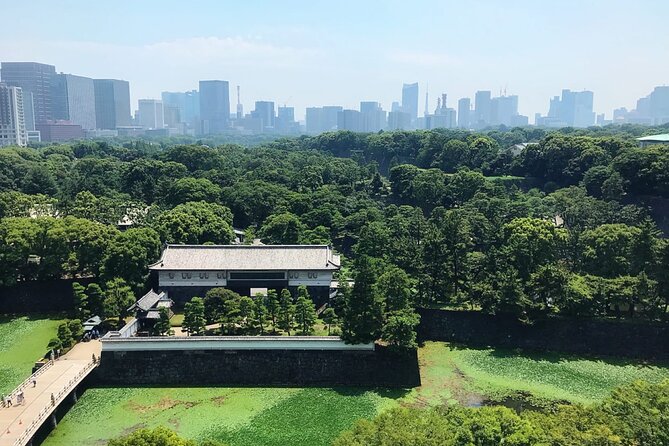
- Edo Castle begins the story: Spend about 90 minutes in the Imperial Palace East Gardens, where the shogun’s castle once stood.
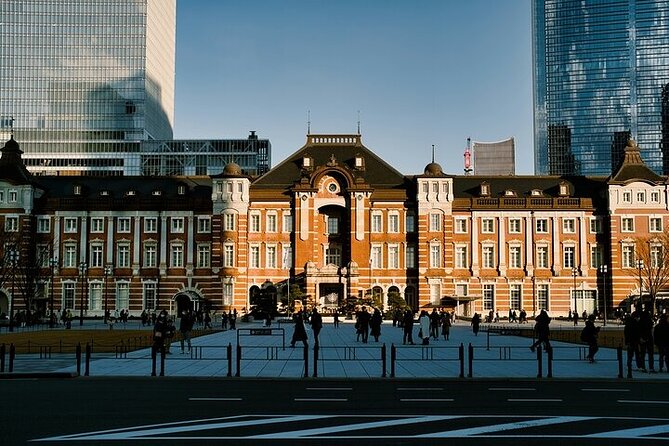
- Tokyo Station shows two eras at once: See the famous red-brick facade beside one of Japan’s busiest railway centers.
- The Tokyo International Forum adds serious architecture: Its glass and steel design provides a calm stop between historic and futuristic Tokyo.
- Odaiba changes the mood: Allow about two hours for open spaces, Tokyo Bay views, and modern buildings on an artificial island.
- The tour is private: Only your group participates, with centrally located hotel pickup offered.
- Budget for transport: Admissions listed for the main stops are free, but public transportation costs about ¥1,500 per person.
A city story that moves from shoguns to steel
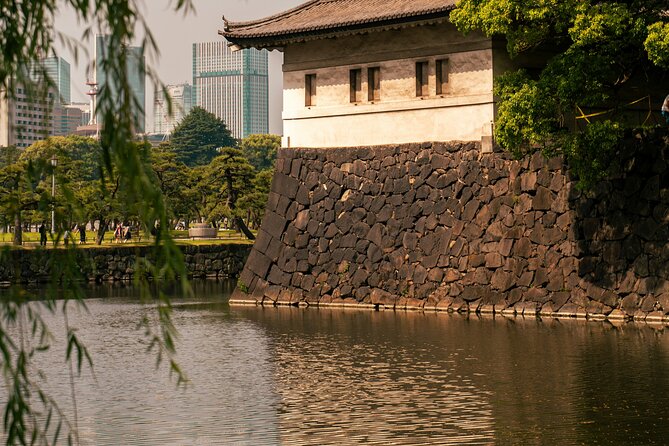
I see the appeal of this route for a first visit, especially if you want more than the usual Shibuya, Shinjuku, and Harajuku circuit. It gives you a basic map of Tokyo through time: political power at Edo Castle, the national railway system at Tokyo Station, contemporary architecture at the International Forum, and planned waterfront development at Odaiba.
That sequence also makes the day feel less scattered. Tokyo can be hard to grasp because its neighborhoods often seem to belong to different cities. Here, Matteo Leone connects the sites through Japanese history, urban planning, literature, and everyday life. The aim is not simply to point at buildings, but to explain why the city looks and functions as it does.
This is a private activity, so your group gets the guide’s full attention. That matters if you have questions about Japanese culture or want to adjust the pace. The five available ratings are all 5, with particular praise for Matteo’s ability to answer questions, explain historical and cultural subjects, and help first-time visitors get oriented.
A few more Tokyo tours and experiences worth a look

Starting at the Imperial Palace East Gardens
The tour starts at Starbucks Coffee in Kokyo Gaien Wadakura Fountain Park, at 3-1 Kōkyogaien in Chiyoda City. From there, you walk into the East Gardens of the Imperial Palace for roughly 90 minutes.
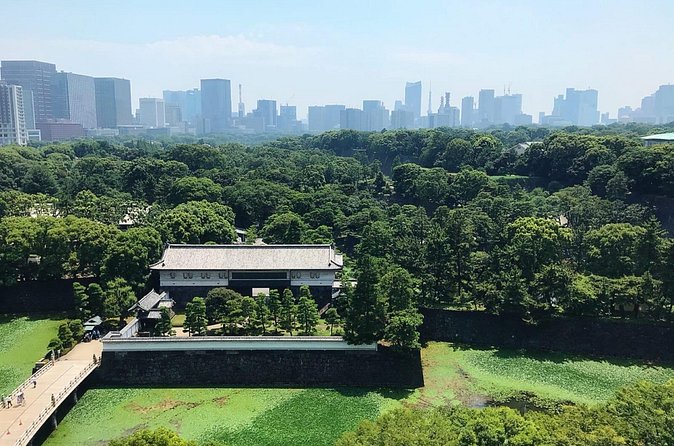
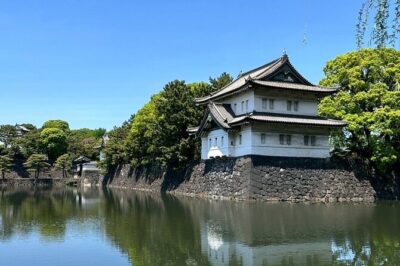
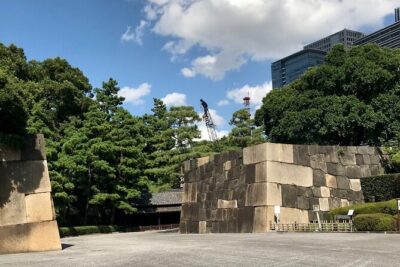
The gardens occupy the grounds of the former Edo Castle. That fact gives this stop more weight than a pleasant stroll through formal greenery. Before Tokyo became Japan’s giant capital, Edo was the seat of shogun power. The castle was the center of a political system that shaped the country for centuries.
You can expect the guide to use the remaining castle traces and garden setting to explain how Edo developed into Tokyo. This is where the tour’s time-travel idea works best. The physical remains are quieter than a complete European palace, so Matteo’s explanation is important. Without context, you might see walls, open ground, and gardens. With context, the site becomes the starting point for understanding the city.
Admission to the East Gardens is listed as free. The 90-minute stop is long enough for explanation and walking, but you should still wear comfortable shoes. The full route involves moving between several areas, and there is no indication that the day is designed for people who need a low-mobility itinerary.
One practical point: the listed meeting place is not necessarily your hotel. Centrally located hotel pickup is offered, but you should confirm the arrangement before the day begins. If you are meeting at Wadakura Fountain Park, make sure you allow enough time to reach the starting point.
Tokyo Station and the machinery of modern Japan
The next stop is Tokyo Central Railway Station, usually called Tokyo Station, for about an hour. Its red-brick European-style facade creates an immediate contrast with the vast railway operation behind it.
This is a useful stop because it shows that Tokyo’s modern identity is not only about neon, towers, and novelty. Rail travel is part of the city’s daily structure. At Tokyo Station, historic design and present-day movement sit side by side. The guide can use the station to explain how Tokyo connects its districts and how infrastructure helped shape the capital.
You are not simply pausing to admire a pretty facade. You are looking at a place where history and ordinary routines meet. That fits the tour’s larger purpose: explaining the city through both major events and daily life.
The hour should suit you if you enjoy interpretation more than shopping or free time. If you want a long independent visit inside the station, this organized stop may feel brief. The experience is built around the guide’s narrative, not around browsing shops or choosing your own station route.
Tokyo Station is also a sensible place to discuss the day’s transport. Public transportation is not included in the tour price, with an estimated cost of ¥1,500 per person. Matteo offers help purchasing transport tickets and attraction tickets if required, but you pay those costs separately.
The Tokyo International Forum’s quiet change of pace
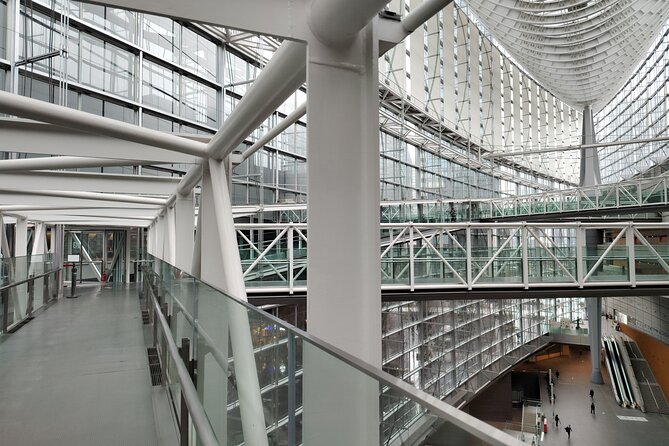
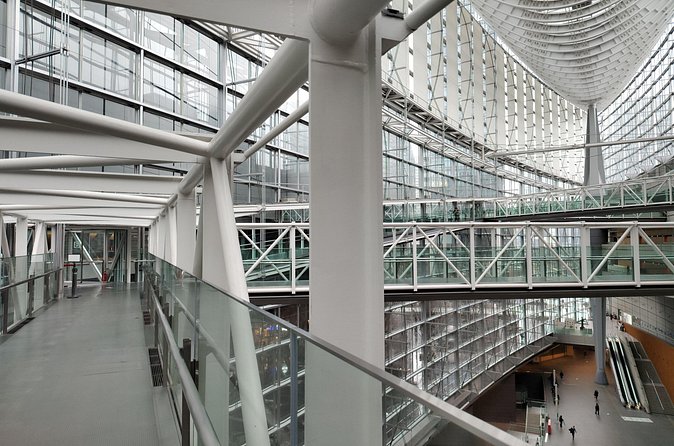
The Tokyo International Forum receives about an hour. Its glass and steel structure has a distinctive shape, and the building gives the group a chance to pause in a broad, calm contemporary setting.
I like this inclusion because it is not the most obvious stop on a first-time Tokyo itinerary. The forum lets you look at the city as a place of design and public architecture, not just a collection of old temples and crowded commercial streets. It also bridges the gap between Tokyo Station and Odaiba.
The building’s spacious interior offers a different kind of city experience. Rather than rushing through another landmark, you can stop and consider how Japan presents modern civic space. The guide’s interest in urbanism is especially relevant here. Matteo’s route was shaped by his reading in Japanese literature and city planning, and this stop reflects that more thoughtful approach.
The forum is best for you if you enjoy buildings, public spaces, and the reasons cities are designed in certain ways. If your ideal tour is all about famous photo stops, you may find the visit less immediately exciting. Its value comes from explanation and comparison, not from a long list of activities.
There is no entrance fee listed for this stop, though the general tour information says any paid attraction entrances are not included. The stated itinerary does not require a ticket for the Tokyo International Forum itself.
Odaiba and Tokyo Bay’s futuristic edge
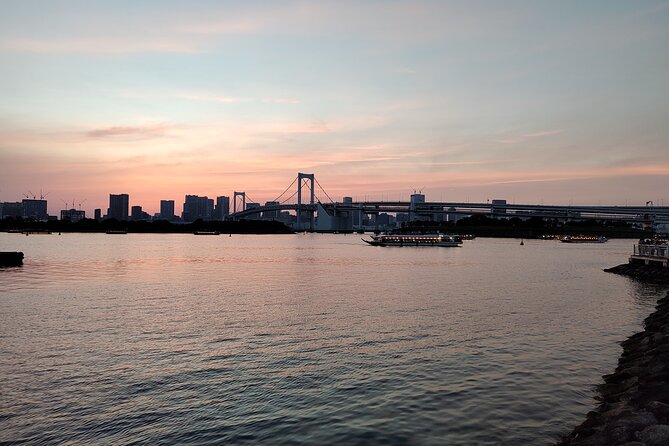
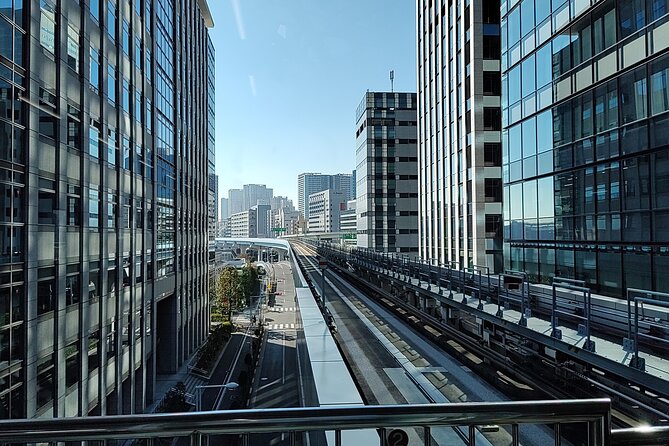
The final stop is Odaiba, where you spend about two hours. Built on an artificial island in Tokyo Bay, Odaiba offers open spaces, modern architecture, and broad views that feel far removed from the old castle grounds.
This change in setting is the payoff of the route. At the Imperial Palace, the story begins with concentrated political power. In Odaiba, the city spreads outward toward the bay through planned land, large public areas, and contemporary buildings. You get a different view of Tokyo, one that feels more spacious and less enclosed.
The tour describes Odaiba as a place to relax, and that is an important contrast after several history and architecture stops. You can use the time to look across the water, take photographs, and notice how the city presents its future-facing side. The exact activities in Odaiba are not specified, so do not book this expecting a particular museum, attraction, restaurant, or event.
That flexibility can be useful. Your end point can be agreed with Matteo during the tour, based on your hotel, preferences, or plans for getting back. The stated ending point is Odaiba, but the final arrangement can be discussed during the day.
Meals, drinks, and personal spending are not included. If you want lunch or a drink during the Odaiba portion, plan to pay separately. Restaurant reservations are also not included, so you should not count on a prearranged meal.
A few more Tokyo tours and experiences worth a look

What the guide adds to the day
The guide service runs for the full tour. That is the main reason to consider this experience instead of visiting the same places independently. The sights themselves are public and mostly free, but the value lies in the connections between them.
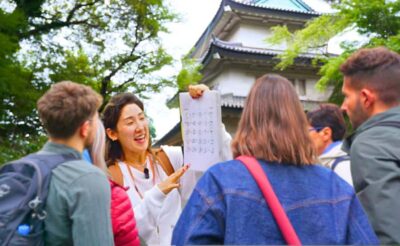
Matteo Leone is described as especially useful for questions about Japanese history and culture. That is important in Tokyo, where a sign, building, or garden may have meaning that is not obvious from appearance alone. A guide can also help explain how older political structures relate to the city you see today.
The personal format gives you room to ask questions as they arise. You can ask about the shogun period at the castle site, rail travel at Tokyo Station, architecture at the forum, or city development in Odaiba. The experience is not designed as a silent walk with fixed commentary.
The private format may also suit families or small groups who prefer not to keep pace with strangers. It does not guarantee a customized itinerary, since the advertised four stops remain the core route, but the end point and some practical details can be discussed with the guide.
Is $91.21 a fair price?
The listed price is $91.21 per person. You should judge that price as a payment for a private guide and a full-day framework, not as an admission bundle. The principal stops are public places, and public transportation costs about ¥1,500 per person in addition to the tour fee.
For a solo visitor, the price may feel high because you are covering a private guide alone. For two or more people, the cost becomes easier to justify, especially if you value personal questions, hotel pickup, and help moving through Tokyo’s transport system.
The tour lasts approximately six to eight hours, which is long enough to make the guide service meaningful. You are paying for interpretation across several parts of the city rather than a short introduction at one landmark. Still, meals, drinks, insurance, paid attraction tickets, restaurant reservations, and non-agreed hotel transfers are excluded.
I would book this if you want context and orientation early in your Tokyo stay. I would hesitate if you mainly want free time, shopping, or a low-cost way to see public landmarks. Independent visitors can reach these areas without a private guide, but they would need to build the historical and architectural connections themselves.
Timing, transport, and physical demands
The published operating hours are 9:00 AM to 6:00 PM, from July 14, 2025, through December 9, 2026. The exact start time should be confirmed when you book, since the tour length is given as approximately six to eight hours.
Hotel pickup is offered if your hotel is centrally located. The information also lists the experience as near public transportation and provides a meeting point at Wadakura Fountain Park. Pickup arrangements and the final Odaiba exit point can be discussed with Matteo.
Plan for a moderate level of physical fitness. The day combines walking through gardens, moving around major public buildings, and using public transport. It is not recommended for people with reduced mobility, mobility difficulties, or special needs involving prams, walkers, or strollers.
The mobile ticket is useful for keeping the booking details available on your phone. Confirmation is provided at booking. Free cancellation is available if you cancel at least 24 hours before the start time. Cancellations or changes made within 24 hours are not refunded or accepted.
Who should book this Tokyo route?
This experience suits a first-time visitor who wants to understand Tokyo before tackling its larger neighborhoods. It is also a good match for someone returning to Tokyo who has already seen Shibuya, Shinjuku, and Harajuku and wants a more thoughtful look at the capital.
You will get the most from it if you enjoy history, architecture, urban design, and conversation. The strongest part is not any single landmark. It is the way the tour moves from Edo Castle to railway Tokyo, then to contemporary civic architecture and artificial-island development.
I would also consider it for a private group that wants flexibility at the end of the day. Since the arrival point can be agreed with the guide, you may be able to finish in a way that suits your hotel or evening plans.
This is less suitable if you need step-free access, dislike long walking days, or want a tour built around specific paid attractions. The route includes no listed meal, museum booking, event reservation, or attraction ticket package.
Should you book From the Imperial Palace to Odaiba?
Book it if you want Tokyo explained as a city that changed over time, not just photographed one neighborhood at a time. The East Gardens provide the historical anchor, Tokyo Station shows the city’s working core, the International Forum adds a thoughtful architectural pause, and Odaiba offers a wide-angle look at Tokyo’s newer ambitions.
The best reason to choose this tour is Matteo Leone’s guide-led approach and the private setting. The main caution is cost: at $91.21 per person, plus transport and personal expenses, it is not a bargain sightseeing shuttle. But for a small group that values clear explanations, questions, and a strong route through Tokyo’s past and present, it offers a useful first-day framework.
FAQ
How long does the tour last?
The tour lasts approximately 6 to 8 hours.
Where does the tour start?
The listed meeting point is Starbucks Coffee at Kokyo Gaien Wadakura Fountain Park, 3-1 Kōkyogaien, Chiyoda City, Tokyo 100-0002, Japan.
Is hotel pickup available?
Hotel pickup is offered if your hotel is centrally located. Transfers from or to other hotels are not included unless specifically agreed.
Is public transportation included?
No. Public transportation costs about ¥1,500 per person. The guide can assist with buying transport tickets if needed.
Are meals and entrance fees included?
No. Meals, drinks, personal expenses, insurance, and entrance fees for attractions are not included. The listed main stops do not require an admission ticket according to the tour details.
Is this tour suitable for people with reduced mobility?
No. The experience is not recommended for people with reduced mobility, mobility difficulties, or special needs related to prams, walkers, or strollers. A moderate level of physical fitness is expected.
More Odaiba Tours in Tokyo
More Imperial Palace & Shogun Tours in Tokyo
More tours in Tokyo we've reviewed



Imperial Palace & Shogun Tours, compared.
 ★ 5.0Tokyo: Imperial Palace and Shogun Historical Walking TourFrom $22
 ★ 4.9Tokyo: Imperial Palace Japanese History Walking TourFrom $32
 ★ 4.9Tokyo: Imperial Palace and Shogun Walking TourFrom $162 hours
 ★ 5.0Imperial Palace East Garden and Edo Castle Walking Tour in TokyoFrom $25
 ★ 4.8Tokyo: Imperial Palace East Gardens Walking TourFrom $192h 30m
 ★ 4.5Tokyo: Imperial Palace, Sensō-ji Temple, & Tokyo Tower TourFrom $404 hours