

Reviewed · MT FUJI DAY TRIPS
Mt Fuji and Hakone 1-Day Bus Tour Return by Bus
Mt Fuji and Hakone in one day is a big sightseeing sweep: you ride from Tokyo to Mt Fuji’s 5th Station, eat lunch near Japan’s highest peak, then cross Hakone by Ropeway and boat. The best reward is a clear-day view of Fuji, followed by a cool breeze on Lake Ashi.
I like two things here. First, you do not need to wrestle with several trains and buses in rural Hakone. Second, the day includes three very different ways to see the area: coach, aerial cable car, and lake cruise. The catch is the pace. Five or more hours may go to road travel, while many stops last only 30 to 40 minutes.
In This Review
- Key points to know before booking
- What this 11-hour day is really like
- Mt Fuji’s 5th Station, a short first look
- Lunch near Fuji, useful but not the main event
- Hakone Ropeway, the day’s best change of viewpoint
- Lake Ashi, a calm finish after a crowded day
- The return to Tokyo needs careful planning
- Guides make a real difference
- The real value of $136.05
- Weather, crowds, and what to pack
- Who should book this tour?
- Should you book it?
- FAQ
- How long does the Mt Fuji and Hakone tour last?
- Where does the tour start in Tokyo?
- Does the bus always return to Shinjuku?
- Is a Shinkansen ticket included?
- Is Mt Fuji guaranteed to be visible?
- Is lunch included?
- Are vegetarian or Muslim-friendly meals available?
- Is the Hakone Ropeway included?
- Is the Lake Ashi cruise included?
- How many people can join the tour?
Key points to know before booking
- Fuji visibility is never guaranteed: Clear winter and late-fall days offer the best chance, but clouds can hide the mountain.
- The 5th Station stop is brief: Plan on about 30 minutes for photos, the shrine, and a quick look around.
- Hakone comes by Ropeway and boat: Both admission fees are included, though weather or traffic can cancel or change an activity.
- Lunch is optional: Choose the buffet in advance if you want it. Vegetarian and some Muslim-friendly choices are available, but Halal-certified and vegan meals are not supplied.
- The return point changes: Weekends and holidays often end at Odawara Station, not Shinjuku, because of traffic.
- Guides can shape the day: Guides including Yui, Sora, Hiro, Aya, Levin, and Tsubasa have been praised for humor, clear instructions, and useful cultural explanations.
What this 11-hour day is really like
This is not a slow countryside outing. It is a practical way to cover two famous destinations from Tokyo when you have limited time and do not want to plan a complicated route yourself.
You meet at either Matsuya Ginza at about 7:20 in the morning or the LOVE sculpture near Shinjuku at about 7:50. The LOVE statue is the final meeting place, and you need to arrive on time. If you miss departure, you cannot join later.
The air-conditioned coach has Wi-Fi, and multilingual audio guidance is available in English, Spanish, French, Italian, German, Portuguese, and Ukrainian. That helps during the long drives, although commentary and bus noise can make it less restful than a quiet train journey.
The group can reach up to 43 people. That size keeps the price below a private tour, but it also means fixed departure times, head counts, and little room for unscheduled photo stops. You will be told when to return to the bus, and the schedule matters.
A few more Tokyo tours and experiences worth a look
Mt Fuji’s 5th Station, a short first look
The Mt Fuji Subaru Line takes you toward the mountain’s 5th Station, a popular stopping point high on the approach to the summit. At roughly this point, you get mountain air, broad views when the sky is clear, souvenir shops, and a chance to visit a Shinto shrine.
The tour allows about 30 minutes here. That is enough for a brisk walk, a few photos, and a quick breath of the cool air. It is not enough for a long wander or a relaxed visit if the area is crowded.
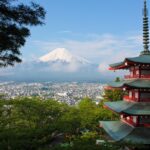
The key issue is visibility. Fuji often hides behind cloud, particularly in warmer or unsettled weather. Some people get a lucky gap in the clouds, while others see only partial views. The tour does not promise a clear mountain, and no coach excursion can control the sky.
Weather can also affect access to the 5th Station. If road rules, traffic, or conditions prevent the bus from reaching it, the operator may use another stop such as Oshino Hakkai, the Fujisan World Heritage Center, or another listed alternative. No refund is provided for these itinerary changes.
The date of June 7 has a specific warning: traffic regulation during the Mt Fuji hill climb means the tour will use an alternative location instead of the 5th Station.
Lunch near Fuji, useful but not the main event
After Fuji, you can have a Japanese buffet lunch near the mountain if you select the lunch option. The meal uses local ingredients and offers a broad range of food, but the exact restaurant may change for operational reasons.
The buffet is best viewed as convenient fuel rather than a special food tour. Some meals have been described as more Western-style cafeteria food than the Japanese spread suggested by the promotional images. Quality can also vary by season and restaurant.
Vegetarian and Muslim-friendly requests should be made during booking. The published food guidance says Halal-certified and vegan meals are not available, so you should book without lunch and bring your own food if those requirements matter.
The buffet has nutrition labels, and typical items may include rice, vegetable soup, fruit, salad, vegetables, fried noodles containing pork, bread, desserts, and drinks. Gluten-free choices may be limited. If you need a particular meal, do not rely on making the request on the morning of the tour, because changes on the day may cost more or may not be possible.
Hakone Ropeway, the day’s best change of viewpoint
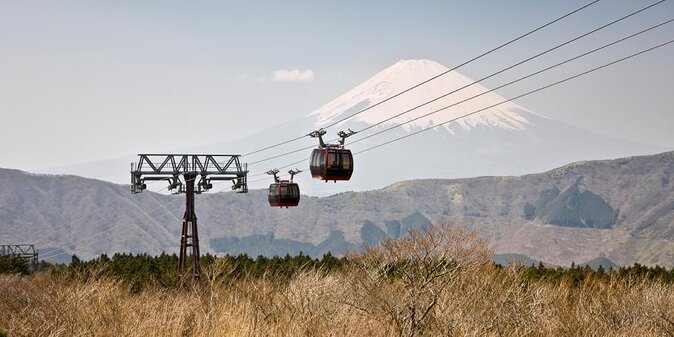
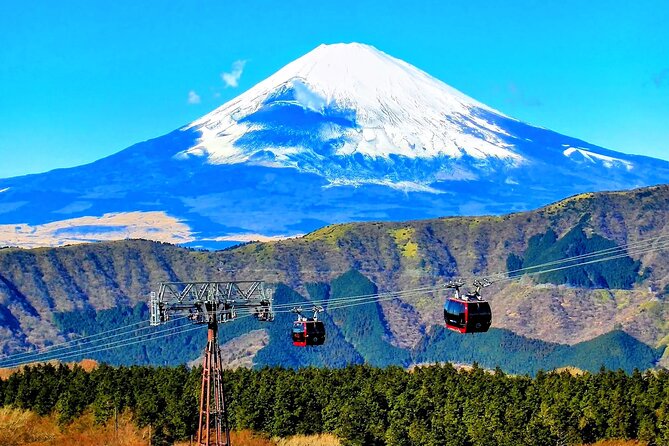
The Hakone Ropeway gives the afternoon a welcome lift, both literally and in mood. From the cable car, you look across Hakone’s volcanic country and may see Fuji if the air is clear.
The ride itself is included in the price and lasts about 30 minutes within the scheduled stop. It gives you a wider view than the tight photo stop at the 5th Station, though your exact route or nearby mountain stop can change. The tour may visit Mt Hakone or Mt Komitake depending on conditions and operations.
This is one of the more memorable parts of the day because you are no longer sitting at road level. You get a sense of the scale of Hakone, its hills, and the volcanic setting around the lake.
Still, keep expectations sensible. A cable car ride is not the same as a long mountain walk. If you want time on trails, quiet overlooks, or a flexible visit to Hakone’s many museums and hot springs, this schedule will feel too tight.
The Ropeway can be suspended because of weather or other operating problems. In that case, an alternative may be offered, and the operator may provide a small gift or another substitute depending on the situation. The itinerary can change without a refund.
Lake Ashi, a calm finish after a crowded day
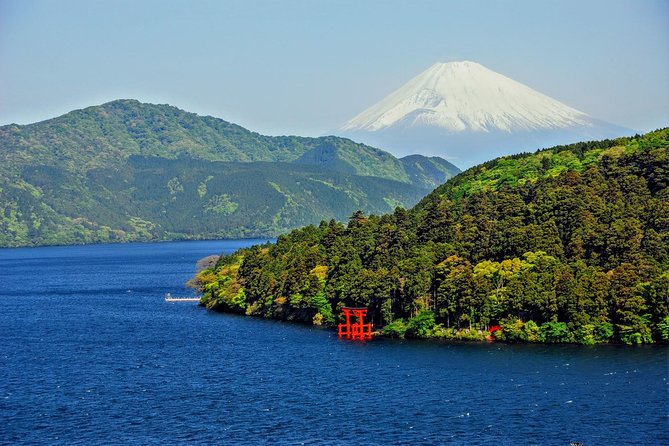
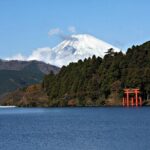
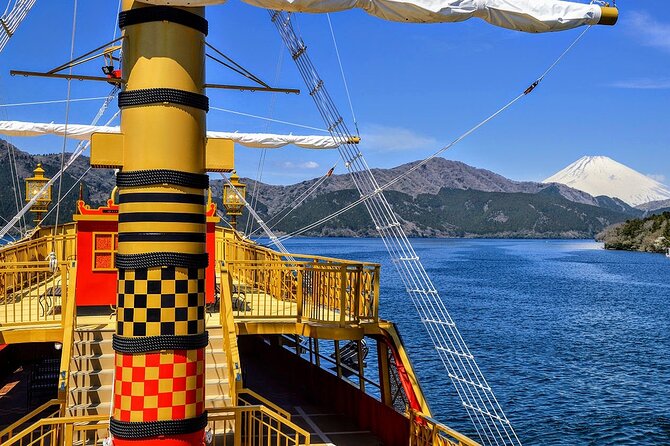
The cruise on Lake Ashi is usually the most restful part of the outing. This is a caldera lake in Hakone, surrounded by wooded slopes and mountain views. The boat gives you a seated break, open air, and a chance to take photos without immediately rushing to the next landmark.
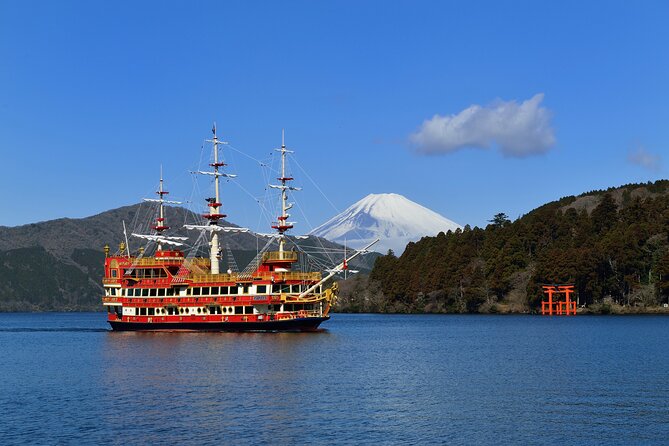
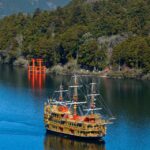
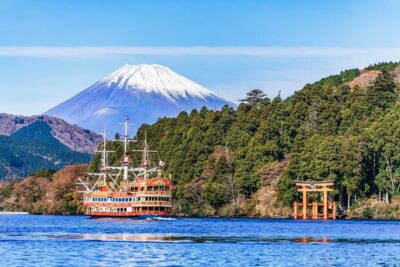
The scheduled cruise is about 30 minutes, and the fare is included. The vessel may be a standard sightseeing boat or ferry-like lake cruiser rather than the elaborate pirate-style ship shown in some tour images. That distinction matters if the ship itself is part of your reason for booking.
The boat can be crowded, especially during busy periods, and you may not find a seat for the whole crossing. Even so, the lake is a good contrast to the bus ride. On a hot Tokyo day, the breeze can be a welcome relief.
Weather, traffic, and service suspensions can change or remove the cruise. Possible alternatives include another Lake Ashi boat, a Swan Lake cruise on Lake Yamanaka, Hakone Shrine, Hakone Sekisho, Odawara Castle, or another listed stop.
A few more Tokyo tours and experiences worth a look
The return to Tokyo needs careful planning
The title says return by bus, but the final destination is not always Shinjuku. On many weekends and public holidays, traffic makes a full coach return to Tokyo impractical, so the tour ends at Odawara Station.
From Odawara, you can continue by train. A visitor with a JR Pass may use the bullet train, and some people find this much quicker and more comfortable than waiting through evening road traffic. If you want a guaranteed Shinkansen ticket included, choose the separate returning-by-bullet-train option.
On ordinary dates, the planned drop-off is near Shinjuku Station at the Mode Gakuen Cocoon Tower, around 7:00 p.m. if traffic is normal. The return time is approximate. A weekend or holiday trip can finish at Odawara instead, so check the calendar before you book.
The 2026 dates specifically flagged for an Odawara finish include January 12, February 11 and 23, March 3, April 29 and 30, May 1 and 4 through 6, July 7 and 20, August 10 through 12 and 14, September 21 through 23, October 12, and November 3 and 23.
You should also think about luggage. A large bag exceeding 160 centimeters in combined height, width, and length cannot go into the non-reserved cars of the Shinkansen. If you are using Odawara as a connection, travel light or confirm your luggage plan first.
Guides make a real difference
The strongest part of this tour is often the guide. Yui has been singled out for clear instructions, warmth, and explanations of Japanese history, customs, and culture. Sora, Hiro, Aya, Levin, Tsubasa, Masa, Tommy, Mo Mo, Hero, and Blue have also received strong praise for humor, energy, organization, and friendly help.
Guide quality matters on a tightly timed trip. A clear guide can explain where to meet, when to return, and what you are looking at without wasting precious minutes. A funny guide can also make a long bus ride easier.
The audio system adds information in several languages, which is useful if your guide is speaking mainly in English. At the same time, the bus may be lively and loud, and some people find the continuous commentary less relaxing than silence or independent travel.
You are not hiring a private guide for personal attention. The guide must keep a large group together and cannot stop the coach whenever someone spots a beautiful view. That structure is useful for first-time visitors, but frustrating if you prefer to set your own pace.
The real value of $136.05
At $136.05 per person, this is not a bargain day trip in the narrowest sense. The price includes the coach from Tokyo, a professional English-speaking guide, Wi-Fi, audio support, the Hakone Ropeway, and the Lake Ashi cruise. Lunch is included only when you select that option.
The value comes from convenience. You get transport to two difficult areas, coordinated transfers, and admission to the main Hakone activities without working out separate tickets. A private taxi or custom guide would cost much more, while doing the whole route independently may cost less but requires careful timing and comfort with several transport changes.
The weak point is the amount of sightseeing you receive for the hours involved. A typical stop lasts around 30 minutes, and traffic can stretch the bus portion well beyond the planned schedule. One disrupted activity can make the day feel particularly poor value because there is little spare time.
I would book this for a first visit when your priority is seeing Fuji and sampling Hakone in one day. I would not book it if your priority is hiking, lingering at the lake, taking long photo breaks, or choosing your own lunch and return time.
Weather, crowds, and what to pack
Your best chance of seeing Fuji is on a clear late-fall or winter day, though no season guarantees a view. Cloud, rain, and wind can affect the 5th Station, Ropeway, and boat, and poor weather may leave you waiting outside at several stops.
Wear shoes suited to walking on uneven or unpaved ground. The tour is not recommended for wheelchair users or people with limited mobility because some locations are not smooth or level. Anyone with asthma is also advised not to take this tour.
Bring water, snacks if you skip lunch, and protection from sun or rain. The operator does not include bottled water. You should also carry a portable charger, since a long day of photos can drain a phone even with bus Wi-Fi.
Crowds are another practical concern. The lake boat can be packed, and popular Fuji stops may feel busy. The fixed schedule helps the group keep moving, but it leaves little time to wait for a quiet viewpoint.
Who should book this tour?
You should consider it if you have only one free day from Tokyo, want a guide, and prefer a single organized vehicle to a chain of local connections. It suits visitors who are happy to collect highlights rather than settle into one place.
Families and first-time Japan visitors may appreciate the simple structure, air conditioning, and clear meeting points. The included Ropeway and cruise also add variety, so the day is not just a long drive and a mountain photo.
You may prefer independent travel if you want to spend half a day around Lake Ashi, visit a shrine or museum at length, hike, or wait patiently for Fuji to appear. An organized schedule cannot give you that freedom.
Should you book it?
Book this tour if your goal is maximum coverage with minimum transport planning. The 5th Station, Ropeway, and Lake Ashi cruise create a satisfying snapshot of the Fuji and Hakone region, and strong guides can make the long day enjoyable.
Think twice if you dislike early starts, crowded transport, or short stops. Check the return date carefully, select lunch in advance if needed, and consider the bullet train option for a weekend or holiday. Cancel at least 24 hours before departure for a full refund; cancellations or changes inside that window are not refunded or accepted.
FAQ
How long does the Mt Fuji and Hakone tour last?
The tour lasts about 11 hours. A typical return to the Shinjuku area is planned for around 7:00 p.m., although traffic, weather, and operational changes can affect the timing.
Where does the tour start in Tokyo?
Pickup is available at Matsuya Ginza at about 7:20 a.m. or the LOVE sculpture near Shinjuku at about 7:50 a.m.
Does the bus always return to Shinjuku?
No. On weekends and public holidays, the tour often ends at Odawara Station because of heavy traffic. On other dates, the planned drop-off is near Shinjuku Station at the Mode Gakuen Cocoon Tower.
Is a Shinkansen ticket included?
Not with this standard return-by-bus product. If you need a bullet train ticket to Tokyo, book the separate returning-by-bullet-train option. Visitors with a JR Pass may use the train from Odawara Station.
Is Mt Fuji guaranteed to be visible?
No. Visibility depends on weather and cloud cover. The itinerary may also change if road conditions or traffic prevent access to the 5th Station.
Is lunch included?
Lunch is included only if you select the lunch option when booking. The buffet includes a range of items, but the restaurant may change due to operational reasons.
Are vegetarian or Muslim-friendly meals available?
Vegetarian and Muslim-friendly meals are available if requested when booking with lunch. Halal-certified and vegan meals are not available.
Is the Hakone Ropeway included?
Yes. The Ropeway fee is included, although the ride may be changed or cancelled because of weather, traffic, or operational conditions.
Is the Lake Ashi cruise included?
Yes. The Lake Ashi cruise fee is included. The boat may be a standard sightseeing vessel rather than the ship shown in some promotional images.
How many people can join the tour?
The tour can have a maximum of 43 participants. It is not a private tour, and everyone must follow the group timetable.
More 1-Day Tours in Tokyo


More Hakone Day Trips in Tokyo
More Mt Fuji Day Trips in Tokyo
More tours in Tokyo we've reviewed




Mt Fuji Day Trips, compared.
 ★ 5.0Mt Fuji and Hakone 1-Day Bus Tour Return by Bullet TrainFrom $163
 ★ 4.0Mt Fuji & Hakone Cruise, Drum Show Bullet Train 1 Day from TokyoFrom $149
 ★ 4.4Tokyo Mt Fuji 5th St & Hakone Cruise Bus Tour w/Bullet TrainFrom $15410 hours
 ★ 4.5From Tokyo: Mount Fuji Full-Day Sightseeing TripFrom $6810 hours
 ★ 4.7Tokyo: Mt. Fuji Tour, Hakone Ropeway, Owakudani, Lake AshiFrom $5410 hours
 ★ 4.4Tokyo:Mt.Fuji,Kawaguchiko Oishi Park,Arakurayama Sengen ParkFrom $5410 hours