
Reviewed · IMPERIAL PALACE & SHOGUN TOURS
Imperial Palace run with fun trivia by an Imperial Palace geek
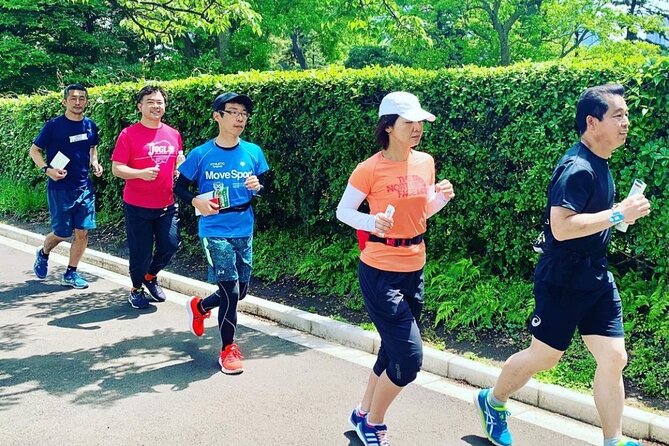
Tokyo’s Imperial Palace makes an unusual running route: part city workout, part open-air history lesson. This 2.5-hour small-group tour follows palace gates, Edo Castle remains, cherry tree spots, and Tokyo Marathon landmarks, with plenty of stops for stories and photos.
I like two things right away. First, you do not have to race. The pace changes between running, walking, and standing, so casual runners can join. Second, guide YUKO brings real enthusiasm for both the palace and running, adding small facts about gates, clocks, bridges, cherry trees, and the Emperor’s connection to Tokyo Marathon sites. The main consideration is the price: $90 does not include the ¥1,500 locker and shower fee, so this works best if you value a personal guide as much as the exercise.
In This Review
- Key points to know before you book
- Why this palace run is different
- Starting at JOGLIS at 8:30 a.m.
- Hanzo-mon and the descent toward Sakurada-mon
- Sakurada-mon, its gate, and the square clock
- Nijubashi and the Tokyo Marathon finish area
- Entering the East Gardens through Otemon
- Fujimi-yagura and the missing castle keep
- Leaving by Kitahanebashi and meeting the uphill section
- Daikancho-dori and Chidorigafuchi’s cherry trees
- How much running should you expect?
- What the $90 price really covers
- Who will get the most from this tour?
- Booking, weather, and practical details
- Should you book the Imperial Palace run?
- FAQ
- Where does the Imperial Palace run begin?
- What time does the tour start?
- How long does the experience last?
- Where does the tour end?
- Do I need to run the entire route?
- How many people can join the tour?
- Is the tour available in English?
- Are lockers and showers included?
- Can I cancel for a refund?
Key points to know before you book
- An early 8:30 a.m. start: You run before the route becomes more crowded and begin at JOGLIS in Kojimachi.
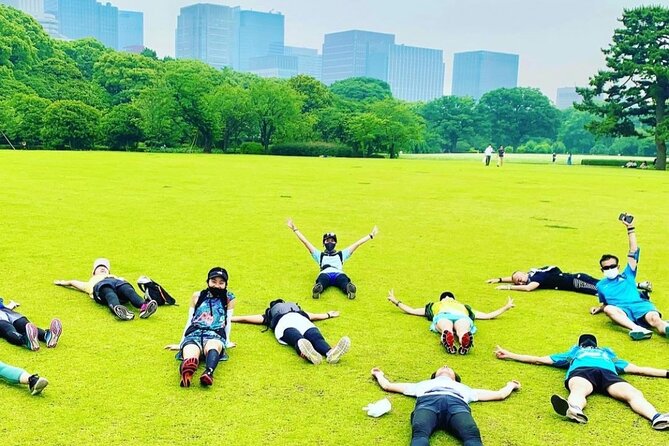
- A run with frequent stops: Expect a mix of jogging, walking, history talks, trivia, and photo breaks rather than nonstop exercise.
- A maximum of eight people: The small group leaves room for questions and makes it easier to match the pace to the group.
- A route through major palace sights: You pass Hanzo-mon, Sakurada-mon, Nijubashi, Otemon, Fujimi-yagura, and the old castle tower site.
- Japanese and simple English: The tour is conducted in Japanese and simple English, so ask questions as you go.
- Optional running-club facilities: JOGLIS offers lockers, showers, clothing, shoes, and towels for extra fees.
Why this palace run is different
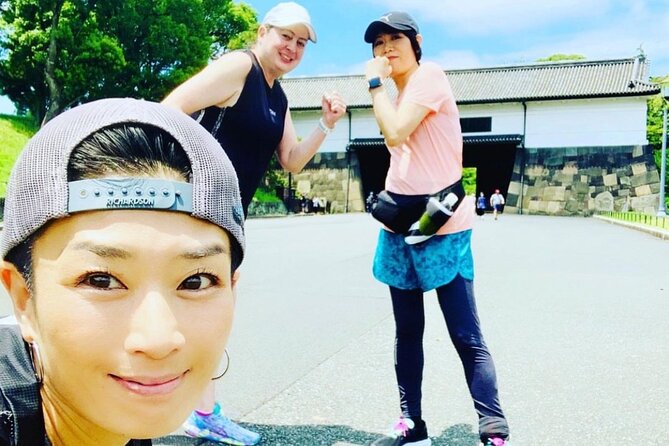
The usual Imperial Palace visit is a sightseeing walk around formal gates and gardens. This experience gives you a moving tour of the area, using the famous palace running route as its backbone.
That format matters. You get a sense of the route’s length and gentle changes in slope, but you are not left alone to guess what you are seeing. At each pause, your guide connects the view to Edo Castle, modern Tokyo, Japanese customs, or the city’s running culture.
This is not a private tour, but the group is capped at eight. That is small enough for direct questions and a little flexibility. If you want to know why a gate mattered, what a clock in Sakurada Square means, or how Tokyo Station fits into the Tokyo Marathon story, you have a natural chance to ask.
Guide YUKO is especially suited to this style. Her enthusiasm for the palace and for running comes through in the way the tour is organized. The route is not treated as a simple loop. It becomes a string of short discoveries, with time to catch your breath and take in the setting.
A few more Tokyo tours and experiences worth a look

Starting at JOGLIS at 8:30 a.m.
The meeting point is JOGLIS, at FM Center Basement 1F in Kojimachi, Chiyoda City. The tour begins at 8:30 a.m., which is useful for two reasons: you get an early start on sightseeing, and the palace running route should feel less crowded than it would later in the day.
You begin with a briefing on the Imperial Palace, the route, and the rules of the Imperial Palace Run. This is the point to tell YUKO if you prefer a slower pace or would rather walk sections. The tour is built for casual runners as well as people who exercise often, and the stops prevent it from becoming a long, uninterrupted run.
JOGLIS is also practical if you need to change. Lockers and showers cost an additional ¥1,500 per person. Running clothes, shoes, and towels can also be rented for a fee. Those costs are not part of the $90 tour price, so check what you need before arrival.
The tour returns to JOGLIS at the end. If you paid to use its facilities, you can shower after the route. That makes the experience easier to fit into a morning of sightseeing, especially if you prefer not to spend the rest of the day in running clothes.
Hanzo-mon and the descent toward Sakurada-mon
The run starts at Hanzo-mon, one of the entrances to the Imperial Palace. From here, the route takes you down Miyake-zaka, a slope described as one of Tokyo’s most beautiful.
This opening section gives you more than a warm-up. You can see the National Theatre and the Diet Building while moving through an area tied to both Japan’s present government and the former castle grounds. The contrast is one of the tour’s strengths: modern national institutions appear beside the old defensive lines of Edo Castle.
The section lasts about 20 minutes. You should not read that as 20 minutes of nonstop running. The tour uses movement and pauses together, and the guide explains what you are seeing along the way.
Sakurada-mon, its gate, and the square clock
At Sakurada-mon, you pass under the largest gate in the Imperial Palace area. The scale is easier to appreciate when you approach it on foot, and the gate gives the route a strong historic marker.
The guide also discusses the Japanese belief in Mount Fuji and the idea of the Imperial Palace as a power spot. That may appeal to you if you enjoy the cultural side of sightseeing, though it is presented as a belief rather than a factual claim about the site.
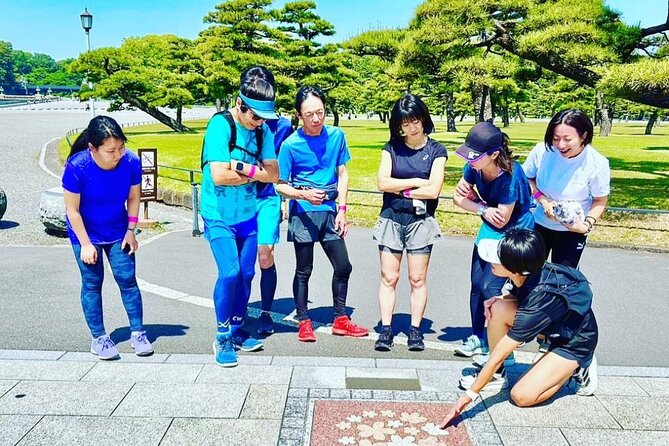
A separate stop in Sakurada-mon Square focuses on the secret of the clock there, a detail aimed at runners who gather in the area. This is the sort of small observation that can be missed on a standard palace walk. The two stops together take about 20 minutes, with time for explanation and a break in the route.
Nijubashi and the Tokyo Marathon finish area
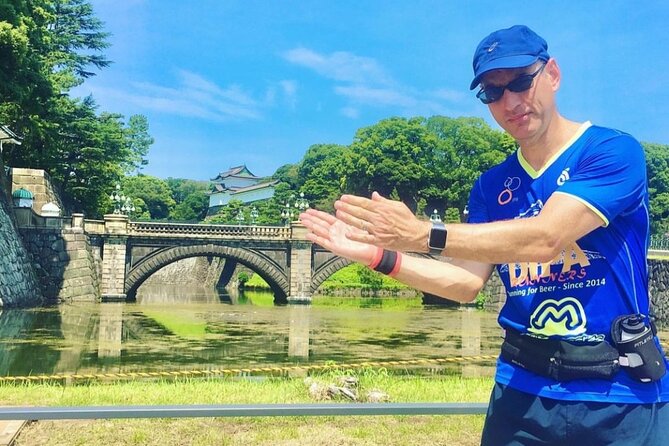
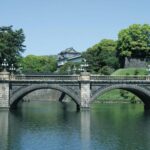
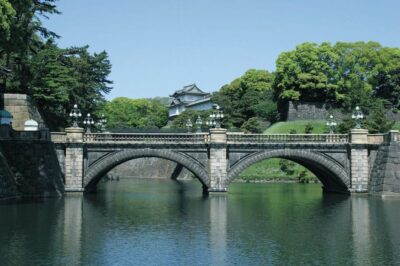
The next major stop is Nijubashi, or the Two-tiered Bridge. It is one of the palace’s best-known views and a natural place for a group photograph.
The photo stop helps keep the pace relaxed. You are not expected to run past a major sight simply to maintain a workout schedule. If you are carrying a phone, this is a good point to have it ready, since the tour includes a commemorative photo here.
From Nijubashi, the route reaches Gyoko-dori Avenue. This is connected with the finish area of the Tokyo Marathon, so the guide shifts from imperial history to modern city life and endurance sport.
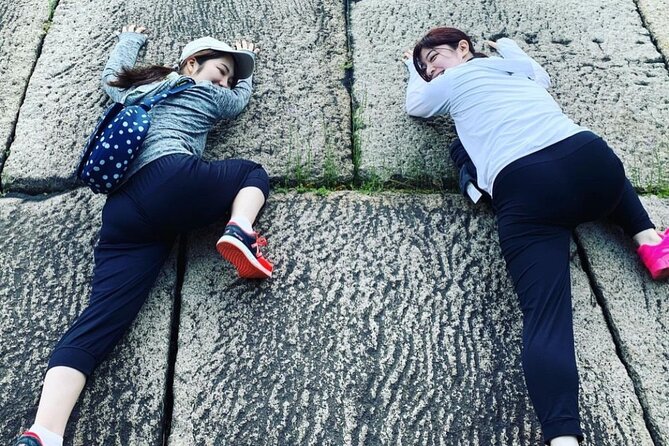
You hear about the secrets of Tokyo Station, the Emperor, and the Tokyo Marathon. The group also takes photos in the style of a marathon finish-line scene. For runners, this adds a personal connection to one of Tokyo’s best-known public events. For walkers, it offers a playful change from gates and stone walls.
Entering the East Gardens through Otemon
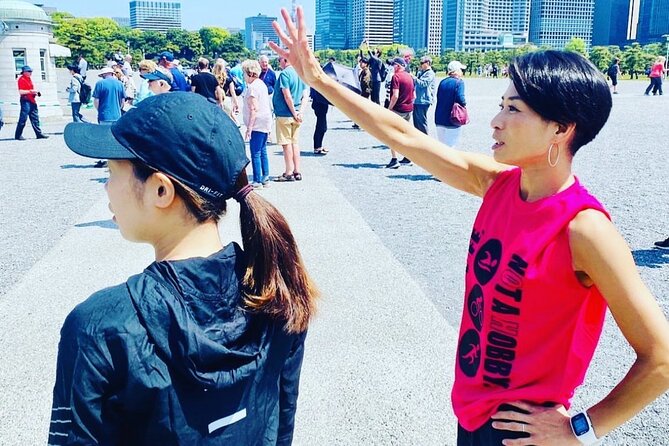
At Kokyo Otemon Gate, you enter the East Gardens of the Imperial Palace. Before going in, expect a baggage inspection. This is a practical detail that can affect the pace, so keep your belongings easy to check and do not assume you will pass straight through.
Otemon was the main gate of Edo Castle. Once inside, you are greeted by a shachihoko, a traditional roof ornament associated with castle architecture. The gate and its approach help you picture the palace not only as a present-day residence and public park, but also as the center of a huge feudal castle complex.
The scheduled time here is about 20 minutes. That is enough for the guide to explain the gate, manage the entry, and get the group into the gardens without turning the visit into a long museum-style stop.
Because the route enters the East Gardens, this is also the section where the tour feels most like a conventional sightseeing visit. You trade busy city streets for lawns, stonework, old defensive structures, and garden paths.
Fujimi-yagura and the missing castle keep

Fujimi-yagura is one of the most attractive structures on the route. The turret served as a substitute for the main keep of Edo Castle, and the guide calls it the little castle.
The name and role make the structure easier to understand. You are not simply looking at an attractive tower. You are seeing part of the defensive system that remained after the castle’s main tower was lost.
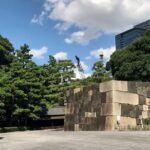
At Tenshudai, you see the stone walls of the former main tower. The castle keep was destroyed by fire and is no longer standing, but a reconstructed model helps show what it looked like.
This stop takes about 20 minutes and is one of the most useful history sections on the tour. The stone base is substantial, yet the absent tower is equally important. It reminds you that the Imperial Palace area is made up of both surviving structures and carefully explained remnants.
For a runner, these stops provide a natural pause in the middle of the route. For a history-minded visitor, they are the core of the experience. You get enough context to understand the site without spending hours inside a formal museum.
Leaving by Kitahanebashi and meeting the uphill section
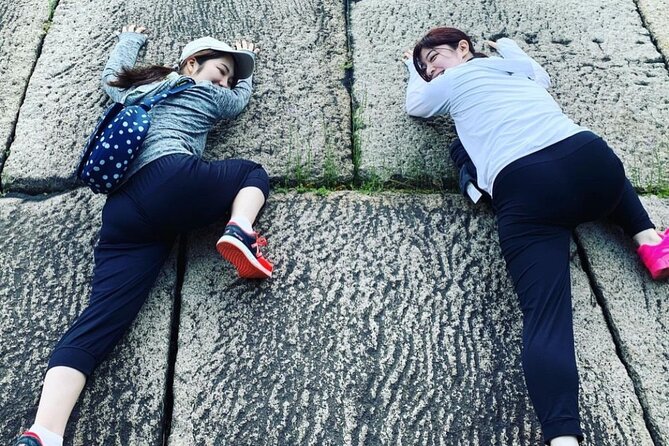
You leave the East Gardens through Kitahanebashi-mon Gate, once a drawbridge of Edo Castle. The gate marks a shift from the garden section back to the running route.
After Kitahanebashi, the course begins to climb. This is where the guide’s flexible pace matters. You can run at your own speed and enjoy the exercise rather than feel pressured to stay at a fixed racing pace.
The climb is not presented as a major athletic challenge, but you should still have moderate physical fitness. If you are not used to running, walking the uphill section is a sensible choice. The tour explicitly allows walking, and the frequent stops make it suitable for people who want activity without a full training session.
Daikancho-dori and Chidorigafuchi’s cherry trees
Daikancho-dori follows, a street associated with daimyo residences during the Edo period. It is also known as a cherry blossom viewing area.
The next stop is Chidorigafuchi Park, another famous spot for cherry trees. Here, the guide explains why cherry blossoms hold such an important place in Japanese culture.
This part of the route is especially appealing in blossom season, although the information provided does not promise a particular bloom date or condition. Even outside the season, the explanation gives you a better sense of why certain parks and palace edges matter so much to local life.
The Chidorigafuchi section is also a good reminder that this is not only a workout around government buildings. The route moves through historic roads, formal palace grounds, and public spaces tied to annual Japanese traditions.
How much running should you expect?
You should think of this as a guided run or active walking tour, not a timed athletic event. The route includes running, walking, standing, photographs, baggage inspection, and short talks at nearly every major sight.
That makes it approachable. A casual runner can take part without matching the pace of a serious athlete. Someone who does not run can walk instead, though a moderate level of physical fitness is still recommended.
The group size helps here. With no more than eight people, the guide can answer questions and keep the group together without the feel of a large exercise class. You should still wear suitable running clothes and shoes, unless you plan to rent them at JOGLIS.
The 8:30 a.m. start is another practical advantage. You get the active portion finished early and avoid making the palace route the hottest or busiest part of your day. The tradeoff is that you must reach Kojimachi in time to prepare before the briefing.
What the $90 price really covers
The listed price is $90 and includes the guide fee. Admission to the palace gates, gardens, and stops is listed as free, so you are mainly paying for the guided format rather than entry tickets.
That value depends on your interests. If you only want to run the standard Imperial Palace loop, you can find a cheaper way to exercise. You are paying extra here for YUKO’s commentary, the planned stops, historical context, questions, photo moments, and the chance to combine sightseeing with a workout.
The maximum group size of eight makes the fee easier to justify for people who dislike large tours. You receive a more personal experience than a standard group walk, with space to ask about the palace, Edo Castle, Japanese beliefs, cherry trees, or running customs.
Still, budget carefully. The optional JOGLIS facilities cost ¥1,500, and clothing, shoes, and towels are available for additional fees. If you already have running clothes and do not need a shower, the $90 price is the main extra cost. If you need the full setup, the final amount will be higher.
Who will get the most from this tour?
I would choose this for a first-time Imperial Palace visitor who wants exercise built into the morning. It gives you a clear route and enough background to understand the gates, bridges, stonework, and gardens.
It also suits a runner who has already seen Tokyo’s main sights and wants a different way to experience them. The Tokyo Marathon references, runner gathering point, and finish-line photos add a local sports angle.
The tour is a good match for couples or friends with different fitness levels because walking is allowed. It may also work for Japanese and English speakers traveling together, since the tour uses Japanese and simple English.
I would hesitate if you want a continuous, serious training run. The frequent stops are the point of the experience, but they interrupt your rhythm. I would also think twice if the $90 price feels high for a guided jog and you are happy to explore the palace area independently.
Booking, weather, and practical details
Your confirmation is provided at booking, and the meeting point is near public transportation. The mobile ticket makes arrival simple, but you still need to allow time to find JOGLIS and prepare before the 8:30 a.m. start.
The activity ends back at JOGLIS after about 2 hours and 30 minutes. You can use the lockers and showers afterward if you have paid the additional fee.
This is a good-weather activity. If poor weather forces cancellation, you are offered another date or a full refund. You can cancel for a full refund up to 24 hours before the start time. Cancellations or changes made within 24 hours are not refunded or accepted, so check the forecast before the cut-off.
The tour has a five-out-of-five rating from 12 recorded ratings and a 100 percent recommendation rate. The strongest praise centers on the guide’s love of the Imperial Palace and running, plus the relaxed pattern of stopping, walking, and running. That is exactly the quality to look for here: the tour is more enjoyable when you want stories and context, not only mileage.
Should you book the Imperial Palace run?
Book it if you want to see Tokyo’s Imperial Palace while moving, hear unusual trivia from an enthusiastic guide such as YUKO, and keep the morning relaxed rather than competitive. The small group, flexible pace, and route through both modern Tokyo and Edo Castle remains give the experience a clear purpose.
Skip it if you only need a workout, dislike frequent pauses, or want to keep costs low. For everyone else, the tour offers a memorable way to connect exercise with Tokyo history, especially if you bring comfortable shoes, arrive ready at 8:30 a.m., and treat the route as a guided run with sightseeing rather than a race.
FAQ
Where does the Imperial Palace run begin?
The tour begins at JOGLIS, located at FM Center Basement 1F, 1-7 Kojimachi, Chiyoda City, Tokyo 102-0083.
What time does the tour start?
The start time is 8:30 a.m.
How long does the experience last?
The tour lasts approximately 2 hours and 30 minutes.
Where does the tour end?
The activity ends back at JOGLIS, the original meeting point.
Do I need to run the entire route?
No. Walking is allowed, and the tour includes regular stops for explanations, photographs, and sightseeing.
How many people can join the tour?
The group has a maximum of eight participants.
Is the tour available in English?
Yes. The experience is conducted in Japanese and simple English.
Are lockers and showers included?
No. JOGLIS lockers and showers cost an additional ¥1,500 per person.
Can I cancel for a refund?
You can receive a full refund if you cancel at least 24 hours before the start time. Cancellations or changes within 24 hours are not refunded or accepted. If poor weather causes the operator to cancel, you are offered another date or a full refund.
More Imperial Palace & Shogun Tours in Tokyo
More tours in Tokyo we've reviewed








Imperial Palace & Shogun Tours, compared.
 ★ 5.0Tokyo: Imperial Palace and Shogun Historical Walking TourFrom $22
 ★ 4.9Tokyo: Imperial Palace Japanese History Walking TourFrom $32
 ★ 4.9Tokyo: Imperial Palace and Shogun Walking TourFrom $162 hours
 ★ 5.0Imperial Palace East Garden and Edo Castle Walking Tour in TokyoFrom $25
 ★ 4.8Tokyo: Imperial Palace East Gardens Walking TourFrom $192h 30m
 ★ 4.5Tokyo: Imperial Palace, Sensō-ji Temple, & Tokyo Tower TourFrom $404 hours