
Reviewed · GO-KARTS
Tokyo: Guided Go Kart Tour from Harajuku to Shibuya Crossing
Driving a go-kart through Shibuya Crossing turns Tokyo sightseeing into a hands-on adventure. You are not watching the city from a bus window. You are rolling through its streets, following a guide, and becoming part of the scene for 75 minutes.
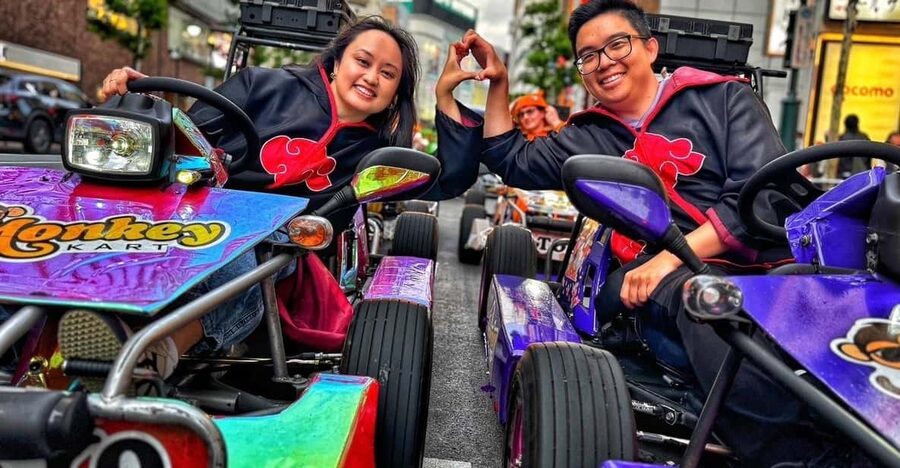
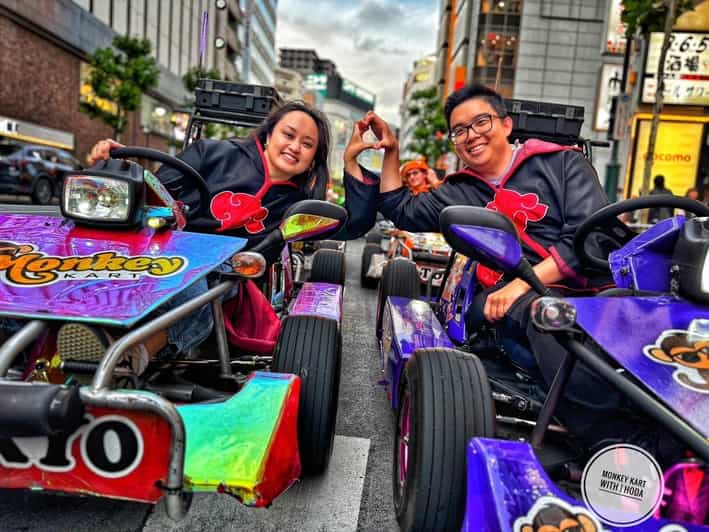
I like the small group of no more than five drivers, which makes the ride easier to manage and lets the guide keep an eye on everyone. I also like the practical extras: costumes, a mounted action camera or Insta360, digital photos, and one printed picture.
The main consideration is the paperwork. Japan accepts only certain hard-copy driving permits, and an online document or card-style license will not do. The ride can also be rescheduled for rain, and one recent booking received 57 minutes of driving time rather than the full advertised 75.
In This Review
- Key things to know before you book
- What this Tokyo go-kart ride is really like
- Starting near Shibuya Station
- Harajuku: a colorful first stretch
- Shibuya Crossing from behind the wheel
- Shinjuku and the central Tokyo streets
- Costumes, cameras, and the photo package
- Safety, speed, and comfort on Tokyo roads
- The driving permit rule you cannot ignore
- How long is 75 minutes in practice?
- Who will enjoy this most?
- Should you book the Monkey Adventure Kart tour?
- FAQ
- How long is the Tokyo go-kart tour?
- What areas does the route visit?
- Is Shibuya Crossing included?
- What is the group size?
- Is the tour guided in English?
- Are costumes included?
- Are photos included in the price?
- What driving permit do I need?
- Can I use an online copy or a card-style international license?
- Can the tour be canceled or rescheduled?
Key things to know before you book
- Shibuya Crossing is the headline moment: You drive through one of Tokyo’s most recognizable city spaces rather than simply photographing it from the pavement.
- The route links three lively districts: Expect Harajuku, Shibuya, Shinjuku, and nearby central Tokyo streets.
- The group is capped at five: That keeps the guide’s instructions and hand signals easier to follow.
- Costumes are part of the fun: Choose a character-style outfit, mask, or funky glasses before setting off.
- Your photos are included: The guide takes pictures during the ride, then sends them by AirDrop or email, with one hard copy included.
- The International Driving Permit rules are strict: Bring the original paper booklet issued under the 1949 Geneva Convention, or the required Japanese translation for certain countries.
What this Tokyo go-kart ride is really like
This is a sightseeing tour with a real driving element. You sit in a custom-built, street-legal kart and travel on Tokyo roads behind an English-speaking guide. It is not a closed racing track, and it is not a quiet city tour. You share the road with ordinary traffic, so the experience feels more immediate and unpredictable than standard sightseeing.
That is also why the opening briefing matters. Before leaving, the guide explains how to operate the kart and reviews the road rules. You then follow the lead kart through the route, using the guide’s signals and pace as your main reference.
You should not expect a long technical lesson or a racing competition. The focus is on staying together, seeing the city, and enjoying the novelty of driving through central Tokyo. The karts are described as well maintained and simple to use, but you still need to pay close attention to instructions.
The tour is limited to five participants. That is a useful size for a road-based activity. A larger convoy would be harder to keep together, while a tiny private booking may cost more. With only a few drivers, the guide can check that everyone is comfortable and adjust the pace when needed.
A few more Tokyo tours and experiences worth a look
Starting near Shibuya Station
The meeting point is on the main big street near a FamilyMart at 3-chome-17-3 Shibuya, Shibuya City. The stated access point is Shibuya Station’s central gate, with Exit C2 about a two-minute walk away.
Give yourself time to find the shop and identify the correct meeting point. Shibuya Station has many exits and several large underground passages, so the station name alone is not enough for a relaxed arrival. Use Exit C2 and look for the FamilyMart on the main street.
Hotel pickup and drop-off are not included. You need to make your own way to the starting point, and you return there after the ride. That makes the experience easiest to fit into a day already centered on Shibuya, Harajuku, or Shinjuku.
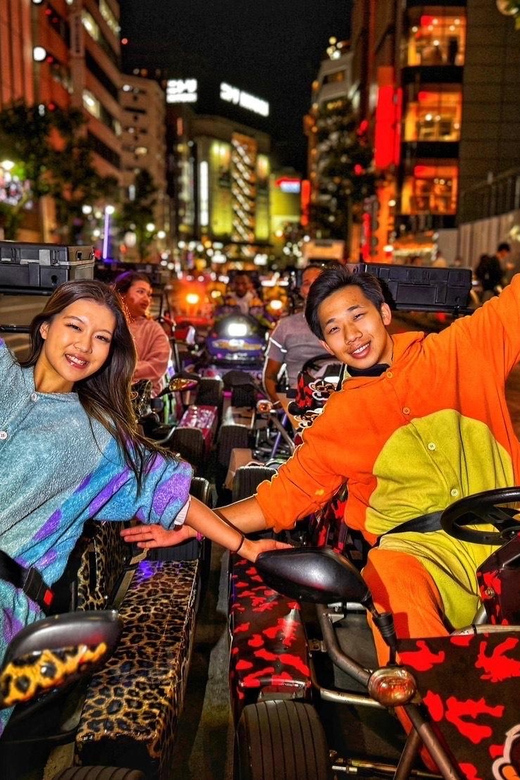
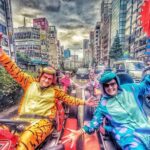
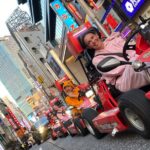
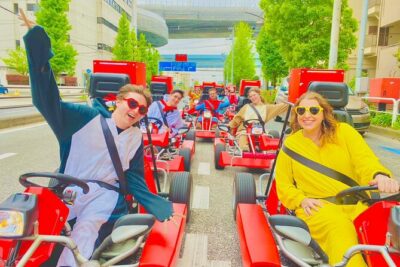
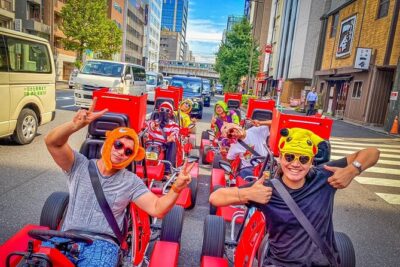
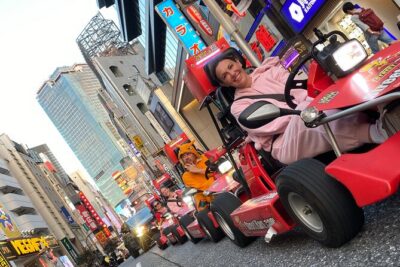
Once you arrive, the staff handle the practical setup. You receive water, get ready for the kart, and choose from the available costumes and accessories. The outfit choice is optional, but it changes the feel of the photos. A superhero-style look, colorful glasses, or a full character costume makes the ride more playful and draws attention from people along the street.
Harajuku: a colorful first stretch
Harajuku gives the ride an energetic start. This district is known for youth fashion, character shops, and eye-catching street style, so it suits the costume side of the activity. From a low kart, shopfronts and passing pedestrians sit closer to eye level than they would from a vehicle.
The route does not turn the tour into a walking visit of Harajuku. You will not have time to browse stores or stop for snacks. Instead, you get a quick moving view of the area, with the guide controlling the route and keeping the group together.
This is a good part of the ride for photos. The guide carries out the photography while you concentrate on driving. The included camera mount also gives you the option of recording your own point of view, though the supplied information does not promise that video footage itself is included.
If you want a calm introduction to Tokyo, this section may feel busy. You are managing the kart, watching traffic, following signals, and taking in the streets at the same time. If you like active sightseeing, that is exactly the appeal.
Shibuya Crossing from behind the wheel
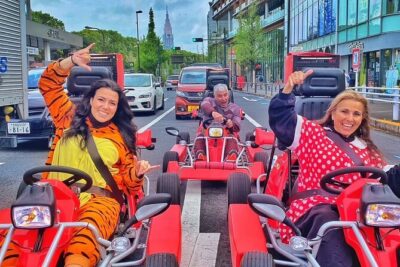
The key moment is the ride through Shibuya Crossing. From the pavement, the crossing is a famous city spectacle. From a go-kart, you experience the timing, movement, and attention of the intersection in a much more direct way.
The guide leads the group through the area rather than leaving you to navigate alone. Clear signals and a steady pace are important here, and the tour places strong emphasis on the safety briefing before departure. You still need to drive responsibly, but you are not working out the route by yourself.
The crossing is also the point where costumes and photography make the most sense. You may attract curious looks, and the guide can take pictures at suitable points along the route. The included digital delivery by AirDrop or email means you do not have to wait for a printed album or download a complicated file. One hard copy photo is also provided.
Keep your expectations realistic. You are passing through the crossing as part of a road route, not stopping in the middle for a long photo session. The memorable part is the combination of location and motion: you are actually driving through central Shibuya instead of only posing beside it.
Shinjuku and the central Tokyo streets
After Shibuya, the route continues toward Shinjuku and nearby central neighborhoods. This gives you a broader view of Tokyo than a single landmark stop would provide. You see tall buildings, busy roads, commercial streets, and the changing character of the city as the route moves north.
Several rides have used tunnels or open stretches of road as part of the experience. One account described the tunnel section as especially thrilling, while another noted that the karts felt faster than expected. That is useful context: this is not a slow amusement-park circuit.
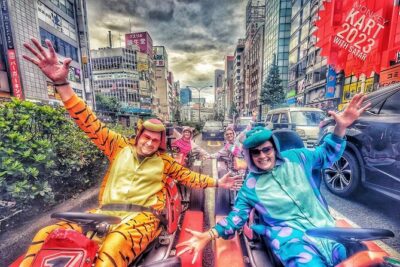
The exact road experience depends on traffic, weather, time of day, and the guide’s chosen route. You might find the night ride more dramatic, with city lights and illuminated buildings creating stronger photographs. Daytime offers clearer views and may feel easier if you want to see street details.
Night tours can feel more exciting, but they also ask more of you as a driver. Visibility, traffic, and the bright signs of Shinjuku can make the city feel intense. The guide’s pace and signals are especially important, and the small group helps keep the convoy orderly.
The route does not replace a proper visit to Shinjuku or Harajuku. You are seeing these districts from the road, without time to explore their shops, shrines, department stores, or restaurants. Think of it as a moving overview and a memorable way to connect areas you may already plan to visit on foot.
A few more Tokyo tours and experiences worth a look


Costumes, cameras, and the photo package
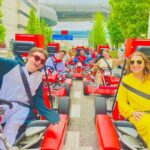
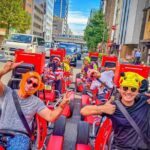
At $103 per person, this is not a cheap way to cover Tokyo’s streets. You are paying for a guided road activity, not simply transportation between districts. The price includes the kart, guide, costumes, water, photography, digital images, a printed photo, and an action camera or Insta360 mount.
I find the value strongest for people who want an unusual shared activity. If you are comparing it with a standard sightseeing bus, the kart offers far more participation. If you are comparing it with a short rental or a theme-park ride, the cost may feel high, but the route through actual Tokyo streets is the feature you cannot easily reproduce.
The photo service adds real value. Driving safely means you cannot take your own pictures while moving, so having the guide photograph the group solves a practical problem. Guides such as Lewis, Rakesh, Mirko, Gus, and others have been praised for combining route leadership with photography and friendly interaction. The specific guide depends on the day.
The hard copy is a small but pleasant extra. Digital pictures are more useful for sharing, while the printed image works as a simple souvenir. You should confirm how the files will be delivered at the end, especially if your phone does not accept AirDrop. Email is also offered.
Safety, speed, and comfort on Tokyo roads
You need to be comfortable driving on public roads. The experience is designed to be orderly, with a briefing before departure and guide signals during the ride. Several participants have described feeling well looked after, and the small group helps the guide monitor the convoy.
That does not mean the activity is risk-free. You are exposed to traffic, weather, road conditions, and the normal demands of driving. The karts may feel faster than expected, particularly in a tunnel or on a clearer stretch. Follow the guide rather than treating the ride like a race.
Alcohol is not allowed in the vehicle. You should arrive sober, alert, and ready to handle the kart. Pregnant people, drivers under 18, and people over 95 are not permitted to take part.
Rain can lead to rescheduling. Tokyo weather can change quickly, so avoid placing this activity immediately before a fixed evening reservation if your schedule has no room to move. Free cancellation is available up to 24 hours in advance, and the reserve-now, pay-later option gives you some flexibility when arranging your plans.
The driving permit rule you cannot ignore
The most important booking detail is the driving document. Every driver must bring a hard-copy paper booklet of a 1949 Geneva Convention International Driving Permit issued by the official agency in their home country, such as AAA, AA, CAA, or another authorized organization.
Japan does not recognize every international permit. Documents issued under the 1968 Vienna Convention are not accepted, and neither are permits from IDA or IAA. Online copies, photocopies, and card-style licenses are also invalid.
Drivers with licenses from France, Switzerland, Taiwan, Germany, Monaco, or Belgium need a Japanese translation of their local license. The physical translation can be obtained through the Japan Automobile Federation.
The supplied information also warns that permits from Indonesia, Pakistan, Saudi Arabia, Mexico, Brazil, Costa Rica, Colombia, Kuwait, Qatar, and some other countries may not allow driving in Japan. Check your eligibility before leaving home. Do not assume that a document called an international driving permit will automatically work.
This is not a detail to solve at the meeting point. Obtain the correct permit before your trip and bring the physical original.
How long is 75 minutes in practice?
The advertised duration is 75 minutes. That is long enough to make the activity feel like a proper city outing rather than a short photo loop, but it is not a full afternoon tour.
The time includes preparation, the briefing, choosing costumes, organizing the group, and the ride itself. One recent booking recorded 57 minutes of driving within the 75-minute experience, so you should not assume every minute will be spent on the road.
That distinction matters if you are booking around lunch, a museum entry, or a train departure. Allow extra time for arrival and return, and avoid scheduling something immediately afterward. The route is more valuable for its unusual setting than for the number of minutes spent driving.
Who will enjoy this most?
I would choose this for a first visit to Tokyo if you want one activity that feels different from the usual temples, observation decks, and food tours. It also works well for couples, friends, and families with adult drivers who enjoy a little theater and a little speed.
It suits you especially well if:
- You already plan to spend time around Shibuya and want a new angle on the district.
- You enjoy driving and can stay focused in city traffic.
- You want photos that show you doing something rather than simply posing at a landmark.
- You like costumes, playful group activities, and nighttime city views.
- You have the correct driving permit in hand.
I would skip it if your main goal is detailed sightseeing, shopping, or a relaxed explanation of Tokyo’s history. You will see a lot, but the guide’s first job is to lead the convoy safely. Commentary is part of the experience, not the central product.
Should you book the Monkey Adventure Kart tour?
Book it if you want the thrill of driving through real Tokyo streets, especially through Shibuya Crossing, and you are happy to pay for a memorable activity rather than efficient sightseeing. The combination of a five-person group, guide-led route, costumes, and included photos gives the experience more substance than a basic kart rental.
Before paying, check three things: your permit meets Japan’s exact rules, your schedule can handle a rain-related change, and you are comfortable driving in traffic. If all three are fine, this is a lively way to connect Harajuku, Shibuya, and Shinjuku in one unusual outing.
FAQ
How long is the Tokyo go-kart tour?
The listed duration is 75 minutes. The booking includes preparation and a safety briefing, so the entire time is not necessarily spent driving.
What areas does the route visit?
The route includes Harajuku, Shibuya Crossing, Shinjuku, and nearby central Tokyo neighborhoods.
Is Shibuya Crossing included?
Yes. Driving through Shibuya Crossing is one of the main features of the tour.
What is the group size?
The tour is limited to five participants.
Is the tour guided in English?
Yes. An English-speaking live guide leads the activity.
Are costumes included?
Yes. Costumes and accessories are included, and you can choose to dress up before the ride.
Are photos included in the price?
Yes. The guide takes photos, and the images are shared digitally through AirDrop or email. One hard copy photo is also included.
What driving permit do I need?
You need the original hard-copy paper booklet of a 1949 Geneva Convention International Driving Permit issued by the official agency in your country.
Can I use an online copy or a card-style international license?
No. Online copies, Xerox copies, and card licenses are not valid for this activity in Japan.
Can the tour be canceled or rescheduled?
You can cancel up to 24 hours in advance for a full refund. The tour may also be rescheduled because of rain.
More Guided Tours in Tokyo


More Go-Kart Tours in Tokyo
More Shibuya Tours in Tokyo

More tours in Tokyo we've reviewed


Go-Karts, compared.
 ★ 5.0Flagship 2-Hours Official Street Go-Kart Tour – Tokyo Bay ShopFrom $642 hours to 2 hours 30 minutes (approx.)
 ★ 5.0Official Street Go-Kart in ShibuyaFrom $76
 ★ 5.0Official Street Go-Kart Tour – AkihabaraFrom $61
 ★ 5.0Tokyo Go Kart: Asakusa, Skytree, and Akihabara **IDP MUST**From $99
 ★ 5.0Shibuya Official Street Go-Kart in Shibuya AnnexFrom $69
 ★ 4.7Tokyo: Asakusa, Skytree & Akhihabara Go-Kart City ExperienceFrom $961h 10m