
Reviewed · GO-KARTS
Akihabara: Go-Kart Experience with Local Guide in Tokyo
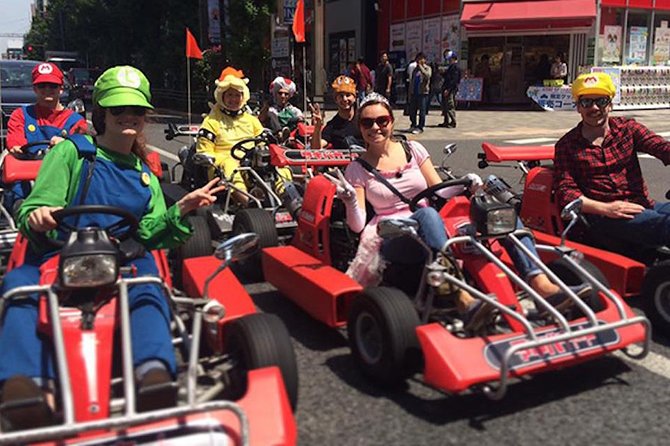
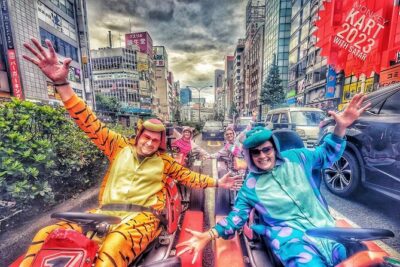
Tokyo’s streets become your sightseeing route on this unusual one-hour go-kart ride through Akihabara. You follow a local guide past neon electronics shops, manga stores, and anime-themed streets, while people on the sidewalks may wave at your costume-clad convoy.
I like the city-at-night views, especially on an evening departure when Tokyo’s signs and high-rises begin to glow. I also like the guide’s role: you are not left to find your way through traffic, and the guide can respond to requests for favorite places and take photos when the group stops at traffic lights.
The main catch is serious: your license paperwork must be exactly right. You also need to arrive early, fit the height and weight limits, and accept that a one-hour booking may include plenty of time sitting at red lights.
In This Review
- Key points before you book
- Meeting in Akihabara and getting ready to drive
- The license rules are the real booking test
- Driving through Akihabara’s neon streets
- What the one-hour route can and cannot cover
- Why evening departures work so well
- Safety on public Tokyo roads
- What the $72.66 price buys you
- Who will enjoy this most
- Booking details that can save you trouble
- Should you book the Akihabara go-kart ride?
- FAQ
- How long does the Akihabara go-kart experience last?
- Where does the activity start and finish?
- Do I need an international driving permit?
- Are foreign driver’s licenses accepted?
- What happens if I arrive without the correct license documents?
- Is there a minimum age?
- Are there height and weight limits?
- Are costumes included?
- Can the tour be canceled because of rain?
Key points before you book
- A valid Japanese driving document is essential: Bring a Japanese license, an approved Geneva Convention international driving permit with your passport, or one of the other accepted document combinations.
- The route is flexible but not guaranteed: You can ask the guide to show favorite places, but the one-hour tour may not cover every major Tokyo sight.
- The safety lesson takes 15 to 20 minutes: Arrive at least 10 minutes before your start time, then allow time for the briefing before driving.
- Each kart carries one person: Groups are limited to about five or six at a time, with a maximum of seven participants for the activity.
- Costumes are included, but Mario costumes are not: Options can add fun and make you easy to spot, though cleanliness and selection may vary.
- Night rides offer the strongest atmosphere: Evening departures bring neon streets and city lights, while earlier starts offer daylight views.
Meeting in Akihabara and getting ready to drive
You meet at Akiba CartJapan, in Building Sasage B1F at 2-chōme 4-6 Sotokanda, Chiyoda City, Tokyo 101-0021. It is a short walk from Akihabara Station and near public transportation, but finding the entrance can take more effort than expected.
The address is useful, yet the venue may not have a large sign outside. Give yourself extra time to locate the building and basement entrance. One practical tip is to use Google Maps rather than relying only on written directions or GPS coordinates. Being late is costly here. The group cannot wait for stragglers, and a late arrival may mean losing the booking without a refund.
At check-in, you present your driving documents, receive your kart, and choose a costume. The karts are single-person vehicles, so you drive your own machine rather than sharing with a partner. The small group size helps the guide keep an eye on everyone, though the experience still takes place on public Tokyo roads.
Before departure, you attend a mandatory safety lecture lasting about 15 to 20 minutes. This is not filler. You need to understand the controls, traffic behavior, and the importance of staying with the guide. If you are nervous about driving on the opposite side of the road, an early Sunday morning slot may feel less stressful because traffic can be lighter, but you still need to pay close attention.
The activity calls for a moderate level of physical fitness. You must be at least 18 years old, between 150 and 185 centimeters tall, and weigh less than 100 kilograms. High heels are not recommended. There are no multi-person karts, so every participant needs to meet the requirements and drive independently.
A few more Tokyo tours and experiences worth a look


The license rules are the real booking test
Do not treat the license requirement as a small footnote. If you arrive without the correct documents, you cannot participate, and the stated policy says no refund will be provided.
You may use one of these options:
- A Japanese driver’s license issued by a Japanese public safety commission.
- An international driving permit issued under the Geneva Convention, together with your passport.
- A license from Switzerland, Germany, France, Belgium, Monaco, or Taiwan, along with an approved Japanese translation and your passport.
- A SOFA driver’s license for USFJ personnel. A military ID or military driver’s license is not accepted.
The permit must be the correct kind. International permits based on the Paris Convention, Washington Convention, or Vienna Convention are not recognized for this activity. If you are unsure, send a copy of your document to the operator before you go and ask them to check it.
For licenses from the listed countries, the Japanese translation must come from the relevant embassy or consulate in Japan or the Japan Automobile Federation. Taiwanese licenses have additional translation rules involving the Japan Automobile Federation or the East Asia Relations Commission.
There is also a one-year limit for certain foreign licenses, counted from your date of landing in Japan or until the license expires, whichever comes first. Re-entry rules can affect how that landing date is treated. This is the sort of detail worth checking before you pay, not at the basement counter.
Driving through Akihabara’s neon streets
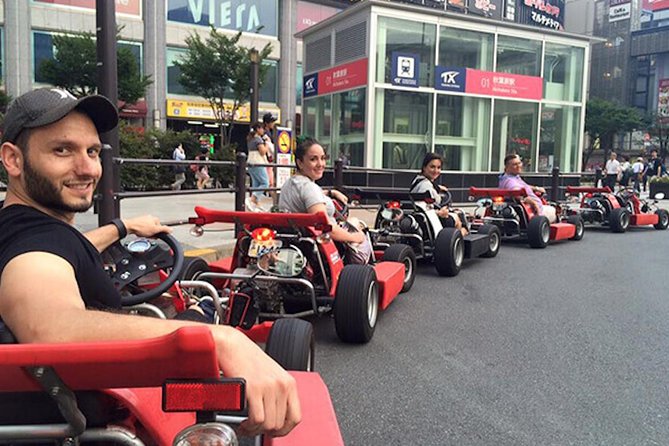
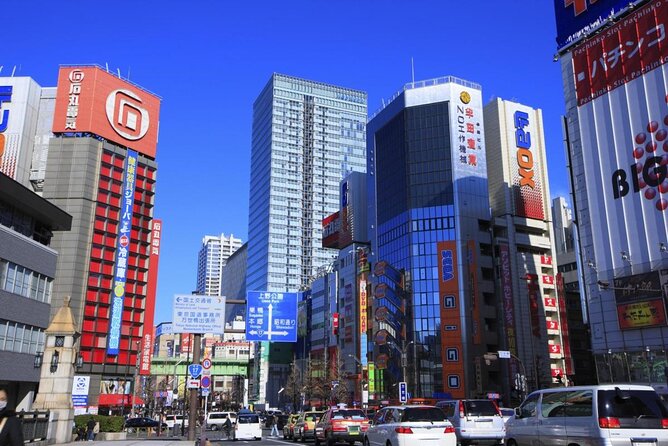
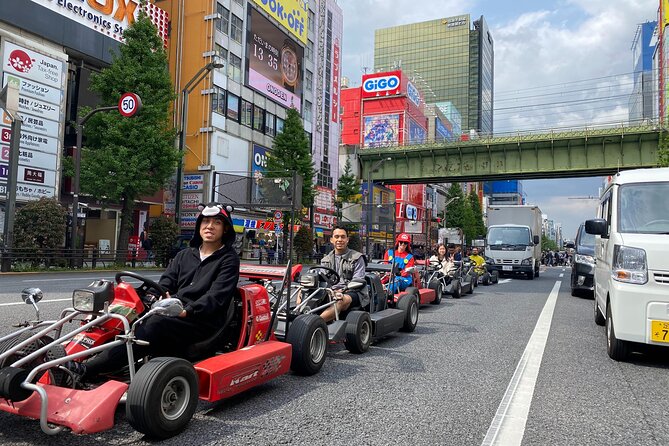
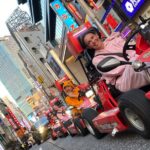
Once the briefing is complete, you follow the guide onto Tokyo’s roads. Akihabara is an entertaining starting point because its streets are lined with electronics shops, manga stores, and anime culture. Neon signs and colorful storefronts provide a very different view from a subway platform or walking tour.
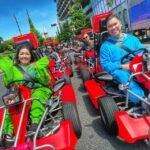
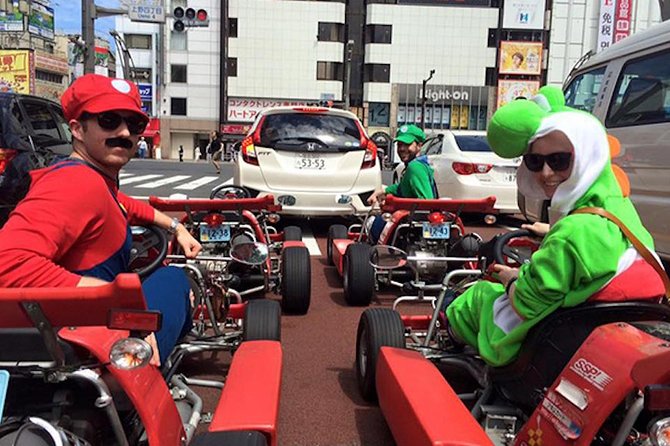
The costume adds to the spectacle. You may choose a character-inspired outfit and find pedestrians, including children, waving as the karts pass. That reaction is part of the fun, but you should know what is not included: there are no Mario costumes. The activity is often associated with Mario Kart imagery, yet the current costume selection is not the classic Mario option.
Costume availability and condition can vary. One person found the clothing useful for warmth in winter, while another was disappointed by the selection and cleanliness. In hot weather, wearing a full costume can feel uncomfortable. Pick a simple outfit if the day is warm, and do not book this expecting a polished costume wardrobe.
The guide leads the group through the streets and helps keep the ride orderly. English-speaking guidance has been praised, and the guide’s job includes watching the group, helping with safety, and stopping for photographs. You may place a phone in a kart storage area for use at red lights, but the simplest approach is to let the guide take pictures.
What the one-hour route can and cannot cover
The route is designed to show you Tokyo from the road rather than deliver a fixed sightseeing lecture. The guide can respond to requests and show favorite places within the time available. That flexibility is useful if you want to focus on Akihabara or nearby sights.
Still, a one-hour drive is short. You spend part of it in the safety briefing, and the driving portion includes traffic signals. One booking found that about half of the driving time was spent waiting at lights. That is normal for a road-based activity in Tokyo, but it changes the value calculation.
You may pass major sights and neighborhoods on this side of the city, but the route is not guaranteed to include Tokyo Tower or every famous photo stop. Some riders loved the selection of sights, while another found the route too random and wanted more narration about the places along the way. If you want detailed cultural explanation at each stop, this is not the right substitute for a walking tour.
Think of the ride as moving city scenery with a guide, not a standard attraction-by-attraction tour. You get the thrill of being on the road, the chance to see large buildings from street level, and photo pauses at useful points. You do not get a promise of a particular landmark route unless the guide confirms it.
A two-hour option appears to be available at some times, and that length gives the guide more room to cover different parts of Tokyo. A two-hour evening ride can show both daylight and night lighting depending on the season and start time. If sightseeing value matters as much as the kart itself, the longer option is probably the better choice.
Why evening departures work so well
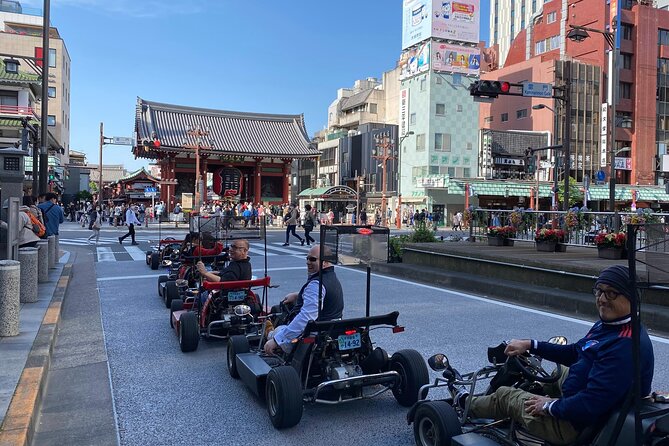
Night is the strongest match for this activity. Akihabara’s signs, shop fronts, and high-rise views give the ride its visual punch. The city can look especially striking around dusk, when you move from daylight into illuminated streets.
Traffic levels matter. Some evening rides have had light traffic, which means more continuous driving instead of repeated stop-and-go movement. That is not guaranteed, but Akihabara may feel less clogged than routes through Shibuya.
An early morning booking has its own advantage. It may help you feel calmer if you are new to driving in Japan, and lighter traffic can make it easier to concentrate. You lose some of the neon effect, though. I would choose dusk or evening for atmosphere and early morning for confidence.
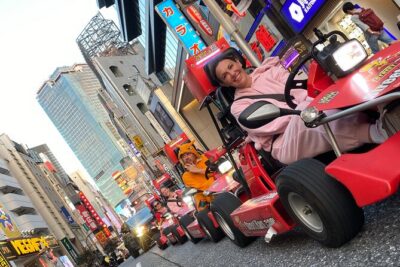
Your guide may take photographs during stops at red lights or other safe pauses. This is a real value point because taking pictures while driving would distract you and create a safety problem. You can concentrate on the road while still going home with images of the costume, kart, and city around you.
A few more Tokyo tours and experiences worth a look

Safety on public Tokyo roads
The karts are easy enough to operate once you understand them, but this is still road driving. You are not circling a closed track. You must follow the guide, watch traffic, obey signals, and remain alert for the full ride.
The guide stays responsible for the group and watches to make sure everyone is safe. That structure helped nervous drivers feel more comfortable, especially people coming from countries that drive on the other side of the road. Japanese drivers were described as careful and respectful, but that should never replace your own attention.
You may notice mechanical sounds such as squealing brakes. That can be normal for go-karts, though it may surprise you at first. If you have concerns during the safety lesson, ask before leaving the meeting point.
Weather is another factor. The activity requires good weather, and poor conditions can lead to a date change or full refund. If the forecast looks uncertain, check the cancellation terms before deciding to go ahead. Voluntary late cancellation is handled differently from an operator cancellation caused by weather.
What the $72.66 price buys you
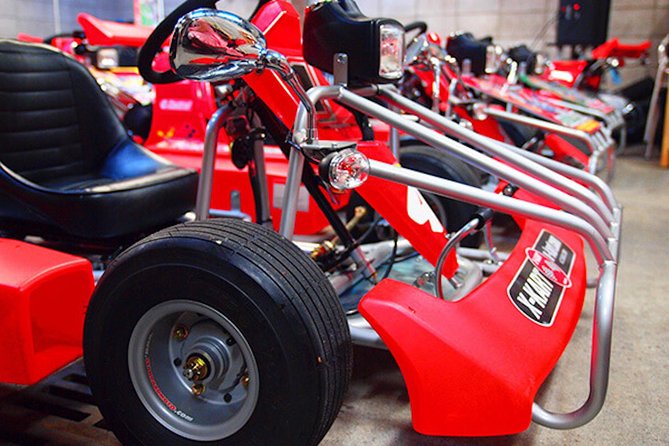
At $72.66 per person, the price covers the kart for the selected duration, insurance, a local guide, and a costume. Food, drinks, hotel pickup, and hotel drop-off are not included.
For one hour, the price is reasonable only if you value the unusual format. You are paying for the kart, road access, guide support, insurance, costume, and a photo-friendly route. You are not paying for a long, detailed tour of Tokyo’s landmarks. The time spent at traffic lights also means the actual moving time may feel shorter than the headline duration.
The value improves for a two-hour booking if one is offered for your date. You have more time to reach different neighborhoods, handle traffic delays, and stop for pictures without feeling rushed. If you want only the novelty of driving a kart in Akihabara, one hour may be enough. If you want the ride to function as sightseeing, I would favor two hours.
There is also a group-size advantage. With five or six people in a slot, the guide can keep the convoy manageable. A solo booking can still work and may feel personal, with more attention for photos and route requests. The maximum activity size is seven, so this is not a huge group tour.
Who will enjoy this most
You should consider booking if you enjoy unusual city activities, anime culture, nighttime photography, and the simple thrill of operating a small vehicle on Tokyo streets. It suits adults who meet the license, height, and weight rules and who are comfortable following instructions in traffic.
It is also a good fit for couples and small groups. Each person drives separately, so you share the outing rather than sit together in one kart. Solo riders can take part too, and the guide can help make the ride feel personal.
You may want another activity if you dislike attention from pedestrians, feel uneasy driving in a foreign country, or want a serious historical and cultural explanation of Tokyo. The costumes make you conspicuous, and the route can feel less focused than a carefully planned sightseeing walk.
Families with children cannot book this as a group activity unless every participant meets the minimum age of 18. It is an adult-only experience, and there are no passenger seats for younger companions.
Booking details that can save you trouble
Arrive at least 10 minutes before the scheduled start. I would aim for even earlier because the basement meeting point can be difficult to spot, and missing the start may mean no ride and no refund.
Bring your passport whenever the permit rules require it. Carry the original documents, not just photographs on your phone. If your license falls into the foreign-license category, arrange the Japanese translation before arriving in Japan.
Cancellation terms are strict. Cancel at least six full days before the start time for a full refund. Cancellation two to six full days ahead provides a 50 percent refund, while cancellations under two full days are nonrefundable. Changes follow the same cutoff structure. Poor weather is treated separately, with a different date or full refund offered if the operator cancels.
The activity ends where it begins, at the Akiba CartJapan meeting point. Plan your next stop from Akihabara rather than expecting a hotel transfer.
Should you book the Akihabara go-kart ride?
Book it if you want a playful, camera-friendly way to see Tokyo from the road and you already have the correct driving documents. The strongest reasons are the neon city views, small groups, guide-led safety, costumes, and the chance to request places within the available time.
Choose a two-hour slot if your goal is sightseeing rather than a quick novelty ride. Choose an evening time for lights and atmosphere, or an early morning slot if quieter roads matter more to you.
I would skip it if the licensing rules are unclear, you dislike public attention, or you expect a guaranteed Tokyo Tower route and detailed commentary. Check the documents first, locate the basement entrance early, and treat the ride as a fun road adventure, not a full city tour. With those expectations, the $72.66 can be a fair price for one of Tokyo’s more unusual outings.
FAQ
How long does the Akihabara go-kart experience last?
The listed experience lasts about one hour. A mandatory safety lecture of roughly 15 to 20 minutes takes place before you drive, and longer booking options may be available at some start times.
Where does the activity start and finish?
You meet at Akiba CartJapan in Building Sasage B1F, 2-chōme 4-6 Sotokanda, Chiyoda City, Tokyo 101-0021. The activity ends back at the same meeting point.
Do I need an international driving permit?
You need a Japanese driver’s license or another approved document that permits driving an automobile in Japan. An approved Geneva Convention international driving permit must be presented with your passport.
Are foreign driver’s licenses accepted?
Licenses from Switzerland, Germany, France, Belgium, Monaco, and Taiwan may be accepted with an approved Japanese translation and passport. The translation requirements differ by country.
What happens if I arrive without the correct license documents?
You will not be allowed to participate if you cannot present the required documentation at check-in. The stated policy says no refund will be provided in that situation.
Is there a minimum age?
Yes. You must be at least 18 years old.
Are there height and weight limits?
Yes. You must be between 150 and 185 centimeters tall and weigh less than 100 kilograms.
Are costumes included?
Yes. A costume to wear while driving is included, but Mario costumes are not available. High heels are not recommended.
Can the tour be canceled because of rain?
The activity requires good weather. If the operator cancels because of poor weather, you will be offered another date or a full refund.
More Guided Tours in Tokyo




More Go-Kart Tours in Tokyo
More Akihabara & Anime Tours in Tokyo



More tours in Tokyo we've reviewed







Go-Karts, compared.
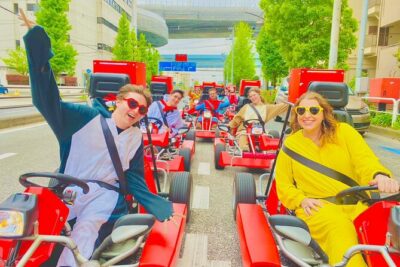 ★ 5.0Flagship 2-Hours Official Street Go-Kart Tour – Tokyo Bay ShopFrom $642 hours to 2 hours 30 minutes (approx.)
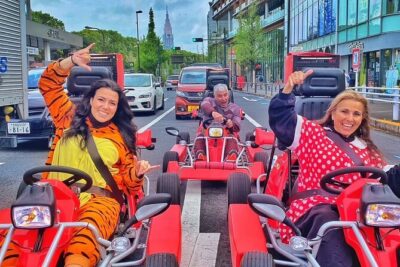 ★ 5.0Official Street Go-Kart in ShibuyaFrom $76
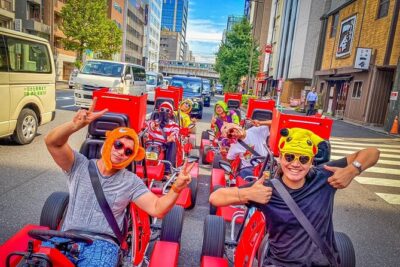 ★ 5.0Official Street Go-Kart Tour – AkihabaraFrom $61
 ★ 5.0Tokyo Go Kart: Asakusa, Skytree, and Akihabara **IDP MUST**From $99
 ★ 5.0Shibuya Official Street Go-Kart in Shibuya AnnexFrom $69
 ★ 4.7Tokyo: Asakusa, Skytree & Akhihabara Go-Kart City ExperienceFrom $961h 10m