
Reviewed · IMPERIAL PALACE & SHOGUN TOURS
Tokyo Imperial Palace:Guided Walking Tour of East Gardens
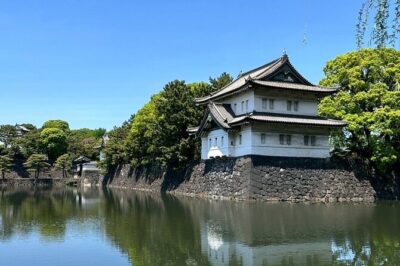
Tokyo’s Imperial Palace hides a surprising amount of samurai-era history behind its quiet gardens and massive stone walls. This two-hour walking tour brings that past into focus, from the Sakurada Tatsumi Yagura watchtower to the remains of Edo Castle.
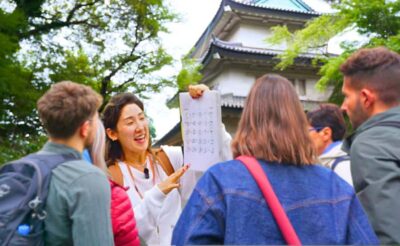
I like the small maximum group of eight, which should make it easier to hear the guide and ask questions. I also like that guides such as Taro explain the political and military story behind the palace, rather than simply pointing out attractive gardens. The main drawback is that palace access can change, and one booking went ahead with alternative sights when the palace was closed.
In This Review
- Key points to know before you book
- Why the East Gardens tell Tokyo’s story so well
- Meeting at Wadakura Fountain Park
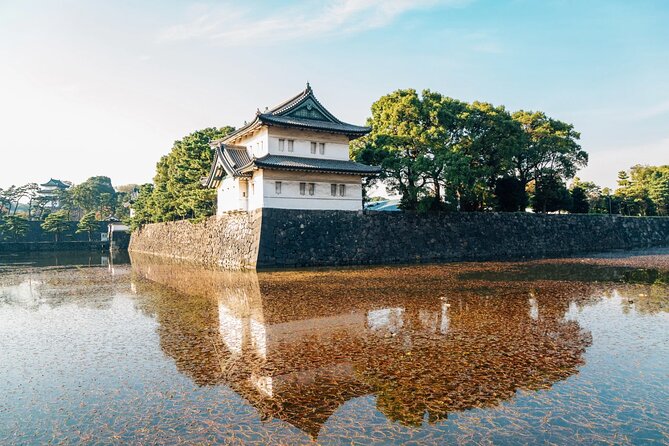
- Sakurada Tatsumi Yagura, a surviving Edo Castle watchtower
- The Imperial Palace and the modern role of the site
- East Gardens and the Edo Castle ruins
- What the small group changes
- Heat, pacing, and the practical side of the walk
- Is the $0.39 price really the main attraction?
- Who will get the most from this walk?
- My booking verdict
- FAQ
- How long does the Imperial Palace East Gardens tour last?
- Where does the tour begin?
- Where does the tour end?
- What places are included?
- Is admission included?
- Is the tour conducted in English?
- How many people can join the tour?
- Can the Imperial Palace be closed during the tour?
- Is the tour near public transportation?
- Can I cancel for a full refund?
Key points to know before you book
- A small group of up to eight: You get a more personal walk than on a large coach-style outing.
- Three history-rich stops: The route includes Sakurada Tatsumi Yagura, the Imperial Palace area, and the former Edo Castle site in the East Gardens.
- English-speaking guidance: Taro is one named guide, and the tour focuses on context about emperors, samurai, and political power.
- A central Tokyo setting: The meeting point is Starbucks Coffee at Kokyo Gaien Wadakura Fountain Park, near public transportation.
- Free cancellation up to 24 hours ahead: Late changes or cancellations do not qualify for a refund.
- An unusually low listed price: At $0.39 per person, the value looks extraordinary, but confirmation remains subject to availability.
Why the East Gardens tell Tokyo’s story so well
The Imperial Palace is not only a royal residence. It occupies ground tied to Edo Castle, the center of political power during the shogun era. That gives the walk two layers: the modern imperial institution and the older world of samurai rule.
You move through stone ruins, gates, moats, watchtowers, and planted garden paths. The setting is peaceful, but the subject is not merely decorative. These walls and towers hint at defense, authority, ceremony, and the long shift from military government to the modern Japanese state.
I find guided context especially useful here because many ruins can look like simple stonework at first glance. A good explanation helps you understand why a tower was placed where it was, how Edo Castle shaped Tokyo, and why the palace still matters today.
The tour is also a sensible choice if you want a short historical outing rather than a full-day museum visit. Two hours is long enough to build a clear picture of the site without taking over your day.
A few more Tokyo tours and experiences worth a look

Meeting at Wadakura Fountain Park
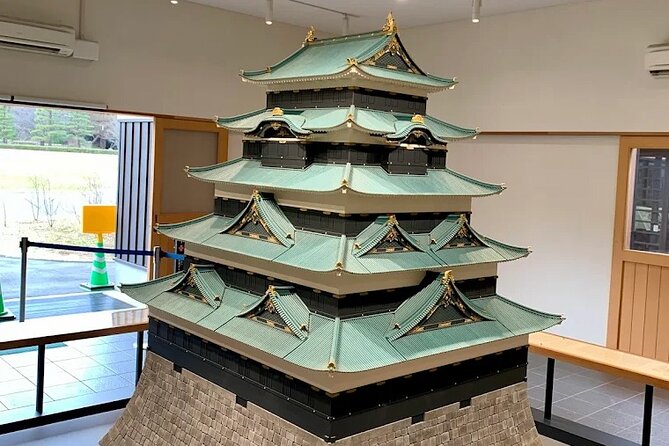
The walk begins at Starbucks Coffee in Kokyo Gaien Wadakura Fountain Park, at 3-1 Kōkyogaien, Chiyoda City. The area is central and near public transportation, which makes it a practical starting point for a sightseeing day around Tokyo’s major civic and imperial landmarks.
You should allow enough time to find the meeting point. The supplied details identify the Starbucks clearly, but they do not give a more precise instruction about where the guide waits or how the guide will identify the group. Since confirmation can take up to 48 hours and depends on availability, check your booking message before setting out.
The tour finishes back at the same meeting point. That is useful if you want to continue exploring central Tokyo afterward, since you are not left at an unfamiliar end point.
Sakurada Tatsumi Yagura, a surviving Edo Castle watchtower
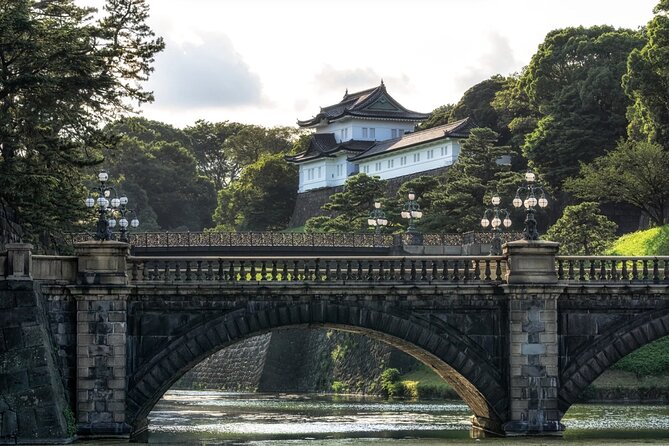
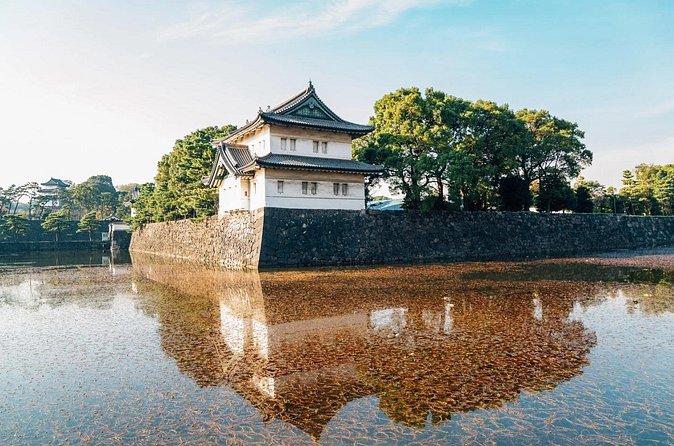
The first main stop is Sakurada Tatsumi Yagura, also called Sakurada Nijū Yagura. This historic watchtower dates from the Edo period and is one of the few remaining structures connected with the old castle complex.
Expect to spend about 30 minutes here. The value of this stop is not just the tower itself. It gives your guide a natural place to explain how Edo Castle worked as a fortified seat of power and how watchtowers fit into that system.
The name may sound technical, but that is exactly where a guide helps. You can ask questions about the tower’s purpose, its position within the palace grounds, and the difference between seeing a surviving structure and looking at a later reconstruction.
This is also a good early stop because it sets the tone for the rest of the walk. You begin with a physical reminder of the castle era, then move toward the wider imperial and garden areas.
One practical point: the tour is on foot, and the route includes paths around historic grounds. Wear shoes you can walk in comfortably. The supplied information does not promise indoor shelter or air conditioning, and one tour took place in very hot weather, so bring water and plan clothing for the season.
The Imperial Palace and the modern role of the site
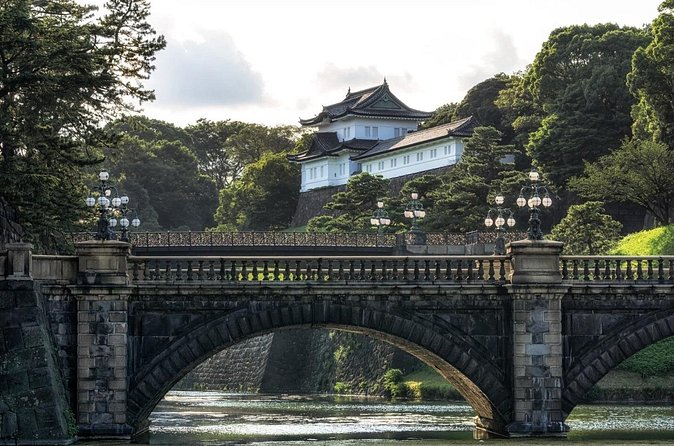
The second stop is the Imperial Palace, the primary residence of the Emperor of Japan. It is one of Tokyo’s best-known landmarks, surrounded by gardens, moats, and heavy stone walls.
The scheduled time here is about 30 minutes. You should think of this part as an exterior-focused visit unless your confirmation says otherwise. The details provided do not promise access to palace interiors, private areas, or a formal audience.
That distinction matters. The appeal lies in seeing the setting and learning how the palace fits into Japan’s national story. Your guide can connect the present-day imperial residence with the older castle grounds and explain how the meaning of the site changed over time.
Palace access can be affected by closures. A guide has previously continued with attractive nearby places and historical explanations when the palace itself was closed, but you should not book this tour expecting guaranteed entry to every part of the complex.
I see that as the key condition of the experience. If your goal is simply to enter a specific building, this walk may disappoint when access changes. If you want a guided explanation of the wider grounds, walls, gardens, and historical setting, the tour has more flexibility.
East Gardens and the Edo Castle ruins
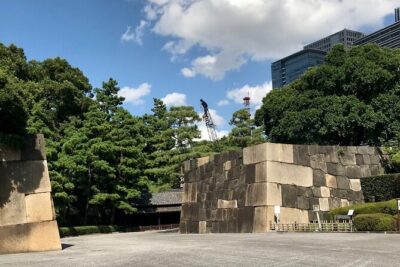
The third stop is the East Gardens of the Imperial Palace, located on the former site of Edo Castle. These gardens are open to the public and include old gates, stone walls, ruins, and carefully planted paths.
About 30 minutes is scheduled here, though the full two-hour experience includes walking and transitions between stops. This is likely the most rewarding section for anyone interested in the castle period because the ruins make the earlier story tangible.
You can expect a contrast between quiet greenery and stark masonry. The gardens offer a break from Tokyo’s busy streets, but the stone foundations and defensive remains keep the focus on the site’s former role.
The guide’s explanation is important here. Without context, you may see a wall, a gate, or a ruined foundation without knowing what it once controlled or protected. With an English-speaking guide, you can ask for the larger political story, including the roles of emperors, samurai warriors, and the leaders who shaped Japan through different periods.
The gardens are also a strong choice for photographers, though the tour is not presented as a photography walk. Your time is shared with the group, and the purpose is historical interpretation rather than waiting for the perfect frame.
Other walking tours we've reviewed in Tokyo



What the small group changes
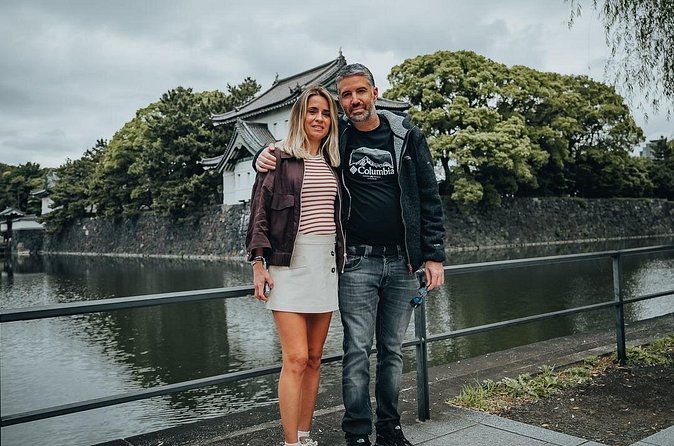
A maximum of eight people is one of the clearest advantages. You are less likely to lose the guide in a crowd, and questions should be easier to handle than on a large group tour.
Small groups also suit this kind of site. The palace grounds are spread out, and a guide may need to explain details while standing near walls, towers, or garden paths. A compact group can listen without creating much disruption.
The trade-off is that the tour’s quality depends strongly on the individual guide. Taro is specifically praised for making the history interesting even in extreme heat. That suggests a conversational approach with useful context, but guide assignments can vary, and no particular guide is guaranteed.
The second review also praised the guides for providing good information despite a palace closure. I would treat that as an encouraging sign of flexibility, not a promise that every guide or every altered route will feel identical.
Heat, pacing, and the practical side of the walk
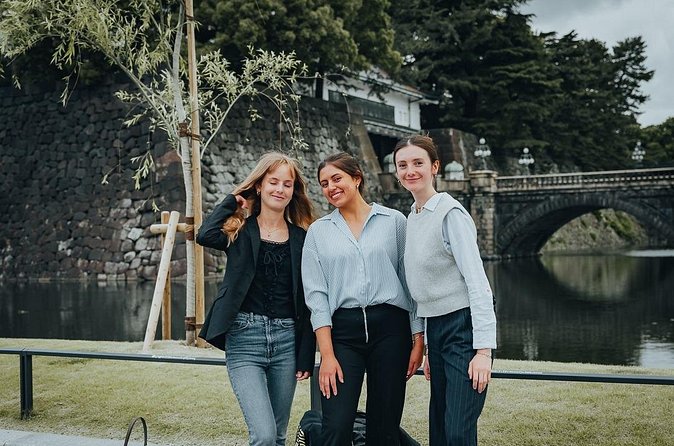
Tokyo can be intensely hot, and the route takes place outdoors. A past outing remained engaging in very hot conditions, but heat is still a real consideration. Choose light clothing, carry water, and consider booking a cooler part of the day if the available start times allow it. The provided details do not list exact departure times.
The tour lasts about two hours. That is manageable for most people who are comfortable walking, and the additional information says most people can participate. Still, this is not a seated sightseeing activity. You should expect to spend much of the time moving between historical points or standing while the guide speaks.
The route’s physical difficulty is not specified, so I would avoid promising that every path is perfectly flat or that there are no steps. Anyone with specific mobility needs should confirm directly before booking.
Because the end point is the start point, you can plan lunch, shopping, or another central Tokyo visit afterward. The tour does not include a separate meal or a longer transfer to another district.
Is the $0.39 price really the main attraction?
The listed price of $0.39 per person is so low that it should be treated carefully. If that price is available and your booking is confirmed, the value is remarkable: you receive roughly two hours of guided history, a small group, and access to public Imperial Palace grounds for less than the cost of a drink.
The important phrase is subject to availability. Confirmation may arrive within 48 hours, so do not build an unchangeable schedule around the booking until it is confirmed.
The low price may also indicate that this is a test tour. The provider, YURAGI, openly asks for feedback after the experience. That can mean you are helping a new or experimental product improve, rather than buying a long-established premium tour with a polished set of extras.
I would not expect the price to cover admission to a paid attraction because the listed stops show free admission. The value comes from the guide, the organization, and the historical explanation, not from a special ticket or private palace access.
Free cancellation helps reduce the risk. You can cancel for a full refund if you do so at least 24 hours before the local start time. Within 24 hours, refunds are not available, and late changes are not accepted.
Who will get the most from this walk?
I would recommend this tour to you if you want a short introduction to Tokyo’s imperial and samurai past. It suits first-time visitors who want historical orientation before exploring more of the city on their own.
It is also a good fit if you prefer questions and conversation to a recorded audio guide. The small group and English-speaking format give you a chance to ask about the castle ruins, the palace, or the meaning of the gardens.
Families and mixed-age groups may appreciate the two-hour length, though the outdoor setting and possible heat require sensible planning. Most people can participate, according to the supplied information, but exact accessibility details are not provided.
I would be more cautious if you need guaranteed palace entry, indoor attractions, or a fixed route that cannot change. The closure issue is the main uncertainty, and the tour’s strength is the broader historical setting rather than access to a single building.
My booking verdict
Book this walk if you want a compact, low-cost way to understand why the Imperial Palace and former Edo Castle matter. The best reasons are the small group, the surviving Sakurada Tatsumi Yagura, and the chance to connect garden scenery with Japan’s political past.
Before booking, confirm that the price is still valid and wait for confirmation before locking in other plans. If the palace closes, you should be comfortable with a flexible route led by the guide. For a patient history-minded visitor, that flexibility is a fair trade for a calm walk through one of Tokyo’s most important sites.
FAQ
How long does the Imperial Palace East Gardens tour last?
The tour lasts approximately two hours.
Where does the tour begin?
It begins at Starbucks Coffee in Kokyo Gaien Wadakura Fountain Park, 3-1 Kōkyogaien, Chiyoda City, Tokyo 100-0002, Japan.
Where does the tour end?
The activity ends back at the meeting point.
What places are included?
The route includes Sakurada Tatsumi Yagura, the Imperial Palace, and the East Gardens of the Imperial Palace at the former Edo Castle site.
Is admission included?
The listed admission for each of the three stops is free.
Is the tour conducted in English?
Yes. The experience is led by a professional English-speaking guide.
How many people can join the tour?
The group has a maximum of eight participants.
Can the Imperial Palace be closed during the tour?
Yes. Palace access can be affected by closure. If that happens, the guide may take the group to other suitable places and continue providing historical information.
Is the tour near public transportation?
Yes. The additional information says the meeting point is near public transportation.
Can I cancel for a full refund?
Yes, if you cancel at least 24 hours before the experience start time. Cancellations or changes made less than 24 hours ahead are not refunded or accepted.
More Guided Tours in Tokyo



More Walking Tours in Tokyo
More Imperial Palace & Shogun Tours in Tokyo

More tours in Tokyo we've reviewed






Imperial Palace & Shogun Tours, compared.
 ★ 5.0Tokyo: Imperial Palace and Shogun Historical Walking TourFrom $22
 ★ 4.9Tokyo: Imperial Palace Japanese History Walking TourFrom $32
 ★ 4.9Tokyo: Imperial Palace and Shogun Walking TourFrom $162 hours
 ★ 5.0Imperial Palace East Garden and Edo Castle Walking Tour in TokyoFrom $25
 ★ 4.8Tokyo: Imperial Palace East Gardens Walking TourFrom $192h 30m
 ★ 4.5Tokyo: Imperial Palace, Sensō-ji Temple, & Tokyo Tower TourFrom $404 hours