
Reviewed · IMPERIAL PALACE & SHOGUN TOURS
Tokyo: Edo Castle Ruins & Imperial Palace East Garden Tour
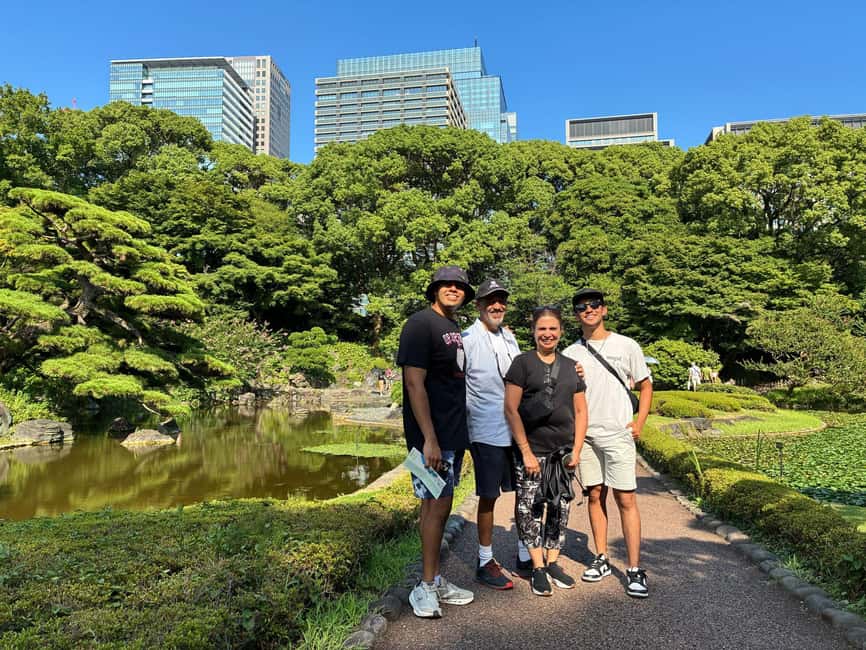
Tokyo’s Imperial Palace East Gardens are more than a pleasant green pause in central Tokyo. They occupy the former grounds of Edo Castle, where shoguns once ruled Japan and where massive stone walls, gates, guardhouses, and the castle keep site still tell the story. This two-hour walk links those pieces in a clear route.
I like the small-group format and the way the tour moves from Wadakura Fountain and the moat to Otemon Gate, then into the old castle compound. I also like the chance to see Ninomaru Garden and its koi pond after the heavier history. The main caution is simple: guide quality matters. Some guests praised Mari and Isao for patient, detailed explanations, while one found the walk too quiet and felt it could be done alone.
In This Review
- Key points at a glance
- Why Edo Castle is the real focus
- Meeting at Wadakura Fountain
- Passing through Otemon Gate
- Reading the Edo Castle ruins
- The castle keep model and Tenshu-dai views
- Suwa no Chaya and the East Gardens
- Finishing in Ninomaru Garden
- How much history will your guide provide?
- Price, timing, and practical value
- Who should book this walk?
- Should you book the Edo Castle tour?
- FAQ
- Where does the tour meet?
- How long does the tour last?
- Is the tour available in English?
- Does the tour enter the Imperial Palace buildings?
- What places are included on the route?
- What should I bring?
- Can I cancel the booking?
Key points at a glance
- Former shogun territory: Walk through the old Edo Castle grounds, including the Honmaru site and Tenshu-dai.
- A strong opening point: Meet at Wadakura Free Rest Area, then hear why the nearby fountain was built for a royal wedding.
- Samurai-era defenses: Otemon Gate, Ote-San-no-mon Gate Ruins, Doshin Bansho, and Hyakunin Bansho show how visitors were controlled.
- Garden time included: Ninomaru Garden offers a calm finish, with a pond and koi.
- English guidance: The tour is available with a live English-speaking guide, privately or in a small group.
- Know the limit: You do not enter the palace buildings or the inner grounds where the Imperial Family resides.
Why Edo Castle is the real focus
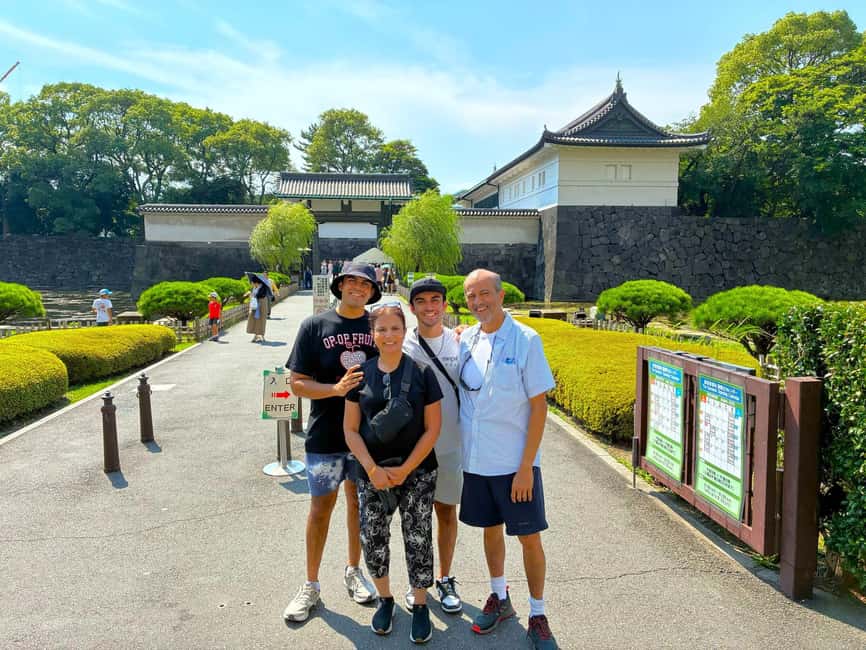
If you arrive expecting palace rooms, this tour needs a small adjustment in your thinking. You will not enter the Imperial Palace buildings, and the inner palace grounds are closed to the public. Instead, you walk through the East Gardens and the remains of Edo Castle, which gives you a better sense of the site’s earlier military and political role.
That change is not a weakness, but it should be clear before you book. The grand castle that once dominated this area is gone, yet its scale survives in the gates, moats, stonework, guard posts, and open spaces of the old compound. A guide helps connect those quiet remains to the shoguns and emperors who shaped Japan.
The route lasts about two hours and costs $37 per person. I consider that a fair price if you want context as you walk. Admission is included, and the guide turns a collection of walls and lawns into a story. If you already know Edo-period history and enjoy reading signs at your own pace, you may find the value less convincing.
A few more Tokyo tours and experiences worth a look

Meeting at Wadakura Fountain
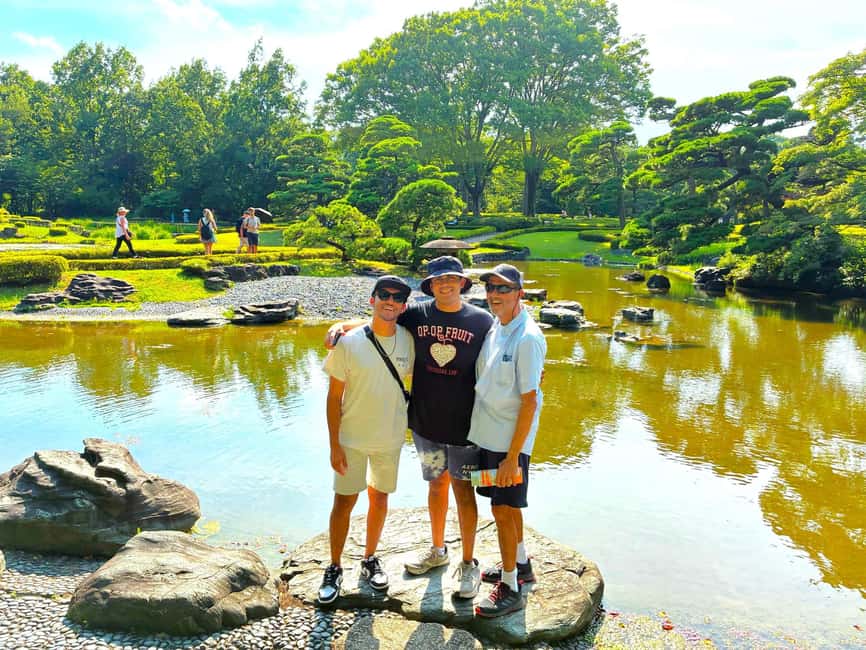
Your guide waits outside the Wadakura Free Rest Area, holding a yellow sign. This is an indoor rest stop, which makes it a practical meeting place in a busy part of Tokyo. The tour begins nearby at Wadakura Fountain National Park.
The fountain was built to commemorate a royal wedding. That detail gives the opening stop a useful link between modern Japan and the Imperial family. You spend about 10 minutes here, enough time to hear the story and get oriented before walking toward the castle grounds.
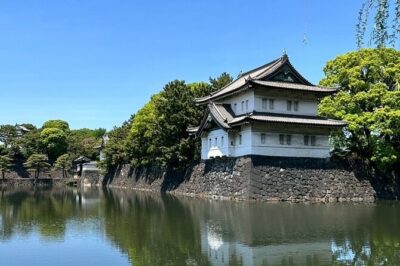
The next stop is Wadakura Moat, covered in about five minutes. It is a short segment, but it introduces the defensive planning of the site. In Edo Castle, water was not decorative alone. Moats helped separate the castle from the city and made access harder.
I would arrive a little early. The meeting point is specific, and the guide is identified by a yellow sign, but a few extra minutes will help you find the rest area without rushing.
Passing through Otemon Gate
Otemon Gate is one of the most important stops on the walk. This was a major entrance to Edo Castle, and its size helps you picture the power of the shogunate more easily than a history lecture alone.
The guide spends around 10 minutes here. Pay attention to the approach, not just the gate itself. The route through a castle entrance was designed to slow, screen, and control people. A large gateway could still be part of a careful defense system.
From Otemon, you continue to the Ote-San-no-mon Gate Ruins for another 10 minutes. The remaining traces may not deliver the visual drama of a complete fortress, but they reward a closer look. This is where a live guide can add real value, explaining how the gates fit together and why a visitor would not simply walk straight into the castle compound.
The tour then reaches Doshin Bansho and Hyakunin Bansho. These guardhouses bring the samurai story down to human scale. Rather than hearing only about shoguns and palace politics, you get a sense of the men assigned to watch entrances and protect the castle.
Hyakunin Bansho is especially useful as a reminder that security depended on people as well as walls. The name points to a guardhouse associated with a large number of guards. You spend about 10 minutes there, followed by another 10 minutes at the Doshin Bansho area as the route explains the castle’s defenses and samurai heritage.
Reading the Edo Castle ruins
The main Edo Castle Ruins section takes around 15 minutes. This is the point where the tour’s central idea comes together. You see what remains of a castle that once served as the seat of shogunal power, while the present-day Imperial Palace grounds continue the site’s political importance.
Do not expect a reconstructed fortress rising above the trees. The appeal here is the relationship between the open grounds, stone foundations, gates, and surrounding city. You can see how much land the castle required and why its position mattered.
The site of the Edo Castle Honmaru, or main hall, receives another 10 minutes. The Honmaru was the core of the castle compound, so this stop gives the ruins their clearest sense of purpose. Even without palace interiors, the location helps you picture where central ceremonies and administration once took place.
This is also where your guide’s style makes a difference. Isao has been praised for answering questions with a friendly manner, while Mari has been praised for explaining the palace and the country with patience and enthusiasm. Those names are useful when comparing guide availability, but no guide can guarantee that every group receives the same depth of commentary.
The castle keep model and Tenshu-dai views
The Edo Castle keep restoration model is a worthwhile stop because the actual keep is no longer there. A model gives you a visual aid for understanding what the original structure may have looked like and how imposing it was within the castle compound.
The visit then continues to the Tenshu-dai, the stone base associated with the castle keep. You get panoramic views of the surrounding area from here. The view is not the same as climbing a surviving tower, but it gives you a broad sense of central Tokyo and the scale of the former castle grounds.
I like this pairing of model and ruins. First, you see a reconstruction that helps your imagination. Then, you stand at the actual base and look across the site. The two stops work better together than either one would alone.
The itinerary also includes a stop marked by the Japanese phrase 都道府県の木, referring to the trees representing Japan’s prefectures. It receives about 10 minutes of guided attention. This adds a quieter botanical and civic detail to a tour otherwise centered on military power, government, and royal history.





Suwa no Chaya and the East Gardens
Suwa no Chaya, or Suwa Tea House, is another 10-minute stop. It provides a change of mood and shows a more refined side of the palace grounds. After gates, guardhouses, and castle foundations, a tea house helps you see that the site was not only about defense and authority.
The walk continues through the Imperial Palace East Gardens for around 15 minutes. These gardens are the public-facing part of the palace experience on this route. You can enjoy the grounds, seasonal planting, paths, and historical remains without entering the palace buildings.
This section suits you if you want a break from dense urban Tokyo without spending half a day outside the city center. It is also a useful stop for first-time visitors who want to see the palace area but do not have access to the inner compound.
The gardens are calm, but that calm can create a mismatch in expectations. If you want room-by-room palace interiors or a close look at current Imperial residences, this is not the right activity. If you want open space tied to the history of the capital, the gardens provide that.
Finishing in Ninomaru Garden
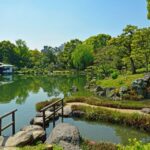
Ninomaru Garden receives about 15 minutes, making it one of the longer stops on the route. This is a good design choice. The tour finishes not with another gate or stone wall, but with a quieter garden and a pond where you can see koi.
Ninomaru gives you time to slow down and absorb the site. The garden’s peaceful character contrasts with the strict security of the castle entrances. You can take photographs, watch the fish, and enjoy a softer ending before returning to Wadakura Free Rest Area.
The tour includes a commemorative photo opportunity, but you should bring your own camera if you want more than that one moment. Flash photography is not allowed, and smoking is prohibited. Comfortable shoes and water are sensible choices because the route is a walking tour with repeated stops across the grounds.
How much history will your guide provide?
The clearest split in the feedback is not about the route. It is about the guide. Several people praised guides for explaining historical facts, answering questions, and spending extra time on the story of the palace and Japan. One French-speaking guest described Mari as especially helpful, while another praised Isao’s friendly manner and willingness to answer questions.
At the same time, one guest felt the activity was simply a park walk and that the guide said very little. That is a fair warning. The physical remains are interesting, but they are not self-explanatory to everyone. The experience depends on how actively your guide tells the story.
You can improve your odds by choosing a private or small-group option if available. A smaller group makes it easier to ask questions and may create more room for the guide to adjust the pace. Still, the supplied information does not promise a particular guide, so book this for the route and format, not on the assumption that you will definitely receive Mari or Isao.
The overall rating is 4.4 from 13 reviews, with several five-star ratings and a few lower scores. That pattern suggests a good experience when the guide is engaged, but a less satisfying one when commentary is thin.
Price, timing, and practical value
At $37, the tour sits in a reasonable range for a two-hour guided walk in central Tokyo. You receive a live English-speaking guide and admission to Edo Castle and the Imperial Palace East Gardens. There is no hotel pickup, food, or drink, so you are paying mainly for access and interpretation.
For me, the price makes sense if you have limited time and want the major castle remains arranged in a logical order. You do not need to plan how Otemon Gate connects to the guardhouses, Honmaru, Tenshu-dai, and Ninomaru Garden. The guide handles that structure.
The value drops if you prefer independent sightseeing. The East Gardens are available as a public attraction, and the route is not built around rare access or palace interiors. One lower rating specifically reflected the view that the walk could be done alone.
The two-hour length is helpful for a packed Tokyo schedule. It gives you a solid introduction without consuming a full morning or afternoon. Check the available start times when booking, since the exact schedule is not fixed in the information provided.
Free cancellation up to 24 hours ahead and the option to reserve now and pay later also make this easier to fit into a changing itinerary. Those terms are useful, but they should not be the main reason to book.
Who should book this walk?
I would recommend it to you if you are curious about the shoguns, samurai-era defenses, and the shift from Edo Castle to the Imperial Palace. It is also a good match if you want a short historical outing with a garden finish and minimal planning.
First-time visitors to Tokyo may get the most from it because the guide supplies a framework for understanding an important central site. You will see major gates and ruins, then finish with gardens and koi rather than leaving with only a list of names.
History fans should enjoy the succession of defensive features, especially Otemon Gate, the Ote-San-no-mon ruins, Doshin Bansho, and Hyakunin Bansho. Photographers should like the contrast between stonework, moats, gardens, and broad city views.
This is not suitable for children under six, people with mobility impairments, or wheelchair users. You should be comfortable walking between multiple outdoor stops and wearing sturdy, comfortable shoes.
Should you book the Edo Castle tour?
Book it if you want a guided introduction to Edo Castle’s remains rather than entry into the Imperial Palace itself. The route is well chosen, the history moves from castle defenses to royal gardens, and $37 is fair when the guide provides the detailed explanation many guests valued.
Skip it if you prefer to wander independently, already understand the site, or mainly want palace interiors. The most important question is how much guided interpretation you want. If the answer is quite a lot, choose the smallest group available, arrive at the Wadakura Free Rest Area early, and come ready with questions.
FAQ
Where does the tour meet?
Meet outside the Wadakura Free Rest Area, in front of the entrance. The guide will be holding a yellow sign.
How long does the tour last?
The tour lasts two hours and returns to the Wadakura Free Rest Area.
Is the tour available in English?
Yes. It includes a live English-speaking guide.
Does the tour enter the Imperial Palace buildings?
No. The tour does not enter the palace buildings or the inner grounds of the Imperial Palace.
What places are included on the route?
The route includes Wadakura Fountain, Wadakura Moat, Otemon Gate, Ote-San-no-mon Gate Ruins, Doshin Bansho, Hyakunin Bansho, Edo Castle Ruins, the Honmaru site, a castle keep restoration model, the Tenshu-dai area, the prefectural trees, Suwa no Chaya, the Imperial Palace East Gardens, and Ninomaru Garden.
What should I bring?
Bring comfortable shoes, water, and a camera. Flash photography is not allowed.
Can I cancel the booking?
Yes. You can cancel up to 24 hours in advance for a full refund. Reserve now and pay later is also available.
More Imperial Palace & Shogun Tours in Tokyo

More tours in Tokyo we've reviewed








Imperial Palace & Shogun Tours, compared.
 ★ 5.0Tokyo: Imperial Palace and Shogun Historical Walking TourFrom $22
 ★ 4.9Tokyo: Imperial Palace Japanese History Walking TourFrom $32
 ★ 4.9Tokyo: Imperial Palace and Shogun Walking TourFrom $162 hours
 ★ 5.0Imperial Palace East Garden and Edo Castle Walking Tour in TokyoFrom $25
 ★ 4.8Tokyo: Imperial Palace East Gardens Walking TourFrom $192h 30m
 ★ 4.5Tokyo: Imperial Palace, Sensō-ji Temple, & Tokyo Tower TourFrom $404 hours