
Reviewed · PHOTOGRAPHY SESSIONS
Tokyo by Night Photography Tour (Private Option Available)
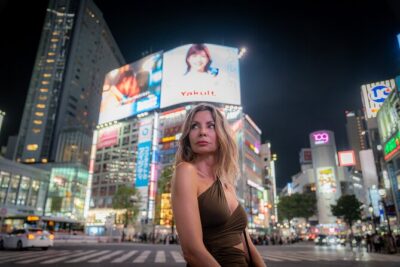
Tokyo after dark is the real subject here. Neon washes over narrow lanes, crowds stream across Shibuya, and a good photographer can turn an ordinary street corner into a sharp travel portrait. This tour combines a guided night walk with a professional photo session, so you see more than you would on your own and go home with pictures of yourself in the scene.
I especially like the small maximum of six people, which gives the photographer room to suggest poses and adjust the shots. I also like that the package includes 20 edited photos, a useful value for solo visitors, couples, and anyone who wants more than quick phone snapshots.
The main caution is pace and timing. The walk can cover about 3 kilometers, includes train travel at your own cost, and may finish closer to two hours than two and a half. Photography is also banned in parts of Golden Gai and Memory Lane, so you will not be able to shoot every location you pass.
In This Review
- Key points
- Tokyo after dark, framed for your camera
- Golden Gai: narrow lanes and strict photography rules
- Kabukicho and the city’s electric center
- A drink, a pause, and no dinner
- Shibuya Crossing at its most photogenic
- What the photographer adds
- Twenty edited photos and the real value of the price
- Weather, clothing, and the pace of the walk
- Important limits on the photo locations
- Who should book this night photo walk?
- Should you book the Tokyo by Night Photography Tour?
- FAQ
- Where does the Tokyo by Night Photography Tour start?
- How long does the experience last?
- How many people can join the group?
- Are edited photos included?
- Is transportation included?
- What is the cancellation policy?
Key points
- Neon-lit Tokyo after dark: Walk through Shinjuku’s Kabukicho and finish around Shibuya Crossing.
- 20 edited images included: A strong reason to consider this tour if you are traveling alone or celebrating a special trip.
- Small group format: The maximum is six people, with a private option available.
- Photographer-led posing: Guides such as Gota help with angles, expressions, and simple poses.
- One drink included: The route may include a casual stop, but dinner is not part of the price.
- Fast-moving urban walk: Expect roughly 2 to 3 kilometers, stairs or crowded streets, and train fare paid separately.
Tokyo after dark, framed for your camera
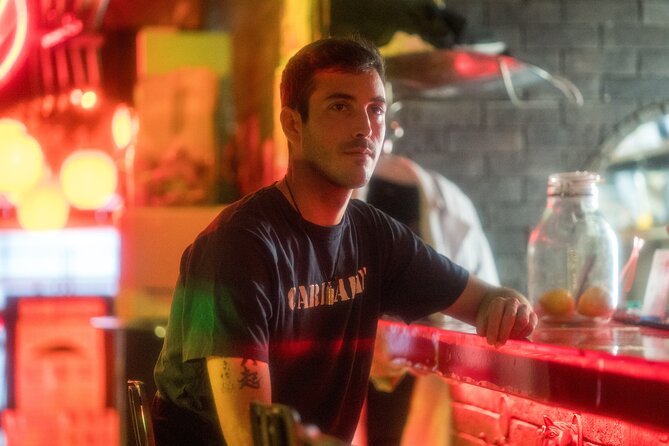
This experience is part sightseeing walk, part portrait session. You meet at Miraion Lion Square in Shinjuku at 5:30 p.m., then move through the city as the evening lights come on. The photographer guides the route, finds workable backdrops, and takes your pictures along the way.
That combination matters. A standard night tour may show you the streets but leave you with only your own snapshots. A normal photo shoot may give you polished portraits but little sense of place. Here, your pictures are tied to Tokyo’s nightlife districts, signs, crossings, alleyways, and street scenes.
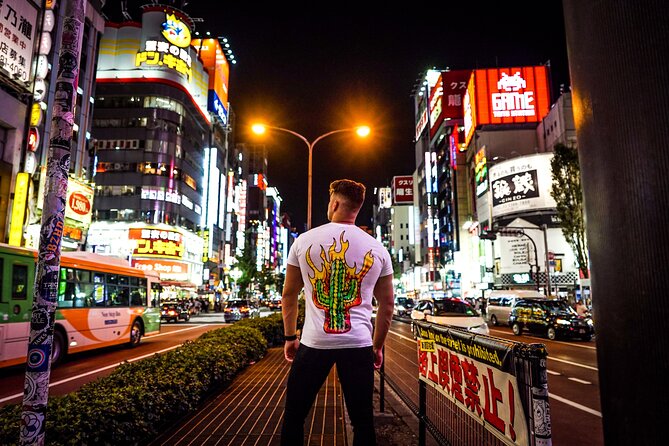
The atmosphere is intentionally cinematic. The tour aims for neon reflections, narrow passageways, dramatic buildings, and the busy energy associated with Tokyo at night. You are not simply standing in front of a landmark for one formal group photo. The photographer may have you walk, pause, turn, or pose against several different city backgrounds.
The strongest feedback centers on the photographers. Gota is repeatedly singled out for being friendly, encouraging, and good at showing people what to do with their hands and where to look. That is useful if you normally feel awkward in front of a camera. You do not need to arrive with modeling experience, and you do not need to bring a camera unless you want to take your own pictures too.
A few more Tokyo tours and experiences worth a look



Golden Gai: narrow lanes and strict photography rules
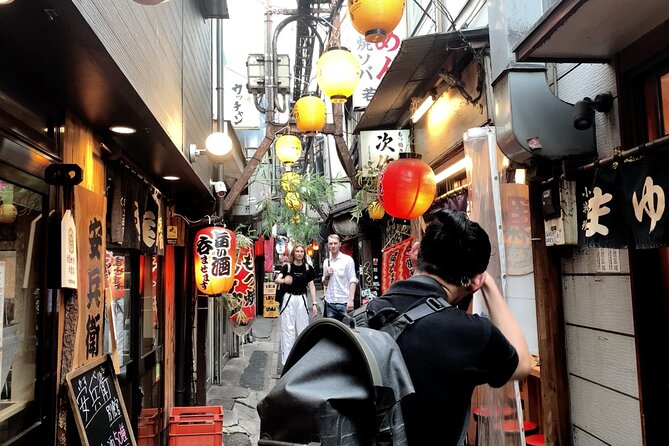
The first named stop is Shinjuku Golden Gai, a compact restaurant and bar district with nearly 300 small establishments. Its tight lanes and layered signs offer exactly the sort of setting that suits a night portrait.
You should set your expectations carefully. The stop is listed at about 15 minutes, and photography is strictly prohibited in some areas of Golden Gai and nearby Memory Lane. That means the photographer must work around the rules, not simply stop anywhere that looks attractive.
This is one of the tour’s useful features: you can see a famous nightlife quarter without having to figure out where to walk or how to avoid blocking doorways. The guide can also tell you when to put the camera away. In a place made up of small bars and tight passageways, courtesy matters.
Golden Gai is not a conventional sightseeing attraction with a large plaza and clear viewing points. It is a close-up urban setting. You may like it most if you enjoy texture, signs, cramped lanes, and the odd visual detail rather than grand monuments.
Kabukicho and the city’s electric center
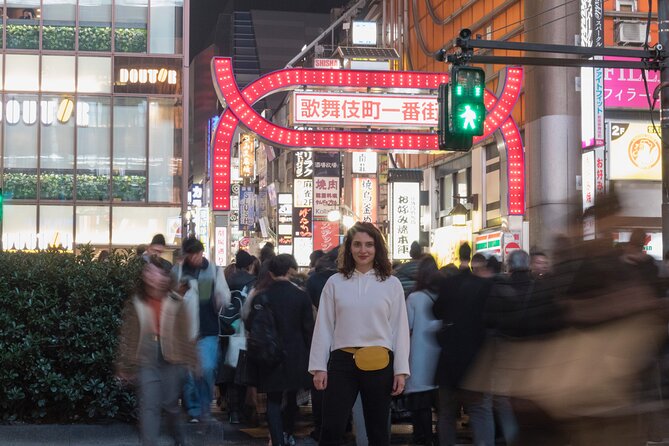
The tour then spends about 30 minutes taking photos in Kabukicho, Shinjuku’s best-known nightlife district. This is where the evening begins to feel more open and kinetic, with larger signs, wider streets, and plenty of movement around you.
The exact photo locations can change. Traffic, crowds, weather, and operating conditions may alter the order or lead the guide to use an alternative spot. That flexibility is sensible in central Tokyo, where a good picture can disappear when a street becomes too crowded.
You will likely walk at a brisk pace. One person described the route as roughly 3 kilometers, and another noted that the guide moved quickly. Comfortable shoes are not optional advice here. Wear footwear you can use for a full evening on pavement, and avoid bringing extra bags if possible. You may need to set belongings down and collect them again at different photo stops.
This section suits people who want a mixture of portraits and street atmosphere. The photographer can use the signs and public spaces behind you rather than making every image look like a studio shot. Guides also explain some of the area’s past and present, giving the walk more context than a simple series of poses.
A drink, a pause, and no dinner
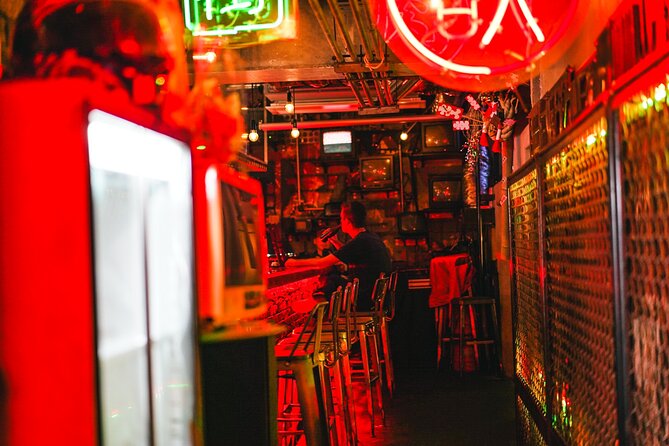
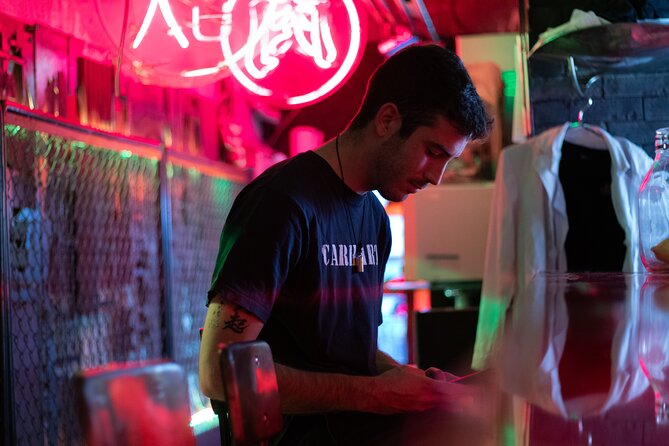
One drink is included. The route may include a stop at a distinctive bar, with one account describing a steampunk-style venue. Treat this as a pleasant extra, not a full meal or a central part of the tour.
Dinner is not included, and the experience lasts only about two to two and a half hours. If you need a proper meal before or after, plan it yourself. Starting at 5:30 p.m. can put you in an awkward gap between lunch and dinner, especially if you are moving quickly and concentrating on photos.
The included drink also comes with a practical advantage: you do not need to pay for the guide’s drink or transportation. Your own train fare is separate, though. The tour moves from Shinjuku toward Shibuya, so keep a little cash or a transit balance available for the train.
Shibuya Crossing at its most photogenic
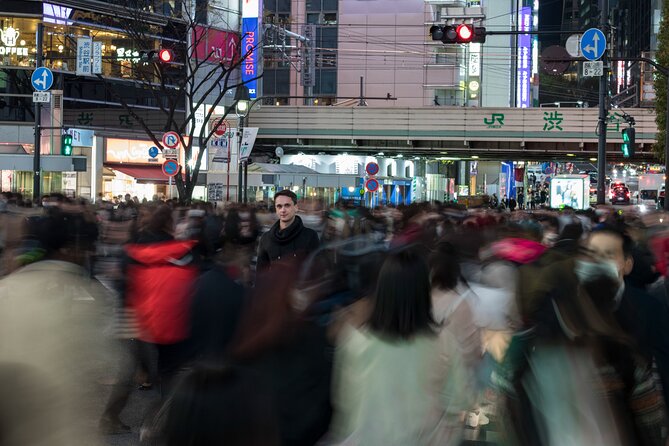
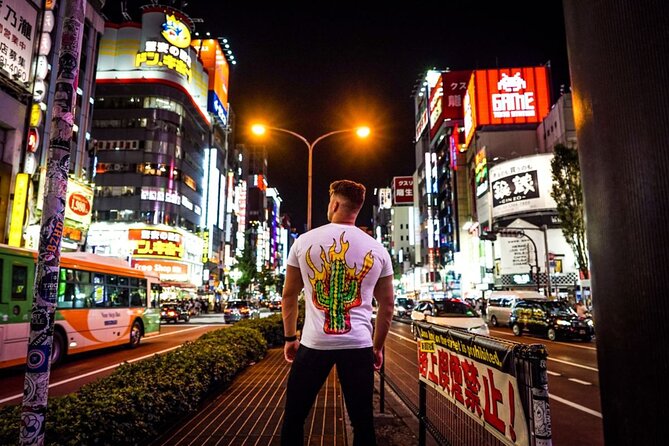
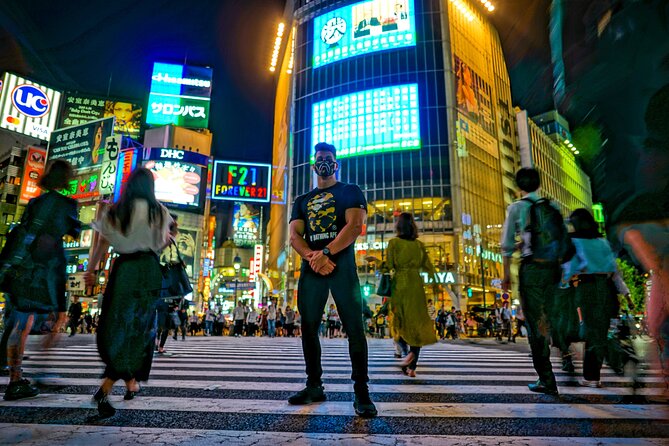
The route continues to Shibuya, with about 40 minutes devoted to photographs around Shibuya Crossing. This is the tour’s most instantly recognizable backdrop. The crossing is famous for the rush of people moving in several directions at once, surrounded by giant screens, signs, and tall buildings.
The photographer’s job here is not only to point a camera at the crossing. You may be photographed near the flow of people, on surrounding streets, or at nearby viewpoints that make the scene easier to frame. Crowd levels and traffic can affect the exact results, so the guide needs to work quickly.
You also pass Hachiko, the bronze statue of the loyal Akita dog, and Shibuya Center-gai, a major shopping and entertainment street. These places add variety, but they are pass-by points rather than long formal stops. If Hachiko is important to you, take note that you may have only a short opportunity there.
Shibuya is a good final setting because it contrasts with Golden Gai. Shinjuku offers narrow lanes and moody corners. Shibuya gives you open space, big signs, and one of Tokyo’s most famous public scenes. The shift keeps the photo set from feeling repetitive.
Other private tours in Tokyo

What the photographer adds
The quality of this experience depends heavily on the individual guide. That is true of any photo tour, but especially so when the route itself is made up of public streets rather than fixed attractions.
Gota is praised for explaining the route with a map, sharing local information, and offering positive direction during the shoot. That last point is important. Many people can take a technically clear picture, but a good portrait guide helps you relax, choose a natural stance, and avoid the stiff look that comes from not knowing what to do.
You can expect an English-speaking photographer, though the exact guide is not guaranteed. The company assigns a certified guide, and other participants may join unless you select the private option. The group limit of six is small enough for some personal attention, but it is not the same as booking a one-to-one session.
If you are a solo visitor, the value is easy to understand. You get professional images without asking a stranger to take every picture, and you also have someone to help you navigate Shinjuku at night. Couples and honeymooners may like the friendly posing guidance and the chance to create pictures together in recognizable parts of Tokyo.
Families can join because all ages are accepted. Still, the pace, distance, late start, and crowded streets may be tiring for very young children or anyone who has trouble walking for several hours.
Twenty edited photos and the real value of the price
At $105.71 per person, this is not the cheapest way to see Shinjuku. You are paying for a small-group guide, a professional photographer, a night walk through two major districts, one drink, and 20 edited images.
The price makes the most sense if you place real value on the photographs. Twenty finished images can give you a useful set of portraits rather than one lucky shot. Several participants received their images very quickly, in some cases later the same night, though delivery timing should not be treated as guaranteed unless confirmed when booking.
For a solo visitor, the price may compare well with arranging a private photo session. For two people, it becomes a more substantial expense, but you also get a shared experience and photos in several locations. Group discounts may improve the cost for larger bookings, while a private option gives you more control over pace and attention.
The price is harder to justify if you mainly want historical explanation or a long food tour. The guide provides local information, but photography drives the schedule. Dinner is excluded, train fares are extra, and the duration is approximate.
Weather, clothing, and the pace of the walk
Tokyo weather can be severe at both ends of the year. Summer temperatures may reach 40°C, while winter lows can fall to around -5°C. Dress for the actual forecast, not for the season as you imagine it.
Comfortable shoes are essential. The route can cover around 3 kilometers, with frequent stops and movement between Shinjuku and Shibuya. A small bag is better than a large one, since you may be setting it aside during portraits.
Rain or unsafe weather can lead to cancellation. The route order can also change because of weather, crowds, traffic, or closures. This is not a flaw in the concept. Night photography depends on conditions, and a flexible guide can often find a better alternative than forcing a poor or unsafe stop.
Arrive early. The meeting instructions require the tour to start on time, and missing the group by more than 15 minutes can mean losing your place without a refund or rescheduling. In central Tokyo, allow extra time for the station, exits, and finding Miraion Lion Square.
Important limits on the photo locations
This is a street photo experience, not a pass that grants access to every attractive interior or alley. Some areas prohibit photography, including parts of Golden Gai and Memory Lane. Respect those rules and follow the guide’s instructions.
The advertised route includes a street near the Tokyo Metropolitan Government Buildings, as well as possible points described as a temple, pedestrian bridge, Love Sculpture, the government building, and Yodobashi Camera. The order and exact use of these locations may vary. They should be viewed as possible photo settings, not guaranteed individual shoots.
That uncertainty is worth understanding before you book. The best images may come from an unplanned corner, while a famous spot may be too crowded at the moment you arrive. If you need a fixed shot list, a private booking may suit you better, though the route can still change for practical reasons.
Who should book this night photo walk?
I would recommend it most strongly to:
- Solo visitors who want professional pictures and an easier way to move through Shinjuku
- Couples marking a honeymoon, anniversary, or first trip to Japan
- People who enjoy city scenes, neon, night portraits, and quick changes of setting
- Anyone who wants a guide but does not want a full-day sightseeing tour
- Visitors comfortable walking several kilometers at a brisk pace
I would be more cautious if you dislike posing, need a slow walking speed, want a full dinner, or expect a fixed two-and-a-half-hour schedule. The photo process can be fast, and one poor experience described a shorter tour with little photography advice. That appears to be an exception rather than the normal pattern, but it is a fair reminder that the assigned photographer matters.
The overall satisfaction level is very high, with a 99 percent recommendation rate and a 5.0 rating based on 151 ratings. The most praised elements are the photographers’ friendliness, posing help, local route knowledge, and the speed and quality of the edited images.
Should you book the Tokyo by Night Photography Tour?
Book it if you want Tokyo memories that include you, not only the city. The combination of Shinjuku lanes, Kabukicho signs, Shibuya Crossing, a local guide, and 20 edited photographs gives the experience a clear purpose and a reasonable amount of value.
Choose the private option if you want more control over the pace or are marking a special occasion. If you join the small group, arrive early, wear comfortable shoes, travel light, and accept that the route may change.
I would skip it if your main goal is dinner, shopping, or a slow cultural tour. But for a solo portrait session with sightseeing built in, this is a practical way to come away with polished Tokyo night photos and a better feel for two of the city’s most famous districts.
FAQ
Where does the Tokyo by Night Photography Tour start?
The meeting point is Miraion Lion Square, 3 Chome-38 Shinjuku, Shinjuku City, Tokyo 160-0022, Japan. The listed start time is 5:30 p.m.
How long does the experience last?
The advertised duration is about two hours and 30 minutes, but the actual time can range from roughly two to two and a half hours. Weather, crowds, photo conditions, and group size may affect the timing.
How many people can join the group?
The maximum group size is six people. A private option is also available.
Are edited photos included?
Yes. The experience includes 20 edited photos taken during the tour. You do not need to bring a camera unless you want to take your own pictures.
Is transportation included?
Your own train transportation is not included. You do not need to pay for the guide’s transportation fee. The tour ends in a different location from the starting point.
What is the cancellation policy?
You can cancel for a full refund up to 24 hours before the local start time. Changes or cancellations made less than 24 hours before the tour are not accepted for a refund.
More Evening Experiences in Tokyo
More Private Tours in Tokyo
More Night Tours in Tokyo
More tours in Tokyo we've reviewed
Photography Sessions, compared.
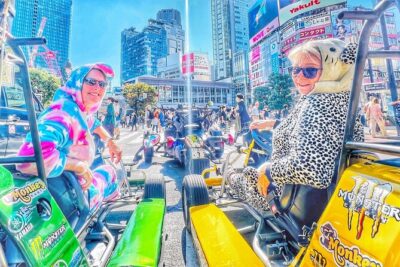 ★ 5.0Best Go Kart Experience in Shibuya Crossing with Iconic PhotosFrom $106
 ★ 4.8Tokyo Go-Karting Experience: Shibuya Crossing with PhotosFrom $901 hour
 ★ 5.0Tokyo Cyberpunk Street Photo TourFrom $184
 ★ 5.0Tokyo Shinjuku Night Photo Tour with Pro GotaFrom $85
 ★ 5.0Tour with Pro Tokyo Photographer and take Edgy Unique PortraitsFrom $145
 ★ 5.0Tokyo Portrait Tour with a Professional PhotographerFrom $92