
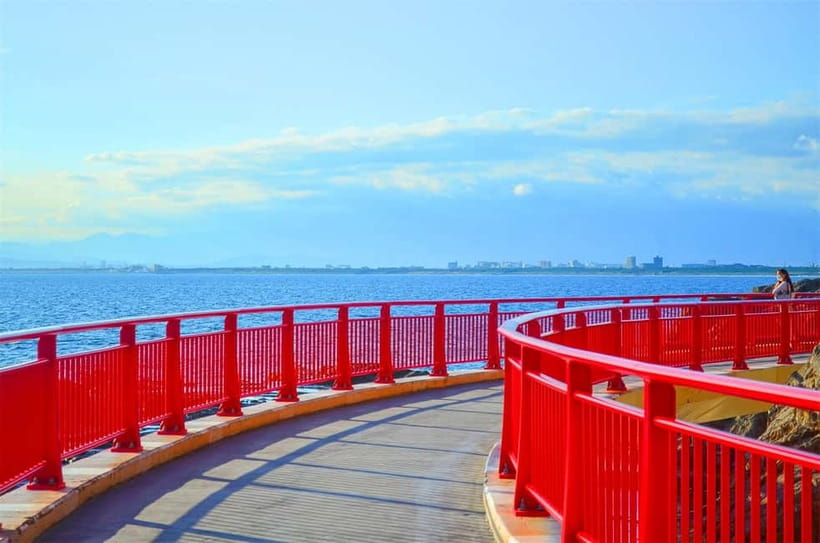
Reviewed · KAMAKURA & ENOSHIMA DAY TRIPS
Tokyo Yokohama Night View Tour With Kamakura And Enoshima
The best part of this 10-hour coastal outing is its mix of old Japan, pop culture, seaside views, and city lights. You move from Enoshima’s dragon legend to Kamakura’s samurai shrine, then finish in Yokohama after dark. The Slam Dunk crossing and Enoden train ride give the day a strong sense of place.
I like the chance to see three very different destinations without arranging several train connections yourself. I also like that the Enoden fare is included and that Yokohama time is open enough for you to choose the Air Cabin, Ferris wheel, Red Brick Warehouse, or simply a walk by the harbor.
The tradeoff is pace. With long road transfers and many stops, the day can feel rushed, especially in Yokohama. Guide service may also be quite basic when the group has fewer than 13 people, since the guide then drives as well.
In This Review
- Key points to know before booking
- Three coastal destinations in one long day
- Starting from Tokyo MODE GAKUEN at 11:00
- Enoshima Island and the five-headed dragon legend
- Riding the Enoden through the Shonan Coast
- The Slam Dunk crossing at Kamakura Koko-Mae
- Tsurugaoka Hachimangu and Kamakura’s samurai past
- Komachi Street for snacks and small purchases
- Yokohama after sunset, with choices to make
- How good is the $82 value?
- Who will enjoy this route most?
- Practical advice for a smoother day
- Should you book the Enoshima, Kamakura, and Yokohama tour?
- FAQ
- Where does the tour start and finish?
- What time does the tour depart?
- Is the Enoden train ride included?
- Are meals included?
- Are the Yokohama Air Cabin and Ferris wheel included?
- What languages are available?
Key points to know before booking
- The Enoden ride links the coastal highlights: You travel between Enoshima, Kamakura Koko-Mae, and Kamakura Station on one of Japan’s most nostalgic local rail lines.
- The Slam Dunk crossing is a quick photo stop: It is the real railroad crossing associated with Hanamichi Sakuragi and Haruko, but you will not have unlimited time there.
- Enoshima combines myth and shrine visits: Enoshima Shrine dates to 552 AD, and the Money-Washing Water Dragon Shrine adds a playful fortune ritual.
- Kamakura gives you the strongest historic setting: Tsurugaoka Hachimangu and Komachi Street offer a better sense of old Kamakura than a simple photo stop.
- Yokohama is self-directed: The final 2.5 hours let you pick your own attractions, but paid rides such as the Air Cabin and Ferris wheel cost extra.
- The value depends on your priorities: At $82, transport and a full day of sightseeing are convenient, but you pay with time spent on the road.
Three coastal destinations in one long day
I see this tour as a sightseeing sampler rather than a slow, detailed visit to each place. You leave Tokyo at 11:00 a.m. from Tokyo MODE GAKUEN in Nishi-Shinjuku and return there after a full day, usually around 9:00 p.m. Traffic, weather, and holiday crowds can push the return later.
That schedule works well if you want a broad taste of the Shonan Coast and Yokohama but do not want to plan the connections yourself. It works less well if you already know you want several hours at Enoshima, a careful Kamakura shrine visit, or a long evening in Yokohama.
The route includes roughly 1.5 hours by coach at the start, 40 minutes between Kamakura-area stops, 75 minutes toward Yokohama, and another hour back to Tokyo. Those transfers are the price of covering this much ground in one day. Bring water, wear shoes suited to walking, and keep your plans after the tour open.
Starting from Tokyo MODE GAKUEN at 11:00
The meeting point is Tokyo MODE GAKUEN, at 1-7-3 Nishi-Shinjuku, Shinjuku-ku, Tokyo 160-0023. You should find the guide at the designated point and check your email the evening before departure. The operator says it will send the pickup time, guide information, and vehicle plate details before 9:00 p.m. Japan time on the day before the trip.
The vehicle depends on group size, so you cannot select a bus or van in advance. This is a shared tour with people from different countries, and explanations may be given in English, Japanese, and Chinese.
One practical detail matters here. If fewer than 13 people join, the guide also serves as the driver and only basic commentary is provided. If you want a tour built around detailed historical explanation, this arrangement may disappoint. If your main goal is getting between the sights without handling the transport, it may be perfectly workable.
Enoshima Island and the five-headed dragon legend
After the opening coach ride, you have about 100 minutes on Enoshima. That is enough to see the island’s main sights at a purposeful pace, but not enough for an unhurried visit to every corner.
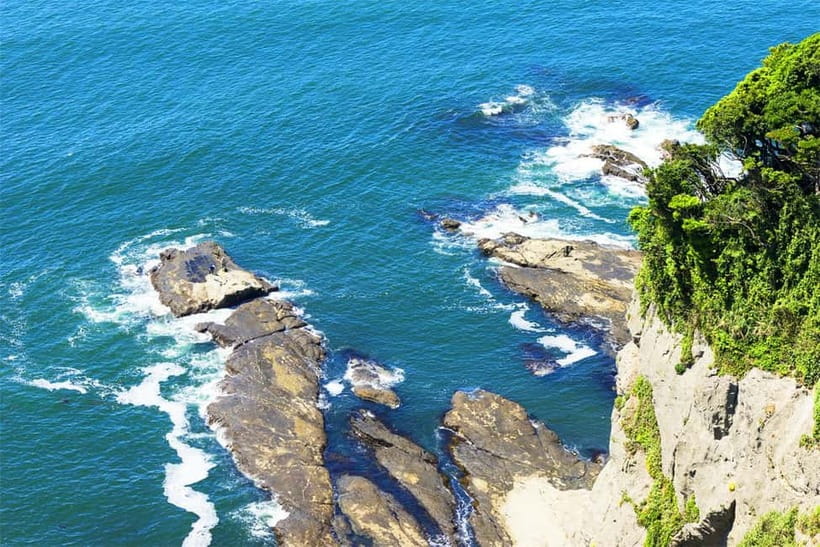
Enoshima is reached by bridge and has a strong old-meets-sea character. Its shrine tradition reaches back to 552 AD, and the island is tied to a local legend about a five-headed dragon that once terrorized the area. A goddess appeared, created Enoshima, and inspired the dragon to change its ways.
You will visit Enoshima Shrine, where people pray for good fortune, creativity, and wealth. The Money-Washing Water Dragon Shrine adds a memorable ritual to the stop. The local belief says that washing coins there can bring prosperity. I would treat it as folklore and a fun cultural moment rather than a financial plan, but it gives the visit a personal touch.
The main challenge is time and walking. The tour information warns that the route involves a fair amount of walking, and Enoshima is not a place where you should expect to remain beside the vehicle. Sunscreen, water, and comfortable shoes are sensible. Cash is also worth carrying because cards may not be accepted at every stop.
Riding the Enoden through the Shonan Coast
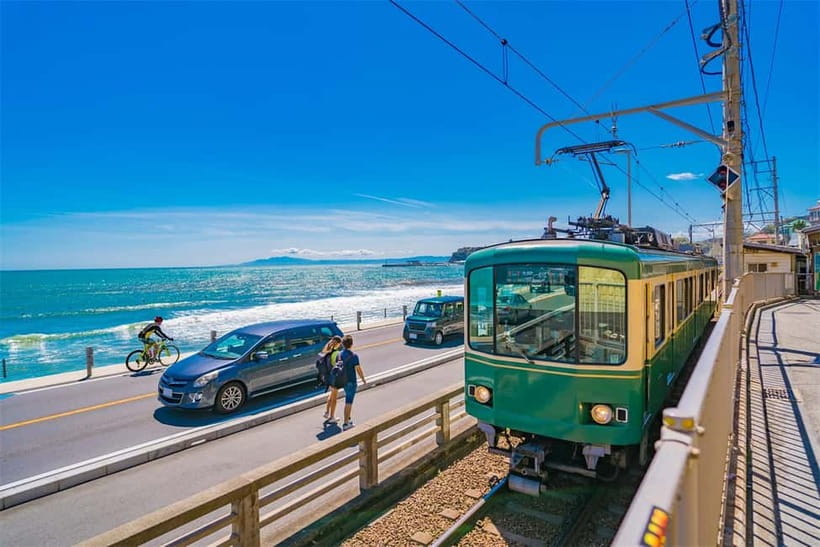
The included Enoden train ride is one of the day’s most appealing features. This old-style local line carries you from Enoshima Station through Kamakura Koko-Mae to Kamakura Station, with the full train portion listed at about 20 minutes.
The route offers ocean views, older homes, narrow streets, and the gentle clatter of a local train. It is not a grand scenic railway journey, and the ride is short, but it gives you a taste of everyday coastal Japan that a private coach cannot provide.
I especially like this part because the train connects the tour’s locations in a natural way. You are not only being delivered to a photo stop. You are using a transport line that is part of the area’s identity.
The ride also introduces a little uncertainty. This is a shared public train, and the tour cannot control every part of the boarding process or crowd level. Still, the Enoden ticket is included, so you do not need to sort out that fare yourself.
The Slam Dunk crossing at Kamakura Koko-Mae
At Kamakura Koko-Mae Station, you get free time for sightseeing and photos. The station is famous for the railroad crossing associated with the anime and manga Slam Dunk. Fans will recognize the scene linked to Hanamichi Sakuragi waving to Haruko.
The appeal is simple: this is a real place, not a themed attraction built for the show. You can stand at the crossing, see the tracks, and look toward the coast. For anime fans, that connection may be one of the main reasons to book the tour.
Expect a brief stop rather than a full neighborhood visit. The itinerary allows about 15 minutes for the panoramic train ride and 20 minutes around Kamakura High School and the crossing area. That should cover photos and a quick look, but it is not designed for lingering or exploring every angle.
Please stay alert around the railway crossing and follow local rules. The appeal is the setting itself, not stepping into an unsafe position for a better photograph.
Tsurugaoka Hachimangu and Kamakura’s samurai past
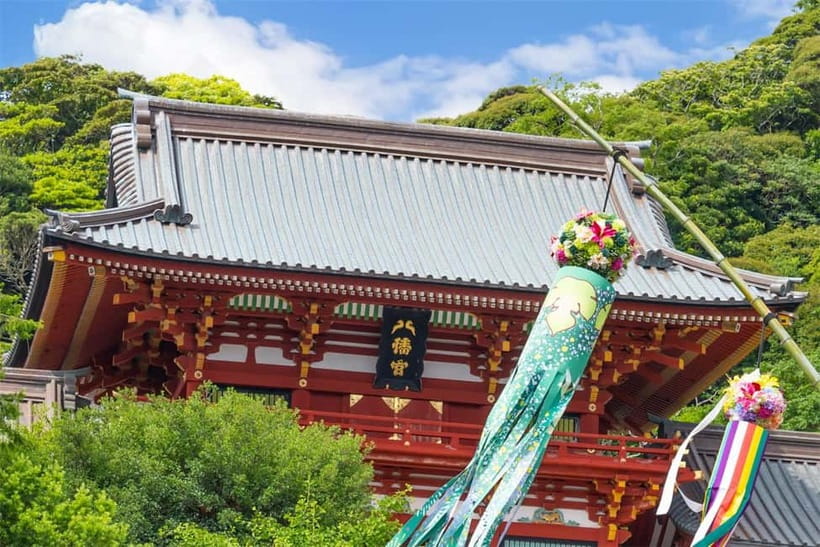
After the coastal train section, the coach takes you to Tsurugaoka Hachimangu. The visit is listed at 80 minutes, including a guided tour and time for photos.
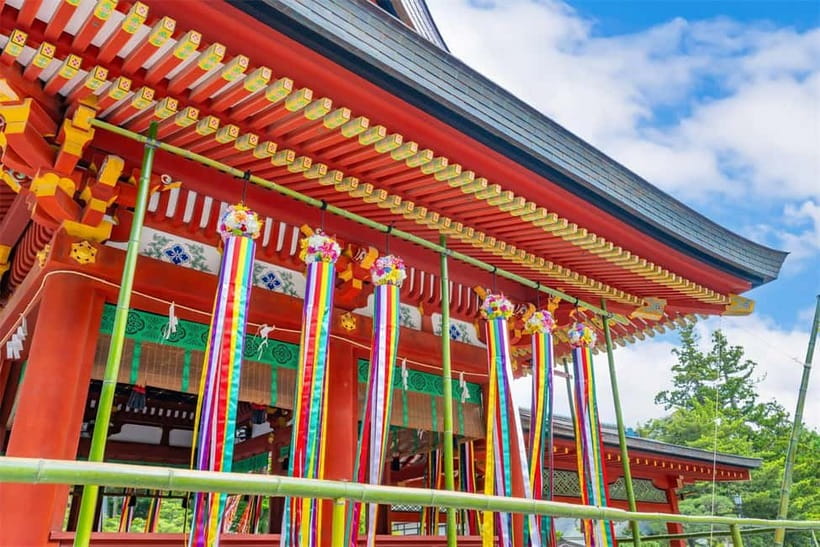
This is the most important historic stop of the day. Tsurugaoka Hachimangu is one of Japan’s Three Great Hachiman Shrines and is closely tied to Kamakura’s samurai era. Its broad approach and formal shrine grounds give the stop a different mood from the compact coastal crossing and island shrines.
The 80-minute window is useful because you have time to look rather than simply step off, take one photograph, and leave. You can pay attention to the shrine layout, gates, worship spaces, and the movement of people coming to pray.
How much history you receive depends on the guide arrangement. A full group with a dedicated guide may get useful context about the shrine and its samurai connections. A group of fewer than 13 may receive only basic commentary because the guide is also driving. I would still value the stop for its setting, but I would not book this tour solely for detailed historical instruction.
Komachi Street for snacks and small purchases
Komachi Street gives you a change of pace after the shrine. The lane is lined with shops, local snacks, souvenirs, and small places to browse. The schedule includes a break and free time, though no exact duration is provided.
This is a good place to use your own judgment. You might pick up a snack, look for a small souvenir, or simply walk through the old-town shopping area. Since meals are not included, this is also your clearest chance to buy something to eat during the day.
Do not expect a long restaurant meal unless the group schedule allows it. The tour covers several stops and still has a substantial drive to Yokohama. I would choose something quick and portable, while remembering that food is not allowed inside the vehicle.
Komachi Street is useful because it adds ordinary street life to a day otherwise built around major sights. It also gives you a chance to spend your money selectively rather than being pushed into a set meal or fixed shopping stop.
Yokohama after sunset, with choices to make
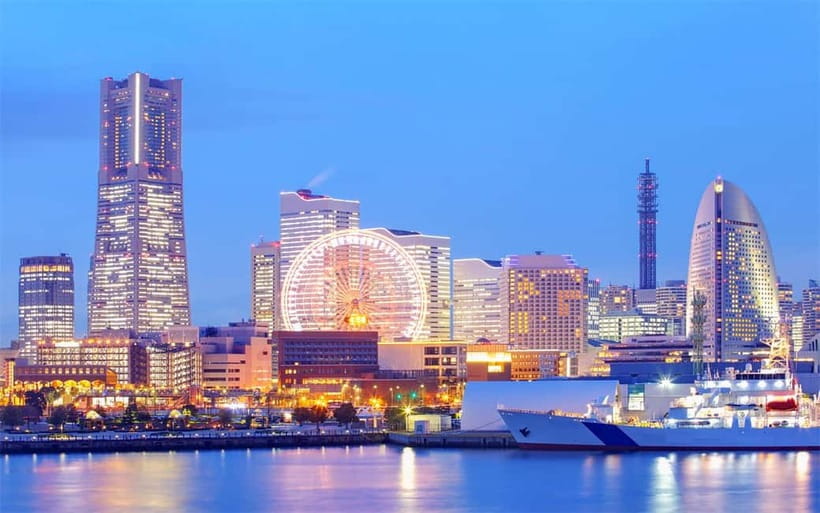
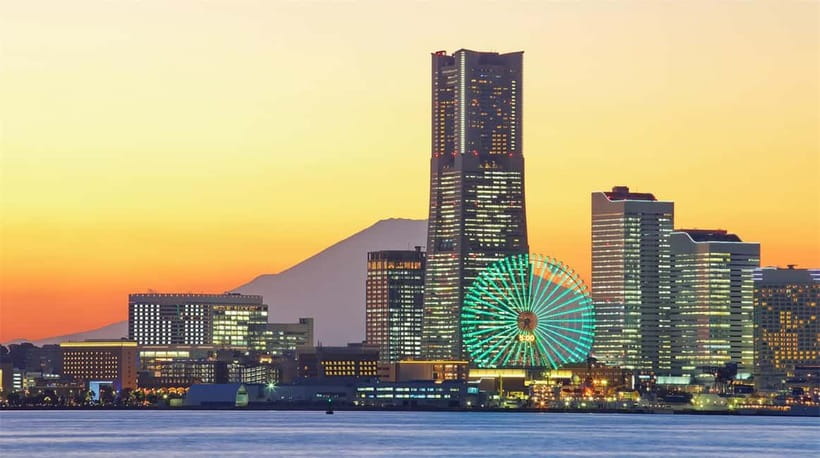
The final major section is Yokohama, where you have about 2.5 hours for guided sightseeing and independent exploration. Depending on the season and traffic, this may take place around sunset and into the evening, which gives the harbor district its best visual quality.
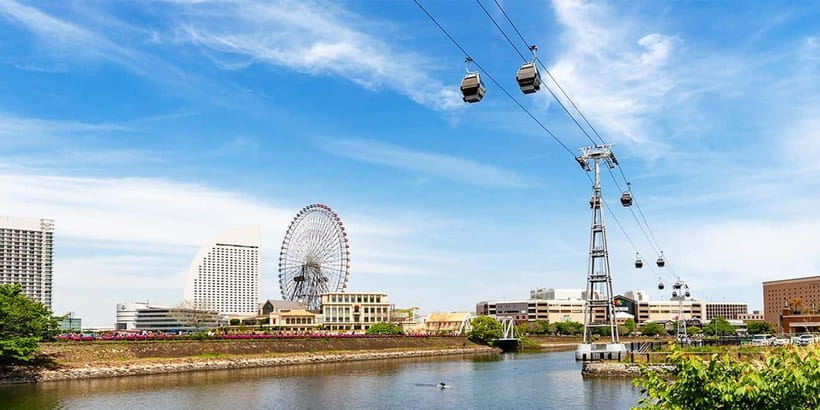
The tour highlights three possible uses of your free time. You can ride the Yokohama Air Cabin from Sakuragicho Station toward the Red Brick Warehouse, take a Ferris wheel ride for a wide night view, or explore the Yokohama Red Brick Warehouse itself.
None of those optional attractions is included in the $82 price. The Air Cabin and Ferris wheel require separate payment, and you should allow time for queues if you choose them. If you prefer not to spend more, the Red Brick Warehouse area and harbor walk provide a straightforward way to enjoy Yokohama at your own pace.
This is also where the schedule can feel tight. Yokohama is large enough to reward a full evening, but the tour gives you only a portion of one. If your main goal is Yokohama’s night view, you may wish the earlier stops had been shorter. One useful strategy is to decide before arrival. Pick one paid ride or one walking area instead of trying to fit everything in.
How good is the $82 value?
At $82 per person, the tour offers a lot of transport for the money. You receive a guide, driver, pickup and drop-off at the stated Tokyo meeting point, and the Enoden fare. You also avoid coordinating the coach, train, and several sightseeing stops on your own.
The value is strongest for first-time visitors who want to connect Enoshima, Kamakura, and Yokohama in one day. Public transport can be handled independently, but the route requires attention to timing and transfers. Here, someone else manages the main movements.
The value is weaker if you want depth. A coach-heavy day with several short visits gives you range, not much free time. Meals, personal purchases, the Air Cabin, and the Ferris wheel all cost extra, so the final price can rise if you build your Yokohama evening around paid attractions.
The guide quality is another part of the value equation. Guides such as KO have been praised for being caring and informative, while the small-group driving arrangement can mean only basic explanations. You should book this as a convenient sightseeing route, not as a guaranteed private-style history lesson.
Who will enjoy this route most?
I would recommend it to you if you want to see the major coastal names around Tokyo in one organized day. It suits anime fans, first-time visitors, couples who want a sunset city setting, and anyone who likes switching between shrines, trains, shopping streets, and modern harbor views.
It is also useful if you are comfortable with a full schedule. You will spend time in a vehicle, walk through several sightseeing areas, and make quick decisions at each stop.
I would be more cautious if you use a wheelchair, since the activity is not suitable for wheelchair users. I would also look elsewhere if you want long visits, slow meals, extensive shopping, or detailed commentary at every location.
The shared format means you should expect a mixed-language group and a guide whose attention is divided among transport, timing, and commentary. That is not automatically a problem, but it is important to set the right expectation.
Practical advice for a smoother day
Wear shoes that can handle a fair amount of walking. Enoshima, the shrine grounds, Komachi Street, and Yokohama all work better when you are not worrying about sore feet.
Bring water, sunscreen, a camera, and some cash. Food cannot be eaten in the vehicle, so plan to buy and finish snacks during the designated breaks. Meals are not included.
Check your email the night before for the final pickup details, guide name, and vehicle plate. Because traffic, bad weather, and holiday crowds can change the route or return time, avoid booking an evening flight, dinner reservation, or other fixed plan too close to the expected arrival.
You can cancel up to 24 hours before departure for a full refund, and the reserve-now, pay-later option keeps your plans flexible. The available guide languages are English, Japanese, and Chinese.
Should you book the Enoshima, Kamakura, and Yokohama tour?
Book it if convenience and variety matter more to you than time at each individual sight. For $82, you get a practical introduction to the Shonan Coast, the Enoden line, Kamakura’s major shrine, and Yokohama’s evening harbor district without building the whole route yourself.
Skip it if Yokohama is your main priority or if you prefer a slow day. The long drives and compressed stops are the central weakness, and Yokohama may leave you wanting more.
My advice is to treat this as a broad first look at three destinations. Pick your Yokohama activity in advance, carry cash and water, and accept that the day’s success depends partly on traffic and the level of commentary your group receives. If that sounds like a fair trade, this route packs a lot of coastal Japan into one ambitious day.
FAQ
Where does the tour start and finish?
The tour starts and ends at Tokyo MODE GAKUEN, 1-7-3 Nishi-Shinjuku, Shinjuku-ku, Tokyo 160-0023, Japan.
What time does the tour depart?
The stated departure time is 11:00 a.m. The operator sends the final pickup time by email before 9:00 p.m. Japan time on the day before the tour.
Is the Enoden train ride included?
Yes. Admission to the Enoden train ride is included in the tour price.
Are meals included?
No. Meals and personal expenses are not included. Food is not allowed inside the vehicle.
Are the Yokohama Air Cabin and Ferris wheel included?
No. The Yokohama Air Cabin and Ferris wheel require separate payment.
What languages are available?
Live guide service is available in English, Japanese, and Chinese. If fewer than 13 people join, the guide also drives and provides only basic commentary.
Kamakura & Enoshima Day Trips, compared.
 ★ 4.5Tokyo: Kamakura & Enoshima Day Trip including Temple TicketsFrom $589 hours - 570 minutes
 ★ 4.5Tokyo: Mt. Fuji, Kamakura, Big Buddha, & Lake Ashi Day TripFrom $4910 - 11 hours
 ★ 4.5From Tokyo: Kamakura & Enoshima 1-Day Bus TourFrom $66
 ★ 5.0Kamakura Historical Walking Tour with the Great BuddhaFrom $98
 ★ 5.0Kamakura Private Tour: Temples, Nature, and the Great BuddhaFrom $98
 ★ 5.0Kamakura Walking Tour – The City of ShogunFrom $35