
Reviewed · ASAKUSA TOURS
Tokyo Asakusa Sensoji Temple Night Walking Tour
Asakusa changes after sunset. The crowds thin, the giant red lantern at Kaminarimon Gate glows against the dark, and Sensoji Temple takes on a quieter mood. This 90-minute walk gives you a quick, well-organized introduction to one of Tokyo’s oldest districts, then finishes among the small pubs of Hoppy Street.
I like the small group cap of eight, which makes it easier to hear your guide and ask questions. I also like the route’s mix of temple grounds, shopping streets, old-style entertainment, and local drinking spots. The main drawback is timing: Sensoji’s main hall closes at 6 p.m., so you may see the temple at night without being able to enter it.
In This Review
- Key points about this Asakusa night walk
- Why Asakusa works so well after sunset
- Kaminarimon Gate and the first look at Sensoji
- Nakamise Street: souvenirs, snacks, and the temple approach
- Sensoji Temple after dark
- Hanayashikidori and the old entertainment district
- Hoppy Street and a practical finish
- What $35 gets you
- Who will get the most from this walk
- Timing, transport, and booking advice
- Should you book the Asakusa night tour?
- FAQ
- How long does the Tokyo Asakusa Sensoji Temple Night Walking Tour last?
- What is the price of the tour?
- Where does the tour begin?
- Where does the tour end?
- Can I enter Sensoji Temple during the tour?
- How many people can join the tour?
- Is the tour suitable for anyone with limited mobility?
- Can I cancel for a full refund?
Key points about this Asakusa night walk
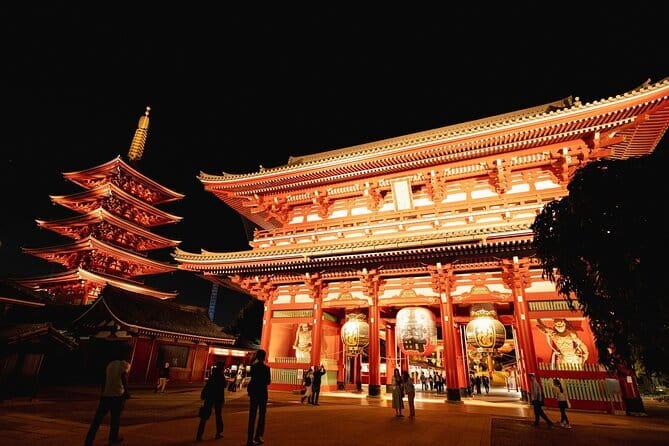
- See Kaminarimon Gate lit up after dark, with its famous red lantern and guardian statues.
- Walk the full approach to Sensoji Temple, including Nakamise shopping street and its traditional snacks and souvenirs.
- Keep the group personal, with no more than eight people.
- Finish on Hoppy Street, where Asakusa’s casual izakaya culture comes into view.
- Use the tour for dinner ideas, since the guide can point out places to eat and drink along the route.
- Plan ahead, since the experience is often reserved about 25 days before the date.
Why Asakusa works so well after sunset
Tokyo can feel hard to grasp on a first visit. The city is huge, the train system is busy, and famous sights are scattered across different districts. Asakusa is easier to take in on foot, especially when you have a guide connecting the streets, buildings, and local customs.
This tour begins near the Asakusa Culture Tourist Information Center, a practical meeting point close to public transportation. From there, you head toward Kaminarimon Gate and follow the traditional approach to Sensoji before turning into the older streets around Hanayashiki and Hoppy Street.
The route does not try to cover all of Tokyo. That is its strength. In an hour and a half, you get a focused look at one neighborhood rather than a hurried checklist of distant sights.
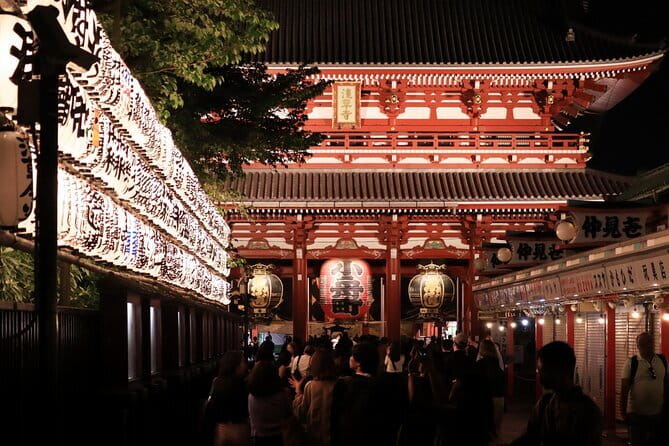
The nighttime setting also matters. During the day, Nakamise Street can be packed with shoppers and temple visitors. At night, the district is quieter, though the food and pub streets still have plenty of life. You can look more closely at the architecture, take photos without quite as much pressure, and see how Asakusa shifts from temple district to evening hangout.
A few more Tokyo tours and experiences worth a look


Kaminarimon Gate and the first look at Sensoji
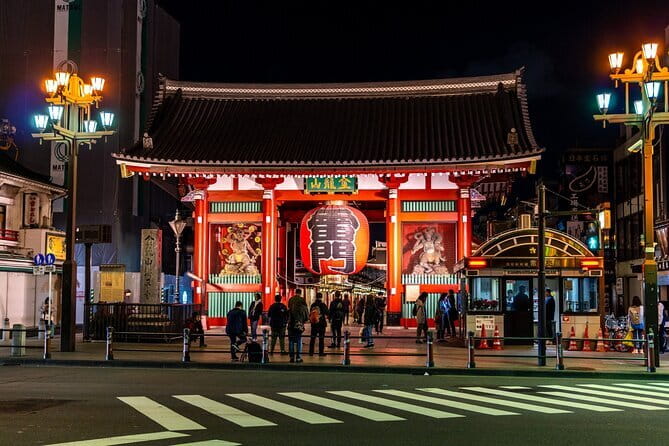
The first stop is Kaminarimon, or Thunder Gate, one of Tokyo’s most recognizable entrances. A large red lantern hangs in the center, while statues of Fujin and Raijin, the gods of wind and thunder, watch from either side.
You get about 10 minutes here. That is enough time for photographs and a short explanation of the gate’s role as the entrance to Sensoji. The scale of the lantern can be hard to appreciate in a quick pass, so this is a useful place to pause and look upward rather than simply snap a picture and move on.
At night, artificial light brings out the gate’s red paint and carved details. The area is still a popular photo stop, but the evening atmosphere is less frantic than the daytime scene.
Your meeting point is the Asakusa Culture Tourist Information Center at 2-chōme-18-9 Kaminarimon. Arrive with enough time to find the building and locate your guide. A mobile ticket is provided, which keeps the booking process simple.
Nakamise Street: souvenirs, snacks, and the temple approach
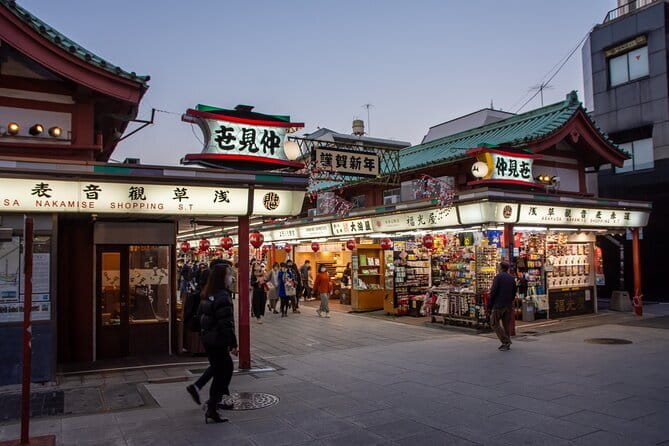
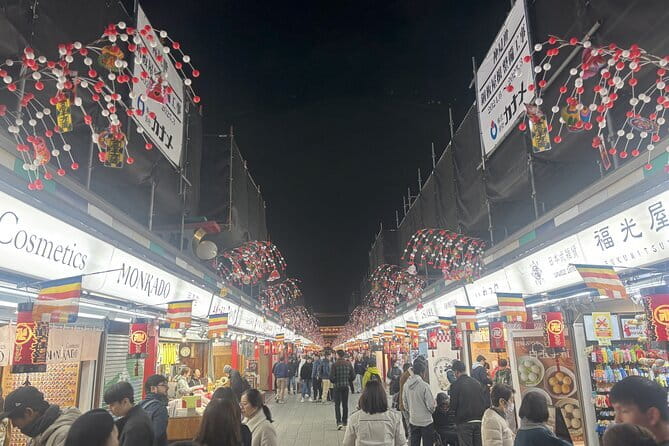
From Kaminarimon, the walk continues along Nakamise Shopping Street. This is the traditional approach to Sensoji, lined with shops selling Japanese snacks, crafts, and souvenirs.
The tour allows about 10 minutes here. That will not give you time to study every shop, and it is not meant to be a dedicated shopping visit. Instead, you get a quick sense of how the street connects commerce with the temple. A small souvenir can be a sensible purchase here, especially if you want something tied to Asakusa rather than a generic Tokyo item.
You might find traditional sweets, small crafts, and other keepsakes. Since the exact shops open at night can vary, treat this stop as an introduction. If something catches your eye, make a note of the location and return later if the shop is open and you have more time.
This part of the route is also useful for first-time visitors because it helps you understand the layout of Sensoji. Kaminarimon is not the temple itself. It is the dramatic front door, and Nakamise is the long shopping approach leading toward the temple grounds.
Sensoji Temple after dark

Sensoji is the heart of the walk. Founded as one of Tokyo’s oldest temples and dedicated to Kannon, the goddess of mercy, it gives Asakusa a very different feel from Tokyo’s newer commercial districts.
The stop lasts about 30 minutes, the longest pause on the route. Your guide can explain the temple’s place in Asakusa and point out the important structures around the grounds. At night, the atmosphere is more subdued, and the illuminated buildings make good photographs.
Here is the key timing issue: the main hall closes at 6 p.m. Since this is a night walk, you may not be able to go inside. You can still see the exterior and temple grounds, but you should not book this experience expecting an interior temple visit.
That limitation is worth considering before you pay. If entering the main hall is a priority, visit Sensoji earlier in the day and use this tour for the evening streets. If you are mainly interested in seeing the temple illuminated and learning how it fits into Asakusa, the night timing works well.
A previous booking specifically praised guide Yugo for being welcoming and well informed, while also wishing the tour had begun 30 minutes earlier so the temple might still have been open. That is useful advice. If temple access matters to you, check the start time carefully and consider asking the provider before booking.
Hanayashikidori and the old entertainment district
After Sensoji, the route turns toward Hanayashikidori for about 20 minutes. This street sits near Hanayashiki, Japan’s oldest amusement park, and has a nostalgic old-Tokyo character.
The focus here is less on one major monument and more on the change in mood. You move from temple grounds into a street of shops, restaurants, cafes, snacks, and local food. It is a good section for seeing how Asakusa mixes religious sites with entertainment and everyday dining.
This stop can be especially useful if you want to return later for a meal. Your guide may point out places that are easy to miss when you are walking alone. The tour does not include food or drinks, so think of Hanayashikidori as a scouting walk, not a tasting tour.
The 20-minute pace is enough to notice the street’s character without making the evening drag. Still, you will not have time to settle into a restaurant during the tour. If you want a full meal, plan to stay in Asakusa after the walk ends.
A few more Tokyo tours and experiences worth a look

Hoppy Street and a practical finish
The final 20-minute stop is Hoppy Street, where the walk ends. This street is known for its izakayas, casual Japanese pubs, and Hoppy, a local drink often served alongside simple pub food.
You may see menus featuring yakitori, or grilled chicken skewers, and oden, a warm dish with items simmered in broth. The point is not to sit down for a long dinner as part of the tour. Instead, you get a look at one of Asakusa’s best-known evening food areas and finish with practical ideas for where to eat and drink.
Ending here is smart. You are not left at a temple gate with nothing open around you. Hoppy Street gives you an immediate choice: continue exploring, find dinner, or head back toward public transportation.
The final location is Hoppy Street at 2-chōme-8 Asakusa. Since the tour ends in a different place from where it begins, remember that you will need to make your own way back to your hotel or onward destination.
What $35 gets you
The price is $35 per person. For a short 90-minute walk, that is not the cheapest way to see Sensoji. You can visit the temple grounds and surrounding streets without paying an admission fee.
The value comes from the guide and the structure. You are paying to have someone connect five distinct parts of Asakusa, explain what you are seeing, and help you decide where to return for food or shopping. A private guide would cost much more, while a large group tour would usually offer less room for questions.
The group limit of eight is important here. In a temple district with narrow streets and many visual details, a capped group is easier to manage than a crowd following a flag. You should also have a better chance of speaking directly with the guide.
I would consider the tour a fair buy if you have one evening in Asakusa and want a clear introduction without spending hours planning a route. It is less appealing if you already know the neighborhood well, want a long dinner, or mainly want to enter the temple hall.
Who will get the most from this walk
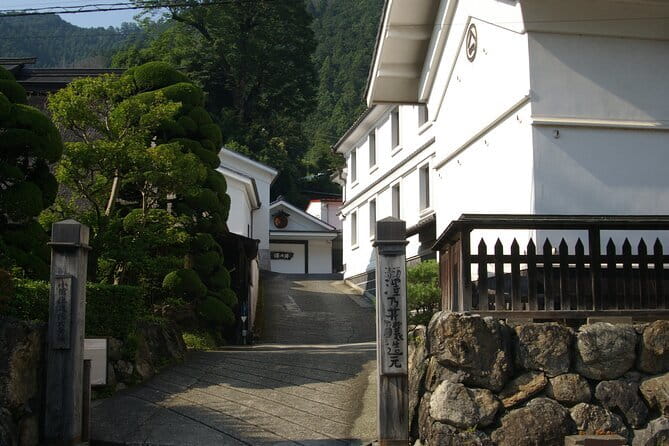
This experience fits first-time Tokyo visitors who want an easy introduction to Asakusa. It also suits people who like walking, local food districts, traditional buildings, and small-group conversation.
History-minded visitors will get the most from the Kaminarimon and Sensoji sections. People more interested in food and nightlife may value Hanayashikidori and Hoppy Street just as much.
You should be comfortable walking for about 90 minutes. The stated fitness requirement is moderate, and there is no suggestion of a seated tour or included transportation between stops. Wear comfortable shoes and bring what you need for an evening outdoors.
Families can use the tour as a simple way to orient themselves, though the food and pub section may be more interesting for adults. Couples and solo visitors may also like the small group, since it creates a chance to meet people without the demands of a large organized outing.
If you want a deep temple visit, this is not the right format. The evening timing limits access to the main hall. If you want a relaxed neighborhood walk with a guide, it is a better match.
Timing, transport, and booking advice
The meeting point is near public transportation at the Asakusa Culture Tourist Information Center. That makes the start relatively easy to reach, but you should still allow time to find the exact building and guide.
The activity is often booked about 25 days in advance. That does not mean every date will sell out, but it is a good reason to reserve early if your Tokyo schedule is fixed.
Confirmation arrives when you book, and the ticket is mobile. You do not need to collect a paper voucher. The group maximum is eight people, which keeps the experience personal but also limits the number of available places.
Free cancellation is allowed up to 24 hours before the start time for a full refund. Changes or cancellations made less than 24 hours before the start time are not accepted for a refund, and the cut-off follows local Tokyo time.
Should you book the Asakusa night tour?
Book it if you want a compact, guided introduction to Asakusa that ends near food and drink. The route is well chosen: Kaminarimon gives you the famous photo, Nakamise shows the temple approach, Sensoji provides the cultural center, and the final streets reveal Asakusa’s evening side.
The strongest reasons to choose it are the eight-person limit, the easy public transport meeting point, and the useful finish on Hoppy Street. Guide Yugo has also been praised for being welcoming and helpful, though your guide may vary.
Skip it if entering Sensoji’s main hall is essential, since the hall closes at 6 p.m. You may prefer to visit the temple independently during the day, then return to Hoppy Street at night. For everyone else, $35 is a reasonable fee for a focused walk, local orientation, and a ready-made evening route.
FAQ
How long does the Tokyo Asakusa Sensoji Temple Night Walking Tour last?
The tour lasts approximately 1 hour and 30 minutes.
What is the price of the tour?
The price is $35 per person.
Where does the tour begin?
It begins at the Asakusa Culture Tourist Information Center, 2-chōme-18-9 Kaminarimon, Taito City, Tokyo 111-0034, Japan.
Where does the tour end?
The tour ends on Hoppy Street, Hoppy St, 2-chōme-8 Asakusa, Taito City, Tokyo 111-0032, Japan.
Can I enter Sensoji Temple during the tour?
You may not be able to enter the main hall because it closes at 6 p.m. The tour still visits the temple grounds and exterior.
How many people can join the tour?
The group has a maximum of eight people.
Is the tour suitable for anyone with limited mobility?
The experience requires a moderate level of physical fitness. The provided details do not give a specific accessibility assessment.
Can I cancel for a full refund?
Yes. You can cancel at least 24 hours before the local start time for a full refund. Cancellations or changes made less than 24 hours before the start time are not refunded.
More Night Tours in Tokyo



More Temples & Meditation in Tokyo
More Asakusa Tours in Tokyo

More tours in Tokyo we've reviewed




Asakusa Tours, compared.
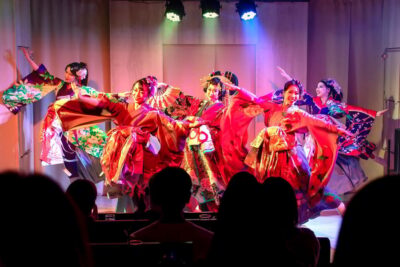 ★ 4.8Tokyo: Japanese Dance Cabaret Theater Asakusa-Kaguwa TicketFrom $492 hours
 ★ 4.7Tokyo: Meiji Shrine, Asakusa, Skytree Bus Tour and CruiseFrom $12210 hours
 ★ 4.9Tokyo: Roll and Authentic Sushi Making Class in AsakusaFrom $581h 40m
 ★ 4.8Tokyo: Asakusa Walking Tour with Sensoji Temple VisitFrom $222 hours
 ★ 5.0Tokyo Asakusa Rickshaw TourFrom $42
 ★ 4.5Tokyo Panoramic 1 Day: Meiji Shrine, Asakusa, Odaiba and SKYTREE®From $85