
Reviewed · SHIBUYA TOURS
30-Min Tokyo Central Private Heli Tour– Asakusa, Skytree, Shibuya
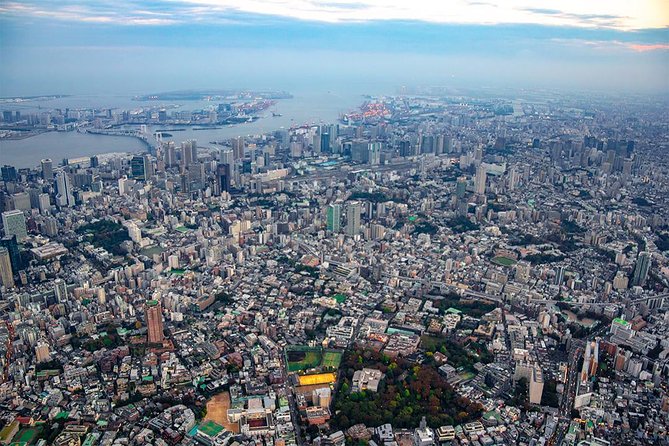
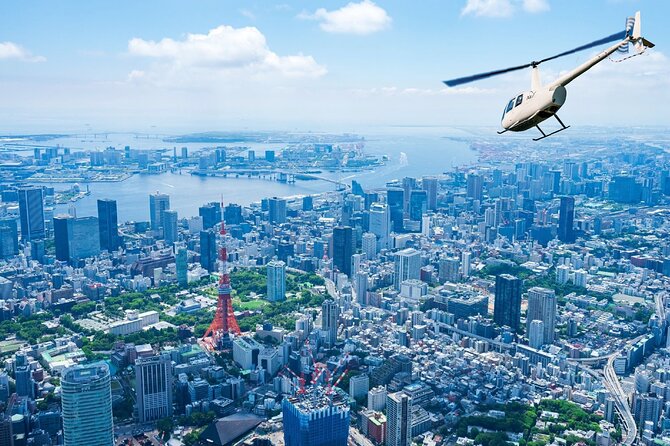
Tokyo looks huge from street level, but from a helicopter you can finally see how its districts fit together. This private flight lifts you above Tokyo Bay, Shibuya, Shinjuku, Asakusa, and Tokyo Skytree, with the Imperial Palace and National Olympic Stadium also part of the advertised view.
I like the small scale: only your group of up to three people flies together. I also like the unusual angle on Shibuya Crossing, where the famous intersection becomes a small, geometric patch below you. The main drawback is cost. At $1,887.77 per group, this makes the most financial sense when three people share it.
In This Review
- Key points before you book
- Why a helicopter changes your view of Tokyo
- Meeting the helicopter at Tokyo Heliport
- What the 45-minute booking really includes
- Tokyo Bay, the city’s wide-open edge
- Shibuya Crossing from the air
- Shinjuku and the central city from above
- Asakusa and Tokyo Skytree on the skyline
- A private flight, and what that means
- Is $1,887.77 a fair price?
- Weather and cancellation planning
- Who should book this Tokyo helicopter tour?
- Should you book it?
- FAQ
- Where does the helicopter tour begin?
- Where does the activity end?
- How long does the experience last?
- How many people can join one booking?
- What Tokyo sights can I see?
- Can I take photographs?
- Are there passenger weight limits?
- What happens if bad weather cancels the flight?
Key points before you book
- A private flight for up to three: You do not share the helicopter with a larger sightseeing group.
- About 25 to 30 minutes in the air: The full experience lasts about 45 minutes, including time at Tokyo Heliport.
- Tokyo Heliport departure: The base is at 4-chōme-7-25 Shinkiba in Koto City, near Tokyo Bay.
- Major sights from above: The planned views include Shibuya Crossing, Shinjuku, Asakusa, Tokyo Skytree, the Imperial Palace, and the National Olympic Stadium.
- Photos are allowed in flight: Photography and picture taking are banned at the Tokyo Heliport site, but you can take pictures inside the helicopter and during the flight.
- Weather controls the schedule: Poor conditions can cancel the flight, with a refund or alternative date offered.
Why a helicopter changes your view of Tokyo
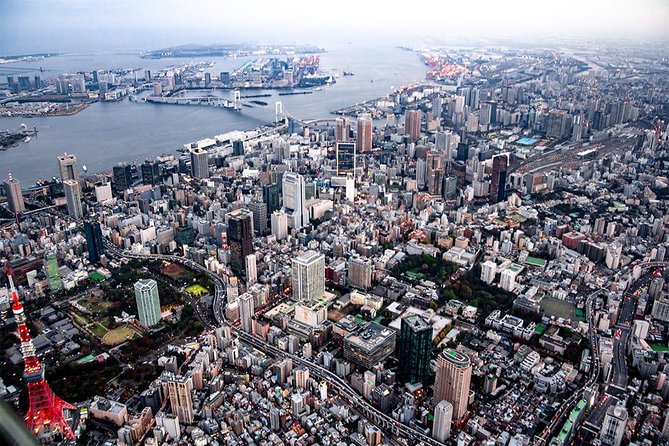
Tokyo is hard to grasp from the pavement. The city spreads across a huge area, and the rail system takes you from one district to another without showing you the spaces between them. From the air, the pattern becomes clearer: water and docks around Tokyo Bay, dense commercial districts inland, and landmark towers rising above the urban mass.
The flight is especially useful early in a Tokyo visit. You can see the relationship between areas you may later explore on foot, including Shibuya, Shinjuku, Asakusa, and the waterfront. It will not replace time in those neighborhoods, but it can help you get your bearings fast.
This is also a good choice if you have already seen Tokyo from observation decks. Tokyo Skytree gives you a fixed, high view. A helicopter gives you movement, changing angles, and the chance to look down at streets, intersections, roofs, bridges, and the bay.
The experience is private, but it is not presented as a guided sightseeing tour with a named guide. The supplied details do not list a guide’s name or promise live commentary. You should book it for the flight and the views, not for a long narrated history lesson.
A few more Tokyo tours and experiences worth a look
Meeting the helicopter at Tokyo Heliport
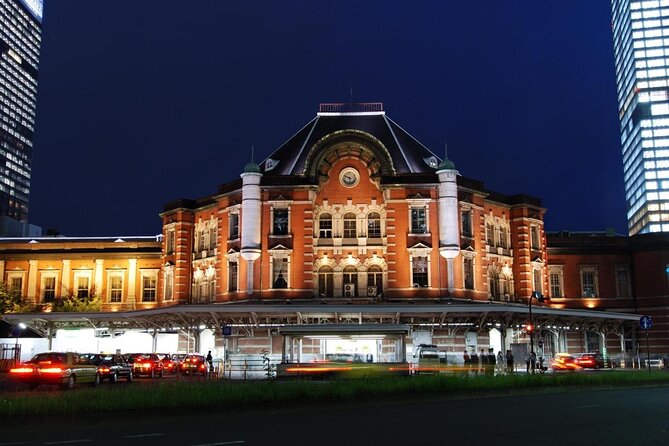
You begin and end at Tokyo Heliport, at 4-chōme-7-25 Shinkiba, Koto City, Tokyo 136-0082. The departure point is described as convenient for reaching the city, and it is near public transportation, but you should still allow enough time to get there. This is not a hotel pickup service.
The heliport’s location in Shinkiba places you close to Tokyo Bay, a fitting starting point for a flight that includes the waterfront. Once you arrive, expect the usual practical steps before boarding, including confirmation of the flight and attention to weight and safety rules.
One unusual rule matters for photographers: you cannot take pictures at the Tokyo Heliport site. That means no posed shot beside the helicopter at this departure point. You can photograph from inside the aircraft and during the flight, so keep your camera or phone ready once you are airborne, not while you are waiting on the ground.
The activity ends back at the same meeting point. Plan your onward schedule around that return rather than treating the flight as transportation between districts.
What the 45-minute booking really includes
The activity lasts about 45 minutes, but the airborne portion is shorter. The details describe a 30-minute flight, while the overview refers to a 25-minute helicopter ride. I would plan on 25 to 30 minutes in the air, with the remaining time covering arrival, boarding, and the return process.
That distinction matters at this price. You are paying for a short, tightly timed aerial experience, not a half-day sightseeing trip. The value comes from the access and the viewpoint, not from the number of hours.
The route is presented as a flight over Tokyo’s major areas rather than a series of ground stops. The itinerary does not promise landing at Asakusa, Shibuya, Shinjuku, or the other sights. You see them from above, then return to the heliport.
That makes this easy to fit into a busy Tokyo schedule. It also means you should not book it if your main goal is to walk through Shibuya Crossing, visit the Imperial Palace grounds, or shop around Skytree. Those require separate visits.
Tokyo Bay, the city’s wide-open edge
Tokyo Bay is likely to be one of the first useful reference points on the flight. From ground level, the waterfront can feel separate from central Tokyo. From above, you can see the contrast between open water, port facilities, roads, and the tightly packed city beyond.
This portion of the flight gives the tour breathing room. Tokyo is famous for density, but the bay shows the city from a broader scale. If you have spent days among buildings and train stations, the open view can be a welcome change.
The bay is also a good place to watch how weather affects visibility. On a clear day, the broad view should help you see farther across the city. In poor weather, the flight may be canceled, which is one reason to avoid placing this activity on the final day of your trip.
Shibuya Crossing from the air
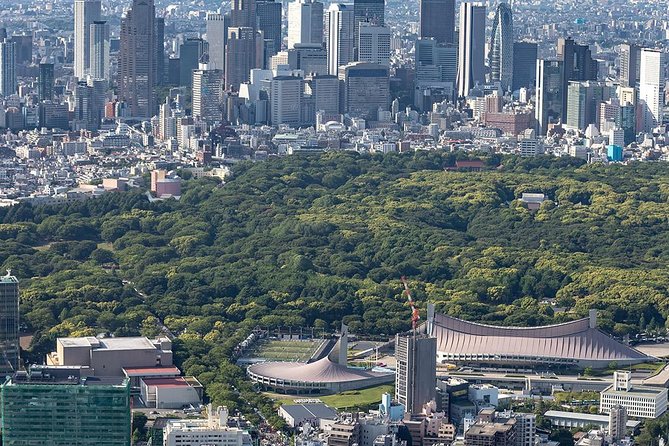
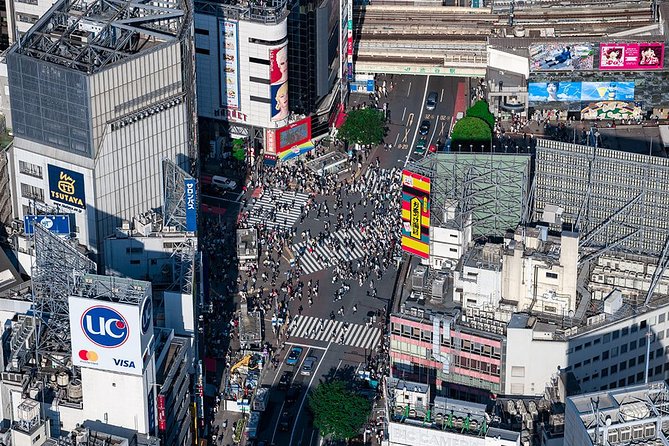
Shibuya Crossing is one of the flight’s most distinctive targets. At street level, you experience the intersection as a wall of people and traffic signals. From above, you see its shape and movement in a single frame.
This is the kind of sight that works especially well from a helicopter because the point is not just the landmark itself. The value lies in the contrast between the small crossing and the scale of the surrounding district. You may also find that aerial photographs are easier here than on the ground, where crowds and tall buildings limit your view.
The National Olympic Stadium is also listed among the sights you may see. Its large form makes more sense from above than from a crowded street, though the exact angle and visibility depend on the flight path and conditions.
Do not expect to hover over every landmark for a long time. A short flight has to cover several parts of Tokyo, and the helicopter will continue moving. If a particular view matters most to you, ask about the planned route before departure, though the available details do not guarantee a custom flight path.
A few more Tokyo tours and experiences worth a look


Shinjuku and the central city from above
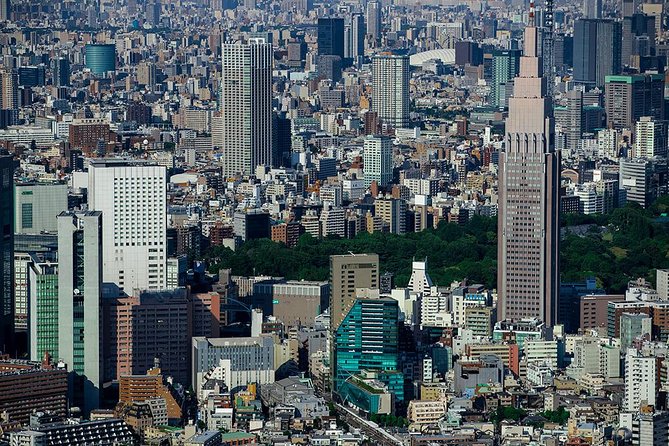
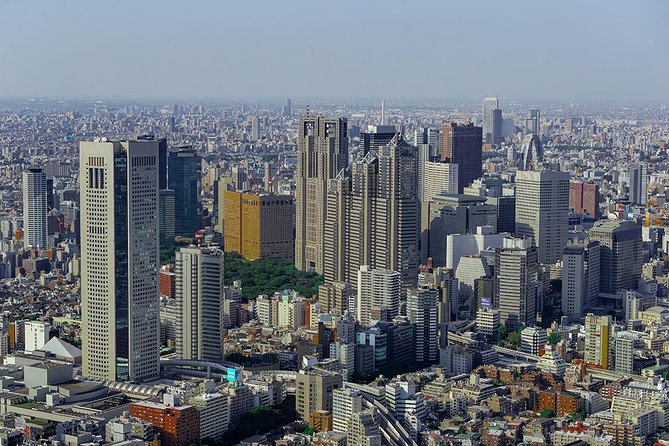
Shinjuku gives you another useful aerial contrast. The district is known for its dense cluster of commercial buildings, rail lines, and towers. From the helicopter, you can place that concentration within the much larger spread of Tokyo.
The city’s scale is the real attraction here. A walking tour can show you a street, a station, or a building. The flight gives you the relationship between them. I find that helpful for making sense of Tokyo’s districts, especially if you are trying to decide where to spend later days.
The Imperial Palace is also included among the advertised views. From above, you may see the contrast between its open grounds and the surrounding built-up center. The tour does not include a visit or landing there, so think of it as a brief aerial reference rather than a palace tour.
Asakusa and Tokyo Skytree on the skyline
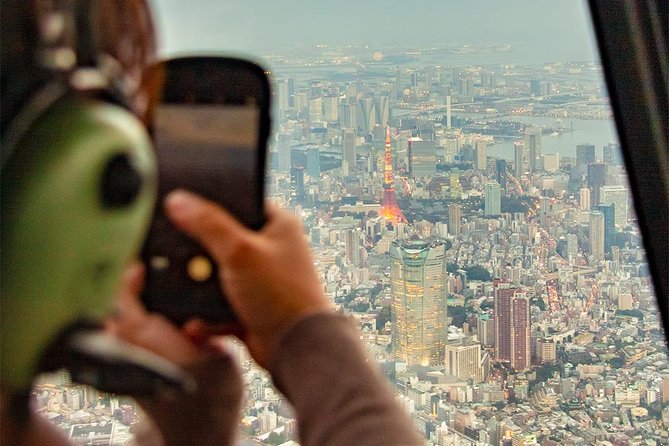
The advertised route includes Asakusa and Tokyo Skytree, two sights that are easy to connect visually from above. Asakusa represents one of Tokyo’s best-known historic districts, while Skytree rises as a modern marker visible across much of the city.
Seeing Skytree from a moving helicopter offers a different experience from standing at its base or looking out from its observation decks. You are not simply looking outward from the tower. You are looking across at it, with the surrounding city helping show how tall and prominent it is.
The details do not state exactly how long the helicopter spends over Asakusa or Skytree. Expect these to be part of a broader route rather than separate stops. Weather, air traffic, and flight operations can affect what you see and how clearly you see it.
For photos, this is where a phone with a ready camera can help. You will have limited time to frame each sight. Since ground photography at the heliport is not allowed, your best keepsakes will come from the flight itself.
A private flight, and what that means
The maximum is three people per booking, and this is a private activity. That is a real advantage for couples, families, or a small group of friends who want the aircraft to themselves.
A private flight can also make the experience feel less formal. You are not trying to share every window view with a busload of people or coordinate with strangers. If one person wants to focus on photography, another can simply watch the city, and the group can enjoy the occasion together.
The small capacity does not mean the aircraft can ignore weight limits. The published details set a maximum of 286 pounds, or 130 kilograms, per passenger, and a maximum combined weight of 530 pounds, or 240 kilograms. One line also lists 287 pounds per passenger, so I would confirm the exact limit when your booking is accepted.
Passengers who have gone scuba diving within the previous 24 hours cannot participate. This is a safety restriction, not a minor suggestion, so plan your activities around it.
Service animals are allowed, and most people can take part. The activity is near public transportation, but there is no promise of hotel transfer. Confirmation arrives within 48 hours of booking, subject to availability.
Is $1,887.77 a fair price?
The price is $1,887.77 per group of up to three. Split three ways, that is about $629.26 per person. For two people, the per-person cost is much higher, so the value improves when you can fill all three available places.
I would compare this with what the experience replaces for you. If you want a private, memorable event and aerial views that no street-level tour can provide, the price may feel justified. If you simply want a high view of Tokyo, an observation deck will cost much less.
The private format is the strongest value point. You are not paying only for a seat in the sky. You are paying for a small group, a dedicated flight, and a rare view of several major parts of Tokyo in one short outing.
The flight is also easy to understand as a special-occasion purchase. It could suit a birthday, anniversary, proposal, or final-day memory, although you should not schedule it so late that bad weather leaves you with no replacement option.
Weather and cancellation planning
This experience requires good weather. If poor conditions, aircraft problems, other flight disruptions, or a flight cancellation prevent departure, you receive a full refund or can move to another date.
You can cancel for a full refund if you do so at least 24 hours before the local start time. Cancellations or changes made inside that 24-hour window are not accepted for a refund.
I recommend booking the flight earlier in your Tokyo stay rather than at the very end. The operator says that if you plan to fly within five days, you should check the forecast because bad weather may cancel the tour. An earlier booking gives you more room to move the date.
The activity is booked on average 25 days ahead, which suggests that you should not assume you can arrange it at the last minute. Confirmation remains subject to availability, so keep your dates flexible if this is a priority.
Who should book this Tokyo helicopter tour?
I would choose this flight if you want a private experience, have a strong interest in photography, or enjoy seeing a city from unusual angles. It is especially suited to a group of three, since sharing the cost makes the price easier to accept.
It also works well for repeat visitors who have already visited Tokyo’s main observation decks. The helicopter does not offer the same quiet, stationary view, but it shows the city in motion and gives you a stronger sense of distance between districts.
I would skip it if your budget is tight, you dislike weather-dependent plans, or you want detailed commentary about every landmark. The available information does not promise a named guide or extensive narration.
Should you book it?
Book this Tokyo helicopter flight if the private aerial viewpoint is the point of your day and you can share the cost with two other people. The mix of Tokyo Bay, Shibuya Crossing, Shinjuku, Asakusa, Skytree, the Imperial Palace, and the National Olympic Stadium gives you a broad view in a short time.
Skip it if you are mainly looking for a cheap panorama or a ground tour with plenty of time at each sight. For the right occasion, though, this is a memorable way to see Tokyo’s size, shape, and famous landmarks at once. Just allow for weather, confirm the weight rules, and remember that the best photographs come after takeoff.
FAQ
Where does the helicopter tour begin?
The tour begins at Tokyo Heliport, 4-chōme-7-25 Shinkiba, Koto City, Tokyo 136-0082, Japan.
Where does the activity end?
The flight ends back at the Tokyo Heliport meeting point.
How long does the experience last?
The total activity lasts about 45 minutes. The flight time is listed as 30 minutes, while the overview describes a 25-minute helicopter ride.
How many people can join one booking?
A maximum of three people can participate in one private booking.
What Tokyo sights can I see?
The advertised views include Tokyo Bay, Shibuya, Shinjuku, Shibuya Crossing, the Imperial Palace, Asakusa, Tokyo Skytree, and the National Olympic Stadium.
Can I take photographs?
Photography is banned at the Tokyo Heliport site. You can take photographs inside the helicopter and during the flight.
Are there passenger weight limits?
Yes. The published details set a limit of 286 pounds, or 130 kilograms, per passenger, with a maximum combined passenger weight of 530 pounds, or 240 kilograms.
What happens if bad weather cancels the flight?
You can receive a full refund or change to an alternative date if poor weather or another flight-related problem prevents the activity from operating.
More Tickets & Passes in Tokyo
More Asakusa Tours in Tokyo
More Shibuya Tours in Tokyo

More tours in Tokyo we've reviewed




Shibuya Tours, compared.
 ★ 5.0Official Street Go-Kart in ShibuyaFrom $76
 ★ 4.9Tokyo: Street Kart Experience in ShibuyaFrom $741 hour
 ★ 5.0Shibuya Meltdown Nightlife Tour: All-You-Can-Drink Bar HoppingFrom $106
 ★ 5.0Shibuya Official Street Go-Kart in Shibuya AnnexFrom $69
 ★ 5.0Tokyo: Shibuya Food Tour (13 dishes and 4 Eateries)From $77
 ★ 5.0Best of Shibuya Food TourFrom $217