
Reviewed · WORKSHOPS
Japanese Fan Painting Workshop ~ in a Tokyo Flower Shop
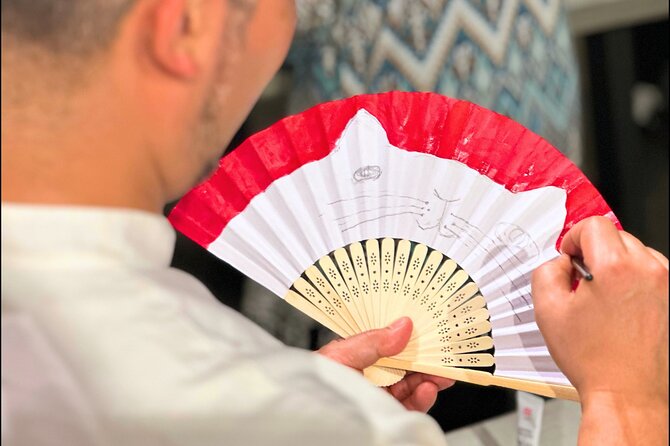
A Japanese fan painting workshop in a flower-filled Tokyo shop is a fine change of pace from temples, shopping streets, and crowded train platforms. You choose a fan, learn about its place in Japanese culture, then paint your own design with help from Ruby and her team.
I like the quiet flower-shop setting, which gives the two-hour session a calm rhythm. I also like that beginners are welcome: the instructor offers patient guidance, and you can copy classic motifs such as cherry blossoms and koi fish or create something personal.
The main consideration is value. At $60 per person, this is not a quick craft stop, and one participant felt the pace and cost did not quite match the amount of artwork completed. You are paying for instruction, materials, a cultural introduction, and a handmade souvenir, not just paint and a fan.
In This Review
- Key points at a glance
- Painting fans in a quiet corner of Tokyo
- Choosing a fan and planning your design
- Learning the story behind the fan
- Guidance for beginners and experienced painters
- A two-hour break from Tokyo’s busy streets
- What the $60 price includes
- Who should book this workshop
- Practical details before you go
- Should you book the fan painting session?
- FAQ
- Where does the Japanese fan painting workshop take place?
- How long does the workshop last?
- Where does the workshop finish?
- How much does the experience cost?
- What can I paint on the fan?
- Are painting materials provided?
- Is the workshop suitable for beginners?
- How many people can join the workshop?
- Can I cancel for a refund?
Key points at a glance
- Paint in a flower shop: The setting gives you a peaceful break from Tokyo’s fast streets.
- Ruby leads the experience: Ruby and her team welcome beginners and offer hands-on advice.
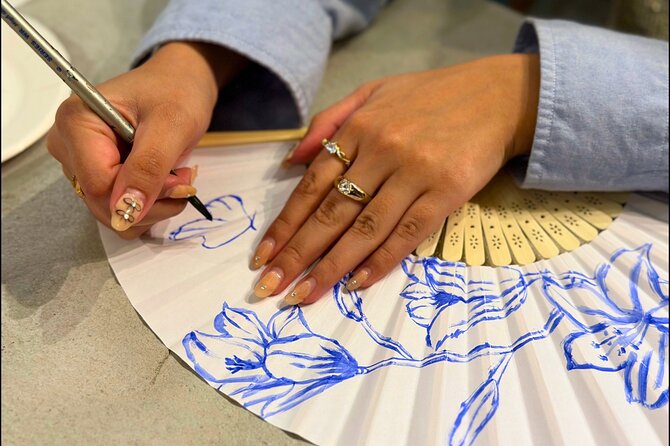
- Choose your own design: Try cherry blossoms, koi fish, scenic views, or an original idea.
- Useful painting tips: You receive guidance on working with acrylic and water-based paints on an irregular fan surface.
- Two hours, maximum 20 people: The session is long enough for instruction and painting without taking a full day.
- A practical souvenir: Your finished fan is decorative and can also help cool you during warm weather.
Painting fans in a quiet corner of Tokyo
The experience begins at The Park House Chiyoda Kojimachi, at 6-chome 46 Kojimachi in Chiyoda City, Tokyo. The workshop ends at the same place, so you do not need to arrange a second pickup point or wonder where the activity finishes.
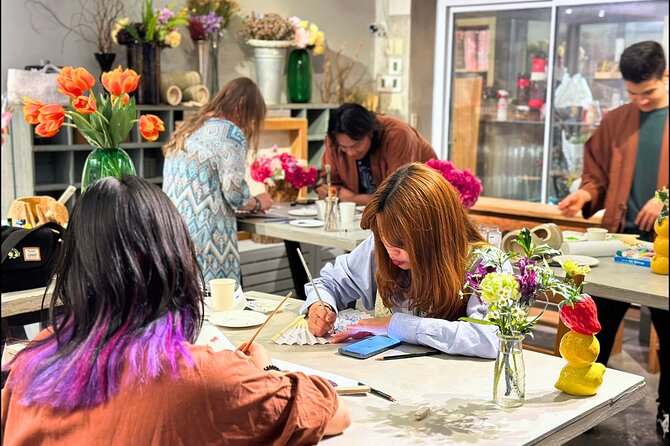
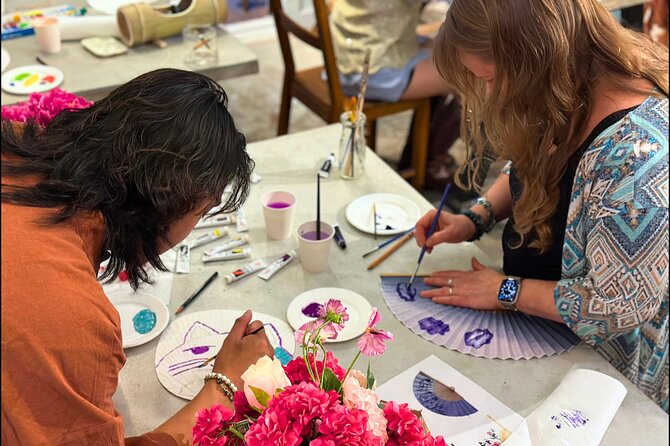
The flower shop sets the mood before you even pick up a brush. Instead of sitting in a plain classroom, you work in a space filled with flowers. That matters in Tokyo, where a calm indoor activity can feel like a welcome pause after a morning of sightseeing.
You will be welcomed by Ruby and her team, then introduced to the available fans. The information provided does not specify an exact inventory, but you can expect a selection of fan shapes, sizes, and colors. That choice gives you an early creative decision: you can select a fan that suits your intended design rather than receiving the same blank item as everyone else.
The shop is near public transportation, though no specific station or walking time is provided. I would check the exact route before leaving your hotel, especially if you are booking a timed session. A mobile ticket is accepted, and confirmation arrives when you book.
A few more Tokyo tours and experiences worth a look



Choosing a fan and planning your design
The fan is both your art surface and a useful object. In warm months, it can help you cool off, so the finished piece is not simply something to pack into a suitcase and forget.
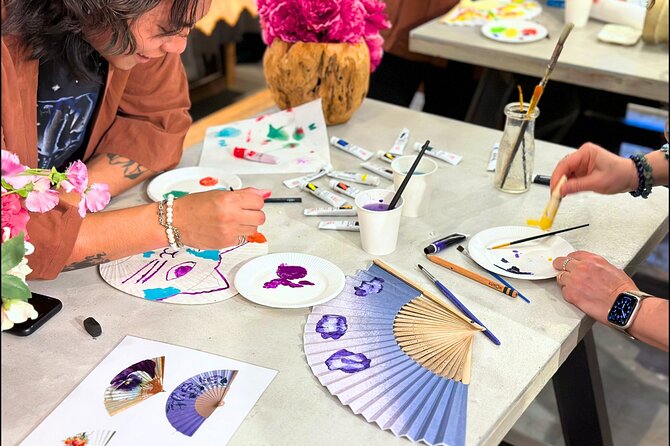
The unusual shape makes the activity more interesting than painting on a flat sheet of paper. It also creates the workshop’s main technical challenge. The curves and folds can affect how paint spreads, so Ruby’s instruction is useful even if you have painted before.
You can follow traditional Japanese themes. Cherry blossoms offer an approachable pattern, while koi fish give you a more detailed subject. Scenic views are another option. These motifs connect the craft to familiar Japanese visual traditions without forcing you to reproduce a formal work.
I like the freedom to do your own thing. If you are not confident with art, a simple motif may be easier to manage. If you already enjoy painting, you can use the fan as a small design project and test how your colors work across its uneven surface.
The session does not require you to arrive with an artistic plan. You receive the fan, paints, and delicate brushes on site. The supplied information does not state how many fan styles or colors are available, so treat the selection as a pleasant part of the activity rather than a guaranteed custom order.
Learning the story behind the fan
Before or during the painting, the instructor explains the history and significance of fans in Japanese culture. This cultural context gives the craft more meaning than a standard souvenir-painting class.
A Japanese fan can be decorative and functional at the same time. Its role as a cooling tool is easy to understand, but painted fans also carry visual ideas through color, seasonal subjects, and familiar images. The workshop uses that background to show why cherry blossoms, koi, and scenic views work well as subjects.
The cultural talk is not presented as a long museum lecture. It supports the hands-on work. You learn enough to understand the motifs, then apply that knowledge with a brush in your own way.
For me, this balance is important. You are not only making an object, and you are not sitting through a history lesson with no chance to create. The value comes from the two parts working together.
Guidance for beginners and experienced painters
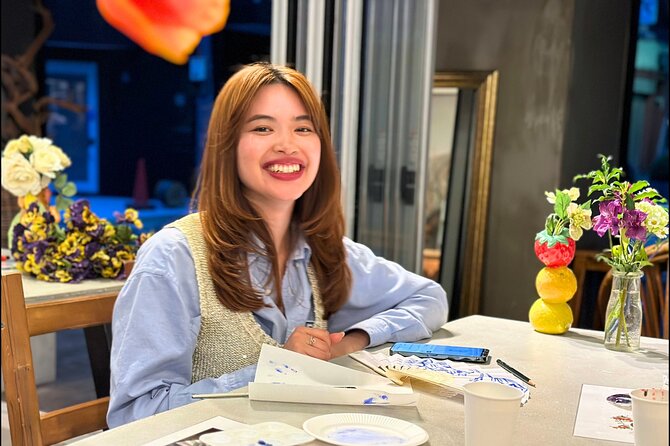
You do not need an art background. One couple with little painting experience received patient, kind guidance and left with a souvenir they enjoyed. That is a good sign for anyone who worries that an uneven fan surface is too hard to handle.
Ruby’s help appears to be practical rather than overly formal. You can ask how to make a design pop, how to place a motif, or how to handle paint on the fan’s irregular surface. The available paints include acrylic and water-based options, and advice is provided on working with both.
That technical point is worth noting. Acrylic and water-based paints behave differently, and a fan is not a perfectly flat canvas. If you have painted on paper or a board before, you may still need to adjust your brush pressure and paint amount.
You should also expect a creative process rather than a polished professional result. Your finished fan will reflect your own skill and choices. The instructor can guide you, but the activity does not promise that every participant will produce a gallery-quality piece.
That is part of the appeal. A slightly imperfect fan can be a better travel memory than a mass-produced souvenir, especially if you remember the flower-filled room and the design choices that led to the final result.
A two-hour break from Tokyo’s busy streets
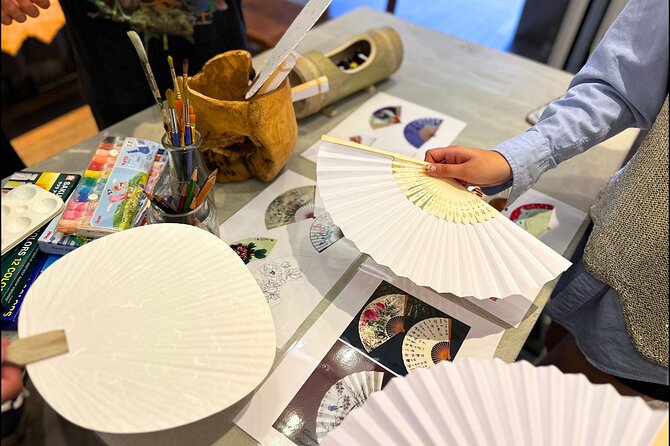
The session lasts about two hours. That is enough time to settle in, hear about fan culture, choose your subject, paint, and take photos at the end without giving up an entire day.
The pace may feel gentle. One participant described a quiet afternoon spent designing and painting a fan, with photos afterward. That is ideal if you want a low-pressure activity, but it may feel slow if you prefer a tightly packed schedule or expect constant instruction.
I would place this workshop between major sightseeing plans rather than before a rushed reservation. The meeting and end point are the same, but the activity itself is designed for concentration. You will get more from it if you allow yourself to work carefully instead of watching the clock.
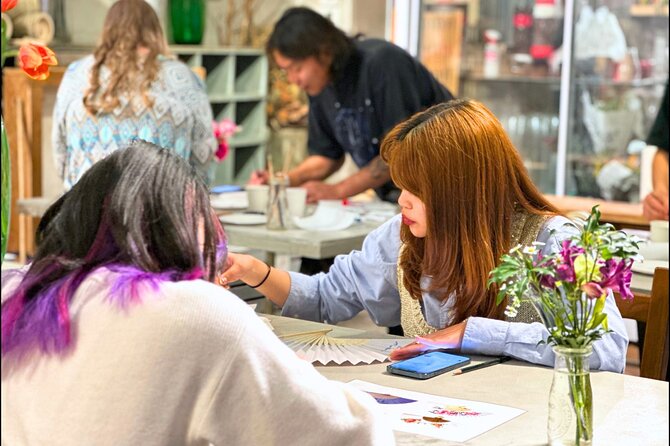
The maximum group size is 20 people. That is large enough to meet other artsy people in Tokyo, but small enough to retain a workshop feel. The exact number at your session can vary, and the information does not promise one-to-one instruction throughout.
The social side may appeal to solo visitors and couples alike. You can chat with people who have also chosen a creative activity, while still spending most of the session on your own fan.



What the $60 price includes
The price is $60 per person. At first glance, that is a noticeable cost for a two-hour craft activity, especially when compared with buying a ready-made fan.
The comparison is not quite fair, though. You are paying for the flower-shop setting, the instructor’s help, the cultural introduction, the choice of fan, paints, brushes, and the time to make a personal item. The fan is a souvenir you create rather than simply purchase.
I would call the price reasonable for visitors who value guided activities and handmade keepsakes. It is less convincing for someone focused only on the finished object or expecting a large amount of painting time.
The workshop’s strongest value comes from the setting and support. Beginners receive assistance, and even experienced painters can learn how acrylic and water-based paints behave on an irregular surface. If you already take art classes often, you may find the session less distinctive, particularly if you expect advanced instruction.
The overall rating is 4.8 from nine ratings, with praise focused on the welcoming atmosphere, patient guidance, originality, and the quality of the shared experience. The smaller number of ratings means I would treat that score as encouraging rather than conclusive.
Who should book this workshop
I would recommend it most strongly to:
- Couples seeking a shared activity that produces a souvenir
- Solo visitors who enjoy meeting other creative people
- First-time painters who want patient guidance
- Anyone needing a calm afternoon away from crowded attractions
- Repeat visitors looking for something different from standard Tokyo stops
- Families or mixed groups where most people can take part
The activity is also a good fit if you like objects with a story. You will remember choosing the fan, testing colors, and working out how to paint across its shape.
I would be more cautious if your main goal is a serious art lesson. The workshop introduces techniques and offers useful advice, but the available information does not describe an advanced curriculum, specialist training, or a formal finished-work critique.
It may also disappoint you if you want a fast, highly structured event. The relaxed pace is central to the experience, and one participant felt the session was pleasant but not fully worth the cost. That criticism is fair to keep in mind.
Practical details before you go
The meeting point is The Park House Chiyoda Kojimachi, Japan, 102-0083 Tokyo, Chiyoda City, Kojimachi, 6-chome 46. The activity finishes back at this meeting point.
You receive confirmation at booking and can use a mobile ticket. The site is near public transportation, but the exact transit directions are not included, so check your route and allow time to find the flower shop.
Most people can participate, and service animals are allowed. The listed group limit is 20 people. The information does not specify accessibility details for the shop or the painting tables, so contact the provider if you need a particular arrangement.
Free cancellation is available if you cancel at least 24 hours before the local start time. Cancellations or changes made less than 24 hours before the start are not accepted for a refund.
Booking is often made well ahead of time, with an average lead time of 47 days. That does not mean you must book exactly 47 days out, but it suggests that advance planning is wise if the workshop fits a fixed Tokyo itinerary.
Should you book the fan painting session?
Book it if you want a calm, hands-on Tokyo experience and like the idea of taking home something you made yourself. The flower shop, the cultural background, and Ruby’s patient help give the activity more character than a basic souvenir-painting stop.
I would especially choose it for a free afternoon, a couple’s activity, or a break from crowded sightseeing. At $60, it is best judged as a guided cultural craft session rather than a cheap art supply purchase.
Skip it if you want advanced painting instruction, a packed two hours, or the lowest-cost way to buy a fan. For everyone else, this is a gentle and original way to spend part of a Tokyo day, with a useful souvenir at the end.
FAQ
Where does the Japanese fan painting workshop take place?
It takes place at The Park House Chiyoda Kojimachi in Kojimachi, Chiyoda City, Tokyo, Japan.
How long does the workshop last?
The activity lasts approximately two hours.
Where does the workshop finish?
The activity ends back at the meeting point at The Park House Chiyoda Kojimachi.
How much does the experience cost?
The listed price is $60 per person.
What can I paint on the fan?
You can explore traditional subjects such as cherry blossoms, koi fish, and scenic views, or create your own design.
Are painting materials provided?
Yes. The workshop provides fans, paints, and delicate brushes for the activity.
Is the workshop suitable for beginners?
Yes. Most people can participate, and the instructor provides guidance. Beginners can receive help with fan painting techniques and design choices.
How many people can join the workshop?
The maximum group size is 20 people.
Can I cancel for a refund?
Yes. You can receive a full refund if you cancel at least 24 hours before the local start time. Cancellations and changes made less than 24 hours before the start are not accepted for a refund.
More Workshops & Classes in Tokyo

More tours in Tokyo we've reviewed






Workshops, compared.
 ★ 5.0Sushi Making Tokyo Roll and Authentic Japanese Sushi ClassFrom $59
 ★ 4.9Tokyo: Roll and Authentic Sushi Making Class in AsakusaFrom $581h 40m
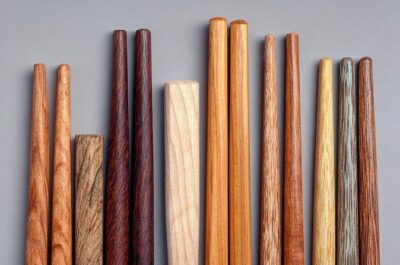 ★ 5.0Tokyo Shinjuku Chopsticks Making ClassFrom $20
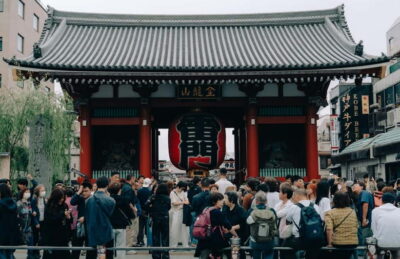 ★ 4.9Tokyo: Sushi Making Class in a Happi Coat near a Famous SpotFrom $421h 30m
 ★ 4.8Chopstick Making Workshop in GinzaFrom $251 hour
 ★ 5.0Tokyo Sushi Making Class in Tsukiji with Professional ChefFrom $49