
Reviewed · UENO & YANAKA WALKS
The Old Quarter of Tokyo – Yanaka Walking Tour
Tokyo’s neon districts get the headlines, but Yanaka shows a quieter, older city. Over about three hours, you walk past wooden homes, Buddhist temples, a historic cemetery, red shrine gates, and a local shopping street. It is a useful change of pace from Ginza, Omotesando, and the city’s crowded center.
I like two things especially: the small group of no more than 10 makes it easy to ask questions, and the guides explain how Buddhist and Shinto customs fit into daily life. Aya, Junko, Rei, Mei, and Polina are among the guides praised for clear English, patience, and practical local tips. The main drawback is the outdoor format: summer heat, humidity, and sun can make three hours feel long without comfortable shoes, water, and a hat.
In This Review
- Key points to know before you book
- Why Yanaka feels unlike central Tokyo
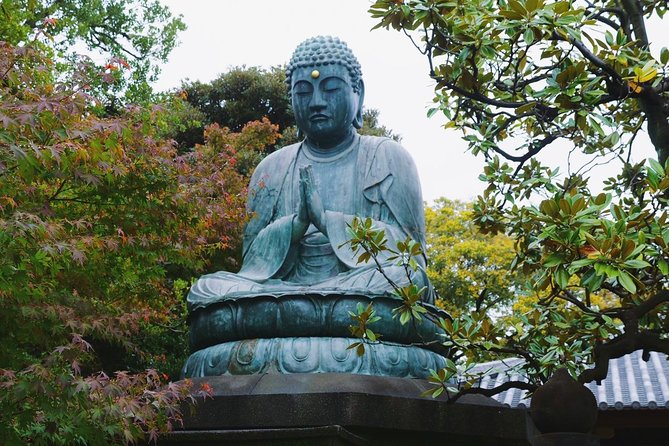
- Tennoji Temple and the Yanaka Buddha
- Walking through Yanaka Cemetery
- Wooden houses at Ueno-Sakuragi Atari
- Enju-ji Temple and the god of strong legs
- Nezu Shrine and its red torii gates
- Hebimichi and the ordinary streets of Yanaka
- Yanaka Ginza, the best finish for food and shopping
- The guides make the difference
- Is $40 a fair price?
- Timing, comfort, and practical details
- Who should book this Yanaka walk?
- Should you book it?
- FAQ
- How long does the Yanaka walking tour last?
- Where does the tour begin?
- Where does the tour finish?
- What places are visited?
- Is food included in the tour price?
- How large is the group?
- Is the tour conducted in English?
- What happens if the weather is poor?
Key points to know before you book
- A different Tokyo: See residential lanes and wooden houses instead of skyscrapers and major shopping avenues.
- Six meaningful stops: The walk includes Tennoji Temple, Yanaka Cemetery, Ueno-Sakuragi Atari, Enju-ji Temple, Nezu Shrine, and Yanaka Ginza.
- Small-group attention: The group is limited to 10 people, so questions and photo requests are manageable.
- Food comes at the end: Yanaka Ginza is a good place to try local snacks, but food and drinks cost extra.
- A guide adds the context: Expect explanations of shrine manners, Buddhist customs, local stories, old homes, and neighborhood life.
- Good walking shoes matter: The tour lasts about three hours and requires walking outdoors in changing weather.
Why Yanaka feels unlike central Tokyo
Yanaka gives you a Tokyo that is easy to miss if you stick to the big sights. Parts of the neighborhood escaped the World War II bombings and later fires, so wooden houses, narrow lanes, temples, and small local businesses still shape the streetscape.
This is not a polished historical district frozen for visitors. It is a working residential area. You pass ordinary homes, quiet back streets, small religious sites, and shops serving local needs. That makes the walk useful if you want to understand how older Japanese neighborhoods function, not just photograph a famous building.
The contrast with modern Tokyo is the point. You can spend the morning among bright signs and packed train stations, then arrive near Nippori Station and find a much slower rhythm. The tour begins at 2 Chome-19 Nishinippori, near Nippori Station, and finishes at Yanaka Ginza. Since the route ends in a shopping street, you can continue eating and browsing rather than having to find your next activity.
A few more Tokyo tours and experiences worth a look

Tennoji Temple and the Yanaka Buddha
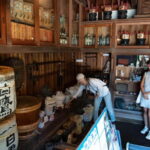
The first stop is Tennoji Temple, where you see the Yanaka Buddha, created in 1690. The visit lasts about 15 minutes and admission is free.
The statue gives the guide a useful opening to explain Japanese religious life. You will not simply hear a date and take a picture. The guide connects the temple with wider ideas about Buddhist practice and the role of religious places in the neighborhood.
This stop is brief, which suits the tour. You get an introduction without spending half the morning at one temple. If you have already visited major temple complexes elsewhere in Japan, the appeal here is less about scale and more about local setting and explanation.
Walking through Yanaka Cemetery
From Tennoji, the group walks into Yanaka Cemetery for another 15-minute stop. This is one of the more unusual parts of the route because it offers a look at a Japanese cemetery and the customs connected with it.
Your guide explains how local people treat and maintain cemetery spaces. The setting also reinforces the character of Yanaka. Religious sites are not isolated attractions here. They sit close to homes, lanes, shops, and everyday routines.
You should approach this section respectfully. It is not a dramatic sightseeing stop, and you may prefer the temples and shrine if you want grand architecture. Still, it adds cultural depth that you would probably miss on a self-guided walk, especially if you are unsure about local etiquette.
Wooden houses at Ueno-Sakuragi Atari
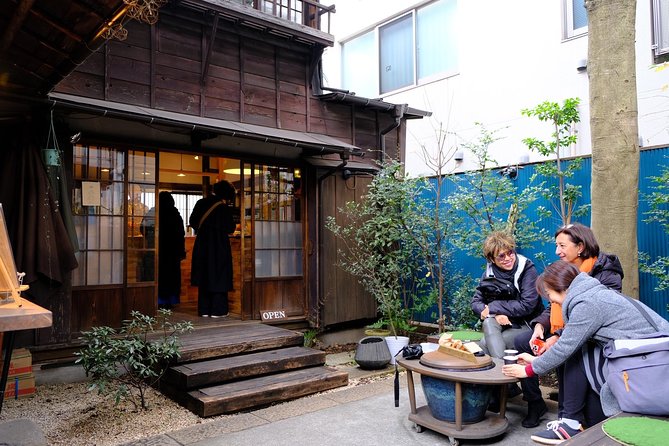
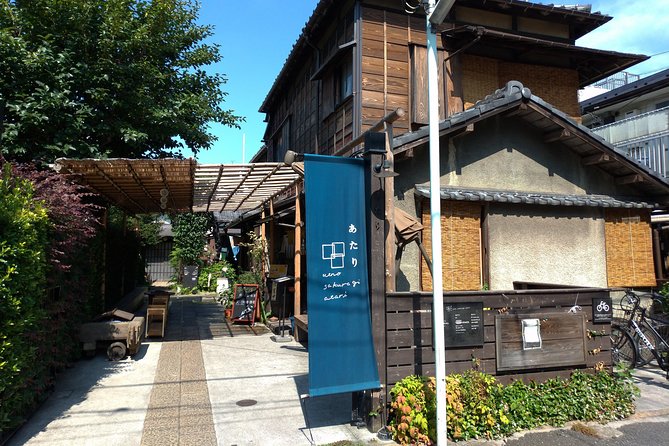
The walk continues to Ueno-Sakuragi Atari, where roughly 80-year-old wooden houses have been renovated into a cafe, bakery, and beer hall. The site functions as a community space for local residents, and the stop lasts about 15 minutes.
I like this part because it shows how an old neighborhood can remain useful without losing its character. You see traditional construction adapted for present-day life rather than preserved behind glass. A bakery or cafe inside an older wooden building tells you more about the district’s current identity than a row of restored facades with no daily purpose.
Admission is not included, though the scheduled visit does not require you to buy anything. If you choose to stop for a drink or snack, budget separately. This is also a natural point for a short break, which helps keep the pace comfortable.
The tour also points out a 100-year-old cider tree, described as a symbol of Yanaka. It is a small detail, but that is part of the charm. The walk is built from local markers and stories rather than one famous monument.
Enju-ji Temple and the god of strong legs
Enju-ji Temple is a short stop of about five minutes. A deity associated with strong legs is enshrined here, rather than one of the more familiar Buddhist figures. Wooden boards carry wishes from people with foot problems.
This is the kind of detail that makes a neighborhood tour worthwhile. It gives you a glimpse of how religion can address very specific concerns in ordinary life. The stop is short, so you will not get an extended temple visit, but the story is memorable and easy to connect with.
Admission is listed as not included. The supplied information does not specify a separate entrance charge, so you should treat personal purchases or donations as your own expense.
Other walking tours we've reviewed in Tokyo



Nezu Shrine and its red torii gates
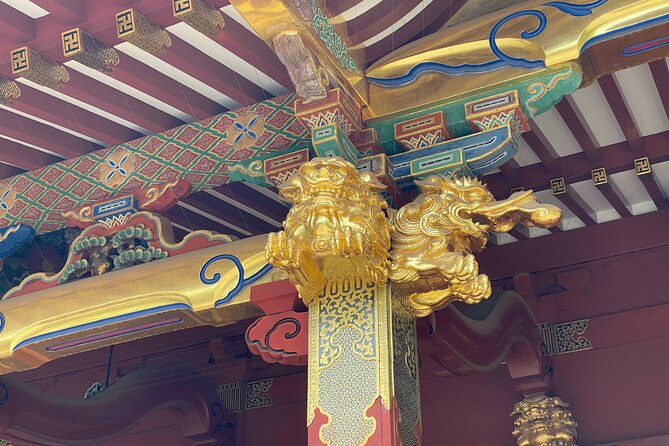
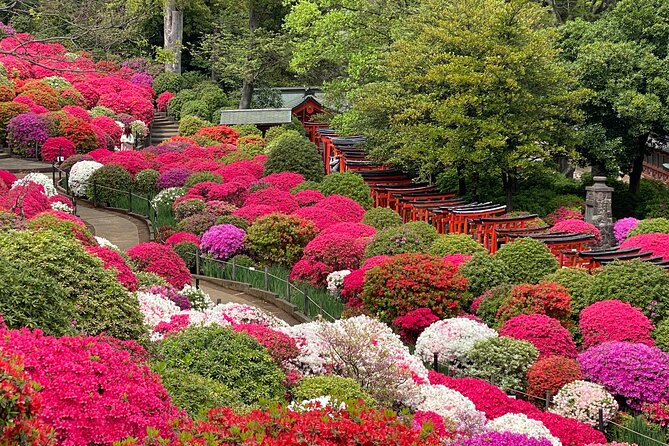
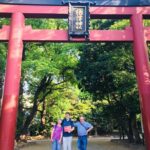
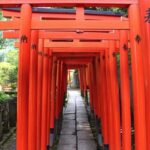
Nezu Shrine receives about 20 minutes, making it the longest formal sightseeing stop. The shrine is known for rows of red torii gates that recall the famous gates at Fushimi Inari in Kyoto. It is also presented as one of Tokyo’s most beautiful Shinto shrines and offers strong photo opportunities.
The guide explains shrine etiquette, which is especially helpful if you are new to Japan. Knowing how to behave at a Shinto shrine lets you pay attention to the place rather than worry about every movement. You learn the difference between simply visiting a scenic site and entering a living religious space with its own customs.
The red gates are likely to draw your camera, but try to give the shrine more than a quick photo stop. The explanation of manners and Shinto practice is the real value here. The time is enough for a focused visit, though not for a long, unhurried exploration of every corner.
Hebimichi and the ordinary streets of Yanaka
Between the larger sights, the route uses Hebimichi, a back street through a residential area. This is where you see Japanese daily life up close.
The lane is important because it links the formal attractions with the neighborhood itself. Temples and shrines can be visited independently, but a guide helps you read the spaces between them. You might notice older homes, compact streets, and the quiet routines that are easy to overlook when moving from one major sight to another.
Do remember that this is a residential area, not a staged open-air museum. Keep voices low, avoid blocking narrow lanes, and ask before photographing people or private property. The tour’s small size helps, but courtesy matters more than group size.
Yanaka Ginza, the best finish for food and shopping
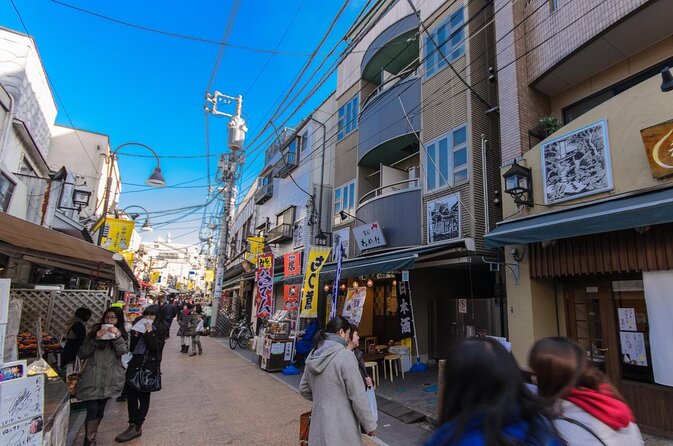
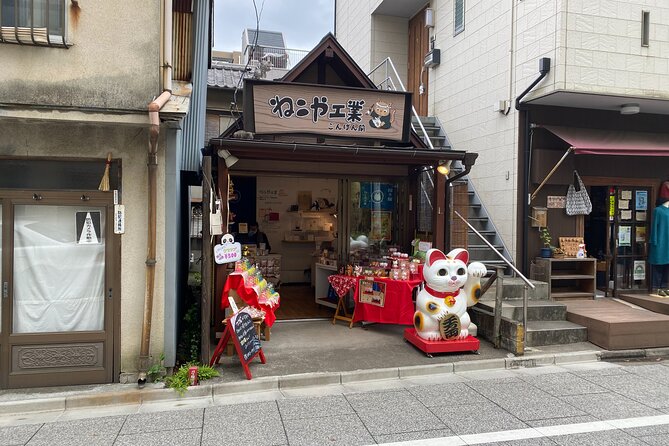
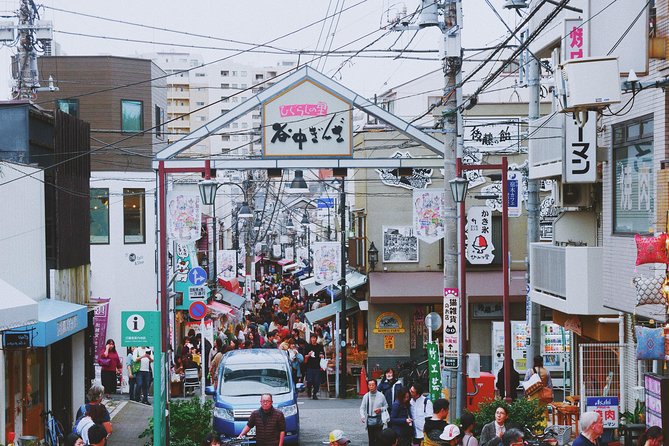
The final stop is Yanaka Ginza Shopping Street, where the guide explains the shops and the normal rhythm of local shopping. You can try regional foods and sweets here, but food is not included in the $40 tour price.
Ending at Yanaka Ginza works well. After several temples and quiet lanes, you finish somewhere with more choice and energy. You can browse local products, pick up a snack, or continue on your own after the official walk ends.
The guide’s suggestions are useful here. Mei, for example, is praised for pointing out good places for street food. Since the tour does not include tastings, you control the cost and can choose what appeals to you. That is better for many people than paying for a fixed food package, though you should bring extra yen or a payment method accepted by the shops.
The street is also a practical end point. If your group has different interests, some can eat while others shop. The tour does not provide transportation back to your hotel, so check your next train connection before setting off.
The guides make the difference
The strongest feature of this experience is the guide rather than any single sight. You may be led by Aya, Junko, Rei, Mei, Polina, Kiyo, Mami, or another member of the local team. The individual style can vary, but the guide is expected to speak English and lead the group through the neighborhood.
Aya is praised for answering questions, offering to take photos, bringing laminated images, and explaining the area with patience. Junko is noted for her familiarity with the neighborhood, and one guide who lives locally has used that knowledge to explain both the old district and its present-day life.
Rei is described as particularly strong in English and willing to answer questions from the whole group. Mei is associated with street-food suggestions, while Polina is praised for folk stories and local history. These details matter because Yanaka’s appeal depends on interpretation. Without context, you see a temple, a cemetery, a wooden house, and a shopping street. With a good guide, you begin to understand how they connect.
The tour’s published rating is 4.7 from 590 ratings, with 94 percent recommending it. That is a strong record, though you should still allow for the normal variation that comes with different guides, weather, and group dynamics.
Is $40 a fair price?
At $40 per person, this is not the cheapest way to walk through Yanaka. You can visit the temples, shrine, cemetery, and shopping street independently, and several stops are free.
The fee pays for more than movement from one address to another. You get an English-speaking local guide, cultural explanations, help with shrine manners, neighborhood stories, and a route that joins several places into a coherent half-day. For a first visit to Tokyo, I think that is fair value, especially if you want to ask questions rather than read signs on your phone.
The small-group limit improves the value. A maximum of 10 people gives the guide room to respond to questions and keep an eye on the pace. It also makes photo help easier. Food, drinks, personal expenses, and optional gratuities are extra, so the final cost depends on what you buy at Yanaka Ginza and Ueno-Sakuragi Atari.
Timing, comfort, and practical details
Plan for about three hours on foot. Wear shoes you can walk in comfortably, and bring sun protection and a hat in hot weather. One participant described conditions of 35 degrees Celsius and high humidity, so summer can be demanding.
The experience requires good weather. If poor weather causes cancellation, you are offered another date or a full refund. You can cancel for a full refund up to 24 hours before the start time, but changes or cancellations inside that window are not accepted.
The meeting point is near public transportation at Nippori Station. The tour ends at Yanaka Ginza, not back at the starting station. Mobile tickets are available, service animals are allowed, and the activity is listed as suitable for most people. The walking format may still be tiring if you have difficulty walking for several hours, so consider your own comfort rather than relying only on the general participation guidance.
Who should book this Yanaka walk?
I would choose this tour early in a Tokyo visit if you want cultural bearings before exploring on your own. It gives you a useful introduction to Buddhism, Shinto, Japanese cemeteries, old houses, shopping streets, and local etiquette in one compact route.
It suits you especially well if you have already seen the major city center and want something calmer. Families, couples, solo visitors, and small groups can all benefit from the manageable size and question-friendly format. Food lovers will also like the finish at Yanaka Ginza, though you should not expect a fully included food tour.
You may want to skip it if your priority is grand architecture, extensive museum time, or a fast list of famous landmarks. Several stops are short, and the appeal lies in the neighborhood’s texture rather than spectacle. Independent walkers who enjoy researching every site may also prefer to save the $40.
Should you book it?
Book it if you want old Tokyo with explanation, not just another checklist of major sights. The combination of temples, cemetery customs, wooden homes, residential lanes, shrine etiquette, and local food makes the route feel varied without becoming rushed.
The strongest reason to go is the guide. Aya, Junko, Rei, Mei, and the other local guides have been praised for clear English, warmth, patience, useful photo help, and answers that connect history with daily life. Bring good shoes, sun protection, and some money for Yanaka Ginza. If that sounds like your kind of afternoon, this is a solid way to see a calmer and more personal side of Tokyo.
FAQ
How long does the Yanaka walking tour last?
The tour lasts approximately three hours.
Where does the tour begin?
It begins near Nippori Station at 2 Chome-19 Nishinippori, Arakawa City, Tokyo 116-0013, Japan.
Where does the tour finish?
The tour ends at Yanaka Ginza Shopping Street at 3-chōme-13-1 Yanaka, Taito City, Tokyo 110-0001, Japan.
What places are visited?
The route includes Tennoji Temple, Yanaka Cemetery, Ueno-Sakuragi Atari, Enju-ji Temple, Nezu Shrine, Hebimichi, and Yanaka Ginza Shopping Street.
Is food included in the tour price?
No. Food, drinks, and personal expenses are not included. You can buy local foods and sweets at Yanaka Ginza at your own cost.
How large is the group?
The group can have a maximum of 10 participants.
Is the tour conducted in English?
Yes. The tour includes an English-speaking local guide.
What happens if the weather is poor?
The experience requires good weather. If it is canceled because of poor weather, you will be offered a different date or a full refund.
More Walking Tours in Tokyo
More Ueno & Yanaka Walks in Tokyo

More tours in Tokyo we've reviewed







Ueno & Yanaka Walks, compared.
 ★ 5.0Eat and Drink Like a Local: Tokyo Ueno Food Tour-Taverns&RamenFrom $95
 ★ 5.0Yanaka Walking Tour: Historic and Traditional District of TokyoFrom $72
 ★ 4.8Tokyo: Old Quarter Yanaka Walking TourFrom $323 hours
 ★ 5.0Tokyo: Food Tour in Ueno with 10+ Tastings of Japanese ClassicsFrom $142
 ★ 4.9Tokyo:Stroll in Old traditional culture towns~Yanaka & NezuFrom $293h 30m
 ★ 5.0Yanaka Historical Walking Tour in Tokyo’s Old TownFrom $81