
Reviewed · UENO & YANAKA WALKS
Tokyo:Stroll in Old traditional culture towns~Yanaka & Nezu
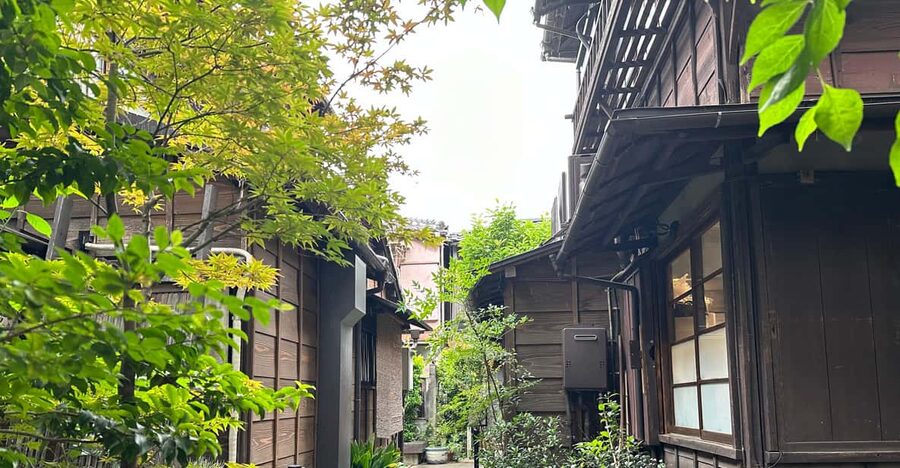
Tokyo’s high-rise image fades quickly in Yanaka and Nezu. Here, narrow lanes lead past wooden houses, small temples, family-run shops, cemeteries, and gardens. This 3.5-hour walk gives you a close look at the Tokyo that survived before and after World War II, with guide Sui explaining the customs and daily life around you.
I especially like the unhurried pace and the chance to visit quiet places of worship rather than racing between famous landmarks. I also like the local touch: Sui can explain what to buy in small shops, how to pray at a shrine or temple, and where to find useful food and restaurant options afterward.
The main drawback is simple: you walk for most of the 210 minutes, with stairs along the way. Summer heat can make that demanding, although the seasonal version adds a cafe stop. Some shops also close on Mondays, so the neighborhood can feel quieter than usual.
In This Review
- Key points to know before booking
- Why Yanaka and Nezu feel different from central Tokyo
- Quiet lanes and ordinary local life
- Nezu Shrine and the rhythm of Japanese worship
- Tennoji Temple and a quieter Buddhist stop
- Yanaka Cemetery, trees, and old Tokyo memory
- Traditional buildings from Meiji to Showa
- Yoshida Liquor Store and small family businesses
- Yanaka Ginza and the local food stop
- Sunset Staircase and the final view
- What the $29 price really buys you
- Practical advice for a comfortable walk
- Who should book the Yanaka and Nezu walk
- FAQ
- How long is the Yanaka and Nezu tour?
- Where does the tour begin?
- Where can the tour finish?
- What language is the tour offered in?
- Is the tour suitable for wheelchair users?
- What should I bring?
- What happens during the summer version of the tour?
- Should you book it?
Key points to know before booking
- A calm side of Tokyo: Yanaka and Nezu feel far removed from Shinjuku and Shibuya’s crowds and neon.
- A strong religious focus: Nezu Shrine, Tennoji Temple, and smaller temples help explain how Shinto and Buddhism fit into everyday Japanese life.
- Sui leads the walk: She is the main guide, speaks excellent English, and is known for adapting the outing to questions and interests.
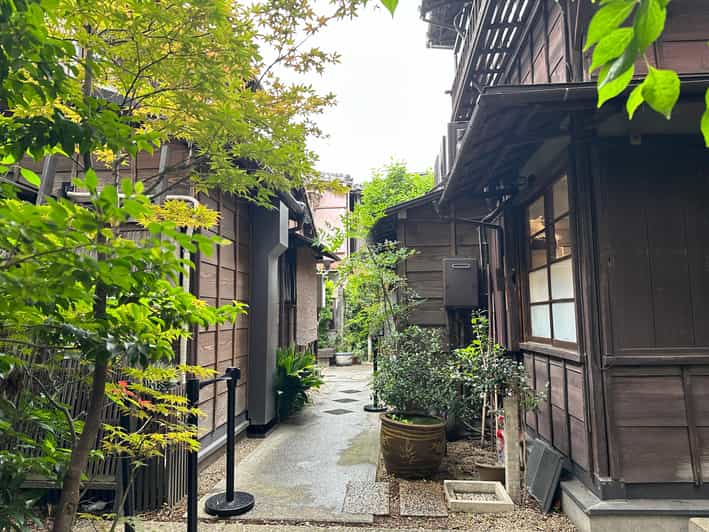
- Old Tokyo at street level: Expect prewar buildings, wooden homes, traditional shops, cemeteries, narrow lanes, and ordinary neighborhood scenes.
- Good value at $29: The price is low for a guided small-group walk that combines history, culture, shopping tips, and local orientation.
- Plan for the weather: Wear good walking shoes, carry cash, and bring water or a snack, especially outside the cooler months.
Why Yanaka and Nezu feel different from central Tokyo
Tokyo is not one city experience. The giant stations and shopping districts show one side of it, while Yanaka and Nezu offer another: low buildings, quiet streets, Buddhist temples, Shinto shrines, modest homes, and small businesses that have served local residents for generations.
This area escaped much of the destruction that reshaped other parts of Tokyo. That helps explain the older buildings and street pattern you see today. The tour does not simply point at old houses and move on. Sui connects them to the Meiji period, from 1868 to 1912, and the Showa period, from 1926 to 1989, so you can understand how the neighborhood changed while keeping its local character.
I find this kind of walk useful early in a Tokyo stay. It gives you a sense of scale and a better feel for ordinary life. You may see children from local nurseries, older residents going about their day, and small shops serving people who live nearby. These are not staged cultural displays. They are everyday scenes, and that is the point.
The tour begins at Nippori Station’s West Exit for Yanaka. The meeting area is just after you leave the station, and the guide waits there. Arrive on time because the walk starts as scheduled.
A few more Tokyo tours and experiences worth a look

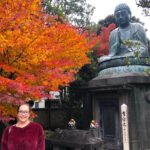
Quiet lanes and ordinary local life
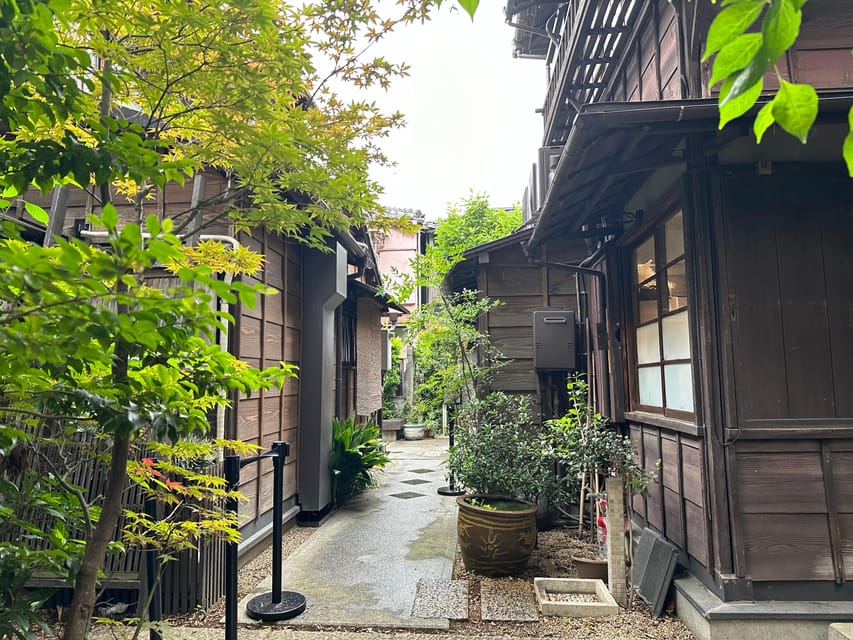
The first part of the outing takes you through residential streets in Yanaka. This is where the tour earns its keep. You are not only looking at major landmarks. You are learning how the area works as a neighborhood.
The route includes a mix of old and new homes, small shops, narrow lanes, and traditional buildings. A guide makes a real difference here because much of what matters is easy to miss. A facade, a gate, a tiny shrine, or a shop passed down through a family can mean more once someone explains its place in local life.
Sui’s approach is conversational. She answers questions as you walk, points out details beyond the formal stops, and adjusts the pace to the group. Several families with children found her especially attentive, with small treats and toys appearing along the way. That makes this a better choice for families than a heavily scripted history walk, though children still need to manage a long period on foot.
You may also meet locals at older shops. The amount of conversation depends on who is working and how busy the shop is, so do not expect a formal demonstration. Still, the chance to exchange a few words or receive an explanation about a local product adds a human touch that a self-guided route cannot easily provide.
Nezu Shrine and the rhythm of Japanese worship
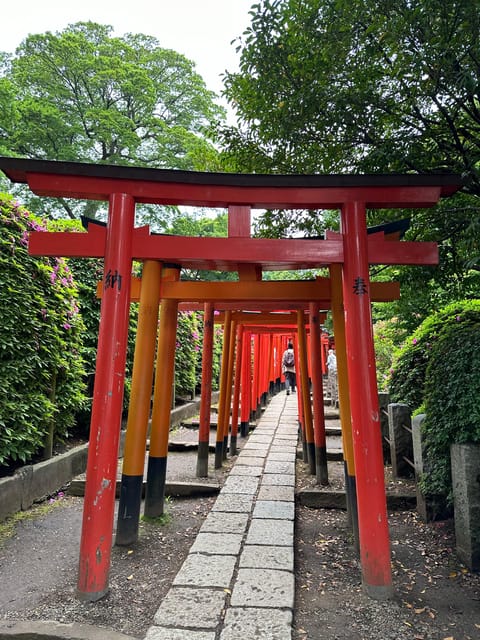
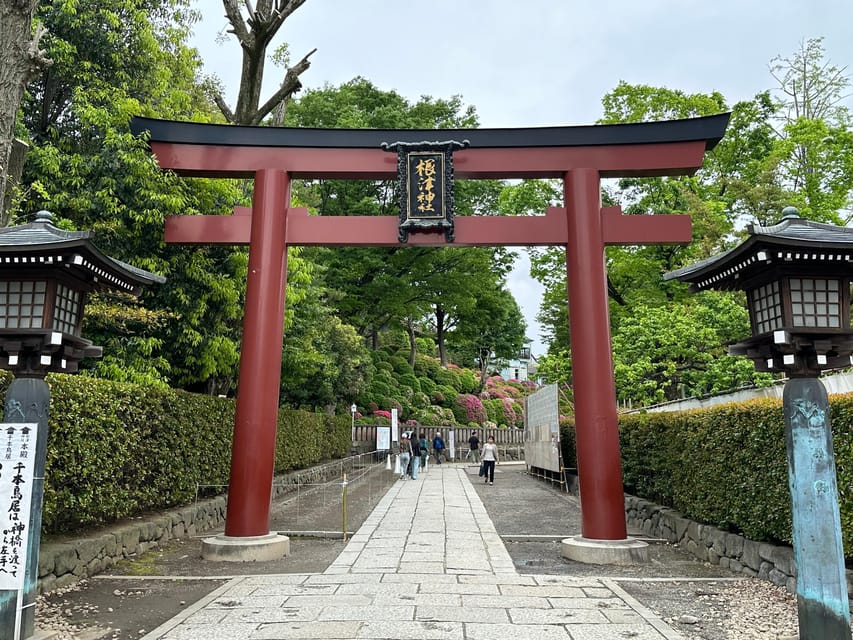
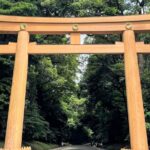
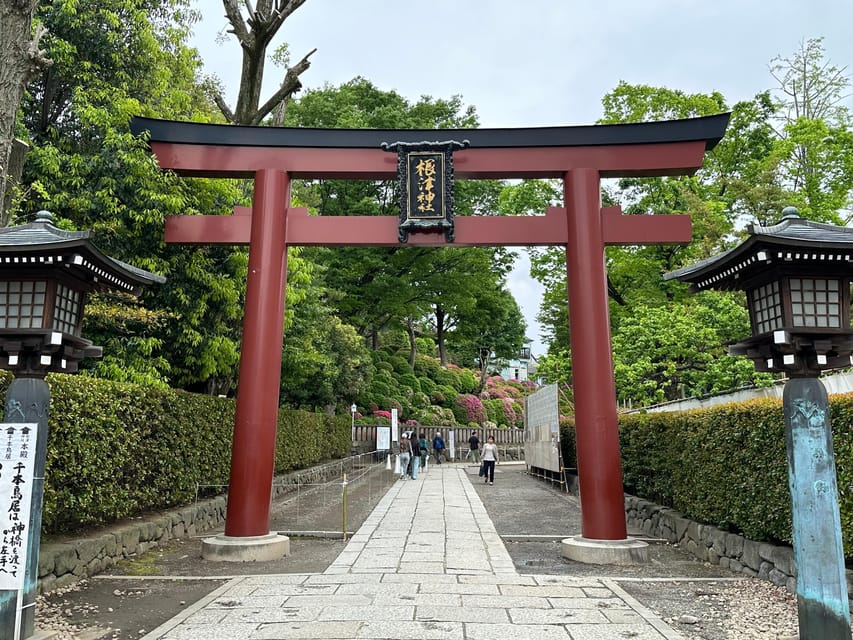
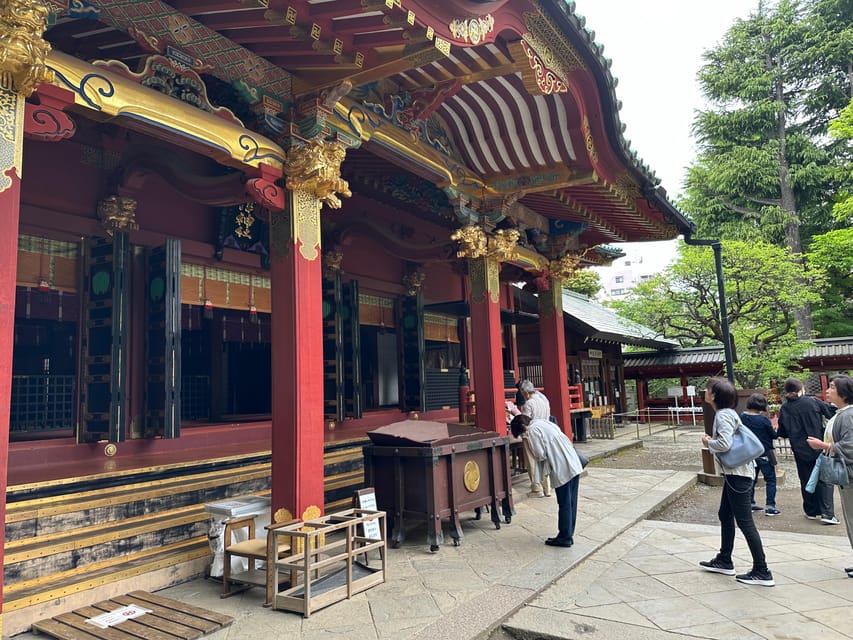
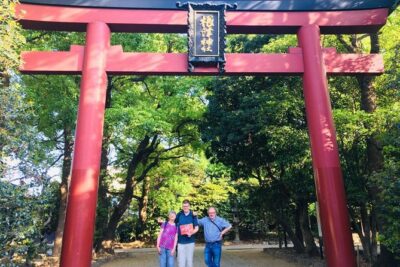
Nezu Shrine is one of the tour’s major stops. It is known for its picturesque rows of torii gates, which create a memorable path through the shrine grounds. The setting offers a good introduction to Shinto, Japan’s native religious tradition, and to the visual language of shrines.
A guide is useful here because a shrine visit involves more than taking photographs. Sui explains how to approach and pray, helping you take part respectfully rather than guessing your way through the ritual. You may also have the chance to write an ema, a wooden votive plaque used for wishes or prayers.
The shrine can be more peaceful than Tokyo’s most famous religious sites, although conditions vary by time and season. Sakura season, listed for March 25 to April 10 in 2026, may add blossom views, but flowering depends on the weather. A free sakura mochi is planned during the spring promotion from March 25 to April 25, with another traditional sweet or food item provided if it is unavailable.
The seasonal dates overlap slightly differently in the supplied details, so check the exact offer when booking. The important point is that the sweet is an added treat, not the reason to choose the walk. The shrine, its gates, and the explanation of local worship are the lasting value.
Tennoji Temple and a quieter Buddhist stop
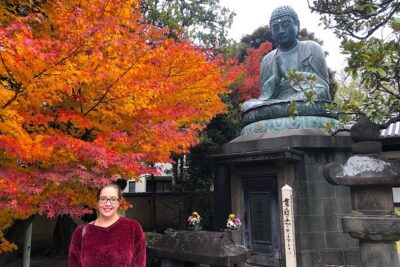
Tennoji Temple provides a useful contrast with Nezu Shrine. Here you see a large bronze seated Buddha and a Japanese garden, with a calmer atmosphere that suits a slow walk and a few quiet minutes.
The distinction between shrine and temple can confuse first-time visitors to Japan. This stop helps separate Buddhist traditions from Shinto practice without turning the tour into a lecture. Sui also explains how religion appears in daily Japanese life, where people may visit both temples and shrines for different occasions.
You should expect a respectful visit rather than a performance. The garden and Buddha are the focus, but the value lies in understanding why these places remain part of a living neighborhood. The tour includes several smaller temples too, and these quieter stops offer a welcome break from Tokyo’s packed sightseeing areas.
There is no guarantee that every temple will be open in the same way during your visit. The walk is built around seeing the grounds, buildings, and religious features, not around entering every interior.
Yanaka Cemetery, trees, and old Tokyo memory
Yanaka Cemetery is one of Tokyo’s largest and most scenic cemeteries. Its rows of trees create a peaceful corridor, especially when seasonal color is present. This is not a quick photo stop. It is part of the story of Yanaka, where temples, graves, homes, and shops exist close together.
A cemetery may not suit every itinerary, but I think it gives the walk needed depth. It shows how religious spaces and daily neighborhoods overlap in Japan. It also slows the pace naturally. You can look at the trees, stone markers, temple grounds, and surrounding architecture while Sui explains the area’s past.
The cemetery is not presented as a spooky attraction. Treat it as a place of respect. Keep your voice low, follow the guide’s instructions, and remember that it remains a place connected to families and remembrance.

Traditional buildings from Meiji to Showa
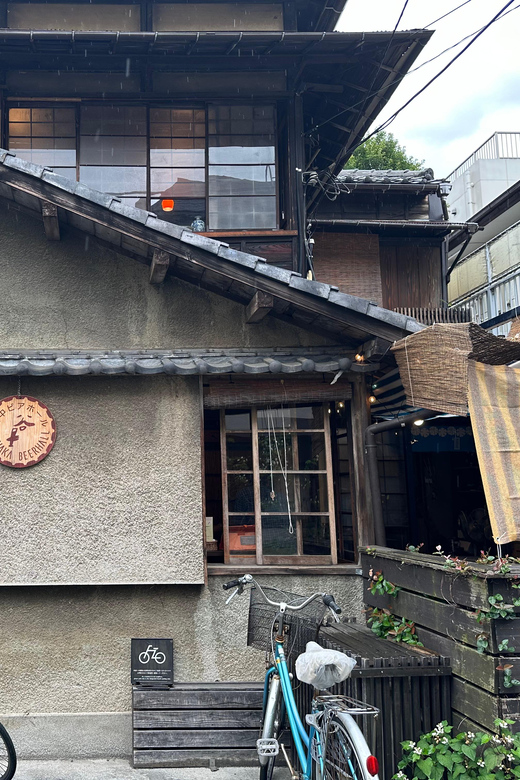
One of the strongest parts of the route is the collection of older structures. You see buildings dating from the Meiji period through the Showa period, along with traditional residential houses and small businesses.
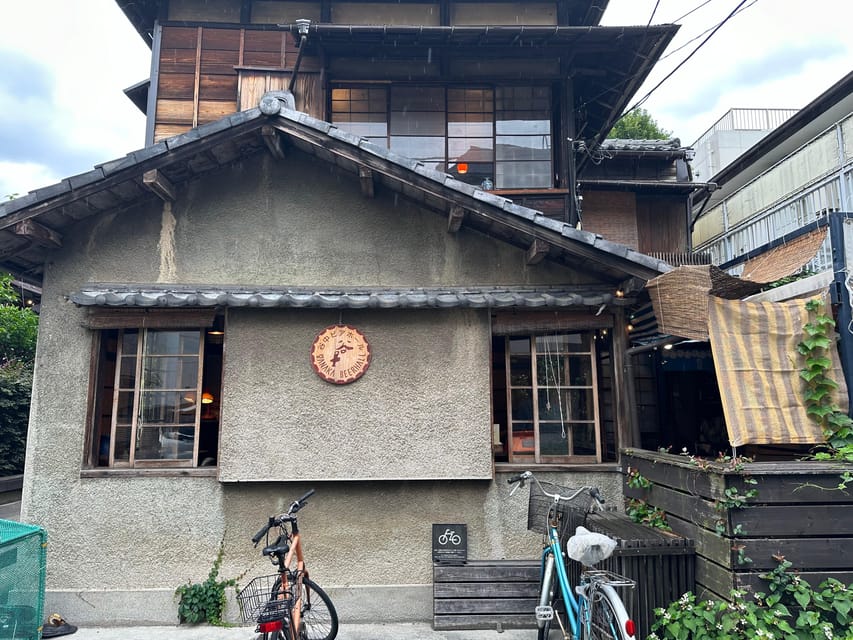
Not every building will look grand. Some are valuable precisely because they are modest. A wooden exterior, a shopfront, or an old bathhouse can show how Tokyo’s neighborhoods once functioned. In a city known for constant rebuilding, surviving ordinary structures are worth attention.
The route also shows newer homes beside older ones. That contrast matters. Yanaka is not a preserved museum district where time stopped. It is a working neighborhood, and the mix of old and new helps you see how residents live with the past rather than simply displaying it.
Sui’s local familiarity is especially useful here. She can explain details that are difficult to find in a standard guidebook, from the role of a building to the history of a street or shop. Her English is strong, and she keeps the information lively with humor and plenty of room for questions.
Yoshida Liquor Store and small family businesses
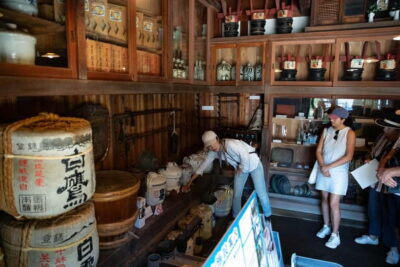
Yoshida Liquor Store is included as an example of the area’s traditional commerce. A shop of this kind gives you a look at the small-scale businesses that have served the neighborhood across generations.
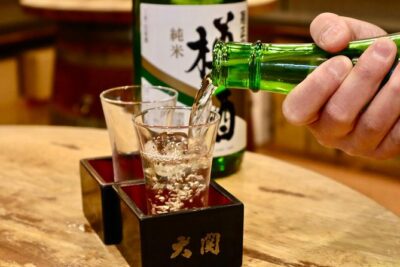
Do not expect a large tasting session or a full shopping excursion. The emphasis is on the character of the store and on learning about local sake culture. Bring cash, since smaller Japanese shops may not accept every payment method.
The tour may also pass other old shops selling sweets, snacks, souvenirs, and local goods. Sui can suggest items worth trying, including handmade snacks and daifuku. These recommendations are more useful than a generic shopping list because they are tied to the exact streets you are walking.
Shop hours are not guaranteed. Many stores close on Mondays, and individual businesses may shut for other reasons. The walk remains worthwhile when shops are closed, but book this experience for the neighborhood and cultural context, not for a guaranteed shopping haul.
Yanaka Ginza and the local food stop
Yanaka Ginza is a traditional shopping street and one of the livelier sections of the route. Here Sui introduces local street foods, Japanese food shops, and souvenir options.
This is a good place to buy something small for later, but manage your expectations. The tour is not a dedicated food tour, and the exact shops available depend on the day and time. You may find appealing snacks, but you should not count on a full meal during the walk.
One useful tip comes directly from the structure of the experience: eat before you start or carry a snack. The walk can run into lunchtime, and the route may leave you hungry by the end. Sui can recommend restaurants and help you find a suitable place afterward, including options for families.
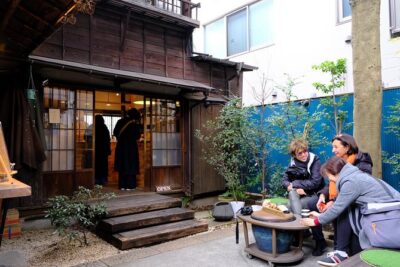
During the summer schedule from June 1 to September 11, 2026, Yanaka Ginza is omitted. The tour instead includes a stop at a cafe in a converted traditional building, with one drink included. The walk ends at Nezu Station in summer, rather than following the usual options around Yanaka Ginza.
This seasonal change is sensible. Tokyo’s heat and humidity can be severe, and three and a half hours outside without a break is hard work. Even with the cafe stop, carry water and wear light clothing.
Sunset Staircase and the final view
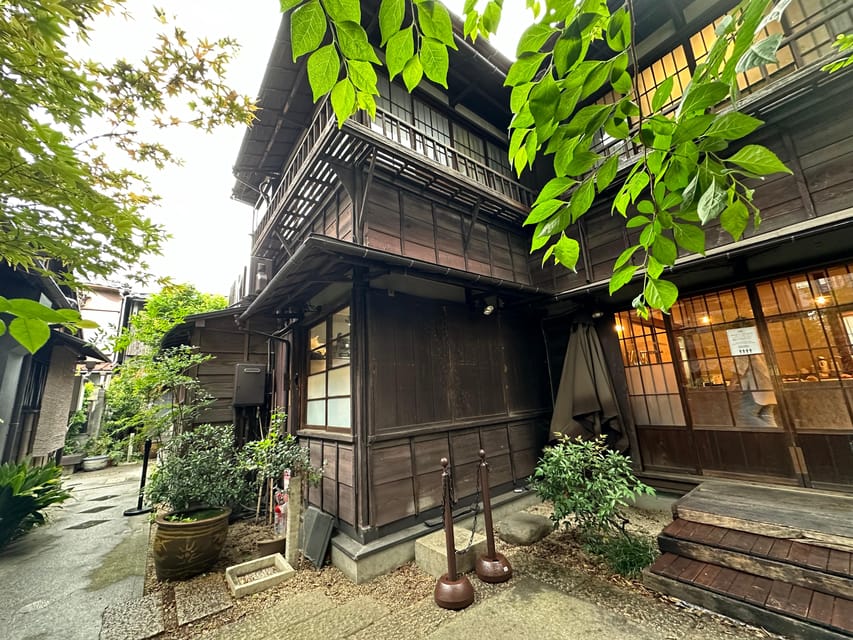
The Sunset Staircase is a popular local photo spot and a fitting final stop. It offers a simple scene rather than a grand monument, which matches the character of the tour. You finish among ordinary streets, shops, and neighborhood life instead of at a major transit hub surrounded by commercial towers.
The name suggests a sunset view, but the time of your tour may not match the actual sunset. Think of this as a recognizable Yanaka viewpoint and a chance for photographs, not a guaranteed sunset spectacle.
At the end, the guide can drop you near Nippori Station, Yanaka Ginza, or Nezu Station, depending on the season and your plans. This flexibility is useful if you want to continue exploring, eat nearby, or connect to your next Tokyo activity.
What the $29 price really buys you
At $29 per person, this is inexpensive for a 210-minute guided walk in Tokyo. You are paying for more than directions between sights. The guide provides cultural context, local shopping advice, help with shrine and temple etiquette, and access to a neighborhood that is easy to wander through but harder to understand alone.
The value is strongest if you care about history, religion, architecture, and daily life. It is also good for a first or second Tokyo visit when you want relief from the city center. Several people received extra time, photo help, restaurant advice, or added stops when the schedule allowed, though you should treat that as guide flexibility rather than a promised extension.
The price does not include a meal, regular shopping purchases, or transport to the meeting point. Sakura mochi is included during the listed spring period, and one cafe drink is included during the listed summer period.
Groups can be private or small. A smaller group makes it easier to ask questions and adjust the pace, which is important on a route built around details rather than major sights.
Practical advice for a comfortable walk
Wear comfortable shoes. The route uses stairs and narrow streets, and it is not suitable for wheelchair users.
Bring cash for small shops and local food. A water bottle and snack are wise, especially because the walk can extend toward lunchtime. In hot months, the cafe stop helps, but it does not remove the need to prepare for Tokyo’s humidity.
Monday is not the best day if shopping is your main goal. Some shops may be closed, although the temples, shrine, cemetery, streets, and buildings still offer plenty to see.
The tour is in English. Sui is the main guide for this Yanaka walk, and her style suits people who prefer conversation, questions, local recommendations, and a little flexibility over a rigid script.
Free cancellation is available up to 24 hours before the start, and you can reserve while paying later. Starting times vary, so check availability before committing your Tokyo schedule.
Who should book the Yanaka and Nezu walk
Book this if you want to understand Tokyo beyond its famous crossings, towers, and shopping streets. It suits history fans, first-time visitors seeking orientation, families who appreciate an attentive guide, and anyone curious about Japanese religious customs.
It is also a good choice for photographers who prefer old homes, shrine gates, gardens, trees, shopfronts, and quiet lanes to large city views. Food-focused visitors will enjoy the shop suggestions, but this is not a full tasting tour.
Think twice if you dislike walking, stairs, hot weather, cemeteries, or a slower neighborhood pace. You may also prefer another day if your main goal is shopping and Monday is your only option.
FAQ
How long is the Yanaka and Nezu tour?
The tour lasts about 210 minutes, or 3.5 hours. It may finish slightly earlier or later depending on the pace and the day.
Where does the tour begin?
Meet at Nippori Station’s West Exit for Yanaka. The guide waits in the waiting area after you leave through that exit.
Where can the tour finish?
The listed drop-off points are Nippori Station, Yanaka Ginza, and Nezu Station. During the summer schedule, the tour ends at Nezu Station.
What language is the tour offered in?
The tour is offered in English with a live guide. Sui is the main guide for this Yanaka walk.
Is the tour suitable for wheelchair users?
No. The route includes staircases and is not suitable for wheelchair users.
What should I bring?
Bring comfortable shoes and cash. A snack and water are also practical, especially in warm weather or if you tend to eat lunch early.
What happens during the summer version of the tour?
From June 1 to September 11, 2026, the tour includes one drink at a cafe set in an old traditional building. Yanaka Ginza is not included during this summer version, and the tour ends at Nezu Station.
Should you book it?
I would book this walk if you want the quieter, older side of Tokyo and value a guide who can explain small details as they appear. At $29, the combination of temples, shrine customs, historic buildings, local shops, and practical food advice is strong.
Choose a cool day if possible, eat beforehand, and leave room in your schedule after the walk. That lets you use Sui’s neighborhood recommendations instead of rushing away. For a slower, more personal look at Tokyo, Yanaka and Nezu make a smart counterpoint to the city’s famous central districts.
More Ueno & Yanaka Walks in Tokyo

More tours in Tokyo we've reviewed







Ueno & Yanaka Walks, compared.
 ★ 5.0Eat and Drink Like a Local: Tokyo Ueno Food Tour-Taverns&RamenFrom $95
 ★ 4.5The Old Quarter of Tokyo – Yanaka Walking TourFrom $40
 ★ 5.0Yanaka Walking Tour: Historic and Traditional District of TokyoFrom $72
 ★ 4.8Tokyo: Old Quarter Yanaka Walking TourFrom $323 hours
 ★ 5.0Tokyo: Food Tour in Ueno with 10+ Tastings of Japanese ClassicsFrom $142
 ★ 5.0Yanaka Historical Walking Tour in Tokyo’s Old TownFrom $81