
Reviewed · TICKETS
Tokyo Skytree Admission Ticket with Tembo Deck and Galleria
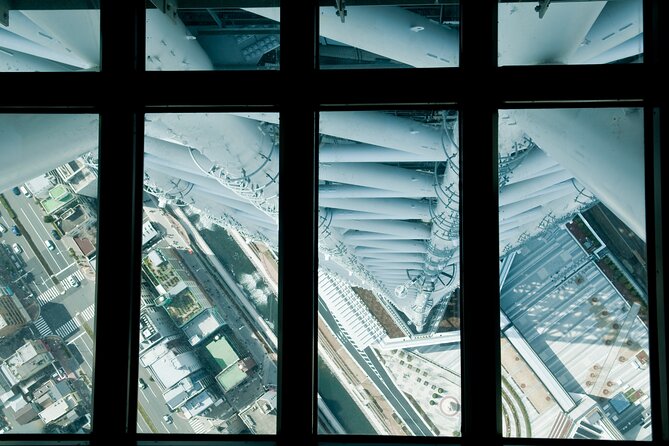
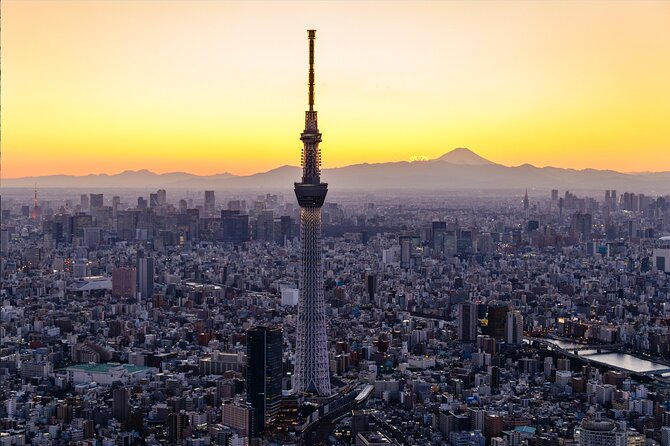
Tokyo Skytree gives you Tokyo from a remarkable height: the glass tube-style elevator reaches the Tembo Deck at 350 meters in about 55 seconds. From there, the city spreads out in every direction, with the Sumida River, distant neighborhoods, and, on a clear day, Mount Fuji in the distance.
I like two things right away. Pre-booking can save time at admission, and the flexible entry slots make it easier to fit the tower into a busy Tokyo day. I also like the choice of going higher to the 450-meter Tembo Galleria, where the skywalk adds a stronger sense of height.
The catch is crowding. Timed admission does not mean the observatories will feel quiet, and elevator lines can add 30 minutes each way, especially around sunset and at night. If you have dinner, a train, or another ticketed activity afterward, leave plenty of room.
In This Review
- Key points to know before you go
- What you actually get at Tokyo Skytree
- The 55-second ride to the Tembo Deck
- Tembo Deck at 350 meters: enough for most people
- Tembo Galleria at 450 meters: worth the upgrade?
- Sunset, daylight, or Tokyo after dark
- The real time commitment: getting in and getting out
- Tokyo Skytree Town makes the ticket more useful
- Families, heights, and practical comfort
- Where this experience succeeds, and where it falls short
- Should you book Tokyo Skytree?
- FAQ
- Where does the Tokyo Skytree ticket meet?
- How long does the visit take?
- What height is the Tembo Deck?
- What height is the Tembo Galleria?
- Is the Tembo Galleria included in the ticket?
- Is this a guided tour?
- Are children admitted for free?
- Are service animals allowed?
- Is parking included?
- Can I get a refund if I cancel?
Key points to know before you go
- The main view is from 350 meters: The Tembo Deck already gives you a huge panorama of Tokyo and is the core of the visit.
- The Galleria reaches 450 meters: This upgrade includes a sloping skywalk and a different sense of height, though some people find the lower deck is enough.
- The elevator ride is part of the attraction: You rise to 350 meters in roughly 55 seconds in a glass tube-style lift.
- Sunset is beautiful but busy: You can watch Mount Fuji fade into the distance, then see Tokyo light up, but queues are often longer.
- The full visit may take longer than one hour: The advertised duration is one to two hours, but crowded exits can stretch the visit.
- The surrounding complex adds value: Tokyo Skytree Town has shops, restaurants, food options, and an aquarium nearby.
What you actually get at Tokyo Skytree
This is a self-guided admission ticket, not a guided tour. You meet at Tokyo Skytree Town, at 1 Chome-1 Oshiage in Sumida City, then enter the tower for the observation levels included with your booking.
The central choice is simple. The Tembo Deck sits at about 350 meters, while the Tembo Galleria sits at about 450 meters. The basic ticket and upgrade wording can vary, so check your confirmation carefully to see if both levels are already included. A few booking problems have involved people expecting access to the Galleria and finding they needed to pay extra on site.
At the tower, the visit follows a practical rhythm: admission, elevator ride, time on the observation level, possible ascent to the higher gallery, then a wait for the elevators back down. There is no guide leading you from point to point, so you can set your own pace once inside.
That freedom is useful. You can spend a short hour taking in the view, or stay longer for photos, sunset, and the city lights. The difficulty is that you do not control every part of the timing. Lines for entry, elevators, and the exit can all affect the schedule.
A few more Tokyo tours and experiences worth a look
The 55-second ride to the Tembo Deck
The glass tube-style elevator is a memorable opening act. It carries you to 350 meters in about 55 seconds, fast enough to make the height feel real without turning the ride into a long wait in the air.
Once you arrive, Tokyo looks less like a collection of famous sights and more like an enormous city system. Roads, blocks, bridges, rivers, and towers stretch toward the horizon. The height helps you understand Tokyo’s scale in a way that street-level sightseeing cannot.
The view is best on a clear day. Mount Fuji may appear in the distance, though visibility depends on weather. One particularly good plan is to enter shortly before sunset. You may see the last light over the city, a possible glimpse of Fuji, and Tokyo gradually brighten below you.
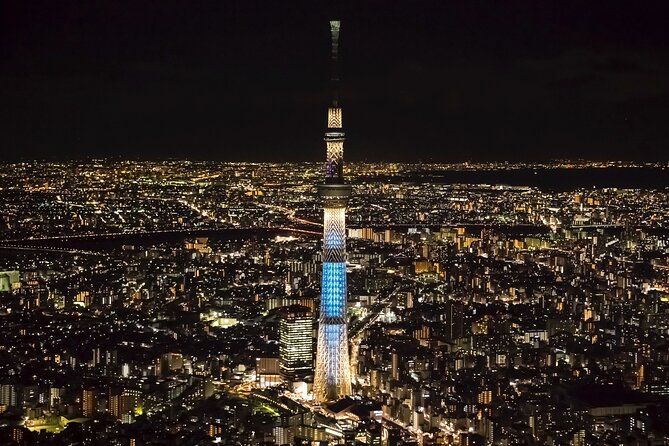
Night has its own appeal. The river and surrounding streets become lines of light, and the city seems to go on without an edge. Yet night photography can be tricky because reflections on the glass make it harder to capture a clean image. Daytime visits generally give you clearer photos.
Tembo Deck at 350 meters: enough for most people
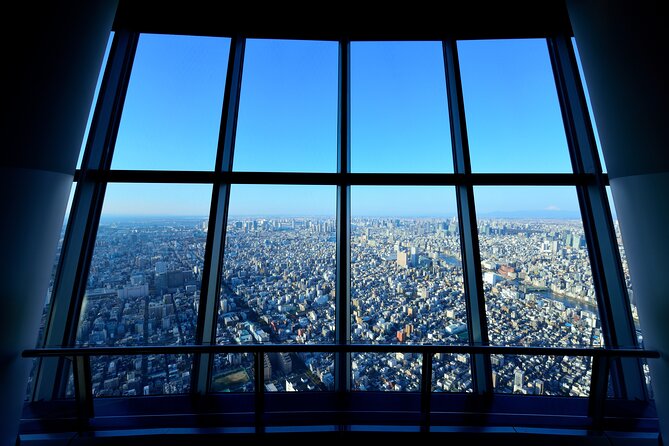
The Tembo Deck is the main reason to book this ticket. At around 350 meters, it is already extremely high, and the view is broad enough to occupy most of your visit.
I would recommend this level to families, first-time visitors, and anyone who wants the best balance of height, cost, and time. The observation space lets you look across Tokyo without committing to the extra expense or additional wait for the Galleria.
There are also small photo opportunities at both levels, with complimentary small photos available according to the supplied experience details. Staff are described as polite and helpful, and some visitors found the photo service a pleasant extra rather than a hard sell.
The deck can feel crowded, especially when people gather at the windows or stop for pictures. Timed admission controls the arrival window, but it does not guarantee a low number of people inside. You may need patience when moving around the best viewing spots.
Tembo Galleria at 450 meters: worth the upgrade?
The Tembo Galleria takes you another 100 meters higher, to about 450 meters above the ground. Its signature feature is the sloping skywalk, which gives the floor a more dramatic sense of height than a standard observation room.
For many people, this is the memorable part of the visit. Looking down from the higher level makes Tokyo feel even farther away, and the gradual walkway gives you a sense of progress as you move upward.
Still, I would not call the upgrade essential for everyone. The Tembo Deck provides the main panorama, and some visitors found the extra height added less than expected. If your budget is tight, or you have only a short time, spend that money elsewhere and enjoy the 350-meter level properly.
The Galleria makes more sense for a special occasion, a first visit to Tokyo, or anyone who enjoys viewing towers for their own sake. Confirm that it is included before you arrive. The booking information can be read in different ways, and paying for access twice is an avoidable annoyance.
Sunset, daylight, or Tokyo after dark
Timing matters more here than at many city attractions. A clear afternoon gives you the strongest chance of seeing distant landmarks and Mount Fuji. Sunset gives you the most dramatic change in mood, but it is also a popular time to arrive.
If you choose sunset, plan to wait. There may be queues to enter, queues at the elevators, and crowding around the windows as the sky changes color. The reward is seeing Tokyo shift from daylight to an illuminated city, but the visit will probably take longer than a quick daytime stop.
Night is a good choice if you want a straightforward city-lights view and do not mind reflections. It can also fit well after dinner or shopping in Tokyo Skytree Town. Do not assume that a night booking will be quiet. The tower can remain very busy, and the trip down may take longer than expected.
Cloud, mist, or rain can reduce the payoff. The weather policy allows a different date or a full refund if the experience is canceled because of poor weather, but the ticket itself is non-refundable and cannot be changed for personal reasons. That makes a clear forecast especially important before you commit.
A few more Tokyo tours and experiences worth a look

The real time commitment: getting in and getting out
The stated visit lasts about one to two hours, but I would treat that as a flexible estimate rather than a promise. One smooth visit may take about an hour. A crowded visit can run much longer.
The trip up is only 55 seconds once you are in the elevator. The waiting is what consumes your time. Some visitors have spent roughly 30 minutes going up and another 30 minutes coming down, while others moved through the tower in about an hour.
The exit deserves special attention. Long lines for the downward elevator have caused serious frustration, with waits of around 20 minutes and, at times, much longer. People can end up packed together in a warm queue after they have finished enjoying the view.
I would avoid booking a tight restaurant reservation or another attraction immediately afterward. Give yourself at least an extra hour beyond the basic estimate if you are visiting at sunset, on a busy evening, or with children who may tire of standing in line.
Tokyo Skytree Town makes the ticket more useful
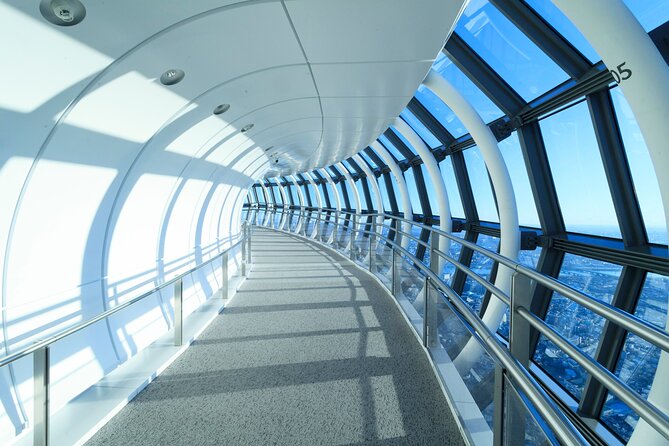
The tower is part of Tokyo Skytree Town, so the outing does not have to begin and end at the elevator doors. The complex has shops, restaurants, souvenir options, and a food market. An aquarium is also nearby.
This is helpful if the tower is crowded or the weather is less than perfect. You can make the visit part of a larger half-day stop rather than treating it as a quick trip with no backup plan.
The surrounding shopping and food options also soften the price. At about $15.08 per person, the basic admission is fairly reasonable for a major Tokyo viewpoint, particularly if you value the speed of advance booking and the chance to choose an entry time.
The higher Galleria changes the calculation. It is a sensible splurge for a one-time Tokyo visit, but not a must-buy add-on. If you are traveling with several people, the extra cost can add up quickly, and the 350-meter view may already give everyone the experience they wanted.
Parking fees are not included. The site is near public transportation, which is the practical way to reach it, though the supplied information does not specify a particular station or train route.
Families, heights, and practical comfort
Most people can take part, and service animals are allowed. Children under five enter free, as do six-year-olds who have not yet started primary school. That age rule is worth checking carefully when you book for a family.
The tower feels secure, but the height is unmistakable. If you are uneasy with heights, the observatory may feel daunting at first. The enclosed setting can be more reassuring than an open-air tower, but looking down from 350 or 450 meters is still a serious test for some people.
The facilities are well organized, with a parent and baby bathroom noted among the practical amenities. Families should still prepare for the queues. A young child may enjoy the elevator and view, then lose patience during the wait to return to ground level.
Bring a charged phone for your ticket and photos, but also check the ticket format before arriving. Some bookings require a printed voucher, and a PDF shown on a phone has not always been accepted immediately. Staff may help, but it is better to follow the stated redemption instructions exactly.
Where this experience succeeds, and where it falls short
The strongest part is the view. You get a genuine sense of Tokyo’s size, with a chance to see the river, surrounding districts, distant Mount Fuji, and the city lights from a single point.
The staff are another plus. They are described as friendly and helpful, and the tower itself is clean and well organized in many parts of the visit. The small complimentary photos are a nice touch, especially for families who want a simple souvenir.
The weak point is crowd control. Advance booking helps with entry, but it cannot remove queues inside the tower. The most common frustrations involve elevator waits, crowded viewing areas, and a slow exit.
The other concern is booking clarity. Confirm the exact floors included, check the required ticket format, and note that late arrival may mean denied entry without a refund. One missed visit caused by a delayed flight ended with no admission and no repayment, so this is not a flexible ticket.
Should you book Tokyo Skytree?
I would book the Tembo Deck if you want a major Tokyo view, have a clear-weather day, and can allow one to two hours without rushing. The price is reasonable, the elevator ride is fun, and the panorama gives you a useful sense of the city’s vast scale.
I would add the Tembo Galleria if this is a special Tokyo memory, you enjoy observation towers, or you want the skywalk at 450 meters. I would skip the upgrade if you are watching your budget or already know that the view from 350 meters will be enough.
Choose your time with care. Daylight is best for clear photos and distant views, sunset is best for atmosphere, and night is best for illuminated Tokyo. In every case, leave extra time for the elevator queue on the way down.
FAQ
Where does the Tokyo Skytree ticket meet?
The ticket redemption point is Tokyo Skytree Town, 1 Chome-1 Oshiage, Sumida City, Tokyo 131-0045, Japan.
How long does the visit take?
The expected duration is about one to two hours, though queues can make the visit longer, especially during busy sunset and nighttime periods.
What height is the Tembo Deck?
The Tembo Deck is located at about 350 meters, or approximately 1,148 feet, above the ground.
What height is the Tembo Galleria?
The Tembo Galleria is located at about 450 meters, or approximately 1,476 feet, above the ground.
Is the Tembo Galleria included in the ticket?
The experience offers an upgrade for access to the Tembo Galleria. Check your confirmation carefully, since the exact level included can depend on the option purchased.
Is this a guided tour?
No. This is an admission ticket. No guide is included, so you explore the observation levels independently.
Are children admitted for free?
Children under five enter free. Children who are six but have not started primary school are also free.
Are service animals allowed?
Yes. Service animals are allowed.
Is parking included?
No. Parking fees are not included in the ticket.
Can I get a refund if I cancel?
No. The experience is non-refundable and cannot be changed for personal reasons. If the operator cancels because of poor weather, you can be offered another date or a full refund.
More Tickets in Tokyo
More Tickets & Passes in Tokyo

More tours in Tokyo we've reviewed











Tickets, compared.
 ★ 4.5Tokyo: TOKYO SKYTREE® Admission ticketFrom $131 day
 ★ 4.6Tokyo: teamLab Planets TOKYO Digital Art Museum Entry TicketFrom $251 day
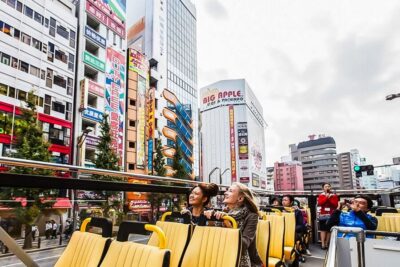 ★ 3.9Tokyo: Hop-On Hop-Off Sightseeing Bus TicketFrom $301 - 2 days
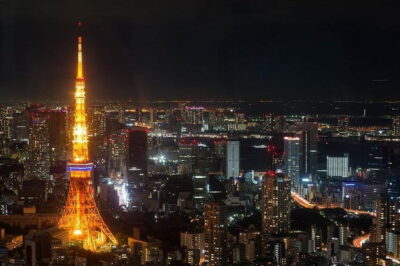 ★ 4.6Tokyo Tower: Admission TicketFrom $91 hour - 3 days
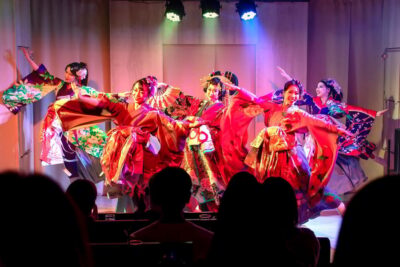 ★ 4.8Tokyo: Japanese Dance Cabaret Theater Asakusa-Kaguwa TicketFrom $492 hours
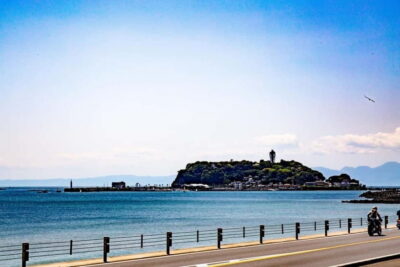 ★ 4.5Tokyo: Kamakura & Enoshima Day Trip including Temple TicketsFrom $589 hours - 570 minutes