
Reviewed · SUMO EXPERIENCES
Sumo Wrestlers Morning Practice Tour – Tokyo Sumida District
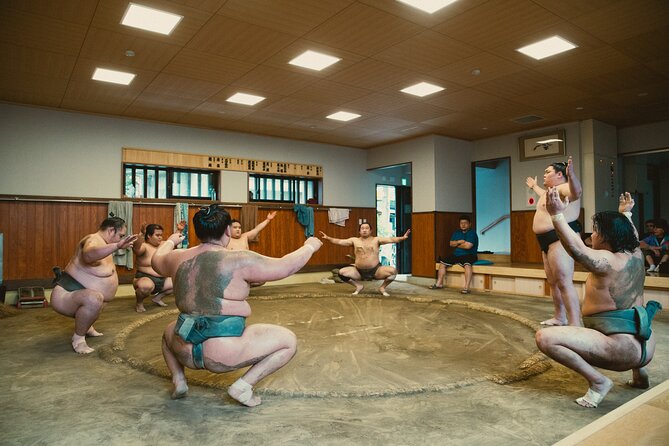
The most revealing part of this Tokyo experience is not a tournament bout. It is the quiet morning practice inside a real sumo stable, where wrestlers repeat stretches, footwork, and bouts under strict rules. You sit close to the ring and see the discipline behind the sport, not a staged show.
I like the early start, since you finish near Tokyo Skytree with most of the day still free. I also like the chance to hear explanations in English and possibly speak with the stable master or pose for photos with wrestlers. The main catch is simple: you sit cross-legged on the floor for about 90 minutes, and practice may end sooner than expected.
In This Review
- Key points to know before booking
- What this morning reveals about sumo
- Meeting at Oshiage before the city wakes up
- Entering the stable and learning the rules
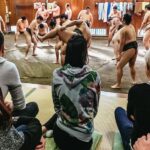
- Watching 90 minutes of close-up training
- The possible conversation after practice
- What the $83.23 price gets you
- Who should book this sumo visit
- Practical etiquette that matters inside
- Is this authentic sumo or a tourist show?
- Should you book the 7:30am practice?
- FAQ
- Where does the sumo practice tour begin?
- What time should I arrive?
- How long does the activity last?
- How far is the stable from the meeting point?
- Are chairs provided?
- Can I take photographs or videos?
- Can I take a photo with the wrestlers?
- Can children join the tour?
- What happens if I am late?
Key points to know before booking
- Watch authentic morning practice: You observe wrestlers training at their stable rather than attending a polished performance.
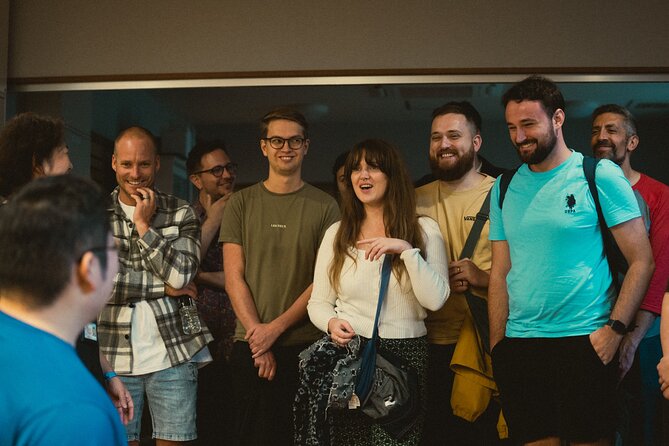
- Meet near Tokyo Skytree: The group gathers at Oshiage Station at 7:30am, then walks about 15 minutes to the stable.
- Expect floor seating: There are no chairs, and you must remain seated and quiet during practice.
- English guidance matters: Your guide explains the rules, customs, and etiquette, helping you avoid mistakes inside the stable.
- Photos may follow practice: If the wrestlers and schedule allow, you can take pictures with them at the end.
- Small-group setting: The tour accepts up to 25 people, though a larger group can mean that not everyone gets a front-row view.
What this morning reveals about sumo
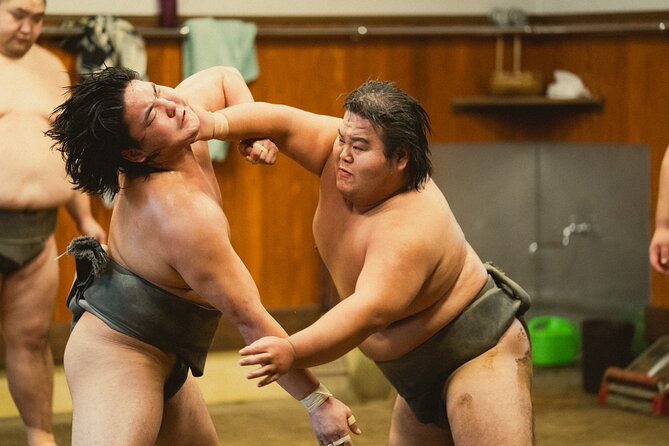
Sumo is easy to recognize, but less easy to understand. A tournament gives you the noise, ceremony, and sudden force of a match. This visit shows the work that comes before that moment: the warmups, repeated drills, physical control, and concentration that shape a wrestler’s day.
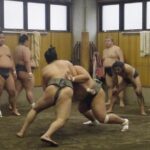
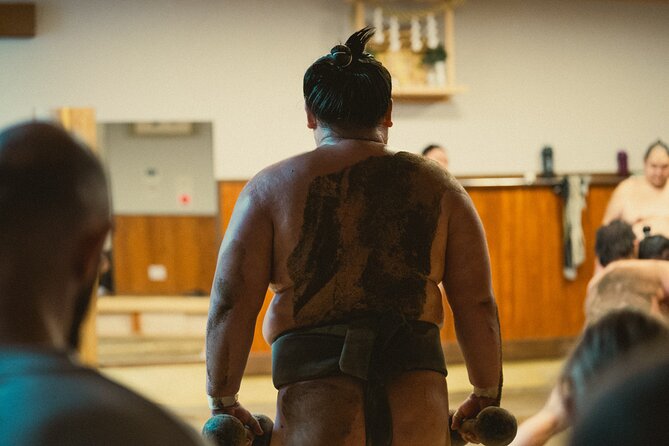
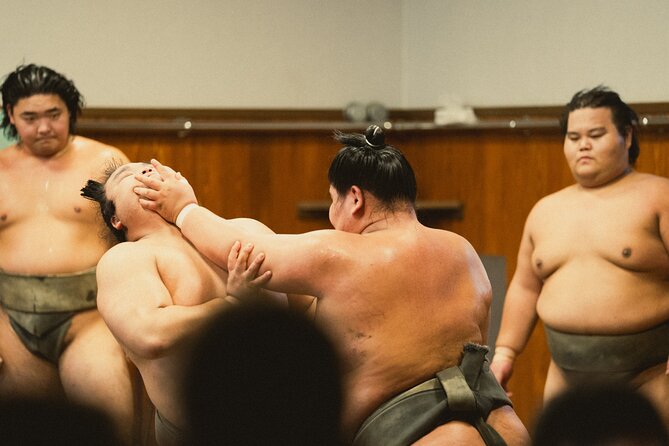
You do not simply watch two large athletes collide. You see how much movement comes before a bout. The wrestlers stretch, work on balance, and practice with speed and force. Their agility can be surprising, especially when you see it from only a short distance away.
The setting also gives the sport its proper context. Sumo began as part of Shinto religious tradition, and the ring remains a sacred place. That is why visitors cannot step onto the ring or sandy ground, and why you must not point your feet toward it.
The tone is serious. The wrestlers are not performing for applause. Some sessions may contain more intense wrestling than others, but you should book this as a chance to watch daily training, not as a substitute for a tournament ticket.
That distinction matters. One of the most useful ways to prepare is to expect repetition and quiet observation. If you want nonstop full-contact action, this may feel subdued. If you want to understand how athletes prepare and how a stable operates, the setting offers far more than a quick photo opportunity.
A few more Tokyo tours and experiences worth a look

Meeting at Oshiage before the city wakes up
The meeting point is at 1-chōme-8-21 Oshiage in Sumida City, close to Tokyo Skytree. You should arrive by 7:10am, even though the official departure time is 7:30am. The group leaves on time, and a late arrival can create a real problem.
From the meeting point, you walk about 15 minutes to the stable. The exact stable location is not the starting point given to you, so plan on meeting the guide and walking with the group. This arrangement helps protect the stable’s routine and makes it easier for your guide to handle entry and etiquette.
Wear modest, comfortable clothing. You will remove your shoes after entering the stable, and a rainy walk can leave your feet wet. A small towel is a smart addition, especially during bad weather.
The early hour is both a challenge and a benefit. You need to organize your morning around the tour, but you are finished at the meeting point near Skytree after roughly two hours. That leaves time for Skytree, Asakusa, the Sumida River area, or another Tokyo sight.
The location is also convenient for public transportation. Since the activity begins and ends near the same point, you do not need to work out a complicated transfer after the visit.
Entering the stable and learning the rules
Your guide helps you enter respectfully and explains what is happening. English translation is an important part of the experience, since the practice itself is conducted in Japanese and you are expected to observe quietly.
Guides have been praised for clear translation and patient help. Yuriko is one guide specifically noted for her calm, useful explanations. The amount of background can vary, though. Some sessions offer plenty of information about the sport, while others put more emphasis on watching the practice and saving questions for afterward.
I suggest reading a little about sumo rules before you arrive, but you do not need to be an expert. The guide can explain the basic aim of a bout, the importance of the ring, and the customs that shape the practice. You will also be better prepared to notice why a stretch, stomp, or push is being repeated.
Once inside, take off your shoes on the raised wooden floor. Hats and sunglasses are not allowed in the stable. Phones must be silent, and photographs and videos must be taken without flash or shutter sounds.
You may bring water, but food, chewing gum, candy, and smoking are not allowed. Try to use the restroom before the tour, since leaving during practice is discouraged and the session requires stillness.
Watching 90 minutes of close-up training
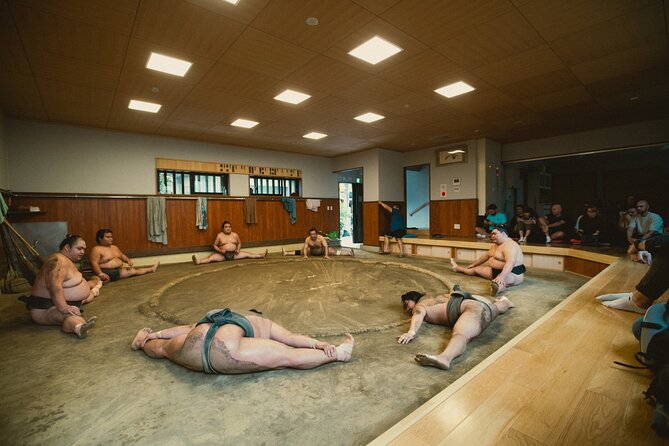
The main section lasts about an hour and a half, though the timing can change with the day’s practice. You sit on the floor, usually cross-legged, and watch the wrestlers go through their routine.
There are no chairs. This is the most important comfort warning in the entire experience. If sitting cross-legged for around 1.5 hours is difficult, you should choose a different way to learn about sumo.
You must also keep your legs tucked in rather than pointing your feet toward the ring. In Japanese culture, showing the soles of your feet toward people or a sacred space is considered impolite. Do not stand, walk around, or shift places during practice.
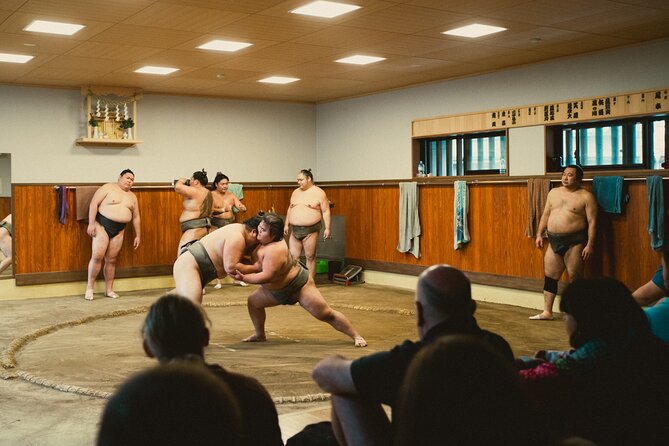
The close view is the real reward. You can see the physical effort in a way that is difficult from arena seating. The wrestlers’ flexibility and speed become easier to appreciate, and the contrast between their size and their agility is striking.
Your group can include up to 25 people. That is still a manageable number for a small stable, but it does not guarantee that everyone will have a front-row position. If you arrive early at the meeting point, you cannot necessarily control your final place inside, so keep your expectations realistic.
The practice is not built around your camera. Wrestlers may allow photographs, but you need to follow the guide’s instructions and avoid interrupting the routine. Social media posting of photos and videos is not permitted, an important restriction for anyone who normally shares every stop online.
The possible conversation after practice
After the training, the atmosphere may soften. The stable master may answer questions about sumo life, training, and diet, and some sessions allow a photo with wrestlers. This is often the most personal part of the morning because you can connect the demanding practice with the people who follow it every day.
A short question-and-answer session has been particularly useful for understanding the wrestlers’ diet and lifestyle. Still, you should treat this part as a possibility, not a promise of a long conversation or a picture with every wrestler.
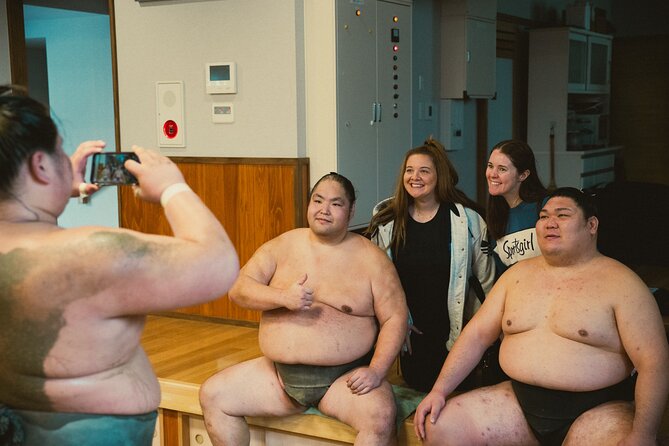
The group may take photos with one or more wrestlers after practice. The exact arrangement depends on the stable and the day’s schedule. Be polite, stay where the guide directs you, and do not assume that every athlete will be available.
Practice can also finish early. The stated duration is about two hours, but the tour may be shorter or longer depending on what the wrestlers are doing. That flexibility is part of visiting a working stable rather than attending a fixed theatrical program.
A few more Tokyo tours and experiences worth a look

What the $83.23 price gets you
At $83.23 per person, this is not a cheap way to fill two hours. You are paying for access to a working sumo stable, an English-speaking guide, help with customs, and the chance to watch from close range.
The value depends on your alternative. A tournament offers a bigger spectacle, more matches, formal ceremonies, and the excitement of a public contest. It also gives you less of a look at ordinary training. This morning visit is a better choice if you want access to the daily discipline behind the tournament.
The guide adds practical value. Without help, you might not know when to sit, where you may step, how to use a phone, or why the ring is treated with such care. Translation also turns silent observation into a lesson, although the amount of explanation may vary from one guide or session to another.
The price is easier to justify if sumo is high on your Tokyo list and you appreciate cultural context. It is harder to justify if you mainly want dramatic bouts, a guaranteed group photograph, or a carefully timed show.
The experience has a 4.9 rating from 54 reviews and a 98 percent recommendation rate. Those numbers suggest strong satisfaction, but they do not remove the practical limits: floor seating, strict silence, an early start, and no promise that practice will last the full scheduled time.
Who should book this sumo visit
I would recommend it to adults and older children who can sit still, listen carefully, and respect a working training space. The minimum age is six, but noisy children, frequent movement, or restless behavior can lead to removal from the stable.
This is a good fit for you if:
- You want to see sumo away from the tournament arena.
- You enjoy watching technique and routine, not only competition.
- You value a guide who can translate and explain local etiquette.
- You are comfortable sitting on the floor without a chair.
- You can manage a 7:30am meeting time.
- You want an activity that ends early enough for a full day in Tokyo.
It is less suitable if you need accessible seating, want to move around freely, or cannot remain silent for a long period. It also may disappoint you if your mental picture comes from action-packed photographs showing constant full-contact wrestling.
Families should be especially honest about their children’s patience. The rule is not simply a polite request. The stable is a serious place, and the group must not disrupt the wrestlers’ training.
Practical etiquette that matters inside
The rules may seem strict, but they protect the stable and make the visit possible. Keep your phone on silent, turn off flash and shutter sounds, and do not upload images or videos to social media.
Do not eat, chew gum, smoke, or wear sunglasses and hats inside. Water is allowed. Wear modest clothes and remove your shoes promptly when you enter.
Remain seated throughout practice. Do not stretch your legs toward the ring, step onto the sandy ground, or move around for a better view. The ring is sacred to the wrestlers, so these are not minor photography rules.
If you are late, contact the tour provider before trying to reach the stable on your own. You cannot enter without contacting the guide or provider. The best plan is to arrive at the Oshiage meeting point at 7:10am and avoid the issue altogether.
Free cancellation is available if you cancel at least 24 hours before the local start time. Cancellations or changes made inside that window are not refunded or accepted.
Is this authentic sumo or a tourist show?
It is best understood as a respectful observation of real practice. The wrestlers train because it is part of their routine, not because a crowd has arrived. That is why one day may show intense bouts while another may focus more on drills, stretching, and preparation.
This difference is a strength, but only if you accept it. The experience gives you a clearer sense of the work and discipline behind sumo. It does not promise a fixed sequence, a certain wrestler, or a full-contact session.
I appreciate that the visitor rules reinforce this point. You are asked to be quiet, stay seated, avoid flash, and keep away from the ring. The restrictions may feel demanding, but they help you behave more like an observer in a working stable and less like an audience at a staged attraction.
Should you book the 7:30am practice?
Book this tour if you want close-up access, useful cultural explanation, and a look at sumo’s demanding daily routine. The chance to meet wrestlers or speak with the stable master adds a personal touch, while the early finish works well for a full day around Tokyo Skytree and Sumida.
Skip it if you need a chair, cannot sit quietly, or want guaranteed high-energy bouts. For those needs, a tournament is the better choice.
For everyone else, the tour offers a rare view of sumo as a discipline rather than a spectacle. Just arrive early, dress modestly, leave your expectations of a staged performance at the station, and let the practice unfold at its own pace.
FAQ
Where does the sumo practice tour begin?
The meeting point is at 1-chōme-8-21 Oshiage, Sumida City, Tokyo, near Tokyo Skytree. The activity ends back at the same meeting point.
What time should I arrive?
You should arrive at the meeting point by 7:10am. The group leaves at 7:30am sharp.
How long does the activity last?
The planned duration is about two hours. Practice may finish earlier or run longer depending on the content of the session.
How far is the stable from the meeting point?
The walk from the meeting point to the stable takes about 15 minutes.
Are chairs provided?
No. There are no chairs in the stable, and you sit cross-legged on the floor for about 1.5 hours.
Can I take photographs or videos?
Photos and videos are allowed without flash or shutter sounds. You must keep your cellphone on silent, and you cannot upload photos or videos from the visit to social media platforms.
Can I take a photo with the wrestlers?
A photo with some wrestlers may be possible after practice, depending on the day and the stable’s schedule. It is not guaranteed that you will photograph every wrestler.
Can children join the tour?
The minimum age is six. Children must remain quiet and still during practice. If a child is noisy or moves around, the group may be asked to leave the stable.
What happens if I am late?
Contact the provider if you cannot reach the meeting point on time. You may be directed to go to the stable yourself, but you cannot enter without contacting the provider first.
More Morning in Tokyo
More Sumo Experiences in Tokyo

More tours in Tokyo we've reviewed






Sumo Experiences, compared.
 ★ 4.8Tokyo: Sumo Show Experience with Chicken Hot Pot and a PhotoFrom $1032 hours
 ★ 4.8Tokyo: Sumo Show and Dining ExperienceFrom $7990 minutes - 2 hours
 ★ 5.0the SUMO showFrom $89
 ★ 5.0Tokyo Shinjuku Sumo Show & Experience with PhotoFrom $79
 ★ 4.8Tokyo: Sumo Show and Experience in ShinjukuFrom $691h 30m
 ★ 4.6Tokyo: Sumo Tournament Tour with Chair Seat TicketsFrom $141