
Reviewed · WALKING TOURS
Private Tokyo Walking Tour with A Guide: Higlights & Customizable
Tokyo is easiest to enjoy when someone helps you connect the dots. This private walk lets you choose the places that matter most, then ask direct questions about daily life, food, customs, and getting around. You can aim for famous sights such as Sensō-ji and Meiji Jingu, or use the guide to find less obvious corners of the city.
I like the one-to-one format, since your guide can adjust the pace and explain things that interest you instead of giving a fixed speech. I also like the hotel pickup, especially on a first Tokyo morning when the rail system can feel like a puzzle. The main catch is time: two hours is short, and the listed sights are spread across the city, so you cannot reasonably explore every stop in one outing.
In This Review
- Key points at a glance
- A private Tokyo walk works best when you choose a theme
- Tsukiji Outer Market: a good start for food-minded visitors
- Sensō-ji and Asakusa: the clearest traditional choice
- Meiji Jingu: calm space beside modern Tokyo
- Akihabara: choose this for electronics, anime, and gaming
- Tokyo Skytree: impressive views, but check what is included
- Ginza: upscale shopping with a local filter
- Ueno Park: museums, seasonal beauty, and breathing room
- Roppongi Hills: art, architecture, and city views
- What two hours really means in a city this large
- Price and group size: good value for the right party
- Language and accessibility details worth checking
- Who will get the most from this Tokyo experience
- Should you book this private Tokyo walk?
- FAQ
- How long is the private Tokyo walking tour?
- Is the tour private?
- Can the itinerary be customized?
- Is hotel pickup included?
- Is transportation around Tokyo included?
- Are food and drinks included?
- Are attraction admission tickets included?
- Is the experience wheelchair accessible?
- Are several languages available?
- Can I cancel for a full refund?
Key points at a glance
- Eight possible areas: Shape the walk around Tsukiji, Asakusa, Meiji Jingu, Akihabara, Tokyo Skytree, Ginza, Ueno, or Roppongi Hills.
- Private from start to finish: Only your group joins, giving you room to ask questions and change plans.
- Hotel pickup included: Meet at your accommodation if it is in the city.
- Walking with local transport: You pay for trains or other local transport as needed, since car service is not included.
- Four language choices: Language support is available in four languages, though the specific language list should be checked before booking.
- Best for a focused first look: Pick two nearby areas, rather than trying to collect eight rushed photo stops.
A private Tokyo walk works best when you choose a theme
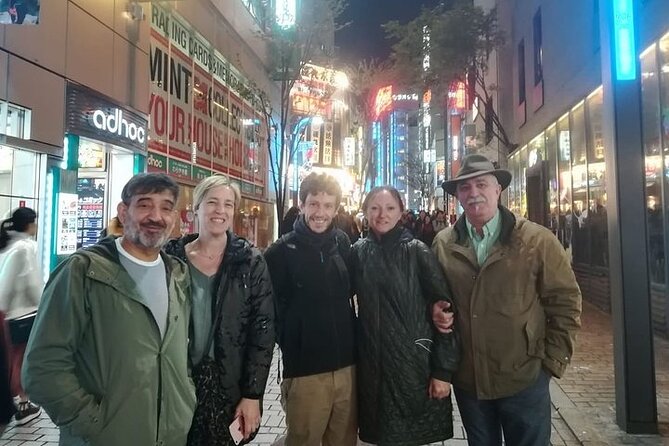
The best use of this experience is not trying to see all of Tokyo in 120 minutes. Tokyo is too large for that, and the suggested neighborhoods sit far apart. Instead, pick a theme before your guide arrives.
You might choose traditional Tokyo, pairing Sensō-ji with Ueno Park. You could focus on food and shopping with Tsukiji Outer Market and Ginza. For modern city culture, Akihabara and Roppongi Hills make a sharper match, though they are very different kinds of places.
I would send your guide a short list of priorities in advance. Name the sights you care about, tell the guide if you want food suggestions or cultural background, and say how much walking feels comfortable. Since the tour is private and customizable, this preparation can make the difference between a useful introduction and a hurried checklist.
The guide is there to help you understand Tokyo, not simply point at buildings. You can ask about local life, customs, food, shopping, and the practical details that are easy to miss when you explore alone. That question-and-answer time is the real value of the tour.
Other walking tours we've reviewed in Tokyo

Tsukiji Outer Market: a good start for food-minded visitors
Tsukiji Outer Market is one of the strongest choices for a short private walk. A guide can help you make sense of the seafood stalls, street food, and small shops, then explain what you are seeing instead of leaving you to guess.
The experience includes no food or drinks, so purchases are extra. That is worth remembering here, because the market is most enjoyable when you have the freedom to sample something or stop for a snack. Ask your guide for help choosing local delicacies and for advice on how to move through the market respectfully.
The listed visit allows about 15 minutes, which is enough for an orientation but not a full market wander. If food is your priority, give Tsukiji more of your two-hour window and cut several other stops. This is also a place where the guide’s language ability can help you feel less uncertain when choosing what to eat.
Sensō-ji and Asakusa: the clearest traditional choice
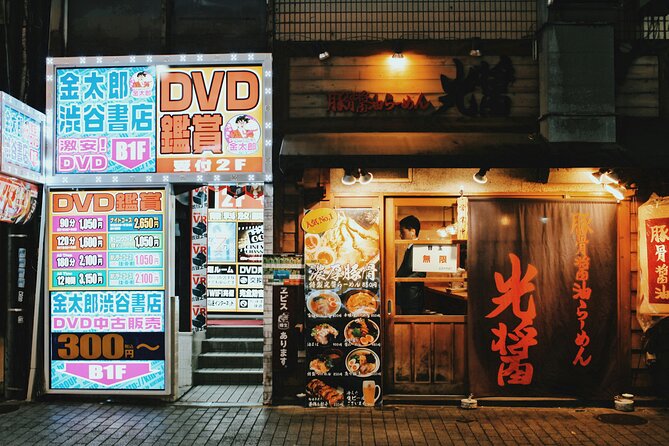
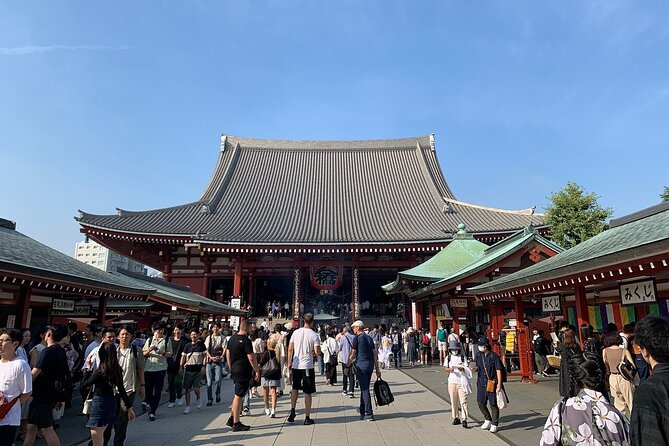
Sensō-ji gives you a strong introduction to old Asakusa. Your guide can explain the Thunder Gate, describe the temple’s past, and show you how to take part in traditional rituals.
For many first visits, this is a better choice than trying to squeeze in several unrelated landmarks. The temple offers architecture, religious customs, and neighborhood atmosphere in one compact area. A guide can also explain what you are doing at each stage, which makes the visit feel more meaningful than a quick photograph at the gate.
The planned stop is about 15 minutes, so treat it as a short introduction. If you want time around the temple and Asakusa streets, ask for a longer visit. You should also expect to use local transport if this stop is paired with a distant district, since the tour does not include a private car.
Meiji Jingu: calm space beside modern Tokyo
Meiji Jingu offers a different side of the city. A guide can explain the meaning of the torii gate, outline Shinto customs, and tell you about the forest around the shrine.
This stop works well for anyone who wants cultural context rather than shopping. It also gives the tour a change of pace. After the noise and commercial energy of other Tokyo districts, the shrine setting can feel more reflective.
The same time limit applies here: 15 minutes is enough to learn the basics, but not enough for an unhurried shrine visit. If you want to understand the rituals, tell your guide that this matters. Otherwise, the stop may become little more than a walk through the entrance area.
Akihabara: choose this for electronics, anime, and gaming
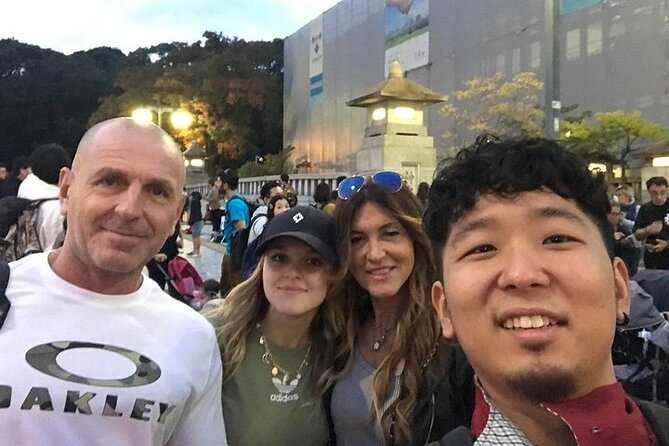
Akihabara is a good fit if you want Tokyo’s modern pop culture and retail scene. Your guide can help you find stores that match your interests, explain the cultural importance of the district, and make the many choices less confusing.
This is one place where a private guide can save time. You may want electronics, anime, gaming, or a particular kind of shop. Tell your guide exactly what you are after instead of asking for a general look at Akihabara.
Fifteen minutes is a very tight allowance for this district. Stores require browsing time, and the area is not best understood from a single street corner. I would choose Akihabara as a main focus, not as one quick stop among seven others.
Other guided tours in Tokyo


Tokyo Skytree: impressive views, but check what is included
The Tokyo Skytree stop is described as a chance to learn about the tower’s construction and importance while enjoying panoramic views from the observation decks. However, the tour includes no admission tickets, and the itinerary marks the stop as free. You should confirm the exact plan before booking if entering the observation decks is important to you.
A guide can add useful city context while you look out over Tokyo. Still, the tower works best when you allow enough time for transport, entry, and the view itself. A 15-minute visit may only work as an exterior stop or a very brief orientation unless the details are arranged in advance.
This is a good example of why customization matters. If the Skytree is on your must-see list, ask for it to receive proper time. Do not assume that every suggested stop includes full access to every attraction.
Ginza: upscale shopping with a local filter
Ginza is Tokyo’s polished shopping and entertainment district. Your guide can point out notable stores, discuss the area’s development, and help you find places to shop or eat.
The benefit here is direction. Ginza can be expensive, and a guide can help you explain what you are looking for before you spend time browsing. You can also ask for dining ideas, although food is not included in the tour price.
Again, the listed 15 minutes is enough to get your bearings, not to shop seriously. If Ginza interests you, use the private format to narrow the visit to a specific goal. A general sweep through the district will feel rushed.
Ueno Park: museums, seasonal beauty, and breathing room
Ueno Park gives you parks, museums, and cultural sights in one broad area. Your guide can point out the main attractions, explain why Ueno matters, and lead you toward good places for seasonal views such as cherry blossoms.
This is a flexible stop for families, art fans, and anyone who wants some open space. It can also pair naturally with Sensō-ji because both are on the traditional side of Tokyo, though local transport between them still takes time.
The park is large, so 15 minutes only provides a taste. Ask your guide to select one section or one museum area. Admission is not included, and the tour information does not promise entry to any museum, so treat this as an outdoor introduction unless you confirm otherwise.
Roppongi Hills: art, architecture, and city views
Roppongi Hills suits visitors interested in contemporary art, shopping, entertainment, and modern architecture. Your guide can show you around the complex and provide information about the Mori Art Museum and local cultural events.
This stop has a different feel from Meiji Jingu or Sensō-ji. It is a choice for modern Tokyo, with more emphasis on design, art, and city life. If you want to visit the Mori Art Museum, ask about timing and admission, since attraction tickets are not listed as included.
At 15 minutes, Roppongi Hills is best treated as a short introduction unless it becomes the main focus of your walk. The private format helps here because your guide can match the stop to your interests instead of dragging you through every part of the complex.
What two hours really means in a city this large
The two-hour duration is both the strength and limit of this experience. It is long enough to get practical advice, learn how a neighborhood works, and visit one or two nearby areas. It is not long enough to properly cover Tsukiji, Asakusa, Meiji Jingu, Akihabara, Skytree, Ginza, Ueno, and Roppongi Hills.
The stops are each shown as about 15 minutes, but moving between distant neighborhoods can use a large part of your time. Local transportation is not included, and the guide does not provide car transport. You should budget separately for trains or other city transport and expect to walk.
I would ask for a realistic route rather than simply naming every attraction. A compact plan gives you time to stop, ask questions, and notice details. A long list may produce eight quick introductions with little sense of place.
Hotel pickup is useful if your accommodation is in the city. Meeting at your hotel removes the need to find a complicated first meeting point. Pickup is not a private vehicle service, though, so the rest of the outing remains a walking and public-transport experience.
Price and group size: good value for the right party
At $52.86 per person, the price is most appealing for a small private group that wants personal attention. You are paying for a private guide, a customized plan, and hotel pickup, not for meals, attraction admission, or transport around Tokyo.
That distinction matters. Add your expected train fares, snacks, drinks, and any entrance tickets to the total. The value comes from saving planning time and having someone respond to your questions, not from bundled admissions.
Group discounts are offered, which may improve the price for a larger private party. Because only your group participates, you can set a comfortable pace and focus on shared interests. Solo visitors may find the per-person price less attractive, while families or friends may get more from the arrangement.
The experience is booked, on average, 76 days in advance. That suggests you should plan ahead if your dates are fixed, particularly if you want a particular guide, language, or pickup arrangement. Confirmation is provided at booking.
Language and accessibility details worth checking
The experience offers four language choices, which helps if you are worried about explaining food preferences, cultural questions, or transport needs. The supplied information does not name the four languages, so confirm your preferred option before paying.
The activity is wheelchair accessible, and most people can participate. Still, the route is customized, so you should discuss the exact neighborhoods and walking distance if accessibility is important for your group. The practical question is not only whether the activity is accessible, but whether the chosen route suits your needs.
Who will get the most from this Tokyo experience
I would recommend this tour to first-time visitors who want a fast orientation with a real person rather than a fixed group program. It also suits families, couples, and friends who have different priorities and want to shape the outing around them.
Food lovers should favor Tsukiji. Visitors drawn to temples and customs should choose Sensō-ji or Meiji Jingu. Fans of anime, games, and electronics should make Akihabara the centerpiece. Art and modern city life point toward Roppongi Hills, while shoppers may prefer Ginza.
I would not book it expecting a full tour of all eight places. You should also think twice if you want a long museum visit, a relaxed market meal, or full observation-deck time. Those goals need more than a few minutes at each stop.
The strongest part of this experience is the chance to ask about Tokyo life as you go. A particularly useful guide can explain small practical matters, including local customs and the challenge of finding public rubbish bins. That kind of advice can make the rest of your stay easier, even after the two-hour walk ends.
Should you book this private Tokyo walk?
Book it if you want a flexible introduction, hotel pickup, and direct access to a local guide. Keep your plan tight, choose two nearby areas, and confirm your language, route, and any admission plans before the day.
Skip it if you want every major Tokyo sight in one sitting or prefer a tour with transport and tickets bundled in. At $52.86 per person, it is fair value for private guidance and planning help, but only when you use the customization well. Pick a clear theme, allow time for local transport, and you will get far more from the experience than a rushed tour of the whole city.
FAQ
How long is the private Tokyo walking tour?
The tour lasts approximately two hours.
Is the tour private?
Yes. Only your group participates, and no other people are added to your tour.
Can the itinerary be customized?
Yes. The tour includes itinerary customization, so you can discuss your preferred sights and interests with the guide.
Is hotel pickup included?
Yes. Pickup is available from your accommodation if it is located in the city.
Is transportation around Tokyo included?
No. This is a walking tour, and local transportation around the city is not included. You pay separately for trains or other local transport you use.
Are food and drinks included?
No. Food and drinks are not included in the tour price.
Are attraction admission tickets included?
The listed stops show no admission ticket charge, but the tour information does not include attraction admission. Confirm any planned entry with the provider before your visit.
Is the experience wheelchair accessible?
Yes. The experience is described as wheelchair accessible.
Are several languages available?
Yes. Four language options are available. The specific languages should be confirmed before booking.
Can I cancel for a full refund?
Yes, if you cancel at least 24 hours before the experience start time. Cancellations or changes made less than 24 hours before the start time are not accepted for a refund.
More Private Tours in Tokyo


More Guided Tours in Tokyo
More Walking Tours in Tokyo

More tours in Tokyo we've reviewed






Walking Tours, compared.
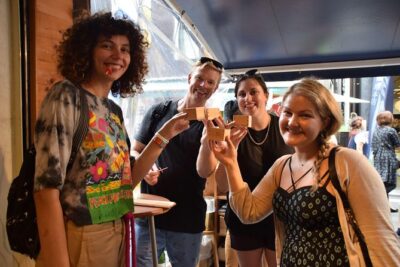 ★ 5.0Tokyo Tsukiji Fish Market Food and Culture Walking TourFrom $99
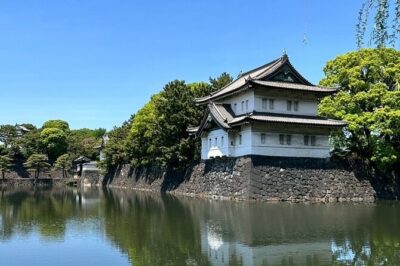 ★ 5.0Tokyo: Imperial Palace and Shogun Historical Walking TourFrom $22
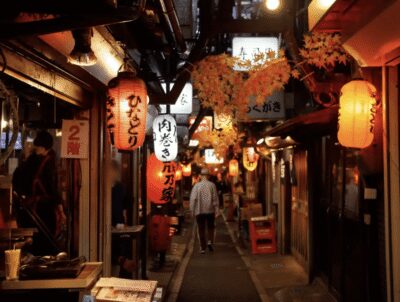 ★ 4.9Tokyo: Shinjuku Local Bar and Izakaya Guided Walking TourFrom $343 hours
 ★ 5.0Tokyo: Tsukiji Fish Market Food and Walking tourFrom $30
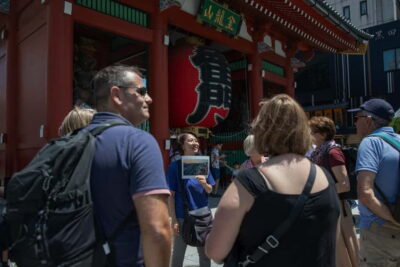 ★ 4.8Tokyo: Asakusa Walking Tour with Sensoji Temple VisitFrom $222 hours
 ★ 4.9Tokyo: Tsukiji Fish Market Guided Walking TourFrom $222 hours