
Reviewed · KAMAKURA & ENOSHIMA DAY TRIPS
Kamakura Full Day Tour with Licensed Guide and Vehicle from Tokyo
Kamakura packs samurai-era temples, sea air, bamboo gardens, and a giant bronze Buddha into one manageable day from Tokyo. A private vehicle and licensed guide let you move between far-flung sights without wrestling with train connections or losing time on foot.
I especially like the chance to shape the day around three or four key sites, rather than race through every stop. I also like the human touch: guides such as Kei and Yoshi have built routes around temple gardens, local food, shopping, and small cultural details such as washing money in sacred spring water. The main caution is the price, $1,026.90 per group of up to four, plus entrance fees and lunch.
In This Review
- Key points to know before you book
- Why Kamakura works as a day trip from Tokyo
- Hasedera begins the temple circuit
- Meeting the Great Buddha at Kotoku-in
- Kencho-ji shows Kamakura’s Zen side
- Tsurugaoka Hachimangu connects shrine and samurai history
- Hokoku-ji pairs bamboo with a cup of matcha
- Yuigahama Beach brings in the Pacific air
- Komachi Street is the best place for food and small purchases
- Eishoji offers a quieter final temple
- How the private vehicle changes the day
- Guide quality matters more than usual
- Is $1,026.90 good value for four people?
- Who should book this Kamakura tour?
- FAQ
- How long is the Kamakura tour?
- How many people can join the private tour?
- Is hotel pickup available?
- Which sights can I visit?
- Do I visit all eight listed places?
- Are entrance fees and lunch included?
- What is the cancellation policy?
Key points to know before you book
- Private transport from Tokyo: The drive to Kamakura takes about an hour, though traffic can change the day’s pace.
- A flexible three-or-four-site plan: The full route lists eight possible stops, but the included service is designed around a smaller selection.
- A licensed multilingual guide: English support is included, though one past booking raised a serious concern about spoken English clarity.
- Kamakura’s greatest hits in one day: You can combine the Great Buddha, major temples, a bamboo grove, the beach, and Komachi Street.
- The group price favors four people: At $1,026.90, the per-person cost drops sharply when shared by a family or small group.
- Bring extra money for admissions and food: Several temple entrances, matcha tea, lunch, and personal purchases cost extra.
Why Kamakura works as a day trip from Tokyo
Kamakura gives you a different Japan from the one found in Tokyo’s crowded central districts. This former political center is known for temples, shrines, gardens, and the Pacific coast. You can spend the morning among religious buildings and forested hills, then eat noodles or sushi, browse shops, and finish near the beach.
The distance matters. Kamakura is close enough for a day trip, but the sights are spread across town. Hasedera and Kotoku-in are near the coast, Kencho-ji and Tsurugaoka Hachimangu occupy the central and northern part of town, and Hokoku-ji lies farther east. A vehicle helps, especially if you want more than one or two major sites.
The drive from Tokyo takes about an hour under normal conditions. Traffic can stretch that considerably, so an eight-hour booking does not mean eight full hours inside temples. Travel time is included in the total, and the route may change during the day.
A few more Tokyo tours and experiences worth a look
Hasedera begins the temple circuit
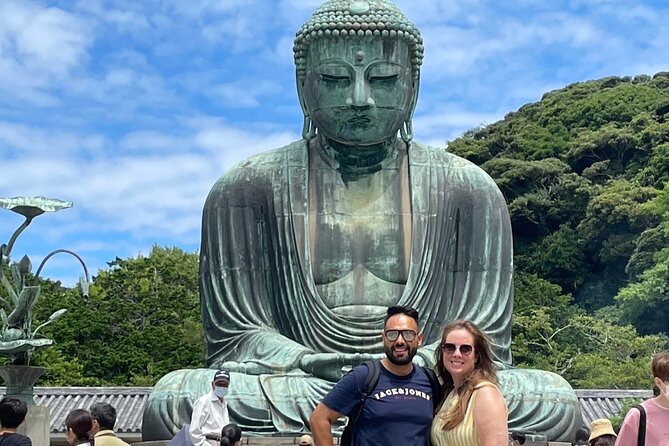
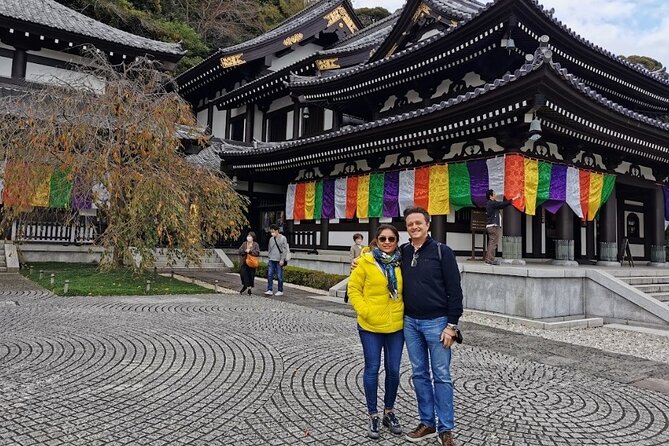
Hasedera is a strong opening stop because it offers both a major religious artwork and attractive elevated views. The temple is associated with the Jodo sect and is famous for its eleven-headed Kannon, a gilded wooden statue measuring 9.18 meters. You see it inside the Kannon-do Hall.
The grounds are known for gardens, and the temple’s higher points give you a look toward the ocean. That combination makes Hasedera more varied than a quick statue stop. You can move from a quiet hall to planted paths and then pause for sea views.
Plan on about an hour here. The admission fee is not included, so keep cash or another accepted payment method ready. Since the route is customizable, ask your guide early if Hasedera is a priority. It is a good choice for you if gardens and religious art matter as much as famous landmarks.
Meeting the Great Buddha at Kotoku-in
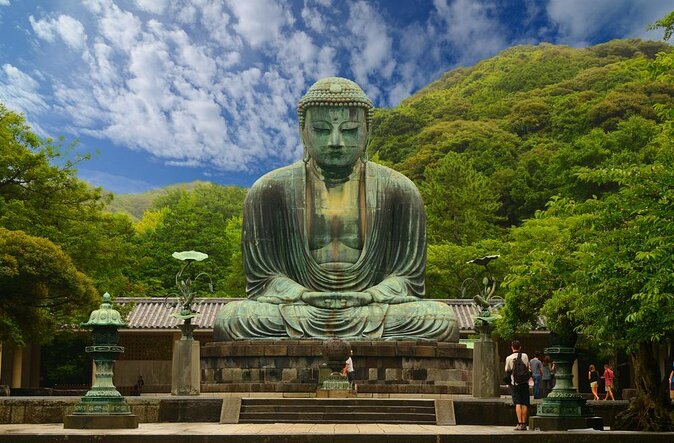
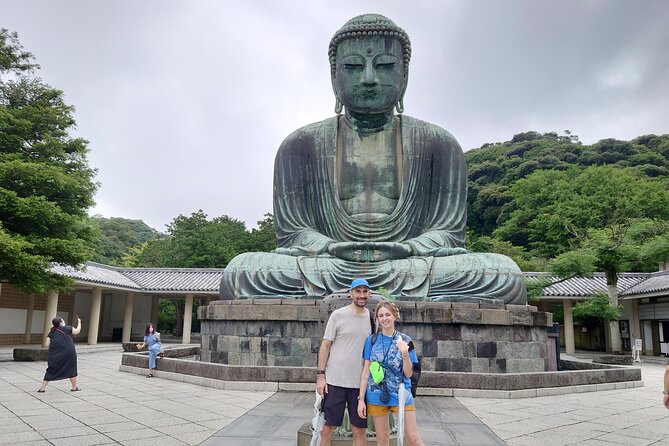
The Great Buddha of Kamakura is the day’s clearest icon. The bronze Amida Buddha rises 11.4 meters on the grounds of Kotoku-in Temple. Its scale is impressive, but the open-air setting gives the visit a calmer feel than a giant indoor monument.
You have about an hour here, enough time to see the statue, take photographs, and listen to the guide explain its place in Kamakura’s religious story. The entrance fee is extra.
The Great Buddha is one of the easiest choices for a first visit to Kamakura. If you have limited time, I would put it near the top of your list, along with Hasedera or Tsurugaoka Hachimangu. The drawback is simple: it is one of the town’s busiest sights, and a private vehicle cannot remove all delays caused by road traffic or crowds.
Kencho-ji shows Kamakura’s Zen side
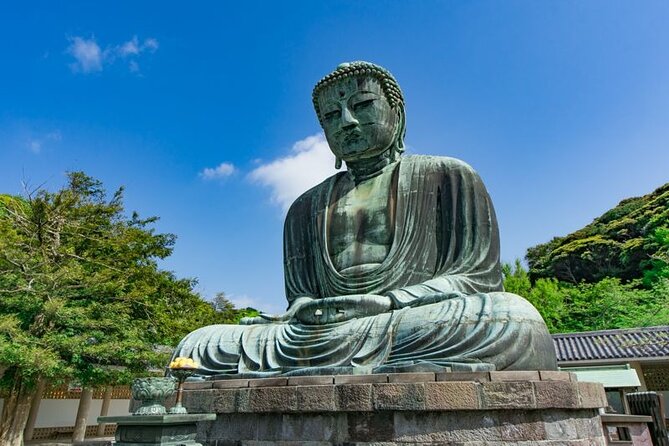
Kencho-ji is the oldest Zen temple in Kamakura and the first of the city’s five great Zen temples. It was founded in 1253 by Hojo Tokiyori, with Rankei Doryu, a Zen priest from China, as its first head priest.
The temple extends from the Sanmon gate into the forested hills. After entering, look for the temple bell, or Bonsho, on the right. It is designated a national treasure. The complex also includes several temple buildings and smaller subtemples.
The planned visit here is about 30 minutes, which is enough for an introduction but not a slow exploration of every building and wooded path. That short time makes Kencho-ji a sensible choice if you want variety. If Zen architecture and temple grounds are your main interest, you may prefer to spend longer here and drop another stop.
Entrance is not included. Tell your guide what kind of visit you want: a quick look at the main structures or more time in the quieter wooded section.
Tsurugaoka Hachimangu connects shrine and samurai history
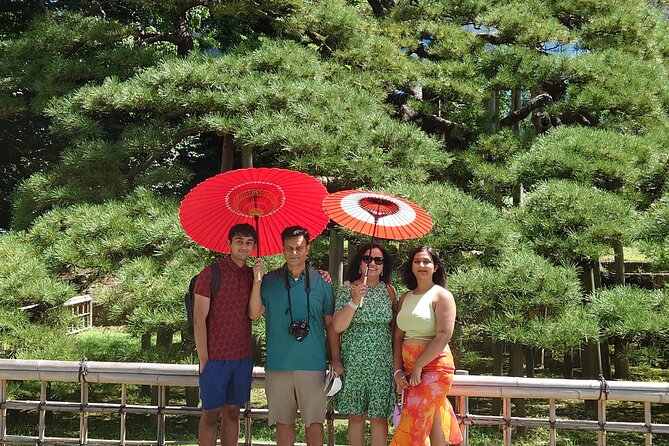
Tsurugaoka Hachimangu is Kamakura’s most important shrine and a natural choice for understanding the city’s samurai connection. It is dedicated to Hachiman, the patron deity of the Minamoto family and samurai more broadly. The shrine also enshrines Emperor Ojin, Hime-gami, and Empress Jingu.
You have about an hour here, and admission is free. That makes it one of the best-value stops in the day. The grounds provide a broad change of mood after the enclosed halls and narrow paths of the smaller temples.
I like this stop for its historical role and its position near Komachi Street. You can visit the shrine, then move easily toward shops and food. It is also a good pick for families and first-time visitors because it gives you a clear sense of Kamakura’s public religious center without an admission charge.
Other guided tours in Tokyo

Hokoku-ji pairs bamboo with a cup of matcha
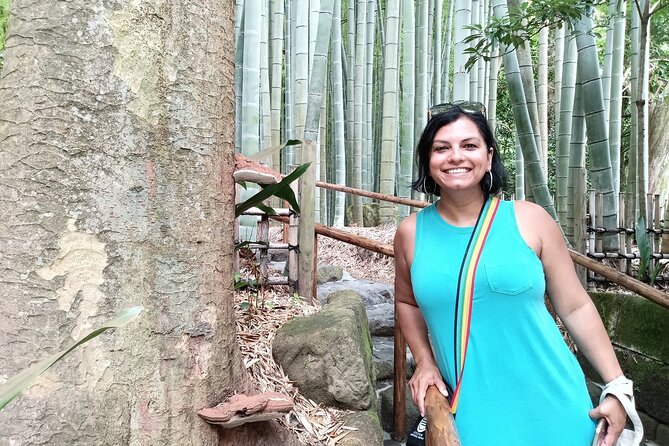
Hokoku-ji is famous for a small bamboo grove containing more than 2,000 dark green stalks. Narrow paths lead through the grove to a tea house, where you can order matcha for an additional fee and look into the bamboo.
Behind the temple, shallow caves cut into the hills are believed to hold the ashes of later Ashikaga lords. That detail adds another layer to the visit, though the bamboo grove is the main attraction.
You have about an hour here, not counting any extra time your guide may arrange. Admission is not included, and the tea costs extra. Hokoku-ji is a good choice when you want a quieter, more visual stop. It is less useful if you want only major historical buildings and a fast list of famous sights.
A practical tip: ask your guide how much of the hour should go toward the grove, tea, and caves. The visit can feel rushed if you try to do everything at once.
Yuigahama Beach brings in the Pacific air
Yuigahama is one of Kamakura’s main beaches. It is broad, flat, and close to Kamakura Station. The scheduled stop lasts about 30 minutes and is free.
This is not a full beach day. Think of it as a short pause that lets you see Kamakura’s coastal character after several temple visits. You can breathe in the sea air, take photographs, and understand why Kamakura feels different from inland Tokyo.
The beach can be crowded, and the stop may be less rewarding in poor weather. Still, it gives the day a welcome change of pace. If your group prefers temples and gardens, you may want to use the time elsewhere. If you like coastal views, keep it on the plan.
Komachi Street is the best place for food and small purchases
Komachi-dori runs from the east exit of Kamakura Station toward Tsurugaoka Hachimangu Shrine. It is lined with souvenir shops, clothing stores, restaurants, and food stalls. The scheduled stop is about an hour, with no admission fee.
This is where the formal sightseeing day becomes more local and casual. You can sample Hatosabure, a dove-shaped biscuit associated with Kamakura, or choose a meal. One guide helped arrange buckwheat noodles served with hot soup, made on the restaurant premises. Another route included sushi at a traditional Japanese restaurant.
Lunch is not included, so you choose how much to spend. An hour gives you time for a focused meal and a little shopping, but not a long restaurant outing followed by extensive browsing. If food matters to you, tell the guide before the day begins so the timing works.
Komachi Street can also be busy and commercial. I would not treat it as a substitute for the temples. Its value is practical: it gives you a convenient place to eat, buy gifts, and try a familiar Kamakura snack.
Eishoji offers a quieter final temple
Eishoji is described as Kamakura’s only surviving nunnery. Founded in the early Edo period by a woman connected to the Tokugawa family, it is known as a flower temple because of its seasonal blooms.
The grounds include a small bamboo grove and an Amida Buddha statue said to be by the sculptor Unkei. The planned stop is only 10 minutes, and admission is extra. That short visit makes it more of an optional add-on than a main attraction.
I would choose Eishoji if you have a special interest in women’s religious history, seasonal flowers, or quieter temple grounds. If this is your first Kamakura visit, the Great Buddha, Hasedera, Tsurugaoka Hachimangu, and Hokoku-ji will likely give you more for your limited hours.
How the private vehicle changes the day
The private car is the tour’s practical advantage. Kamakura’s sights are not all clustered together, and moving between them by public transport or on foot takes planning. With a vehicle, you can spend more of your day looking at temples instead of checking routes.
The guide can also adjust the order when traffic or crowd conditions change. The route is not fixed in stone, and that is useful in a town where road delays can quickly affect the last part of the day.
There are limits. You cannot request a specific vehicle type, and only a limited number of car seats and booster seats are available. Rear-facing car seats are not available. Contact the provider directly if you need a child seat, and do not assume one will be ready without advance notice.
The booking is private, so only your group participates. One reservation covers up to four people, and separate tour groups cannot be combined. This is especially helpful if you want to move at your own pace or need the guide to focus on your family’s interests.
Guide quality matters more than usual
A government-licensed local guide is included, along with English support and multilingual service. The experience can be much stronger when the guide explains why a statue, shrine, or garden matters instead of simply naming it.
Kei and Yoshi are two guide names connected with past bookings, but you should not assume either guide will lead your day unless the provider confirms it. Kei was praised for fitting many Kamakura stops into eight hours, including a food break and a visit to Zeniarei Benzaiten Temple, where you can wash money in sacred spring water as a prosperity custom. That temple is not part of the listed route, but the example shows how the day may be adjusted.
There is also an important warning. One booking reported that the guide’s spoken English was difficult to understand, with communication described as a major failure. The provider responded that a refund request could be pursued through the booking platform. Since the tour’s value depends heavily on explanation, ask about the assigned guide’s language ability before departure if clear English is essential to you.
Is $1,026.90 good value for four people?
The price is $1,026.90 per group of up to four. Split four ways, that is about $257 per person before entrance fees, lunch, and personal spending. For two people, the effective cost is much higher.
That price can make sense if you value door-to-door transport, a private guide, and a flexible route from Tokyo. A family of four can avoid separate train fares, taxi planning, and the time cost of managing a complicated day. You are paying for coordination as much as transportation.
The value is weaker if you are comfortable using trains, choosing only one or two sights, or exploring without explanation. Kamakura is accessible on its own, and this experience is best for people who want convenience and guidance more than the lowest possible cost.
Admission charges apply at most temples. Tsurugaoka Hachimangu, Yuigahama Beach, and Komachi Street are free, while Hasedera, Kotoku-in, Kencho-ji, Hokoku-ji, and Eishoji list admission fees as extra. Matcha at Hokoku-ji, lunch, Hatosabure, and shopping also come from your own budget.
Who should book this Kamakura tour?
I would recommend it to a small group that wants a private day, has limited time in Tokyo, and prefers a guide to explain the religious and samurai connections. It also suits families who would rather use a vehicle than manage transfers between spread-out sights.
It is a good match for first-time visitors who want a broad introduction: a major Kannon temple, the Great Buddha, a Zen complex, a leading shrine, bamboo, the coast, and shopping.
I would think twice if you want a slow temple day. The published route includes eight possible places, but the service is built around choosing three or four sites. Trying to cover every location in eight hours, especially from Tokyo, leaves little room for lingering.
Book it if you will share the cost with three other people and want convenience, flexibility, and personal guidance. Skip it if price matters most, you prefer independent train travel, or you need guaranteed use of a particular vehicle or a particular guide.
FAQ
How long is the Kamakura tour?
The experience lasts about eight hours, including travel time between Tokyo and Kamakura. Travel from Tokyo to Kamakura takes about an hour under normal conditions.
How many people can join the private tour?
The price covers one private group of up to four people. Only your group participates, and multiple reservations cannot be combined into a larger group.
Is hotel pickup available?
Pickup is offered. The provided information does not specify every pickup location, so confirm the exact arrangement when booking.
Which sights can I visit?
Possible stops include Hasedera Temple, Kotoku-in and the Great Buddha, Kencho-ji Temple, Tsurugaoka Hachimangu Shrine, Hokoku-ji Temple, Yuigahama Beach, Komachi Street, and Eishoji Temple.
Do I visit all eight listed places?
The included service is a customizable tour of three or four sites from the available list. The route can also change because of traffic conditions.
Are entrance fees and lunch included?
No. Entrance fees, lunch, and personal expenses are extra. Tsurugaoka Hachimangu Shrine, Yuigahama Beach, and Komachi Street are listed as free stops.
What is the cancellation policy?
You can cancel at least 24 hours before the start time for a full refund. Cancellations or changes made less than 24 hours before the start time are not refunded or accepted. The experience requires good weather, and a weather cancellation offers a different date or a full refund.
More Full-Day in Tokyo
More Guided Tours in Tokyo
More Kamakura & Enoshima Day Trips in Tokyo
More tours in Tokyo we've reviewed










Kamakura & Enoshima Day Trips, compared.
 ★ 4.5Tokyo: Kamakura & Enoshima Day Trip including Temple TicketsFrom $589 hours - 570 minutes
 ★ 4.5Tokyo: Mt. Fuji, Kamakura, Big Buddha, & Lake Ashi Day TripFrom $4910 - 11 hours
 ★ 4.5From Tokyo: Kamakura & Enoshima 1-Day Bus TourFrom $66
 ★ 5.0Kamakura Historical Walking Tour with the Great BuddhaFrom $98
 ★ 5.0Kamakura Private Tour: Temples, Nature, and the Great BuddhaFrom $98
 ★ 5.0Kamakura Walking Tour – The City of ShogunFrom $35