
Reviewed · MT FUJI DAY TRIPS
From Tokyo: Must-Visit Mount Fuji Highlight Full-Day Tour
Mt. Fuji is famous for one perfect postcard view, but this tour gives you several chances to find it. You can choose a photo-heavy route with Chureito Pagoda, Lake Kawaguchi, and Obuchi Sasaba, or a calmer route featuring Oshino Hakkai and Lake Yamanaka.
I like the easy round-trip bus service from central Tokyo, and I like the way the day mixes famous photo spots with quieter countryside stops. Guides such as Kei, Goldie, Yui, and Yuichi have been especially attentive and good at keeping large groups moving. The tradeoff is time: traffic can stretch the day beyond 11 hours, and some stops may feel short.
In This Review
- Key points to know before booking
- Why this is a smart way to see Mt. Fuji from Tokyo
- Choosing between the photo route and the scenic route
- Arakurayama Sengen Park and the 400-step photo climb
- Shimoyoshida Honcho Street and Lawson Fujikawaguchiko
- Lake Kawaguchi and Oishi Park in one compact visit
- Shiraito Waterfall brings a welcome change of scenery
- Obuchi Sasaba and the tea fields
- Oshino Hakkai and its clear spring ponds
- Mt. Fuji World Heritage Centre or a matcha café
- Lake Yamanaka and Hirano Beach
- The bus ride, group size, and guide quality
- Weather, walking, and what to pack
- Is $69 good value for a full Fuji day?
- Should you book this Mt. Fuji tour?
- FAQ
- How long does the Mt. Fuji tour last?
- Where does the tour start?
- Which languages are available?
- Does the tour include lunch?
- Is Chureito Pagoda difficult to reach?
- Is the tour wheelchair-accessible?
- Can I cancel the booking for a refund?
Key points to know before booking
- Two different Fuji experiences: Choose the photo-focused route or the lakes-and-villages route when booking.
- Chureito Pagoda requires stairs: The climb is short but steep, with about 400 steps reported for the pagoda viewpoint.
- Weather controls the main event: Mt. Fuji can disappear behind clouds, even when the surrounding sights remain beautiful.
- Large coach, not a small van: Groups can reach 49 people, though the buses have been described as comfortable with generous legroom.
- Lunch is not included: Bring snacks or a light meal, then buy noodles, ice cream, and drinks at stops.
- Strong value at $69: Reaching several Fuji-area sights without driving or planning complicated transport makes this a practical Tokyo day trip.
Why this is a smart way to see Mt. Fuji from Tokyo
The Fuji region is spread across a wide area, and its best viewpoints are not clustered around one train station. A private car would give you more control, but it costs far more. Public transport can work, yet connecting a pagoda, lakes, waterfalls, a spring village, and a tea plantation in one day takes careful planning.
For $69 per person, this trip handles the long-distance transport and the route planning. You get an English-, Korean-, or Chinese-speaking guide, plus a driver who knows how to move a large group through a busy sightseeing area.
That last point matters. The road from Tokyo to Mt. Fuji can take about two and a half hours in normal conditions, and much longer on a bad traffic day. One trip took five hours to reach the area after a road accident, forcing two stops to be dropped. That is not a flaw unique to this tour, but it is the reality of visiting Mt. Fuji from Tokyo.
The bus also means less freedom. You cannot linger at a favorite lake or leave early from a crowded photo stop. Still, if you want to see many sides of Fuji without renting a car, this is a sensible trade.
A few more Tokyo tours and experiences worth a look
Choosing between the photo route and the scenic route
The two advertised routes are not identical, so check the option name carefully before paying.
Course A is the better match for classic Fuji photographs. It includes Arakurayama Sengen Park, Shimoyoshida Honcho Street, Lawson Fujikawaguchiko, Lake Kawaguchi, Oishi Park, Shiraito Waterfall, and Obuchi Sasaba. The route moves through postcard views, flower beds, cascading water, and tea fields.
Course B has a softer pace in spirit, though the day remains long. It visits Arakurayama Sengen Park, Honcho Street, Lawson Fujikawaguchiko, the Mt. Fuji World Heritage Centre or a nearby matcha café, Oshino Hakkai, and Lake Yamanaka’s Hirano Beach.
If your main goal is the pagoda-and-mountain photograph, choose the photo route. If you prefer springs, lakeside walking, and a little more cultural context, choose the scenic route. The exact order can change with weather and road conditions, so treat the route as a plan rather than a promise carved in stone.
Arakurayama Sengen Park and the 400-step photo climb
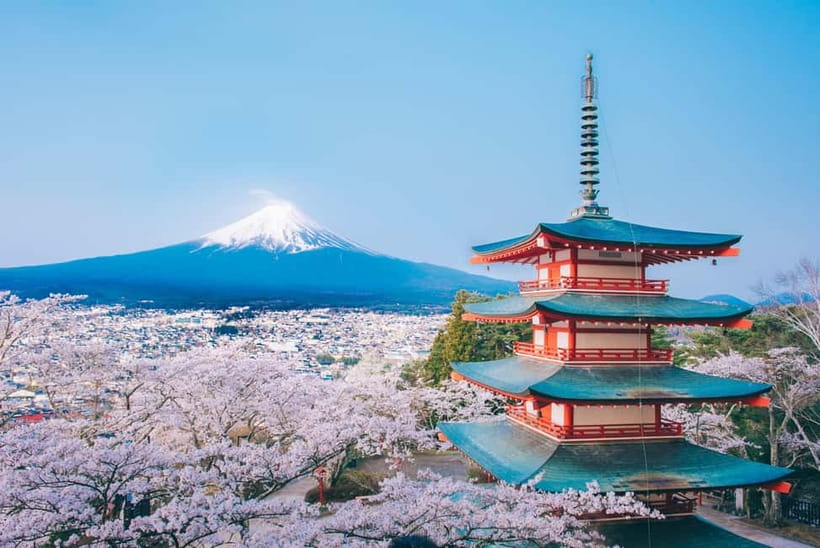
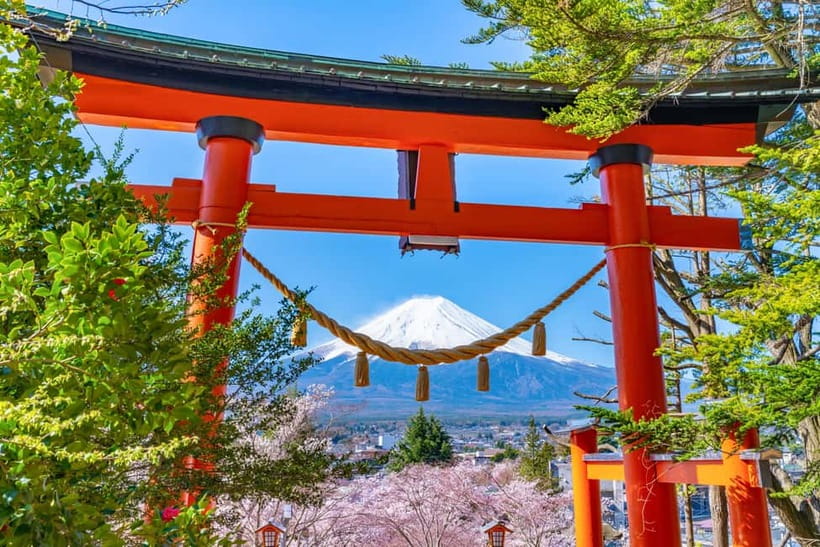
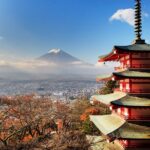
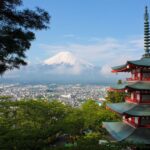
Arakurayama Sengen Park is the signature stop. From the upper viewpoint, the red-and-white Chureito Pagoda sits in front of Mt. Fuji, creating one of Japan’s most recognizable views.
Getting there takes effort. The staircase is short enough for many visitors but steep enough to make comfortable shoes essential. One account puts the climb at roughly 400 steps, and the return descent can be just as demanding for anyone with knee or walking problems.
You usually get around 45 minutes here, with additional time around nearby Honcho Street depending on the selected route. That is enough for the main view and a few photographs, but not a slow visit. If you want the classic shot, head up promptly rather than spending the first part of the stop browsing below.
The pagoda is also a useful test of the weather. If Fuji is hidden at this first stop, do not assume the whole day is lost. Clouds can break later, and guides have sometimes changed the order to chase clearer views.
Shimoyoshida Honcho Street and Lawson Fujikawaguchiko
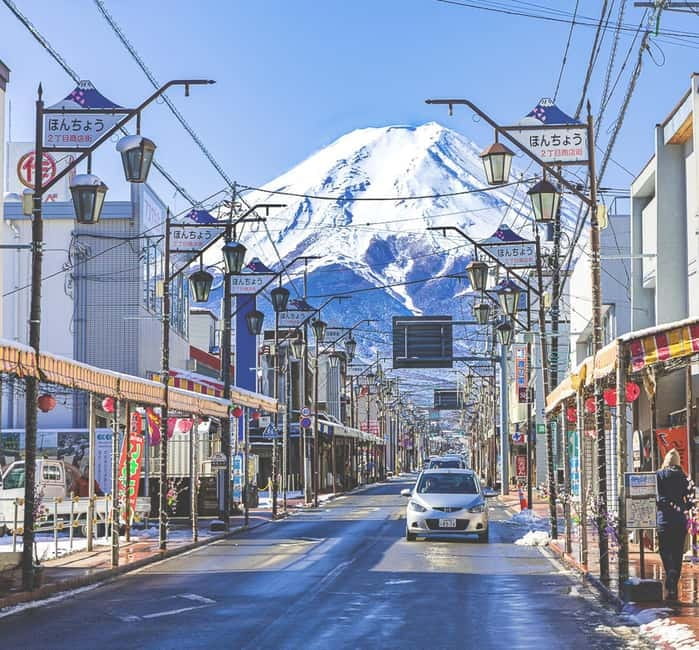
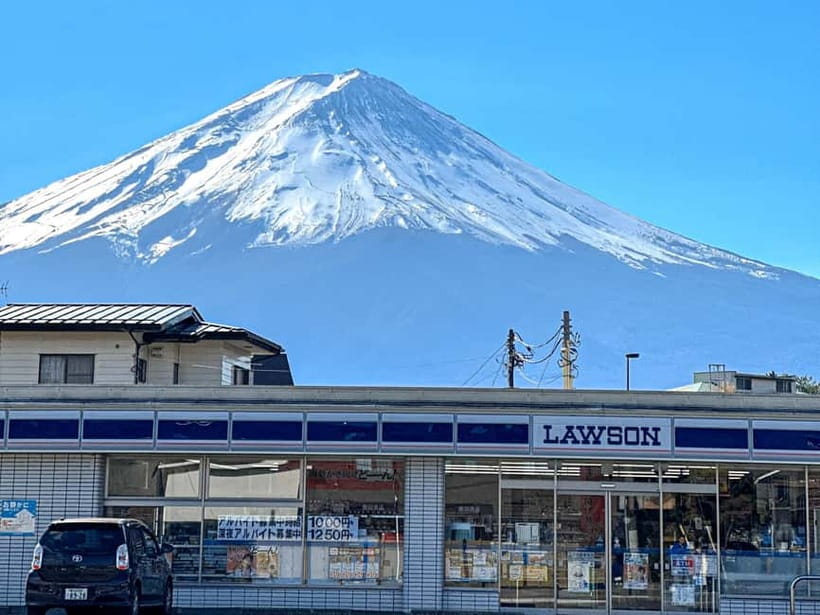
Shimoyoshida Honcho Street gives you a different Fuji image. The road has a nostalgic town feel, with local shops, eateries, utility lines, and the mountain rising beyond the street. It is less formal than a temple garden and more like a working Japanese neighborhood that happens to have an extraordinary backdrop.
The stop is paired with Arakurayama Sengen Park, giving you time for both the elevated pagoda view and the street-level scene. Keep your camera ready, but remember that this is a public street. Take care around traffic and avoid blocking shop entrances.
Lawson Fujikawaguchiko Town Hall is a brief photo and refreshment stop. The convenience store became popular online because Mt. Fuji can appear directly behind the familiar Lawson sign. It is an amusing modern snapshot of Japan, though some people find the stop less meaningful than time in Fujiyoshida itself.
You usually have about 15 to 30 minutes here. Use it for a drink, snack, or quick photograph. If you would rather spend more time in a historic district, this is the stop you may find least rewarding.
Lake Kawaguchi and Oishi Park in one compact visit
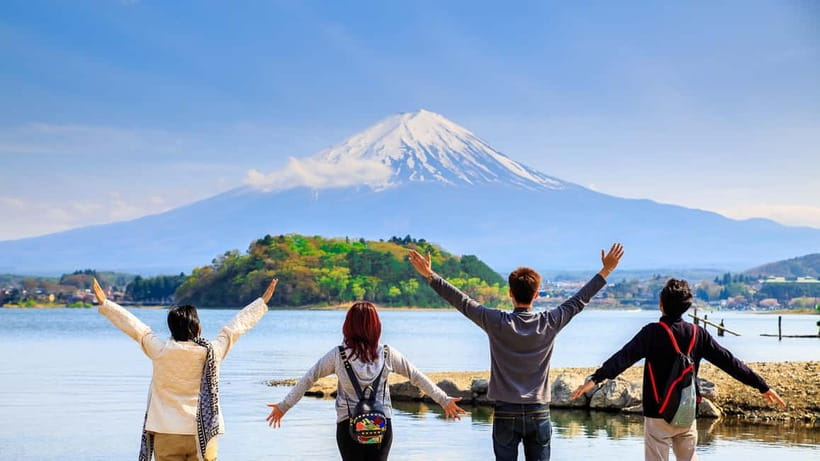
Lake Kawaguchi is one of the most accessible Fuji-area lakes, and its broad water views give you a chance to see the mountain reflected in calm conditions. The itinerary includes a short pass-by or sightseeing period at the lake, followed by about 20 minutes at Oishi Park.
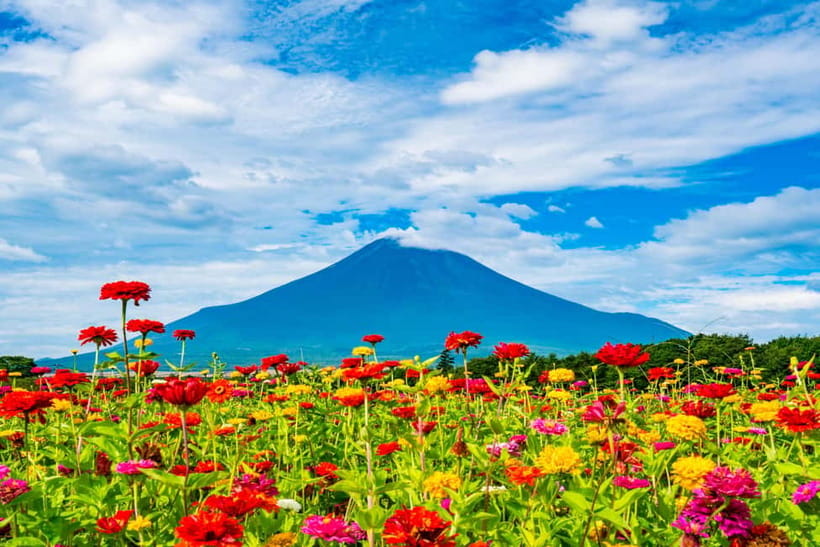
Oishi Park is the more focused stop. Seasonal flower beds add color in front of the mountain, and the open view makes it easier to frame Fuji with water and plants. Lavender ice cream has been a popular local treat here, and it is worth considering if you want a distinctly regional snack rather than another convenience-store purchase.
Twenty minutes is enough for photographs and a quick look, but not a full walk around the park. If the mountain is clear, you may wish you had longer. On cloudy days, the flowers and lake still give you something worthwhile to see.
Autumn can add another strong visual element. A route may include the Lake Kawaguchi Autumn Leaves Corridor when conditions are right, but seasonal changes and traffic can affect the exact program.
A few more Tokyo tours and experiences worth a look

Shiraito Waterfall brings a welcome change of scenery
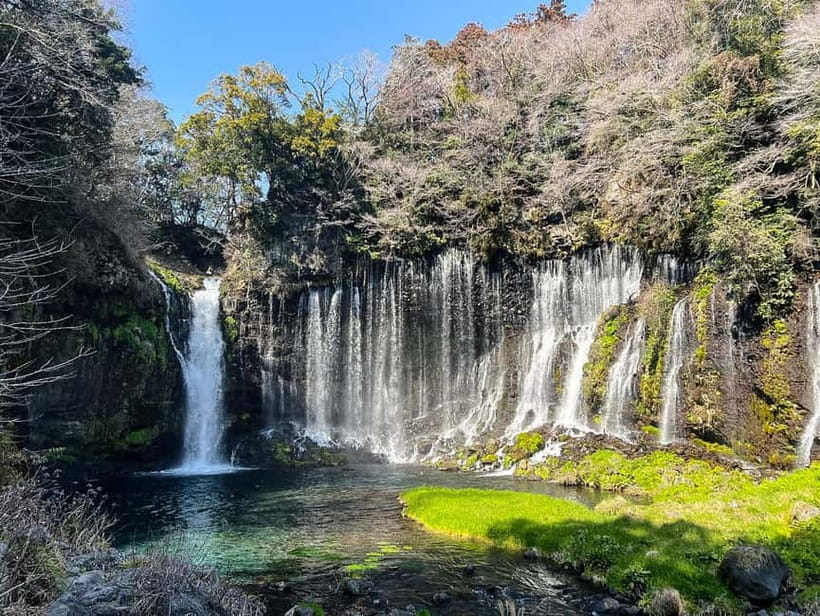
After several Fuji viewpoints, Shiraito Waterfall changes the mood. Water streams over a broad rock wall in thin white ribbons, creating a cool, misty setting. It is a natural stop rather than another mountain-framed photograph, and that variety helps keep the long day from feeling repetitive.
The stop lasts about 50 minutes and includes a simple lunch break. Lunch itself is not included, so bring food or buy something nearby. Noodles, snacks, drinks, ice cream, and other simple choices are available at designated stops, but you should not count on a formal sit-down meal.
This is one of the places where practical preparation pays off. Carry a small snack, refill your water when you can, and wear shoes with a secure sole. The walking is not described as a major hike, but wet conditions and uneven ground can make casual footwear uncomfortable.
Obuchi Sasaba and the tea fields
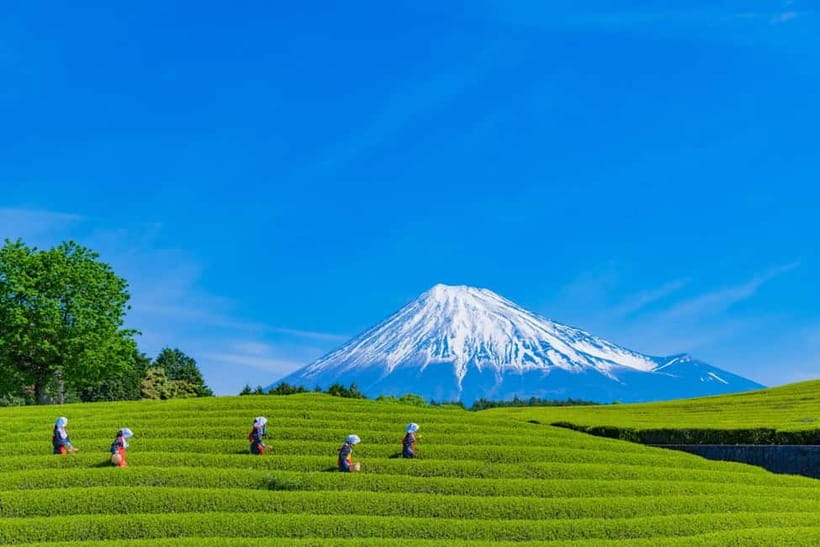
Obuchi Sasaba is among the more unusual stops on the photo-focused route. Here, neat green tea rows lead the eye toward Mt. Fuji, creating a quieter agricultural view than the pagoda or convenience-store scene.
Tea fields give you a better sense of the region beyond its famous landmark. You are looking at working countryside, not just a staged viewpoint. The stop lasts about 40 minutes, which should allow time for photographs and a relaxed look if the group stays on schedule.
The Fuji view depends entirely on clouds. Even when the summit is covered, the tea plantation remains attractive, but the full reason for the stop is the combination of green rows and the snow-covered peak. This is another place where weather luck matters.
Oshino Hakkai and its clear spring ponds
Oshino Hakkai is the highlight of the scenic route for many people who want more than photographs. The village is known for eight clear spring ponds fed by water from Mt. Fuji. Small water channels, traditional-looking buildings, and old waterwheels give the area a calmer feel than the major lakefront stops.
You get about an hour here. That is enough to walk between several ponds, take photographs, and buy food. Local snacks and noodles are easy choices for the unplanned lunch period.
The ponds are a strong reason to choose Course B. They provide a closer look at how Fuji shapes the surrounding region, not simply how it appears in a picture. The main drawback is that the area can feel busy when several tour groups arrive together, and one hour passes quickly if you stop often for food.
Mt. Fuji World Heritage Centre or a matcha café
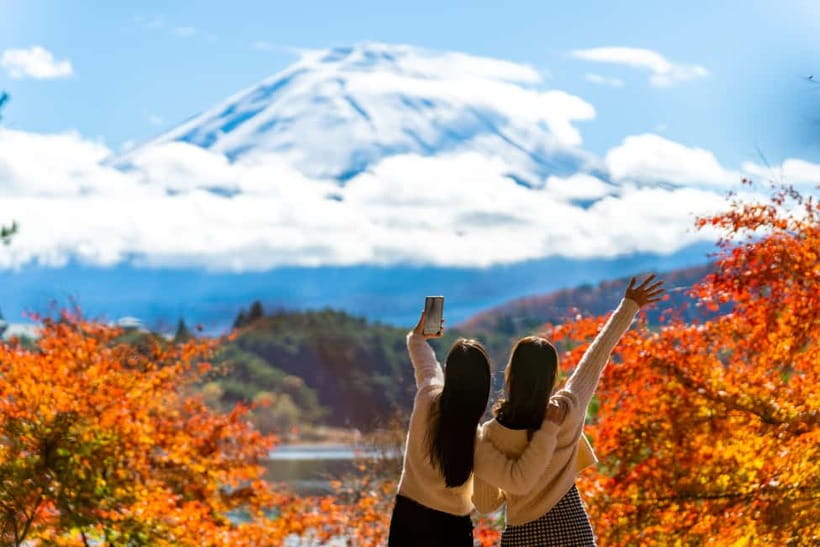
The Mt. Fuji World Heritage Centre gives the day a cultural and educational pause. It explains the mountain’s geology and cultural importance through an interactive facility, making it useful if you want context for all the photographs.
The alternative is a nearby matcha café, which suits anyone more interested in a quiet drink and a local flavor than museum displays. The choice is particularly helpful on a cloudy day, when the mountain itself may not be visible.
Allow about an hour for this portion. Since the supplied details describe the café as optional, confirm the exact choice with your guide on the day.
Lake Yamanaka and Hirano Beach
Lake Yamanaka is the largest of the Fuji Five Lakes and offers wide-open views from the shoreline. Hirano Beach gives you room for a lakeside walk and, when the air is clear, a chance to see Fuji reflected in the water.
This stop lasts about 50 minutes to one hour. It is less about checking off a single landmark and more about slowing down after a busy series of stops. The open shore also gives you a different angle from Lake Kawaguchi.
Clouds can gather toward the end of the day, and several outings have had clear Fuji views earlier but not at the final lake stop. Take photographs whenever the mountain appears rather than waiting for the perfect final frame.
The bus ride, group size, and guide quality
This is a large-group coach experience. Groups may reach 49 people, and one outing carried about 50 people on a full but comfortable bus. That means you should expect a set schedule, group meeting times, and a little patience when everyone boards.
The upside is comfort and simplicity. You do not need to navigate rural bus routes, drive unfamiliar roads, or worry about parking. Several guides have also used group chats to send meeting-point photos, addresses, and updates, which is useful when returning to the bus after free time.
Guides named Kei, Goldie, Yui, Jun, Hooni, Jeffrey, and Yuichi have been praised for clear directions, energy, photography help, and care with solo participants. Yuichi was noted for explaining Fuji’s formation, lakes, and waterfalls in clear English, while Kei has helped guests adjust the order to make the most of changing skies.
Guide quality can vary by departure, but the structure supports good communication. You may also receive small touches such as sweets, origami, or an instant photograph, though these are not listed as guaranteed inclusions.
Weather, walking, and what to pack
Mt. Fuji is often hidden by cloud, even when nearby towns are bright and sunny. This tour cannot guarantee a clear view, so book it for the full mix of lakes, waterfalls, villages, parks, and tea fields rather than for one photograph alone.
The most demanding walking is at Chureito Pagoda. The other stops involve short walks and free time, but you will get on and off the bus repeatedly. Wear comfortable shoes and bring layers, especially if you are visiting in cooler months.
Pack snacks or a light lunch, since meals are not included. Also bring water, a phone charger, and enough cash or payment access for food and personal purchases. The activity is stroller-friendly if you notify the operator, but it is not wheelchair-accessible.
Traffic can change the day. Japanese law limits vehicle operation to 10 hours, so the guide may adjust the route when delays build. Expect the advertised 11-hour duration to be an estimate, not a guarantee. Some outings have lasted 12 to 12.5 hours.
Is $69 good value for a full Fuji day?
Yes, if you value coverage more than independence. At $69, round-trip transport from central Tokyo and a multilingual guide are doing much of the work. Reaching a pagoda, lake, waterfall, spring village, museum or café, and tea plantation independently would require multiple connections and careful timing.
The price is less attractive if you dislike large groups or want long, unhurried visits. You pay for access to many places, but the schedule means most stops are brief. Meals, insurance, and personal expenses are extra.
Free cancellation up to 24 hours before departure and reserve-now, pay-later terms also make it easier to fit into a changing Japan itinerary.
Should you book this Mt. Fuji tour?
I would book it if you have one free day in Tokyo and want a broad introduction to the Fuji region without driving. It suits first-time visitors, photographers, solo visitors who appreciate help with pictures, and anyone who wants rural scenery alongside famous viewpoints.
Choose the photo route for Chureito Pagoda, Oishi Park, Shiraito Waterfall, and Obuchi Sasaba. Choose the scenic route for Oshino Hakkai, the World Heritage Centre or matcha café, and Lake Yamanaka.
Skip it if you need wheelchair access, dislike early starts and long bus rides, or want to spend half a day at one lake. The clearest advice is simple: bring snacks, wear good shoes, photograph Fuji whenever it appears, and accept that the mountain controls the schedule more than any tour company can.
FAQ
How long does the Mt. Fuji tour last?
The advertised duration is 11 hours. Traffic and weather can change the timing, and some outings have lasted 12 to 12.5 hours.
Where does the tour start?
There are two possible starting locations: Starbucks Coffee at Shinjuku L Tower and Tokyo Station Marunouchi North Exit 2. Your meeting point depends on the option you book.
Which languages are available?
Guides are available in English, Korean, and Chinese.
Does the tour include lunch?
No. Meals are not included. Bring snacks or a light lunch, or buy food and drinks at stops such as Oshino Hakkai and Shiraito Waterfall.
Is Chureito Pagoda difficult to reach?
The walk includes a short but steep staircase. About 400 steps are associated with reaching the pagoda viewpoint, so comfortable shoes are important.
Is the tour wheelchair-accessible?
No, the activity is not wheelchair-accessible. It is stroller-friendly if you inform the operator in advance.
Can I cancel the booking for a refund?
Yes. You can cancel up to 24 hours in advance for a full refund. The reserve-now, pay-later option lets you hold a place without paying immediately.
More Full-Day in Tokyo
More Mt Fuji Day Trips in Tokyo
More tours in Tokyo we've reviewed






Mt Fuji Day Trips, compared.
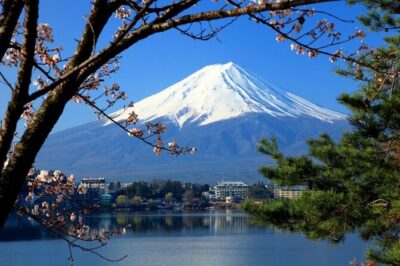 ★ 5.0Mt Fuji and Hakone 1-Day Bus Tour Return by Bullet TrainFrom $163
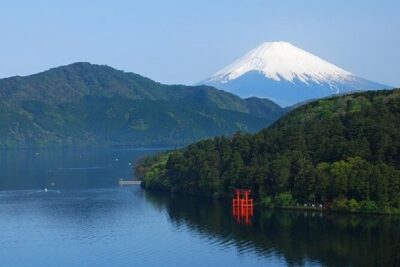 ★ 4.0Mt Fuji & Hakone Cruise, Drum Show Bullet Train 1 Day from TokyoFrom $149
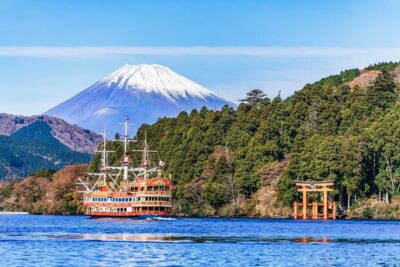 ★ 4.4Tokyo Mt Fuji 5th St & Hakone Cruise Bus Tour w/Bullet TrainFrom $15410 hours
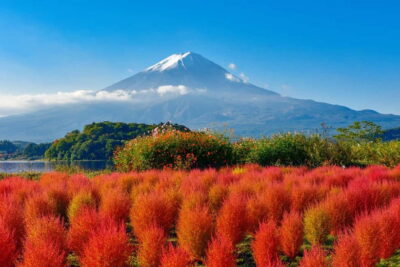 ★ 4.5From Tokyo: Mount Fuji Full-Day Sightseeing TripFrom $6810 hours
 ★ 4.7Tokyo: Mt. Fuji Tour, Hakone Ropeway, Owakudani, Lake AshiFrom $5410 hours
 ★ 4.4Tokyo:Mt.Fuji,Kawaguchiko Oishi Park,Arakurayama Sengen ParkFrom $5410 hours