
Reviewed · SUMO EXPERIENCES
Chair Seat Guaranteed SUMO Practice +Photo +Culture Option
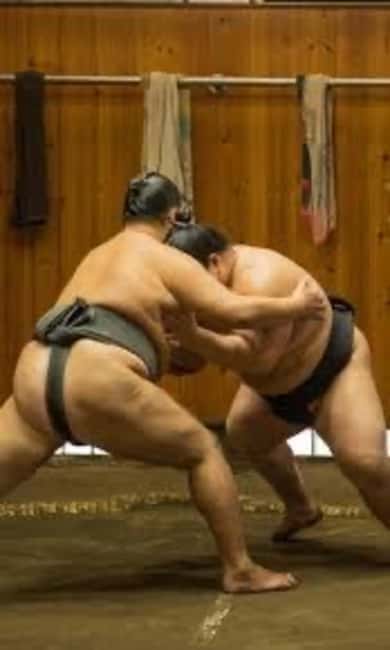
A sumo practice is not a staged show. You sit quietly a few feet from wrestlers as they stretch, stomp, grapple, and absorb coaching in a working stable. This three-hour Tokyo outing gives you a guaranteed chair, a major comfort advantage, and a close view of the morning routine.
I especially like the small group, capped at 10 people, and the way the experience continues after practice with a talk, group photo, and Q&A with an active wrestler. The main drawback is the strict silence during training, plus some uncertainty around the exact station exit in the meeting instructions.
In This Review
- Key points at a glance
- Why a morning practice is more revealing than a tournament
- Meeting at Kiyosumi-shirakawa at 8:00 a.m.
- Inside the stable, close enough to feel the impact
- The wrestler Q&A and group photo
- Making sense of sumo with Max or Masao
- What the $102.47 price really covers
- Who will get the most from this outing
- A practical three-hour plan
- Should you book it?
- FAQ
- Where does the tour meet?
- What time does the experience start?
- Which station exit should I use?
- How long does the experience last?
- Will I sit on the floor?
- How long is the sumo practice?
- Can I take photographs?
- Can I talk during the practice?
- Is a wrestler Q&A included?
- Is the group photo included?
- What is the cancellation policy?
Key points at a glance
- Watch from a chair: You do not need to sit on a floor cushion, which helps if your knees or hips are not fond of traditional seating.
- See a working practice: Wrestlers train at close range, with warmups, repeated bouts, and coaching rather than a polished tourist performance.
- Meet active wrestlers: A short Q&A and possible photo opportunity follow the practice.
- Get the cultural context: Max, Masao, or another local guide explains sumo customs, history, techniques, and the wrestlers’ way of life.
- Start early in Koto: Meet at 8:00 a.m. near Kiyosumi-shirakawa Station, then travel to the stable and return to the station.
- Plan for quiet discipline: No talking, eating, or drinking during practice. Photos are allowed, but videos are not permitted according to the practical guidance given to families.
Why a morning practice is more revealing than a tournament
Tokyo visitors often first encounter sumo through tournament highlights, giant posters, or the bright spectacle of a match at Ryogoku Kokugikan. A stable practice offers something different. You see the work before the ceremony: bodies warming up, wrestlers repeating movements, and men training under the watch of their coaches.
The mood is serious and highly controlled. You are not there to cheer or chat with the person beside you. You sit, watch, and let the practice unfold at close range. That quiet is part of the experience, not a flaw, though it can surprise people expecting a more interactive morning.
The physical contrast is striking. Sumo wrestlers may move slowly between exercises, then collide with tremendous force. One family managed the rules with a seven-year-old after explaining the need to stay quiet, still, and dry-eyed through the session. That suggests the outing can work for children, but only if they can follow those limits.
A few more Tokyo tours and experiences worth a look
Meeting at Kiyosumi-shirakawa at 8:00 a.m.
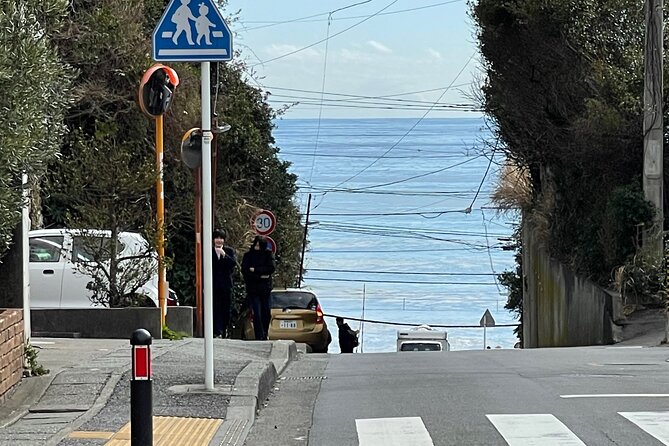
The meeting point is near Kiyosumi-shirakawa Station in Koto City, served by the Oedo and Hanzomon lines. The directions identify Exit B1 and point to the FamilyMart convenience store nearby as a landmark.
Give yourself extra time to find the correct exit. The meeting instructions have caused confusion for some people, partly because station exits and the voucher wording have not always matched perfectly. Check the final confirmation carefully, and do not assume that every station sign will use the same label you see in the tour description.
The early start is useful once you understand the reason. Practice begins in the morning, and arriving early can mean getting very close seats before other groups arrive. One reported schedule had the group leaving the Kiyosumi-shirakawa area around 7:30 a.m., while the official start time is listed as 8:00 a.m., so follow the time on your confirmed booking rather than relying on a general description.
The transfer to and from the stable takes about 20 minutes in total. The precise transport method and stable location are not specified, so think of this as a short city transfer rather than a sightseeing ride. Your guide handles the movement, but you should be ready to walk and stay with the group.
Inside the stable, close enough to feel the impact
The practice itself lasts about 1 hour and 40 minutes. You sit in a chair rather than on the floor and watch from very near the training area. Several people valued the front-row position, since it lets you see the wrestlers’ footwork, posture, slaps, and collisions without relying on a distant view.
This is the strongest reason to choose this particular experience. Many sumo practice visits use floor cushions, and that can be tough for anyone with weak knees, limited flexibility, or leg problems. The chair does not make the setting luxurious, but it removes one of the most common physical hurdles.
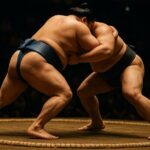
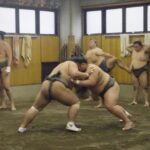
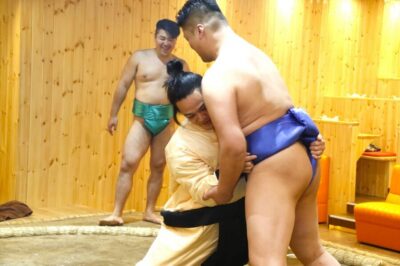
You may see wrestlers warm up, practice shiko, and run through repeated training bouts. The supplied details describe men in loincloths slamming into each other with great force, while coaches direct and correct them. The point is not to watch one official match with a clear winner. You are watching a training system.
There are firm rules. No talking, food, or drinks are allowed during practice. Photos are permitted, but the family guidance for this outing says no videos. Follow the stable’s instructions even if you see another person behaving differently. This is a working religious and sporting setting, not a theater where the audience controls the mood.
The silence can make the session feel more intense. You hear the impact, breathing, and movement without a running guide commentary. That is also why the explanation after practice matters so much. Without context, some parts of the training may look repetitive or mysterious.
The wrestler Q&A and group photo
After practice, you get about 20 minutes for a question-and-answer session with an active sumo wrestler. You may also have the chance to take individual pictures, depending on the stable and the wrestler’s availability.
This is a short encounter, so do not expect a long private conversation. Still, it changes the experience from simply observing a sport to meeting someone who lives inside its demanding routine. Have one or two clear questions ready. The exact subjects covered are not promised, but the format gives you a chance to ask about training, daily life, or the sport itself.
The included group photo is a useful extra. You receive a shared picture of the session, and the possible wrestler photo gives you a personal memento. One amusing detail in the tour information is the suggestion that a picture with a wrestler could become more valuable if that wrestler rises through the ranks. That is not a guarantee or an investment plan, but it adds a fun bit of sumo perspective to the photograph.
Photography rules can vary inside a stable, so listen to your guide before taking pictures during the Q&A. The general information says photos are allowed, but it does not promise that every moment or every wrestler will be available for a posed shot.
Making sense of sumo with Max or Masao
The guide’s talk lasts about 25 minutes and covers the sport’s history, customs, techniques, and place in Japanese culture. This is where the tour earns more than a simple viewing fee.
Max is singled out in the supplied information as an excellent guide, educated in the United States and able to explain the sport in clear English. Masao is also named as an entertaining and engaging guide. The exact guide may depend on the date, so do not book solely on the assumption that one particular person will lead your group.
A good talk is important because sumo has its own vocabulary and visual language. A stomp, bow, warmup, or bout can carry meaning that is easy to miss if you have only seen televised matches. The guide helps connect the movements in front of you with the customs and way of life behind them.
I also like the order of the experience. You watch first, while the action is fresh, then get the explanation. A lecture before the practice might give you more background, but the post-practice format lets you ask yourself what you just saw and use the presentation to fill in the gaps.
The small group helps here. With a maximum of 10 people, the talk should feel more personal than a large bus excursion. It also makes it easier to hear the guide and stay together during the station transfer.




What the $102.47 price really covers
At $102.47 per person, this is not a cheap way to fill a morning. You are paying for access to a working sumo stable, a guaranteed chair, a guide, the transport time to and from the stable, an active-wrestler Q&A, and a group photo.
The value is strongest if you care about comfort and interpretation. A basic practice visit may give you a seat on the floor and little explanation. Here, the chair matters for anyone who cannot comfortably kneel or sit low, while the talk helps you understand what the wrestlers are doing.
The price is harder to justify if you only want to see a tournament match or take dramatic action photos. This is a quiet, respectful training visit, and the practice itself is not fully under the tour operator’s control. You also spend only about 20 minutes with the wrestler and 25 minutes on the cultural presentation, so the largest part of the morning remains silent observation.
For a first Tokyo visit, I think the fee can make sense if sumo is high on your list and you want access beyond the standard tourist view. It is less compelling for someone with little interest in the sport or someone hoping for a lively, talk-filled group activity.
Who will get the most from this outing
This experience fits you well if you want to:
- See sumo at close range in an authentic training setting
- Avoid sitting on the floor
- Learn enough background to understand the movements and customs
- Meet an active wrestler briefly
- Keep the group small
- Start your sightseeing day early
Families can make it work, but explain the rules in advance. Children must remain quiet and still during practice, and eating, drinking, and video recording are not allowed. The activity asks for a moderate level of physical fitness, so you should be comfortable getting to the station, transferring to the stable, and returning afterward.
It is not the best choice if you need a flexible start, want to talk throughout the event, or have difficulty following strict instructions. The practice is also not a guaranteed photo shoot. Your chance to speak with or photograph a wrestler depends on the session.
The activity is mobile-ticket friendly, and service animals are allowed. Confirmation is sent within 48 hours, subject to availability. Since the experience requires a minimum number of participants, a cancellation by the operator may lead to another date or a full refund.
A practical three-hour plan
Allow roughly three hours from the station meeting until you return to the same area. The approximate flow looks like this:
- Meet at Kiyosumi-shirakawa Station at 8:00 a.m.
- Spend about 20 minutes transferring to and from the stable.
- Watch approximately 1 hour and 40 minutes of morning practice.
- Spend about 20 minutes on the wrestler Q&A and possible photos.
- Hear a 25-minute presentation from the local guide.
- Return to the station and continue your day.
Wear something comfortable for an early start and a period of quiet sitting. The chair removes the need to sit on the floor, but you still need to remain in place for much of the practice.
Keep your phone ready for permitted photos, but do not let photography distract you from the session. The best part is often not a single dramatic bout. It is seeing the repeated effort, coaching, and concentration that support the public matches.
Free cancellation is available up to 24 hours before the local start time for a full refund. Changes or cancellations inside that window are not accepted for a refund, so check the timing before you commit.
Should you book it?
Book this experience if you want close-up access to real sumo training, need a chair, and value a guide who can explain what you are seeing. The combination of practice, cultural talk, wrestler Q&A, and small-group format gives the morning more substance than a seat alone.
Think twice if your schedule cannot handle an early start, if silence will be difficult for your group, or if you want the excitement of a formal tournament. For the right visitor, the $102.47 cost buys a rare look at the work behind Japan’s national sport, with comfort and context built in.
FAQ
Where does the tour meet?
It meets near Kiyosumi-shirakawa Station in Koto City, Tokyo, at the crossing point of the Oedo and Hanzomon lines.
What time does the experience start?
The listed start time is 8:00 a.m.
Which station exit should I use?
The directions identify Exit B1 and mention a FamilyMart convenience store at ground level. Check your confirmation carefully because the exit wording has caused some confusion.
How long does the experience last?
It takes approximately three hours, including the transfer to and from the sumo stable.
Will I sit on the floor?
No. The ticket guarantees a chair, so you do not need to sit on the floor during practice.
How long is the sumo practice?
The morning practice lasts about 1 hour and 40 minutes.
Can I take photographs?
Yes, photography is allowed during the practice according to the tour information. Video recording is not permitted according to the practical instructions provided for families.
Can I talk during the practice?
No. You must remain quiet during the training session. Eating and drinking are also not allowed.
Is a wrestler Q&A included?
Yes. The experience includes a Q&A session with an active sumo wrestler and a possible photo opportunity.
Is the group photo included?
Yes. A group photo of the session is included in the price.
What is the cancellation policy?
You can cancel at least 24 hours before the local start time for a full refund. Cancellations or changes made less than 24 hours before the start are not accepted for a refund.
More Sumo Experiences in Tokyo

More tours in Tokyo we've reviewed




Sumo Experiences, compared.
 ★ 4.8Tokyo: Sumo Show Experience with Chicken Hot Pot and a PhotoFrom $1032 hours
 ★ 4.8Tokyo: Sumo Show and Dining ExperienceFrom $7990 minutes - 2 hours
 ★ 5.0the SUMO showFrom $89
 ★ 5.0Tokyo Shinjuku Sumo Show & Experience with PhotoFrom $79
 ★ 4.8Tokyo: Sumo Show and Experience in ShinjukuFrom $691h 30m
 ★ 4.6Tokyo: Sumo Tournament Tour with Chair Seat TicketsFrom $141