
Reviewed · TOKYO
Tokyo: Karate Experience with Former All-Japan Champion
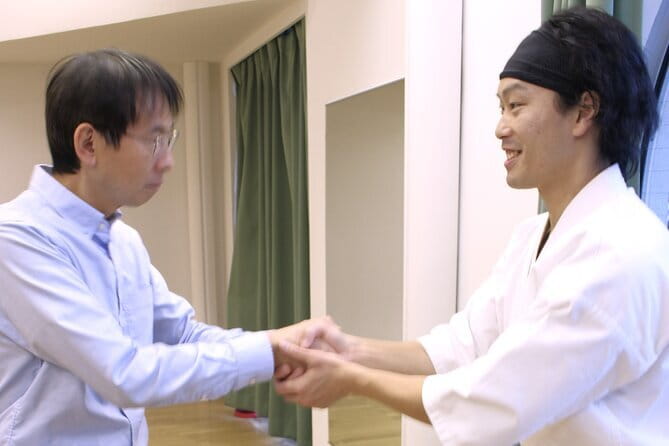
The most unusual part of this Tokyo experience is its teacher: Ryo is a former All-Japan karate champion with two decades of practice. In 90 minutes, you move from bowing and breathing to stances, strikes, blocks, kicks, and non-contact sparring. It gives you a real taste of karate without requiring previous martial arts experience.
I like two things here. First, the small maximum of eight people should give Ryo room to correct your form. Second, the class includes a karate uniform and protective pads, so you can focus on learning instead of packing special gear. Ryo also teaches in clear English and adjusts the lesson for beginners and people with prior karate or boxing experience.
The main consideration is physical ability. This is an active class, not a sightseeing talk, and some kicks require flexibility and hip mobility. You will not be hit during the sparring section, but you should have a moderate fitness level and be ready to stretch, bend, and work steadily for an hour and a half.
In This Review
- Key points before you book
- Why this karate class feels different from a Tokyo sightseeing stop
- Beginning with the bow and belly breathing
- Stretching before the strikes
- Learning the karate stance and basic attacks
- Kicks, blocks, and the limits of flexibility
- Non-contact kumite without the fear of getting hit
- Ryo’s teaching style and the small-group advantage
- Location, schedule, and what to wear
- Who will get the most from the $66.99 price
- Booking timing and cancellation flexibility
- My advice for making the choice
- Should you book this Tokyo karate class?
- FAQ
- How long does the Tokyo karate experience last?
- Where does the karate class meet?
- Who teaches the karate class?
- Do I need prior karate experience?
- How many people can join the class?
- Is the sparring section full contact?
- What equipment is provided?
Key points before you book
- Former All-Japan champion: Train with Sensei Ryo, who has 20 years of karate experience.
- Small class size: The maximum is eight people, with room for personal correction and questions.
- Step-by-step basics: Practice bowing, breathing, stance, punches, blocks, kicks, and defense.
- Standing Zen Training: Learn a traditional position that links posture, breathing, calm, and focus.
- Safe sparring practice: Study the essence of kumite without physical contact.
- Simple logistics: Meet at Azumabashi Hall in Sumida City, with morning and afternoon class times available.
Why this karate class feels different from a Tokyo sightseeing stop
Tokyo offers plenty of ways to look at Japanese culture. This class asks you to take part in it. You are not simply watching a demonstration or posing in borrowed clothing. You learn how karate begins, how the body is placed, and how control matters as much as force.
The opening idea is simple: karate starts with a bow and ends with a bow. That ritual sets the tone. The class is physical, but it also introduces the discipline and courtesy built into the practice.
Ryo leads the session through demonstration and clear explanation. That matters for a first-time student because karate movements can look simple until you try to coordinate your feet, hips, shoulders, hands, and breathing. The class breaks each technique into several smaller movements, giving you a better chance of following along.
The experience is based on Kyokushin karate, a style mentioned by participants with experience in different forms of karate. If you already train in another style, you should expect some familiar movements along with differences in stance, posture, power, or sparring method. Ryo can adjust the lesson for different levels rather than forcing every person through exactly the same routine.
If you're still narrowing it down, here are other tours in Tokyo we've reviewed.


Beginning with the bow and belly breathing
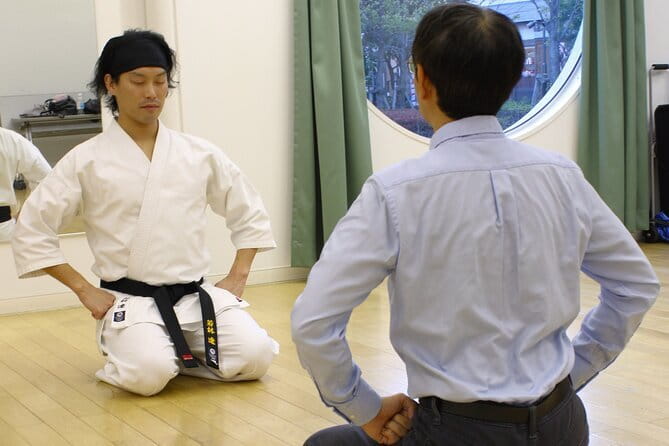
Your first work is not a punch or kick. You learn how to bow properly, then practice breathing from the belly. This may sound modest, but it gives the class a useful foundation.
Deep breathing helps you settle your attention before the faster movements begin. It also introduces the idea that karate is not just about swinging your arms or lifting your legs. You are learning to stay controlled and focused while using your whole body.
The Standing Zen Training position adds another layer. This position emphasizes stillness, posture, breathing, and mental focus. It gives you a quiet contrast to the later combinations and helps explain why traditional martial arts include calm training alongside hard physical work.
Do not expect a long meditation session. The class is only about 90 minutes, so the emphasis remains practical. Still, this opening section gives the experience more depth than a quick martial arts workout.
Stretching before the strikes
After the opening exercises, you work through stretches for major parts of the body. The session includes the leg muscles, hip joints, shoulder blades, and chest.
This is useful preparation, especially because the later lesson includes kicks and defensive movements. Your hips and legs need to move freely, and your shoulders need to stay relaxed enough for clean punches and blocks.
I would pay attention here instead of rushing through it. One person specifically found that limited mobility made some kicks difficult. That is a helpful warning, not a reason to skip the class. You can take the movements at your own level, and Ryo adjusts the lesson to suit the people in front of him.
You should still arrive ready for moderate exercise. The stretching is part of the training, not a short warm-up before sitting down. If you have stiff hips, tight hamstrings, or limited balance, tell Ryo early and work within your range.
Learning the karate stance and basic attacks
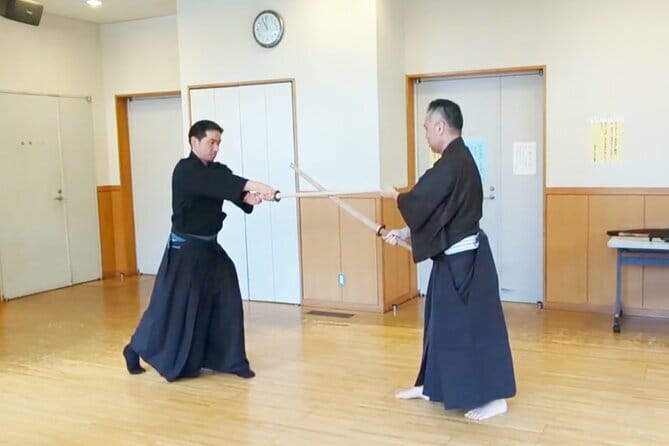
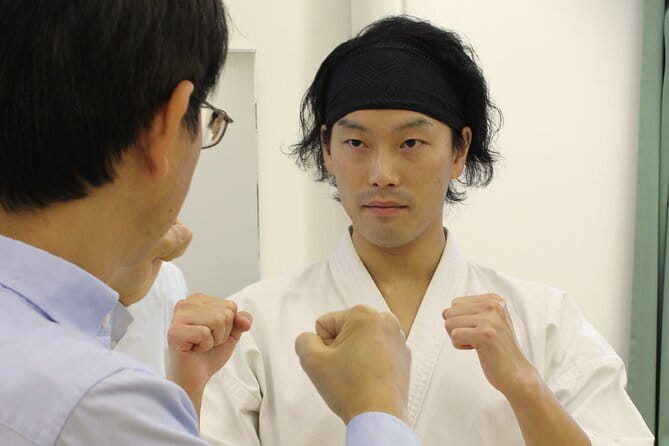
The central section covers the building blocks of karate: proper stance, punches, blocks, and kicks. Ryo divides the movements into smaller steps, which makes the lesson approachable for beginners.
A correct stance is more than placing your feet apart. It affects balance, reach, power, and your ability to move out of the way. The same is true of a punch. The arm travels forward, but the body position behind it determines how stable and efficient the movement feels.
You practice basic attacks and defensive actions rather than jumping straight into a complicated routine. That approach suits a first lesson because you can focus on posture and precision instead of trying to remember too many combinations.
The class can also work well for someone with past experience. One student with a different karate background used the session to correct posture, improve stomach power, and rethink sparring skills. Another person with boxing and martial arts experience found room for discussion about combat training. That suggests Ryo is comfortable answering technical questions and offering a fresh angle to people who already know the basics.
Still, you should keep your expectations sensible. In 90 minutes, you will learn selected fundamentals, not become proficient in karate. The value is in receiving direct instruction from an accomplished practitioner and feeling how the movements work in your own body.
Kicks, blocks, and the limits of flexibility
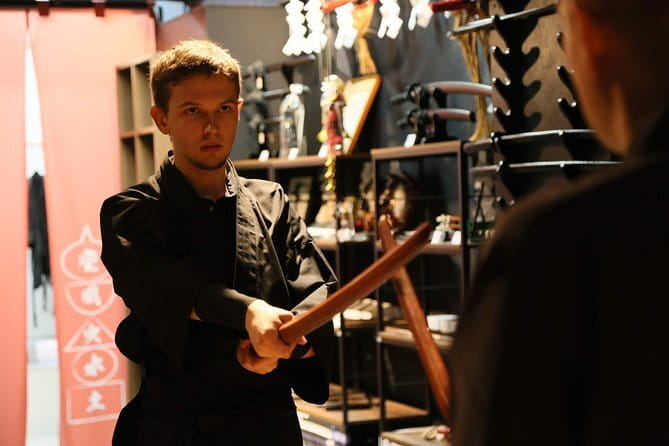
Kicks are often the part beginners look forward to most, but they can also expose the limits of your mobility. The class includes basic kicks and defense against front kicks and low kicks.
Ryo focuses on precision and efficiency. That is important because trying to kick higher does not automatically make the technique better. A controlled kick at a comfortable height is more useful than a strained kick that upsets your balance.
You may find that your stance, hip turn, or supporting foot needs more attention than the kick itself. Ryo’s step-by-step teaching lets you work on those pieces separately. If a movement feels beyond your range, use a lower height and listen to the correction.
The pads are included, which gives you the feel of working with training equipment without asking you to bring your own. The supplied information does not specify exactly when every pad is used, so think of them as part of the provided class equipment rather than a promise of continuous pad work.




Non-contact kumite without the fear of getting hit
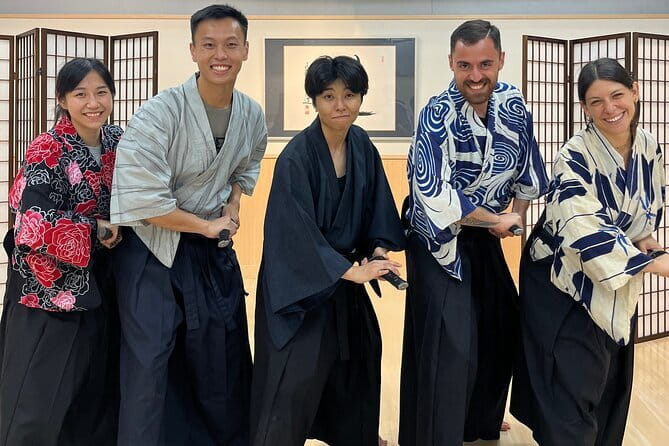
The final section introduces the essence of kumite, or sparring, without physical contact. You practice how to defend against attacks such as punches, front kicks, and low kicks.
This is a smart format for a mixed-level class. Beginners can learn distance, timing, and reaction without taking a blow. People with past experience can focus on movement and defensive choices rather than trying to prove who is toughest.
The no-contact approach does not make the section pointless. You still have to recognize the attack, choose a response, keep your stance, and control your movement. Ryo shares tips aimed at improving precision and efficiency, so the exercise is about decision-making as well as mechanics.
You should not expect a full-contact Kyokushin bout. The goal is to understand the structure of sparring in a safe class setting. That makes this a good choice for families, couples, and mixed groups where not everyone has the same fitness or martial arts background.
Ryo’s teaching style and the small-group advantage
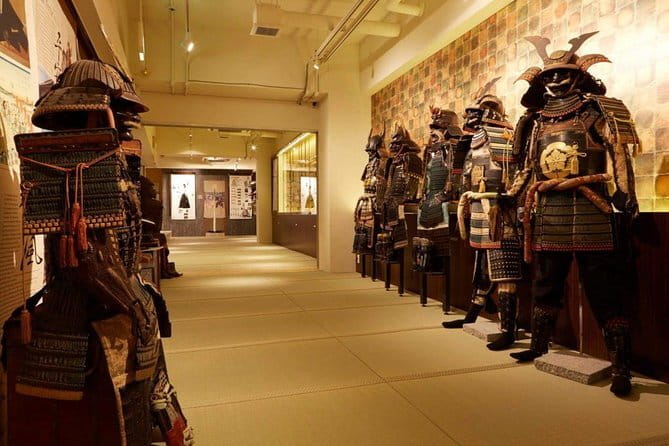
Ryo is the main reason to book this experience. He combines competition experience with a teaching format built for visitors who may be completely new to karate.
His English is described as fluent and clear, and the lesson relies on both explanation and demonstration. That combination helps because some body mechanics are easier to see than to describe. You can watch the movement, try it, then receive a correction.
The group maximum is eight people. That is small enough to feel more personal than a large fitness class, though the exact amount of individual attention depends on the number and mix of people booked that day.
The class can also be adapted. Ryo’s own teaching approach recognizes that every participant arrives with a different level and martial arts background. A complete beginner may spend more time on stance and basic blocks, while an experienced student may receive adjustments to technique or sparring habits.
That flexibility is one of the strongest reasons to choose this class over a generic martial arts demonstration. You are not just watching a champion perform. You are asking him to help you move better.
Location, schedule, and what to wear
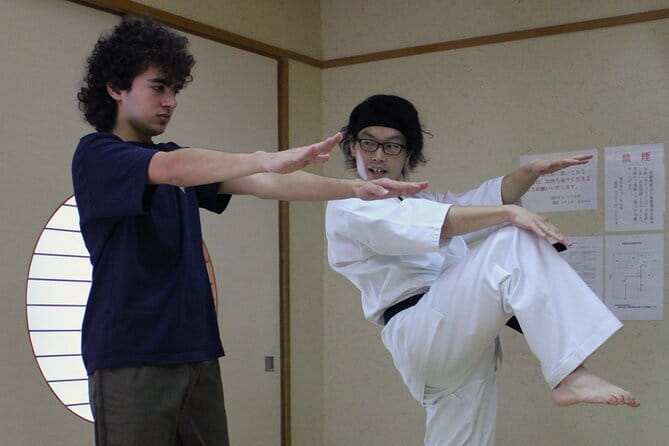
The meeting point is Azumabashi Hall, at 1-chōme-23-27 Azumabashi, Sumida City, Tokyo 130-0001. The location is near public transportation, and the activity ends back at the meeting point.
You can choose from morning and afternoon class times. That makes it easier to fit the lesson around temple visits, shopping, museums, or other Tokyo plans. I would avoid placing a demanding physical class immediately after another strenuous activity, especially if you are not used to regular exercise.
A karate uniform and pads are included. The available information does not specify what personal clothing to wear underneath the uniform, so practical, comfortable clothing is the safest choice. You should also plan for movement rather than arriving in restrictive clothes.
The class lasts about 90 minutes. The listed price is $66.99 per person. For that fee, you receive a guided lesson, the use of a uniform and pads, access to a former All-Japan champion, and a small-group format. I see the best value here for someone who wants active instruction and cultural context, not simply a short photo opportunity.
Group discounts are available, which may improve the price for families or friends booking together. The experience is also offered with a mobile ticket, making it easy to keep the confirmation on your phone.
Who will get the most from the $66.99 price
I would recommend this class to you if you want a Tokyo activity that combines exercise, Japanese tradition, and direct contact with a skilled instructor. It suits first-timers because the techniques are taught in stages and the sparring is non-contact.
It is also a good fit if you have done karate, boxing, or another martial art before. Ryo has experience adjusting the content for people who already understand basic fighting mechanics. You may come away with useful corrections rather than simply repeating an introductory routine.
The class may be less satisfying if you want a hard-contact fight, a long competition session, or advanced instruction in one narrow technique. The format is broad and welcoming, with time devoted to breathing, stretching, stance, attacks, defense, and sparring concepts.
Your fitness level matters. The requirement is moderate physical fitness, and that is fair. You will be on your feet, stretching, kicking, and practicing repeated movements. You do not need to be an athlete, but you should be willing to modify a kick or stance when your body reaches its limit.
Booking timing and cancellation flexibility
This experience is booked about 29 days ahead on average, so planning early is sensible if the class falls on a particular morning or afternoon of your Tokyo stay. The eight-person limit can also affect availability.
You receive confirmation at the time of booking. Free cancellation is available if you cancel at least 24 hours before the local start time. Cancellations or changes made within 24 hours are not accepted for a refund.
That policy gives you some room to adjust your plans, but it is not a same-day flexible booking. Check your schedule before reserving, especially if your Tokyo itinerary includes several timed attractions.
My advice for making the choice
I like this experience because it gives you something to do with your body while teaching the values behind the movements. The bow, belly breathing, Standing Zen Training, and non-contact kumite make it more thoughtful than a basic kickboxing workout.
The strongest feature is Ryo’s ability to teach across levels. You can be a complete beginner, someone returning to karate after years away, or a person trained in another style. The lesson still has room for useful instruction.
The main limitation is the short time. You will not cover every part of karate, and tight hips or limited mobility may make some kicks challenging. If you accept the class as a focused introduction rather than a full course, the 90 minutes should feel well used.
Should you book this Tokyo karate class?
Book it if you want a small, active cultural experience led by a former All-Japan champion. It is especially well suited to couples, families, first-time martial arts students, and people who already train but want a different perspective on Kyokushin karate.
Skip it if you are looking only for a passive cultural activity or a full-contact sparring session. For everyone else, the combination of clear instruction, included equipment, flexible scheduling, and a maximum of eight participants makes the $66.99 price a reasonable choice for an unusual Tokyo morning or afternoon.
FAQ
How long does the Tokyo karate experience last?
The class lasts approximately 1 hour and 30 minutes.
Where does the karate class meet?
The meeting point is Azumabashi Hall, 1-chōme-23-27 Azumabashi, Sumida City, Tokyo 130-0001, Japan. The activity ends back at the meeting point.
Who teaches the karate class?
The instructor is Ryo, a former All-Japan champion with 20 years of karate experience.
Do I need prior karate experience?
No. The class is designed for beginners as well as people who have practiced karate or other martial arts before.
How many people can join the class?
The activity has a maximum of eight participants.
Is the sparring section full contact?
No. The kumite training is practiced without physical contact, including defense against punches, front kicks, and low kicks.
What equipment is provided?
A karate uniform and pads are included.
More tours in Tokyo we've reviewed






Tokyo, compared.
 ★ 5.0Mt Fuji and Hakone 1-Day Bus Tour Return by Bullet TrainFrom $163
 ★ 5.01-Day Tokyo Bus TourFrom $129
 ★ 4.6Tokyo: teamLab Planets TOKYO Digital Art Museum Entry TicketFrom $251 day
 ★ 4.0Mt Fuji & Hakone Cruise, Drum Show Bullet Train 1 Day from TokyoFrom $149
 ★ 5.0Tokyo: Shinjuku Food Tour (13 Dishes at 4 Local Eateries)From $86
 ★ 4.4Tokyo Mt Fuji 5th St & Hakone Cruise Bus Tour w/Bullet TrainFrom $15410 hours