
Reviewed · TEA CEREMONY & MATCHA
Tokyo: Matcha Tasting and Making Experience
The most useful part of this 90-minute matcha class is the side-by-side tasting. You do not simply drink one green cup and hear that matcha is special. You compare teas from five Japanese production areas, notice changes in color and scent, then taste them before choosing one to whisk yourself.
I like the guide’s six years of tea-farming experience in Kyoto, and I like that the lesson ends with practical skills rather than a quick photo opportunity. You also get a matcha latte, hojicha latte, and matcha sweets. The main consideration is the tasting count: the experience is promoted with 10 types in one place, while the detailed running order says eight types are served. Ask ahead if the exact number matters to you.
In This Review
- Key points at a glance
- Five tea regions, one useful comparison
- Learning from a former Kyoto tea farmer
- What happens during the 90 minutes
- Why the hands-on whisking matters
- Lattes and sweets make the ending approachable
- A small group that leaves room for questions
- Is $63 a fair price?
- Who will enjoy this Asakusa class most?
- Meeting point, timing, and booking details
- Should you book the matcha tasting?
- FAQ
- Where does the matcha experience take place?
- How long does the class last?
- Is the experience taught in English?
- How many people can join the class?
- What drinks and food are included?
- Can I cancel for a full refund?
Key points at a glance
- Five production areas: Compare matcha from representative tea-growing regions in Japan, including six ceremonial-grade teas and two products sold as matcha but not formally defined as matcha.
- A tea farmer as your guide: Learn cultivation, production, preparation, and tea history from an English-speaking guide who grew tea in Kyoto for six years.
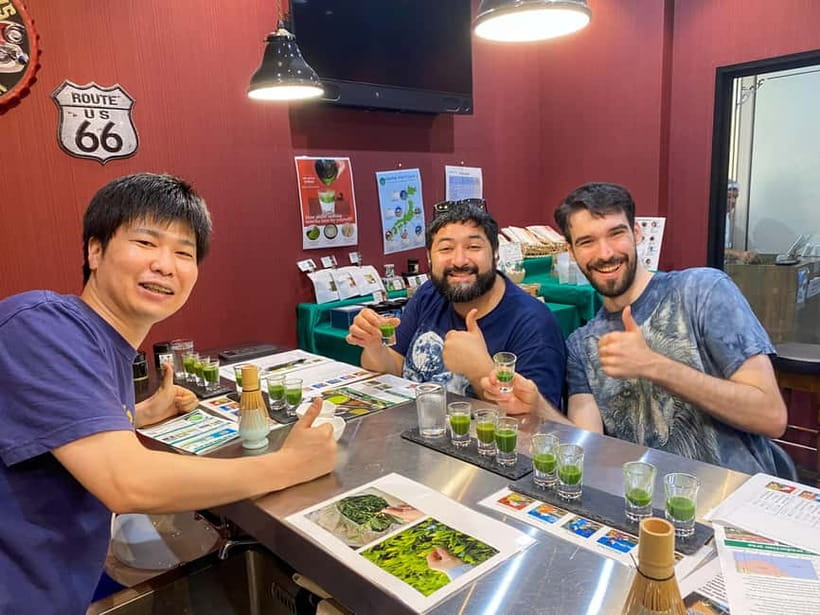
- Small class size: The group is limited to five people, which suits anyone who wants room to ask questions and handle the whisk.
- Make your own ousucha: Choose your favorite sample, then prepare a traditional thin matcha using a bamboo whisk.
- Milk-based finish: Try the house matcha blend in a latte, plus hojicha latte and matcha sweets.
- Easy Asakusa location: Find the cafe on the second floor of Henn na Hotel Asakusa Tawaramachi, above the FamilyMart.
Five tea regions, one useful comparison
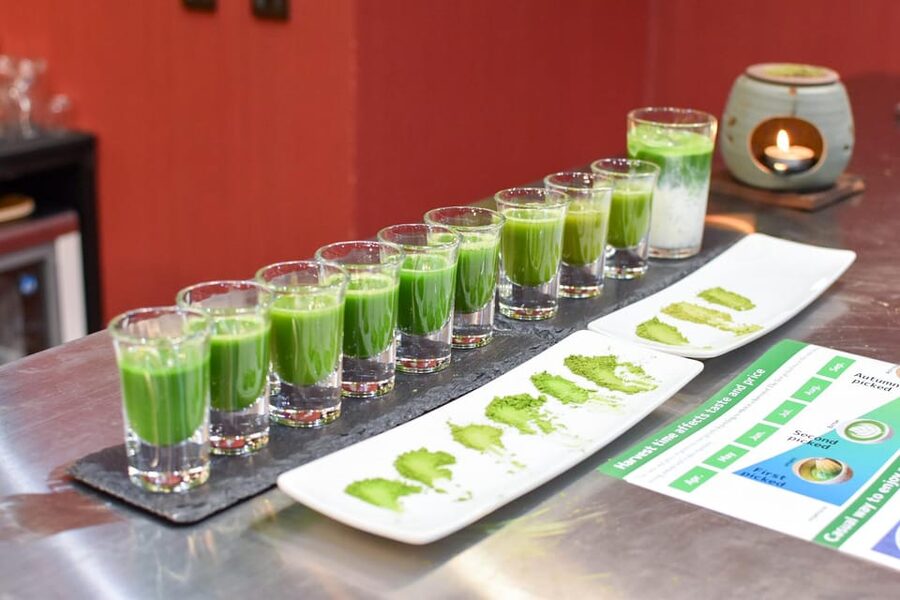
Matcha can look similar in a cup, yet its smell, bitterness, sweetness, and finish can vary. This class makes those differences easier to grasp because the samples arrive in small portions and are tasted close together.
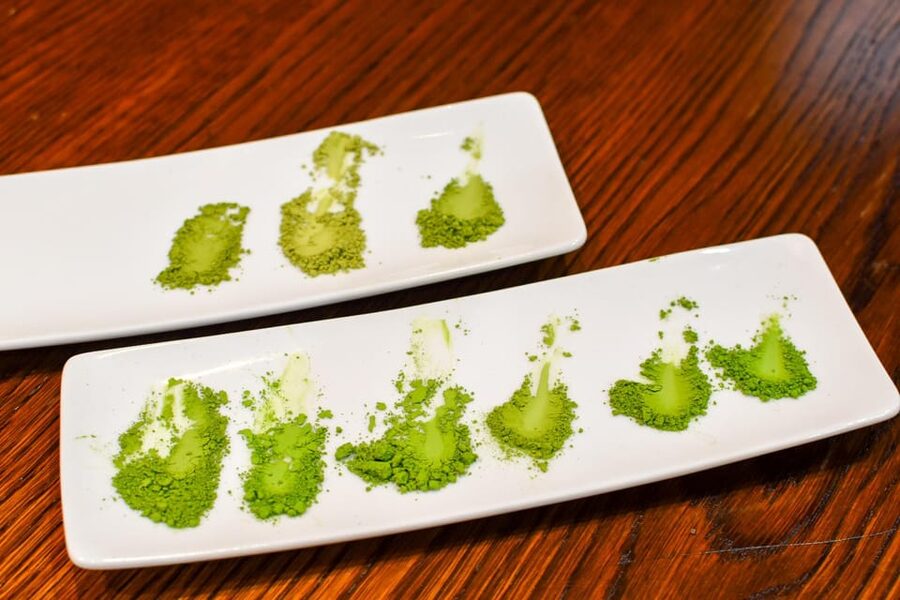
You first look at the powder’s color. Then the tea is prepared and served, giving you a chance to compare appearance, fragrance, and flavor in order. That sequence matters. It keeps you from judging matcha by color alone, which is handy when you shop for tea later in Japan.
The detailed class plan lists eight samples from five production areas. Six are described as ceremonial grade. Two are not formally defined as matcha, though they are sold as matcha in parts of the world. That distinction gives the class a useful edge: you learn not only what tastes good, but also how the word matcha is used.
The headline information also refers to 10 types of matcha. Since the more detailed schedule specifies eight servings, I would confirm the current tasting lineup before booking if the total number is important to you. Either way, the point is comparison, not quantity. Eight careful samples can teach you more than a crowded flight of teas with no explanation.
A few more Tokyo tours and experiences worth a look
Learning from a former Kyoto tea farmer
The instructor has six years of experience growing tea in Kyoto. That background changes the tone of the class. You are not just hearing a general explanation of powdered tea. You can ask about cultivation and production from someone who has worked with the crop.
The lesson covers the definition of matcha, how tea is cultivated, and the history behind the drink. The guide also explains the tea you are drinking that day, so the information connects directly to what is in your bowl.
The strongest praise in the available feedback focuses on the guide’s practical expertise, detailed explanations, and warm teaching style. That is important here because matcha has plenty of ceremony around it, but a good class should also answer ordinary questions: Why do two powders look different? Why does one taste more bitter? What makes one suitable for drinking plain and another better with milk?
This is an educational class for general visitors. It is not intended for commercial research or business inquiries, so anyone booking for commercial purposes should contact the provider before reserving.
What happens during the 90 minutes
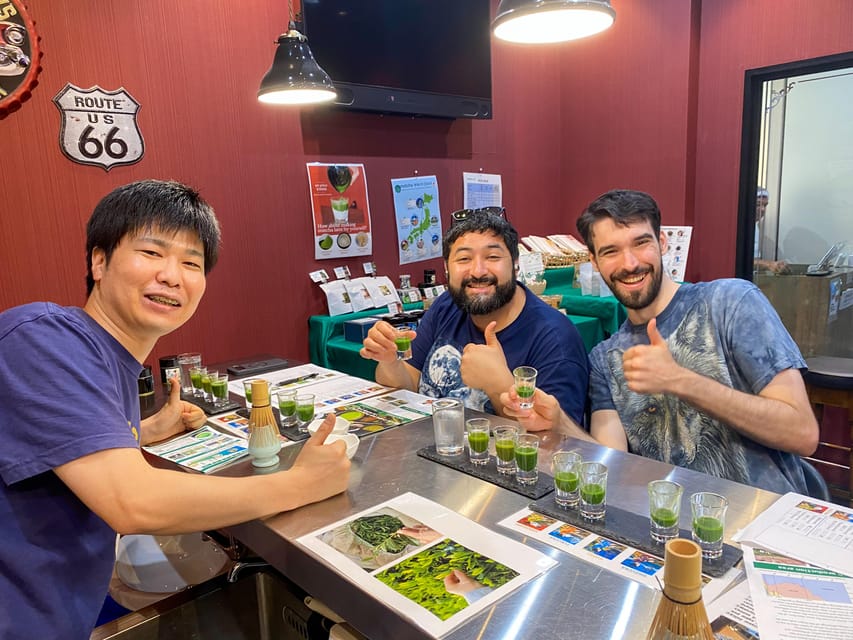
The class begins at the cafe inside Henn na Hotel Asakusa Tawaramachi. Enter through the hotel, pass the FamilyMart on the first floor, and go up to the second floor. Transportation is not included, so you need to make your own way to the meeting point.
A welcome drink starts the session. While you sip, the guide explains the history and production of matcha. This opening is more than a polite drink before the main event. It gives you the basic terms and background you need before the tasting begins.
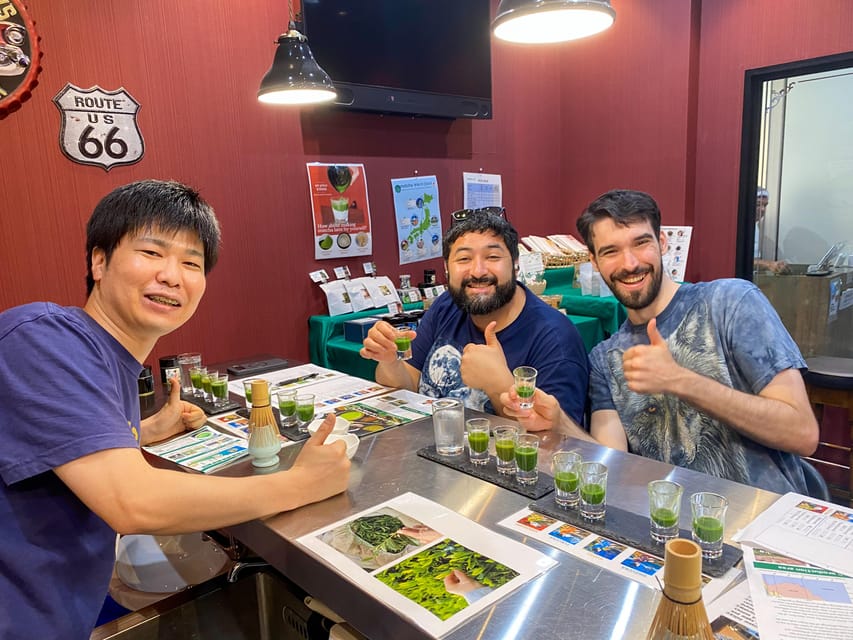
Next comes the comparison flight. You examine the color of the powders, then taste the prepared teas. Small servings let you try several kinds without becoming overwhelmed by caffeine or bitterness. Pay attention to the aroma before you sip, then notice the texture and aftertaste. You do not need a trained palate. The guide’s job is to give you a framework, not to turn you into a tea judge in 20 minutes.
After tasting, you select the matcha you liked best. This personal choice is one of the best features of the class. You are not handed a fixed tea and told to copy a demonstration. You make a connection between the earlier comparisons and the cup you prepare yourself.
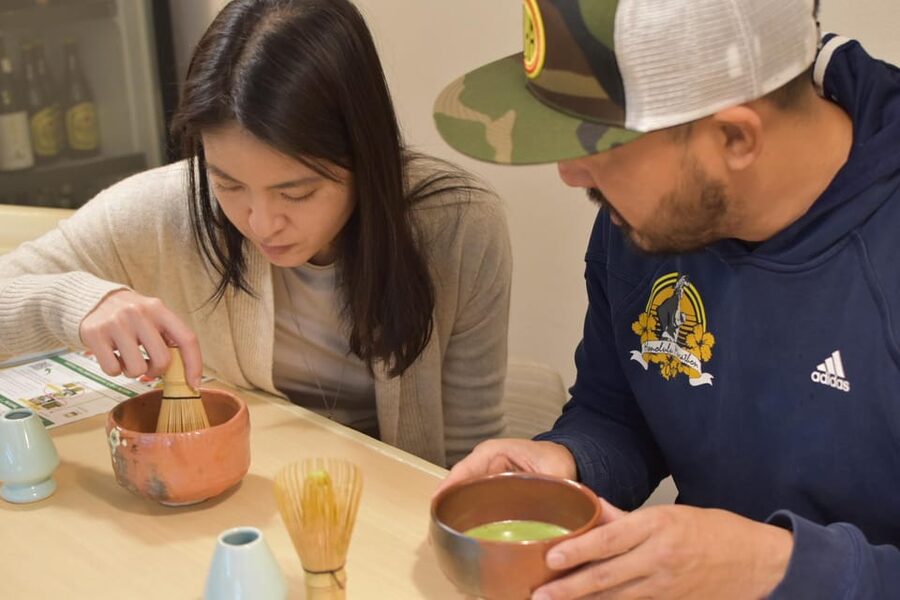
The final preparation is ousucha, a thin matcha made with a bamboo tea whisk. The guide demonstrates the process, then you whisk your own bowl. The activity promises a skill you can repeat at home, which gives the $63 price more value than a tasting alone.
The session finishes with a matcha latte, hojicha latte, and matcha sweets. These drinks use an original matcha blend made to work well with milk. The latte section also shows how matcha changes outside the traditional preparation. Plain matcha can be sharp or earthy, while a milk drink is softer and easier for many people to enjoy.
Why the hands-on whisking matters
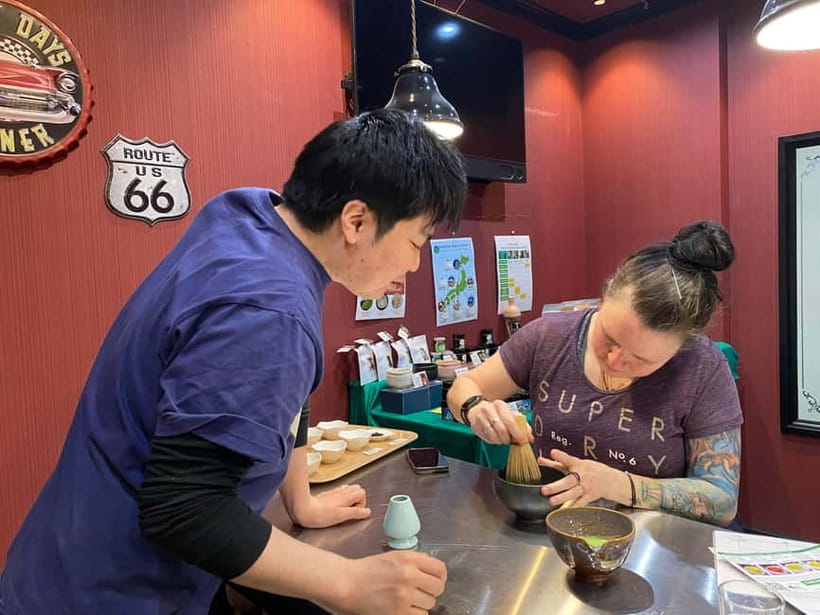
The whisking portion is simple in concept but useful in practice. You handle the bamboo tool, prepare your chosen tea, and learn the basic method for making matcha at home. The experience does not end when the guide takes away the bowl.
That practical finish makes this a good choice for people who buy Japanese tea but are unsure how to use it. You leave with a better sense of how much powder, water, and whisking are involved, even though the supplied information does not specify exact measurements.
I also like the order of the class. You taste first, choose second, and prepare third. That lets you see how the same tea experience can move from a small tasting sample to a drink you make with your own hands.
Do not expect a formal, highly ceremonial tea gathering based on the details provided. This is a general educational class with tasting, instruction, and modern drinks. If you want a quiet traditional tea ceremony with elaborate etiquette, this may not be the right fit. If you want to understand matcha and learn a repeatable technique, it is better suited.
Lattes and sweets make the ending approachable
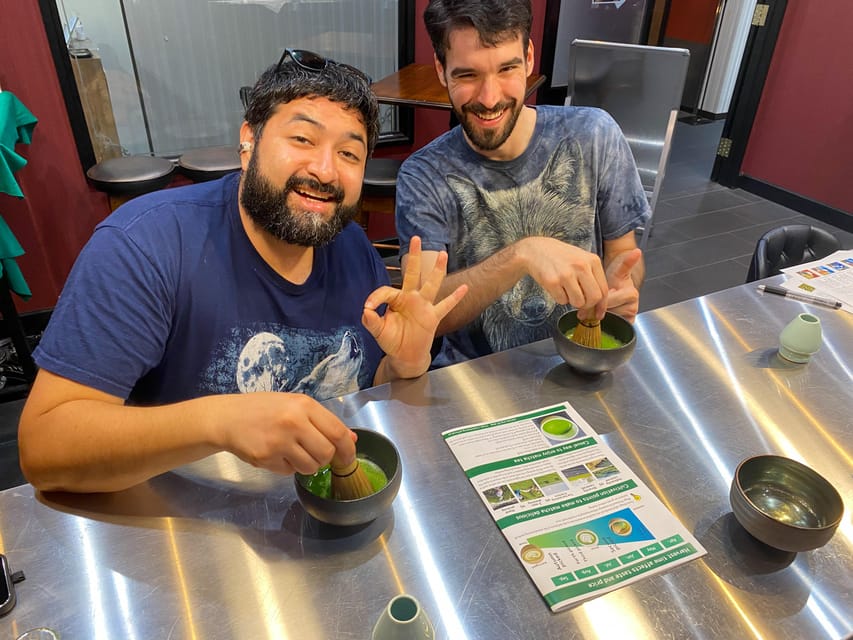
The matcha latte is not an afterthought. The class uses an original blend chosen to pair with milk, which gives you a second way to assess the flavor. You can also drink a hojicha latte, bringing roasted tea into the final part of the session.
Matcha sweets round out the tasting. The exact sweets are not specified, so do not book this expecting a particular dessert. Think of them as a small pairing with the drinks rather than a full meal.
This ending works well for mixed groups. One person may enjoy grassy, ceremonial matcha while another prefers a sweet latte. You get both the traditional preparation and a familiar cafe-style version without having to choose one or the other.

A small group that leaves room for questions
The class is limited to five participants and taught in English. That is a meaningful advantage for a technical subject. With a large group, the tasting can become a lecture and the whisking can feel rushed. A five-person limit should make it easier to see the demonstration, ask about the teas, and receive help with your bowl.
The available feedback especially praises the guide’s clear explanations and practical command of the subject. One assessment describes the activity as highly informative, while another notes the host’s experience made the session especially interesting. The overall rating is 4.9 from 21 ratings, with strong marks for the teaching rather than only the drinks.
The small size also means this is best for people who want an interactive class, not a drop-in cafe stop. Set aside the full 90 minutes. You will get more from it if you listen during the explanation, compare the samples carefully, and take your time with the whisk.
Is $63 a fair price?
At $63 per person, this costs more than ordering a matcha drink and dessert in Tokyo. That comparison is not quite fair, since the fee covers instruction, a tasting from several regions, a hands-on preparation, a welcome drink, a latte, hojicha latte, and matcha sweets.
The value depends on what you want. If you only want a good matcha beverage, spend less at a cafe. If you want to understand Japanese tea, compare several styles, and learn a method you can use at home, the price is easier to justify.
The five-person limit also matters. You are paying for access to a focused English class, not simply for liquid in a cup. The former tea-farmer guide is the central value, since the explanations link cultivation and production to what you taste.
I would be less enthusiastic about the price for someone who dislikes tea, avoids caffeine, or has no interest in preparation. There is no transportation included, and the class takes 90 minutes, so factor in the time and cost of reaching Asakusa Tawaramachi.
Who will enjoy this Asakusa class most?
I would recommend it to first-time matcha drinkers who want a clear introduction without committing to a long ceremony. It also suits tea fans who have visited cafes but want to understand why powders and flavors differ.
Families and small groups may appreciate the five-person limit, though the supplied information does not state a minimum age or specific child policy. Couples can make the tasting more personal by comparing their favorite teas, then seeing how each choice works in the whisked preparation.
This is also a good rainy-day activity in Tokyo. You stay indoors, receive a structured lesson, and do not need to spend half a day moving between tea shops. The hotel setting is practical rather than atmospheric, so choose it for the content, not for a grand traditional tea-house setting.
I would skip it if you are looking for a full meal, a formal tea ceremony, or a commercial consultation. The class is designed for general learning, and commercial requests should be arranged before booking.
Meeting point, timing, and booking details
The cafe is on the second floor of Henn na Hotel Asakusa Tawaramachi. Look for the FamilyMart on the first floor, enter the hotel, and go upstairs. Since transportation is not included, check your route before the start time.
The activity lasts 90 minutes, with start times depending on availability. English instruction is provided, and the group is limited to five people. You can reserve now and pay later, which helps if your Tokyo schedule is still changing.
Free cancellation is available up to 24 hours in advance for a full refund. That gives you some protection when planning around weather, train changes, or a crowded sightseeing day.
Should you book the matcha tasting?
Book this experience if you want more than a pretty green drink. The strongest reasons are the five-region comparison, the former Kyoto tea farmer’s practical teaching, and the chance to whisk your own ousucha. The latte, hojicha latte, and sweets keep the class friendly for mixed tastes.
Think twice if you only want a quick cafe treat or if you expect a formal tea ceremony. Also confirm the tasting count, since the information describes both 10 types and a detailed eight-tea sequence.
For most visitors with an interest in Japanese food and drink, $63 is reasonable for a small English class that combines tasting with a skill you can take home. It is a focused Asakusa activity, and the hands-on ending gives it more lasting value than another ordinary cup of matcha.
FAQ
Where does the matcha experience take place?
It takes place at a cafe inside Henn na Hotel Asakusa Tawaramachi. Enter the hotel, find the FamilyMart on the first floor, and go to the second floor.
How long does the class last?
The experience lasts 90 minutes. Starting times depend on availability.
Is the experience taught in English?
Yes. The instructor provides the class in English.
How many people can join the class?
The group is limited to five participants.
What drinks and food are included?
You receive a welcome drink, matcha from five production areas, a matcha latte, a hojicha latte, and matcha sweets. You also make your own matcha with a bamboo whisk.
Can I cancel for a full refund?
Yes. You can cancel up to 24 hours in advance for a full refund.
More Tea Ceremony & Matcha in Tokyo

More tours in Tokyo we've reviewed




Tea Ceremony & Matcha, compared.
 ★ 5.0Matcha Making Class in Tokyo with Authentic Japanese Sweets SetFrom $21
 ★ 5.0Tokyo: Traditional Tea Ceremony with a Tea MasterFrom $381 hour
 ★ 4.5Dynamic Tokyo: Tokyo Tower, Tea Experience, Bay Cruise Day TourFrom $99
 ★ 4.9Tokyo: Matcha Making Experience with Mochi Sweets in AsakusaFrom $221 hour
 ★ 4.7Tokyo: Matcha and Kimono ExperienceFrom $57
 ★ 5.0Tea Ceremony Workshop in Tokyo by the Experienced InstrucorFrom $38