
Reviewed · SUMO EXPERIENCES
Unique Afternoon Live Sumo training tour in Tokyo
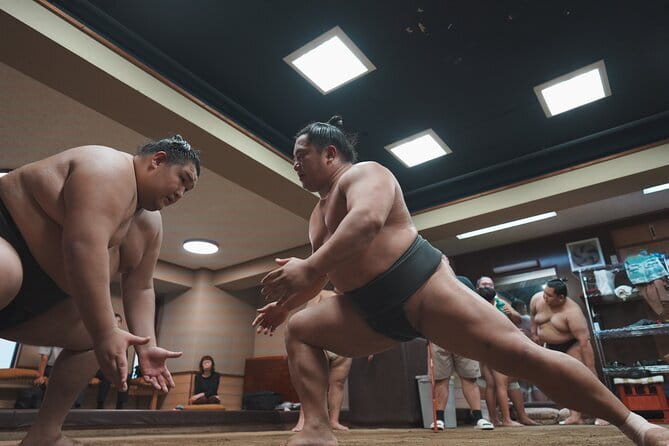
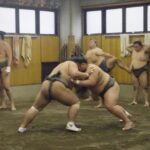
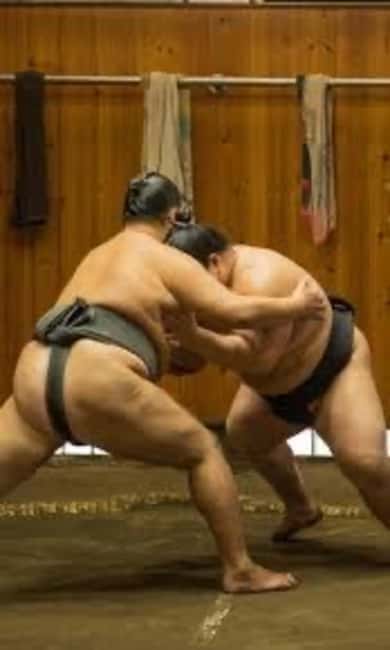
Real sumo training is not a polished stage show. At Nakamura-beya Sumo Stable, you watch professional wrestlers perform the stomps, clashes, and drills that prepare them for competition. The first warm-up period can feel quiet, but once the wrestling begins, the room changes quickly.
I like the small group of up to 10 people, which keeps the view personal rather than crowded. I also like the useful extras: free Wi-Fi, phone charging points, a sumo explanation pamphlet, and a photo with the wrestlers.
The main thing to consider is the pace. The opening 20 to 30 minutes may seem uneventful while the wrestlers warm up. Seating is limited to chairs for 8 to 10 people, so some people sit on the floor.
In This Review
- Key points to know before you book
- Watching sumo before the match begins
- Why the small group makes a difference
- What the 90-minute visit feels like
- Seating, comfort, and practical details
- The photo with the wrestlers
- Is $137.71 a fair price?
- Who will get the most from this experience?
- Booking and cancellation advice
- My recommendation for the sumo stable visit
- FAQ
- Where does the sumo training tour take place?
- How long does the experience last?
- Is the training always held in the afternoon?
- How many people can join the tour?
- Is seating provided?
- What is included in the ticket?
Key points to know before you book
- Watch genuine afternoon keiko: This is a working training session, not a performance created for tourists.
- Feel the power up close: The stomps and clashes happen directly in front of you.
- Expect a compact 90-minute visit: The short format works well in a busy Tokyo schedule.
- Use language support: The guide speaks English, Japanese, and Korean, while the audio guide is available in 10 languages.
- Leave with a personal souvenir: A photo with the sumo wrestlers is included.
- Plan for mixed seating: Chairs are available for 8 to 10 people, and other seats are on the floor.
Watching sumo before the match begins
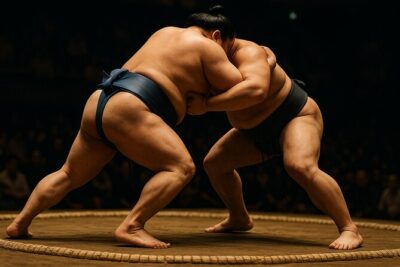
Sumo is easy to recognize from tournament broadcasts: two massive athletes face each other, slap the ground, and try to force one another out of the ring. Training shows you the less polished side of that sport. You see the repetition, discipline, and physical preparation that happen before a match ever begins.
The visit takes place at Nakamura-beya Sumo Stable in Ryogoku, Tokyo’s well-known sumo district. The stable is where wrestlers train, so the setting matters. You are not sitting in a theater watching a staged demonstration. You are observing a real practice session at a place connected to the wrestlers’ daily work.
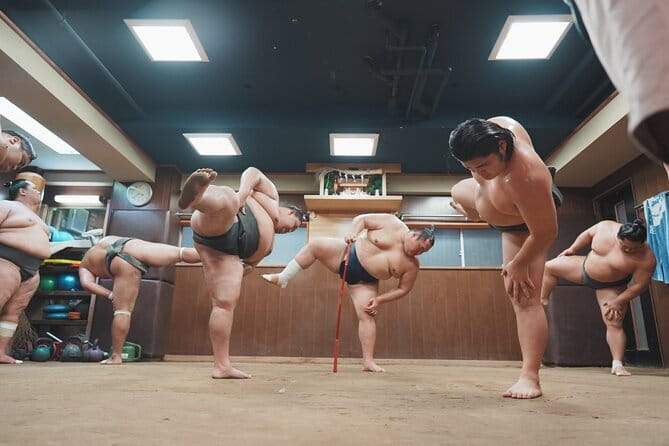
The first part is often the quietest. Wrestlers warm up, repeat movements, and prepare their bodies and minds. If you arrive expecting constant combat from the first minute, you may find this section slow. I would treat it as part of the lesson. Sumo training is built on routine, and the warm-up gives you a better sense of the work behind the spectacle.
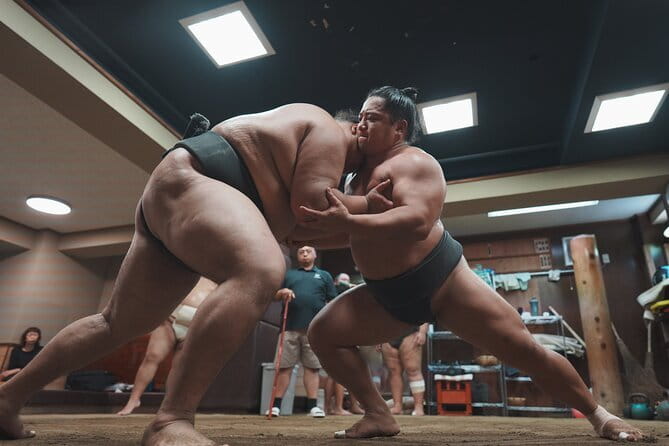
After roughly 20 to 30 minutes, the action can become much more intense. The wrestlers begin more forceful clashes, and you can see how quickly a bout changes once both athletes commit to the movement. The contrast between the measured warm-up and the sudden physical power is one of the strongest parts of the visit.
A few more Tokyo tours and experiences worth a look

Why the small group makes a difference
The maximum group size is 10 people. That is a useful limit for a training stable, where the room and viewing area are not designed like a large public arena. You are less likely to feel lost in a crowd, and the guide can help explain what you are seeing.
The experience lasts about 1 hour and 30 minutes. That is long enough to watch the warm-up and the more intense practice without taking up half a day. I would pair it with other sights in Ryogoku or central Tokyo, but I would not try to schedule something immediately afterward unless you allow time for local transport and finding the meeting point.
This is also a good option for repeat visitors to Tokyo. First-time visitors often want an easy introduction to sumo, but regular Japan visitors may appreciate seeing the sport outside a major tournament. You get a side of Japanese culture that many people miss simply because professional sumo is not always in season at the time of a trip.
The stable is near public transportation, but pickup and drop-off are not included. You make your own way to 1-chome-18-7 Ryogoku, Sumida City, Tokyo 130-0026, and the activity ends at the same meeting point. Check the route and timing before setting out, since the experience depends on arriving at the stable at the correct time.
What the 90-minute visit feels like
The visit begins with an explanation of sumo keiko, the term for training. A pamphlet is included, and the guide can speak English, Japanese, and Korean. An audio guide is also available in 10 languages, which helps if you want extra explanation in a language other than those spoken by the guide.
The opening warm-up may include repeated movements and preparation routines. You might not understand the purpose of every exercise right away, but the pamphlet and guide help put the activity into context. This is a good moment to watch details such as posture, balance, footwork, and the way the wrestlers conserve energy before the harder bouts.
Then the training becomes more physical. The famous sumo stomps are particularly effective at close range. You do not just see the movement, you hear the impact and feel how much force the wrestlers put into a basic ritual. When the clashes begin, the difference between ceremonial sumo and competitive strength becomes clear.
The practice can include three wrestlers in the more active section, according to the experience description. That gives you more to watch than a single pair repeating the same contest. Still, this remains a training session, so the exact flow is not presented as a fixed show with a guaranteed sequence.
That point is worth keeping in mind. You are paying to observe a real practice, not to receive a carefully timed performance. The benefit is authenticity. The tradeoff is that some parts may feel less dramatic or less predictable than a tournament match.
Seating, comfort, and practical details
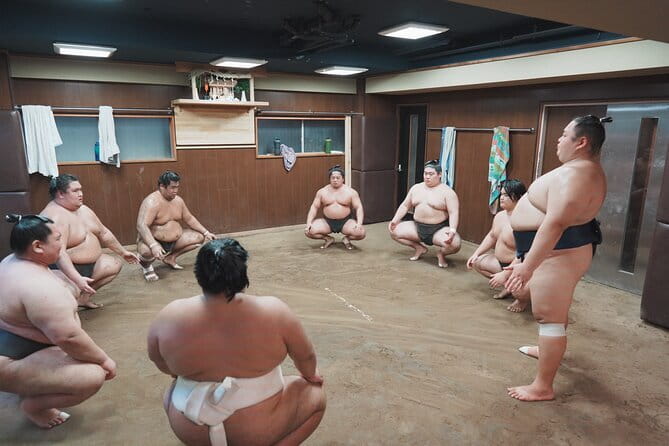
There are chair-type seats for 8 to 10 people. The remaining seating is on the floor. If sitting on the floor is difficult for you, consider this before booking, since chair seating is limited and not described as guaranteed for every participant.
The tour has free Wi-Fi and charging service. Those details will not change the sumo itself, but they are handy in Tokyo. You can keep your phone charged for photos before or after the session, and Wi-Fi is useful if you need to check maps or coordinate the rest of your day.
The activity is mobile-ticket based, and confirmation is provided when you book. Most people can participate, but the seating arrangement means you should think about your own comfort rather than assuming a standard theater seat.
The training is generally held in the afternoon, although it can sometimes take place in the morning. Check the actual time carefully. This is one of the most important practical points because the visit is tied to the stable’s schedule, not to a broad sightseeing timetable.
The photo with the wrestlers
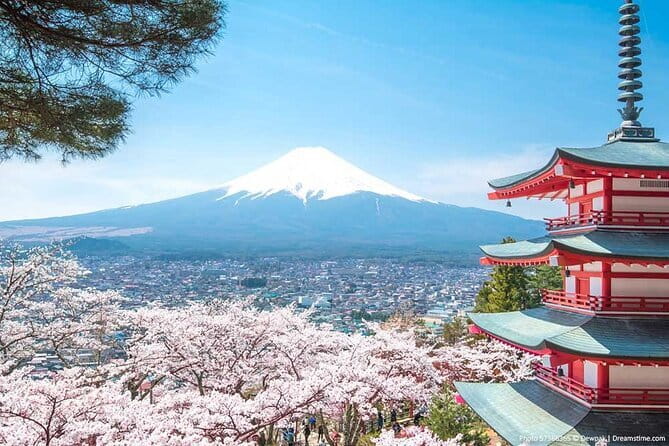
A photo with the sumo wrestlers is included. It gives you something personal to take home, rather than only a memory of watching practice from the viewing area.
The photo also adds a family-friendly element. One review describes teenage boys enjoying the experience because the athletes felt real and powerful, while another family praised the organization and the duration. Children and adults may connect with different parts of the visit: younger visitors may focus on the size and force of the wrestlers, while adults may pay more attention to ritual, discipline, and training technique.
Keep your expectations sensible. The main purpose of the experience is watching keiko. The photo is a bonus, not the reason to book the visit by itself.




Is $137.71 a fair price?
At $137.71 per person, this is not a cheap way to fill 90 minutes in Tokyo. The value depends on how important genuine access to sumo is to you.
You are paying for a small group, a close view of professional training, language support, the guide’s explanation, a pamphlet, Wi-Fi, charging service, and a photo. The small group and stable setting are the strongest value points. If you want a casual photo opportunity or a quick introduction with no interest in the training itself, the price may feel high.
If you care about seeing sumo outside a tournament, the cost is easier to justify. Tournament tickets can require careful planning, and tournament schedules do not always match your travel dates. This visit gives you a scheduled chance to watch professional wrestlers at work during an ordinary training session.
The booking pattern also gives you a useful planning clue. The experience is booked about 25 days in advance on average, so I would not leave it until the last day of a Tokyo trip. The group is capped at 10 people, and that small capacity can make late availability uncertain.
Who will get the most from this experience?
I would recommend this visit to you if you want a closer look at Japanese culture and do not need every minute to be action-packed. It suits first-time Tokyo visitors who want a clear introduction to sumo, as well as repeat visitors who have already seen the major city sights.
Families can also find it a good fit. The duration is manageable, and the wrestlers provide a memorable visual focus for children. The French-language response praised the family experience, the organization, and the length, while the English feedback points to teenage children being especially impressed by the athletes.
It is less suitable if you dislike floor seating, need a guaranteed chair, or want a theatrical show with constant narration and nonstop bouts. It may also disappoint you if you cannot give the warm-up your attention. The slower beginning is not wasted time, but you need to understand what it is.
The multilingual setup helps remove some of the usual language concerns. The guide speaks English, Japanese, and Korean, and the audio guide gives you 10 language choices. The provided information also refers to 11 language options in the general description, so check the available language list at booking if your preferred language is important.
Booking and cancellation advice

You can cancel for a full refund if you do so at least 24 hours before the start time. Changes or cancellations made less than 24 hours before the experience are not accepted for a refund, and the cutoff follows Tokyo local time.
I would book once your Tokyo schedule is reasonably firm, then confirm the time and meeting point again before the day. The activity does not include transportation, and it ends where it begins, so you need to plan your route both ways.
The provider is NexSpark Co., Ltd. The stable address is Nakamura-beya Sumo Stable, 1-chome-18-7 Ryogoku, Sumida City, Tokyo 130-0026, Japan. Since the training time can occasionally shift from afternoon to morning, do not rely only on a general itinerary when planning the rest of your day.
My recommendation for the sumo stable visit
I would book this tour if you want real training rather than a tourist performance. The strongest reasons are the small group, the close view of powerful practice, and the chance to see the patience and repetition behind professional sumo.
I would skip it if you need guaranteed chair seating, dislike a slower first half, or feel that $137.71 is too much for a 90-minute activity. For everyone else, especially families and repeat Tokyo visitors, this is a focused way to see a part of Japanese life that a standard city tour rarely covers.
FAQ
Where does the sumo training tour take place?
The activity takes place at Nakamura-beya Sumo Stable, 1-chome-18-7 Ryogoku, Sumida City, Tokyo 130-0026, Japan.
How long does the experience last?
The visit lasts approximately 1 hour and 30 minutes.
Is the training always held in the afternoon?
It is generally held in the afternoon, but it can sometimes take place in the morning. Check the confirmed time before you go.
How many people can join the tour?
The activity has a maximum of 10 travelers.
Is seating provided?
Chair-type seats are available for 8 to 10 people. Other participants can sit on the floor.
What is included in the ticket?
The experience includes an audio guide in 10 languages, a photo with the sumo wrestlers, a sumo keiko explanation pamphlet, guide support in English, Japanese, and Korean, plus free Wi-Fi and charging service. Pickup and drop-off are not included.
More Sumo Experiences in Tokyo

More tours in Tokyo we've reviewed







Sumo Experiences, compared.
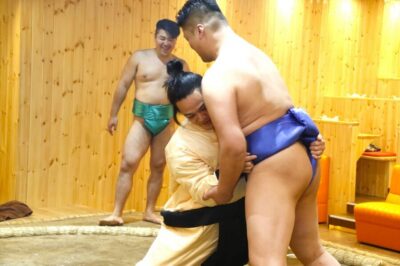 ★ 4.8Tokyo: Sumo Show Experience with Chicken Hot Pot and a PhotoFrom $1032 hours
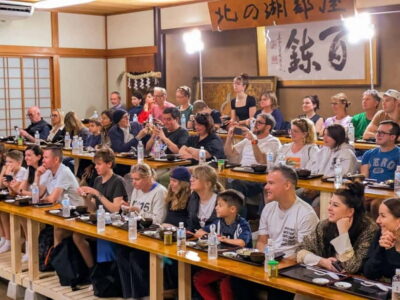 ★ 4.8Tokyo: Sumo Show and Dining ExperienceFrom $7990 minutes - 2 hours
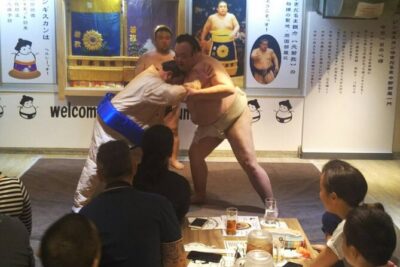 ★ 5.0the SUMO showFrom $89
 ★ 5.0Tokyo Shinjuku Sumo Show & Experience with PhotoFrom $79
 ★ 4.8Tokyo: Sumo Show and Experience in ShinjukuFrom $691h 30m
 ★ 4.6Tokyo: Sumo Tournament Tour with Chair Seat TicketsFrom $141