
Reviewed · CYCLING TOURS
Little Adventure with Cycling in Tokyo No. 1 Crystal Clear River
Tokyo’s best surprise may be how quickly its city streets give way to forests, mountain villages, and a clear-running river. This six-hour outing takes you from Tateya in Akiruno to temples, bridges, local cafés, and the Akigawa Valley by electric bicycle, all about an hour from central Tokyo by train.
I like the easy pace and the mix of activities: you get a useful ride through the valley, a special riverside lunch, and a proper river walk to a waterfall. I also like the tiny group size, capped at six, and the chance to meet guide Kenji, who is described as kind and accommodating. The main catch is weather. Rain can change the plan, and the river section requires comfort with getting wet and walking outdoors.
In This Review
- Key things to know before you book
- Why this rural corner still counts as Tokyo
- Starting at Kotokuji Temple
- Riding an electric bike through the Akigawa Valley
- Lunch beside the river
- River trekking to the waterfall
- The second e-bike ride and Sesonoyu footbath
- What the $143.34 price gets you
- Who will enjoy this day most
- Timing, meeting point, and practical planning
- How this compares with ordinary Tokyo day trips
- Should you book the Akigawa Valley cycling tour?
- FAQ
- Where does the tour start?
- What time does the activity begin?
- How long does the tour last?
- Where does the tour end?
- How many people can join?
- Is the tour canceled in bad weather?
- What is the cancellation policy?
Key things to know before you book
- An hour from central Tokyo: The countryside setting feels far removed from the city without requiring an overnight trip.
- Electric bicycles do the hard work: You cover more ground while stopping at bridges, temples, gardens, and cafés.
- A riverside Cuba sandwich lunch: Outdoor chairs are set beside a special section of the Akigawa River from noon to 1 p.m.
- River walking to a waterfall: Waterproof gear lets you follow the water toward a waterfall rather than simply viewing it from a path.
- A hot-spring footbath ends the ride: You cross a suspension bridge and soak your feet at Sesonoyu before returning.
- Small-group attention: With a maximum of six people, the outing should feel more personal than a large bus excursion.
Why this rural corner still counts as Tokyo
When most people picture Tokyo, they picture train stations, neon signs, packed sidewalks, and tall buildings. Akiruno, in the western part of Tokyo Prefecture, gives you a very different picture. Here, the Tama and Akigawa Rivers run through wooded valleys, and the area reflects Tokyo’s older connection with forestry and charcoal burning.
That background matters because this is not simply a scenic bike ride pasted onto a city holiday. The valley helped supply Edo, the old name for Tokyo, with forest products. As you ride, the temples, old roads, river crossings, and mountain villages provide a glimpse of the region’s working past.
The meeting point is Tokyo Urayama Base, at 219-7 Tateya in Akiruno. The tour begins at 10 a.m. and ends back there after about six hours. You need to allow time to reach western Tokyo by train, but the short journey is part of the appeal. You trade the city’s noise for open air without committing to a long-distance excursion.
If you're still narrowing it down, here are other tours in Tokyo Prefecture we've reviewed.
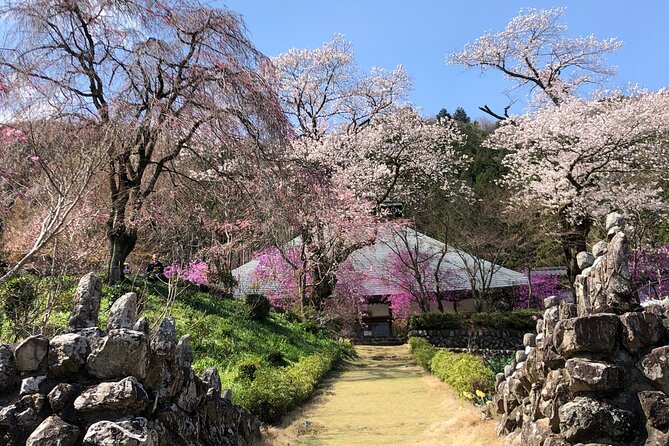
Starting at Kotokuji Temple
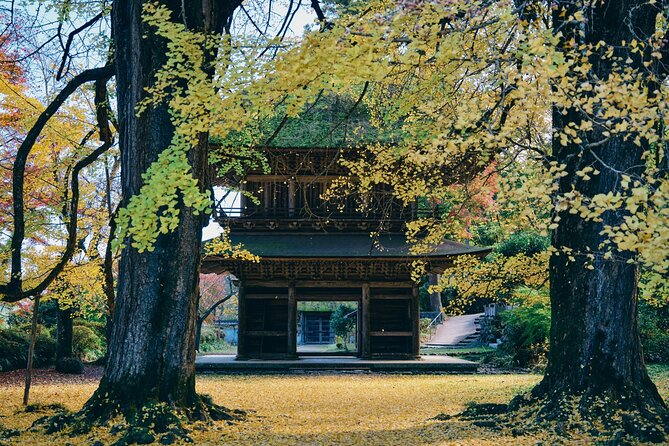
The first stop is Kotokuji Temple, where you pass through a large thatched gate and see a giant ginkgo tree. A guide explains the temple’s history during a roughly 30-minute visit.
This is a good opening stop because it gives the day some cultural shape before the cycling begins. The temple is not treated as a quick photo stop only. You have time to look at the gate, tree, and grounds while hearing why the site matters locally.
The giant ginkgo should be especially appealing if you like seasonal scenery, though the experience will naturally look different depending on the time of year. The tour description does not promise a particular seasonal display, so think of the tree as a strong visual feature rather than a guaranteed autumn spectacle.
You will want shoes suited to a day that combines temple grounds, bicycle riding, and river walking. The schedule is active, but it is not built around racing from one stop to the next.
Riding an electric bike through the Akigawa Valley
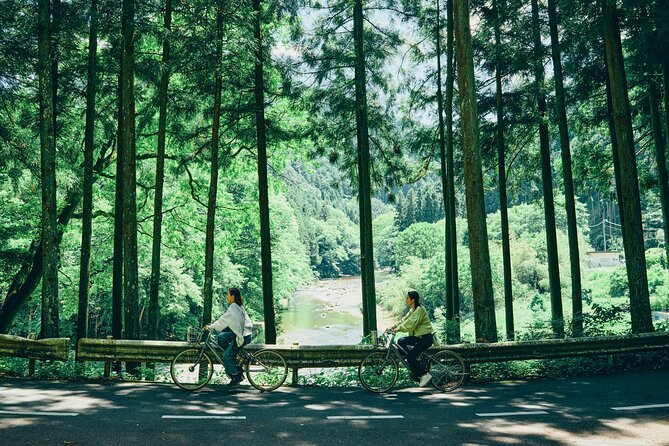
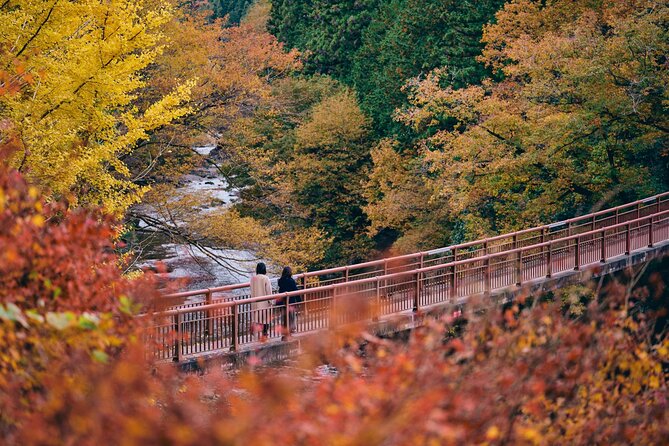
At Kurochaya, you prepare for the first cycling section. The guide leads you on electric bicycles past scenic bridges, old temples, Japanese gardens, and cafés with terraces facing the valley.
The e-bikes are one of the tour’s smartest choices. The route covers enough ground to show you more than a single riverside viewpoint, but electric assistance helps make the ride approachable for most people who can participate in ordinary outdoor activities. You still need to ride a bicycle, yet you are not expected to power every uphill stretch unaided.
I like that the ride has a purpose beyond transport. Bridges give you changing views of the river, while temples and gardens break up the scenery. Café terraces add a local, relaxed touch, although the schedule does not promise a café stop with time to order. Treat these places as points of interest along the route rather than guaranteed shopping or dining stops.
The small group limit of six is useful here. A guide can keep the ride together, explain what you are seeing, and respond to your comfort level more easily than on a large group outing. Kenji is the named guide associated with the experience, and the available feedback describes communication with him as easy and his manner as accommodating.
Lunch beside the river
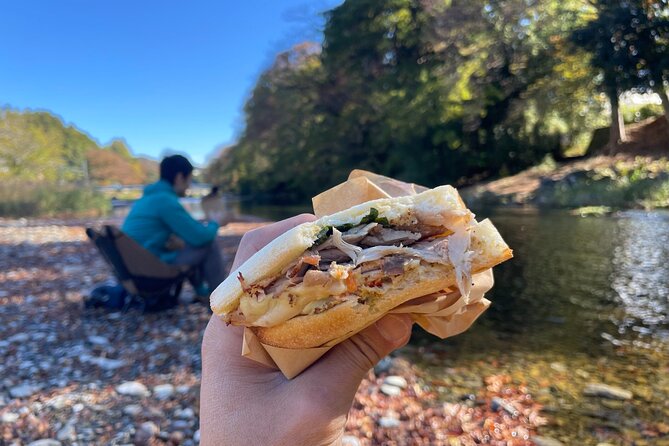
The main outdoor break runs from noon to 1 p.m. Chairs are placed at a special riverside spot, where you eat a Cuba sandwich lunchbox.
This is a simple idea, but it gives the day a sense of place. Instead of eating in a standard restaurant, you sit beside the water and let the river provide the setting. The sandwich has also earned specific praise, so lunch is not an afterthought in the schedule.
Keep your expectations practical. This is a picnic-style meal, not a multi-course culinary experience. The supplied information identifies the lunch as a special Cuba sandwich lunchbox, but it does not give details about ingredients, drink options, or dietary substitutions. If you have food restrictions, ask the operator before booking.
The one-hour lunch break should also help you reset before the wet portion of the outing. You have already cycled and will soon spend about an hour on the river trekking section, so this pause is well placed.
River trekking to the waterfall
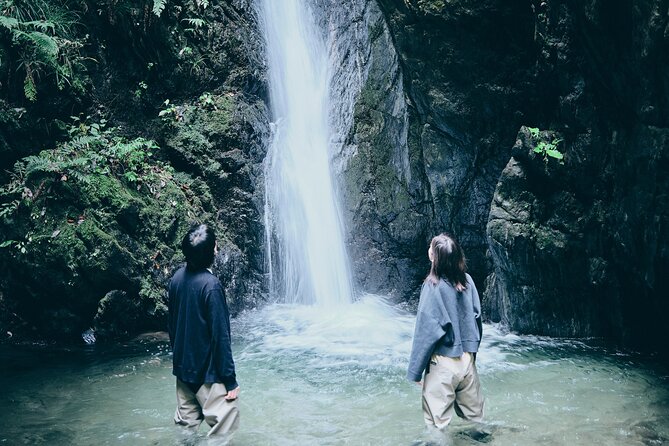
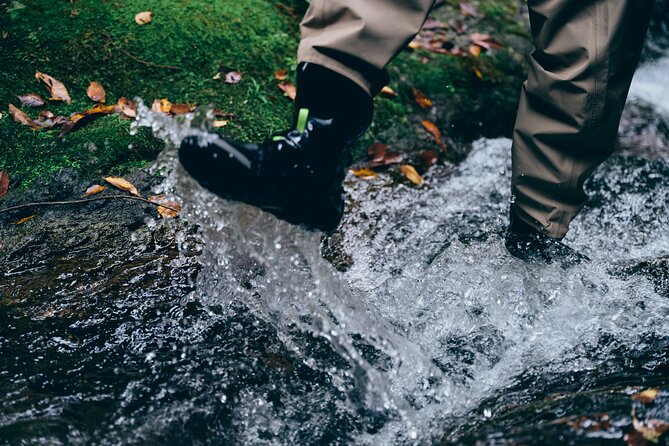
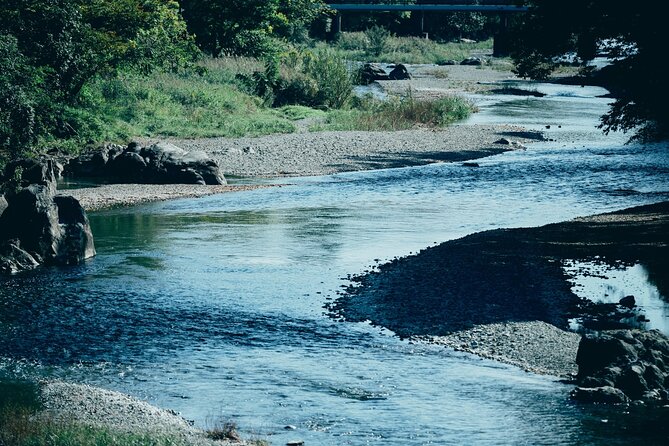
From 1 to 2 p.m., the tour changes character. You put on waterproof gear and walk through the river toward a waterfall.
This is the most unusual part of the day. Many river tours keep you on a bank or viewpoint. Here, the water itself becomes the route. You should expect wet, uneven outdoor conditions rather than a paved sightseeing walk. The appeal is direct contact with the valley: flowing water, rock, and forest replace the usual city itinerary.
The experience is described as fun, but it is also the part that deserves the most honest thought before you book. You need to be comfortable walking in a river while wearing waterproof equipment. The information does not state the water depth, footwear type, or exact distance to the waterfall, so ask the operator if those details matter to you.
Weather can affect this section. The tour requires good weather, and rain has already led to an adjusted itinerary on at least one occasion. That is not necessarily a flaw. A wet river can become unsafe or unpleasant, and changing the plan is better than forcing the original route.
The waterfall is the payoff, but the walk itself is the point. You are not merely being taken to a famous attraction for a quick photograph. You are moving through the environment that makes this part of Tokyo special.
The second e-bike ride and Sesonoyu footbath
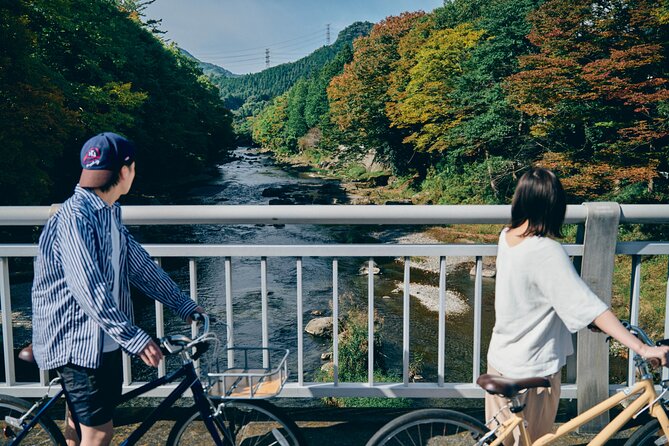
After the river walk, you cycle again from 2 to 2:40 p.m. The second ride leads toward 秋川溪谷瀨音之湯, commonly written as Akigawa Keikoku Seoto-no-Yu.
The timing matters. You are not spending the full afternoon on a bicycle, which keeps the day varied and manageable. The second ride also carries you toward the final relaxation stop rather than sending you back along the exact same experience.
The next part includes crossing a suspension bridge and visiting the hot spring for a footbath and souvenir shopping. A footbath is a gentler ending than a full bathing session, and the distinction is important. You soak your feet, not your whole body, so do not book this expecting a complete onsen visit.
Still, it is a fine way to finish a day of cycling and river walking. Warm water can ease tired feet, while the suspension bridge adds one last scenic moment before the tour returns to its starting point. The stop also gives you a chance to browse for a souvenir, though no specific shops or products are listed.
What the $143.34 price gets you
At $143.34 per person, this is not the cheapest way to see rural Tokyo. The value comes from how much the day combines into one small-group outing: electric bicycle use, a guide, temple visits, riverside scenery, lunch, waterproof river trekking, a waterfall walk, a suspension bridge, and a hot-spring footbath.
You would need to arrange several pieces yourself to copy the day independently. Finding an e-bike rental, working out a valley route, locating the river section, arranging waterproof equipment, and timing the footbath would take effort. The tour charges for that planning as well as for the equipment and guide service.
The price makes the most sense if you want an active day with local context, not just transportation to a viewpoint. It is less compelling if you prefer a quiet temple visit, a long restaurant meal, or a full hot-spring bathing session.
The group limit helps support the cost. Six people is small enough for a guide to manage the cycling and river activity without the feel of a coach tour. The tour is booked, on average, 46 days ahead, so the small capacity may make early planning sensible.
Who will enjoy this day most
I would recommend this outing to you if you want Tokyo beyond the central districts and like days that mix movement with scenery. It suits people who can ride a bicycle, enjoy outdoor conditions, and are willing to walk through a river in waterproof gear.
It is also a strong choice for repeat visitors to Japan, or for first-time visitors who have already set aside enough city time and want a change of pace. The valley offers a side of Tokyo that many international tourists never see.
Families and mixed-ability groups should read the practical details carefully. The information says most people can participate, but it does not give age limits, cycling distance, water depth, or specific mobility guidance. If anyone in your group has concerns about balance, cycling, or wet terrain, contact Tokyo Urayama Base before paying.
This is not the right pick if you want a weather-proof plan. The river section is central to the appeal, and the operator can change the route when conditions are poor. A canceled tour due to weather brings the choice of another date or a full refund, but you should keep a backup plan for your Tokyo stay.
Timing, meeting point, and practical planning
You meet at Tokyo Urayama Base in Tateya at 10 a.m. The activity ends at the same location after roughly six hours. Since the base is near public transportation, you do not need a private car according to the supplied details.
Plan around the fixed schedule. Kotokuji Temple takes about 30 minutes, the first cycling and sightseeing section about an hour, lunch one hour, river trekking two hours in the broader midday block, and the final cycling, bridge, footbath, and shopping section roughly an hour and a half.
The published stop times have some overlap in their labels, so do not treat every minute as a strict individual appointment. The useful point is that this is a full half-day outing with a 10 a.m. start and an afternoon return.
A mobile ticket is provided, and booking confirmation arrives at the time of booking. Free cancellation is available until 24 hours before the local start time. Cancellations or changes made inside that window are not refunded or accepted.
How this compares with ordinary Tokyo day trips
A standard Tokyo day trip often sends you toward a well-known temple district, shopping area, or scenic lookout. This experience offers something less polished and more physical. You ride through a valley, stop at places that feel connected to daily local life, and get wet in a river.
That difference is its strength. The outing does not try to recreate central Tokyo outside the city. It shows you the wooded upper reaches of the Tama and Akigawa Rivers, where forestry, temples, gardens, and hot springs shape the day.
It also asks more of you than a regular sightseeing tour. You need to ride, walk outdoors, handle changing weather, and accept a picnic lunch. In return, you get a fuller sense of place and a day that is unlikely to feel like a repeat of your city itinerary.
Should you book the Akigawa Valley cycling tour?
Book it if you want an active, small-group escape from central Tokyo and the idea of riding an e-bike, eating beside a river, and walking through water to a waterfall sounds better than another urban attraction. The guide, compact group, local temples, and footbath give the day a thoughtful rhythm.
Skip it if you need a predictable indoor plan, dislike wet activities, or want a full hot-spring bath. At $143.34, the tour earns its price through variety, equipment, guidance, and access to a rural setting that is awkward to arrange alone.
For the right person, this is one of the more memorable ways to spend a day in Tokyo Prefecture. It shows how quickly Japan’s capital region can shift from concrete and trains to clear water, forests, and mountain villages.
FAQ
Where does the tour start?
It starts at Tokyo Urayama Base, 219-7 Tateya, Akiruno, Tokyo 190-0163, Japan.
What time does the activity begin?
The start time is 10 a.m.
How long does the tour last?
The experience lasts approximately six hours.
Where does the tour end?
The activity ends back at the meeting point, Tokyo Urayama Base.
How many people can join?
The tour has a maximum of six participants.
Is the tour canceled in bad weather?
The experience requires good weather. If poor weather causes a cancellation, you will be offered a different date or a full refund.
What is the cancellation policy?
You can cancel at least 24 hours before the local start time for a full refund. Cancellations or changes made less than 24 hours before the start are not accepted or refunded.
More tours in Tokyo Prefecture we've reviewed
Cycling Tours, compared.
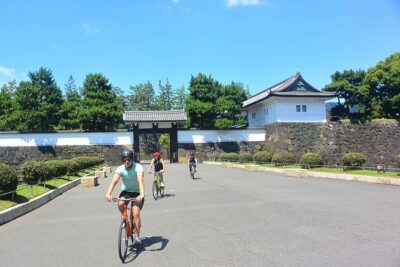 ★ 5.0Tokyo Guided Small-Group Biking TourFrom $106
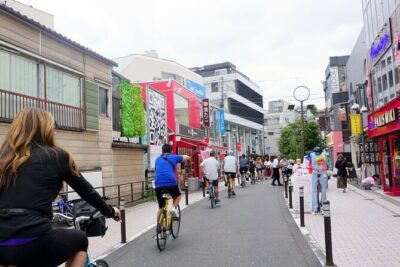 ★ 5.0Tokyo Great Cycling TourFrom $99
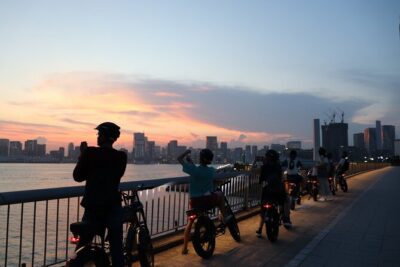 ★ 5.0Tokyo Top Highlights 3h Guided E-bike TourFrom $63
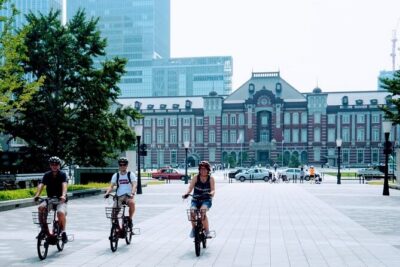 ★ 5.03h Tokyo E-Bike Tour: Hidden Gems, and Local Life with guideFrom $63
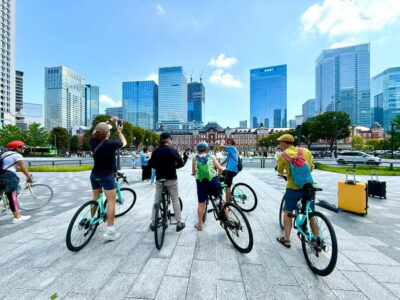 ★ 4.8Tokyo: 3-Hour Bike or E-Bike City Highlights TourFrom $453 hours
 ★ 4.8Tokyo: 3-hour Guided E-Bike Tour of the City’s Hidden GemsFrom $65