
Reviewed · TEA CEREMONY & MATCHA
Tokyo Small-Group Ramen, Gyoza & Matcha Class with a Pro Chef
This compact Tokyo class puts you at the stove for miso ramen, gyoza, and matcha, not just at a table watching someone else cook. In about two hours, an English-speaking chef guides you through dashi, ramen techniques, dumpling making, and tea preparation.
I like the very small group size, capped at four, and the fact that dinner, recipes, an apron, photos, matcha, and Japanese sweets are included. The main catch is dietary: vegetarian, vegan, halal, and gluten-free menus are not available, so this class is best for people who can eat the standard menu.
- Cook three Japanese staples: Learn dashi, miso ramen, gyoza, and matcha preparation in one class.
- Maximum of four people: The chef can adjust the pace and answer individual questions.
- Dinner is included: Eat the ramen and gyoza you prepare, with matcha and Japanese sweets afterward.
- Useful take-home material: You receive recipes, an apron for the class, and photos as a keepsake.
- Easy city access: Reach the Zoshigaya classroom from Shibuya on the Fukutoshin Line, then explore Ikebukuro or Kishimo Shrine.
- Know the food limits: No vegetarian, vegan, halal, or gluten-free option is offered.
In This Review
- Cooking Miso Ramen From Dashi Up
- Gyoza Gives the Class a Hands-On Finish
- Matcha and Seasonal Sweets Slow the Pace
- A Four-Person Class Near Ikebukuro
- What the $104.51 Price Covers
- Dietary Limits Matter More Than the Small Print
- Why the Small Group Size Changes the Experience
- What to Bring and How to Plan Your Time
- Who Will Get the Most From This Class
- Should You Book the Ramen, Gyoza, and Matcha Class?
- FAQ
- Where does the cooking class meet?
- How long does the class last?
- How many people can join the class?
- Is the class taught in English?
- What food and drinks are included?
- Are recipes provided?
- Are vegetarian, vegan, halal, or gluten-free menus available?
- Can I cancel for a full refund?
Cooking Miso Ramen From Dashi Up
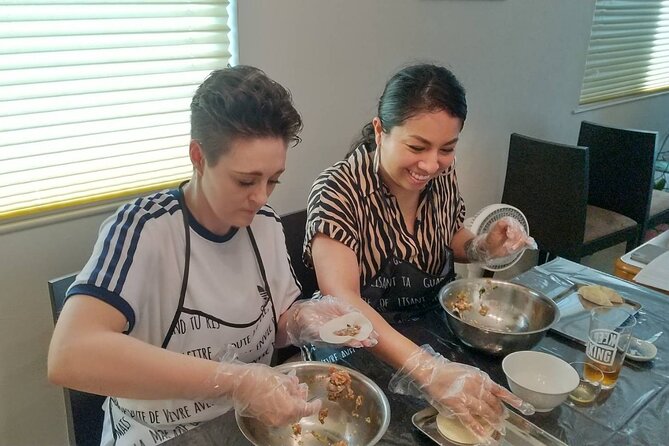
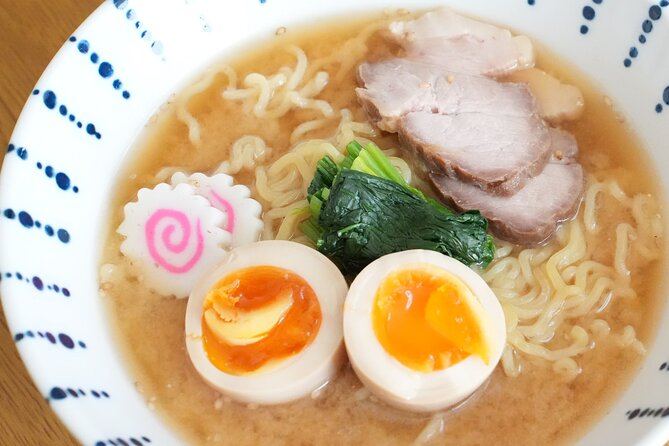
The best part of this class is that it starts with the building blocks of Japanese flavor. Rather than treating ramen as a packet of noodles with toppings, you learn how dashi contributes depth before moving on to a hearty miso broth.
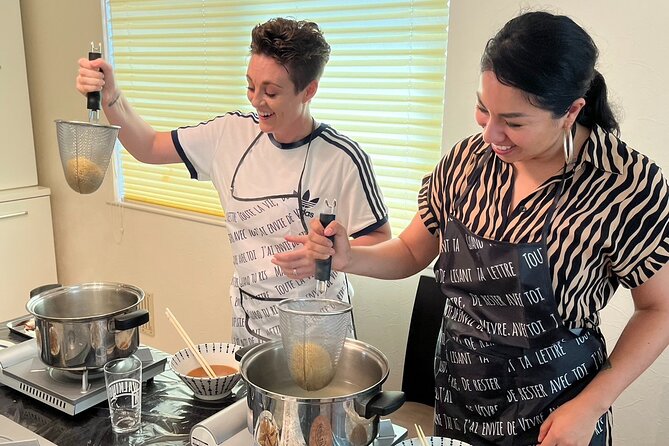
The class then turns those foundations into dinner. You make miso ramen and gyoza, so the meal gives you two different cooking tasks: building a soup and shaping filled dumplings.
The supplied information does not set out an exact minute-by-minute schedule, so the order may vary with the group. You can expect the chef to explain the ingredients and techniques in English, then guide you through the preparation at a pace suited to the people in the room.
That point matters if you have little kitchen experience. You are not expected to arrive with professional knife skills or a perfect knowledge of Japanese ingredients. The chef is there to explain the process clearly and answer questions as you work.
The class is also aimed at teaching skills you can repeat at home. You receive recipes, which makes the experience more useful than a meal that ends when you leave the table. You may not find every Japanese ingredient easy to source outside Japan, but the recipes give you a starting point for rebuilding the dishes in your own kitchen.
Gyoza Gives the Class a Hands-On Finish
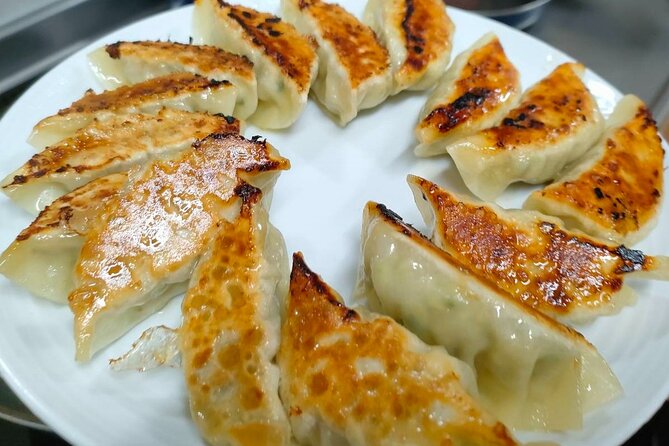
Gyoza brings a different kind of fun to the lesson. Ramen depends on broth, seasoning, and timing. Gyoza asks you to work with filling and wrappers, then cook the dumplings into the familiar mix of tender filling and browned exterior.
The chef will guide you through the technique and let you work at your own pace. The group size makes a real difference here. With no more than four participants, you should have room to ask about folding, filling, or cooking instead of trying to catch instructions from the back of a large room.
This is a good activity for mixed-age groups. One available account describes grandparents attending with their 19-year-old grandson, with everyone enjoying the meal, getting questions answered, and feeling that the class kept to its promised time. That combination is useful for families who want an activity that does not depend on fitness, long walking distances, or prior cooking experience.
The class is still only about two hours, so keep your expectations sensible. You are learning practical methods, not completing a full Japanese culinary course. You will leave with a solid introduction to two popular foods, but the session does not claim to cover every ramen style, gyoza variation, or regional cooking tradition.
Other cooking classes in Tokyo
Matcha and Seasonal Sweets Slow the Pace
After the savory food, the matcha portion changes the mood. You prepare your own matcha and enjoy it with seasonal Japanese sweets, adding a small tea-culture lesson to the cooking class.
This is more than an extra drink included with dinner. Matcha preparation gives you a chance to experience a Japanese ritual in a simple, hands-on way. You are shown how to make the tea, then taste it alongside sweets that balance its bitterness.
The seasonal element means the sweet may vary. That keeps the tea serving tied to what is available, though the details are not specified in advance. If you are especially interested in formal tea ceremony, note that this is a matcha experience within a cooking class, not a separate traditional tea ceremony program.
I like the way this rounds out the meal. Ramen and gyoza are active, savory tasks. Matcha provides a quieter ending and gives the two-hour class a cultural component without turning the entire session into a lecture.
A Four-Person Class Near Ikebukuro
The class meets at 3-chōme-1-7 Zōshigaya, Toshima City, Tokyo 171-0032, and returns to the same meeting point at the end. The classroom is described as being in Zoshigaya, near Ikebukuro, so check the meeting address carefully rather than heading only to the largest station in the area.
From Shibuya, you can reach the area with one train ride on the Fukutoshin Line. The route passes by Meiji Shrine and Shinjuku, and Ikebukuro gives you plenty to do before or after class.
This location works well if you want to attach the lesson to an afternoon or evening in northwestern central Tokyo. Ikebukuro has shopping areas with Animate, the Pokémon Center, and electronics stores. Near the classroom, Kishimo Shrine has red torii gates and offers a quieter place for a stroll after you finish eating.
The tour does not provide private transportation, so you handle your own journey to the meeting point. It is near public transportation, but I would still allow enough time to find the address, especially if you are unfamiliar with Tokyo station exits and neighborhood streets.
The activity ends where it begins. That is convenient if you leave bags, shopping plans, or a second nearby stop in your schedule. It also means you should not expect a guided walk through Ikebukuro after the meal.
What the $104.51 Price Covers
At $104.51 per person, this is not a budget meal. The value comes from combining instruction, food, and a small cultural activity in one booking.
Your price includes:
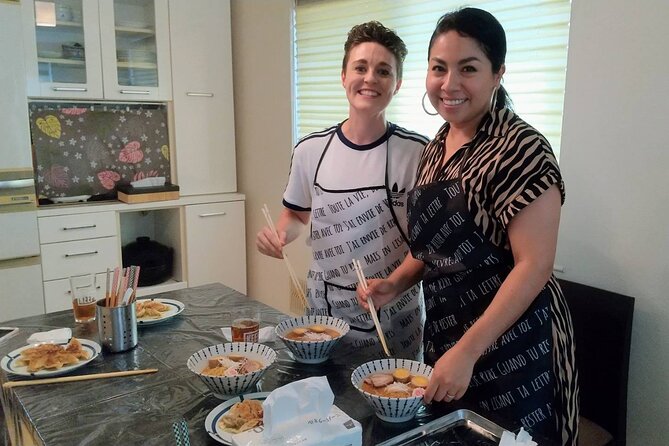
- A dinner of miso ramen and gyoza
- Matcha tea and Japanese sweets
- An English-speaking guide
- Cooking instruction from an experienced chef
- Take-home recipes
- An apron for use during the class
- Photos provided afterward as a thank-you
If you priced the meal alone, the class would look expensive. But you are also paying for the chef’s guidance, a limited group size, ingredients, a prepared classroom, and the chance to make the food yourself. The maximum of four is particularly important to the value. A much larger cooking class might cost less, but it would offer less individual attention.
Two hours is also a practical length. It is long enough to prepare and eat several dishes, yet short enough to fit into a busy Tokyo day. You will not lose an entire afternoon, though the experience is substantial enough to count as a meal and an activity.
Drinks beyond matcha cost extra. Sake, specifically Hakkaisan in a 180-milliliter serving, and Kirin Ichiban Shibori beer in a 350-milliliter serving are available for 500 yen each, payable in cash. Soda is not included. Plan for cash if you want one of the alcoholic options.
Dietary Limits Matter More Than the Small Print
The biggest reason not to book this class is the fixed menu. Vegetarian, vegan, halal, and gluten-free choices are not available, and the operator says dietary restrictions cannot be accommodated.
That rules out this experience for many people with firm food requirements. Do not assume that removing meat or changing noodles will be possible on the day. The class is built around its standard ramen and gyoza menu.
If you can eat the listed dishes, the menu offers a useful range. Miso ramen introduces broth and seasoning. Gyoza gives you a filling and wrapper technique. Matcha and sweets provide a separate taste and preparation style.
You should also consider food preferences beyond formal restrictions. The class includes dinner, not just a demonstration, so you need to be comfortable eating what you prepare. The available information does not list every ingredient, so anyone with a serious allergy should confirm details before booking.
A few more Tokyo tours and experiences worth a look


Why the Small Group Size Changes the Experience
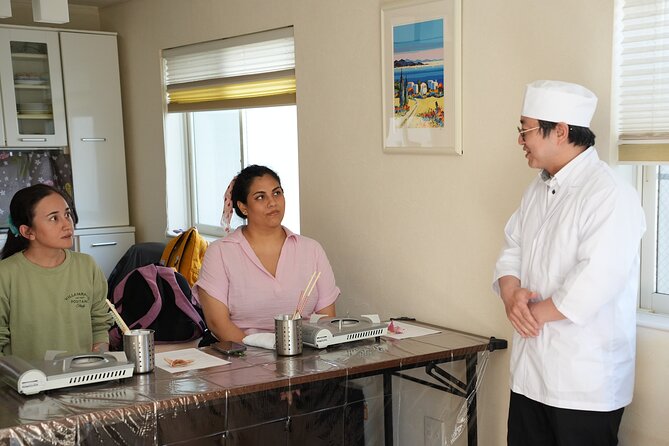
A group limit of four is the strongest practical feature here. Cooking instruction can become frustrating when you cannot see the work surface or ask a question without interrupting a crowd. This format gives the chef a better chance to check your progress and adjust the pace.
The wording about learning at your own pace is useful, but it does not mean a completely private lesson. Other participants may be present, and the class still has a set duration. Think of it as a compact shared lesson with room for personal help.
The small group also suits people with different levels of confidence. A keen home cook can ask about technique, while a beginner can focus on following the steps. Families and small friend groups should find the format easier to manage than a large food tour.
The class has a five-star rating from 12 ratings and a 100 percent recommendation figure. That is encouraging, especially alongside the specific account of a multigenerational family enjoying the food, getting answers to their questions, and finishing on time. Still, 12 ratings is a small sample, so I would treat those figures as a positive sign rather than proof that every participant will have the same experience.
What to Bring and How to Plan Your Time
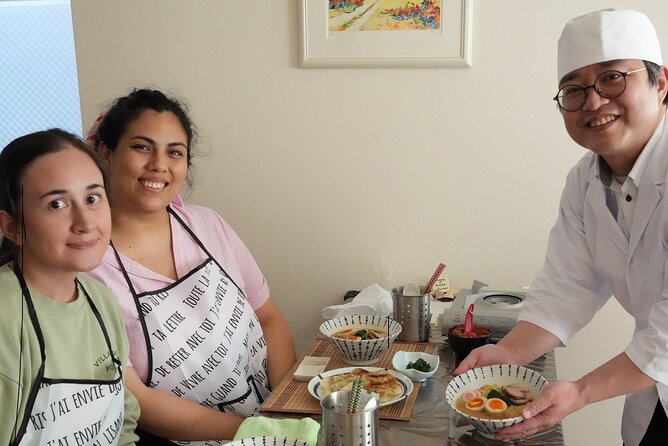
An apron is provided, so you do not need to pack one. The class also supplies recipes and later provides photos, which means you can focus on participating rather than documenting every step yourself.
Wear practical clothing suitable for a cooking lesson. The supplied information does not specify a dress code or detailed kitchen setup, so avoid assuming that every personal item will be provided. You should also keep the meeting address available on your phone, since the activity uses a mobile ticket and returns to the starting point.
Because dinner is included, schedule the class in place of a meal rather than immediately after one. If you want to visit Ikebukuro’s shopping attractions or Kishimo Shrine, leave time around the two-hour session. The nearby red torii gates offer a simple post-class walk, while Ikebukuro gives you a longer list of shopping stops.
The class requires a minimum number of participants. If that minimum is not met and the activity is canceled, you are offered another date or experience, or a full refund. You can cancel for a full refund up to 24 hours before the start time. Changes or cancellations inside 24 hours are not accepted for a refund.
Who Will Get the Most From This Class
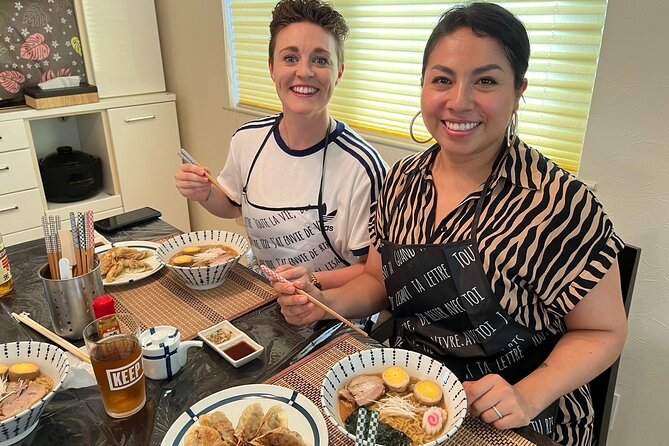
I would recommend this to you if you want to do more than eat ramen in Tokyo. It suits first-time cooks, food-focused visitors, couples, families, and small groups who value direct instruction and a meal at the end.
It is especially practical for:
- Visitors staying near Shibuya, Shinjuku, or Ikebukuro
- Families with older children or teenagers
- Home cooks who want recipes to use later
- People who prefer small classes to large group demonstrations
- Anyone interested in both Japanese food and matcha
- Visitors with a free two-hour slot who want an indoor activity
I would not choose it if your main goal is a formal tea ceremony, a long market tour, or a broad survey of Japanese cuisine. It is also the wrong choice for anyone needing vegetarian, vegan, halal, or gluten-free food.
The class gives you a focused look at a few familiar Japanese dishes. That focus is its strength. You learn enough to understand how dashi, miso, wrappers, and matcha fit together, without spending a full day in a kitchen.
Should You Book the Ramen, Gyoza, and Matcha Class?
Book it if you want a personal, food-centered activity with dinner built in and you can eat the standard menu. The four-person cap, English instruction, recipes, and direct question time make the $104.51 price easier to justify than a simple restaurant meal.
Before booking, check three things: your dietary needs, your route to the Zoshigaya meeting point, and whether you want to spend part of your day in Ikebukuro. If all three work, this is a tidy way to connect cooking with a small taste of Japanese tea culture.
If your priority is low cost or dietary flexibility, choose a different activity. For everyone else, this class offers a useful souvenir that is not just a photograph: the ability to make ramen and gyoza again at home.
FAQ
Where does the cooking class meet?
The meeting point is 3-chōme-1-7 Zōshigaya, Toshima City, Tokyo 171-0032, Japan.
How long does the class last?
The experience lasts approximately two hours.
How many people can join the class?
The maximum group size is four participants.
Is the class taught in English?
Yes. An English-speaking guide explains the ingredients and techniques.
What food and drinks are included?
Dinner includes miso ramen and gyoza. Matcha tea and Japanese sweets are also included.
Are recipes provided?
Yes. You receive recipes to take home and use later.
Are vegetarian, vegan, halal, or gluten-free menus available?
No. The class cannot accommodate vegetarian, vegan, halal, or gluten-free requirements.
Can I cancel for a full refund?
Yes. You can cancel at least 24 hours before the start time for a full refund. Cancellations or changes made less than 24 hours before the start time are not refunded.
More Cooking Classes in Tokyo
More Tea Ceremony & Matcha in Tokyo
More Cooking Classes in Tokyo
More tours in Tokyo we've reviewed








Tea Ceremony & Matcha, compared.
 ★ 5.0Matcha Making Class in Tokyo with Authentic Japanese Sweets SetFrom $21
 ★ 5.0Tokyo: Traditional Tea Ceremony with a Tea MasterFrom $381 hour
 ★ 4.5Dynamic Tokyo: Tokyo Tower, Tea Experience, Bay Cruise Day TourFrom $99
 ★ 4.9Tokyo: Matcha Making Experience with Mochi Sweets in AsakusaFrom $221 hour
 ★ 4.7Tokyo: Matcha and Kimono ExperienceFrom $57
 ★ 5.0Tea Ceremony Workshop in Tokyo by the Experienced InstrucorFrom $38