
Reviewed · SUMO EXPERIENCES
Tokyo: Sanctuary Authentic Grand Sumo Experience & Training
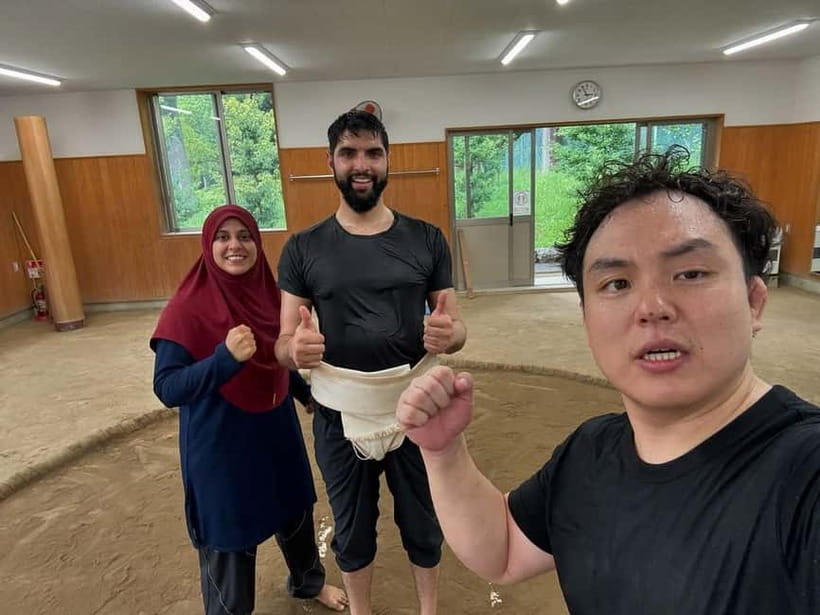
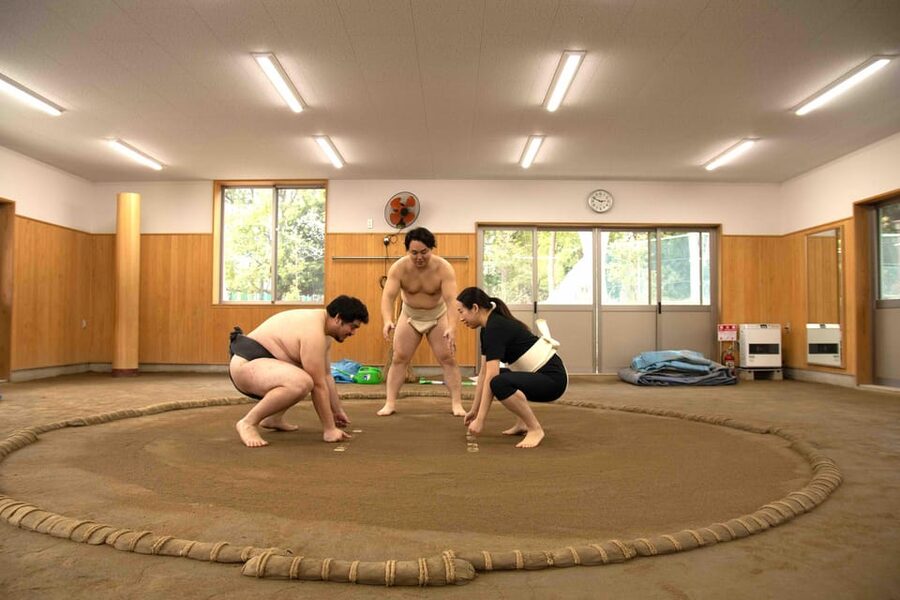
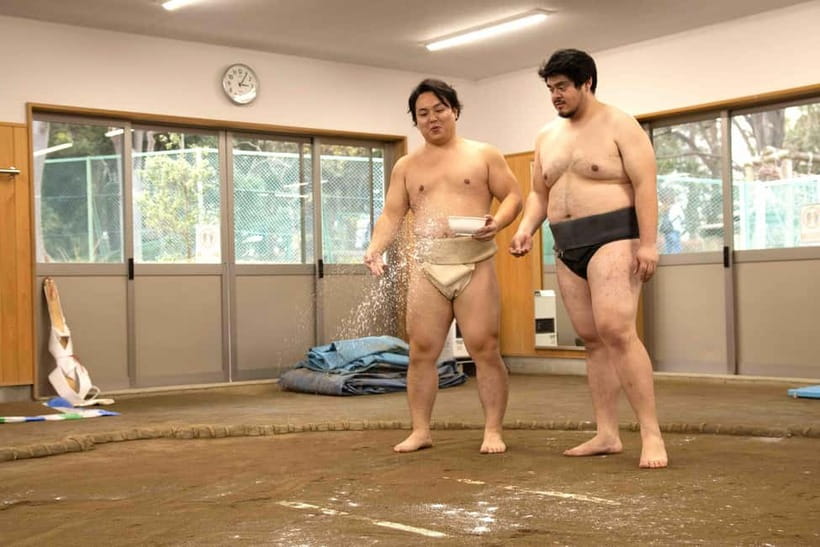
The unusual thing here is that you do not simply watch sumo. At Amita Sumo Dojo, you enter a real clay ring, wear a real mawashi, and learn the basic movements from a Japanese coach. Takeshi leads the session in English and Japanese, so you get both the physical work and the meaning behind the rituals.
I like the chance to wrestle friends or even the coach at the end, and I like that beginners are welcome regardless of age, gender, or fitness level. The main drawback is simple: this is a workout. Bring plenty of water, two towels, and a willingness to sweat. At $199 per person, it is also a serious spend for two hours, though the hands-on access makes it a different proposition from a standard sumo show.
In This Review
- Key points
- Why this Tokyo sumo session feels different
- Arriving at Heiwanomori Park Sumo-jo
- The first lesson: stretches, warm-ups, and ring manners
- Wearing the mawashi, or staying in your clothes
- Learning how a bout works inside the dohyo
- A real workout, not a passive photo stop
- Who will get the most from the $199 price
- Why families and mixed groups can work well here
- Practical planning for your two hours
- Is the Amita Sumo Dojo session worth booking?
- FAQ
- Where does the sumo experience take place?
- How do I reach the dojo by train?
- How long does the experience last?
- Is the instruction available in English?
- Do I need previous sumo experience?
- Is a mawashi provided?
- What will I learn during the session?
- Can children participate?
- Is there a shower nearby?
- Is food included?
Key points
- Train in a real dohyo: You work on a genuine clay sumo ring rather than a stage built for tourists.
- Wear a mawashi: The traditional belt is provided at no extra charge, though you may keep your regular clothes on if you prefer.
- Learn the rituals first: Warm-ups, stretches, Shinto customs, ring rules, and sumo fundamentals come before the bouts.
- Wrestle at your own level: You can face friends, family members, or, if you are brave, one of the coaches.
- English and Japanese instruction: Takeshi guides the class in both languages and explains the purpose behind each step.
- Plan for sweat and travel time: Heiwajima Station is a 10-minute walk away, and the session can be demanding.
Why this Tokyo sumo session feels different
Tokyo gives you many ways to see sumo, especially during tournament season. Most are spectator events. You sit, watch the wrestlers clash, and try to understand the rules from the action. This session takes the opposite approach. You become part of the practice.
That difference matters. Sumo is not just two large people pushing each other out of a circle. The sport includes set movements, strict ring customs, ceremonial gestures, and a particular way of preparing the body. Here, you learn those basics before testing them yourself.
I especially like the order of the session. You do not get thrown into a match without context. The coach first shows you what to do, explains the rituals, and introduces the rules for wrestling inside the dohyo. By the time you face a friend, you have a better sense of what the movements mean.
This is not a professional training camp, and you should not expect to become a sumo wrestler in two hours. It is a practical introduction led by a real coach, with enough physical action to make the subject stick.
A few more Tokyo tours and experiences worth a look

Arriving at Heiwanomori Park Sumo-jo
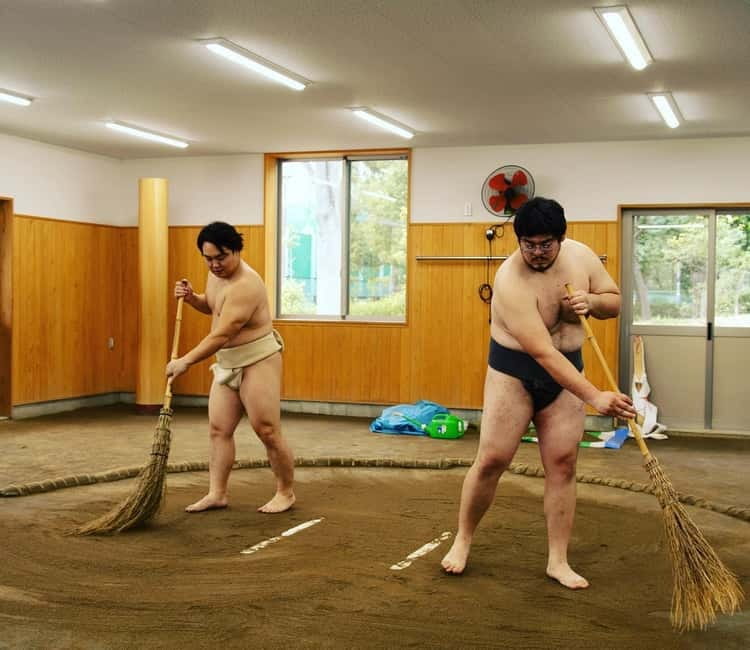
The meeting point is Heiwanomori Park Sumo-jo, at 2-1 Heiwanomorikoen in Ota City. You meet at the small office at the address, then begin the two-hour session.
The nearest station is Heiwajima on the Keikyu Main Line. From there, allow about 10 minutes on foot. This is useful to know because the venue is not beside one of Tokyo’s main sightseeing districts. You need to build in travel time, rather than treating it as a quick stop between Shibuya and Asakusa.
The listed train times give you a useful planning guide. From Shinagawa, the journey is about 22 minutes. From Shimbashi, allow about 28 minutes, and from Nihonbashi about 34 minutes. From Shibuya, the trip takes roughly 36 minutes. The journey from Shinjuku is about 49 minutes, while Ryogoku, Tokyo’s best-known sumo district, is listed at about 53 minutes.
That last detail may surprise you. You can visit the area around Ryogoku and still need nearly an hour to reach this dojo. Do not confuse the meeting point with the National Sumo Hall district.
A taxi can be used, but one will not normally arrive at the venue unless you arrange it yourself. Walking from Heiwajima Station is likely the simpler choice. Check the provided walking route before leaving the station, especially if you are arriving close to your start time.
The first lesson: stretches, warm-ups, and ring manners
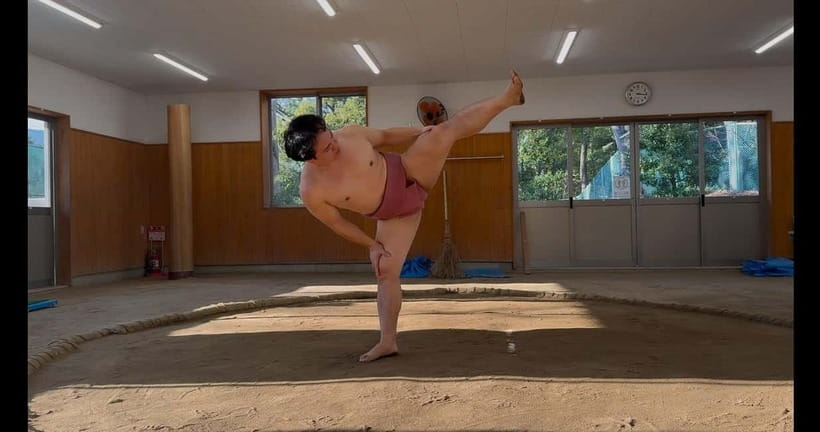
The session begins with physical preparation. You learn stretches and warm-ups before attempting a bout. This is not filler. Sumo places a lot of emphasis on the body being ready, and the exercises give you a safer, more useful introduction than immediately trying to push someone across the ring.
The coach also demonstrates the rituals connected with sumo and Shinto tradition. You learn that the ring has rules beyond its circular shape, and that the movements around a bout have purpose. These details help explain why sumo is treated as both a sport and a traditional practice.
Takeshi is described as warm and easy-going in the feedback supplied for this activity, and that fits the needs of a beginner class. You want a coach who can explain the movement without making an inexperienced visitor feel foolish. The session is offered in English and Japanese, which removes a major barrier for international participants.
Families can take part too. Children under four may accompany you but can only watch. Children aged five and older may observe for free, but each child who wants to participate needs a separate booking. That makes this workable for a family, though the physical nature of the activity means parents should decide which children are ready to join the ring.
Wearing the mawashi, or staying in your clothes
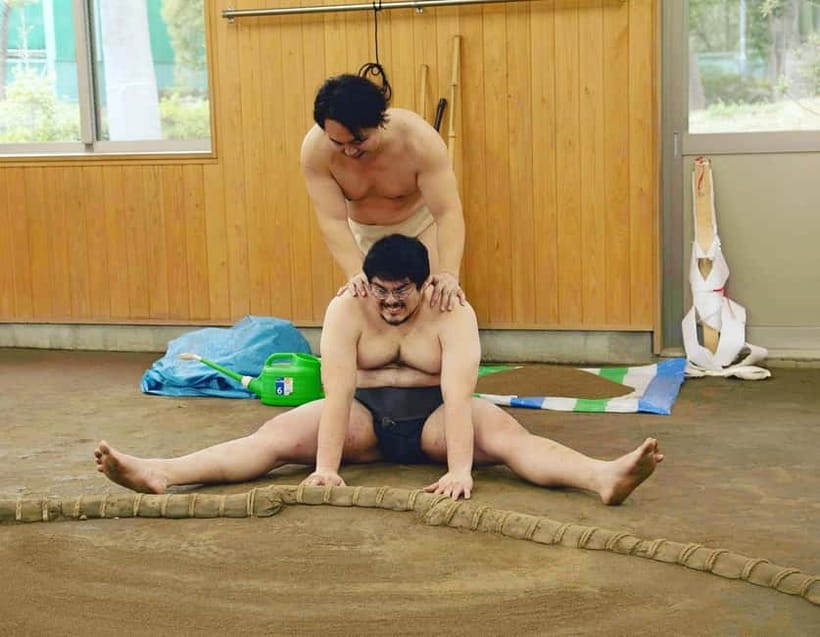
The traditional belt is called a mawashi. It is provided at no extra cost, so you do not need to bring your own sumo gear. Wearing one gives the activity a stronger connection to real practice, but you are not forced to do so. The instructions say you may wear regular clothes if that is your preference.
That flexibility is important. Some people will enjoy the novelty and visual appeal of a mawashi. Others may feel uncomfortable changing into one, especially in a mixed-age or mixed-gender group. You can still take part without it.
The listing does not specify a dress code for regular clothes, so choose something that allows movement and that you do not mind sweating in. Loose, practical clothing is the sensible choice. The key point is comfort, not looking like a professional wrestler.
You should also bring a towel and drinks. I would take two towels, as recommended: one for the session and one for the shower. The warning about sweating is not decorative. You are stretching, practicing, and wrestling, so pack more water than you might expect for a normal sightseeing activity.
Learning how a bout works inside the dohyo
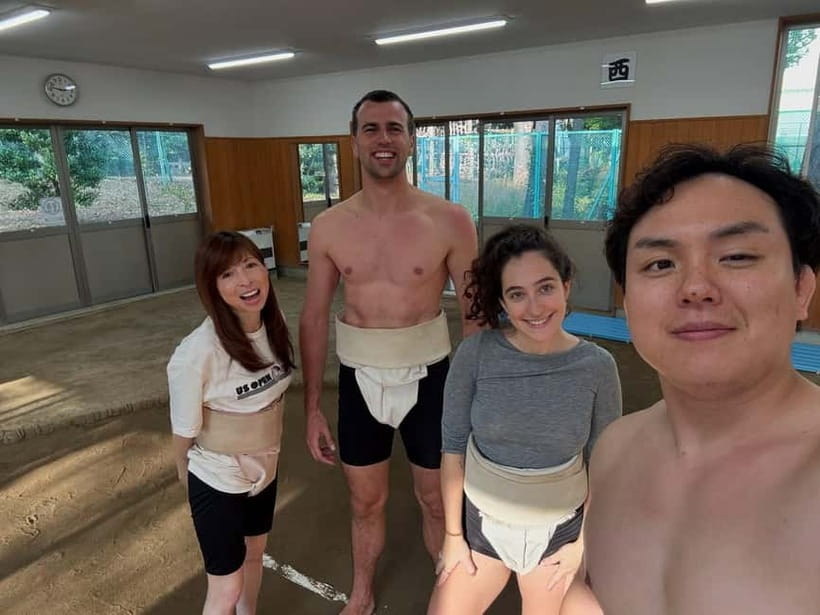
Once the warm-up and ritual demonstration are complete, the coach explains the rules for wrestling in the dohyo. You learn how the ring works and how a match is decided. The supplied information does not promise a full technical course, so think of this as a clear beginner’s introduction rather than a referee-training seminar.
The value comes from trying the rules immediately. It is easier to understand the purpose of footwork, balance, and pushing when you are standing in the ring yourself. You may also find that the ring feels more intimidating once you are inside it, even in a friendly practice setting.
At the end, you can wrestle with friends or family members. If you are brave enough, you can also challenge one of the coaches. One particularly notable session included a match against a five-time Japanese national champion, though that should be treated as a possibility rather than a guaranteed part of every booking.
This is where the activity becomes more than a demonstration. You are not simply copying a stance for a photograph. You are applying the basics in a real bout, with the coach adjusting the challenge to suit the participant.




A real workout, not a passive photo stop
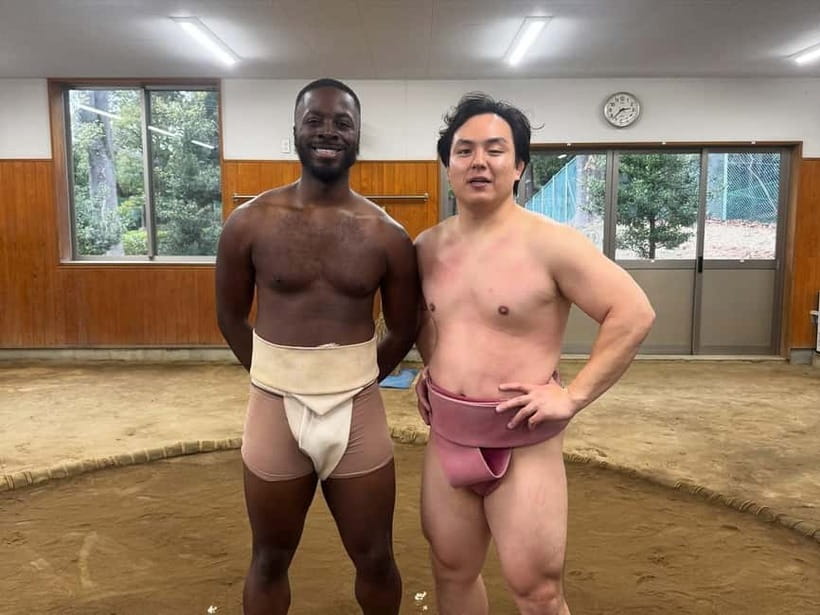
The activity is suitable for people with different fitness levels, but suitable does not mean effortless. Sumo training includes warm-ups, stretches, low stances, movement, and bouts. You will probably work harder than you would during a museum visit or a standard cultural talk.
The advantage is that the physical work makes the lesson memorable. You feel the difficulty of maintaining balance and pushing with control. You also gain a better sense of the strength and technique required from professional wrestlers.
The limitation is that you may not want this on a day when you are already exhausted from walking around Tokyo. If you have a packed schedule, place the session early enough that you can recover afterward. A shower nearby costs ¥100 for five minutes, which is useful after the class, but it is still wise to bring water and a change of clothes if you have room.
The activity provider does not accept responsibility for injuries or accidents. That is a straightforward reminder to listen to the coach, respect your own limits, and avoid treating the practice as a contest of pride. You can participate fully without trying to prove that you are tougher than everyone else.
Who will get the most from the $199 price
At $199 per person, this is not a budget activity. The price makes more sense if you want access that a tournament ticket cannot provide. A tournament lets you watch professionals. This session gives you a real ring, a mawashi option, instruction from a Japanese coach, ritual demonstrations, and the chance to wrestle.
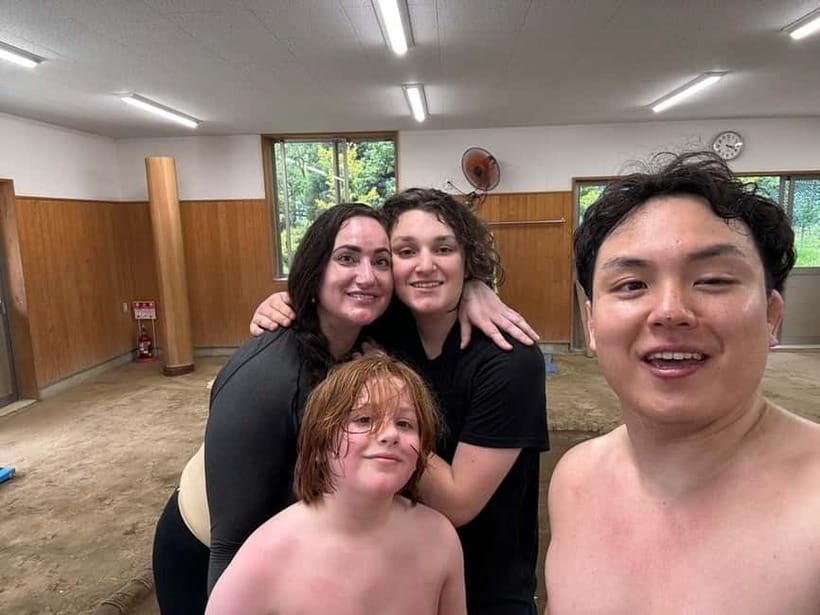
For a family or small group, the value also comes from doing something together. One family of four used the session to learn the warm-ups and rituals, then took part in matches with each other and the coach. That format can produce a shared memory that a short photo stop cannot.
It is less suitable if you only want to see professional sumo, avoid physical activity, or have a strict sightseeing budget. It is also not the right choice if you expect a full tournament atmosphere. There is no food included, no mention of a professional tournament occurring during the session, and no promise that every participant will wrestle a national champion.
The strongest reason to pay the price is direct access. You get an activity built around doing, not merely watching. If that is what you want from Tokyo, the fee can be reasonable. If you simply want to learn about sumo, there are less costly ways to do that.
Why families and mixed groups can work well here
The session is not limited to athletes. The supplied information specifically says no experience is needed and welcomes all ages, genders, and fitness levels, with the children’s age rules noted above.
That broad welcome is one of the activity’s best features. A family can learn together, and friends with very different fitness levels can adjust how hard they wrestle. The experience is not built only for someone who already follows sumo or trains in martial arts.
Still, you should be honest about the physical side. A younger child may prefer to watch, and anyone with concerns about balance, stamina, or injury should take a cautious approach. The provider’s injury notice means you should not assume the session is risk-free simply because it is designed for beginners.
For teenagers and adults, the final bouts are likely to be the most memorable part. A 13-year-old and an 18-year-old were able to enjoy the activity with their family group, which suggests that the format can work across age ranges when everyone follows the coach’s instructions.
Practical planning for your two hours
Book at least two days before the date you want. Although the online system may allow a booking closer to the start time, the provider recommends giving more notice. That is sensible for a specialized session with a coach and limited space.
The experience lasts two hours, but your day needs more time around it. Allow for the train ride to Heiwajima, the 10-minute walk, changing or preparing, and a shower afterward if you want one. Add extra time if you are coming from Shinjuku, Shibuya, or another distant part of Tokyo.
Bring:
- Plenty of drinking water
- Two towels
- Comfortable clothes for movement
- Regular clothes if you do not want to wear a mawashi
No food is served, so eat beforehand or plan a meal afterward. Do not arrive expecting refreshments at the dojo.
Photography and video are allowed, including sharing on social media, but you must avoid interrupting the session. Do not record participants who have not given permission, and follow any additional instructions from the staff. This is especially important in a small training setting, where a phone in the wrong place can distract someone inside the ring.
Free cancellation is available up to 24 hours before the activity for a full refund. You can also reserve now and pay later, which helps if your Tokyo plans are still shifting.
Is the Amita Sumo Dojo session worth booking?
Book it if you want to take part in sumo rather than simply watch it. The real dohyo, mawashi option, Shinto rituals, bilingual instruction, and final bouts give this two-hour session a clear purpose.
I would especially recommend it for families, friend groups, and visitors who want one active cultural experience in Tokyo. It is also a strong choice for anyone already interested in martial arts or Japanese traditions, though you do not need previous experience.
Think twice if you dislike sweating, have very little time, or mainly want professional competition. The $199 fee is high, and the journey to Ota City takes planning. But if you value direct participation, the activity offers something a tournament viewing session cannot: you learn the customs, step into the ring, and feel the sport through your own body.
FAQ
Where does the sumo experience take place?
It takes place at Heiwanomori Park Sumo-jo, 2-1 Heiwanomorikoen, Ota City, Tokyo, 143-0005. Meet at the small office at the address.
How do I reach the dojo by train?
The venue is about a 10-minute walk from Heiwajima Station on the Keikyu Main Line.
How long does the experience last?
The sumo training session lasts two hours.
Is the instruction available in English?
Yes. The instructor provides instruction in both English and Japanese.
Do I need previous sumo experience?
No. The session is designed for beginners, and no experience is needed.
Is a mawashi provided?
Yes. A real mawashi is provided at no extra cost. You may also wear regular clothes if you prefer.
What will I learn during the session?
You will learn stretches, warm-ups, sumo fundamentals, Shinto rituals, and the rules for wrestling inside the dohyo.
Can children participate?
Children under four may attend but can only observe. Children aged five and older may observe for free, but each participating child needs a separate booking.
Is there a shower nearby?
Yes. A nearby shower room costs ¥100 for five minutes.
Is food included?
No. Food is not served during the experience, so plan to eat before or afterward.
More Sumo Experiences in Tokyo

More tours in Tokyo we've reviewed











Sumo Experiences, compared.
 ★ 4.8Tokyo: Sumo Show Experience with Chicken Hot Pot and a PhotoFrom $1032 hours
 ★ 4.8Tokyo: Sumo Show and Dining ExperienceFrom $7990 minutes - 2 hours
 ★ 5.0the SUMO showFrom $89
 ★ 5.0Tokyo Shinjuku Sumo Show & Experience with PhotoFrom $79
 ★ 4.8Tokyo: Sumo Show and Experience in ShinjukuFrom $691h 30m
 ★ 4.6Tokyo: Sumo Tournament Tour with Chair Seat TicketsFrom $141