
Reviewed · TEMPLES & MEDITATION
Tokyo: Meiji Shrine and Shinto Culture Walking Tour
Meiji Jingu can feel like a quiet country shrine dropped into the middle of Tokyo. You pass beneath an enormous wooden torii, then follow a broad forest path while the city noise fades behind you. The real value here is not simply seeing the shrine, but learning what the bows, cleansing steps, offerings, and sacred spaces mean.
I like the small-group format, capped at 15 people, because it leaves room for questions instead of turning the walk into a one-way speech. I also like the practical cultural guidance. Guides including Sara, Yumi, Haydn, Matt-san, and Benjamin have been praised for explaining Shinto customs clearly and, in some cases, offering useful Tokyo tips along the way.
The main consideration is pace. This is a two-hour walking experience, not a long historical tour of every corner of Meiji Jingu. You will also be outdoors, so rain or hot weather can affect your comfort. Still, at $18 per person, it offers a useful layer of meaning for a modest price.
In This Review
- Key points to know before booking
- Why Meiji Jingu makes a good first shrine visit
- Meeting near Harajuku and starting the walk
- The giant torii: a memorable entrance
- Through the 70-hectare forest
- Learning the rituals many people miss
- Understanding Emperor Meiji and Empress Shoken
- What the small group changes
- Is $18 a fair price?
- Who will get the most from this walk?
- Small practical details that matter
- Should you book the Meiji Shrine walking tour?
- FAQ
- How long does the Meiji Shrine walking tour last?
- How much does the tour cost?
- Is admission to Meiji Jingu Shrine included?
- Where does the tour begin?
- Where does the tour end?
- How large is the group?
- What does the guide explain?
- Are tips included?
- Is a mobile ticket available?
- Can I cancel for a full refund?
Key points to know before booking
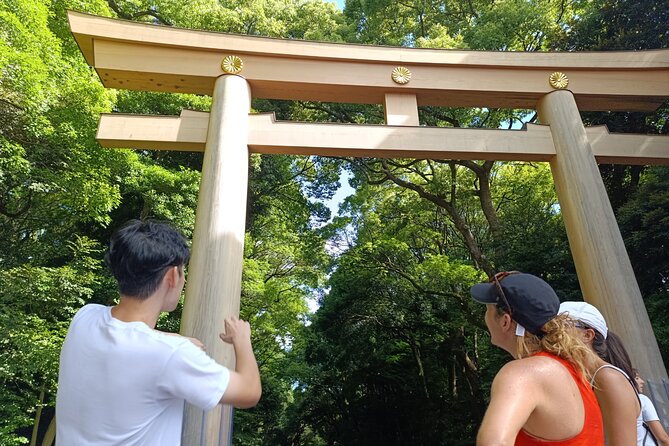
- The giant torii sets the tone: The main wooden gate is about 12 meters tall and 17.1 meters wide, making it an impressive first sight.
- You learn how Shinto rituals work: The guide explains customs such as bowing at the gate and ritually cleaning your hands before prayer.
- The shrine sits in a 70-hectare forest: The wooded approach gives you a calm break from Harajuku’s busy streets.
- The group is limited to 15 people: That is small enough for questions and personal attention without the cost of a private tour.
- The meeting point is easy to find: You start at Starbucks Coffee at WITH HARAJUKU in Jingumae, near public transportation.
- The price is low for guided context: Admission is included, and the $18 fee mainly buys interpretation you would likely miss on your own.
Why Meiji Jingu makes a good first shrine visit
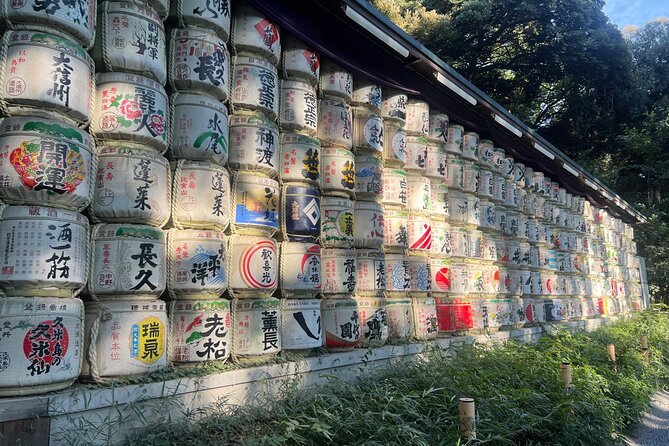
Meiji Jingu is one of Tokyo’s best places to begin learning about Shinto. It is dedicated to the deified spirits of Emperor Meiji and Empress Shoken, who are linked with Japan’s modernization. The shrine was established in 1920, so it is not an ancient monument in the same way as some famous religious sites elsewhere in Japan. Its importance comes from its connection to modern Japanese history, imperial memory, and living religious practice.
That combination gives the visit more depth than a quick photo stop. You are not just looking at a beautiful gate or wooded path. You are entering a working Shinto shrine where people come to pray, make offerings, and follow customs that are still part of daily and ceremonial life.
I find the setting especially effective. Harajuku is known for shops, fashion, and crowds, yet Meiji Jingu quickly shifts the mood. The forested grounds cover about 70 hectares, creating a long green approach between the city and the shrine buildings. A guide helps you notice that change and understand why the path and gates matter.
A few more Tokyo tours and experiences worth a look

Meeting near Harajuku and starting the walk
The tour begins at Starbucks Coffee at WITH HARAJUKU, 1-chome 14-30 Jingumae, Shibuya, Tokyo 150-0001. The meeting point is near public transportation and gives you an easy landmark in the Harajuku area.
Allow enough time to find the café and check your mobile ticket before the start. The activity ends back at the meeting point, so you are not left trying to figure out a new part of Tokyo after the walk. That is useful if you want to continue shopping in Harajuku, visit nearby streets, or simply return to your hotel by train.
The exact guide can vary. Names associated with this experience include Sara, Yumi, Haydn, Matt-san, and Benjamin. Their approach may differ slightly, but the central focus remains the same: Meiji Jingu, Shinto customs, and the history tied to Emperor Meiji and Empress Shoken.
The giant torii: a memorable entrance
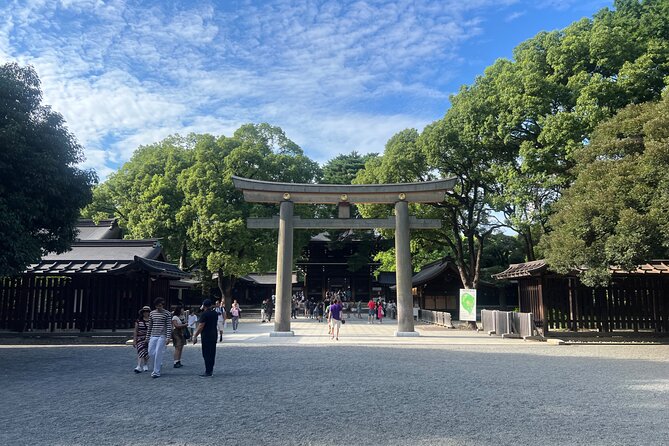
One of the first major sights is the large wooden myojin-style torii. It measures about 12 meters high and 17.1 meters wide, so it is not the sort of gate you simply pass without noticing. Its scale makes the entrance feel ceremonial before you reach the shrine itself.
This is also where the guide can explain the proper behavior at a Shinto shrine. The gate marks a boundary between ordinary city space and sacred ground. You may be shown how visitors bow before entering and again after leaving. These small actions are easy to miss when you walk alone, especially if you are trying to follow the crowd.
I appreciate this kind of explanation because it turns etiquette into something understandable rather than a list of rules. You learn that your behavior is part of acknowledging the place. The guide can also answer questions about what is appropriate for visitors who are curious about Shinto but do not practice it.
The torii is a strong photo opportunity, but do not let your camera become the whole point. Take a moment to look up at the wood, the proportions, and the shift in atmosphere beyond it.
Through the 70-hectare forest
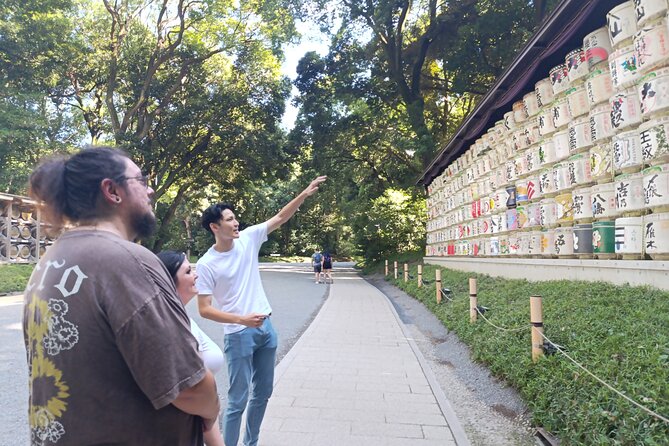
After entering, you follow a forested path toward Meiji Jingu. The grounds are artificial forest, planted to create the setting for the shrine, but that does not make the walk feel artificial. The trees give the approach a sense of separation from Tokyo’s traffic and commercial streets.
This part of the experience is less about a single sight and more about the transition. You have time to walk, listen, and ask questions. The guide can connect the setting to Shinto ideas about sacred space and the relationship between religious practice and nature.
The walk is a practical reason to wear comfortable shoes. The activity lasts about two hours, and the shrine portion is listed at roughly one hour, so the full experience includes movement, explanations, and time around the grounds. It is not a seated presentation.
You should also plan for the weather. A June visit in the rain was still described as enjoyable because the guide kept the experience engaging, but rain will make the walk less comfortable. Bring suitable clothing, since the activity is outdoors and no weather exception is promised.
Learning the rituals many people miss
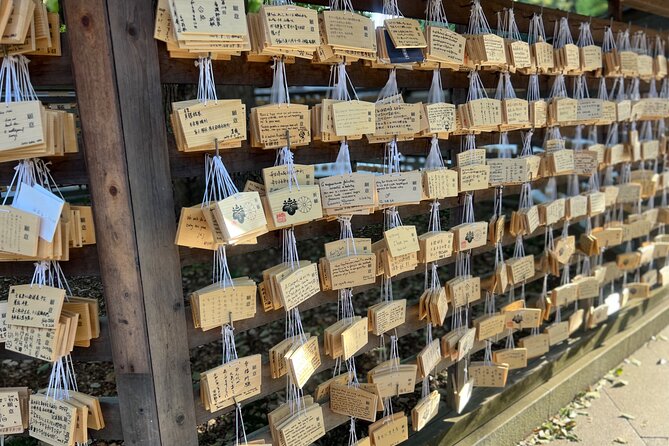
The most useful part of this tour is often the instruction around shrine customs. Your guide may explain bowing at the gate, the ritual cleansing process, and how to behave near the prayer area. These are simple actions, but they can seem confusing if you have never visited a Shinto shrine.
Ritual cleansing usually involves water at a purification fountain. Rather than rushing through or copying the nearest person, you can learn the purpose and sequence from the guide. The point is not to perform a ceremony perfectly for show. It is to approach the sacred area with care.
The guide can also explain how prayers and offerings fit into the visit. Since the tour focuses on Shinto culture, you get context for what you see rather than a string of dates and names. That makes the visit useful for families and first-time visitors who want a clear introduction.
Keep in mind that this is an educational walking tour, not a private religious consultation. The guide explains customs and symbolism, but the experience is designed for a mixed group of up to 15 people.
Other walking tours we've reviewed in Tokyo




Understanding Emperor Meiji and Empress Shoken
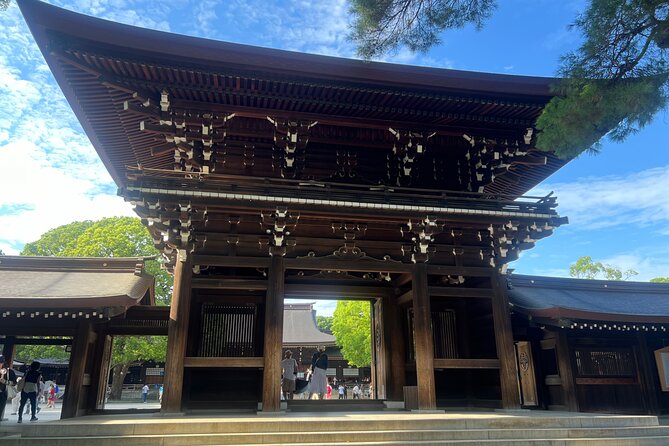
Meiji Jingu is connected to Emperor Meiji and Empress Shoken, so the historical side of the walk centers on their place in Japan’s modern transformation. Guides have explained the Meiji Restoration and Emperor Meiji’s achievements in a way that helps connect the shrine to Tokyo’s wider story.
You do not need a detailed background in Japanese history to follow along. The guide’s job is to make the setting understandable as you move through it. That is particularly helpful because the shrine’s meaning is not obvious from its architecture alone.
The tour can also help you separate Shinto from the broad idea of Japanese tradition. Shinto is not simply a collection of old customs. It is a living set of practices involving respect, purification, prayer, sacred places, and connections to revered spirits. Hearing those ideas explained at the shrine itself makes them easier to grasp.
This historical focus is also where guide quality matters most. Sara has been praised for being interactive, while Yumi has been described as accommodating and generous with useful Tokyo advice. Matt-san has been noted for clear explanations of the Meiji Restoration and the emperor’s achievements. These details suggest that the experience is strongest when you take an active role and ask questions.
What the small group changes
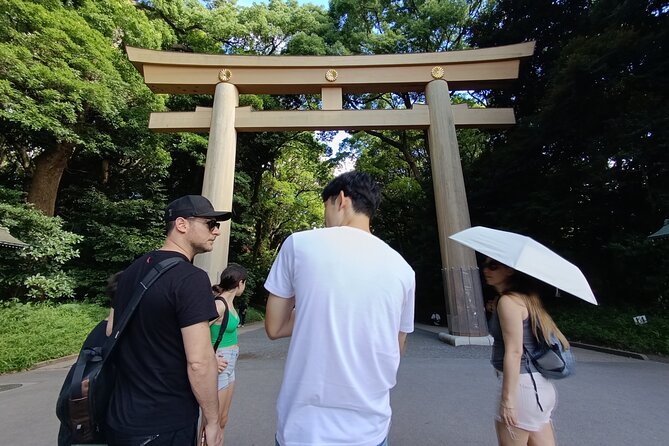
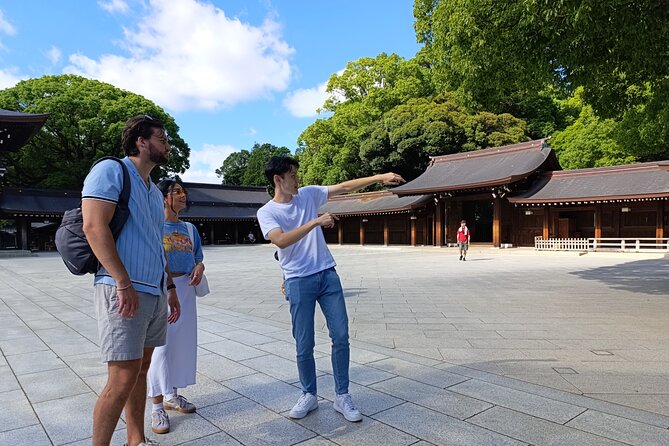
A maximum of 15 people is not the same as a private tour, but it is a sensible size for a busy shrine. You can generally hear the guide more easily than in a large crowd, and there is a better chance to ask about customs that puzzle you.
The group size also affects the social feel. You are walking with other people, so the experience is not completely solitary or self-directed. If you prefer to wander at your own speed and stop for photographs whenever you like, an unguided visit may suit you better.
For most visitors, though, the small group is a good compromise. You receive personal explanations without paying private-tour rates. At $18, that is the central value of the booking.
The guide may also offer practical Tokyo advice beyond the shrine. Yumi, for example, has been praised for sharing navigation tips. That can be useful early in a Tokyo stay, when Harajuku, Shibuya, and the city’s train system may still feel confusing.
Is $18 a fair price?
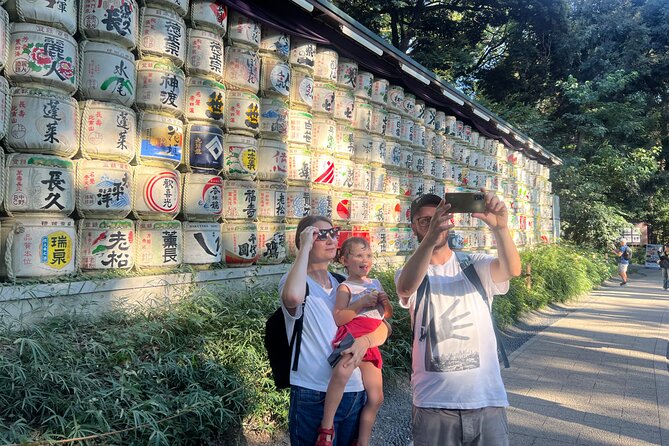
Yes, if you want cultural explanation rather than just entry to the grounds. The price is $18 per person, the guide is included, and admission to Meiji Jingu is included. Tips are not included, so you should budget separately if you choose to give one.
You are paying for about two hours of a guided walk, interpretation of rituals, historical background, and help understanding what you are seeing. The shrine itself is a place you can visit without this activity, so the value depends on your interest in context.
I would book it for a first visit to Tokyo, especially if you are unsure how to behave at a Shinto shrine. I would be less likely to book it if I had already taken several shrine tours or preferred a quiet, unstructured walk.
The fact that it has been booked more than 10 times in the past week suggests steady interest, but the more useful point is the 5 out of 5 rating from 225 reviews and a 100 percent recommendation figure. Those numbers do not guarantee that every guide or group will feel identical, but they support the idea that the format is working well for its intended purpose.
Who will get the most from this walk?
This is a good match for first-time visitors who want to understand Japanese spirituality without committing to a full-day cultural program. Families can also benefit because the guide can explain unfamiliar customs in plain language and keep the visit interactive.
It suits you particularly well if you:
- Want a clear introduction to Shinto customs
- Prefer a guide to explain etiquette and symbolism
- Enjoy walking through historic and religious sites
- Are staying near Harajuku or planning to visit the area
- Have about two hours available
- Like asking questions in a small group
It may be less suitable if you have limited mobility, since the activity involves walking through shrine grounds and the provided information does not describe specific accessibility arrangements. Most people can participate, but you should contact the provider if you have a particular access need.
Small practical details that matter
You receive confirmation when you book, and the ticket is mobile, so you do not need to collect a paper voucher. Check the meeting address carefully because the start is at Starbucks Coffee in WITH HARAJUKU, not directly at the shrine gate.
The tour returns to the meeting point. That makes planning simple, but it also means you should allow time to continue on foot or use public transportation afterward.
Free cancellation is available if you cancel at least 24 hours before the experience’s local start time. A cancellation made less than 24 hours ahead is not refunded, and changes inside that window are not accepted.
Tips are excluded. The tour lasts approximately two hours, and the group can include up to 15 people. Most people can participate, but the supplied details do not promise a private group, hotel pickup, or special access beyond the included shrine visit.
Should you book the Meiji Shrine walking tour?
Book this tour if you want Meiji Jingu to mean more than a beautiful forest, a huge gate, and a quick photograph. The guide-led explanation of bowing, purification, prayer, and the shrine’s connection to Emperor Meiji gives the visit a clear purpose.
At $18, it is a sensible choice for first-time shrine visitors, families, and anyone interested in Japanese culture. Choose it with realistic expectations: you will walk outdoors, share the experience with as many as 14 other people, and follow a roughly two-hour route rather than explore every part of the grounds at your own pace.
If you happen to be guided by Sara, Yumi, Haydn, Matt-san, or Benjamin, you can expect the kind of personal explanation that makes this format worthwhile. The most important question is simple: do you want help understanding what you are seeing? If yes, this is an easy tour to recommend.
FAQ
How long does the Meiji Shrine walking tour last?
The activity lasts approximately two hours. The Meiji Jingu Shrine portion is listed as about one hour, with the full experience including the walk and cultural explanations.
How much does the tour cost?
The price is $18 per person.
Is admission to Meiji Jingu Shrine included?
Yes, admission to the shrine is included.
Where does the tour begin?
The meeting point is Starbucks Coffee at WITH HARAJUKU, 1-chome 14-30 Jingumae, Shibuya, Tokyo 150-0001.
Where does the tour end?
The activity ends back at the meeting point.
How large is the group?
The tour has a maximum of 15 travelers.
What does the guide explain?
The guide covers Meiji Jingu’s highlights, Shinto culture, shrine rituals, historical background, and customs that can be easy to miss when visiting alone.
Are tips included?
No. Tips are not included in the tour price.
Is a mobile ticket available?
Yes. The experience includes a mobile ticket.
Can I cancel for a full refund?
Yes, if you cancel at least 24 hours before the experience’s start time. Cancellations made less than 24 hours in advance are not refunded, and changes during that period are not accepted.
More Walking Tours in Tokyo
More Temples & Meditation in Tokyo


More tours in Tokyo we've reviewed











Temples & Meditation, compared.
 ★ 4.7Tokyo: Meiji Shrine, Asakusa, Skytree Bus Tour and CruiseFrom $12210 hours
 ★ 4.8Tokyo: Asakusa Walking Tour with Sensoji Temple VisitFrom $222 hours
 ★ 4.6Nikko: Kegon Falls, Lake Chuzenji & Toshogu TempleFrom $8911 hours
 ★ 4.5Tokyo: Kamakura & Enoshima Day Trip including Temple TicketsFrom $589 hours - 570 minutes
 ★ 4.5Tokyo: Nikko Toshogu Shrine and Kegon Waterfall TourFrom $8410h 30m
 ★ 4.5Tokyo Panoramic 1 Day: Meiji Shrine, Asakusa, Odaiba and SKYTREE®From $85