
Reviewed · TEMPLES & MEDITATION
Tokyo: Meiji Jingu Shrine and Shinto Culture Walking Tour
Meiji Shrine gives you one of Tokyo’s best chances to slow down. Behind Harajuku’s shops, a broad path enters a forest of about 100,000 trees, leading to a shrine where Shinto customs still shape the visit. I like the clear explanations of washing, bowing, praying, ema, and the line between Shinto and Buddhism. I also like the small groups, which make it easy to ask questions. The one drawback is that two hours goes quickly, especially if you want photos, stamps, or extra quiet time in the grounds.
I especially like that guides such as Maya, Yota, Ryota, Andres, Minori, and Haydn have been praised for friendly English, cultural explanations, and local suggestions. The tour can also be a smart first activity in Tokyo because guides explain shrine etiquette and may help you feel more at ease using the city. Just remember that this is a walking tour, not a long, leisurely garden visit.
In This Review
- Key points at a glance
- Why Meiji Shrine feels far from Tokyo
- The Imperial Garden begins the cultural lesson
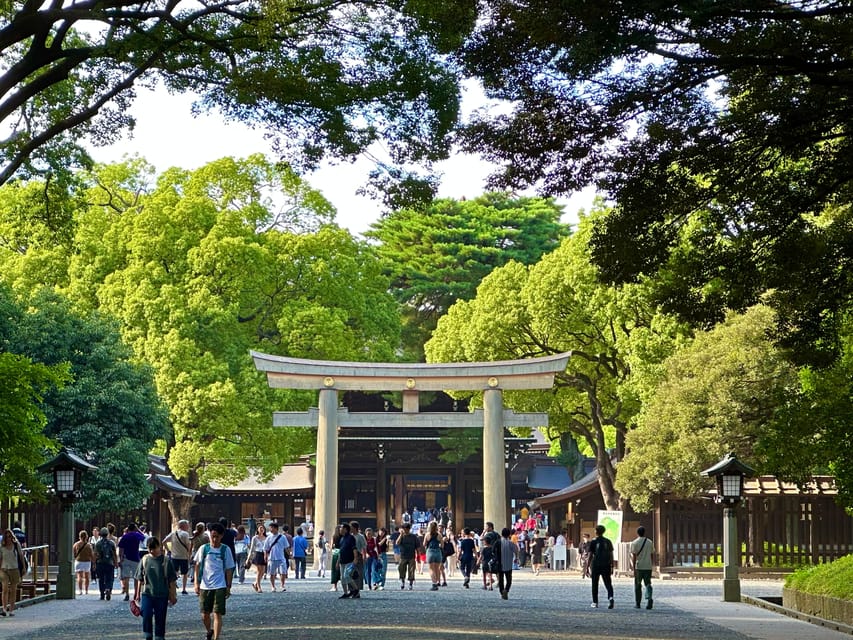
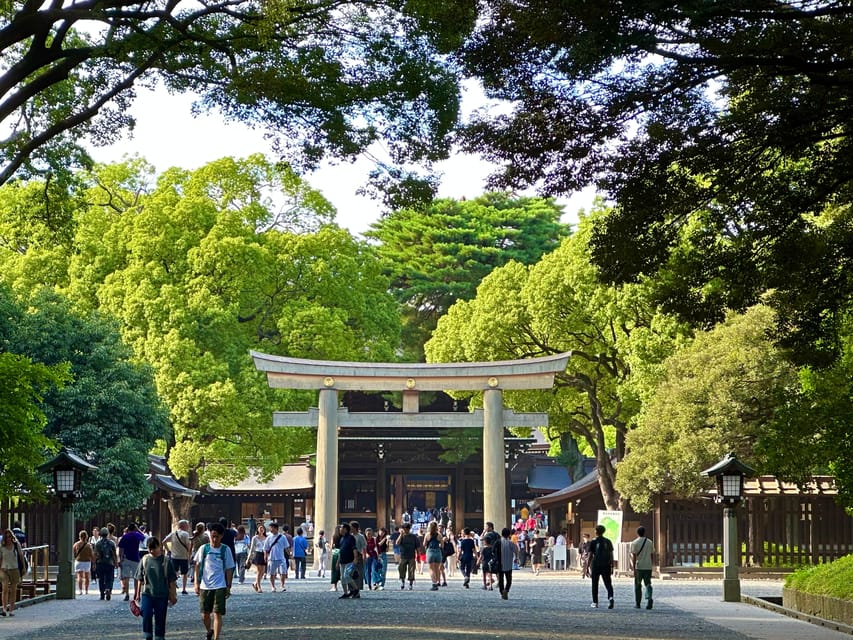
- Passing beneath the Big Torii
- Sake barrels and wine barrels tell a wider story
- Meiji Shrine is the main hour
- Small groups keep the walk personal
- What the guides add beyond the shrine
- Is two hours enough?
- The $19 price and what it covers
- Best time and best type of visitor
- Who should book this Meiji Shrine walk?
- FAQ
- How long is the Meiji Shrine walking tour?
- Where does the tour meet?
- What language is the tour offered in?
- Is admission to Meiji Shrine included?
- How large is the tour group?
- Is the tour wheelchair accessible?
- Can I cancel the booking for a refund?
Key points at a glance
- A forest escape beside Harajuku: Walk beneath roughly 100,000 trees just minutes from one of Tokyo’s busiest shopping districts.
- Shinto customs made practical: Learn how to purify yourself, pray, bow, and understand common shrine features.
- Small groups matter: Groups can reach 12 people, but some departures have only a few participants or even one person.
- A useful first-day tour: Guides explain Tokyo customs and offer restaurant and sightseeing suggestions.
- More than the main shrine hall: The route includes the Imperial Garden, giant torii, sake barrels, wine barrels, and the shrine grounds.
- Good value at $19: Admission, an English-speaking guide, historical context, and tour photos are included.
Why Meiji Shrine feels far from Tokyo
The meeting point is outside the Starbucks closest to Meiji Shrine, at coordinates 35.6705208, 139.7031067. That detail matters because there are several Starbucks in the Harajuku area, and using the exact location or map pin will save you a needless search.
From there, the mood changes fast. Harajuku is known for fashion, food, and crowds, but Meiji Shrine’s approach is shaded and quiet by comparison. The forest was planted as part of the shrine grounds, and the long walk gives your guide time to explain why nature matters so much in Shinto practice.
I like this slow change of pace. You do not simply arrive at a building, take a photo, and leave. The path prepares you for the shrine. Your guide can point out details you might otherwise pass without noticing, then connect those details to Japanese ideas about purity, respect, nature, and worship.
The walk is still in central Tokyo, so do not expect total silence at every moment. The shrine is one of the city’s best-known sights. Still, the wooded approach gives the experience a calmer shape than a quick stop between Harajuku shops and Shibuya.
A few more Tokyo tours and experiences worth a look

The Imperial Garden begins the cultural lesson
The first listed stop is Meiji Jingu Gyoen, described as a 30-minute guided visit and photo stop. The tour includes admission to the Meiji Shrine Imperial Garden, so you are not paying an extra entrance fee for this part.
This opening section is useful because it gives you time to settle into the setting before reaching the main shrine. Ask questions here. Guides have been praised for adjusting the pace, answering many questions, and making the experience personal even when the group is small.
You might find this stop especially helpful if you are new to Japanese religious sites. The guide can establish basic ideas before you face the formal shrine rituals. Visitors with more experience can use the time to ask about the Meiji period, the shrine’s founding, or how Shinto differs from Buddhism.
The supplied schedule calls this a photo stop, but do not treat it as only a picture opportunity. The value is in the explanation. A garden can look beautiful without telling you why it matters. A guide gives the scenery a cultural frame.
Passing beneath the Big Torii
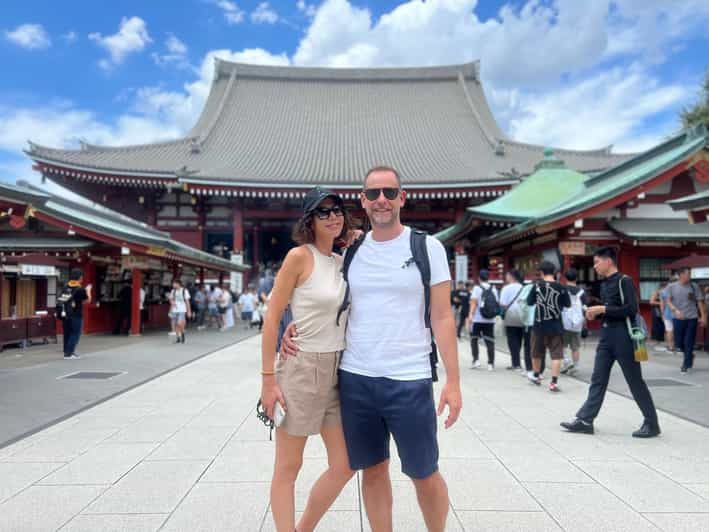
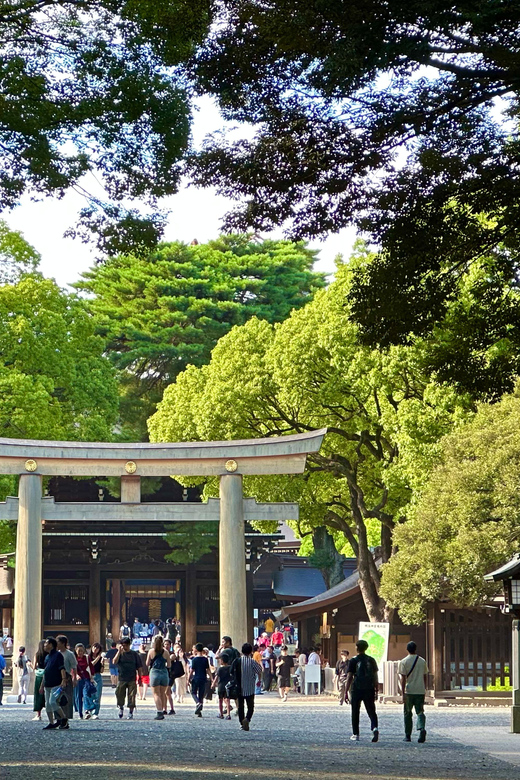
The Big Torii receives about 10 minutes of guided attention. It is one of those places where scale does the first bit of teaching. The gate marks a change from ordinary city space to sacred ground, and your guide explains how to approach it respectfully.
This is also a good point to learn the small habits that make shrine visits less awkward. You may be shown how to bow before entering and how to keep to an appropriate part of the path. These customs are easy once someone explains them, but confusing when you are seeing them for the first time.
The stop is brief, so the guide will not spend half an hour on the gate alone. That is sensible. The torii is an important threshold, but the larger lesson comes from how the whole route works together.
If you want a clear photograph, you will have to balance the group’s pace with your own. The tour includes photos taken during the walk, which is useful if you would rather listen than manage your phone at every stop.
Sake barrels and wine barrels tell a wider story
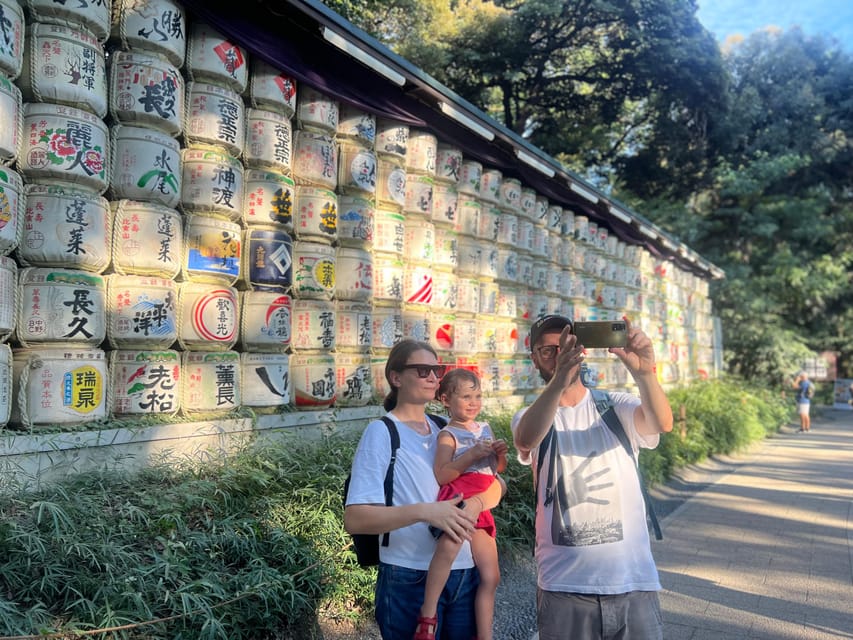
The consecrated sake barrels receive another 10 minutes. Their neat rows are among the most recognizable sights along the approach, and they offer a simple way to understand the relationship between religious institutions, local producers, and offerings.
Your guide explains what the barrels represent rather than leaving you with a decorative photo. This is one of the tour’s practical strengths. You learn to read a feature that may otherwise look like a colorful wall of labels.
The consecrated wine barrels follow, with another 10-minute explanation. Seeing wine alongside sake helps show that the shrine’s visual details are connected to modern Japanese life as well as older customs. The pair of stops also adds variety to the walk.
I would not book this tour only for the barrels. They are short stops within a larger experience. Their real value comes from the context, especially if you are curious about offerings, ceremony, and the way Meiji Shrine connects tradition with the modern era.
Meiji Shrine is the main hour
The final major stop is Meiji Shrine itself, with about one hour for guided sightseeing. This is where the earlier lessons come together. You have crossed the torii, walked through the forest, and seen offerings. Now you can approach the shrine with a better sense of what to do.
A guide demonstrates or explains the basic Shinto ritual. That can include purification before prayer, the proper way to bow, and how to make a respectful offering. The exact pace depends on the group and the guide, but the goal is not to turn worship into a performance. It is to help you participate without feeling lost.
You can also learn about ema, the wooden plaques used for written wishes, and goshuin, the stamps or calligraphy collected at religious sites. One family specifically enjoyed writing on an ema and having books stamped, which shows how the visit can work for children as well as adults.
The hour also allows time for questions about Meiji Shrine’s origins, the Meiji period, Shinto practice, and the relationship between Shinto and Buddhism. Guides including Minori, Hoshi, Haydn, Yota, and Ryota have been praised for making these subjects easy to follow and for going beyond basic facts when visitors wanted more detail.
This part is where the tour earns its price. Without a guide, you can admire the architecture and forest. With one, you can understand why you are bowing, what the offerings mean, and how the shrine fits into Japan’s wider religious life.
Other walking tours we've reviewed in Tokyo



Small groups keep the walk personal
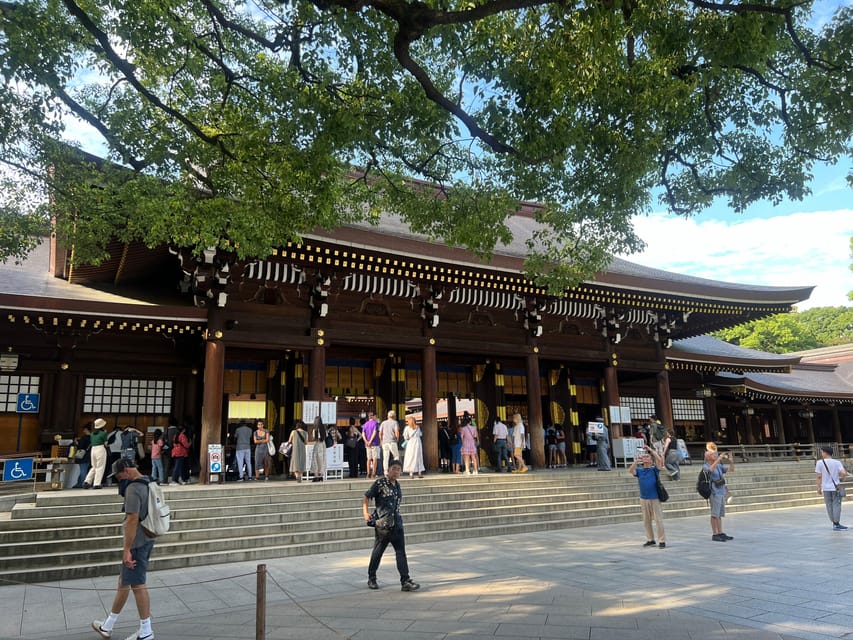
The usual group can be as large as 12 people, but the actual size may be much smaller. Several departures have had only two to four participants, and one person reported having the entire tour to himself when the other booking did not arrive.
That flexibility changes the experience. In a group of four, you can ask about a custom without holding up a crowd. A solo participant may get a more tailored route and extra photo help. Guides have also been praised for keeping children engaged and for adapting to requests along the way.
You should not assume every departure will be private. The stated maximum is 12, and the tour’s appeal is partly that it remains manageable even at that size. If you are hoping for a private walk, book with that possibility in mind, but do not count on it.
The small-group format is particularly useful for first-time visitors. You can ask basic questions about shrine behavior, Japanese culture, or nearby food without worrying that you are taking over a large group.
What the guides add beyond the shrine
The guide quality is the strongest part of this experience. Names attached to especially positive feedback include Maya, Minori, Nicholas, Hoshi, Naruto, Matt, Sara, Andres, Yota, Ryota, Haydn, and Maria.
The common thread is not a scripted lecture. It is conversation. Guides have been praised for clear English, warmth, patience, photo help, and the ability to answer a long list of questions. Andres, in particular, was praised for helping first-time visitors understand shrine etiquette and Tokyo customs. Yota was praised for adjusting a small tour to individual interests, recommending food, and helping with photos.
That does not mean every guide will have the same style. Some may focus more on history, while others may spend more time on ritual, culture, or local suggestions. This is a live English-language tour, so expect a human conversation rather than an audio guide with a fixed pace.
The food tips can be useful, but they are an extra benefit, not part of the advertised route. Several guides have offered suggestions for restaurants and places to visit around Tokyo. You should not expect a meal to be included in this two-hour activity.
Is two hours enough?
Two hours is enough for an introduction, not a full study of Meiji Shrine. The schedule gives about 30 minutes to the Imperial Garden, 10 minutes each to the Big Torii, sake barrels, and wine barrels, and about an hour to the shrine. The group then returns to the Starbucks meeting point.
I like this length for a busy Tokyo itinerary. You can learn the basics without giving up an entire morning or afternoon. It also fits neatly before shopping in Harajuku, exploring Omotesando, or continuing toward Shibuya.
The tradeoff is time. You may want to linger in the forest, write an ema, buy a stamp, take photos, or sit quietly near the shrine. The guide will help you see the main features, but you may want to return on your own if the setting speaks to you.
The tour starts and finishes at the same Starbucks. That makes planning simple, though the return point is not necessarily the most convenient place for your next stop. Check your map before booking if you have a tight reservation afterward.
The $19 price and what it covers
At $19 per person, this is an inexpensive guided introduction to one of Tokyo’s major cultural sites. The price includes a professional English-speaking guide, photos taken during the tour, historical information about the districts, and admission to Meiji Shrine and its Imperial Garden.
The key value is interpretation. Meiji Shrine itself can be visited without a tour, but the guide explains customs that are easy to miss. You are paying for the ability to ask questions, understand the ritual, and connect separate sights into one story.
I would call it good value for a first visit, especially early in your trip. The experience can give you a basic cultural vocabulary for later shrine visits around Japan. It may be less useful for someone who already knows Shinto practice well and prefers to explore at a completely independent pace.
There is also useful booking flexibility. You can cancel up to 24 hours before the activity for a full refund, and the reserve-now, pay-later option lets you hold a place without paying at once. The tour is wheelchair accessible, though the route remains a walking experience, so you should confirm that the route suits your particular needs before booking.
Best time and best type of visitor
The tour works well for first-time visitors to Tokyo, families, couples, solo visitors, and anyone who wants cultural context rather than a quick photo stop. It is also a good fit if you enjoy asking questions and learning through conversation.
Families may appreciate the concrete activities, such as ema and shrine stamps. Children may also respond well to the forest, large torii, colorful barrels, and a guide who can explain customs in simple terms.
Several people have recommended taking the tour near the start of a Tokyo trip. I agree. The shrine etiquette, local suggestions, and city tips can help you feel more comfortable during the rest of your stay.
The time of day matters, though the available starting times vary. One guide recommended visiting shrines early in the morning for more peace and stillness. If an early departure is available, it may give you a quieter atmosphere. If not, the guide still helps you make sense of the visit despite the city’s steady flow of people.
Wear comfortable shoes and allow room in your schedule for walking. Rain does not automatically ruin the experience. One group enjoyed the tour during heavy rain, but wet weather will make the forest paths and photo stops less comfortable.
Who should book this Meiji Shrine walk?
Book it if you want to understand what you are seeing, not just photograph it. The tour is especially useful if you are uncertain about shrine etiquette, curious about Shinto and Buddhism, or visiting Japan for the first time.
I would also recommend it to repeat visitors who have seen Meiji Shrine before but never had the cultural background explained. The route includes familiar sights, yet the guide can add meaning to the torii, offerings, forest, and prayer ritual.
Skip it if you want a silent walk with no fixed pace, or if you already have a private guide covering Meiji Shrine in depth. Two hours leaves limited time for lingering, and the group schedule will shape your visit.
For most visitors, though, $19 is a fair price for a friendly, focused introduction. You get the beauty of Meiji Shrine, practical Shinto guidance, a manageable route, and a chance to ask the questions that signs rarely answer. I would book this early in a Tokyo stay, then return later if you want a slower, more personal visit.
FAQ
How long is the Meiji Shrine walking tour?
The tour lasts two hours, including the walk through the grounds and the return to the Starbucks meeting point.
Where does the tour meet?
You meet in front of the Starbucks closest to Meiji Shrine. The listed coordinates are 35.6705208, 139.7031067.
What language is the tour offered in?
The tour is conducted in English by a live English-speaking guide.
Is admission to Meiji Shrine included?
Yes. Admission to Meiji Shrine and the Meiji Shrine Imperial Garden is included in the price.
How large is the tour group?
The group can be as large as 12 people. Some departures may be much smaller, and private-feeling tours can occur when only one or a few people book.
Is the tour wheelchair accessible?
Yes, the activity is listed as wheelchair accessible.
Can I cancel the booking for a refund?
Yes. You can cancel up to 24 hours in advance for a full refund. You can also reserve now and pay later.
More Walking Tours in Tokyo
More Temples & Meditation in Tokyo
More tours in Tokyo we've reviewed








Temples & Meditation, compared.
 ★ 4.7Tokyo: Meiji Shrine, Asakusa, Skytree Bus Tour and CruiseFrom $12210 hours
 ★ 4.8Tokyo: Asakusa Walking Tour with Sensoji Temple VisitFrom $222 hours
 ★ 4.6Nikko: Kegon Falls, Lake Chuzenji & Toshogu TempleFrom $8911 hours
 ★ 4.5Tokyo: Kamakura & Enoshima Day Trip including Temple TicketsFrom $589 hours - 570 minutes
 ★ 4.5Tokyo: Nikko Toshogu Shrine and Kegon Waterfall TourFrom $8410h 30m
 ★ 4.5Tokyo Panoramic 1 Day: Meiji Shrine, Asakusa, Odaiba and SKYTREE®From $85