
Reviewed · WORKSHOPS
Tokyo: Manga Drawing Workshop Guided by Pro Manga Artist
Creating manga by hand takes more than drawing a big-eyed character. In this Shibuya workshop, you follow the working method used by professional artists: choose an idea, sketch it, ink it, add solid blacks, apply screen tones, and finish with speech bubbles. No drawing skill is required, and the artist guides you through each stage.
I like the close contact with a working manga artist and the chance to ask about technique, tools, and the manga business. I also like the finished keepsake, since you leave with something you made rather than another bought souvenir. The main consideration is that the experience may feel more like guided construction than a free-form art class, especially if you hope to create a completely original page without tracing or close help.
In This Review
- Key points to know before booking
- What the 150-minute manga class is really like
- Choosing your character, image, or story idea
- Rough sketches: where the artist gives you a safety net
- Inking and traditional manga tools
- Solid blacks, screen tones, and speech bubbles
- How much help will you receive?
- The keepsake at the end
- Is $129 a fair price?
- Who should book this workshop?
- Final verdict: book it for the process and the personal souvenir
- FAQ
- How long does the manga drawing workshop last?
- How much does the experience cost?
- Do I need drawing experience?
- What languages are available?
- What is included in the price?
- Where does the workshop meet?
- Can I cancel the booking?
Key points to know before booking
- A professional artist leads the class: Instructors have included Shige Mathumori, Rokkaku-sensei, Kousei-sensei, and other experienced manga artists with more than 20 years in the field.
- You learn the full traditional process: Sketching, drafting, inking, black areas, screen tones, and speech bubbles all fit into the 150-minute session.
- The group is limited to eight people: That keeps the class personal and gives you a chance to ask for help.
- An interpreter is included: English and Japanese are supported, with interpreters such as Machi, Madoka, Ai, and Hanae appearing in different sessions.
- You can use a supplied prompt or your own idea: Some participants work from a sample image, while others bring a character, pose, pet, or personal concept.
- The workshop meets in central Shibuya: Find the black, narrow Shibuya 3-chome TR Building and go to the sixth floor.
What the 150-minute manga class is really like
The class takes place at 6F, Shibuya 3-chome TR Building, 3-8-11 Shibuya, Shibuya-ku, Tokyo. The building is black and relatively thin, a useful detail because the meeting point can be easy to miss among Shibuya’s signs and side streets.
I would arrive early. One family had trouble finding the studio during a political rally near Shibuya Crossing, and the staff helped locate them. That sort of street confusion is not part of the class, but it is a good reason not to cut your arrival time close.
Once inside, you meet the manga artist and interpreter. The teaching artist can vary by date. Past sessions have featured artists called Shige Mathumori, Rokkaku, Kousei, Kamaya Katsuki, and Hiroshi, among others. The interpreter also varies, with Machi, Madoka, Ai, and Hanae among the names associated with sessions.
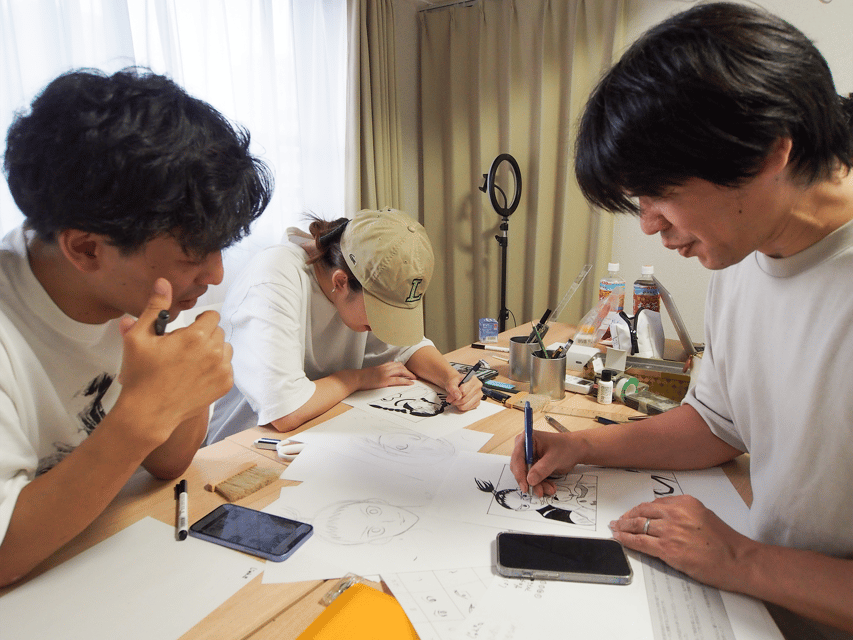
The small group size matters here. With a limit of eight, the instructor can look at your page, correct a line, suggest a pose, or show you how to handle a tricky area. Some sessions have had only two people or even one participant, while others have included families and mixed-age groups.
The atmosphere is informal, but the method is serious. You are not simply handed a pencil and told to draw an anime face. You work through the same broad sequence used in traditional manga production, adapted to fit a short class.
Other guided tours in Tokyo


Choosing your character, image, or story idea
The first creative decision is what to put on the page. You may select from a set of examples or use your own image. Past participants have worked with favorite characters, original characters, pets, personal photos, and unusual choices such as a virtual streamer design.
You can also suggest a pose or combine ideas. One participant chose two dogs, and the artist quickly sketched them in manga form. Another asked to turn a photograph into a manga-style panel. This makes the class more personal than simply copying a standard face from a worksheet.
There is one practical limit: complicated designs take longer. A character with elaborate clothing, accessories, or hair may be harder to adapt within the class period. If you bring an idea, a clear image with a readable pose will give you a better starting point than a highly detailed scene.
For beginners, the selection stage removes much of the fear of the blank page. The artist can help shape a workable idea. For experienced artists, this is the point where you should explain that you want more freedom, rather than expecting the instructor to know your preferred level of help.
Rough sketches: where the artist gives you a safety net
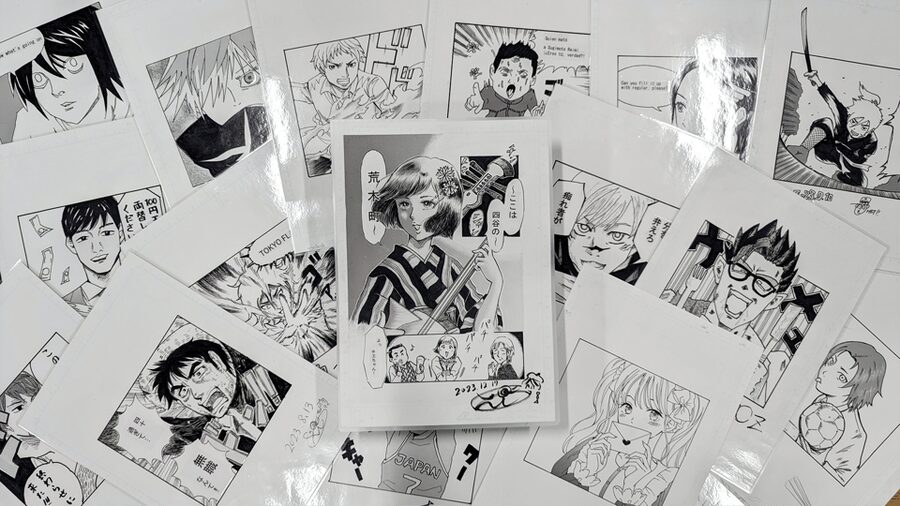
The artist begins with a rough outline or sample sketch. This is one of the strongest parts of the class for people who do not draw often. You get a framework for the face, body, pose, and major features before you commit to ink.
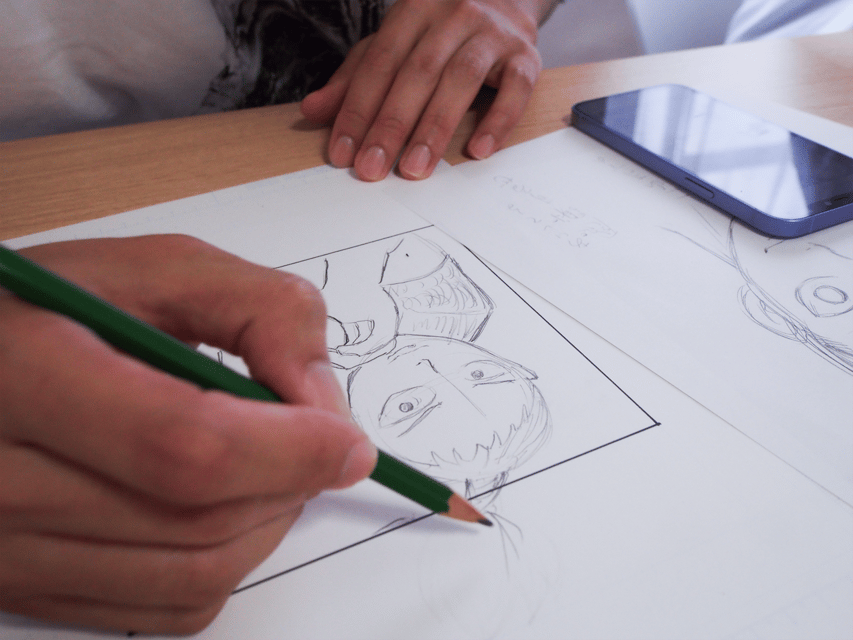
You then work over the sketch with a pencil and can amend parts of it. The instructor checks proportions and helps bring your idea closer to the intended manga style. If you are nervous, this stage lets you make mistakes without ruining the finished panel.
The teaching is not only about copying lines. You can ask about how the artist builds a face, places a character in a panel, or creates an expressive pose. The interpreter keeps those exchanges moving in English and Japanese, which is useful when discussing art terms that may not translate neatly.
That said, you should set the right expectation. One participant who booked the class for two skilled artists felt the session gave less room for fully original work than expected. The artist created much of the base image, and the participants then traced, refined, or decorated it. Other participants felt they created their own piece with guidance.
The difference may come down to your skill level, chosen subject, and how much help you request. If your priority is a polished result, accept the artist’s framework. If your priority is independent practice, say so at the beginning.
Inking and traditional manga tools
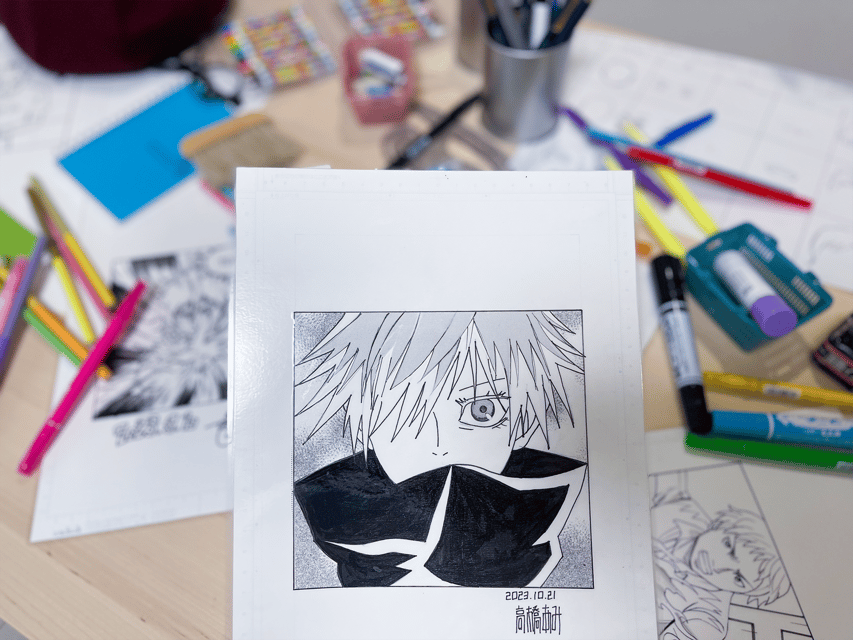
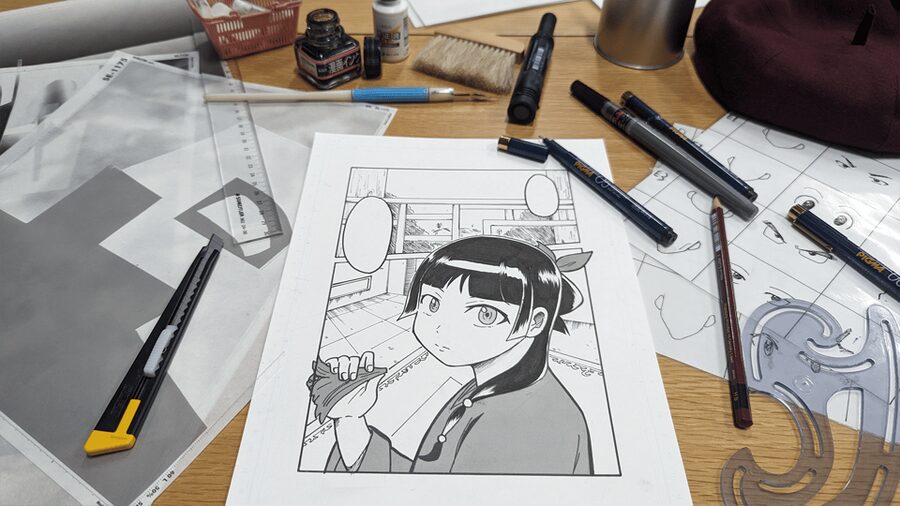
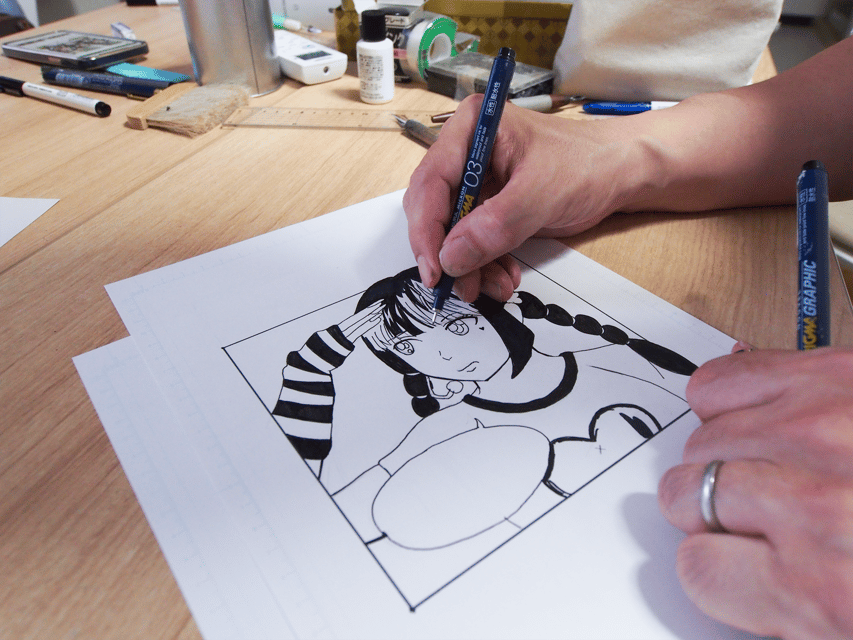
After the pencil work, you move into inking. This is where the page begins to look like finished manga. You trace or refine the lines with ink, learning how a confident dark line changes the feel of the drawing.
For many people, the tools are part of the appeal. The experience supplies the paper, pencils, inks, and other materials, so you do not need to pack art equipment. Participants have specifically enjoyed learning how much the proper tools affect the final result.
The instructor can demonstrate how to handle lines, fill background areas, and keep the panel clean. You also erase the remaining pencil marks before moving on. This order is important: the pencil gives you room to adjust, while the ink creates the lasting structure.
I like this stage because it connects the finished page to the craft behind printed manga. You begin to see why professional pages have such clear blacks and controlled lines. Even a simple image can gain a stronger mood through line weight and contrast.
The class is not a full professional training course. In 150 minutes, you will learn the basic workflow rather than master every tool. Still, you get enough contact with the process to understand why manga art is more than a digital filter placed over a drawing.
Solid blacks, screen tones, and speech bubbles
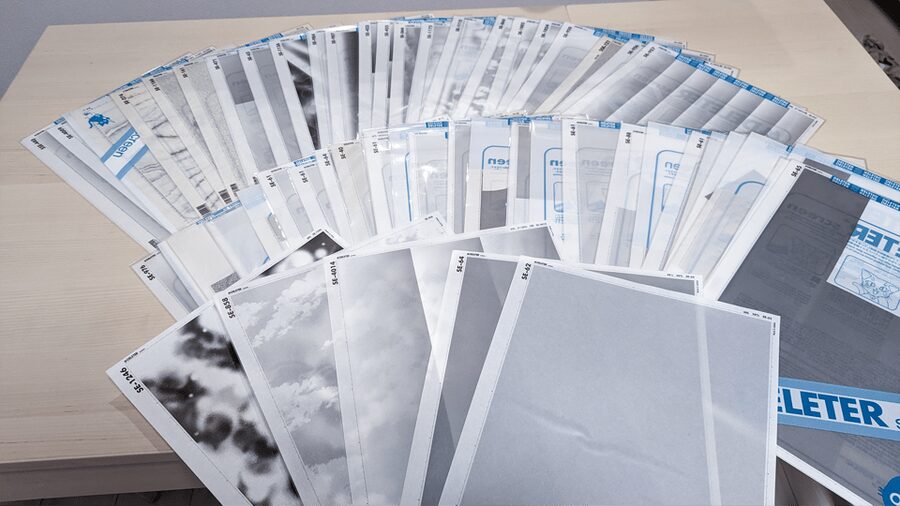
The next steps add the effects that make a manga panel read as manga. You fill selected areas with solid black, creating depth and contrast. The artist can show you how to avoid muddy edges and how dark areas direct attention around the page.
Then come screen tones. These are sheets or pieces of patterned material used to create gray areas, shadows, texture, and visual emphasis. You apply the tone with a cutter, following the shape of the area you want to shade. It is a hands-on process that feels very different from choosing a gray brush in a digital art program.
Several participants found screen tones especially interesting. One digital artist enjoyed returning to traditional materials and later went looking for art supplies in Tokyo. If you normally draw on a tablet, this part alone may justify the class.
You finish by adding speech bubbles or other comic-style effects. Stickers or prepared elements may be available to help create a finished panel, depending on the session. The result is designed to look complete and presentable, even if this is your first attempt.
This is also where the instructor’s experience shows most clearly. A beginner may produce a clean page because the artist knows which details to simplify and which effects will have the most impact. You are not expected to create every element from scratch at professional speed.
A few more Tokyo tours and experiences worth a look




How much help will you receive?
The teaching style is patient and encouraging. Children around age 10 and 11 have taken part successfully, and adults with little confidence have produced artwork they were proud to display. Families, couples, solo participants, and mixed-level groups can all fit the format.
You should not feel embarrassed if you cannot draw a convincing circle. The artist can guide your hand through the steps and adjust the plan to your ability. An interpreter can also explain questions and instructions, which makes the process easier than relying on gestures or translation software.
The workshop can work well for a mixed pair. One person may be a serious artist while the other is a complete beginner. Both can learn, but they may receive different kinds of help. The beginner benefits from a clear structure, while the experienced artist may want to request more independent time.
The interpreter is part of the value, not just a language convenience. Past interpreters have answered questions about the artists’ careers, inspirations, tools, and the manga industry. Their personality also helps keep the class relaxed when the drawing feels intimidating.
The class is listed as English and Japanese, with a live guide and interpreter included. A few points may still require extra clarification, but the language support is built into the session.
The keepsake at the end
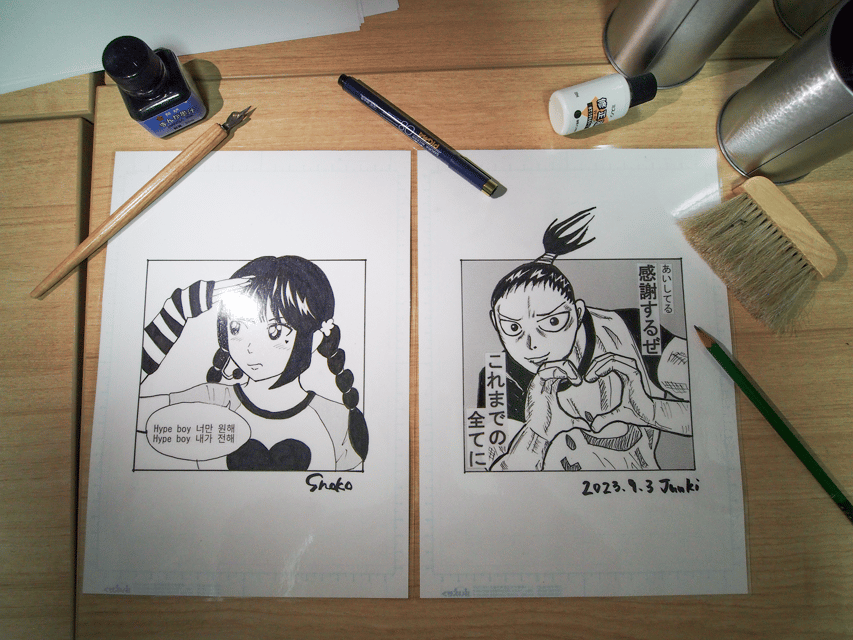
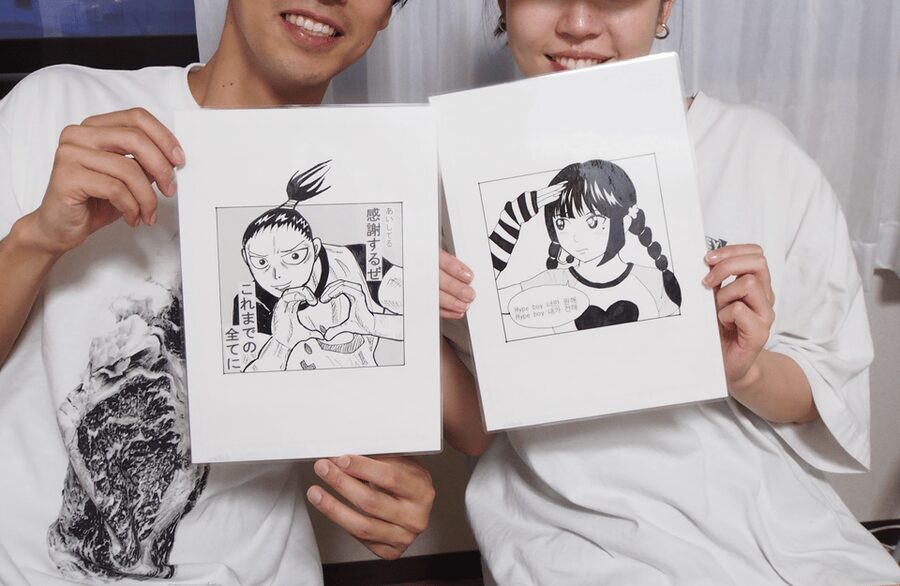
The best souvenir here is the one you cannot buy in a shop. You take home your own manga panel, often signed and laminated according to the session details described by participants. It is light, flat, and easy to pack in a suitcase.
That final result matters because the class has a clear payoff. You are not only watching a professional sketch. You are leaving with a physical reminder of the time spent learning the process.
The quality of the finished image depends partly on how much the instructor helps. If the artist supplies a strong rough drawing, your final panel may look far more polished than your normal drawing would. Some people will see that as welcome guidance. Others may feel the final piece is partly the artist’s work.
I would think of it as a collaboration rather than a test of pure drawing ability. You make decisions, refine lines, add ink, apply tones, and finish the page, while the professional artist supplies structure and correction. That is a fair way to approach the activity, especially if your goal is a good keepsake.
Is $129 a fair price?
At $129 per person, this is not a cheap drop-in craft activity. The price makes more sense when you count the professional instruction, interpreter, materials, small group setting, and the finished artwork you carry home.
You are paying for access to a specialized part of Japanese popular culture, not just for paper and pencils. The artist’s experience is the key element. A self-guided drawing session would cost much less, but it would not give you the same feedback or insight into traditional manga production.
Value depends on your expectations. Manga and anime fans are likely to get the most from the chance to discuss the art form with a working professional and create a page using traditional methods. If you have no interest in manga, the activity can still be fun, but the price may feel high for a drawing class.
The small group limit improves the value. Eight people is still enough for a social class, but it is far more personal than a large demonstration. If your date happens to have only a few bookings, you may receive unusually direct attention.
The reserve-now, pay-later option also helps if your Tokyo schedule is still changing. You can hold a place without paying immediately, and cancellation is free up to 24 hours before the activity for a full refund.
Who should book this workshop?
I would recommend it most strongly to:
- Anime and manga fans who want a hands-on connection to the art form
- Families with children who enjoy drawing or Japanese pop culture
- Couples looking for a personal souvenir from Tokyo
- Solo artists who want to try traditional tools and screen tones
- Beginners who want a guided path from blank paper to finished page
- Digital artists curious about manual manga techniques
It is also a good choice for people who want a quieter creative break from sightseeing. You spend two and a half hours focused on one page, rather than rushing from one Tokyo sight to the next.
I would be more cautious if you are an experienced artist seeking a completely open studio session. The artist may provide a rough base and expect you to trace or refine it. Ask for more independent work at the start if that is important to you.
The class is wheelchair accessible, and no materials are required. Food and drinks are not included, and there is no pickup, so plan your route to Shibuya separately.
Final verdict: book it for the process and the personal souvenir
Book this workshop if you want to understand how manga is built by hand and take home a page with your own choices in it. The strongest features are the patient professional artists, helpful interpreters, small groups, and the chance to try screen tones and inking rather than simply watch a demonstration.
Go in expecting a guided collaboration, not a free studio where you independently produce a complete comic from scratch. That distinction is important. With the right expectation, the $129 price buys a memorable piece of Tokyo culture, a practical introduction to traditional manga tools, and a keepsake that carries a story.
FAQ
How long does the manga drawing workshop last?
The workshop lasts 150 minutes, or two and a half hours.
How much does the experience cost?
The listed price is $129 per person.
Do I need drawing experience?
No. The activity is designed for people with no previous drawing skills, and the professional artist guides you through each stage.
What languages are available?
The live guide and interpreter support English and Japanese.
What is included in the price?
A professional manga artist instructor, an interpreter, and manga drawing materials are included. Food, drinks, and pickup are not included.
Where does the workshop meet?
The meeting point is 6F, Shibuya 3-chome TR Building, 3-8-11 Shibuya, Shibuya-ku, Tokyo. The building is black and relatively thin.
Can I cancel the booking?
You can cancel up to 24 hours in advance for a full refund. A reserve-now, pay-later option is also available.
More Workshops & Classes in Tokyo
More Guided Tours in Tokyo



More tours in Tokyo we've reviewed











Workshops, compared.
 ★ 5.0Sushi Making Tokyo Roll and Authentic Japanese Sushi ClassFrom $59
 ★ 4.9Tokyo: Roll and Authentic Sushi Making Class in AsakusaFrom $581h 40m
 ★ 5.0Tokyo Shinjuku Chopsticks Making ClassFrom $20
 ★ 4.9Tokyo: Sushi Making Class in a Happi Coat near a Famous SpotFrom $421h 30m
 ★ 4.8Chopstick Making Workshop in GinzaFrom $251 hour
 ★ 5.0Tokyo Sushi Making Class in Tsukiji with Professional ChefFrom $49