
Reviewed · SHIBUYA TOURS
Tokyo Shibuya Crossing & Hidden Streets Walking Tour
Shibuya Crossing is the headline, but the best part of this walk comes after you cross it. For about two hours, your guide leads you from Taro Okamoto’s powerful Myth of Tomorrow mural to Miyashita Park, tiny drinking alleys, shopping streets, and the Hachiko statue.
I like the small group of no more than 12 because it gives you a fair chance to ask questions. I also like the mix of famous sights and overlooked corners, including Nonbei Yokocho and Maruyamacho. The main drawback is practical: the meeting point inside Shibuya Mark City can be hard to find, and Shibuya’s hills make this more of a workout than the short distance suggests.
In This Review
- Key points before you book
- Why this Shibuya walk is more useful than a crossing photo
- Starting inside Shibuya Mark City
- Myth of Tomorrow gives the walk a serious beginning
- Crossing Shibuya at the busiest point
- Miyashita Park changes your view of urban Tokyo
- Nonbei Yokocho shows Shibuya at miniature scale
- Center-gai brings you back to modern Shibuya
- Maruyamacho reveals a more complicated past
- Hachiko makes a clear ending
- What the $25 price really buys you
- Guides make the biggest difference
- Hills, heat, and who should take this walk
- Should you book the Shibuya hidden streets tour?
- FAQ
- How long does the Shibuya walking tour last?
- How much does the tour cost?
- How large is the tour group?
- Where does the tour start?
- Where does the tour end?
- Does the tour include Shibuya Crossing?
- What places are visited besides Shibuya Crossing?
- Are admission fees included?
- Is the tour accessible by public transportation?
- What happens if bad weather cancels the tour?
Key points before you book

- See more than the crossing: The route adds Miyashita Park, Nonbei Yokocho, Maruyamacho, Center-gai, and Hachiko.
- Expect a personal guide style: Guides including Loc, Rio, Grey, Zac, and Daichi have been praised for clear explanations, humor, patience, and useful recommendations.
- Prepare for uphill walking: Shibuya is not flat, and humidity can slow the group.
- The meeting point needs care: Start at SABON in Shibuya Mark City East Mall, 3F, rather than at the Hachiko statue.
- Good first-day value: At $25 per person, the tour can help you understand the area before exploring its restaurants, bars, and shops on your own.
Why this Shibuya walk is more useful than a crossing photo
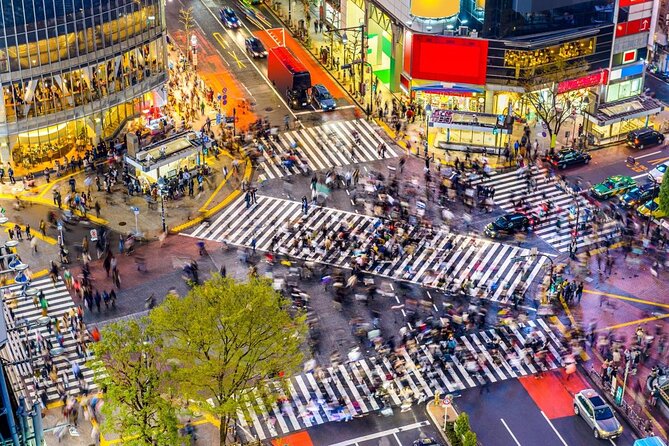
Shibuya Crossing is easy to find. Understanding Shibuya is harder.
The famous intersection gives you a quick burst of Tokyo energy: traffic stops, crowds move from every direction, and the whole street becomes a moving stage. But if you only cross the road, you have seen one moment of the district. This tour gives that moment a wider frame.
Your guide handles the route while explaining how the nearby streets fit together. That matters in Shibuya, where major railway stations, department stores, shopping arcades, narrow lanes, parks, bars, and steep side streets can blur into one large maze.
The tour has earned a 4.8 rating from 103 reviews, with 96 percent recommending it. The most repeated praise concerns the guides, especially Loc, who is described as friendly, relaxed, and able to answer questions without turning the walk into a lecture. Rio, Grey, Zac, Daichi, and others have also been praised for making the tour feel conversational.
That personal approach is important here. You are not just collecting landmarks. You are learning where you might return later for food, drinks, shopping, or a quieter look at Shibuya.
A few more Tokyo tours and experiences worth a look



Starting inside Shibuya Mark City
The meeting point is SABON Shibuya Mark City, in the East Mall on the third floor. The address is 1-chome 12-3 Dogenzaka, Shibuya, Tokyo 150-0043.
This is the one logistical detail I would take seriously. Shibuya Mark City is a large complex, and finding a particular shop inside it is not as simple as meeting beside a statue outside the station. Give yourself extra time, and use the exact shop name and mall location rather than searching only for Shibuya Mark City.
Two people have specifically had trouble locating the start. One spent close to 20 minutes looking before giving up. That is a preventable loss, especially in a district where station exits and shopping complexes can leave you turned around.
The activity uses a mobile ticket, and confirmation is provided when you book. The end point is much easier to recognize: the Hachiko Statue outside Shibuya Station.
Myth of Tomorrow gives the walk a serious beginning
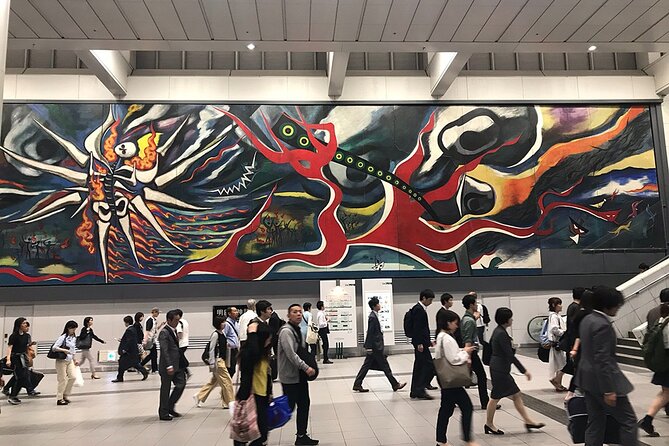
The first stop is Myth of Tomorrow, a large mural by Japanese artist Taro Okamoto inside Shibuya Station. You get about 10 minutes here, with admission included.
The mural depicts the horror and destruction of the atomic bombings of Hiroshima and Nagasaki. Its location is striking. In the middle of one of Tokyo’s busiest transport areas, surrounded by movement and commercial noise, the artwork asks you to pause.
This stop adds weight to the walk right away. Shibuya is often sold as neon, fashion, music, and youth culture. The mural reminds you that modern Japan also carries difficult memories, and that public art can appear in places where people are rushing to work or changing trains.
The short visit will not allow for a long art lecture, but a good guide can give you a useful frame for what you are seeing. Daichi, in particular, has been praised for adding historical and present-day context to the area. If you care about Japanese art or modern history, this is one of the tour’s most meaningful stops.
Crossing Shibuya at the busiest point
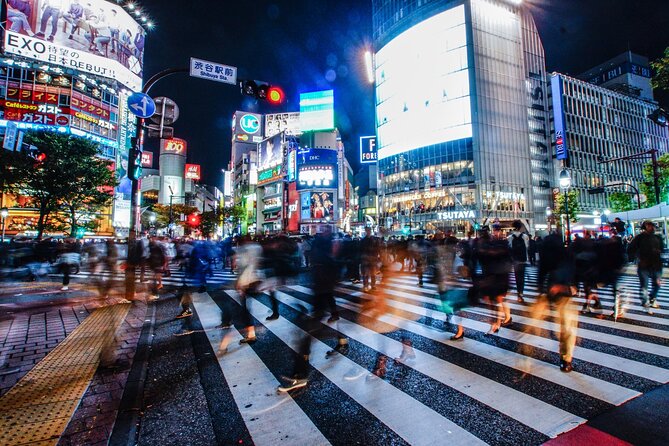
The walk then reaches Shibuya Crossing, often called the Scramble. You get around 10 minutes here, and you do cross the intersection as part of the experience.
The crossing is famous because of its scale and choreography. Several streams of people move at once, yet the process is orderly. The comparison to Times Square is understandable, but the feeling is different. Here, the spectacle comes from coordinated pedestrian movement rather than from giant signs alone.
Your guide can help you appreciate the crossing without reducing it to a quick photograph. You may cross with the group, then continue to a different angle nearby. The stop is brief, so do not expect a long period for photography or people-watching.
For a first visit to Tokyo, this is an excellent orientation point. It shows you how much energy is concentrated around Shibuya Station. It also gives you a clear reason to keep walking: the district beyond the intersection is more varied than the famous image suggests.
Miyashita Park changes your view of urban Tokyo
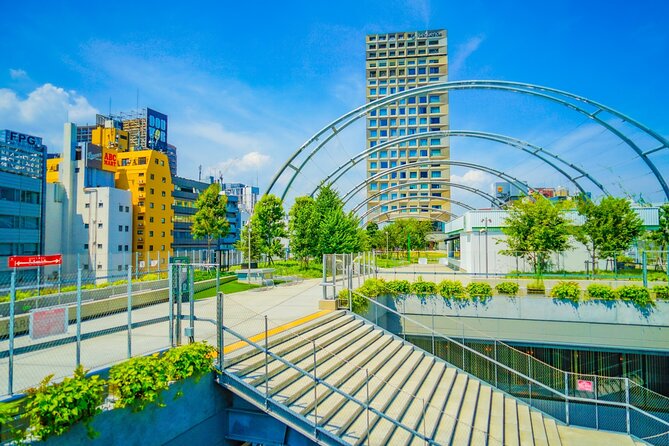
Miyashita Park receives about 20 minutes, the longest stop on the route. It is a multi-level sports and recreation complex built through an urban renewal project on land that was once a simple public green space.
This is a useful stop because it shows a newer side of Shibuya. The park is not a traditional Japanese garden, and it is not simply an open lawn. Its stacked design reflects the pressure on space in central Tokyo, where recreation, shopping, and public use must share a limited footprint.
Your guide can explain how the area fits into Shibuya’s changing identity. That is more valuable than simply walking through a modern complex without context.
The 20-minute stop also offers a natural pause during a walk that includes hills and city traffic. If the weather is hot or humid, the group may slow down and take breaks. The pace has been adjusted for older participants, but you should still wear comfortable shoes and be ready for steady walking.
Other walking tours we've reviewed in Tokyo



Nonbei Yokocho shows Shibuya at miniature scale
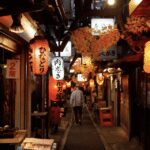
Nonbei Yokocho, or Drunkard’s Alley, is a narrow historic lane close to Shibuya Station. The stop lasts about five minutes, but the setting is memorable.
The lane is known for tiny traditional bars and restaurants, some so small they seat only a handful of people. The narrow scale feels worlds away from the open sweep of Shibuya Crossing. It is one of the places you are unlikely to understand from a major boulevard or a station map.
The short visit is a preview rather than a meal stop. You do not get time here for a full evening at a bar, and the tour price does not include food or drinks. Still, your guide may explain how these small businesses work and why some older lanes may change or disappear over time.
This is the kind of stop that gives the tour its local flavor. It is not a grand attraction. It is a glimpse of how people use small urban spaces.
Center-gai brings you back to modern Shibuya
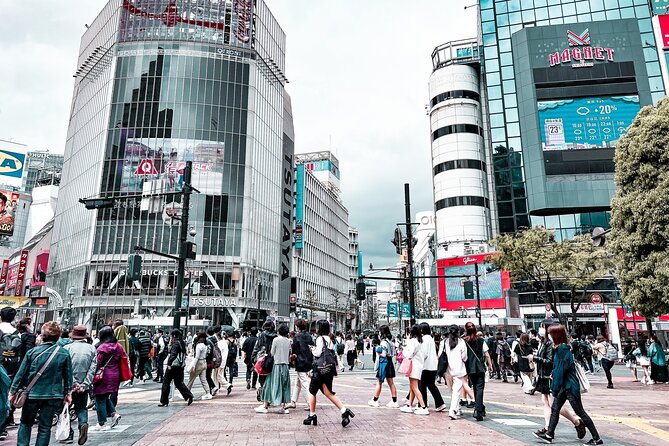
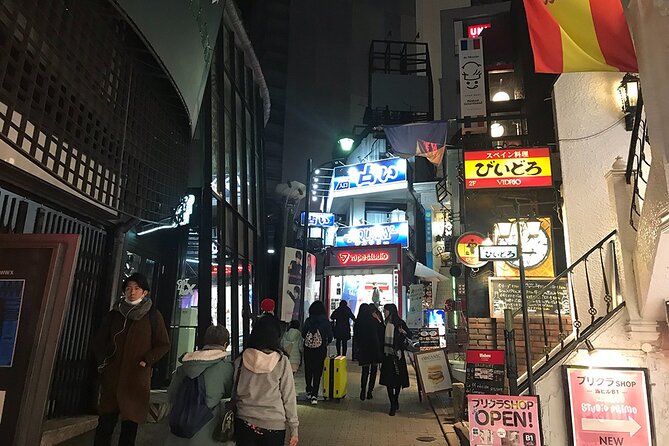
Shibuya Center-gai gets about 10 minutes. This pedestrian shopping street is known for its youth culture, trend-focused shops, and constant foot traffic.
After the quiet scale of Nonbei Yokocho, Center-gai shows the opposite side of the district. Here, the emphasis is fashion, shopping, food, and the latest street styles. Your guide can point out where the main activity is and help you understand how this part of Shibuya differs from older side streets.
The stop is useful if you plan to return later. You can ask for suggestions based on your interests, and several guides have been praised for food recommendations and ideas for places to go after the walk.
Do not expect dedicated shopping time. Ten minutes is enough to orient yourself, not enough to browse carefully. Think of this stop as a map in motion.
Maruyamacho reveals a more complicated past
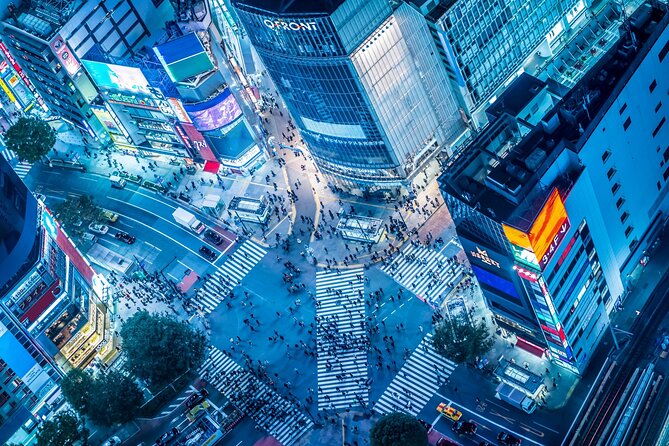
Maruyamacho is another 10-minute stop, and it adds social history to the route. The neighborhood was once associated with Tokyo’s red-light district. Today, it has changed into a fashionable area while still showing a mixture of older and newer buildings and businesses.
This is where the tour moves beyond simple sightseeing. Shibuya is not only a polished entertainment center. Its streets reflect changes in land use, business, nightlife, and city planning.
The area is also linked with love hotels and nightlife, subjects that guides may explain with some humor and care. Loc has been praised for answering questions patiently and giving useful context without making the tour feel like a formal speech.
If you want a purely cultural tour focused on temples, shrines, or traditional craft, this is not that. The cultural value here comes from seeing how a modern neighborhood changes over time.
Hachiko makes a clear ending
The final stop is the Hachiko Statue, at 2 Chome-1 Dogenzaka, outside Shibuya Station. You get about 10 minutes, and the tour ends here.
The bronze statue honors Hachiko, the Akita dog remembered for his loyalty. The statue is one of Tokyo’s best-known meeting points and a natural place to finish a walk through Shibuya.
Ending at Hachiko also makes the route practical. You are back beside the station, close to the district’s transport links, shops, restaurants, and nightlife. Your guide can finish with suggestions for the rest of your evening, which is especially helpful if this is your first night in the area.
The end point is easier to find than the start. If you are joining the tour because of Hachiko, remember that you meet elsewhere and finish here.
What the $25 price really buys you
At $25 per person, this is a modestly priced two-hour city walk. All fees and taxes are included, but tips for the guide are not.
You are not paying for entry to a major attraction, a meal, or a special viewing platform. You are paying for direction, local explanation, and a route that connects places you might otherwise visit separately or miss altogether.
That makes the value strongest for first-time visitors. A guide can save you time in a confusing district and give you enough background to make better choices afterward. The advice about bars, restaurants, shopping areas, and food can be worth as much as the formal stops if you use it during the rest of your stay.
The price also works for repeat visitors. One person joined after visiting Tokyo four times and still found new corners of Shibuya, including the mural, Miyashita Park, Nonbei Yokocho, and Maruyamacho.
The value is weaker if you already know Shibuya well and prefer to wander alone. You will spend time at several places for only five or 10 minutes, so independent explorers may want more freedom at each stop.
Guides make the biggest difference
The strongest part of this experience is the guide. The names attached to particularly warm feedback include Loc, Rio, Grey, Zac, Daichi, and Dixce.
Loc is repeatedly described as upbeat, friendly, and easy to talk to. He seems particularly good for people who want explanations without a stiff presentation. Rio has been praised for showing her home neighborhood and adapting to questions. Grey is noted for humor, patience, and clear local information.
Zac has been praised for strong English and for adjusting the walk to the group’s interests. Daichi has brought historical and current context, with an interest in city planning. Dixce received especially enthusiastic praise for packing a great deal of information into two hours.
The guide assigned to your departure may vary, so do not book on the assumption that one specific person will lead it. Still, the pattern is clear: this experience depends heavily on an approachable guide who can bring together history, current city life, and practical advice.
There was one serious service failure in which the guide did not arrive, followed by a full refund. It appears to be unusual, but it is worth acknowledging because a walking tour has no substitute when the guide is absent.
Hills, heat, and who should take this walk
Most people can participate, and service animals are allowed. The tour runs near public transportation and has a maximum of 12 people.
The route includes a fair amount of uphill walking. Shibuya’s terrain can surprise you, especially after a long day of sightseeing. Hot or humid weather may make the walk harder, and the tour requires good weather. If poor weather cancels the activity, you can choose another date or receive a full refund.
I would choose this tour if you:
- Are visiting Shibuya for the first time
- Want a quick orientation before dining or going out
- Like local streets more than a list of major attractions
- Want to ask questions in a small group
- Have limited time in Tokyo
- Enjoy modern history, public art, city planning, and nightlife districts
I would think twice if you need a flat route, dislike walking in warm weather, or want long stops for shopping and photography.
Should you book the Shibuya hidden streets tour?
Yes, if you want the famous crossing plus a useful introduction to the streets around it. For $25, the combination of a small group, a two-hour route, and practical local advice is strong value.
Book it early in your Tokyo stay so you can use the guide’s restaurant and nightlife suggestions afterward. Allow extra time to find the SABON meeting point inside Mark City, and wear shoes suited to hills.
The best reason to book is simple: Shibuya Crossing takes a few minutes, but Shibuya itself takes a little guidance. This walk gives you a better sense of where you are and what is worth exploring next.
FAQ
How long does the Shibuya walking tour last?
The tour lasts approximately two hours.
How much does the tour cost?
The listed price is $25 per person.
How large is the tour group?
The tour has a maximum of 12 travelers.
Where does the tour start?
It starts at SABON Shibuya Mark City in the East Mall on the third floor, at 1-chome 12-3 Dogenzaka, Shibuya, Tokyo 150-0043.
Where does the tour end?
The tour ends at the Hachiko Statue at 2 Chome-1 Dogenzaka, Shibuya, Tokyo 150-0043.
Does the tour include Shibuya Crossing?
Yes. Shibuya Crossing is one of the scheduled stops, and the route includes crossing the intersection.
What places are visited besides Shibuya Crossing?
The route includes Myth of Tomorrow, Miyashita Park, Nonbei Yokocho, Shibuya Center-gai, Maruyamacho, and the Hachiko Statue.
Are admission fees included?
All fees and taxes are included. Tips for the guide are not included.
Is the tour accessible by public transportation?
Yes. The activity operates near public transportation.
What happens if bad weather cancels the tour?
If poor weather causes cancellation, you will be offered another date or a full refund.
More Walking Tours in Tokyo
More Shibuya Tours in Tokyo



More tours in Tokyo we've reviewed











Shibuya Tours, compared.
 ★ 5.0Official Street Go-Kart in ShibuyaFrom $76
 ★ 4.9Tokyo: Street Kart Experience in ShibuyaFrom $741 hour
 ★ 5.0Shibuya Meltdown Nightlife Tour: All-You-Can-Drink Bar HoppingFrom $106
 ★ 5.0Shibuya Official Street Go-Kart in Shibuya AnnexFrom $69
 ★ 5.0Tokyo: Shibuya Food Tour (13 dishes and 4 Eateries)From $77
 ★ 5.0Best of Shibuya Food TourFrom $217