
Reviewed · SUSHI MAKING CLASSES
Tokyo : Hand-Roll Sushi Class, Skytree view & Asakusa Tour
Tokyo’s best short introduction may be the combination of a Skytree view, old Asakusa, and hands-on sushi making. You begin at the 350-meter observation deck, move through Senso-ji and its traditional shopping street, browse Kappabashi’s chef-supply shops, then finish by building hand-roll sushi with your own group.
I like the private format, since your guide can focus on your questions and help with food choices. I also like the range of stops: you get a high view, a major temple, local shopping, and a meal activity in one outing. The main consideration is timing. Three and a half hours goes quickly, and the tour starts at 3:00 pm, so this is a focused sampler rather than a slow day in Asakusa.
In This Review
- Key points to know before booking
- Why this Tokyo combination works
- Starting above the city at Tokyo Skytree
- Senso-ji and the traditional heart of Asakusa
- Snack stalls and souvenirs on Nakamise Street
- Kappabashi Kitchen Town for food-minded shoppers
- Making hand-roll sushi at Hand Roll Tokyo Asakusa
- What the private format is worth at $123.56
- Who will enjoy this 3:00 pm tour most
- Booking, weather, and cancellation details
- Should you book this Asakusa and sushi tour?
- FAQ
- Where does the tour start?
- What time does the experience begin?
- How long does the tour last?
- Where does the tour finish?
- Is Tokyo Skytree admission included?
- Is this a private tour?
- What places are included?
- What happens during the sushi class?
- Can I cancel for a full refund?
Key points to know before booking
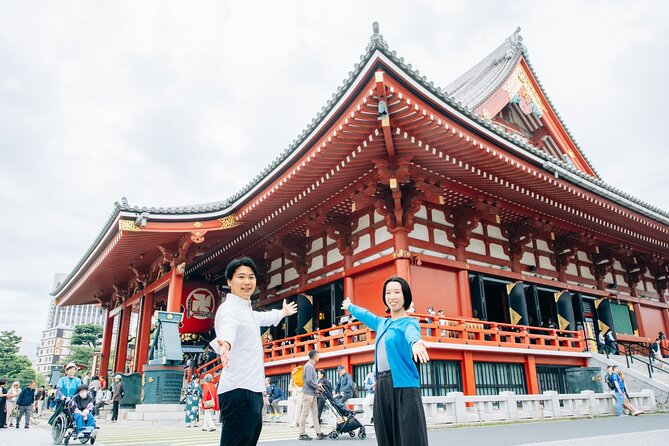
- A private route through Asakusa: Only your group takes part, giving the guide more time to adjust explanations and help with decisions.
- A 350-meter Tokyo Skytree view: Admission is included, with a fast pass intended to make entry smoother.
- Four different sides of Asakusa: The route covers a city view, Senso-ji, Nakamise shopping, and Kappabashi Kitchen Town.
- A practical sushi workshop: Choose fillings such as salmon with avocado or tuna with cucumber, then use a special rolling tool.
- A late-afternoon schedule: The 3:00 pm start suits a day when you want sightseeing followed by an early dinner.
- A weather-sensitive plan: Poor weather can lead to a new date or a full refund.
Why this Tokyo combination works
This outing solves a common Tokyo problem: deciding how to fit major sights into a short stay. Skytree, Senso-ji, Kappabashi, and a sushi class each deserve time, but they are often booked as separate activities. Here, the route links them in one private appointment.
I like the contrast. Skytree gives you a broad view of Tokyo, while Senso-ji brings you down to one of the city’s oldest Buddhist sites. Kappabashi shifts the focus to the working side of Japanese food culture, and the final class lets you handle the food rather than simply eat it.
The tour lasts about three hours and 30 minutes. The listed stops account for roughly three hours, leaving time for moving between places and getting settled at the sushi shop. You should still expect a brisk pace. This is built for seeing the main pieces of Asakusa, not for lingering at every stall or shop.
The private arrangement is especially useful if your group has mixed interests. You can ask about temple customs, Tokyo food, kitchen tools, or sushi ingredients without competing with a large crowd. It also makes the class feel more personal than a standard group demonstration.
A few more Tokyo tours and experiences worth a look
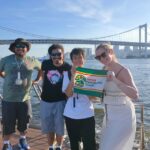
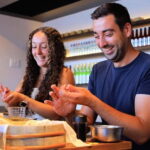
Starting above the city at Tokyo Skytree
The meeting point is Tokyo Skytree, at 1-chome-1-2 Oshiage in Sumida City. The start time is 3:00 pm, so plan to arrive with enough time to find the meeting point. The route may continue by train or taxi, depending on the arrangements for the day.
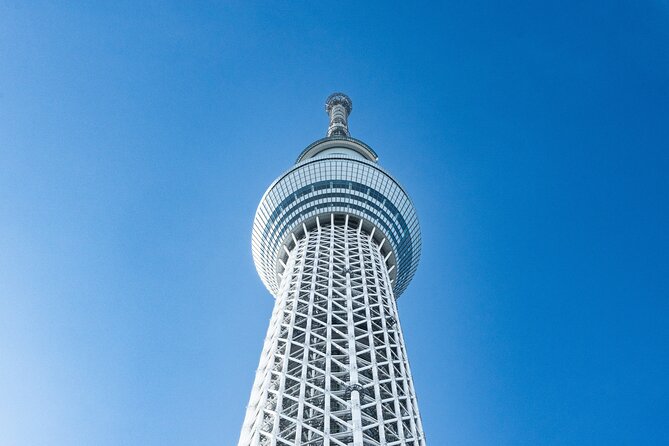
The tower is impressive before you even reach the observation level. As you approach, its height becomes the main event, and the view gives you a useful sense of Tokyo’s scale before you explore the older streets of Asakusa.
Admission to the observation deck is included, and the tour uses a fast pass for entry. The scheduled Skytree visit lasts about one hour. The deck is 350 meters high, giving you a wide view over the city rather than the close-up street scenes that follow.
This first stop is a good choice for orientation. Tokyo can feel like a collection of separate districts, but from above you begin to see how much city surrounds the Sumida River and the older Asakusa area. The tradeoff is weather. Cloud, rain, or poor visibility can reduce the value of a paid observation deck, which explains why the tour requires good weather.
Do not expect an extended tower visit with time for every level. The plan allows about an hour, so use the time for the view, photos, and a quick sense of direction. The fast pass matters most when regular entry lines are long, though exact waiting conditions can change.
Senso-ji and the traditional heart of Asakusa
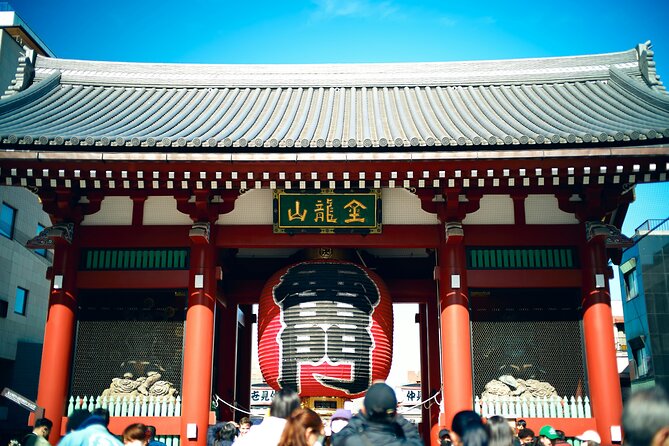
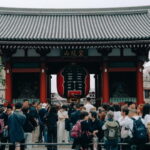
After Skytree, the tour continues to Senso-ji, Tokyo’s oldest Buddhist temple, founded in 645 AD. You have about 30 minutes here, enough to see the main hall and the most recognizable buildings.
The five-story pagoda and Hozomon Gate provide the big visual moments. The main hall gives the visit its religious focus, and your guide can explain what you are seeing instead of leaving you to guess your way through the grounds.
Thirty minutes is useful but short. If you want quiet reflection, detailed photography, or a close look at every building, you may wish you had more time. Still, for a first visit, the stop covers the central sights without allowing one temple visit to take over the whole afternoon.
The sequence also makes sense. You have just seen modern Tokyo from a tower, and now you are facing a site tied to centuries of worship and local tradition. That change in scale and mood is one of the strongest parts of the route.
Dress and behave as you would at any active religious site. The tour information does not specify a formal dress code, but respectful conduct is always the sensible approach. Follow your guide’s instructions if you are shown how to approach the main hall or take part in local customs.
Snack stalls and souvenirs on Nakamise Street
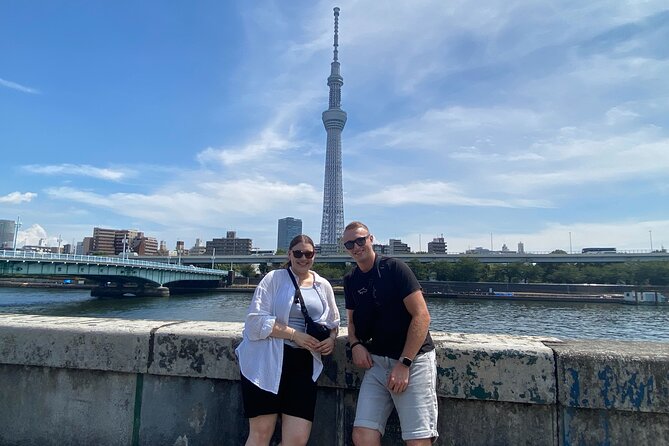
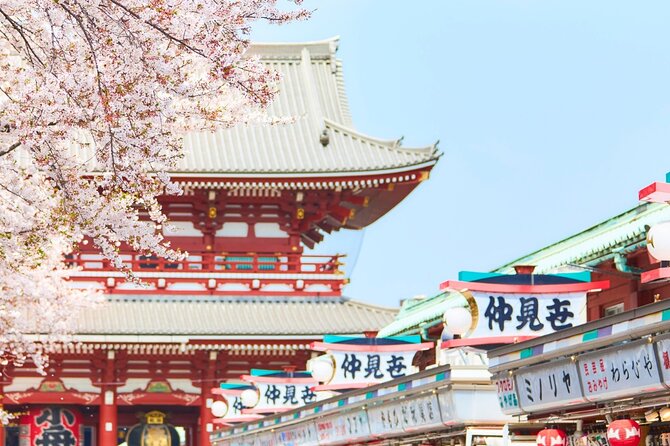
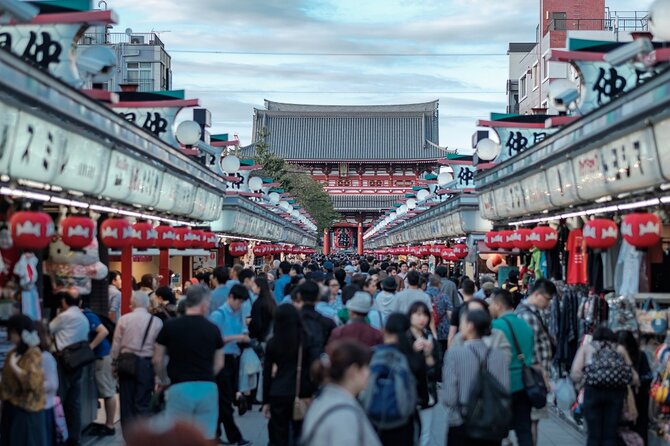
From Senso-ji, you walk along Nakamise Street, a 250-meter shopping path leading toward the temple. The route is lined with souvenir shops and snack stalls, many connected with the area’s long Edo-period trading tradition.
This is where a private guide can add practical value. You can ask what a snack is, which souvenirs are easy to carry, and how local food fits into the neighborhood. The guide can also help you avoid buying something simply because it looks familiar or attractive.
Nakamise is not a quiet lane. It is a commercial approach to a major temple, so expect shops, food, and plenty to look at in a compact space. The benefit is variety. You can see traditional-style goods and sample local snacks without making a separate shopping trip.
The 30-minute stop is best treated as a guided introduction. If you want to shop seriously, you will need to return later on your own. The experience is designed to help you understand the street and choose a few items, not to provide an unhurried buying session.
I would keep your hands free at this point. You still have Kappabashi and the cooking class ahead, and large purchases can become awkward as you move between stops. Ask the guide about food choices before buying a snack, especially if you want to save your appetite for the sushi workshop.
Kappabashi Kitchen Town for food-minded shoppers
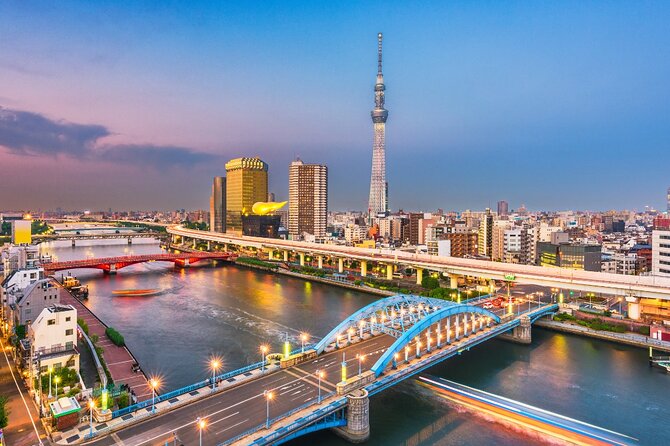
Kappabashi Street, also called Kappabashi Dogugai, is one of the most distinctive stops. This shopping street supports Japan’s food industry and is known for specialist stores used by professional chefs.
The appeal is practical rather than purely scenic. Shops focus on items connected with restaurants and cooking, and you might find tools, serving pieces, kitchen goods, and other food-related supplies. Even if you are not shopping, the street shows how much equipment sits behind Japan’s restaurant culture.
You have about 30 minutes here. That is enough to browse and ask questions, but not enough to inspect every shop. If you already know you want a particular knife, bowl, pan, or restaurant item, research it before the tour and tell your guide. A private guide can help you spend the limited time more wisely.
Kappabashi also gives the route a useful local angle. Senso-ji presents the historic and religious side of Asakusa, while Kappabashi shows the business of preparing and serving food. The two stops belong together, but they offer very different experiences.
Shopping here may not suit every group. If your priority is temples and photographs, 30 minutes in kitchen shops might feel less essential. If you cook, enjoy Japanese tableware, or want a practical souvenir, this could be one of the most valuable stops.
A few more Tokyo tours and experiences worth a look
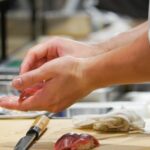
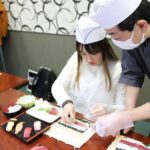
Making hand-roll sushi at Hand Roll Tokyo Asakusa
The final stop is Hand Roll Tokyo Asakusa, at 1-chome-12-6 Asakusa. The workshop lasts about 30 minutes and admission is included.
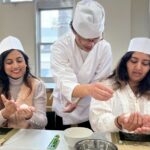
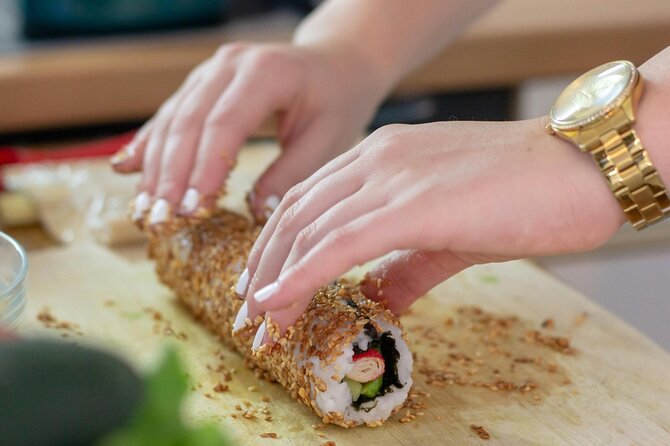
You choose ingredients, with examples including salmon and avocado or tuna and cucumber. Then you use a special sushi rolling tool to shape the hand rolls. The process is simple enough to fit into the schedule, but active enough to give you something to remember beyond a restaurant meal.
This is also the most playful part of the afternoon. The finished rolls make good photos, and the range of filling choices lets you build something that suits your taste. If you are new to sushi preparation, the guide or class staff can help you understand the basic process.
Do not expect a full chef-training session in half an hour. The class is a compact workshop at the end of a sightseeing route. Its value comes from participation, not technical depth. You make food, eat what you prepare, and finish the tour with a clear connection to the shops and food culture you have just seen.
The timing works well for an early evening meal. Since the tour begins at 3:00 pm, the sushi class comes as the sightseeing portion winds down. If you tend to eat an early dinner, this may cover part of that meal. If you need a large dinner, plan to eat again later.
A useful tip is to think about your ingredient preferences before the class. The supplied choices include salmon and avocado, plus tuna and cucumber, but the full range of options is not specified. If you have allergies or dietary restrictions, ask about them before booking or at the start of the activity.
What the private format is worth at $123.56
The listed price is $123.56 per person. That is not a budget walking tour, so the value depends on how much you want from the private format and the included Skytree admission and sushi activity.
You are paying for more than transportation between sights. The price combines a fast-pass observation deck visit, a private guide for your group, several Asakusa stops, and a hands-on food workshop. Buying each piece separately could take more planning, and you would lose the convenience of having one person connect the places.
The private setup is the biggest value question. If you want personal explanations, help with shopping, and freedom to ask questions, the cost is easier to justify. If you mainly want to see Senso-ji and Nakamise, you can visit those areas independently for much less.
Group discounts may be available, so the per-person cost could make more sense for a larger party. Since only your group participates, families and friends can share the outing without being placed with strangers. The exact discount depends on the booking details, so check the total before committing.
The strongest value comes when you have limited time in Tokyo. You see four distinct parts of the area and end with food, all in one appointment. The weakest value comes if you prefer a slow pace or plan to spend hours shopping at Kappabashi.
Who will enjoy this 3:00 pm tour most
I would recommend this experience to a first-time Tokyo visitor who wants a guided introduction to Asakusa without joining a large group. It also suits anyone who likes to combine sightseeing with a simple cooking activity.
Families may appreciate the change of pace. A tower, temple, shopping street, specialist shops, and hand-roll sushi offer more variety than a long walking tour focused on one subject. The private format also makes it easier to keep the day comfortable for your own group.
Food fans and home cooks have an extra reason to book. Kappabashi provides a look at professional kitchen supplies, while the sushi workshop gives you something to make with your own hands. The route connects food shopping, food culture, and food preparation.
You may want another plan if you dislike fixed schedules or want extensive free time. The stops are short, and the tour begins at a set time. It is also less suitable for anyone hoping to explore the Skytree area and Asakusa at night, since the visit is scheduled as a late-afternoon activity.
Most people can participate, and the meeting point is near public transportation. The tour may use a train or taxi between Skytree and the next area. Exact movement details can depend on the day, so comfortable shoes and a light bag are sensible choices.
Booking, weather, and cancellation details
Confirmation is provided when you book, and mobile tickets are available. The activity is private, meaning only your own group takes part.
You can cancel for a full refund up to 24 hours before the start time. Changes or cancellations made less than 24 hours before the 3:00 pm start are not accepted for a refund. Cutoff times follow Tokyo local time, so check the clock carefully if you are booking from another country.
Good weather is required. If poor weather causes the tour to be canceled, you are offered another date or a full refund. This matters most because the Skytree view is an important part of the experience.
Should you book this Asakusa and sushi tour?
Book it if you want a well-packed private introduction to Asakusa and like the idea of ending with food you prepare yourself. The Skytree fast pass, Senso-ji, Nakamise, Kappabashi, and the sushi class make a strong mix for a first visit, especially when your Tokyo schedule is tight.
Skip it if you want long temple visits, serious shopping time, or a low-cost self-guided afternoon. At $123.56 per person, the tour earns its price through the private guide, included admissions, and careful mix of activities. For a small group that values convenience and personal attention, it is a sensible way to see several sides of Tokyo in one short outing.
FAQ
Where does the tour start?
The tour starts at Tokyo Skytree, located at 1-chome-1-2 Oshiage, Sumida City, Tokyo 131-0045, Japan.
What time does the experience begin?
The scheduled start time is 3:00 pm.
How long does the tour last?
The experience lasts approximately three hours and 30 minutes.
Where does the tour finish?
The tour ends at Hand Roll Tokyo Asakusa, located at 1-chome-12-6 Asakusa, Taito City, Tokyo 111-0032, Japan.
Is Tokyo Skytree admission included?
Yes. Admission to the Tokyo Skytree observation deck is included, along with a fast pass for entry.
Is this a private tour?
Yes. Only your group participates in the private tour or activity.
What places are included?
The route includes Tokyo Skytree, Senso-ji Temple, Nakamise shopping street, Kappabashi Kitchen Town, and Hand Roll Tokyo Asakusa.
What happens during the sushi class?
You choose ingredients such as salmon and avocado or tuna and cucumber, then use a special sushi rolling tool to make hand-roll sushi.
Can I cancel for a full refund?
Yes. You can cancel at least 24 hours before the experience starts for a full refund. Poor weather cancellations are handled with a different date or a full refund.
More Tickets & Passes in Tokyo


More Sushi Making Classes in Tokyo
More Asakusa Tours in Tokyo
More tours in Tokyo we've reviewed
Sushi Making Classes, compared.
 ★ 5.0Sushi Making Tokyo Roll and Authentic Japanese Sushi ClassFrom $59
 ★ 4.9Tokyo: Roll and Authentic Sushi Making Class in AsakusaFrom $581h 40m
 ★ 5.0Make Sushi and Create Unforgettable Memories in TokyoFrom $79
 ★ 4.9Tokyo: Sushi Making Class in a Happi Coat near a Famous SpotFrom $421h 30m
 ★ 5.0Tokyo Sushi Making Class in Tsukiji with Professional ChefFrom $49
 ★ 5.0Tokyo Night Foodie Tour in Shinjuku – Seasonal Sushi, Wagyu BeefFrom $111