
Reviewed · SUSHI MAKING CLASSES
Unlimited Sake Tasting with Sushi Omakase tasting in Tokyo
Roppongi gives you a polished Tokyo setting for a very Japanese pairing: fresh sushi and regional sake in one compact 90-minute sitting. The sake selection can reach eight or more bottles, with choices from Hokkaido in the north to Kyushu in the south. The tuna comes through Yamayuki, a leading Japanese wholesaler, and the sushi is prepared by a chef.
I like the chance to compare sake from different parts of Japan, and I like that the experience keeps its group small, with no more than eight participants. The main caution is that the tasting may not be as educational as the description suggests. Recent bookings received delicious food and sake, but some found the explanations brief, the selection smaller than expected, and the pace rushed.
In This Review
- Key points
- Sushi and sake in a 90-minute Roppongi sitting
- What the 75-minute sake tasting really offers
- The sushi course, with Yamayuki tuna at the center
- How much attention you can expect from the chef
- The pace can shape your experience
- Is $63 a fair price?
- Who will enjoy this most
- My recommendation for booking
- FAQ
- Where does the sake and sushi tasting take place?
- How far is the venue from Roppongi Station?
- How long does the activity last?
- How many types of sake are available?
- Is sake tasting unlimited?
- Where does the sake come from?
- What sushi is included?
- How many people can join the group?
- Can I cancel for a refund?
Key points
- 75 minutes of unlimited sake tasting: You can sample the available bottles during the main tasting period, rather than stopping after one small pour.
- Regional sake comparison: The selection may include sake from Hokkaido through Kyushu, giving you a useful taste of Japan’s broad brewing culture.
- Premium Yamayuki tuna: The sushi tasting features tuna sourced from one of Japan’s top wholesalers.
- Chef-prepared sushi: The meal is more than a snack plate, with one recent format serving 10 pieces of sushi.
- Small Roppongi group: The maximum group size is eight, and the venue is a short walk from Roppongi Station.
- Good value with a qualification: At $63 per person, the combination is attractive, but the value depends on how many sake types are available and how much explanation you receive.
Sushi and sake in a 90-minute Roppongi sitting
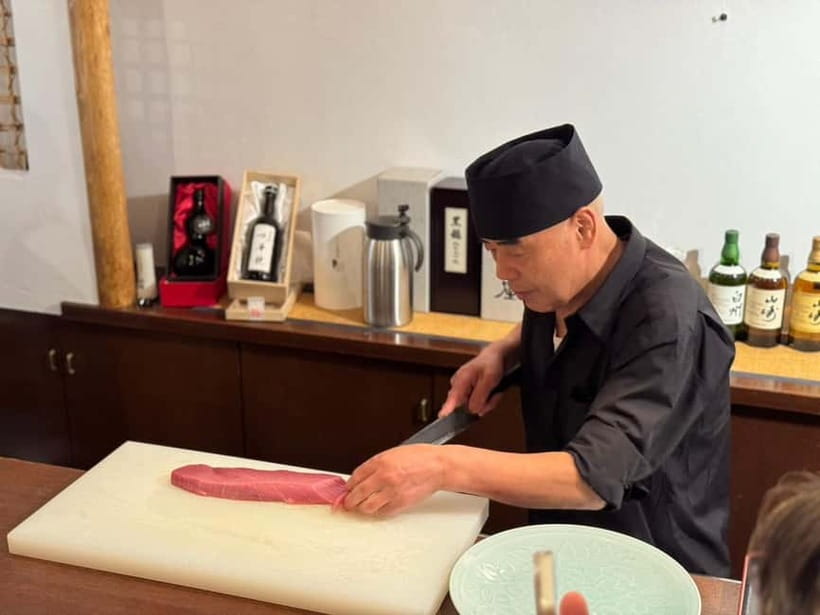
This experience brings two familiar Japanese pleasures together without asking you to spend an entire evening at a formal restaurant. You sit down in Roppongi, taste sushi prepared by a chef, and work through a selection of sake from different Japanese regions.
The format is simple. The main sake tasting lasts 75 minutes within the total 90-minute booking. That leaves enough time for the sushi service and a little settling in, but not much room for delays. I would arrive ready to begin, especially if you want to ask questions about the bottles.
The experience provider is SUSHI GARYU, and the meeting venue is SUSHIROKU on the fourth floor of Vort Roppongi Briller Kaleido. The address is 3-14-14 Roppongi, Minato-ku. It is about a three-minute walk from Roppongi Station on the Tokyo Metro Hibiya Line or Toei Oedo Line, and about one minute from Don Quijote Roppongi.
That location makes this easy to pair with an evening in Roppongi. You do not need to build a whole day around it. Just keep in mind that the venue is inside a building, so allow a few minutes to find the correct floor rather than arriving at the last second.
A few more Tokyo tours and experiences worth a look
What the 75-minute sake tasting really offers
The most appealing part is the regional spread. Bottles are sourced from breweries across Japan, from Hokkaido to Kyushu when available. That gives you a chance to compare sake by region instead of drinking one bottle in isolation.
Sake can be subtle to a newcomer. One may taste light and clean, while another feels fuller, sweeter, drier, or more aromatic. Without several glasses side by side, those differences can be hard to notice. Here, the comparison is the point.
The experience advertises eight or more types depending on availability, with unlimited tasting during the 75-minute period. The availability note matters. The selection is not fixed, and a recent booking had only four sakes available. That is still enough for a pleasant tasting, but it is a different proposition from eight or more.
I would treat the number as a possible range, not a promise that every bottle will be poured at every sitting. If you are booking mainly for variety, ask at the start how many types are available that day. This gives you a clear idea of what the tasting will look like.
The other important point is the level of instruction. The experience presents itself as a way to learn about sake’s origins, brands, and place in Japanese food culture. In practice, the amount of explanation can vary. Some recent participants expected stories about brewing, regional styles, and cultural use, but received only limited information.
That does not make the tasting worthless. You can still compare the bottles and ask questions. But I would not book it as a full sake class unless the provider confirms that a detailed explanation will be included. If you already know a little about sake, you may enjoy the freedom to taste at your own pace. If you are brand new to it, you may need to take the lead and ask about each bottle.
The sushi course, with Yamayuki tuna at the center
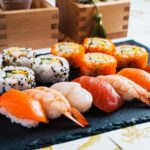
The sushi gives the sake something useful to work with. Rather than tasting alcohol alone, you can see how different styles pair with rice, fish, and the richer flavor of tuna.
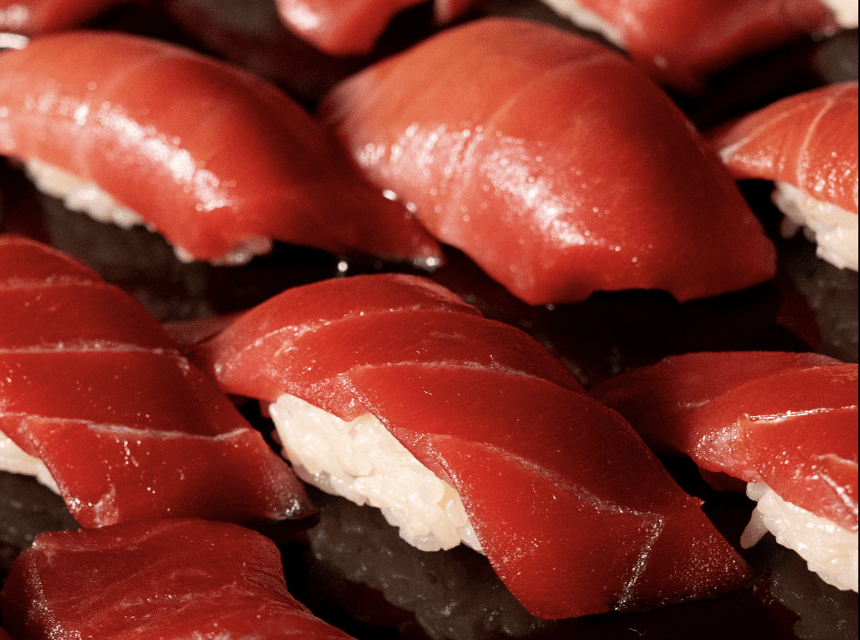
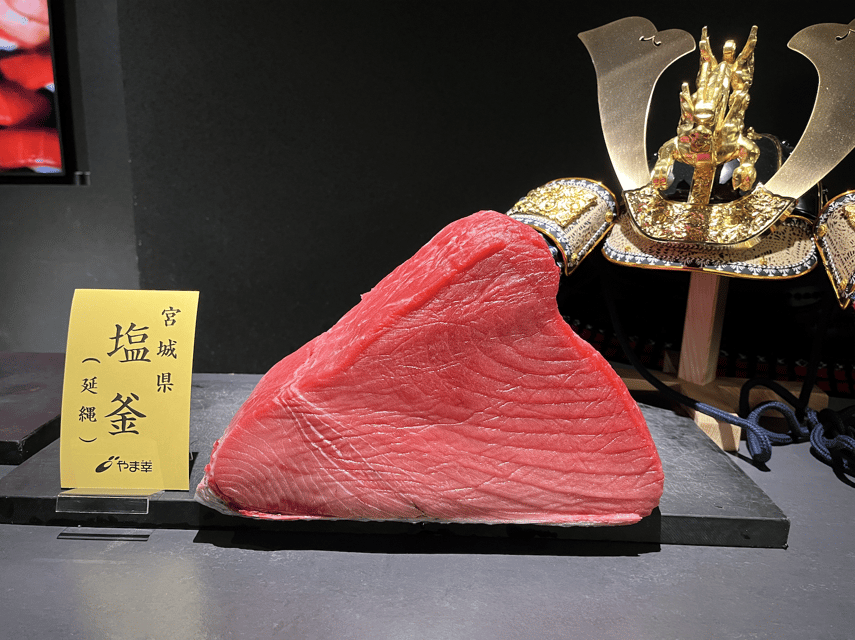
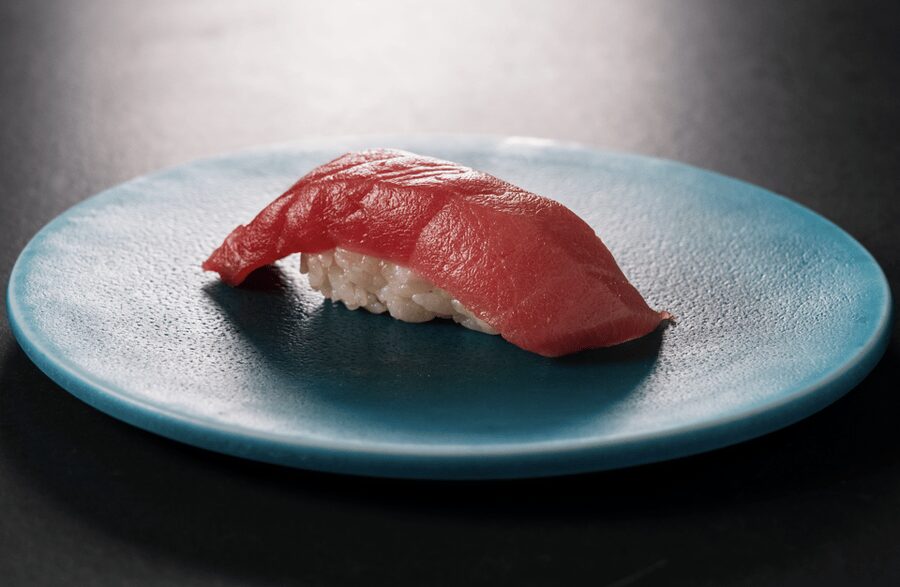
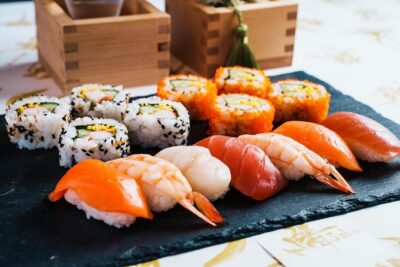
The tuna is sourced from Yamayuki, described as one of Japan’s top wholesalers. That is a meaningful detail for anyone who cares about the main ingredient. It does not tell you the exact cut, grade, or number of tuna pieces served on your date, but it signals that the tuna is meant to be a feature rather than a filler.
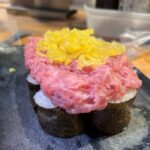
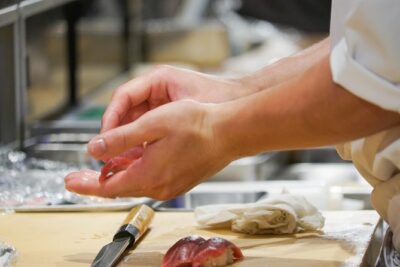
The sushi is prepared by a sushi chef, and one recent format served 10 pieces within about 30 minutes. Ten pieces makes this more substantial than a token tasting, though it is still not designed as a long, elaborate omakase dinner. The word omakase suggests that the chef selects what is served, so you should expect a set tasting rather than a menu where you choose every item.
The timing deserves attention. If ten pieces arrive within half an hour, the food service can feel quick. That may suit you if you want an efficient meal before another Tokyo plan. It may disappoint you if you imagine a quiet, carefully explained progression with long pauses between pieces.
I like that the sushi is part of the cultural lesson. Sushi and sake are often treated as separate tourist activities, but pairing them gives you a better feel for how Japanese meals work. A sip after a piece of tuna can change the way you notice the fish and rice. Just do not expect a full lecture on every ingredient unless that is confirmed in advance.
How much attention you can expect from the chef
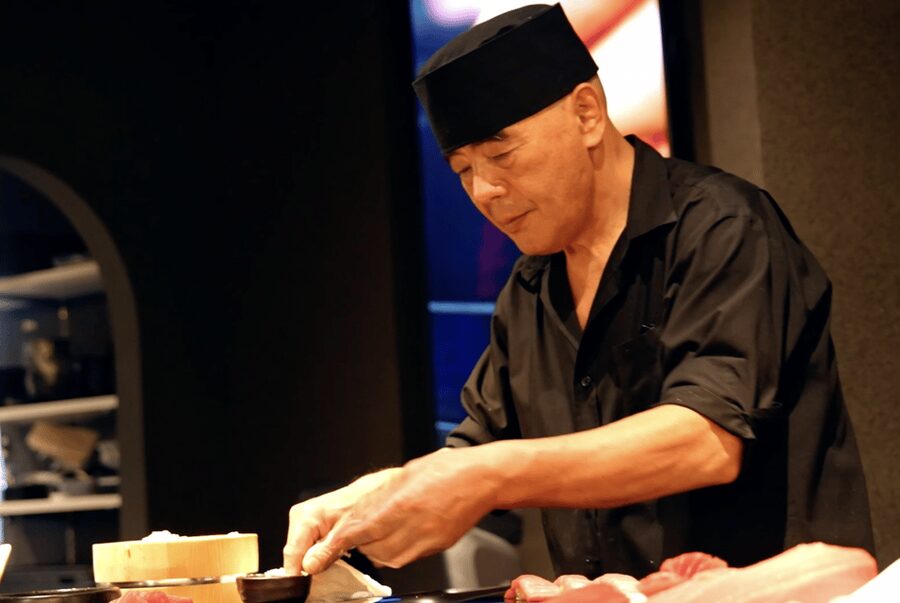
A small group of up to eight is a real advantage. It is easier to sit near the counter, watch the preparation, and ask a question than it would be in a large food tour. The setting should feel more personal simply because there are fewer people competing for attention.
Still, small group size does not guarantee a detailed teaching session. The chef’s priority may be preparing and serving the sushi, while sake information receives less time. That appears to be the central weakness of the experience for people who booked it as an educational tasting.
I would arrive with three or four simple questions ready:
- Where was this sake made?
- Is it dry, sweet, light, or full-bodied?
- What food does the brewery recommend with it?
- Is it served chilled, at room temperature, or warm?
These questions keep the conversation focused and may help you get more from the bottles. If the staff can answer clearly, the tasting becomes more informative. If not, you will know early that the experience is mainly about eating and drinking, not formal instruction.
No guide names are provided for this activity, so you should not book it expecting a specific host. The quality of the explanation may depend on who is working that session.
The pace can shape your experience
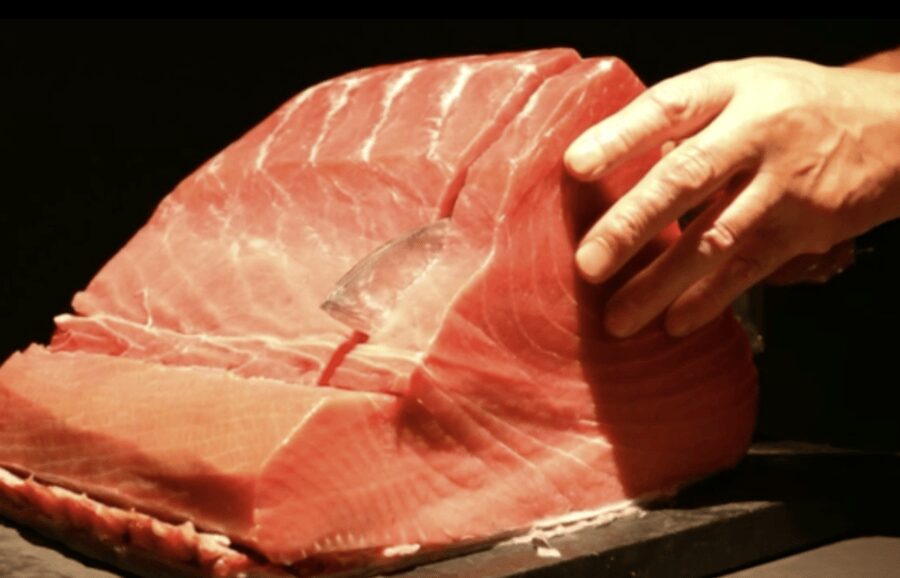
Ninety minutes sounds generous at first, but the clock moves quickly once sushi service begins. The published structure allows 75 minutes for unlimited sake tasting, while the sushi is served during the same overall appointment. You are not getting 75 minutes of sake followed by a separate 90-minute meal.
One recent format served the sushi within 30 minutes. During the remaining time, the sake continued, but the seating arrangement became an issue when some diners were asked to move from the counter to a table near the entrance to make room for incoming customers.
That detail is worth knowing if you care about counter seating. The counter is likely to be the most interesting place because you can watch the chef and feel connected to the preparation. Seating may not remain fixed throughout the visit. If you want the counter, arrive on time and ask politely, but do not assume it is guaranteed for the full booking.
The quick pace has a bright side. You can fit this into a busy Tokyo evening, perhaps before dinner, a show, or a walk around Roppongi. The drawback is that the experience may feel more like a well-organized tasting stop than a leisurely omakase meal.

Is $63 a fair price?
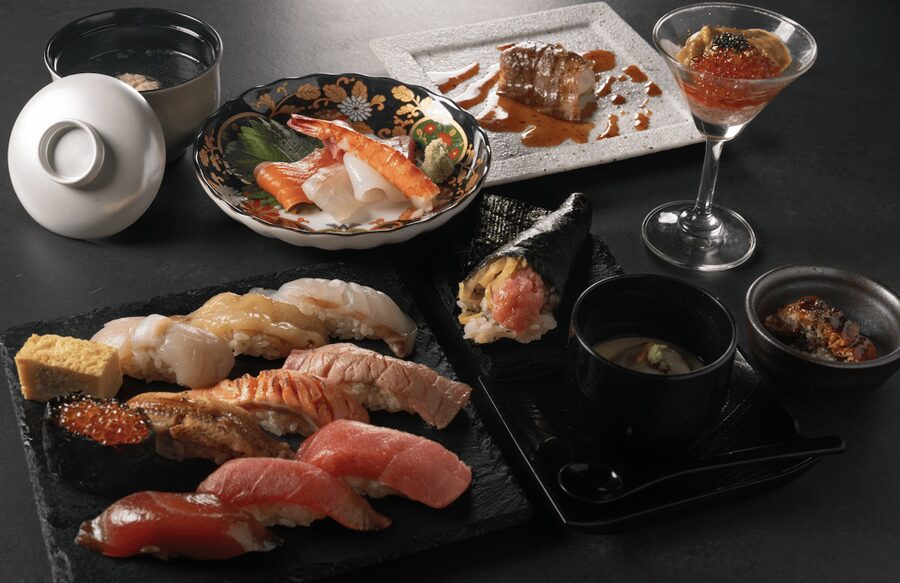
At $63 per person, the value depends on what you want from the appointment. For a combined sushi and sake tasting in central Tokyo, the price is reasonable if you receive a generous sake selection and a satisfying number of sushi pieces.
The premium tuna helps justify the cost. So does the chance to taste bottles from several parts of Japan without buying full bottles or visiting multiple restaurants. If eight or more sake types are available, the comparison element becomes a strong part of the deal.
The value is weaker if only four types are poured and the explanations are minimal. You would still receive sushi and sake, but the cultural and educational side would be thinner than expected. I would compare this with the cost of a regular sushi meal plus a few drinks in Roppongi, then decide how much you value the guided tasting format.
The unlimited element also needs a practical reading. Unlimited tasting does not mean you should drink quickly or try to sample everything at once. The best value comes from tasting slowly, noticing differences, and choosing a favorite to revisit. You have 75 minutes, so use the time for comparison rather than simply quantity.
Who will enjoy this most
I would recommend this to you if you want a convenient introduction to sushi and sake, especially if you have limited time in Tokyo. The central Roppongi location, small group, and short duration make it easy to fit into a larger itinerary.
It also suits couples and small groups with different interests. One person can focus on tuna and sushi while another compares the sake. You do not need to be a sake expert to participate, and the format gives beginners a starting point.
This is less suitable if your main goal is a serious sake seminar. The available information does not promise a named sake educator, detailed brewing lessons, or a fixed list of eight bottles. It is also not ideal if you want a slow, ceremonial omakase dinner with each piece introduced at length.
Wheelchair access is listed, which is useful for anyone who needs an accessible venue. Since the activity takes place in a fourth-floor restaurant space, it is sensible to confirm any specific access needs when booking.
Cancellation is free up to 24 hours before the activity for a full refund. You can also reserve now and pay later, which helps if your Tokyo schedule is still changing.
My recommendation for booking
I would book this experience for the food pairing and the chance to sample Japanese sake in one efficient stop. The Yamayuki tuna, chef-prepared sushi, and regional bottle selection give it a solid foundation, and the $63 price can be good if the larger sake selection is available.
I would not book it expecting a polished sake lecture. Ask at the beginning how many types are being served and how much explanation is planned. If the answer is four bottles and a quick tasting, you can still enjoy the sushi, but you will know what you are paying for.
Book it if you value convenience, premium tuna, and a small group. Skip it if you want guaranteed depth, a fixed eight-bottle lineup, or a long, unhurried omakase meal.
FAQ
Where does the sake and sushi tasting take place?
It takes place at SUSHIROKU, on the fourth floor of Vort Roppongi Briller Kaleido, 3-14-14 Roppongi, Minato-ku, Tokyo 106-0032, Japan.
How far is the venue from Roppongi Station?
The venue is about a three-minute walk from Roppongi Station, served by the Tokyo Metro Hibiya Line and Toei Oedo Line.
How long does the activity last?
The full activity lasts 90 minutes. Unlimited sake tasting is available for 75 minutes during that time.
How many types of sake are available?
Eight or more types may be available depending on the day and current supply. The selection can vary, and a recent sitting had four types available.
Is sake tasting unlimited?
Yes. Unlimited tasting is included during the 75-minute sake tasting period.
Where does the sake come from?
The sake is sourced from breweries across Japan, from Hokkaido in the north to the Kyushu area in the south, depending on availability.
What sushi is included?
Sushi tasting is included, with fresh sushi prepared by a sushi chef. The tasting features premium tuna sourced from Yamayuki, a leading Japanese wholesaler.
How many people can join the group?
The group is limited to eight participants.
Can I cancel for a refund?
Yes. You can cancel up to 24 hours in advance for a full refund. Reserve now and pay later is also available.
More Sushi Making Classes in Tokyo
More tours in Tokyo we've reviewed



Sushi Making Classes, compared.
 ★ 5.0Sushi Making Tokyo Roll and Authentic Japanese Sushi ClassFrom $59
 ★ 4.9Tokyo: Roll and Authentic Sushi Making Class in AsakusaFrom $581h 40m
 ★ 5.0Make Sushi and Create Unforgettable Memories in TokyoFrom $79
 ★ 4.9Tokyo: Sushi Making Class in a Happi Coat near a Famous SpotFrom $421h 30m
 ★ 5.0Tokyo Sushi Making Class in Tsukiji with Professional ChefFrom $49
 ★ 5.0Tokyo Night Foodie Tour in Shinjuku – Seasonal Sushi, Wagyu BeefFrom $111