
Reviewed · SUMO EXPERIENCES
Sumo Training Watching Experience in Tokyo
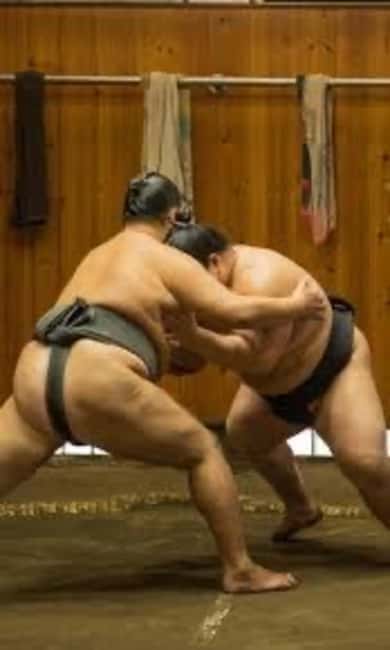
The best part of this Tokyo experience is the close view of real sumo training. You sit near an active stable while wrestlers work through stretching, strength exercises, basic drills, and hard match-style practice. This is serious training, not a staged show.
I like the small group of no more than eight people and the live explanations with original diagrams. I also like the chance to take photos with wrestlers after practice. The main drawback is the floor seating, plus strict rules about silence, clothing, punctuality, and phone sounds.
In This Review
- Key points to know before booking
- Why this is a rare way to see sumo in Tokyo
- Meeting near Ryogoku Station, then walking to the stable
- The 7:45 start gives you the full training sequence
- The later 8:20 start saves time but cuts the program short
- What the close seating adds, and what it takes away
- Alisa’s explanations help make sense of the action
- Photos after training are possible, not guaranteed
- Dress and behavior are part of the experience
- Is $84.70 a fair price?
- Who will enjoy this morning activity most
- Should you book the Sumo Training Watching Experience?
- FAQ
- Where does the sumo training experience meet?
- How long is the activity?
- How far is the stable from the meeting point?
- What time should I arrive for the full program?
- What happens if I arrive at 8:20?
- Can I take photos during training?
- Can I take a photo with a wrestler?
- Can children participate?
- Is seating on chairs provided?
- What is the cancellation policy?
Key points to know before booking
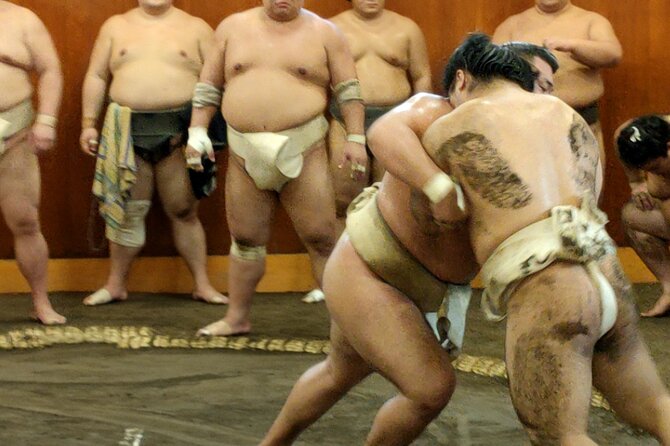
- Real morning practice: Watch active wrestlers train at a sumo stable rather than seeing a performance made for tourists.
- Two different arrival times: The 7:45 start gives you the full program, while the 8:20 start usually misses stretching and strength work.
- Close, quiet viewing: You sit on cushions near the action, so the sound and physical effort are much easier to sense than in a large arena.
- Small group size: A maximum of eight people allows clear explanations and a more personal setting.
- Guide Alisa’s visual explanations: Original documents and diagrams help explain what you are seeing as the practice moves along.
- Floor seating matters: This Japanese-style setup can be difficult if you have knee or back trouble, or if you are pregnant.
Why this is a rare way to see sumo in Tokyo
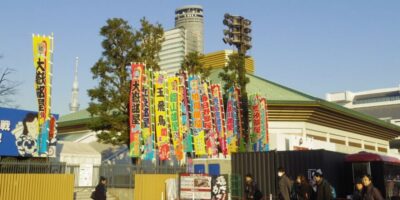
A sumo match at Ryogoku Kokugikan is the obvious choice for many visitors, but a tournament only takes place at certain times of year. Even then, the wrestlers are far from your seat, and you see the sport as a formal contest.
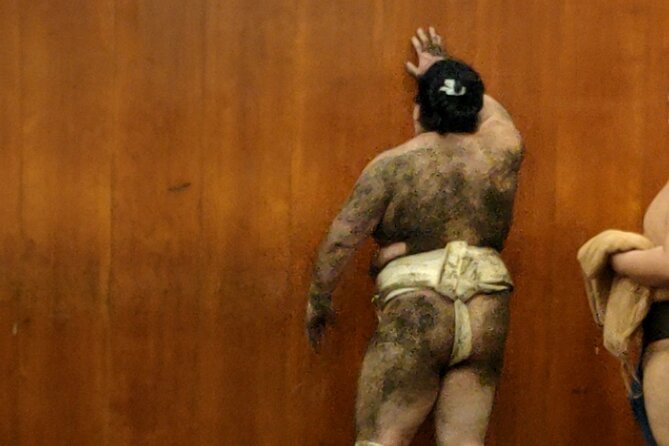
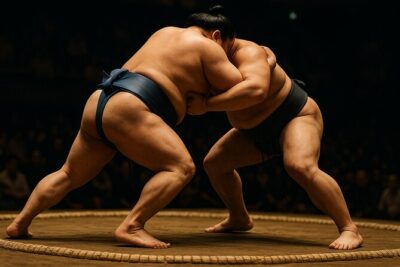
At a stable, you see the work behind that contest. The wrestlers repeat movements, build strength, and practice bouts under a strict morning routine. The room is quiet, focused, and close enough for you to notice the sound of bodies hitting the floor and the force behind each push.
That closeness is the reason I find this experience more interesting than a simple photo stop at the Kokugikan. You are not just watching a match. You are seeing how the wrestlers prepare for one.
The setting also brings responsibility. A sumo stable is treated as a sacred place, and the visit follows Japanese customs that may feel strict to some visitors. You do not eat or drink inside. You keep your phone silent. You generally do not talk during training, and you must arrive on time because the group cannot wait.
This is a good fit for someone who wants an authentic cultural experience and can follow directions carefully. It is not the right pick if you want a casual, chatty activity where you can move around and ask questions whenever you like.
A few more Tokyo tours and experiences worth a look
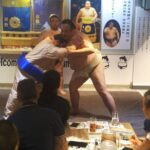

Meeting near Ryogoku Station, then walking to the stable
You meet near Ryogoku Station in the Yokoami area of Sumida City. The stated meeting address is 1-chome-4-29 Yokoami, and the activity finishes back at the same meeting point.
From there, you walk to the stable. The walk is described as about 10 minutes, though the organizer also gives a seven-minute estimate. A participant found the route closer to 10 to 15 minutes and pointed out an important detail: this is not the JR station meeting point, and the stable is not right beside the Kokugikan.
I would allow extra time to find the correct meeting spot. Do not assume that arriving at Ryogoku Station means you are already at the meeting location. Since the group leaves on time and cannot wait for late arrivals, this is one morning when arriving early pays off.
The route itself is short, but the timing matters. The full 7:45 session begins with the earliest part of practice. If you arrive for the later 8:20 start, you will generally begin with basic training instead.
The 7:45 start gives you the full training sequence
The program has four parts:
- Stretching and strength training
- Basic training
- Match-style training
- Photos with wrestlers, when possible
The early arrival time is the better choice if you want to see the entire routine. The viewing period can last from about 60 to 120 minutes, depending on the morning and the flow of practice.
The first section shows the preparation that leads into sumo. Stretching and strength work may not look as dramatic as a bout, but it gives you a useful frame for the rest of the session. You see that sumo depends on repeated physical work, not only on the short bursts shown during a tournament.
Next comes basic training. This is where the guide’s diagrams and explanations are especially useful. Sumo has its own movements, rules, and vocabulary, and a first-time viewer can easily miss the point of a drill without help. The visual material gives you something concrete to follow while the wrestlers practice.
The last major part is match-style training. This is likely to be the most intense section, with the sound and force of the wrestlers especially noticeable from the floor. You are closer to the action than in an arena, but that does not mean you can treat the room like a sports bar. Quiet observation is part of the experience.
The later 8:20 start saves time but cuts the program short
The later arrival is useful if your morning schedule is tight, but you should understand what you give up. Participants arriving at 8:20 generally start with basic training, and the viewing time can range from 30 to 90 minutes.
That shorter option may work well if you mainly want to see the wrestlers in action and receive an introduction to sumo. It is less suitable if you want the full progression from warm-up through match-style work.
The stated total activity time is about two hours and 20 minutes, including the meeting and walk. The actual viewing time varies, and photos afterward can add time. One practical point: the advertised end time may not include the photo period, so avoid scheduling a tight appointment immediately afterward.
What the close seating adds, and what it takes away
You sit directly on cushions on the floor in the Japanese style. There are no standard chairs. This puts you physically close to the training area and helps you feel the impact of each bout in a way that a large stadium cannot match.
The tradeoff is comfort. If you have bad knees or a bad back, sitting on the floor may be hard. The same caution applies to pregnant women. The stable also asks participants to remain settled and quiet, so you cannot count on standing up, stretching, or changing position often.
Children must be at least six years old, but age alone does not make the experience suitable. Even children over eight who cannot sit still are not allowed to participate. That rule makes sense in a sacred training room, but families should be realistic about how well their child can manage a quiet, fixed seating arrangement.
The small maximum of eight people helps here. You are not part of a large crowd, and the guide can provide explanations without competing with a room full of voices. The group size also makes the photo opportunity more manageable.




Alisa’s explanations help make sense of the action
Guide Alisa from NicoTour Japan provides live commentary with original documents and diagrams. That support matters because sumo training can look repetitive at first glance. A series of pushes or drills becomes more meaningful when you understand what type of practice you are watching.
The commentary is not a running conversation during every moment. The stable’s rules say that participants basically do not talk during the tour. Expect the guide to explain what is happening at suitable points, then let you watch in silence.
One Japanese participant found the explanations clear and helpful, including the diagrams shown during practice. That is useful confirmation for anyone worried that the experience might be too visual or too specialized for a first visit.
You should also keep your expectations in check. The guide cannot turn the stable into an open interview session. The focus is on watching training respectfully, not on chatting with the wrestlers or interrupting the routine.
Photos after training are possible, not guaranteed
You can take photos during the session, provided your phone or camera is silent. Install or use a silent camera setting before you arrive. A phone that makes shutter sounds can break the stable’s quiet atmosphere and may lead to a request that you stop using it.
After training, you might be able to take a photo with wrestlers. The wording matters: this is a possible extra, not something guaranteed for every visit. The timing of the practice, the wrestlers’ schedules, and the stable’s rules can affect what happens afterward.
You should also allow time for this if it is important to you. The activity may finish later than the basic viewing time suggests because photos can take place after the main session.
Dress and behavior are part of the experience
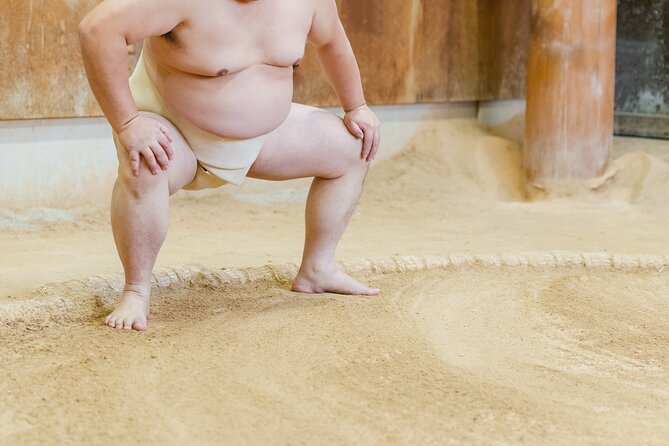
The stable is not a standard sightseeing venue. You should wear modest clothing and avoid revealing outfits. You must not eat or drink inside, and your phone needs to stay on silent.
Punctuality is especially important. The group leaves the station meeting point on schedule, and late participants cannot be held for. Arrive early enough to find the meeting spot, confirm the route, and settle your phone before departure.
Do not attend if you have a cold or another infectious illness on the day. The instruction is to cancel your participation in that situation. It protects the wrestlers and the other people sharing a small indoor space.
If you break the rules, you may be asked to go outside temporarily. That is not a minor inconvenience in a short activity, so read the expectations before booking rather than treating them as suggestions.
Is $84.70 a fair price?
At $84.70 per person, this is not a cheap way to fill an hour in Tokyo. The value depends on what you want from your visit.
You are paying for access to a place that is difficult to visit independently, a small group capped at eight people, a guide who explains the training, and the chance to observe active wrestlers from close range. For someone interested in Japanese sport and custom, those elements make the price easier to justify.
The value is weaker if you only want to see a sumo bout. A tournament ticket, when available, serves a different purpose and may be a better fit for a sports fan who wants formal competition. This stable visit is about practice, discipline, and setting.
The limited availability also affects the price. Sumo tournaments happen only several times a year, and wrestlers may be away at other training camps. The experience is therefore tied to the stable’s schedule, not your preferred date. It is booked an average of 77 days ahead, so waiting until the last minute is risky.
Confirmation arrives within 48 hours of booking, subject to availability. You can cancel for a full refund up to 24 hours before the start time. Changes or cancellations inside that 24-hour window are not accepted for a refund.
Who will enjoy this morning activity most
I would recommend it to you if you meet most of these conditions:
- You have a real interest in sumo, Japanese customs, or traditional sport.
- You can sit quietly on a floor cushion for an extended period.
- You can arrive early and follow strict timing rules.
- You prefer a small group to a large staged attraction.
- You are comfortable with an experience where photos with wrestlers are possible but not promised.
- You want to see training rather than only a tournament match.
I would think twice if you have knee or back problems, are pregnant, or need a chair. I would also skip it if you want a flexible activity with food, drinks, conversation, or frequent movement.
Families can join with children aged six and older, but the child must be able to remain still and quiet. The age requirement is only the starting point.
Should you book the Sumo Training Watching Experience?
Book it if you want a close, respectful look at the physical work behind Japan’s national sport. The small group, clear visual explanations from Alisa, and possible post-training photo make this more personal than watching from the far side of a tournament hall.
Choose the 7:45 arrival if you want the full sequence. Pick the 8:20 option only if you understand that you will usually miss stretching and strength training. Most important, prepare for floor seating and strict stable etiquette.
I would not book this as a casual novelty stop. I would book it as a focused cultural visit, one where quiet attention is part of the experience and the value comes from access that is not easy to arrange on your own.
FAQ
Where does the sumo training experience meet?
The meeting point is near Ryogoku Station at 1-chome-4-29 Yokoami, Sumida City, Tokyo 130-0015. The group then walks to the sumo stable.
How long is the activity?
The total activity takes about two hours and 20 minutes. Training observation can last from 60 to 120 minutes for the early arrival, or 30 to 90 minutes for the later arrival.
How far is the stable from the meeting point?
The walk is described as about seven to 10 minutes. Allow 10 to 15 minutes so you have time to follow the route without rushing.
What time should I arrive for the full program?
Arrive at 7:45 to experience stretching and strength training, basic training, match-style training, and possible photos.
What happens if I arrive at 8:20?
You will generally begin with basic training. The later start usually does not include the full stretching and strength section.
Can I take photos during training?
Yes, photos are allowed, but your camera or smartphone must be silent. Install a silent camera setting before the activity.
Can I take a photo with a wrestler?
You might be able to take a photo with wrestlers after the event. This is not guaranteed.
Can children participate?
Children aged six and older can participate. Children must also be able to sit still and quietly, and older children who cannot do so are not allowed to join.
Is seating on chairs provided?
No. You sit directly on cushions on the floor in the Japanese style. Take care if you have knee or back problems, or if you are pregnant.
What is the cancellation policy?
You can cancel up to 24 hours before the start time for a full refund. Cancellations or changes made less than 24 hours before the start time are not accepted for a refund.
More Sumo Experiences in Tokyo

More tours in Tokyo we've reviewed








Sumo Experiences, compared.
 ★ 4.8Tokyo: Sumo Show Experience with Chicken Hot Pot and a PhotoFrom $1032 hours
 ★ 4.8Tokyo: Sumo Show and Dining ExperienceFrom $7990 minutes - 2 hours
 ★ 5.0the SUMO showFrom $89
 ★ 5.0Tokyo Shinjuku Sumo Show & Experience with PhotoFrom $79
 ★ 4.8Tokyo: Sumo Show and Experience in ShinjukuFrom $691h 30m
 ★ 4.6Tokyo: Sumo Tournament Tour with Chair Seat TicketsFrom $141