
Reviewed · SUMO EXPERIENCES
Tokyo: Grand Sumo May Tournament
Tokyo’s Grand Sumo Tournament is much more than a few large men pushing one another out of a ring. You’ll see ritual, rank, ceremony, and theater inside Ryogoku Kokugikan, then learn why each movement matters from an English-speaking sumo guide. The May tournament is one of six major meets held in Japan each year, and tickets can be hard to secure.
I like two things here: the walk through Ryogoku gives the afternoon a useful sense of place, and the guide’s live explanations make the bouts far easier to follow. The personal earphones, supplied for groups of three or more, are especially handy when the arena gets noisy. The main drawback is price: at $198.20 per person, you pay a sizable premium over a basic admission ticket, and the quality of the experience depends heavily on how active your assigned guide is.
In This Review
- Key points at a glance
- Why the May tournament is worth your afternoon
- Starting in Ryogoku from 1 p.m. to 3 p.m.
- Touring the Kokugikan before the bouts
- Following the matches with a guide in your ear
- Chanko-nabe near the arena
- What $198.20 really buys you
- Timing, group size, and planning tips
- Who will get the most from this sumo day
- Should you book the Grand Sumo May Tournament?
- FAQ
- Where does the sumo tour take place?
- How long does the tour last?
- What time does the tour begin?
- Is the chanko-nabe dinner included?
- What type of seats are used?
- Is a guide included?
- Is hotel pickup included?
- Can I cancel for a full refund?
Key points at a glance
- Ryogoku before the matches: Spend up to two hours seeing sumo landmarks, stables from the outside, and a sumo shrine before entering the arena.
- Kokugikan access: Your guide leads you through the murals, championship prizes, museum, paintings, and photographs before the bouts.
- Live explanations: Follow the rules, rituals, ranks, and wrestlers through commentary from your guide via headsets when provided.
- Chair seating: The tour uses B or C balcony chairs, a practical choice if you do not want to sit on floor cushions.
- Optional chanko-nabe: Finish near the arena with the hearty hot-pot dish associated with sumo wrestlers’ training diets.
- Advance planning matters: This experience is booked about 41 days ahead on average, a useful clue that tournament dates fill quickly.
Why the May tournament is worth your afternoon
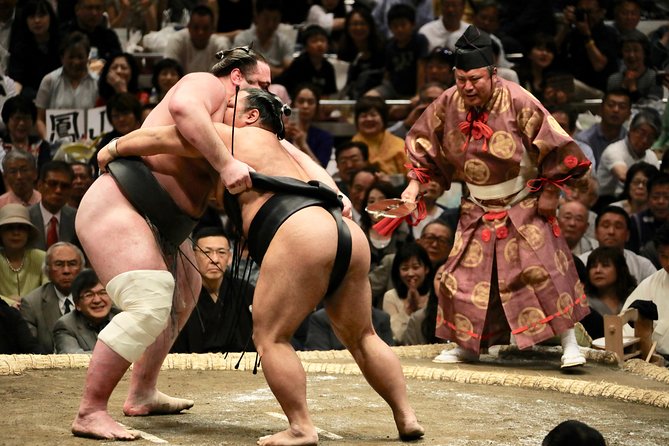
Sumo makes the most sense when you see it as a complete cultural event, not only as sport. The wrestlers’ entrance ceremonies, the formal gestures, the salt throwing, the referee’s clothing, and the crowd’s reactions all carry meaning. Without context, a bout can last only seconds and leave you wondering what happened. With a guide, those seconds become easier to read.
The May tournament takes place at Ryogoku Kokugikan, Tokyo’s main sumo arena and the center of the Ryogoku district. This is the traditional sumo neighborhood, so the setting helps. You are not being whisked from a generic meeting point to a sports hall. The afternoon begins among places linked to the sport, then moves into the arena while the excitement builds.
The tour is described as private and offers personal attention, but the activity can have as many as 35 participants. That is worth clarifying before you pay. A small booking may feel personal, while a larger departure will be more like a guided group outing. The guide names appearing in past bookings include Yoko, Aki, Ken, Sue, Ali, Yasu, Yosh, and Ichirio. Assignments vary, so you should not book expecting one particular person unless the operator confirms it.
A few more Tokyo tours and experiences worth a look
Starting in Ryogoku from 1 p.m. to 3 p.m.
The first portion is an optional walking tour around Ryogoku. It lasts about two hours and is designed to give you enough background to enjoy the matches later. The pace and exact route can vary, but the supplied details point to sumo-related landmarks, a sumo stable viewed from outside, and a sumo shrine near the Kokugikan.
That stable visit is a useful detail. You will not be entering the training quarters, but seeing where wrestlers live and practice gives the district a stronger connection to the sport. One guide, Ken, also shared sumo lore and sang a sumo song at a shrine. That kind of personal touch can make the neighborhood walk feel less like a list of monuments.
The walk is best for first-time sumo spectators. You can ask about the ranking system, the wrestlers’ daily lives, the role of the stable, and the customs that shape a tournament day. The information package adds tournament details, current rankings, and profiles of prominent wrestlers, so you have something concrete to follow once you sit down.
This section is optional, which helps if you have already explored Ryogoku or mainly want the arena. Still, I would keep it if you are new to sumo. The point is not sightseeing for its own sake. It prepares you to notice details that would otherwise pass quickly.
Wear comfortable shoes. The tour includes walking around the neighborhood before several hours in the arena. Ryogoku is easy to reach by public transportation, and the meeting place is described as convenient, but hotel pickup and drop-off are not included.
Touring the Kokugikan before the bouts
From about 3 p.m. to 6 p.m., you enter Ryogoku Kokugikan for the tournament program. Before settling into the matches, the guide walks you through parts of the arena. The route includes large murals, championship prizes, the sumo museum, and paintings and photographs showing successive yokozuna, the sport’s grand champions.
This orientation is one of the better reasons to choose the guided option. The arena contains layers of information, but it is not presented like a standard museum visit. Your guide can connect the objects to the current tournament, explain the importance of the top ranks, and point out what you should watch for during the ring-entering ceremonies.
The sumo museum is listed as a short stop of about 15 minutes. Do not expect a full museum afternoon. Think of it as a compact introduction before the main event. The murals and prize displays also help you understand the formal side of the tournament, where presentation and tradition matter as much as raw strength.
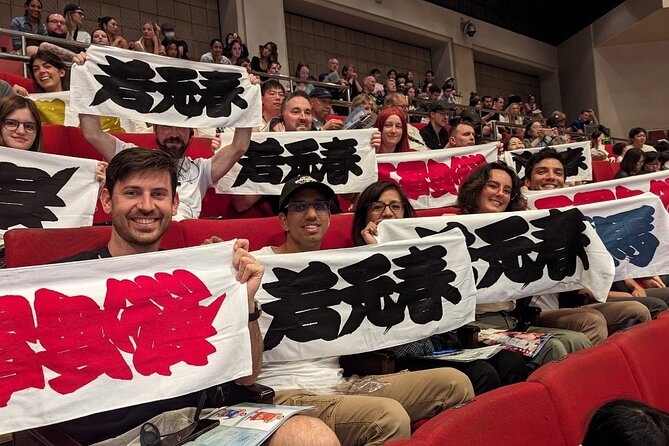
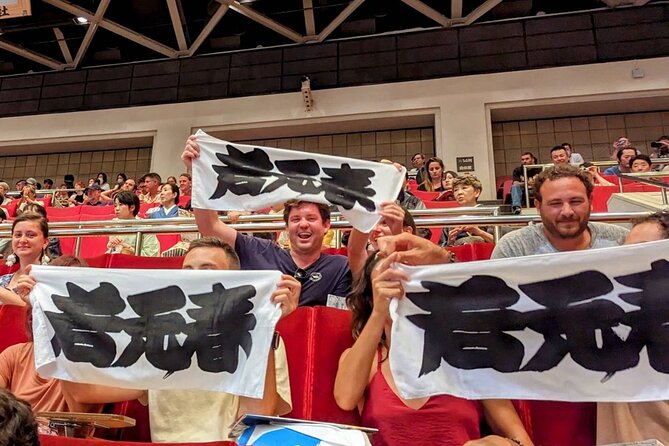
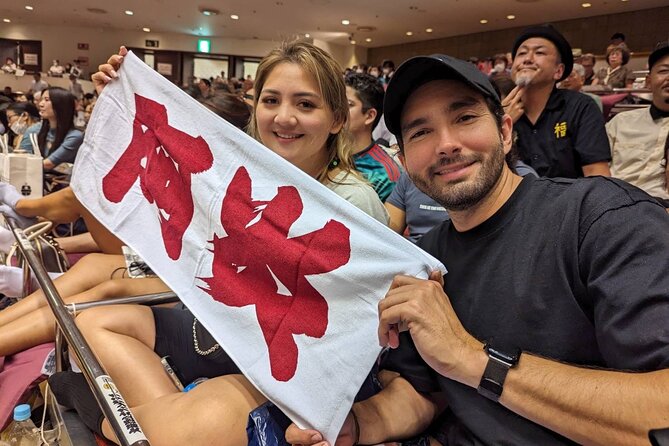
A welcome bag may include tournament information, wrestler profiles, and material about sumo itself. Cheer-up goods are also supplied so you can support a particular wrestler. These are small extras, but they help you take part in the atmosphere instead of sitting quietly as an outsider.
Following the matches with a guide in your ear
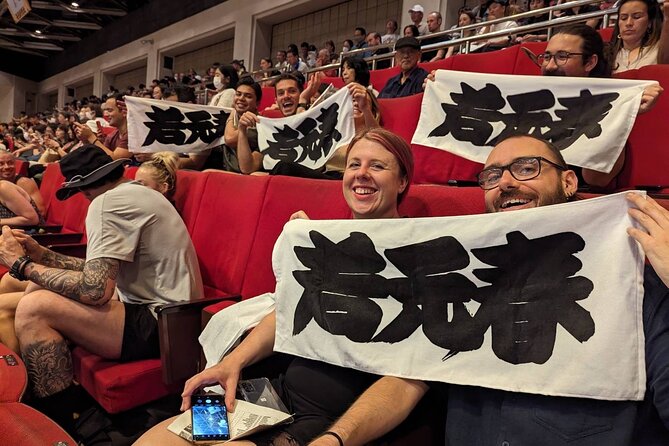
The strongest part of the experience is the live commentary during the bouts. The guide explains what is happening as the tournament unfolds, including the rituals, the wrestlers’ ranks, and the significance of the action. For groups of three or more, headsets are supplied so you can hear the guide clearly even from a distance.
That matters because sumo has a steep learning curve. A match may be over before you have worked out who had the advantage. A guide can explain the push, belt grip, footwork, or ring position while the details are still fresh. You also gain a better sense of why a bout matters in the larger tournament standings.
Guide quality is the biggest variable. Several guide names receive strong praise for clear explanations and friendly help, with Yoko, Aki, Sue, Ken, and Ichirio singled out in the supplied feedback. One quieter guide drew criticism for offering only short comments unless directly asked. The lesson is simple: ask questions. If you want more than basic commentary, speak up about rankings, tactics, rituals, or a wrestler you are following.
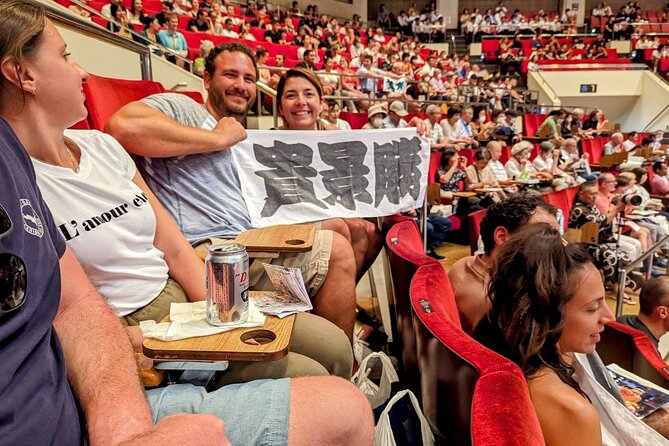
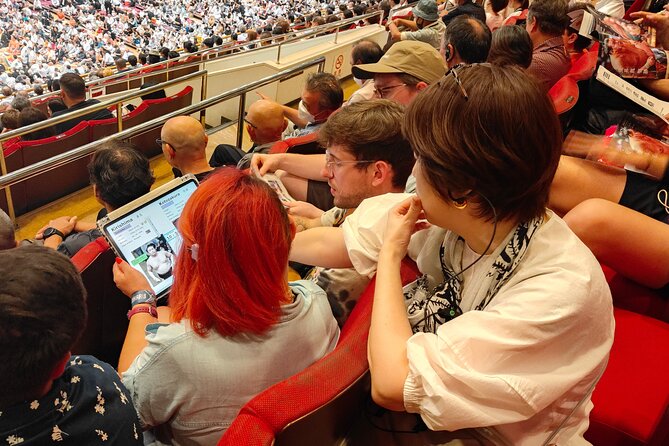
The seats are on the balcony in chair B or C sections. This is a practical choice for most international visitors. First-floor box seating uses a flat floor area measuring about 1.3 meters by 1.3 meters, with cushions for four people. That can be a memorable traditional arrangement, but it is not ideal if you want a chair for the entire afternoon. The chair option gives you a more comfortable base for watching the tournament.
The exact view depends on your assigned section. The information supplied here does not promise ringside seating, so do not buy this tour expecting to be directly beside the dohyo. The value comes from having a seat secured, a guide to explain the event, and entry to a tournament that can sell out quickly.
Chanko-nabe near the arena
After the matches, you can add a chanko-nabe dinner at a restaurant near the Kokugikan. Chanko-nabe is the hot-pot dish associated with sumo wrestlers’ diets. It is filling and built around a shared pot, making it a fitting end to a day focused on the sport.
The meal is optional, and drinks cost extra. One practical food warning: the pot may contain a noticeable amount of fish, so ask about the ingredients if you do not eat fish. The restaurant is described as a short walk from the arena, and the food may be ready when you arrive, which keeps the evening moving after a long session in the stands.
Do not treat dinner as a separate fine-dining event. Its appeal is the connection to sumo culture and the chance to eat the dish linked with wrestlers’ training. If you are tired, have dietary concerns, or already have dinner plans, skipping this part is easy.

What $198.20 really buys you
At $198.20 per person, this is not a cheap way to enter a sumo tournament. A basic ticket may cost much less, and one low-rated account calculated a large gap between the tour price and the underlying seat cost. That criticism is fair. You are paying for more than the admission itself, but the premium is not automatically good value for every visitor.
The price includes all fees and taxes, English guiding by a sumo specialist, the information package, cheer-up goods, and arena guidance. For three or more people, it also includes headsets. Depending on the option you choose, the price may or may not include the neighborhood walk, the chair seating arrangement, and chanko-nabe. Check the exact combination at booking because the experience comes in several versions.
I see the value in three situations. First, you want to attend the May tournament but do not want to compete for tickets on your own. Second, you are new to sumo and want the rules and rituals explained in real time. Third, you value a planned afternoon that joins the district, arena, commentary, and dinner in one package.
If you already follow sumo closely, can secure your own ticket, and are comfortable navigating the Kokugikan alone, the markup may be harder to justify. You can still gain something from the walk and guide, but the admission itself may be the main reason to book.
Timing, group size, and planning tips
The full experience takes about six hours, from 1 p.m. to 6 p.m., with the optional dinner adding about another hour. That makes it a substantial half-day and evening plan. Avoid scheduling another fixed activity immediately afterward, especially if you add the meal.
The tour can hold up to 35 people. That is not a tiny private outing, despite the private-tour wording, so ask how many people are expected for your date if personal attention is important. The guide may be assigned to a position near you, but seating and group arrangements can differ.
The activity is near public transportation, and most people can participate. Confirmation arrives at booking, and the mobile ticket is convenient for a busy Tokyo schedule. Cancel at least 24 hours before the start time for a full refund. Changes or cancellations inside that window are not accepted, and the cut-off uses local Tokyo time.
Book well ahead. The typical advance booking period is about 41 days, and tournament tickets are known to disappear quickly. If seeing live sumo is a major part of your Tokyo trip, leaving this until the last week is a gamble.
Who will get the most from this sumo day
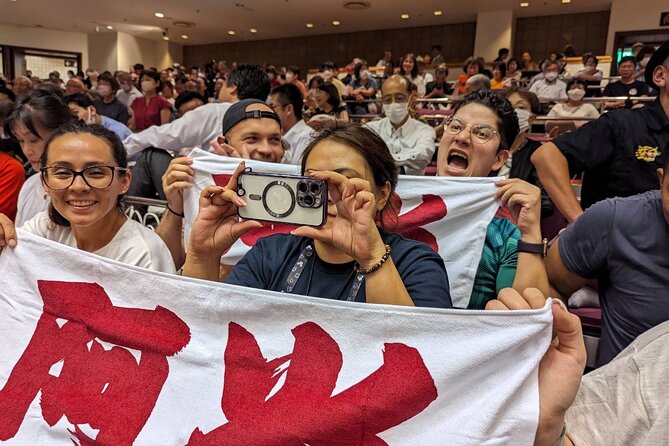
This is a strong fit for first-time visitors to a Japanese tournament, sports fans who want help reading the action, and families or mixed-age groups that may not know the rules. The pre-match walk gives the day shape, while the live commentary keeps the arena from feeling confusing.
It also suits anyone who has tried to buy sumo tickets and found the process difficult. Securing a seat through a guided package can be worth the added cost when the dates of your Tokyo visit are fixed.
I would think twice if you want a silent, independent afternoon, prefer to choose your exact seat, or already know the sport well. You may also want to skip the dinner option if fish is a concern or if you have a different evening plan.
Should you book the Grand Sumo May Tournament?
Book it if the May tournament is a priority and you want help understanding what you see. The Ryogoku walk, arena orientation, tournament information, and real-time commentary turn a short bout into a more complete cultural experience. The chair seating is also more comfortable than first-floor floor cushions for many people.
Skip it if you are mainly buying a ticket and do not need guiding. At $198.20, the premium is real. Before booking, check which options are included, ask about the expected group size, and confirm the seating category. For a first sumo experience, though, this is a practical way to get inside the Kokugikan and make sense of one of Japan’s most distinctive sporting traditions.
FAQ
Where does the sumo tour take place?
The experience takes place in Ryogoku, Tokyo’s traditional sumo district, with the tournament held at Ryogoku Kokugikan.
How long does the tour last?
The main program lasts about six hours, from approximately 1 p.m. to 6 p.m. The optional chanko-nabe dinner adds about one hour.
What time does the tour begin?
The optional Ryogoku walking tour begins at about 1 p.m. The arena portion begins around 3 p.m.
Is the chanko-nabe dinner included?
The dinner is optional. Drinks are not included and must be ordered separately.
What type of seats are used?
The chair option uses B or C balcony seats. First-floor box seats use cushions on a flat floor area, so you should confirm the seating option when booking.
Is a guide included?
Yes. English guiding by a sumo expert guide is included. Headsets are provided for groups of three or more.
Is hotel pickup included?
No. Hotel pickup and drop-off are not included. You meet the guide at a convenient location in Ryogoku, which is near public transportation.
Can I cancel for a full refund?
Yes. You must cancel at least 24 hours before the experience start time for a full refund. Cancellations or changes made less than 24 hours before the start time are not accepted.
More Sumo Experiences in Tokyo
More tours in Tokyo we've reviewed


Sumo Experiences, compared.
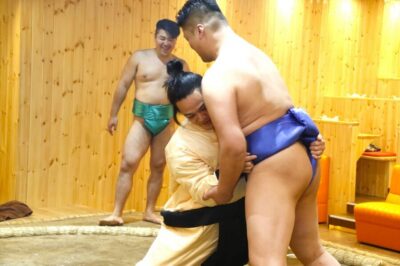 ★ 4.8Tokyo: Sumo Show Experience with Chicken Hot Pot and a PhotoFrom $1032 hours
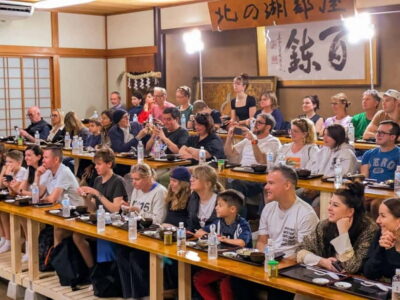 ★ 4.8Tokyo: Sumo Show and Dining ExperienceFrom $7990 minutes - 2 hours
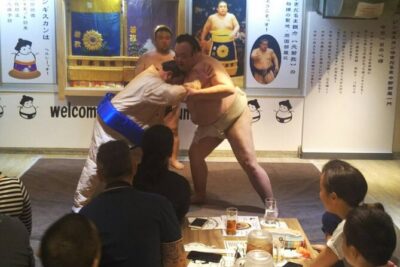 ★ 5.0the SUMO showFrom $89
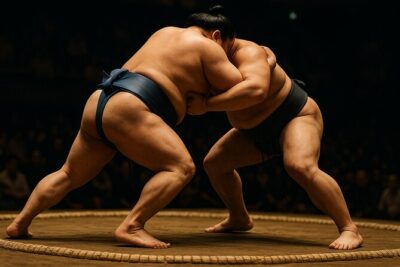 ★ 5.0Tokyo Shinjuku Sumo Show & Experience with PhotoFrom $79
 ★ 4.8Tokyo: Sumo Show and Experience in ShinjukuFrom $691h 30m
 ★ 4.6Tokyo: Sumo Tournament Tour with Chair Seat TicketsFrom $141