
Reviewed · SHIBUYA TOURS
Shibuya Tokyo: Modern Kintsugi Workshop in Shibuya
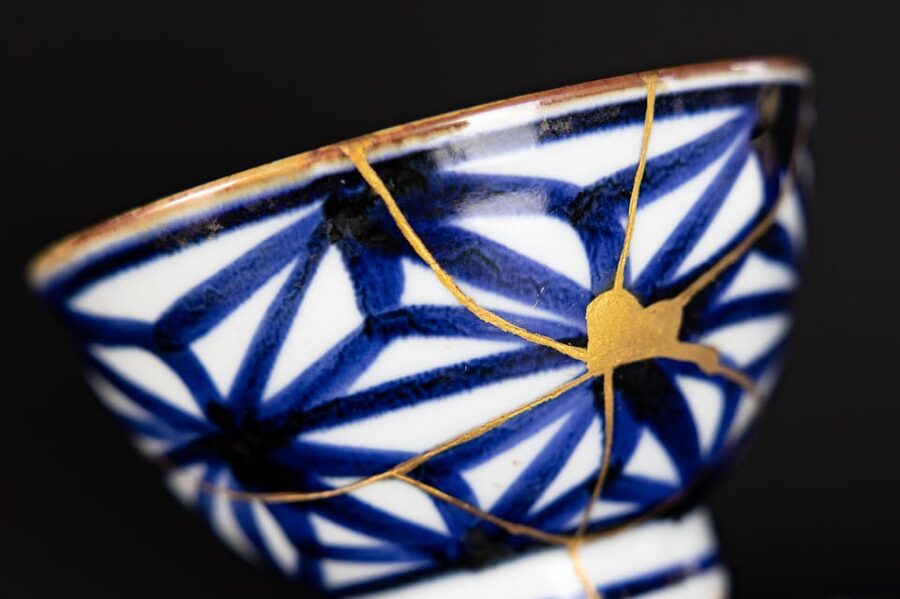
Kintsugi turns a broken plate into a keepsake by making its repaired seams part of the design. At mon cadeau’s studio above Shibuya Crossing, you’ll learn this Japanese craft in a small class, with matcha, seasonal sweets, and patient step-by-step help from teachers such as Michiko and Yuki.
I like the six-person maximum, which gives you real one-on-one guidance rather than a quick demonstration followed by guesswork. I also like that you take home an actual piece of crockery in a gift box, not just a fleeting lesson or a paper certificate.
The main consideration is the price: $141 per person is a serious spend for two hours, especially if you are comparing it with a museum visit or a longer cooking class. The value comes from the personal instruction, materials, tea service, and finished souvenir, so this suits you best if the making matters as much as the sightseeing.
In This Review
- Key Points
- A Hands-On Craft Above Shibuya Crossing
- Matcha First, Then the Meaning of Wabi Sabi
- Choosing a Plate and Starting the Repair
- Contemporary Materials Make the Craft Accessible
- Why the Small Group Matters
- Taking Home a Better Souvenir
- Location, Timing, and the Entrance
- Is $141 a Fair Price?
- Who Should Book This Workshop?
- Should You Book the Modern Kintsugi Workshop?
- FAQ
- How long does the modern kintsugi workshop last?
- Where is the studio located?
- How do I find the entrance?
- Is the workshop taught in English?
- What is included in the price?
- Do I need to bring tools or crockery?
- Can children join the workshop?
- Can I cancel my booking?
Key Points
- Small class, personal help: Groups are limited to six, with English-language instruction and close attention at each stage.
- A calm pause above Shibuya: The studio is up the hill from Shibuya Crossing, away from the crossing’s crowds and noise.
- Modern kintsugi materials: You learn an accessible contemporary method rather than working through a long traditional restoration process.
- Your own crockery to repair: Choose a prepared plate or other piece from the studio collection, then take it home.
- Matcha and seasonal sweets: The class begins with Japanese tea and treats that set the mood for the craft.
- A useful arrival warning: The entrance is on the main street by the tiled façade and large brown double door, not in the side alley some map directions may suggest.
A Hands-On Craft Above Shibuya Crossing
Shibuya is best known for its giant crossing, glowing signs, department stores, and young fashion districts. A few minutes uphill, the tone changes. Mon cadeau’s private studio sits near the top of Bunkamura-dori, by the Shoto 2-Chome Crossing and next to the Central Hospital Annex building.
That change of pace is part of the appeal. You can spend the afternoon among Shibuya’s crowds, then settle into a quiet room for a craft that asks you to slow down and pay attention. This is not a grand temple ceremony or a formal museum lesson. It is a compact workshop where you handle the tools, make the decisions, and leave with something you helped create.
The class runs for two hours. That is enough time to understand the idea behind kintsugi, watch every stage, and complete a modest repair without turning the activity into a full-day project. The pieces prepared for the class are designed to be manageable, though you still get a genuine hands-on challenge.
A few more Tokyo tours and experiences worth a look



Matcha First, Then the Meaning of Wabi Sabi
The workshop begins with matcha tea and seasonal Japanese sweets. This is more than a snack break before the work starts. It gives you a quiet introduction to Japanese hospitality and a moment to shift out of sightseeing mode.
The sweets change with the season, and the tea service adds a cultural layer without requiring you to attend a lengthy formal ceremony. If you have never tried matcha, the class gives you an easy setting in which to do so. One family even found that children trying matcha for the first time enjoyed it, though the activity is officially not suitable for children under five.
You also receive an introduction sheet and an explanation of kintsugi’s ideas. The central concept is familiar: damage does not have to be hidden, and an object can gain character from the marks of repair. The modern method here presents that idea in a practical way, with enough context to make the finished lines feel meaningful rather than merely decorative.
Expect an informal lesson rather than a lecture. The focus stays on making, but the background helps you understand why the repaired seams are treated as part of the object’s story.
Choosing a Plate and Starting the Repair
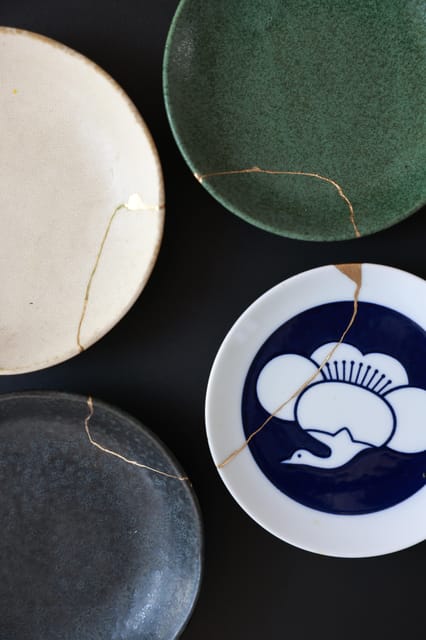
After the introduction, you choose a piece of crockery from the studio’s collection. The exact selection can vary, but the class provides a prepared item that is suitable for the time available.
This choice matters. A very simple piece lets you concentrate on technique, while a more involved break may give you a stronger visual result but require more patience. The instructors help keep the task realistic. One class participant described the prepared pieces as appealing and challenging without being too difficult, which is the right balance for a two-hour session.
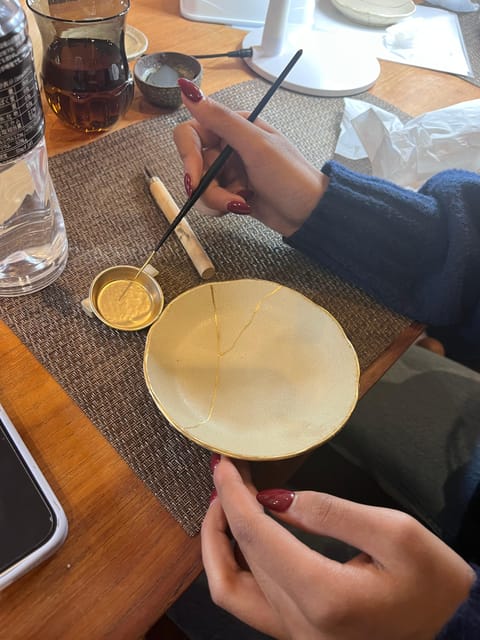
The teacher demonstrates each stage before you try it. You are not expected to remember a long string of instructions from the start. Instead, the lesson moves in a clear order: reassembly, repair, and restoration.
That format works well for beginners. You can watch the instructor’s hands, copy the movement, and ask for help before going on. The limited group size is important here. With six people or fewer, the teacher can check your piece and correct small mistakes before they become bigger ones.
Contemporary Materials Make the Craft Accessible
Traditional kintsugi can involve specialist materials and a much longer process. This workshop uses contemporary materials, which makes the activity faster and easier to manage in a tourist’s schedule.
That distinction is worth understanding before you book. You are learning a modern version of kintsugi, not completing a museum-grade restoration using the oldest materials and methods. For most people, this is an advantage. The work is more approachable, the class fits into a Tokyo day, and you can finish your piece during the session.
Modern materials also make the lesson feel less intimidating. You can focus on the basic principles of joining, filling, and highlighting the repaired lines instead of worrying that one small error will ruin a valuable antique.
The result is still personal. You decide how to work with the piece in front of you, and the visible repair becomes a record of your time in Tokyo. It is not a factory-made souvenir with a Shibuya label on it. You take home something that carries the marks of your own hands.
Why the Small Group Matters
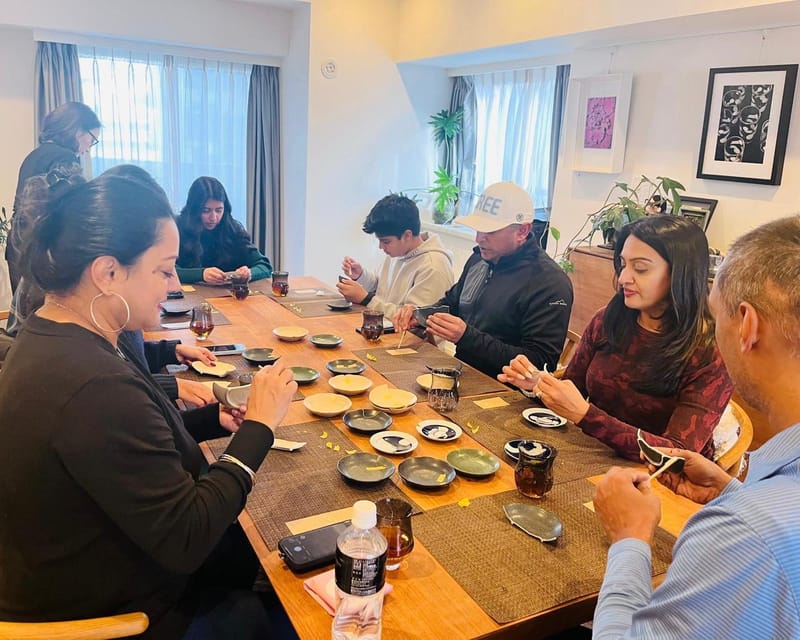
A class limited to six participants changes the experience. In a large workshop, you might spend much of the lesson waiting for tools or trying to see a demonstration from the back. Here, the process is close and direct.
Michiko receives especially strong praise for her warm teaching style, patience, and careful attention. Yuki is also named as an exceptional host, while Koto and Rita assist with teaching and hosting at some sessions. The atmosphere is described as cozy and intimate, with the instructors creating a relaxed setting from the first few minutes.
That warmth has practical value. Kintsugi requires care, and you may want reassurance before placing material along a seam. The teachers prepare the tools, explain what to do, and stay available while you work. You get guidance without someone taking over your piece.
The class can also suit families with older children. Participants have brought a 16-year-old daughter and sons aged 10 and 13. Children under five are not suitable, and the work still requires patience and concentration, so older children who enjoy crafts will get more from it than very young children who need constant movement.
A few more Tokyo tours and experiences worth a look

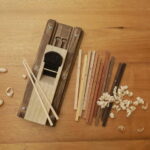
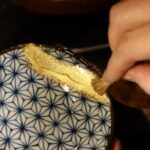

Taking Home a Better Souvenir
At the end, your repaired crockery is placed in one of the studio’s special gift boxes. That packaging helps with the practical problem of carrying a fragile object through the rest of your Japan trip.
The finished piece is small enough to make sense as luggage, yet more memorable than another mass-produced charm. You will remember the tea, the teacher, the room, and the small decisions that shaped the final design.
The experience may also spark an interest in continuing the craft. One participant bought a kit to repair more crockery at home. That kit is not included in the workshop, so do not assume you will receive one, but the class can give you a clear idea of whether kintsugi is something you want to pursue.
You should also treat the finished crockery as a crafted souvenir rather than assume it is suitable for every household use. The provided information does not specify food safety, dishwasher use, or microwave use, so ask the instructor if those points matter to you.
Location, Timing, and the Entrance
The studio is up the hill from Shibuya Crossing at the top of Bunkamura-dori, near Shoto 2-Chome Crossing. Exact directions arrive by email after booking, and you meet outside the building five minutes before the lesson.
Allow time for the uphill walk and for finding the door. A useful detail from the studio’s instructions is that some map routes may send you toward a side alley. The entrance is on the main street. Look for the tiled façade and the large brown double door with a narrow glass panel.
Do not cut the timing close. You cannot join if you arrive more than 15 minutes after the reserved start time. This is understandable for a small, teacher-led class, since late entry would interrupt a demonstration and leave you behind. Still, Shibuya can be confusing, so build in a cushion.
Wear comfortable clothes. You do not need to bring tools, crockery, or other supplies. Everything required for the repair is provided.
Video recording is not allowed. That may disappoint you if you hoped to document every stage, but it keeps the class focused and protects the calm atmosphere. You can still enjoy the process and take home the finished object.
Is $141 a Fair Price?
At $141 per person, this is not a bargain activity. The two-hour length means you are paying for a compact, carefully prepared experience rather than a full day of instruction.
The price includes the matcha tea, seasonal sweets, introduction sheet, all repair materials, and your piece of crockery. It also includes the finished item and its gift box. Most important, it pays for a very small group and close teacher support.
I would compare it with other premium craft experiences, not with a standard attraction ticket. If you only want a cheap souvenir, buy one in a shop. If you want to understand a Japanese craft, make something yourself, and receive individual help in English, the cost is easier to justify.
The value depends on your priorities. Couples, solo visitors, and craft-minded families may find the personal nature worth the price. A group of four or six friends can also make the private-studio setting feel like a shared event. Budget-conscious visitors who prefer major sights and free neighborhood walks may reasonably decide that two hours and one plate are not enough for this fee.
Free cancellation up to 24 hours before the start gives you some flexibility, and you can reserve now and pay later. Those policies help if your Tokyo schedule is still changing, but they do not reduce the basic price.
Who Should Book This Workshop?
I would choose this for you if you want an activity that is quiet, creative, and tied to Japanese culture without requiring prior craft experience. It also works well as a break from Shibuya’s shopping and nightlife.
It is a good match for:
- Adults who enjoy making things with their hands
- Couples looking for a shared souvenir
- Older children and teenagers who can focus on a careful craft
- Visitors interested in wabi sabi and Japanese design
- Anyone who prefers a small class to a large group demonstration
I would think twice if you dislike fine handwork, want a traditional master-level restoration course, or need a very low-cost activity. The modern process is accessible, but it still asks you to work slowly and carefully.
The English instruction is another plus. You can follow the demonstrations and ask questions directly, rather than trying to learn a delicate process through translation alone.
Should You Book the Modern Kintsugi Workshop?
Book it if you want more than a photograph from Shibuya. The setting gives you a calm counterpoint to the crossing, and the combination of tea, sweets, cultural background, patient instruction, and a boxed handmade souvenir makes the experience feel complete.
The strongest reason to go is the teaching. Michiko’s warm, attentive approach and the small class size mean you are not left to struggle on your own. The main reason to hesitate is the cost, not the format.
For craft lovers, design fans, and visitors who value a personal memory over another purchased object, I think this is a worthwhile splurge. Arrive early, use the main-street entrance, wear comfortable clothes, and give yourself two unhurried hours to make something imperfect and distinctly yours.
FAQ
How long does the modern kintsugi workshop last?
The workshop lasts two hours.
Where is the studio located?
The studio is next door to the Central Hospital Annex building at the top of Bunkamura-dori, at the Shoto 2-Chome Crossing, up the hill from Shibuya Crossing.
How do I find the entrance?
Detailed directions are sent by email after booking. The entrance is on the main street, by a tiled façade and a large brown double door with a narrow glass panel.
Is the workshop taught in English?
Yes. English instruction is provided.
What is included in the price?
The price includes matcha tea, seasonal sweets, an introduction explanation sheet, all restoration and repair materials, and a piece of crockery to repair. The finished crockery is placed in a gift box for you to take home.
Do I need to bring tools or crockery?
No. The studio provides everything needed for the workshop. You should wear comfortable clothes.
Can children join the workshop?
Children under five are not suitable for the activity. Older children have taken part, including children aged 10, 13, and 16.
Can I cancel my booking?
You can cancel up to 24 hours in advance for a full refund. You can also reserve now and pay later.
More Workshops & Classes in Tokyo

More Craft Workshops in Tokyo
More Shibuya Tours in Tokyo



More tours in Tokyo we've reviewed











Shibuya Tours, compared.
 ★ 5.0Official Street Go-Kart in ShibuyaFrom $76
 ★ 4.9Tokyo: Street Kart Experience in ShibuyaFrom $741 hour
 ★ 5.0Shibuya Meltdown Nightlife Tour: All-You-Can-Drink Bar HoppingFrom $106
 ★ 5.0Shibuya Official Street Go-Kart in Shibuya AnnexFrom $69
 ★ 5.0Tokyo: Shibuya Food Tour (13 dishes and 4 Eateries)From $77
 ★ 5.0Best of Shibuya Food TourFrom $217