
Reviewed · CRAFT WORKSHOPS
Small Group Japanese Calligraphy Workshop Experience
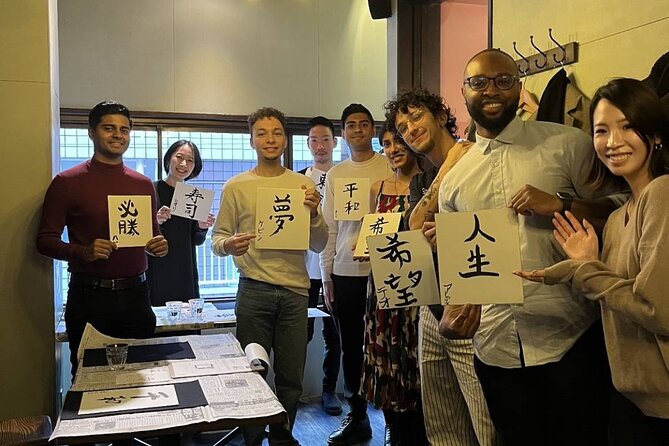
At Monja Kurya Restaurant, you trade Tokyo’s usual rush for a brush, ink, and a quiet hour of focused practice. A certified master calligrapher guides a group of no more than seven people through shodo, the Japanese art of brush writing, and helps you create work you can keep.
I like the personal scale, which gives you a real chance to ask questions and get help with your strokes. I also like that the lesson produces something specific: your name or nickname in Japanese, plus a favorite word. The main consideration is that this is a short workshop in a restaurant during its off hours, not a full cultural class with food, drinks, or hotel transport included.
In This Review
- Key points at a glance
- A quiet hour with a Japanese brush
- Meeting the master in Higashiikebukuro
- Learning the brush before the words
- Writing your name in Japanese
- The restaurant wall display
- What the $55.52 price buys you
- A lesson shaped by your own word
- The main drawback: a short class in a quiet restaurant
- Who should book this calligraphy experience
- Should you book it?
- FAQ
- Where does the Japanese calligraphy workshop take place?
- How long does the activity last?
- Where does the activity end?
- What will I practice writing?
- Is the calligraphy equipment included?
- Is the lesson taught in English?
- How many people can join the workshop?
- Is food included in the price?
- Is hotel pickup and drop-off provided?
- Can I cancel for a full refund?
Key points at a glance
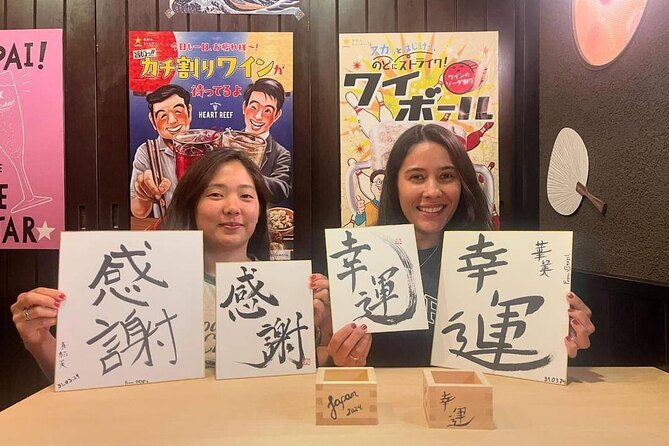
- Write your own name: Practice your name or nickname in Japanese, then add one Japanese word or a favorite word.
- Small group of seven: The limited size gives you more access to the certified master calligrapher.
- Restaurant setting: The lesson takes place at Monja Kurya Restaurant in Higashiikebukuro, during quiet off hours.
- Everything is supplied: Brushes and other calligraphy equipment are included, so you only need to show up.
- One-hour format: This is an easy activity to fit between sightseeing plans, though the short session leaves little room for lingering.
- A personal souvenir: One piece may be displayed on the restaurant wall like an autograph, if you agree.
A quiet hour with a Japanese brush
Japanese calligraphy is not simply handwriting with a prettier pen. The brush changes everything. Ink flows, pressure matters, and each stroke has a shape and rhythm of its own.
This workshop gives you a practical introduction without asking you to commit half a day. You learn by doing, under the direction of a certified master calligrapher, and your lesson centers on words that matter to you. That personal angle makes the class more useful than copying a random character you cannot explain later.
The setting adds to the mood. The class takes place inside Monja Kurya Restaurant, not in a formal museum or large activity studio. The restaurant is used during its off hours, so you may find the room quiet. That is not a problem here. Calligraphy needs concentration, and a low-key room lets you focus on the brush instead of competing with a crowd.
The activity lasts about one hour. That is enough time to learn the basic handling of the brush and produce finished work, but you should not expect an advanced lesson in Japanese writing or a long discussion of calligraphy history.
A few more Tokyo tours and experiences worth a look

Meeting the master in Higashiikebukuro
Your meeting point is Monja Kurya Restaurant in Higashiikebukuro, Toshima City, Tokyo, at 1-chome 25, Higashi Building, on the second and third floors. The stated postal code is 170-0013, and the location is near public transportation.
The activity begins and ends at the restaurant. That makes planning simple, especially if you want to pair the class with other stops in the Higashiikebukuro area. You receive a mobile ticket, and confirmation arrives when you book.
Because the restaurant is quiet during the lesson, do not expect the feel of a busy dining service. You might arrive and wonder if you have found the right place. The calm atmosphere is part of the setup. Allow a little extra time to locate the building and the correct floor, since the supplied address covers the second and third floors.
The guide teaches in English, which matters for an activity built around small movements and exact instructions. You need to understand how to hold the brush, how much ink to use, and when to lift your hand. A language barrier would make those details frustrating, so the English guide is an important part of the experience.
Learning the brush before the words
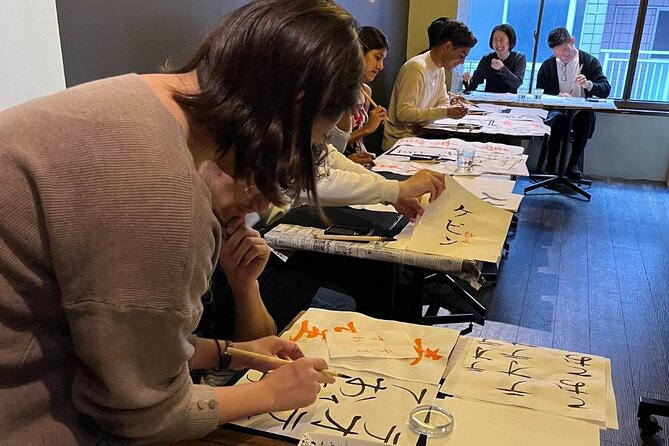
The lesson starts with the basic practice of Japanese brush calligraphy. You work with the supplied equipment rather than watching a demonstration and then being left alone. That hands-on format is the reason the small group size matters.
With a maximum of seven people, the instructor can give individual attention as you practice. Calligraphy is not forgiving when your wrist is stiff or your brush pressure is uneven. A smaller class gives you a better chance to correct those habits before moving on to your final pieces.
You do not need to bring brushes, ink, paper, or other materials. Everything needed for the activity is provided. That makes this an easy addition to a packed Tokyo schedule and removes the need to buy supplies that you may not know how to choose.
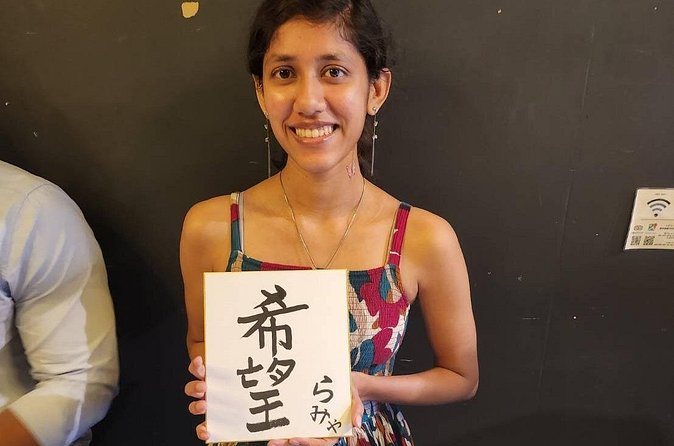
The workshop is also suitable for people who have never tried calligraphy. The description does not require previous experience, and the lesson is designed around learning to write your own name and one chosen word. Still, keep your expectations sensible. Your first attempt may not look like a professional artist’s work, and that is part of the fun.
Writing your name in Japanese
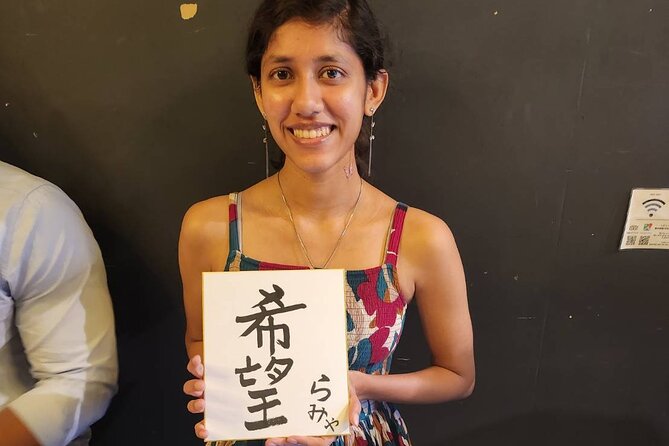
One of the most appealing parts of the activity is the chance to write your own name or nickname in Japanese. If your name does not have a direct Japanese equivalent, the instructor can guide you toward a Japanese rendering or a suitable nickname format, though the exact approach is not specified in the activity details.
This gives you a clear goal from the start. Rather than practicing abstract symbols with no personal connection, you create something tied to your trip. You also leave with a better sense of how Japanese writing looks and feels when made with a traditional brush.
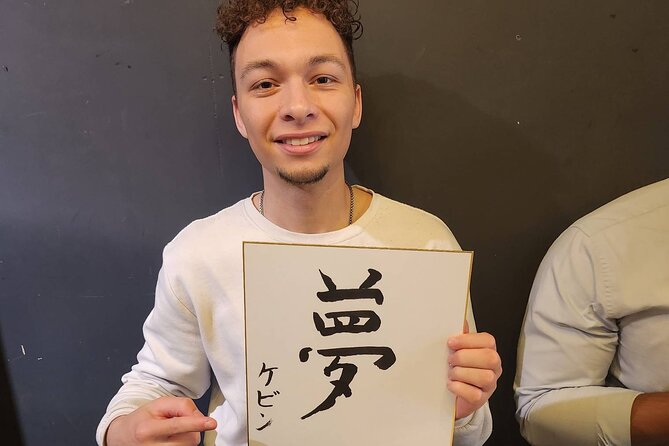
You can also choose one Japanese word or a favorite word. The choice is yours, so think about it before the class begins. A short word is likely to be easier to manage in a one-hour session than a long phrase, but the activity does not specify a required word length.
I like this part because it turns the lesson into more than a craft demonstration. You are not just watching an expert produce beautiful characters. You are making a small piece of art that reflects your own interests, name, or memory of Japan.
The restaurant wall display
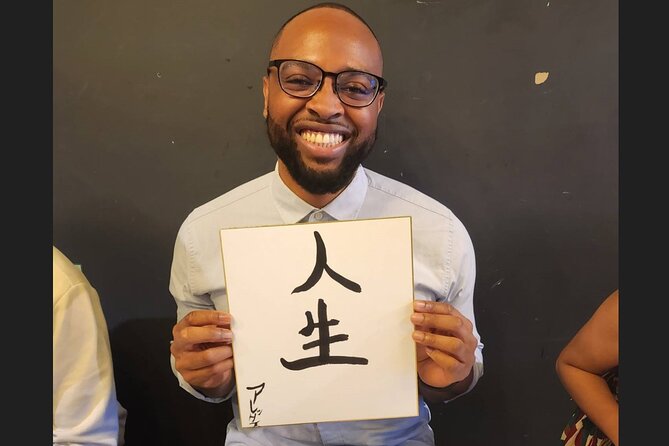
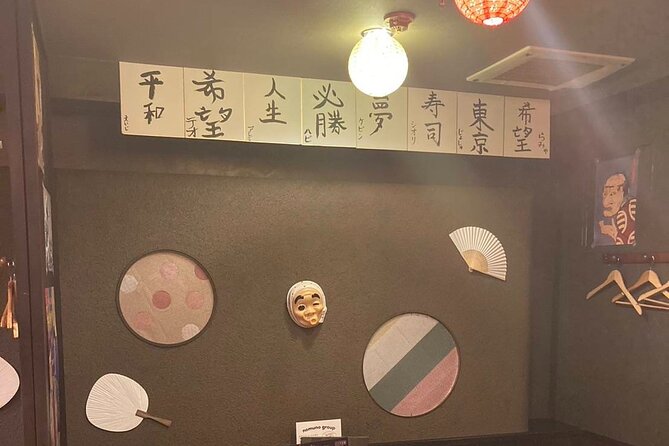
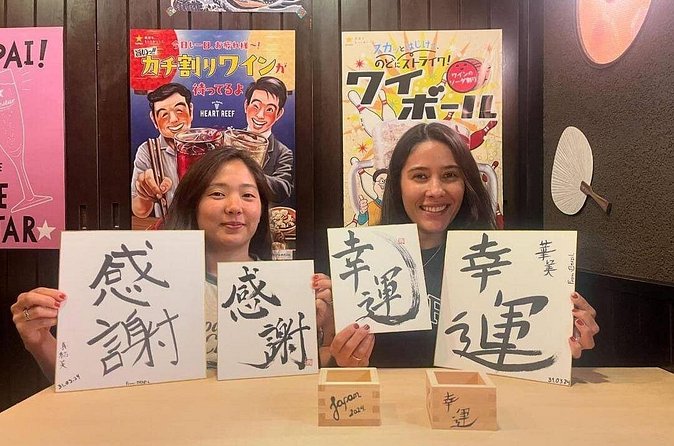
The workshop offers one unusual extra: if you agree, one of your pieces may be displayed on the restaurant wall like an autograph. This is not required, and you can decide whether you want your work shown.
The display gives the activity a sense of place. Instead of taking home an anonymous souvenir from a shop, you may leave a small mark at the restaurant where you practiced. It also gives you a fun story to share with friends, especially if you return to the restaurant later.
Do not assume that every piece will be displayed or that the wall display is the main purpose of the class. It is an optional gesture, and the central experience remains the lesson itself. If you prefer to keep your work private, you can do so.
A few more Tokyo tours and experiences worth a look


What the $55.52 price buys you
At $55.52 per person, this is not the cheapest one-hour activity in Tokyo. The value comes from the instruction, the small class size, the supplied materials, and the personal result you create.
You are paying for more than a quick brush-using demonstration. A certified master calligrapher leads the session, and the group is capped at seven. That combination gives you a better chance of receiving direct correction than you would in a large cultural activity.
The price also includes an English guide and all necessary equipment. You do not need to budget for brushes or ink, and you avoid the trouble of finding a shop that sells suitable materials. For a visitor who wants a compact cultural activity with a take-home result, the cost is reasonable.
Food and drinks are not included. Since the class takes place in a restaurant, you might expect a meal to be part of the package, but it is not. Plan to pay separately if you want to eat or drink there, and do not count on the workshop itself to fill a full afternoon.
The one-hour length keeps the price from feeling excessive, but it also limits how much you can learn. If you already study shodo or want a serious technical course, this may feel too brief. If you want a personal introduction that fits neatly into a Tokyo day, the format works better.
A lesson shaped by your own word
The structure is simple and useful:
- You meet the English-speaking guide at Monja Kurya Restaurant.
- You receive the required calligraphy equipment.
- The certified master explains and demonstrates the traditional brush approach.
- You practice writing your name or nickname in Japanese.
- You choose and practice one Japanese word or favorite word.
- You may agree to have one finished piece displayed on the restaurant wall.
- You finish back at the same meeting point.
That sequence gives the class a clear beginning, middle, and end. You start with technique, move to personal writing, and finish with a piece that has meaning for you.
The practical value is that you can continue practicing at home. You will not leave with a complete formal education in shodo, but you will have tried the basic tools and learned enough to understand the careful balance of ink, brush, and movement.
The activity description refers to traditional Japanese writing and a deeper understanding of Japanese calligraphy and culture. The cultural lesson is present through the practice itself rather than through a long lecture. You learn by handling the brush and seeing how the characters take shape.
The main drawback: a short class in a quiet restaurant
The off-hours restaurant setting is atmospheric, but it may not suit everyone. If you want a polished studio, a large cultural center, or a highly staged activity, this workshop may feel modest.
The quiet room can also seem slightly odd at first. A restaurant without its normal energy does not offer the same visual drama as a temple or historic house. Yet the tradeoff is useful concentration and a more intimate class.
The bigger limitation is time. One hour passes quickly once you include instructions, practice, and your final writing. You should arrive ready to choose your word and pay attention from the beginning. There is no indication of a long break, meal, or extended free practice period.
The activity is also not a sightseeing tour. You will not visit several places or learn about a wide range of Tokyo sights. This is a focused cultural stop, best used as one small part of a larger day.
Who should book this calligraphy experience
I would choose this for a first-time visitor who wants a calm, hands-on activity between major Tokyo attractions. It also suits couples, friends, and solo visitors who like making something personal rather than collecting another bought souvenir.
Families and mixed-age groups may find the small class appealing, though the supplied information does not give a minimum age or specific child policy. Since most participants can take part, the activity is broadly accessible in terms of participation, but the operator does not provide more detailed accessibility information.
This is a good pick for anyone curious about Japanese culture but short on time. The one-hour format is easy to fit into a city schedule, and the same meeting point for arrival and departure keeps the logistics tidy.
I would think twice if your main goal is a full meal, a long cultural talk, or advanced calligraphy training. Food and drinks cost extra, hotel pickup is not provided, and the class has a firm one-hour shape.
Book ahead if your Tokyo dates are fixed. This experience is booked an average of 104 days in advance, which suggests that popular dates can fill well before arrival. Free cancellation is available if you cancel at least 24 hours before the local start time. Changes or cancellations inside that window are not accepted for a refund.
Should you book it?
Book this workshop if you want a personal, creative souvenir and prefer learning by doing. The seven-person limit, English instruction, supplied equipment, and chance to write your own name make the $55.52 price easier to justify.
Skip it if you want a longer class, included food, or a major Tokyo attraction built into the experience. For the right visitor, though, this is a pleasant way to slow down, practice a traditional craft, and leave Higashiikebukuro with something you made yourself.
FAQ
Where does the Japanese calligraphy workshop take place?
The workshop takes place at Monja Kurya Restaurant in Higashiikebukuro, Toshima City, Tokyo, postal code 170-0013. The stated address is 1-chome 25, Higashi Building, on the second and third floors.
How long does the activity last?
The calligraphy workshop lasts approximately one hour.
Where does the activity end?
The activity ends back at the restaurant meeting point.
What will I practice writing?
You will practice writing your name or nickname in Japanese and one Japanese word or favorite word.
Is the calligraphy equipment included?
Yes. All necessary equipment is included, so you do not need to bring your own materials.
Is the lesson taught in English?
Yes. An English guide is included.
How many people can join the workshop?
The activity has a maximum group size of seven participants.
Is food included in the price?
No. Food and drinks are not included.
Is hotel pickup and drop-off provided?
No. Hotel pickup and drop-off are not included. You make your own way to the restaurant.
Can I cancel for a full refund?
Yes, if you cancel at least 24 hours before the experience start time. Cancellations or changes made less than 24 hours before the start time are not accepted for a refund.
More Workshops & Classes in Tokyo
More Craft Workshops in Tokyo

More tours in Tokyo we've reviewed




Craft Workshops, compared.
 ★ 5.0Tokyo Shinjuku Chopsticks Making ClassFrom $20
 ★ 4.8Chopstick Making Workshop in GinzaFrom $251 hour
 ★ 5.0Kintsugi Experience: Art of Golden Joinery in TokyoFrom $59
 ★ 5.0Tokyo Chopstick Making Workshop with ArtisanFrom $26
Tokyo: Shinjuku Chopstick Making ClassFrom $121 hour
Tokyo: Chopstick-Making WorkshopFrom $61 hour
★ 5.0Tokyo Chopstick Making Workshop with ArtisanFrom $26
Tokyo: Shinjuku Chopstick Making ClassFrom $121 hour
Tokyo: Chopstick-Making WorkshopFrom $61 hour