
Reviewed · TOKYO FOOD TOURS
Tokyo Vegan Food Tour
Tokyo’s vegan food scene gets far more interesting than a simple bowl of noodles. This three-hour tour through Shibuya and Ebisu brings you mini bowls of Hokkaido-style ramen, vegan gyoza, plant-based karaage, fruit sandwiches, and sweet anko sandwiches, while showing how Japanese cooking can work without animal products.
I like the small group limit of six, which gives the guide room to explain ingredients and answer questions. I also like the practical mix of tasting and orientation, including a quick convenience-store stop and a walk past Shibuya’s famous crossing. The main drawback is that the tour costs $101.25 and does not include private transportation, so you are paying for a focused food experience rather than a full-day sightseeing tour.
In This Review
- Key points to know before booking
- Why this Tokyo food tour is different
- Starting near Shibuya Crossing
- Ramen first, with four styles to compare
- Gyoza and karaage show how plant-based substitutes work
- Sweet sandwiches add a distinctly Japanese finish
- The convenience-store stop has real practical value
- Shibuya and Ebisu make a good food route
- What the guide adds to the meal
- How much food do you get for $101.25?
- Who will enjoy this most?
- Booking flexibility and timing
- What the high rating tells you
- Should you book the Tokyo Vegan Food Tour?
- FAQ
- Where does the Tokyo Vegan Food Tour start?
- Where does the tour finish?
- How long does the tour last?
- What food is included?
- Is a drink included?
- How many people can join the tour?
- Can I cancel for a full refund?
Key points to know before booking
- Five distinct Japanese tastings: Expect ramen, gyoza, karaage, fruit sandwiches, and butter with anko sandwiches.
- Shibuya to Ebisu route: The experience begins at SHIBU HACHI BOX and finishes near Ebisu Station.
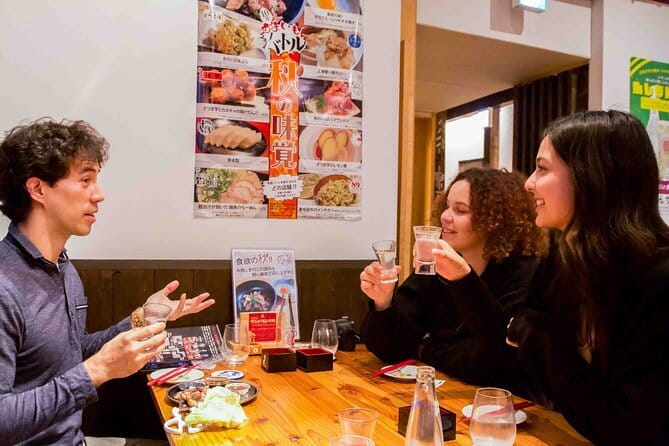
- Small group format: A maximum of six people keeps the food discussion personal and manageable.
- Useful vegan guidance: You get tips for finding plant-based food in Tokyo, including a convenience-store visit.
- One drink included: Choose one alcoholic or non-alcoholic beverage during the tour.
- Strong reported satisfaction: The experience has a five-star rating from 12 reviews, with 100 percent recommending it.
Why this Tokyo food tour is different
Tokyo can be a tricky city for a vegan eater. Plant-based food is available, but you need to know what to look for, and familiar Japanese dishes may contain fish stock, meat, eggs, or dairy in less obvious ways. This tour gives you a way to sample Japanese flavors while also learning how vegan dining fits into the country’s food culture.
The menu is not limited to one style of cooking. You get savory foods, fried foods, noodles, sweets, fruit, and a drink. That variety matters because it lets you compare the techniques used to replace meat, eggs, and dairy rather than judging the whole experience on one dish.
The tour also has a useful local angle. You are not simply seated in one restaurant for lunch. You move through parts of Shibuya and Ebisu, see one of Tokyo’s best-known public scenes, and get practical ideas for eating on your own after the tour ends.
A few more Tokyo tours and experiences worth a look
Starting near Shibuya Crossing
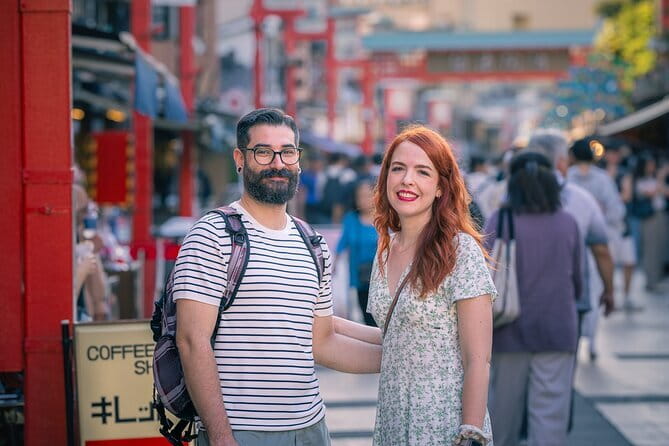
The meeting point is SHIBU HACHI BOX at 2-chōme-1-1 Dōgenzaka, Shibuya. This puts you close to the area’s famous crossing and major public transportation connections. The exact starting point matters in Tokyo, where a busy station can turn a simple meetup into a hunt if you arrive late.
Your guide takes you past some of Shibuya’s iconic scenes, including the famous crossing. This is not presented as a dedicated sightseeing tour of Shibuya, so keep your expectations in check. The crossing is part of the setting and route, not the main event.
That is a good balance for a food-focused outing. You get a little sense of the neighborhood without spending the whole three hours on standard city sights. If this is your first visit to Shibuya, arrive with enough time to find the meeting point and take in the surroundings before the food stops begin.
Ramen first, with four styles to compare
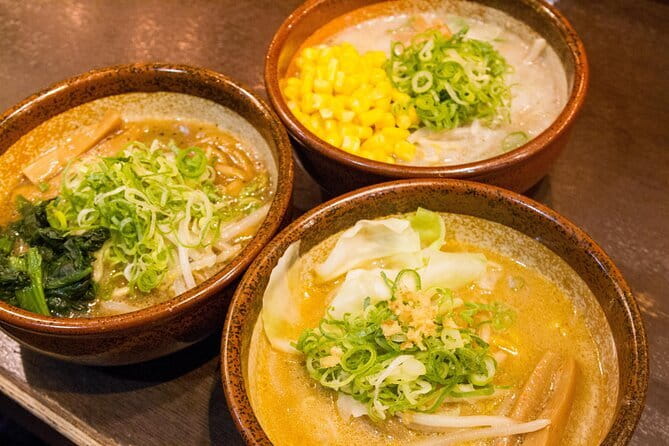
One of the strongest parts of the food selection is the chance to try mini bowls of Hokkaido-style ramen. The available choices include spicy miso, miso, shoyu, and shio. Since the bowls are small, the format allows you to taste without committing your entire lunch to one large serving.
The four choices also give you a useful introduction to the main flavor families. Miso offers a fuller, fermented taste. Shoyu brings soy sauce into the mix. Shio is the lighter-sounding salt-based option, while spicy miso adds heat. The tour does not state that every participant receives all four styles, so your exact tasting may depend on the choices available during your visit.
For a vegan tour, the ramen stop has special value. Ramen is often associated with pork broth, chicken stock, or seafood-based seasoning. Here, the focus is on plant-based versions while still keeping the recognizable Japanese noodle experience.
Gyoza and karaage show how plant-based substitutes work

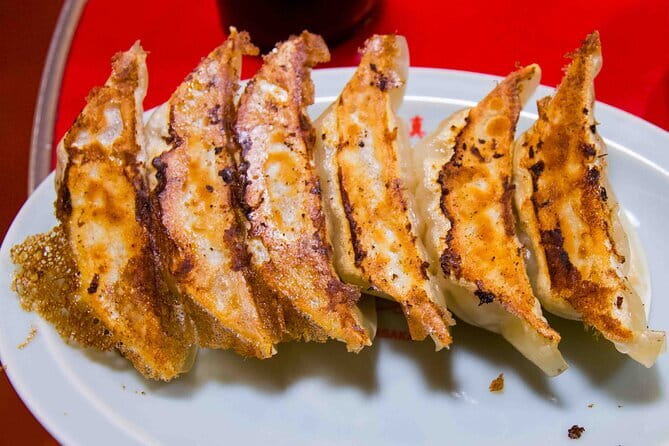
Next come vegan gyoza dumplings and vegan karaage. These are useful choices because they are familiar Japanese foods that traditionally rely on meat or other animal ingredients.
Gyoza gives you the chance to focus on seasoning, filling, and the dumpling wrapper. Karaage brings a crunchy, fried element to the meal. It is described as a vegan twist on Japanese fried chicken, so you can expect the tour to use plant-based ingredients in place of the usual poultry while retaining the idea of a crisp, savory bite.
I like this pairing because it keeps the food fun. The tour is educational, but it is not built around lectures or abstract discussion. You learn through recognizable dishes that show how Japanese cooks approach texture and flavor in plant-based form.
The included snacks and lunch make the price easier to assess. You are not paying only for a guide to point out vegan restaurants. Several food samples form the substance of the experience, and the selection covers enough styles to function as a substantial tasting meal for many people.
Sweet sandwiches add a distinctly Japanese finish
The sweet side of the menu is where this tour moves beyond the usual vegan ramen route. You may try fruit sandwiches filled with fresh seasonal fruit, as well as butter and anko sandwiches.
Fruit sandwiches are a particularly distinctive Japanese treat. The appeal comes from the contrast between soft bread, creamy filling, and fresh fruit. Seasonal availability can affect the fruit used, so the exact combination may change.
Anko is sweet bean paste, a classic Japanese filling. Pairing it with butter creates a rich sweet and salty contrast, and the vegan version lets you try the idea without dairy. This stop gives you a better sense of Japanese snack culture than another savory bowl would.
Do not book this tour expecting a Western-style vegan menu. The point is to see how familiar Japanese foods, including convenience-store snacks and sweets, can be adapted for a plant-based diet.
A few more Tokyo tours and experiences worth a look




The convenience-store stop has real practical value

A quick stop at a convenience store may sound less exciting than a restaurant tasting, but it could be one of the most useful parts of the experience. Japanese convenience stores are everywhere, and they are a common source of quick meals and snacks. The challenge is knowing which products fit your diet and which hidden ingredients to avoid.
The tour includes practical tips for navigating Tokyo’s vegan food scene, and the convenience-store visit gives those tips a real setting. You can ask questions about labels, ingredients, and what to look for when you are eating independently.
The details provided do not specify which convenience store you visit or which products you sample, so you should treat this as a short orientation rather than a guaranteed shopping session. Still, it is a smart addition for anyone staying in Tokyo for several days.
Shibuya and Ebisu make a good food route

The tour begins in Shibuya and concludes near Ebisu Station at 1 Chome-5 Ebisuminami, Shibuya. These neighborhoods give the experience a useful sense of movement. You start amid one of Tokyo’s most famous urban scenes and finish in a different part of the city after several food stops.
Private transportation is not included. That means you should expect to get between the meeting point, food stops, and final station as part of the guided route rather than by private vehicle. Since the tour lasts about three hours and follows city streets, wear shoes you can use comfortably for that amount of time.
The end point near Ebisu Station is convenient for continuing your day. You can treat the tour as a late morning or midday activity, then continue sightseeing from Ebisu or return to another part of Tokyo by public transportation.
What the guide adds to the meal
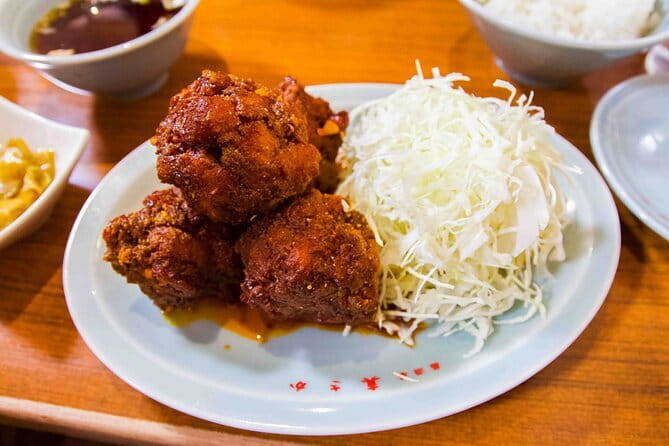
The guide is an important part of the value here. The tour is led by food enthusiasts who explain local ingredients, cooking methods, and the growth of vegan dining in Japan. That turns each sample into more than a quick bite.
Specific guide names connected with the experience include Daisy and Sahori. One account described Daisy as the guide for a very small tour with only two participants, while another praised Sahori for making the outing relaxed and enjoyable. Guide assignments can change, but these details suggest that the experience can feel personal rather than scripted when the group is small.
The educational side is especially useful if you are not vegan. One person who joined with a vegan partner enjoyed the food despite not following a vegan diet. That is a good sign for mixed groups, since nobody needs to be committed to plant-based eating to appreciate ramen, dumplings, fried food, fruit, and sweets.
You should come ready to ask questions. The more you engage with the guide, the more useful the restaurant suggestions and food explanations are likely to be.
How much food do you get for $101.25?
At $101.25 per person, this is not a bargain meal. Tokyo has cheaper ways to eat, and you could spend less by visiting one restaurant or buying snacks on your own.
The better question is what the fee combines. You receive a guide for about three hours, a series of vegan food tastings, lunch, snacks, one alcoholic or non-alcoholic drink, neighborhood orientation, cultural context, and advice for finding plant-based food afterward. The small group limit of six adds value because the experience is not designed for a large crowd.
I would consider the price reasonable for a visitor who wants a clear introduction to vegan Tokyo and does not want to spend time researching every stop. It is less compelling for someone who already knows the city’s vegan restaurants or mainly wants a cheap lunch.
The booking pattern also tells you something practical. The tour is booked, on average, 45 days ahead. That does not mean every date sells out that early, but you should reserve ahead if your Tokyo schedule is fixed, especially because the group is capped at six.
Who will enjoy this most?
This tour suits several types of visitors:
- You are vegan or vegetarian and want help finding Japanese food you can trust.
- You are traveling with someone vegan and want a meal that works for the whole group.
- You want to taste several dishes instead of sitting down for one standard lunch.
- You enjoy food history, ingredients, and cooking methods.
- You are visiting Tokyo for the first time and want a guided introduction to Shibuya and Ebisu.
- You want practical ideas for eating on your own after the tour.
It may not suit you if you dislike walking between food stops, want a private vehicle, or prefer a large meal at one restaurant. The experience is also less useful if you are looking only for major sightseeing attractions. Shibuya Crossing appears along the route, but food remains the focus.
Most people can participate, and the tour is near public transportation. The supplied details do not give a specific accessibility assessment, so contact the provider if you have mobility or dietary questions beyond the stated vegan format.
Booking flexibility and timing
Confirmation is received at booking, and the ticket is mobile, which makes the experience easy to add to a Tokyo itinerary without printing paperwork.
Free cancellation is available if you cancel at least 24 hours before the local start time. Cancellations or changes made less than 24 hours before the experience are not accepted for a refund. Keep that cutoff in mind when arranging a food tour around a busy sightseeing schedule.
Since the tour starts in Shibuya and ends near Ebisu Station, avoid placing a tightly timed reservation immediately afterward. The duration is about three hours, but food stops and city movement can make a little extra planning sensible.
What the high rating tells you
The experience has a five-star rating from 12 reviews, with 100 percent recommending it. The praise centers on three clear points: the food tastes good, the guides explain vegan culture well, and the tour helps you understand where to eat in Tokyo.
Daisy received praise for leading a small group through enjoyable restaurant stops. Sahori was described as relaxed and fun. The educational value also comes through strongly, with the tour helping participants understand vegan food culture in Tokyo and Japan rather than simply handing out samples.
A small review count cannot prove that every departure will be identical. Menus, guides, and group size can vary. Still, the pattern is consistent enough to make the experience a strong option for visitors who want both a meal and a practical food lesson.
Should you book the Tokyo Vegan Food Tour?
Book it if you want a guided introduction to Japanese vegan food with enough variety to make lunch feel like an event. The combination of ramen choices, gyoza, karaage, fruit sandwiches, anko sandwiches, a drink, and convenience-store advice gives you more than a single restaurant visit.
I would especially recommend it for a mixed vegan and non-vegan group, first-time visitors to Tokyo, and anyone who wants help making sense of plant-based options. The $101.25 price is fair when you value the guide, small group, food, and local advice together.
Skip it if your priority is the lowest possible food cost, a private tour, or a major sightseeing itinerary. For everyone else, this is a focused, useful way to eat across Shibuya and Ebisu while learning how vegan dining fits into everyday Tokyo.
FAQ
Where does the Tokyo Vegan Food Tour start?
The tour starts at SHIBU HACHI BOX, 2-chōme-1-1 Dōgenzaka, Shibuya, Tokyo 150-0043, Japan.
Where does the tour finish?
The tour concludes near Ebisu Station at 1 Chome-5 Ebisuminami, Shibuya, Tokyo 150-0022, Japan.
How long does the tour last?
The experience lasts approximately three hours.
What food is included?
The tour includes vegan Japanese tastings such as mini bowls of Hokkaido-style ramen, vegan gyoza dumplings, vegan karaage, seasonal fruit sandwiches, and butter and anko sandwiches.
Is a drink included?
Yes. One drink is included, and you can choose an alcoholic or non-alcoholic beverage.
How many people can join the tour?
The tour has a maximum of six participants.
Can I cancel for a full refund?
Yes, if you cancel at least 24 hours before the experience start time. Cancellations or changes made less than 24 hours before the local start time are not accepted for a refund.
More Food Experiences in Tokyo
More Tokyo Food Tours in Tokyo
More tours in Tokyo we've reviewed








Tokyo Food Tours, compared.
 ★ 5.0Tokyo: Shinjuku Food Tour (13 Dishes at 4 Local Eateries)From $86
 ★ 4.9Tokyo: Shinjuku Food Tour (15 Dishes and 4 Eateries)From $853 hours
 ★ 5.0Best of Shinjuku: Izakaya Food Tour (4 Stops, 14+ Tastings)From $92
 ★ 5.0Tokyo Night Foodie Tour in Shinjuku – Seasonal Sushi, Wagyu BeefFrom $111
 ★ 5.0Eat and Drink Like a Local: Tokyo Ueno Food Tour-Taverns&RamenFrom $95
 ★ 5.0Tokyo: Shibuya Food Tour (13 dishes and 4 Eateries)From $77