
Reviewed · TOKYO FOOD TOURS
Private Tokyo Food Tour – A Journey Through Time Through Food
Tokyo’s food story unfolds in three acts on this private tour: Edo-era staples in Nihonbashi, postwar working-life dishes around Ginza and Yurakucho, then playful modern sweets in Akihabara. You get 14 tastings, plenty of local context, and a route that shows how Japanese cooking changed without losing its roots.
I especially like the focus on ingredients such as kombu and katsuobushi, and the use of old shops rather than a string of famous tourist stops. I also like the private format, which lets your guide adjust the pace and explain unfamiliar foods. The main drawback is the price, $327.75 per person, plus your subway fares, so this makes the most sense for a small group that values personal guidance.
In This Review
- Key points to know before booking
- Nihonbashi begins with the building blocks of Japanese flavor
- Fukutoku Shrine adds a short cultural pause
- Ginza and Yurakucho explain food under the railway tracks
- The route between districts gives you a look at modern Tokyo
- Tokyo Station serves commuter food with a polished twist
- Akihabara looks at the future of Japanese food
- What the private format adds
- Food quantity, dietary needs, and family appeal
- Timing, transport, and practical details
- Who will get the most from this Tokyo food tour
- Should you book it?
- FAQ
- How long does the private Tokyo food tour last?
- Where does the tour start?
- Where does the tour end?
- Is hotel pickup available?
- How many food tastings are included?
- What food is included?
- Are transportation costs included?
- Is this a private activity?
- What is the cancellation policy?
Key points to know before booking
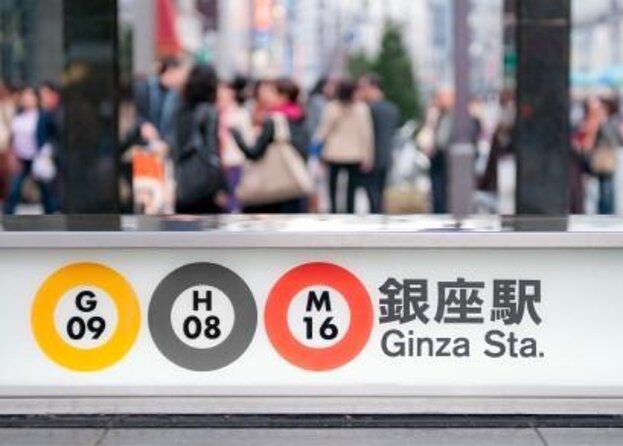
- Three Tokyo districts, three food eras: Nihonbashi covers tradition, Ginza and Yurakucho show postwar city life, and Akihabara looks toward modern food culture.
- Fourteen tastings fill the day: Expect snacks, noodles, yakitori, sweets, tea, and a lemon sour, so arrive hungry.
- Private guiding changes the experience: Only your group takes part, with pickup offered from your Tokyo accommodation.
- The old and new sit close together: You may eat century-old Japanese sweets in one part of the tour and a Pokémon taiyaki or fusion dessert later.
- Two subway rides cost extra: The route is not entirely on foot, and you pay directly for the short subway trips.
- Guide quality matters here: Guides including Yasu, Keiko, Miko, Paiva, and Rohan have led this experience, with special praise for clear explanations, humor, and help with Tokyo’s train system.
Nihonbashi begins with the building blocks of Japanese flavor
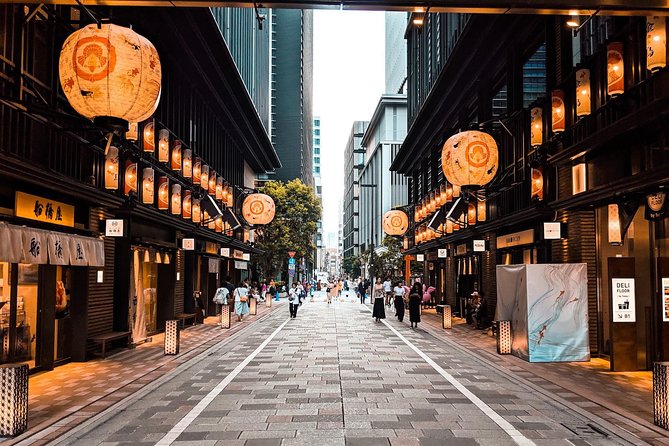
The tour starts at the Nihonbashi 1-chome Mitsui Building, near Nihonbashi Bridge. This is a useful starting point because the first hour is not just a snack crawl. It gives you the vocabulary to understand much of what you eat in Japan afterward.
Your guide explains dashi, the stock used as a base for many Japanese dishes. The key ingredients here are kombu, or kelp, and katsuobushi, dried fermented bonito that is shaved into thin flakes. Once you know these flavors, noodle broths, soups, sauces, and simmered dishes become easier to recognize.
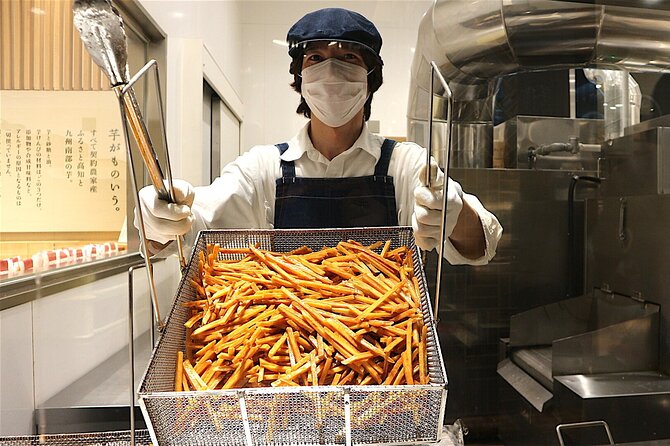
You then sample satsuma-age, a fried fish cake; amazake, a fermented rice drink; imo kenpi, sweet potato chips; and daifuku or dorayaki, traditional sweets. These are small portions, but four tastings at the opening stop set a steady pace. You are not waiting until lunchtime to eat.
The shops chosen for this section are more than convenient food counters. All are at least 100 years old, and several date to the Edo period. That gives the tasting a strong sense of continuity. You can connect an ingredient or snack to a long-running food tradition instead of simply checking another Japanese dish off a list.
A practical note: the exact sweet may be daifuku or dorayaki, and the included food list also mentions Pokémon taiyaki later. If you have strong food preferences, ask your guide at the start what is planned that day. The published details do not promise substitutions.
A few more Tokyo tours and experiences worth a look
Fukutoku Shrine adds a short cultural pause
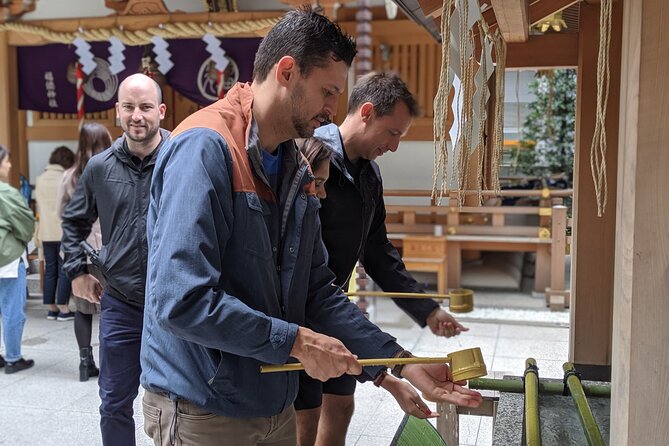
From the food shops, you visit Fukutoku Shrine for about ten minutes. This is a brief stop, but it breaks up the eating and helps explain a basic point that can otherwise be confusing on a first visit to Japan: the difference between a Shinto shrine and a Buddhist temple.
Your guide shows you how to cleanse yourself and pray at a shrine. The stop is not a long religious tour, and that is part of its value. You get a simple, practical introduction without losing much time from the food route.
Wear shoes you can walk in and expect to move between stops at a city pace. The tour lasts about five and a half hours, so even short pauses matter when combined with meals, train rides, and walking.
Ginza and Yurakucho explain food under the railway tracks
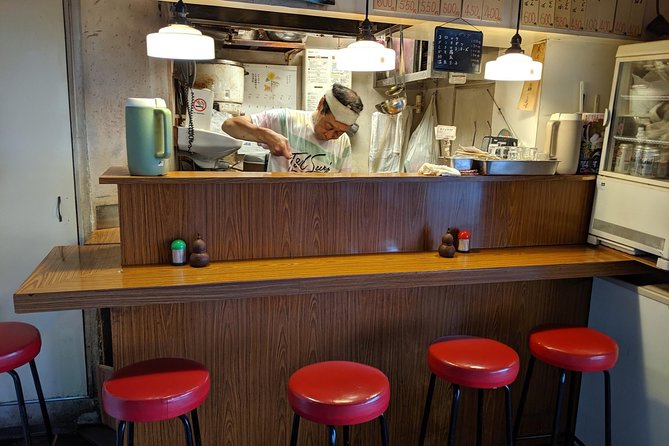
The next major section moves toward Ginza and Yurakucho. Here the story changes from traditional ingredients to Japan’s postwar industrial growth.
Your guide introduces the salaryman, the office worker whose daily routine helped shape Tokyo’s food culture. Small restaurants and bars built beneath or beside railway tracks, known as gado shita, served workers before their commute home. The setting is a reminder that Japanese food is shaped not only by chefs and recipes, but also by work schedules, rail lines, and crowded city life.
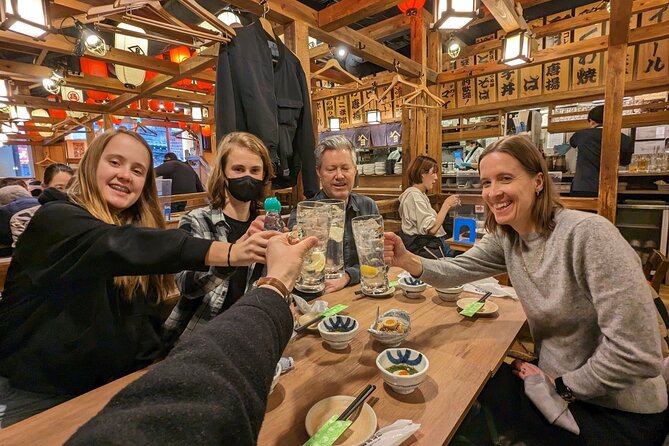
You eat at an izakaya and a noodle stall in this railway-side district. The menu includes yakitori, a lemon sour, and either tempura soba or curry udon. Yakitori gives you grilled meat on skewers, while the noodle dish offers a more filling bowl. Curry udon is especially appealing if you want something warming and substantial, while tempura soba gives you a more classic combination of broth, noodles, and fried seafood or vegetables.
The lemon sour is an alcoholic drink closely linked to Japanese pub culture. It is included, but you should tell your guide if you do not drink alcohol. The supplied details do not specify a nonalcoholic replacement.
This part of the route is one of the most distinctive sections because you are eating in the kind of place built around local working life, not a polished dining room designed for sightseeing. It may also be the least comfortable section for anyone who prefers quiet, spacious restaurants. The point is the atmosphere and the connection to the railway district.
The itinerary lists Ginza and Yurakucho as separate stops, but they describe the same food section and the same menu. Think of this as one extended neighborhood visit rather than two separate meals.
The route between districts gives you a look at modern Tokyo
After eating under the tracks, you walk toward Tokyo Station. The route includes the Tokyo International Forum, an impressive modern building, followed by the Kitte Marunouchi building.
These are short stops, around 15 minutes at the International Forum and 10 minutes at Kitte. They do not add another major tasting, but they keep the food story tied to the city around it. Tokyo’s food culture developed alongside offices, train stations, shopping buildings, and new forms of urban design.
This is also where the tour’s structure works well. Rather than spending five hours inside restaurants, you alternate between eating, walking, and short cultural explanations. You get a stronger sense of how the districts connect, although the walking and transfers mean this is not a sit-down meal experience.
Tokyo Station serves commuter food with a polished twist
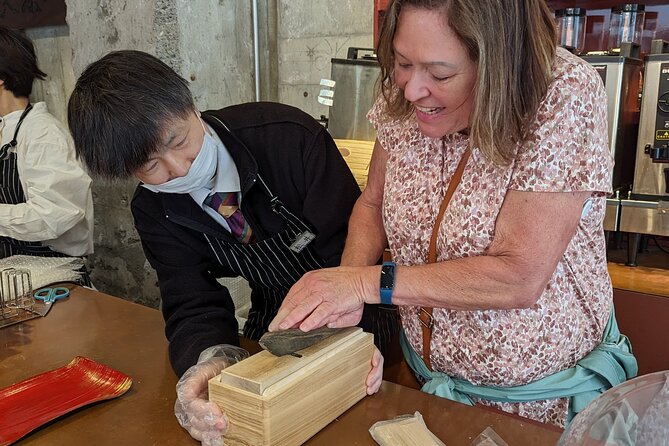
At Tokyo Station, you try foods associated with eating on the way home or picking up something convenient after work. The menu includes tamagoyaki and a fruit sando.
Tamagoyaki is Japanese rolled omelette, lightly sweet and neatly layered. It is simple food, but it shows the care often given to a familiar everyday item. A fruit sando is made with Japanese milk bread, fresh fruit, and whipped cream. It looks like a sandwich, but the soft bread and sweet filling make it closer to a portable dessert.
You may visit the Tokyo Station Marunouchi plaza and Daimaru Tokyo during this section. The timing listed for these stops totals about 20 minutes each, though the food experience is best understood as one Tokyo Station segment.
This is a good place to see how Japanese convenience food can be precise and visually appealing without being formal. It also gives you a contrast with the older snacks in Nihonbashi and the informal dishes beneath the railway tracks.
A few more Tokyo tours and experiences worth a look

Akihabara looks at the future of Japanese food
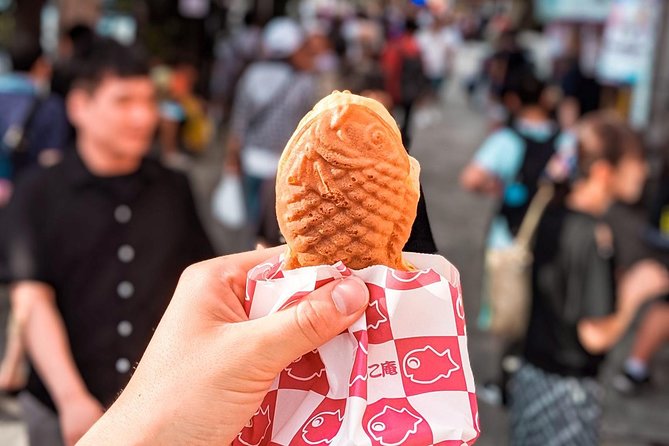
The final district is Akihabara, known for electronics shops, maid cafés, and anime culture. The food changes again, moving toward desserts that combine traditional Japanese ingredients or flavors with modern presentation.
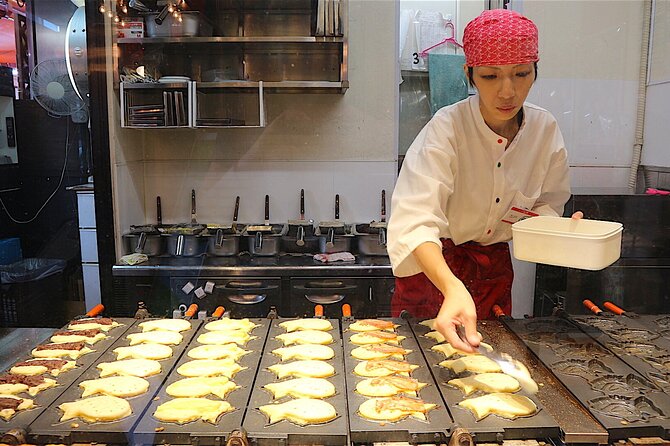
The included choices mention three fusion desserts, Pokémon taiyaki, and matcha bubble tea or matcha ice cream. Taiyaki is a fish-shaped cake traditionally filled with sweet bean paste, though the Pokémon version gives the familiar form a contemporary pop-culture identity.
This section is less about a single classic dish and more about how Japanese food absorbs new ideas. Akihabara provides the right setting because its identity is tied to technology, entertainment, and subcultures. Your guide discusses that connection while you try the sweets.
For some people, this will be the most fun stop. For others, it may feel less essential than the traditional food in Nihonbashi or the railway-side meal in Yurakucho. I would view it as a light ending rather than the culinary high point. After a full day of eating, a few modern desserts make sense, but you should not expect a second full meal.
What the private format adds
The tour is private, so only your party takes part. That matters in Tokyo, where small food counters, station passages, and narrow izakaya spaces can make a large group awkward.
A private guide can also spend more time on the questions that interest you. You might want more detail about dashi, help ordering food later in your trip, or a clearer explanation of shrine customs. The tour’s guides have included Yasu, Paiva, Miko, Keiko, and Rohan. The strongest praise centers on guides who combine humor with clear cultural explanations, and on practical help with Tokyo’s train system.
One particularly useful feature is the pickup option from your accommodation. The official meeting point is the Nihonbashi 1-chome Mitsui Building, but pickup can make the first morning easier, especially if this is your first day in Tokyo.
The private format does not automatically make the tour good value for everyone. At $327.75 per person, the cost is high compared with simply eating at the same types of shops yourself. You are paying for the guide, planning, explanations, and the convenience of having the route arranged across four districts. The value improves if you are a family or small group splitting the benefit of a private guide, or if you want an easy first introduction to Tokyo food.
Food quantity, dietary needs, and family appeal
Fourteen tastings sounds modest until you add the noodle dish, yakitori, omelette, fruit sandwich, alcoholic drink, and desserts. You should come hungry, but do not treat this as a sequence of full restaurant meals. The portions are designed to let you sample many foods across the day.
The menu includes fish cake, bonito, kelp, fermented rice, mochi, noodles, grilled meat, egg, dairy, fruit, green tea, and alcohol. The supplied information does not state that vegetarian, vegan, gluten-free, halal, kosher, or allergy substitutions are available. Contact the provider before booking if you have dietary restrictions, rather than assuming the guide can change the menu.
The food range can work well for families. An 11-year-old and a 9-year-old were able to enjoy the tastings, and the private structure can be easier with children than a fixed group tour. Still, the day includes walking, public transport, cultural explanations, and several unfamiliar flavors. Children who already enjoy Japanese food will likely get more from it than very selective eaters.
Timing, transport, and practical details
The experience lasts approximately five hours and 30 minutes. The first Nihonbashi section takes about 90 minutes, the Ginza and Yurakucho food section about 70 minutes, the International Forum about 15 minutes, Kitte about 10 minutes, Tokyo Station about 20 minutes, and Akihabara about 45 minutes.
You pay for two short subway rides yourself. The route ends at Akihabara Station, at 1 Chome Sotokanda, rather than returning you to your accommodation. That is useful if you plan to continue exploring Akihabara, but less convenient if you need to return to your hotel immediately.
Confirmation is provided when you book, and the stops are near public transport. Most people can take part, though the combination of walking, stairs or station movement, and standing in food shops may matter if you have mobility concerns. No specific accessibility arrangements are provided in the information available.
The cancellation information needs careful attention. One set of terms says a full refund, minus booking and administration charges, is available more than a week before the tour, with a 50 percent refund between seven and two days before, and no refund within 48 hours or for lateness. Another statement says the experience is non-refundable and cannot be changed. Because these terms conflict, confirm the applicable policy before paying.
Who will get the most from this Tokyo food tour
I would choose this experience if you want food tied to city history and daily life, rather than a tour focused only on expensive restaurants or famous market counters.
It is especially suitable for:
- First-time visitors who want help understanding Japanese food and customs
- Couples, families, or friends who prefer a private guide
- People who want to learn why dashi, kombu, and katsuobushi matter
- Anyone interested in the connection between railways, office culture, and casual dining
- Families with children who enjoy trying several small dishes
- Visitors who want a planned route through Nihonbashi, Ginza, Tokyo Station, and Akihabara
I would hesitate if you want a slow, elegant lunch, dislike public transport, avoid many food categories, or are mainly looking for a bargain. The route is broad and educational, not a specialist tasting of one cuisine.
Should you book it?
Book this private Tokyo food tour if you want to understand how Japanese food moved from Edo-era ingredients to postwar commuter meals and modern pop-culture sweets. The strongest parts are the old Nihonbashi shops, the railway-side izakaya food, and the guide’s role in making unfamiliar dishes and customs easier to grasp.
At $327.75 per person, it is a premium choice. I think it earns that price most clearly for a private group, a family starting a Japan trip, or anyone who wants a well-organized introduction rather than a do-it-yourself food hunt. Confirm the cancellation terms and dietary options first, then arrive hungry and ready to walk.
FAQ
How long does the private Tokyo food tour last?
The tour lasts approximately 5 hours and 30 minutes.
Where does the tour start?
It starts at the Nihonbashi 1-chome Mitsui Building, 1-chome-4-1 Nihonbashi, Chuo City, Tokyo.
Where does the tour end?
The tour ends at Akihabara Station, 1 Chome Sotokanda, Chiyoda City, Tokyo.
Is hotel pickup available?
Yes. Pickup from your Tokyo accommodation is offered.
How many food tastings are included?
The experience includes 14 tastings, covering traditional snacks, lunch items, drinks, and modern desserts.
What food is included?
Included items include dashi ingredients, satsuma-age, amazake, imo kenpi, daifuku or dorayaki, Pokémon taiyaki, matcha bubble tea or ice cream, yakitori, tempura soba, tamagoyaki, a fruit sando, and a lemon sour.
Are transportation costs included?
No. You pay for the two short subway rides used during the tour.
Is this a private activity?
Yes. Only your group participates in the tour.
What is the cancellation policy?
The supplied booking details contain two different policies. One allows partial or full refunds depending on how far ahead you cancel, while another says the experience is non-refundable. Confirm the current policy with the provider before booking.
More Private Tours in Tokyo


More Food Experiences in Tokyo
More Tokyo Food Tours in Tokyo
More tours in Tokyo we've reviewed




Tokyo Food Tours, compared.
 ★ 5.0Tokyo: Shinjuku Food Tour (13 Dishes at 4 Local Eateries)From $86
 ★ 4.9Tokyo: Shinjuku Food Tour (15 Dishes and 4 Eateries)From $853 hours
 ★ 5.0Best of Shinjuku: Izakaya Food Tour (4 Stops, 14+ Tastings)From $92
 ★ 5.0Tokyo Night Foodie Tour in Shinjuku – Seasonal Sushi, Wagyu BeefFrom $111
 ★ 5.0Eat and Drink Like a Local: Tokyo Ueno Food Tour-Taverns&RamenFrom $95
 ★ 5.0Tokyo: Shibuya Food Tour (13 dishes and 4 Eateries)From $77