
Reviewed · GO-KARTS
Official Street Go Kart Tour Akihabara 2nd
Tokyo sightseeing usually means trains, sidewalks, and observation decks. This experience puts you behind the wheel of a street-legal go-kart, with central Tokyo rushing past at road level. You drive through Akihabara, around the Imperial Palace area, past Harajuku, and across Shibuya Crossing while a guide leads the group.
I like two things here: the route gives you a fast look at several famous districts, and the small group limit of six allows the guide to keep an eye on everyone. Guides such as Sam, Khan, Julian, Madz, and Billy are praised for clear instructions, steady pacing, and taking photos along the way.
The main drawback is practical, not scenic: you must bring the correct physical driving documents, and you are driving in real Tokyo traffic. The ride is not suitable for children or non-drivers, and poor weather can cancel it.
In This Review
- Key points before you book
- Starting in Akihabara with the right paperwork
- Costumes, karts, and what the price covers
- Tokyo Station gives the route a grand opening
- Akihabara is the natural home base
- Around the Imperial Palace, not inside it
- Harajuku adds fashion and youth culture
- Shibuya Crossing is the big finale
- A guide-led convoy makes the traffic manageable
- Two hours on the road, with little time to linger
- Photos and evening timing
- Weather and cancellation details
- Who will enjoy this most
- Should you book the Akihabara 2nd street kart tour?
- FAQ
- Do I need an International Driving Permit?
- Are there exceptions to the International Driving Permit rule?
- Can children or non-drivers ride in the kart?
- Are Mario or Nintendo costumes available?
- What is included in the price?
- What happens if the weather is poor?
Key points before you book
- You drive through five major Tokyo areas: The route includes Tokyo Station, Akihabara, the Imperial Palace area, Harajuku, and Shibuya Crossing.
- Every participant drives alone: The karts are single-seaters, so there is no ride-along option for children or non-drivers.
- A 1949 Geneva-format International Driving Permit is required: Your ordinary home-country license is not enough.
- The group is capped at six: That is useful for road guidance and keeping the convoy together.
- Costumes are included, but Nintendo characters are forbidden: Choose from permitted comic, game, or anime-style outfits, not Mario-themed clothing.
- Budget extra for insurance and camera equipment: Full coverage insurance costs ¥1,000 per person, while action-camera rental is separate.
Starting in Akihabara with the right paperwork
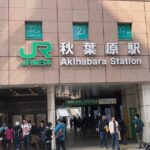
The meeting point is STREET KART Akiba 2nd at 4-chome 16, Kanda Sakumacho, Chiyoda City, Tokyo 101-0025. It is near public transportation, which helps because you will not need a taxi or hotel transfer. The activity begins and ends at this same location.
Allow time before the departure to handle the practical details. You need to show your physical passport and your physical driving document. A phone photo or digital copy is not enough according to the stated requirements.
Most international participants need an International Driving Permit issued under the 1949 Geneva Convention by an authorized organization in their home country. There are special rules for licenses from Switzerland, Germany, France, Taiwan, Belgium, and Monaco: you need the physical domestic license plus an official Japanese translation from the Japan Automobile Federation, or JAF.
Licenses from countries not covered by the 1949 Geneva Convention, including China, Indonesia, Mexico, Qatar, and Saudi Arabia, are not accepted for driving in Japan. This is the one detail I would check before paying for the booking. If your paperwork is wrong, enthusiasm will not get you onto the road.
You must be at least 18. Wear closed shoes, and skip skirts or long dresses. You should also tell the operator in advance about any hearing or mobility impairment.
A few more Tokyo tours and experiences worth a look

Costumes, karts, and what the price covers
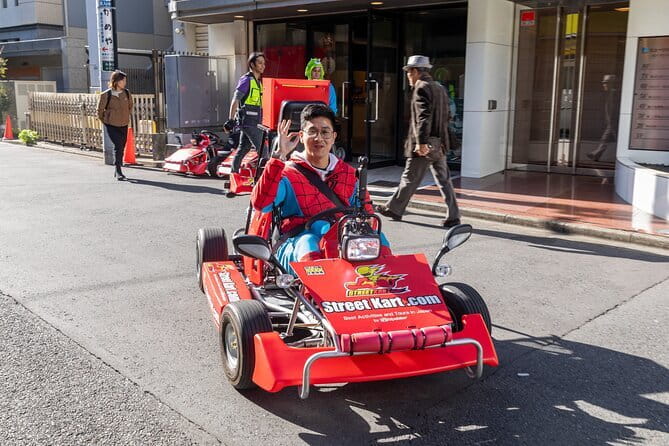
The listed price is $62.40 per person. For that amount, you get the kart rental, fuel surcharge, costume rental, and a lead guide driving with the group. The guide is not simply pointing out buildings from a sidewalk. They set the pace, lead the route, and help keep the convoy together in traffic.
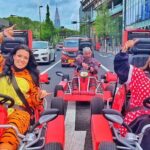
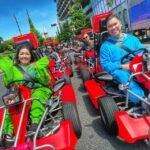
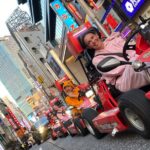
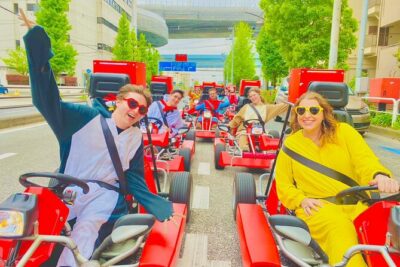
The costumes add much of the visual fun. You can dress in a permitted character-inspired outfit before heading out, which explains why this activity works so well for photographs and short social-media videos. There is one firm limit: Mario, Nintendo characters, and clothing or props that suggest those characters are not allowed because of copyright restrictions.
Full coverage insurance costs an additional ¥1,000 per person. Action-camera rental gear, including the camera, mount, and SD card, is also not included. The team takes photos during the ride, and the experience includes a printed picture plus a link to images from the outing, according to the information provided. If you want your own point-of-view footage, plan for the separate camera charge.
At this price, I see the value in the combination of driving, costumes, a guide, and photos. It is not the cheapest way to see Tokyo, and you will not spend long periods at each landmark. You are paying for an unusual activity and a quick moving tour of several districts, not a standard sightseeing circuit.
Tokyo Station gives the route a grand opening
One listed stop is Tokyo Central Railway Station, meaning the restored Marunouchi side of Tokyo Station. Its red-brick façade gives you a classic first view of the capital, especially in contrast with the modern streets and towers around it.
You should think of this as a drive-by sight, not a station visit. The activity does not include an admission ticket because there is no paid attraction entry. You will not get time for the station’s interior, platforms, shopping arcades, or the nearby palace gardens.
That limitation is part of the trade-off. From a kart, you get a quick sense of Tokyo’s scale and changing architecture, but you should not book this expecting a detailed explanation of Tokyo Station. If the building is high on your list, return later by train or on foot.
Akihabara is the natural home base
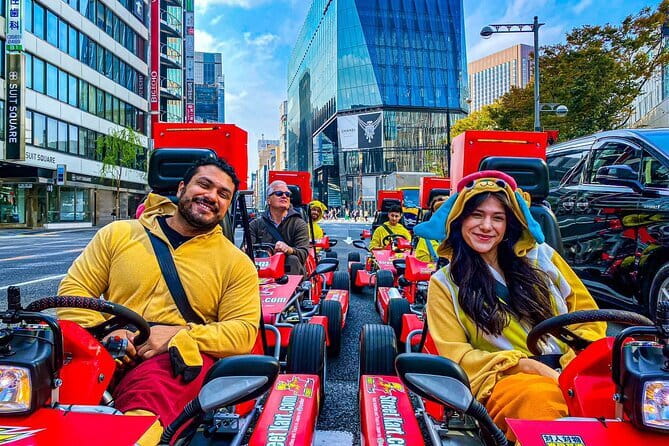
Akihabara is both the meeting area and one of the key sights on the route. Known for anime, games, electronics, and character culture, it gives the costume idea a fitting setting. You are not just wearing a playful outfit in an ordinary neighborhood. You are driving through Tokyo’s best-known center for Japanese pop culture.
The route offers an overview rather than time to shop. You will not be stopping to browse arcades, hunt for collectibles, or visit specialty stores. That can be a plus if you want an active introduction to Akihabara, but it is a drawback if your main goal is shopping.
Traffic matters here. You need to pay attention to your kart, the guide, and surrounding vehicles instead of staring at every sign. One useful way to approach this part is to treat it as a moving snapshot. You can return later with your phone and more time.
Around the Imperial Palace, not inside it
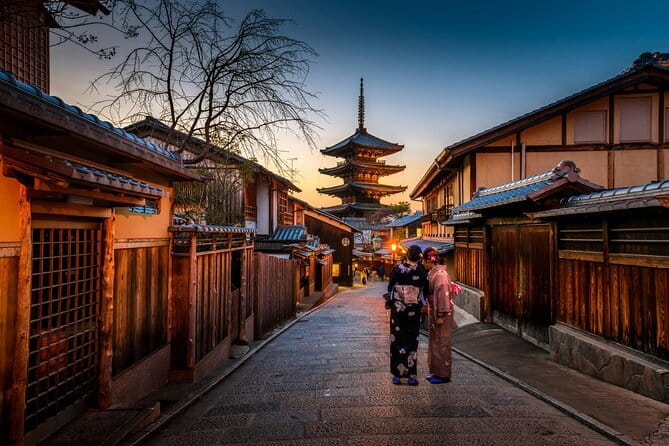
The route takes you around the Imperial Palace area. You do not drive into the palace grounds, and no palace admission is included.
That distinction is important because the palace is often treated as a single sightseeing stop, though the experience here is simply a circuit around the surrounding roads. You get the setting and the broad city view, not a palace tour or garden visit.
This section may feel calmer than Akihabara or Shibuya, but you still need to stay focused on driving. The appeal comes from seeing how central Tokyo shifts from pop culture streets to formal government and imperial surroundings within a short ride.
A few more Tokyo tours and experiences worth a look

Harajuku adds fashion and youth culture
Harajuku is the route’s fashion stop. The listed sight is the entrance arch to Takeshita Street, which changes design through the year. That means the exact visual backdrop can vary depending on when you visit.
Again, this is a passing view rather than a shopping break. Takeshita Street is famous for youth fashion and its highly individual style, but you will not have time to wander its shops during the drive. If you want crepes, clothing, or people-watching on foot, plan another visit.
I like this part of the route because it adds contrast. Akihabara gives you anime and games, while Harajuku brings fashion and street style. You get a compact look at two different sides of Tokyo without changing trains.
Shibuya Crossing is the big finale
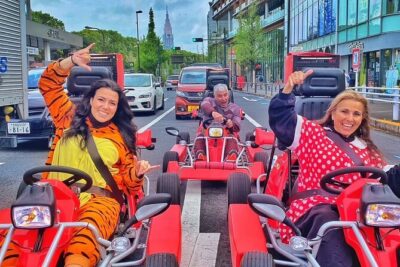
The route includes Shibuya Crossing, often called the world’s most famous scramble crossing. This is the moment many people picture when they imagine the experience: a costumed convoy moving through one of Tokyo’s best-known public spaces.
You should expect attention from people on the sidewalks. The supplied experience details describe children and passersby waving, and photos are taken during the ride. That interaction is part of the fun, but it also makes the crossing a place where you must keep your eyes on the road. Do not let the cameras or waving distract you.
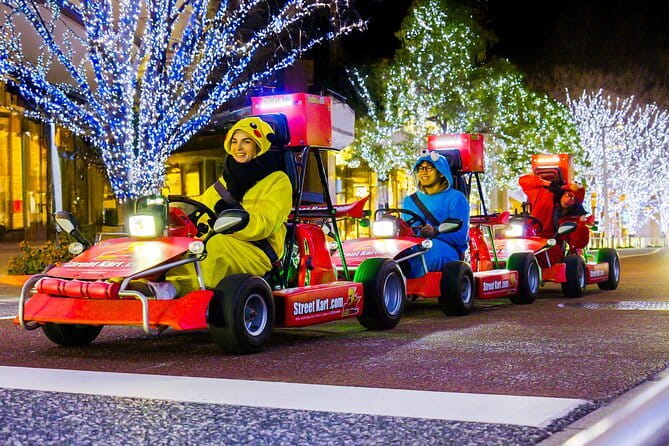
Shibuya is also where timing can shape the mood. Morning rides may have clearer roads and fewer pedestrians. Evening rides bring more city lights and a bigger street audience, but they can also feel more demanding because you are sharing the road with more activity. Choose the time based on your comfort level, not just the photo potential.
A guide-led convoy makes the traffic manageable
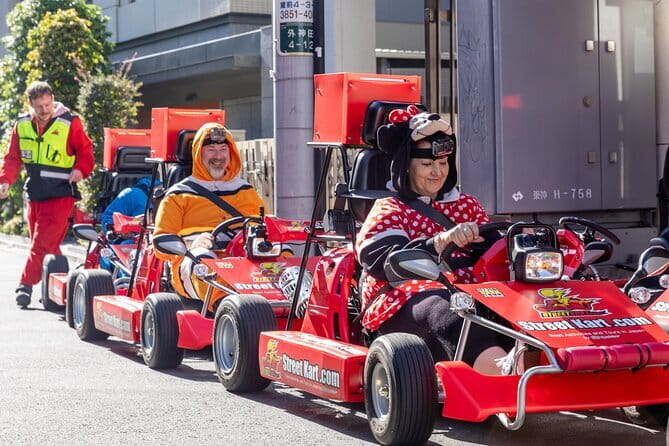
The guide drives a lead kart and sets the route and pace. This matters because you are not being left to find your own way through unfamiliar streets. The strongest practical detail from the experience is the guide’s habit of checking back to make sure the group remains together.
Guides named Sam, Khan, Julian, Madz, and Billy have all been associated with especially friendly, attentive service. You should not assume a particular guide will be working on your date, but the staff style is clear: give road instructions, maintain a safe pace, keep an eye on the group, and take photos.
You still have to drive responsibly. A guide can help, but cannot replace your attention. If you are nervous about city traffic, the first minutes may feel intense. The route is on public streets, not a closed karting track, so you should be comfortable operating a vehicle around other traffic before booking.
The group limit of six is a real advantage. A smaller convoy is easier to monitor than a large parade, and a guide can respond more quickly if someone falls behind or needs help. Solo bookings are possible, but group bookings should be made together rather than as separate reservations. Separate bookings do not guarantee that everyone will ride in the same group.
Two hours on the road, with little time to linger
The activity lasts about one hour and 40 minutes to two hours. That is long enough to reach several major districts, but not long enough for extended stops at each one.
You should picture the experience as a continuous urban circuit with brief moments to take in the setting. It is best for seeing a broad slice of Tokyo while doing something active. It is not a substitute for a full-day city tour, a palace visit, an Akihabara shopping session, or a Harajuku walking tour.
The physical demand is moderate. You sit and drive, but you must remain alert for the full outing. Closed footwear is required, and long dresses or skirts are discouraged because of the kart setup. The operator asks you to disclose hearing or mobility issues before the activity, which is worth taking seriously when planning.
Photos and evening timing
The guide takes photos during the experience, and you receive a printed picture plus a link to photos taken during the ride. That is a useful part of the package because it lets you focus on driving instead of trying to hold a phone.
An action camera is optional and costs extra. You should not assume the camera rental is included in the listed price. If you want a personal video record, ask about the camera, mount, and SD card before setting out.
Morning and evening offer different versions of the same route. Morning can mean clearer roads and a quieter feel. Evening brings illuminated streets, more pedestrians, and stronger photo moments. The choice is simple: pick morning if you want an easier introduction to driving in Tokyo, and evening if city lights and public attention matter more to you.
Weather and cancellation details
This activity requires good weather. If poor weather forces cancellation, you are offered a different date or a full refund.
For your own cancellation, you can cancel up to 24 hours before the start time for a full refund. Changes or cancellations made less than 24 hours before the experience are not accepted for a refund. The cut-off follows local Tokyo time.
Because the ride is outdoors and takes place on public roads, checking the forecast is sensible. A rainy-day alternative is not part of the experience, so keep another activity in mind if your booking is close to a period of unsettled weather.
Who will enjoy this most
I would recommend this to adults who want a playful, photo-friendly way to cover several Tokyo districts quickly. It suits confident drivers, anime and game fans, couples, friends, and solo visitors who want a story to take home beyond another temple or observation deck.
It is also useful early in a Tokyo stay because you get a quick visual introduction to Akihabara, Harajuku, Shibuya, Tokyo Station, and the Imperial Palace area. You can then return to the neighborhoods that interest you most.
I would not choose it for children, non-drivers, anyone without the correct permit, or anyone who dislikes driving in city traffic. It is also a poor match if you want long explanations, museum time, shopping stops, or a relaxed walking pace.
Should you book the Akihabara 2nd street kart tour?
Book it if you have the correct physical documents, are at least 18, and see the ride itself as the main attraction. The value comes from combining a costume, a guide-led city drive, famous Tokyo backdrops, and photos in roughly two hours.
Skip it if your paperwork is uncertain or if you want to study each neighborhood slowly. For the right person, this is an unusual and memorable way to connect several parts of Tokyo. Just treat it as a driving activity first and sightseeing tour second.
FAQ
Do I need an International Driving Permit?
Yes. Most participants need a physical International Driving Permit issued in the 1949 Geneva Convention format by a government-authorized association. Your ordinary home-country license alone is not accepted.
Are there exceptions to the International Driving Permit rule?
Yes. Participants with licenses from Switzerland, Germany, France, Taiwan, Belgium, or Monaco need their physical domestic license plus an official Japanese translation from the Japan Automobile Federation, or JAF.
Can children or non-drivers ride in the kart?
No. The karts are single-seaters, so every participant must drive. The minimum age is 18, and each person must hold a valid driving document accepted for driving in Japan.
Are Mario or Nintendo costumes available?
No. Mario, Nintendo-themed costumes, and clothing or items suggesting those characters are not permitted because of copyright restrictions.
What is included in the price?
The listed price includes the kart rental, costume rental, lead guide in a kart, and fuel surcharge. Food, drinks, hotel transfers, full coverage insurance, and action-camera rental gear are not included.
What happens if the weather is poor?
The activity may be canceled because it requires good weather. You will be offered a different date or a full refund. You can also cancel your booking at least 24 hours before the start time for a full refund.
More Go-Kart Tours in Tokyo
More Akihabara & Anime Tours in Tokyo
More tours in Tokyo we've reviewed


Go-Karts, compared.
 ★ 5.0Flagship 2-Hours Official Street Go-Kart Tour – Tokyo Bay ShopFrom $642 hours to 2 hours 30 minutes (approx.)
 ★ 5.0Official Street Go-Kart in ShibuyaFrom $76
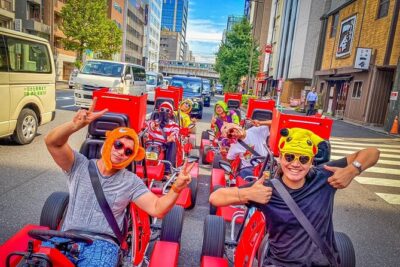 ★ 5.0Official Street Go-Kart Tour – AkihabaraFrom $61
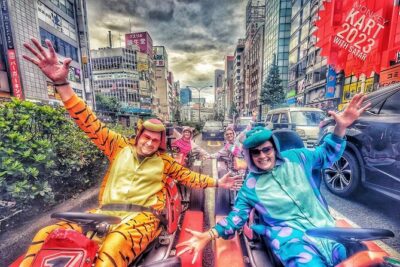 ★ 5.0Tokyo Go Kart: Asakusa, Skytree, and Akihabara **IDP MUST**From $99
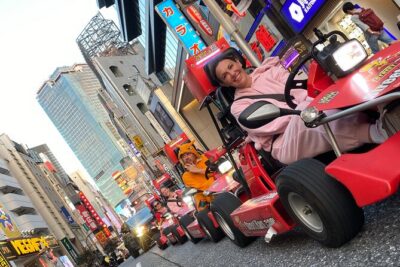 ★ 5.0Shibuya Official Street Go-Kart in Shibuya AnnexFrom $69
 ★ 4.7Tokyo: Asakusa, Skytree & Akhihabara Go-Kart City ExperienceFrom $961h 10m