
Reviewed · GO-KARTS
Official Japan Go-Kart Through Shibuya / Shinjuku
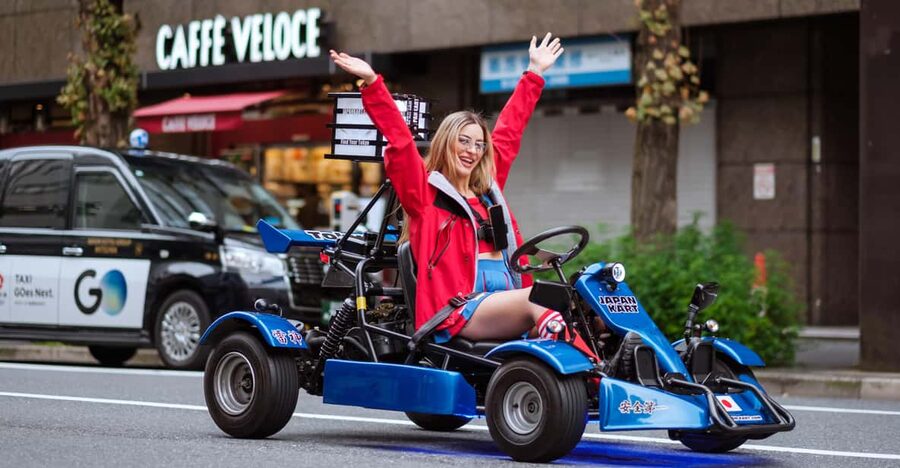
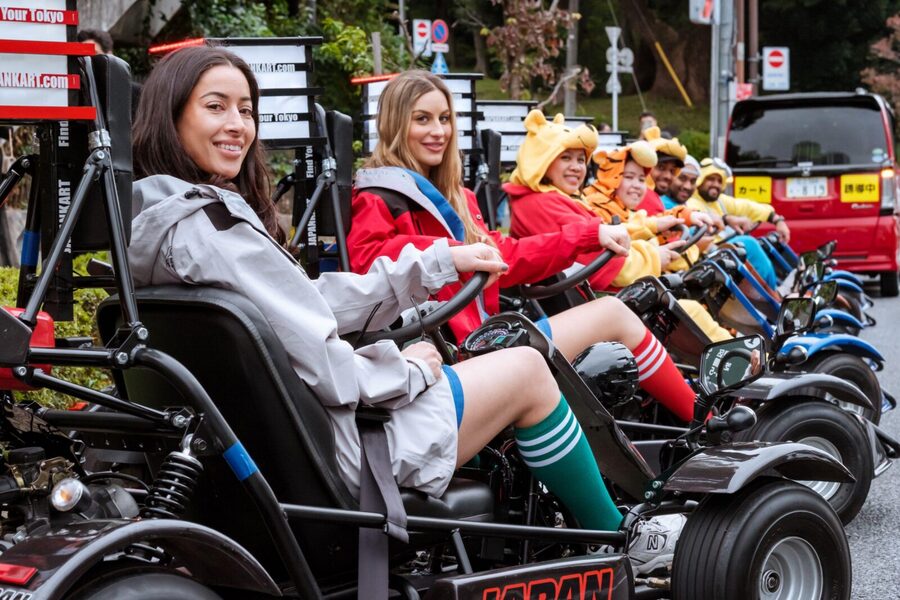
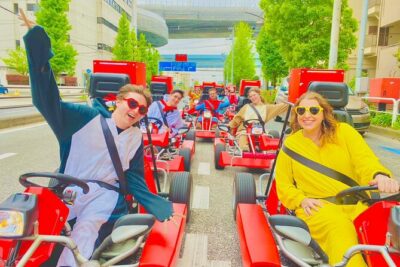
Tokyo sightseeing usually means trains, sidewalks, and observation decks. This tour gives you a very different view: you sit inches above the road and drive through the city in a road-legal go-kart, with Shibuya Crossing as the headline moment. The costumes add a playful touch, and guides keep the group together with a lead car and support vehicles behind.
I like the clear safety briefing and the free photos and videos taken along the way. I also like that you see major Tokyo sights from street level instead of simply stopping at them. The main catch is traffic. At busy times, you may spend plenty of the tour waiting at lights or moving slowly, so this is a city drive with go-karts, not a nonstop race.
In This Review
- Key points at a glance
- Tokyo by Go-Kart: What This Ride Really Feels Like
- Choosing Between the 90-Minute and Two-Hour Routes
- Shibuya Crossing, Harajuku, and Omotesando
- Tokyo Tower, the Imperial Palace, and Tokyo Station
- The Kanda and Shinjuku Starting Points
- Safety Comes Before the Costumes
- The Most Important Part: Your Japanese Driving Documents
- Cost and What You Receive for $122
- Weather, Timing, and What to Wear
- Who Will Enjoy This Most
- Should You Book the JAPANKART Tokyo Ride?
- FAQ
- How long does the go-kart experience last?
- Where does the tour start?
- Where does the tour finish?
- Which Tokyo sights are included?
- Do I need an International Driving Permit?
- Are Vienna Convention 1968 permits accepted?
- What should I bring?
- Are costumes and safety equipment included?
- What happens if the weather is bad?
Key points at a glance
- Shibuya Crossing from the driver’s seat: Cross one of Tokyo’s most famous intersections, with the chance to pass through it more than once on some routes.
- Two useful route lengths: The 90-minute option focuses on Shibuya, Harajuku, Omotesando, and Shinjuku Kabukicho, while the two-hour route adds Tokyo Tower, the Imperial Palace, and Tokyo Station.
- A strong safety setup: Guides lead the group, support staff follow behind, and motorcycles or vans can help if the group separates at lights.
- Costumes and free media: Costumes, cold-weather jackets, and gas are included, and the team takes photos and videos during the ride.
- Strict Japanese driving paperwork: You need the correct hard-copy documents before you arrive. Missing paperwork means you cannot drive and will not receive a refund.
- Best for confident adult drivers: You must be at least 18, wear proper footwear, and remain comfortable driving in city traffic.
Tokyo by Go-Kart: What This Ride Really Feels Like
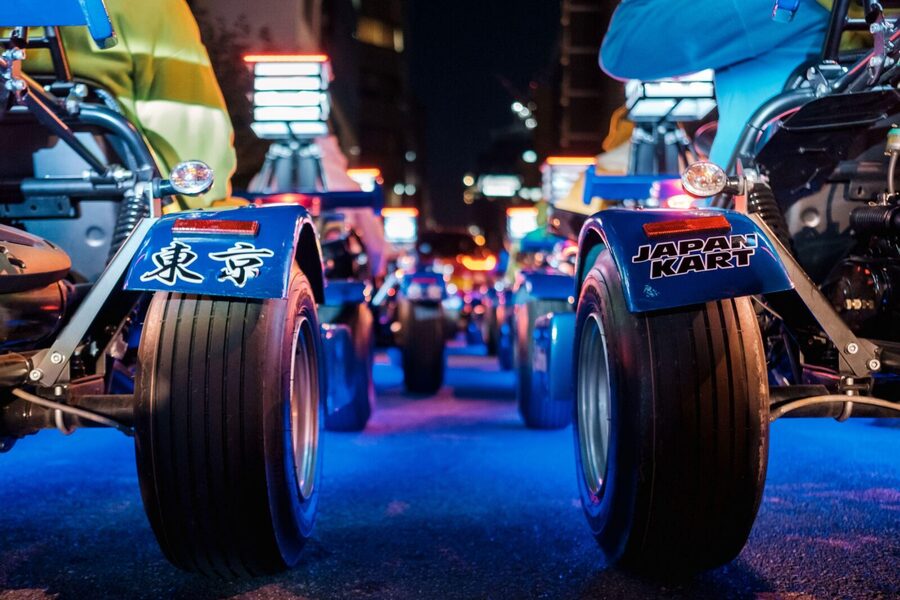
The appeal is simple. You are not looking down at Tokyo from a tower or passing through it behind a train window. You are out in the open, close to the sounds, traffic, signs, and curious faces of the city.
The karts are designed for road use, not for a private indoor track. That means the experience is part sightseeing and part driving challenge. You need to follow traffic signals, stay with the group, and pay attention to the guide. The reward is a memorable sense of motion, especially when you roll through Shibuya Crossing with the city moving around you.
I would not book this expecting speed. Tokyo traffic can be heavy, particularly around the afternoon rush. One ride that began at 4 p.m. included plenty of time at traffic lights, while another described only a few chances to open up the kart. That is not a flaw in the operation. It is simply what happens when you drive through a large capital city.
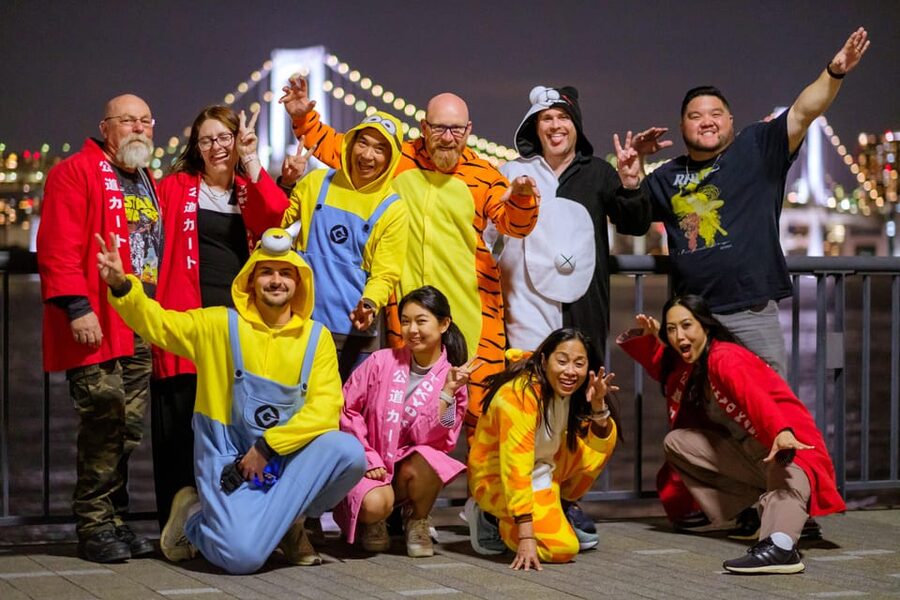
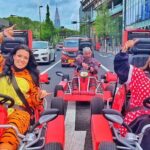
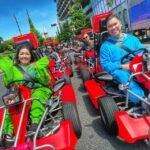
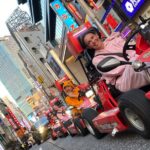
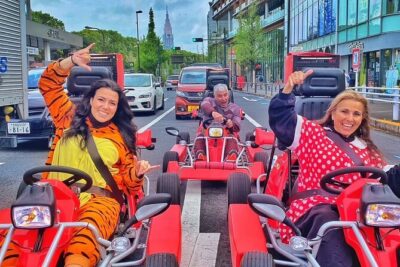
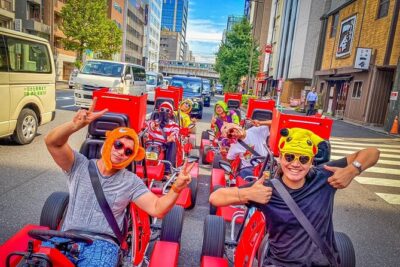
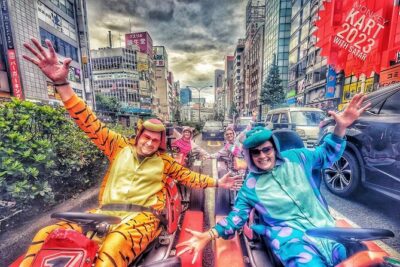
The fun comes from the setting. Even at a slow pace, you are doing something few city tours can offer. People may smile, wave, or take pictures as the costumed group passes. The staff also take photos and videos on the route, then share them without an extra charge. Bring your own phone or GoPro if you want personal footage, since mounts are available according to the ride experience.
A few more Tokyo tours and experiences worth a look

Choosing Between the 90-Minute and Two-Hour Routes
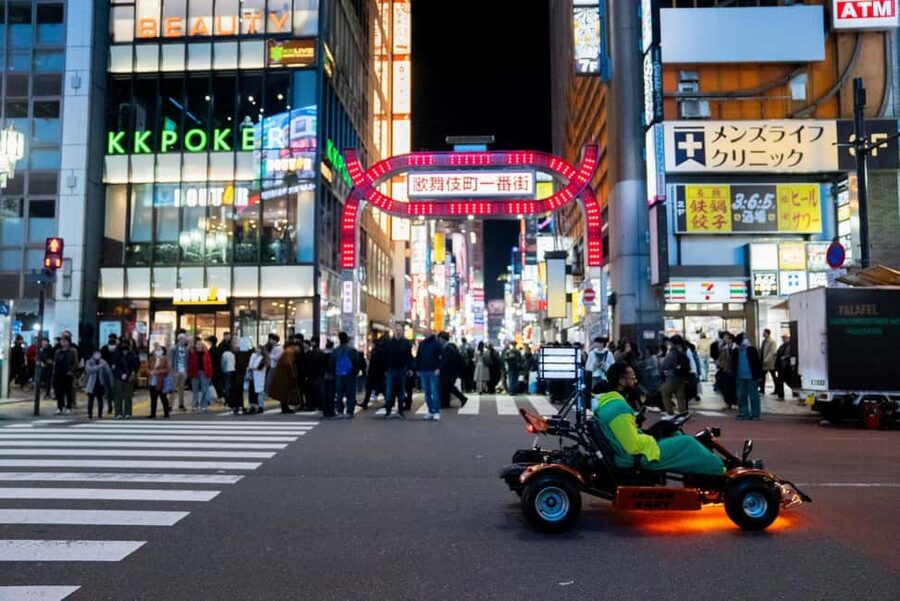
The shorter route lasts about 90 minutes and covers West Tokyo highlights. You can expect Shibuya Scramble Crossing, Harajuku, Omotesando, and Shinjuku Kabukicho.
This is the better choice if you want the central idea of the activity without committing a large part of your day. Shibuya gives you the biggest visual payoff, while Harajuku and Omotesando show a different side of Tokyo, with major shopping streets and polished architecture. Kabukicho brings you into the neon-heavy entertainment district of Shinjuku.
The longer route lasts about two hours and follows a broader central Tokyo circuit. It includes Tokyo Tower, Shibuya Crossing, the Imperial Palace area, and Tokyo Station. This route gives you more famous landmarks, but it also means more time exposed to traffic, weather, and city driving.
The advertised options can vary by departure branch and booking choice. Some descriptions also refer to routes through Ginza, Ueno, and Asakusa, so check the exact option before paying if one district matters to you. Do not assume every departure includes every Tokyo landmark.
Shibuya Crossing, Harajuku, and Omotesando
Shibuya Crossing is the emotional center of the ride. From a normal sidewalk, you watch the crossing from above or from the curb. In a go-kart, you experience the timing of the lights and the attention that comes with being part of an unusual group on the road.
Some routes pass through the crossing twice, giving you more than one chance to enjoy it. The first pass may feel busy as you concentrate on signals and the guide. By the second, you may feel more relaxed and have more time to look around.
Harajuku and Omotesando add variety. Harajuku is associated with youth fashion and shopping, while Omotesando is known for broad streets and impressive modern buildings. You do not stop for a shopping visit, so think of these areas as a moving street tour rather than a chance to explore on foot.
That distinction matters. This experience lets you cover ground and get a strong visual impression, but it cannot replace a walking tour. If you want time inside shops, shrines, cafés, or department stores, plan those separately.
Tokyo Tower, the Imperial Palace, and Tokyo Station
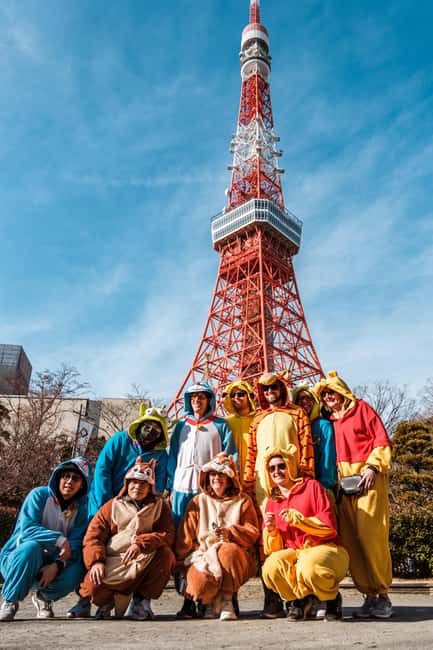
The two-hour route includes a photo stop near Tokyo Tower. This is one of the ride’s more useful pauses because it gives you a chance to appreciate the tower instead of only seeing it flash past between traffic lights.
The guides take photos during the tour and at stops. This is especially helpful when you are driving a kart and cannot take your own pictures safely. You can enjoy the moment without trying to handle a phone on the road.
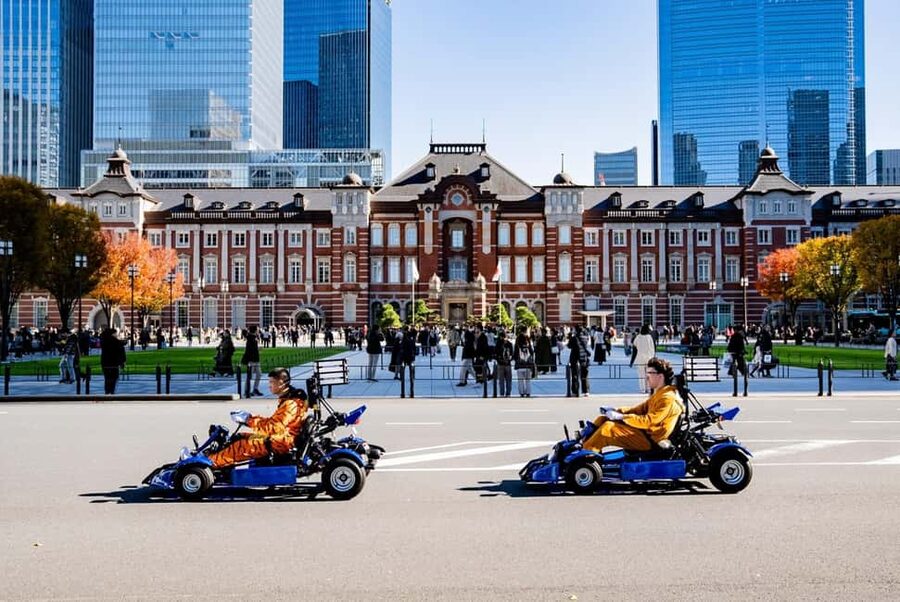
The Imperial Palace is listed as a pass-by point rather than a full interior visit. Expect a look at the area from the road, not entry into the palace grounds or a guided palace tour. Tokyo Station provides another photo stop, with its distinctive historic red-brick facade and busy central-city setting.
These sights show why the longer route can be worth the extra cost and time. You get more than the single spectacle of Shibuya. You also see Tokyo’s government, transport, and landmark architecture in one continuous ride.
Roppongi is another pass-by point. It adds a well-known nightlife and dining district to the route, but there is no scheduled stop listed there. Again, this tour works best when you enjoy seeing a city in motion.
The Kanda and Shinjuku Starting Points
You may start at the JAPANKART Kanda branch or the JAPANKART Shinjuku branch, depending on the option you book. Drop-off is available at the Shinjuku or Kanda branch listed for your tour.
That flexibility can help you fit the ride into a busy day. A Kanda start may work better alongside Tokyo Station, the Imperial Palace, or eastern central Tokyo plans. A Shinjuku start may be easier if you are already visiting Shibuya, Harajuku, or Kabukicho.
The meeting point can vary, so confirm your branch carefully. Do not plan a tight connection immediately before the tour. You need time to reach the shop, complete the safety process, handle documents, choose a costume, and get ready to drive.
The tour is offered in English, and the staff place strong emphasis on explaining the karts and road procedures. Several rides describe the instructions as clear and the staff as patient, including one case where a nervous driver needed a few minutes to build confidence.
A few more Tokyo tours and experiences worth a look

Safety Comes Before the Costumes
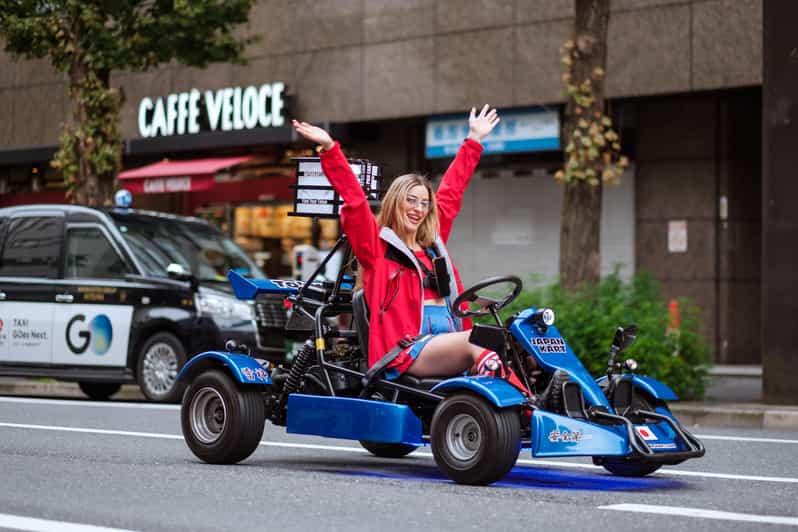
The playful costumes attract attention, but the operation treats the driving seriously. A full safety briefing is included, and the guides remain with the group on the road.
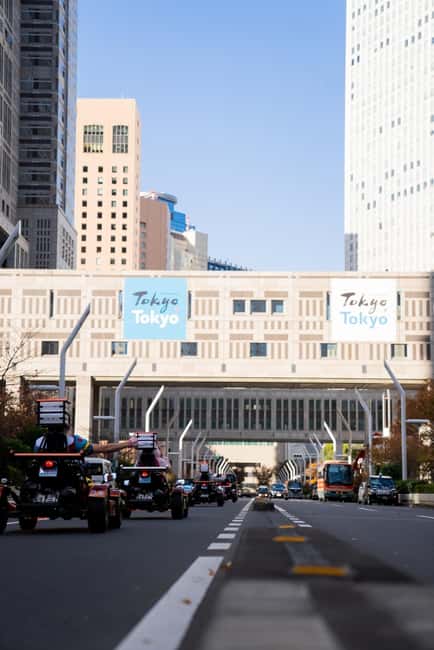
The group may have a lead car in front, with a car or motorcycle behind. This arrangement helps keep the group together and gives staff a way to assist if someone is delayed by traffic, a signal, or another vehicle. You may still become separated briefly. That can happen at large intersections or when cars move between karts, but the support team is there to guide you back.
The karts are described as easy to drive once you understand the controls. I would still choose this only if you are comfortable operating a vehicle in urban traffic. You are not driving alone on an empty course. You must watch signals, maintain position, and respond to the guide.
Do not wear sandals or flip-flops. Alcohol and drugs are not allowed, and you cannot bring alcoholic drinks into the vehicle. Drivers must be at least 18 years old.
The Most Important Part: Your Japanese Driving Documents
This is the point where you need to be exact. You must arrive with:
- Your valid driving license from your home country
- A hard-copy International Driving Permit issued under the 1949 Geneva Convention
- Your passport
The IDP must be issued by an approved authority in your own country. It must be in booklet form, not a loose paper document. An IDP issued under the 1968 Vienna Convention is not accepted in Japan.
Do not buy an online permit from an unapproved company. Examples of accepted issuing organizations include AAA or AATA in the United States, AAA in Australia, AA or RAC in the United Kingdom, and CAA in Canada. The responsibility is yours, so check the requirements before booking.
Drivers with licenses from Switzerland, Germany, France, Taiwan, Belgium, Estonia, or Monaco follow a different process. You need the original driving license, an official Japanese translation from the authorized organization, and your passport.
US military participants need the combination of an active military ID and a stateside driver’s license under the SOFA arrangement.
A digital photograph or phone copy will not solve the problem if you forget the physical documents. If you cannot show the correct paperwork at the shop, you will be denied participation with no refund. This is the one detail I would verify before considering anything else about the tour.
Cost and What You Receive for $122
At about $122 per person, this is not a cheap way to move around Tokyo. The city’s trains are far less expensive, and a conventional sightseeing bus can cover major areas without requiring you to drive.
The value is in the activity itself. Your price includes the kart, gas, safety briefing, costume, and a jacket during colder months. Staff also take photos and videos, with free sharing reported after the ride. You are paying for a distinctive experience, not just transportation between landmarks.
For a first visit, the longer route may offer better value if you want Tokyo Tower, the Imperial Palace area, and Tokyo Station along with Shibuya. The 90-minute option may be the smarter buy if you mainly want the crossing, costumes, and the thrill of driving through West Tokyo.
Group size can be small, which helps the guide manage the karts and gives the ride a more personal feel. Mechanical parts are involved, so the operator may adjust bookings when capacity is reached or equipment needs attention. A bad-weather cancellation brings a full refund, or you may be offered a new date if space allows.
You can cancel up to 24 hours before the start for a full refund. Forgetting your license or IDP is not covered, so paperwork is more important than the flexible cancellation policy.
Weather, Timing, and What to Wear
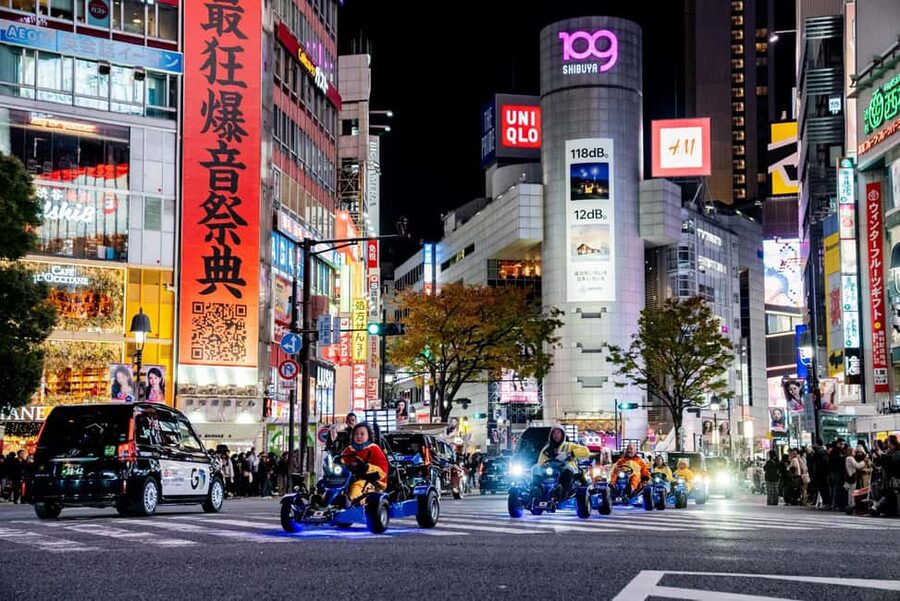
Tokyo weather can change the character of the ride. In cold months, jackets are provided. In hot weather, the open kart leaves you exposed to the sun and heat. One summer ride took place at 35 degrees Celsius, and staff supplied ice water along the way.
Rain makes the drive more difficult and cold. A rainy ride still went ahead with helpful staff, but the conditions reduced comfort. If you have flexibility, choose a dry day and avoid the hottest part of the afternoon.
Timing also affects the pace. A 4 p.m. departure may place you in heavy traffic, which means more stops and slower progress. That can reduce the driving excitement, though it also puts you in the middle of Tokyo’s late-day activity.
An evening ride offers a different mood, with city lights and entertainment districts taking center stage. The route and weather matter more than the clock, so choose the time that fits your comfort level and sightseeing plans.
Who Will Enjoy This Most
I would recommend this for adults who want an unusual Tokyo memory and are happy to trade comfort and efficiency for participation. It works especially well for couples, friend groups, and families with adult children who meet the driving rules.
It is also a good choice for people who have already seen Tokyo’s main sights and want a fresh way to connect them. The ride provides a strong sense of place, even when traffic keeps the karts moving slowly.
You may want to skip it if you dislike road driving, need a quiet sightseeing experience, or have no interest in dressing up. It is not suitable for anyone under 18, and it is not a substitute for exploring the neighborhoods on foot.
If you are nervous, tell the staff at the start. The guides are used to helping people settle in, and the support vehicles make it easier to stay with the group. Still, you should not book simply because friends want to do it if driving in city traffic sounds stressful.
Should You Book the JAPANKART Tokyo Ride?
Book it if you want to see Shibuya Crossing from an unusual angle, enjoy a little public attention, and value a story you will remember more than a perfectly efficient sightseeing route. The high rating of 4.7 from 141 bookings fits the strongest parts of the experience: friendly English-speaking staff, careful instructions, safety support, clean equipment, costumes, and free photos.
I would choose the two-hour route for a first visit if the added landmarks matter to you. Choose the 90-minute ride if Shibuya and West Tokyo are your priority, or if you want to keep the activity from taking over your day.
Before you reserve, confirm the exact departure branch, route, weather forecast, and driving documents. If those pieces are in order, this is one of Tokyo’s most playful sightseeing choices. Just remember that the city controls the pace. The best moments may come while waiting at a light, waving back at pedestrians, and realizing you are seeing ordinary Tokyo from a very extraordinary seat.
FAQ
How long does the go-kart experience last?
The available options last about 90 minutes or two hours. The overall activity is described as taking two to three hours, depending on the selected option and schedule.
Where does the tour start?
The tour can start at the JAPANKART Kanda branch or the JAPANKART Shinjuku branch. The exact meeting point depends on the option you book.
Where does the tour finish?
Drop-off is available at the JAPANKART Shinjuku branch or the JAPANKART Kanda branch, depending on the selected option.
Which Tokyo sights are included?
The listed route can include Shibuya Scramble Crossing, Harajuku, Omotesando, Shinjuku Kabukicho, Tokyo Tower, the Imperial Palace, Tokyo Station, Roppongi, Ginza, Ueno, and Asakusa. The exact sights vary by route, so check your chosen option.
Do I need an International Driving Permit?
Yes. Most drivers need their home-country driving license, a hard-copy International Driving Permit issued under the 1949 Geneva Convention, and their passport.
Are Vienna Convention 1968 permits accepted?
No. International Driving Permits issued under the Vienna Convention 1968 are not accepted in Japan for this activity.
What should I bring?
Bring your passport, your home-country driving license, and the correct International Driving Permit. Drivers from certain countries may need an official Japanese translation instead of an IDP.
Are costumes and safety equipment included?
Costumes are included, as are jackets during colder months. The activity also includes a full safety briefing and the gas fee.
What happens if the weather is bad?
If the operator cancels because of bad weather, you can receive a full refund or reschedule, depending on availability. You can also cancel up to 24 hours before the start for a full refund, but missing required driving documents is not refundable.
More Go-Kart Tours in Tokyo
More Shibuya Tours in Tokyo
More Shinjuku Tours in Tokyo

More tours in Tokyo we've reviewed










Go-Karts, compared.
 ★ 5.0Flagship 2-Hours Official Street Go-Kart Tour – Tokyo Bay ShopFrom $642 hours to 2 hours 30 minutes (approx.)
 ★ 5.0Official Street Go-Kart in ShibuyaFrom $76
 ★ 5.0Official Street Go-Kart Tour – AkihabaraFrom $61
 ★ 5.0Tokyo Go Kart: Asakusa, Skytree, and Akihabara **IDP MUST**From $99
 ★ 5.0Shibuya Official Street Go-Kart in Shibuya AnnexFrom $69
 ★ 4.7Tokyo: Asakusa, Skytree & Akhihabara Go-Kart City ExperienceFrom $961h 10m