
Reviewed · MT FUJI DAY TRIPS
Hakone Private One Day Tour From Tokyo: Mt Fuji, Lake Ashi, Hakone National Park
Hakone’s best feature is its variety: in one long day, you can move from sulphur vents and volcanic valleys to a Shinto shrine, an art museum, and a boat ride on Lake Ashi. This private outing lets your party shape the day instead of following a fixed large-group schedule.
I like the practical transport help and the chance to adjust the stops to your interests. I also like that the guide adds local history and cultural context, with Izumi Aizawa receiving especially warm praise for attentive care. The main drawback is time: Hakone is a large resort area, and autumn traffic can turn a planned eight-hour day into a tiring one.
In This Review
- Key points to know before booking
- Why this private Hakone day trip works
- Leaving Shinjuku and reaching Hakone
- Owakudani, where Hakone still steams
- The Hakone Ropeway and possible Mt Fuji views
- Lake Ashi by boat and Hakone Shrine
- Gora Park, gardens, and a slower pause
- Art at the Open-Air Museum
- Narukawa Art Museum and the mountain view
- Mount Hakone and optional ropeway choices
- What the $238.45 price really covers
- Crowds, weather, and physical effort
- Planning, cancellations, and who should book
- FAQ
- Where does the Hakone tour start?
- What time does the tour begin?
- Where does the tour end?
- Is this a private tour?
- Is an English-speaking guide included?
- Can I choose how I travel to Hakone?
- Are transportation costs included?
- Is the Lake Ashi cruise included?
- Is food included?
- Can I visit an onsen?
- Do I need to book far in advance?
- What happens if I arrive late?
- Is the tour refundable?
Key points to know before booking
- A private day for your own party: You are not sharing the guide with strangers, and the route can be adjusted to suit your group.
- A full Hakone sampler: The day can include Owakudani, the ropeway, Lake Ashi, Hakone Shrine, Gora Park, museums, and historic walking routes.
- Transport is handled: Choose public transportation or a private car, with Hakone fares, buses, mountain trains, and cable cars covered as specified.
- Mt Fuji views depend on weather: Clear conditions can produce fine views from the ropeway, Lake Ashi, and selected museums, but there is no guarantee.
- Optional costs add up: Some major attractions and activities require extra payment, including the Open-Air Museum, tea ceremony, onsen, and certain ropeway or cruise combinations.
- Book early for a custom plan: Three months is recommended, and at least one month is advised for a carefully arranged itinerary.
Why this private Hakone day trip works
Hakone is close enough to visit from Tokyo, yet complicated enough that planning the transport can eat up your day. Railways, mountain trains, buses, cable cars, ropeways, and boats all fit into the region’s sightseeing network. This tour takes that puzzle off your hands.
You meet your English-speaking guide at 7:30 am at the west exit of Shinjuku Station, near HALC at 1-chōme-5-1 Nishishinjuku. From there, the tour uses either public transportation or a private car, depending on your choice at checkout.
The private format matters most for families, couples, and small groups with different interests. You can spend longer at the Open-Air Museum, skip an art museum, or focus more heavily on shrines and scenery. It is not unlimited flexibility, since the day still has a fixed start and return to Shinjuku, but it is far more adaptable than a standard coach tour.
The stated duration is about eight to ten hours, with arrival back in Tokyo before dinner under the planned schedule. That sounds generous, but Hakone’s attractions are spread out. You will want to keep moving, especially during busy seasons.
A few more Tokyo tours and experiences worth a look
Leaving Shinjuku and reaching Hakone
The day starts early, but the timing is sensible. A 7:30 am meeting gives you a chance to reach Hakone before the worst crowds and road delays. You should arrive at least ten minutes early, since the guide waits only up to 30 minutes before the tour can be cancelled.
Your passport may be required for transport or age verification, and the operator asks for your birth date when booking. Bring weather-ready clothing. Hakone can feel quite different from Tokyo, especially around the mountains, Lake Ashi, and the ropeway.
If you choose public transport, you gain the classic Hakone experience of changing between local rail and mountain systems. A private car is simpler for groups that value door-to-door movement, though traffic remains a concern during peak periods. The transport choice changes the feel of the day, so consider your group’s energy, not only the price.
Owakudani, where Hakone still steams
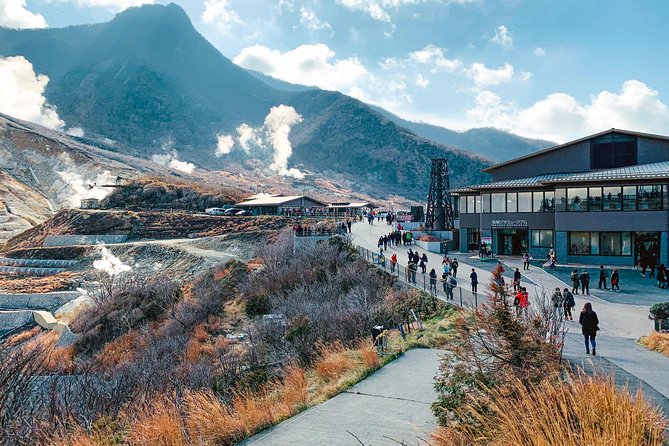
Owakudani is one of the day’s most distinctive stops. This volcanic valley was formed by an eruption of Mount Hakone about 3,000 years ago. Sulphur vents and hot springs remain active, giving the area a dramatic, earthy character.
I like Owakudani because it is not just a viewpoint or a polished resort stop. You see evidence of the volcano that shaped Hakone. The air, volcanic ground, and steaming vents give the visit a stronger sense of place than a routine mountain lookout.
Conditions can affect access and visibility, and the smell of sulphur is not for everyone. Still, it is one of the stops I would keep even on a shortened itinerary. It connects the scenery to the region’s geology and helps explain why Hakone became known for hot springs.
The Hakone Ropeway and possible Mt Fuji views
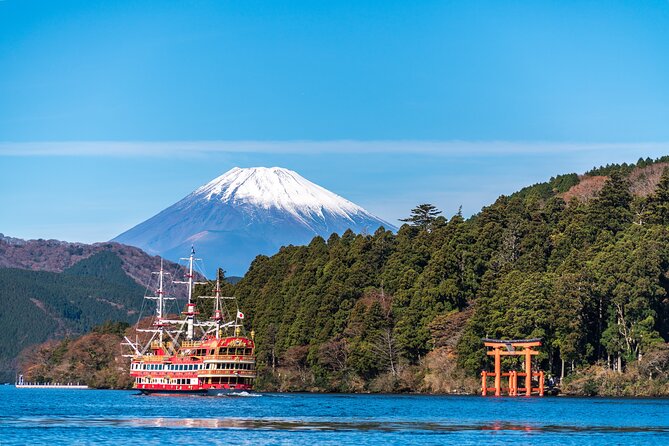
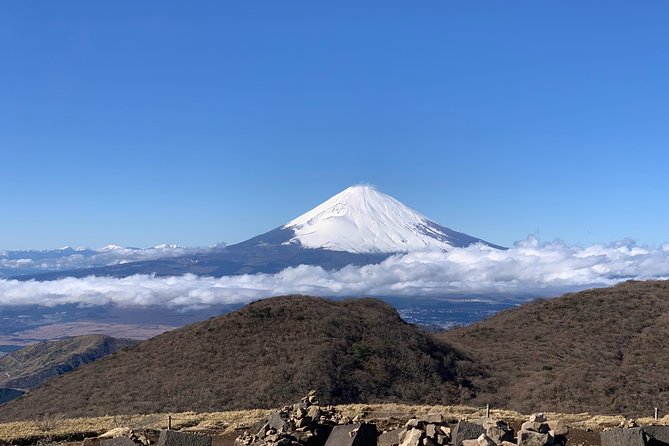
The Hakone Ropeway links Sōunzan and Tōgendai, passing through Owakudani. Its aerial route gives you broad views over the volcanic valley and Hakone National Park. On a clear day, Mt Fuji may appear in the distance, which is one of the tour’s main scenic rewards.
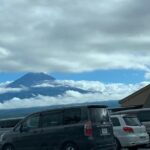
The important phrase is on a clear day. Clouds, haze, and weather can block Fuji, even when the rest of the outing runs perfectly. I would treat the mountain view as a welcome bonus rather than the sole reason to book.
The ropeway also helps you cover ground without spending the entire day on buses. However, busy periods can bring queues and slower movement. Autumn is especially crowded, and traffic between Hakone stops may take two or three times longer than normal.
Lake Ashi by boat and Hakone Shrine
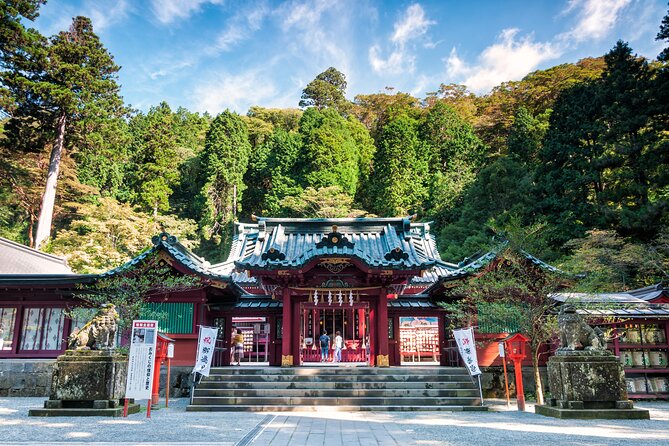
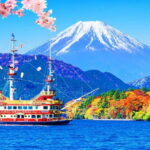
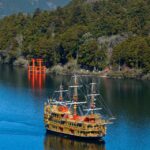
Lake Ashi gives the day a different rhythm. After volcanic scenery and mountain transport, you can cross the calm lake on a traditional pirate-style ship. The cruise is included when weather allows, along with Mt Fuji views when conditions cooperate.
I find the boat ride valuable because it lets you see Hakone from the water rather than simply stopping at another overlook. It also provides a break from walking and transfers. The ride is still part of a busy day, so do not expect a slow, empty-lake cruise during a crowded holiday period.
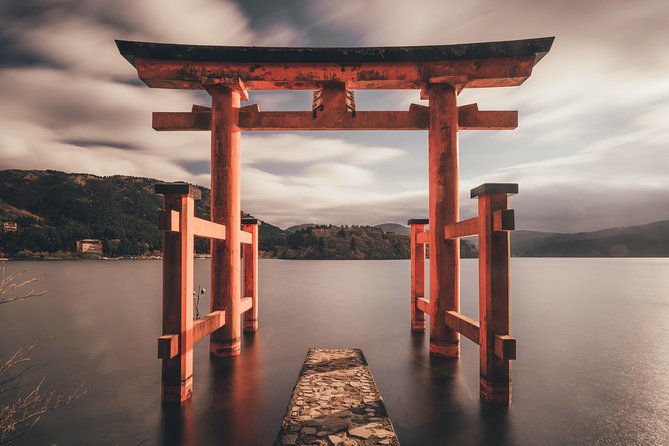
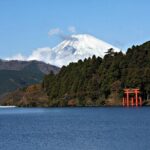
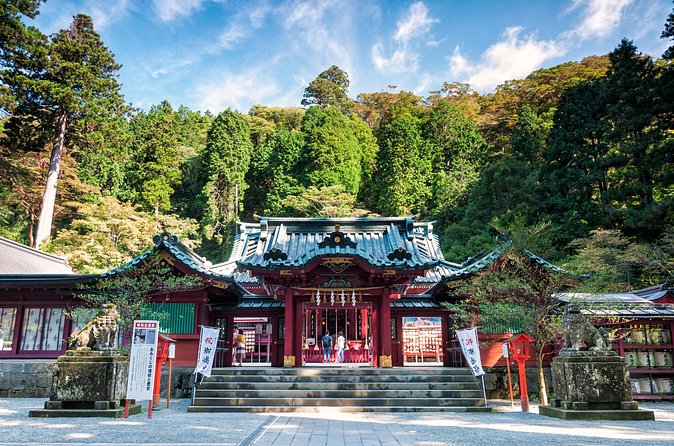
On the eastern shore, Hakone Shrine sits among the wooded slopes beside the lake. The shrine, also called Hakone Gongen, is a major cultural stop and gives the day a quieter, more reflective side. A related shrine on the east bank is dedicated to a dragon god associated with financial luck and business prosperity.
The tour may also include a 30-minute walk along the historic Old Tokaido road beside Lake Ashi. That short walk is a useful counterpoint to the modern ropeway and boat. It gives you time to experience Hakone at ground level, though anyone with limited stamina should tell the guide early so the route can be adjusted.
A few more Tokyo tours and experiences worth a look
Gora Park, gardens, and a slower pause
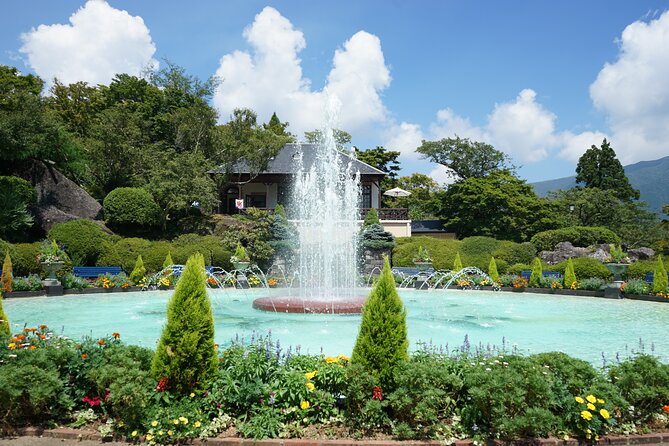
Hakone Gora Park is a western-style hillside garden with a tea house, greenhouses, and a central fountain. It is a pleasant change from the exposed volcanic valley and busy transport hubs.
The entrance fee is included. A Japanese tea ceremony is optional and costs 500 yen. I would consider it if your group wants a cultural activity with a clear time limit, but it is not essential to understand the wider Hakone experience.
The garden is also a useful place to trim the schedule. If your group is tired, you can enjoy the setting without adding another long transfer. If you are trying to fit every museum, ropeway, shrine, and boat into one day, however, even a garden stop can feel rushed.
Art at the Open-Air Museum
The Hakone Open-Air Museum was Japan’s first open-air museum, opening in 1969. Its collection includes works by Picasso, Henry Moore, and Taro Okamoto, arranged in an outdoor setting rather than confined to traditional galleries.
This is a strong choice for art lovers and families who want more than temples and scenery. Large sculptures, open views, and indoor galleries make the visit feel varied. The museum can also be a practical shelter if weather changes.
The tour provides a discounted entrance fee, but the Picasso Gallery has an optional charge of 1,600 yen. Ask your guide to clarify exactly which areas are covered before entering. Art lovers may consider the extra worthwhile, while others may prefer to spend the time at the lake or shrine.
Because the museum is substantial, it deserves real time. I would not choose it merely to tick off another stop. If you want a serious visit, make it one of your day’s priorities and drop a less important optional activity.
Narukawa Art Museum and the mountain view
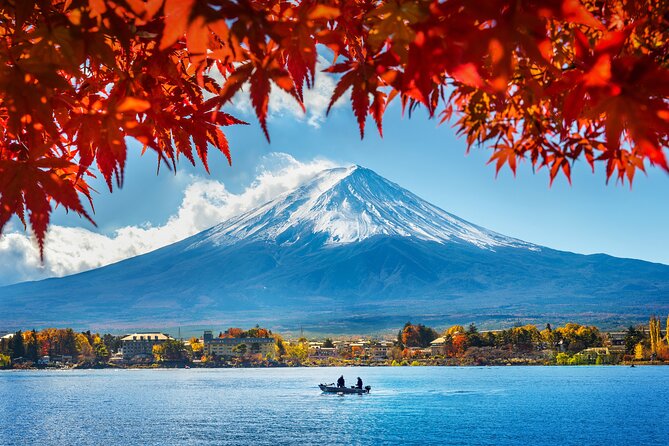
Narukawa Art Museum, opened in 1988, focuses on Nihonga-style Japanese painting. It also offers city views, a café, and gardens, with a location suited to views over Lake Ashi and possible Mt Fuji sightings.
This museum is a good fit if you want Japanese art in a quieter setting. It also combines culture and scenery, which can be useful on a day when the weather is too uncertain for relying only on the ropeway or cruise.
Its entrance is discounted rather than fully included, with an optional fee of 1,200 yen. I would ask the guide about the current route and available time before choosing it, since adding both this museum and the Open-Air Museum can squeeze the rest of the day.
Mount Hakone and optional ropeway choices
Mount Hakone is a complex volcano formed by two overlapping calderas, the larger measuring about 10 by 11 kilometres. The tour’s route gives you several ways to understand this volcanic setting, from Owakudani to the elevated ropeway system.
You may also choose the Mt Komagatake Ropeway, which overlooks Hakone National Park. The optional cost is 1,300 yen. Another option combines a ropeway to Mount Koma with a modern two-body ship cruise on Lake Ashi for 2,220 yen.
These choices can be appealing, but they are not automatically better than the included route. Hakone has many scenic transport rides, and paying for every one can make the day expensive without giving you more time. Pick the route that adds a view or experience your group actually wants.
What the $238.45 price really covers
At $238.45 per person, this is not a bargain day trip for someone who only wants a quick Fuji photograph. The value comes from the private guide, route planning, round-trip movement from Tokyo, and Hakone transport handling.
Included costs cover Hakone buses, the mountain train, cable cars, and the listed transportation within Hakone. Gora Park and the Old Tokaido walking route are included, while several major attractions come at discounted rates or require extra payment.
You still need to budget for food, drinks, and optional admissions. The Open-Air Museum, Narukawa Art Museum, tea ceremony, onsen, and extra ropeway or cruise options can change the final cost quickly. A public hot bath at Hakone Yumoto costs 1,800 yen, or 2,800 yen for a private indoor bath with the listed supplement.
For a group that would otherwise struggle with Hakone’s transport, the cost can make sense. For independent visitors comfortable with Japanese rail and bus systems, the price is harder to justify unless private guiding and a custom route are priorities.
Crowds, weather, and physical effort
Hakone is especially busy during autumn foliage season. Golden Week, the Obon holiday period, and the New Year holidays also bring heavier demand. Road delays can be serious, with bus journeys taking two or three times their usual duration.
That affects the tour in practical ways. A crowded day may force you to choose between a full museum visit and a relaxed lake stop. If you are visiting during a peak period, keep your expectations flexible and tell the guide which two or three experiences matter most.
A moderate level of physical fitness is required. You may walk along the Old Tokaido road, move through stations, use mountain transport, and navigate museum or shrine grounds. Wear comfortable shoes and clothing suitable for changing weather.
Planning, cancellations, and who should book
The operator sends a Hakone form within 48 hours of booking. Complete it accurately at least three weeks before your tour date so the team can build the route around your interests. For a custom plan, booking three months ahead is ideal, and one month is the minimum suggested timing.
The tour is non-refundable and cannot be changed for any reason under the stated policy. If a custom itinerary sheet has already been prepared, a 15 percent service fee may be nonrefundable under the separate planning terms, so read the checkout conditions carefully before paying.
I would book this for a family, couple, or small group that wants a guided introduction to Hakone without managing a complicated transport network. It is also a good match for people who value history, art, shrines, and scenery in equal measure.
I would hesitate if your main goal is a guaranteed Mt Fuji view, a long onsen session, or a slow day at one museum. The route covers a lot, but the day remains a moving target because of weather, queues, and traffic.
FAQ
Where does the Hakone tour start?
The meeting point is at the Shinjuku West Exit, near HALC, at 1-chōme-5-1 Nishishinjuku, Shinjuku City, Tokyo 160-0023.
What time does the tour begin?
The tour starts at 7:30 am. You should arrive at least ten minutes before the meeting time.
Where does the tour end?
The activity ends back at the Shinjuku meeting point.
Is this a private tour?
Yes. Only your own group participates, and the guide can adjust the itinerary to your preferences within the available time.
Is an English-speaking guide included?
Yes. An English-speaking tour guide is included. Izumi Aizawa is one guide associated with this experience.
Can I choose how I travel to Hakone?
Yes. You can choose public transportation or a private car at checkout.
Are transportation costs included?
Transportation from Tokyo to Hakone and transport within Hakone are covered according to the selected option. Hakone bus fares, the mountain train, and cable cars are included as specified.
Is the Lake Ashi cruise included?
In good weather, the Lake Ashi cruise and Owakudani Ropeway are included. Additional cruise and ropeway combinations may have separate costs.
Is food included?
No. Meals, snacks, and drinks are not included.
Can I visit an onsen?
Yes. A public hot bath at Hakone Yumoto is an optional activity costing 1,800 yen. A private indoor bath costs an additional 1,000 yen.
Do I need to book far in advance?
For a customized itinerary, booking three months ahead is ideal, and at least one month ahead is recommended. Requests made less than seven days before the date may not be possible to arrange.
What happens if I arrive late?
The guide waits up to 30 minutes after the scheduled start time. After that, the tour may be cancelled, so contact the guide using the provided phone number if you are delayed.
Is the tour refundable?
No. The stated cancellation policy says the experience is non-refundable and cannot be changed for any reason.
More Private Tours in Tokyo


More Hakone Day Trips in Tokyo
More Mt Fuji Day Trips in Tokyo
More tours in Tokyo we've reviewed



Mt Fuji Day Trips, compared.
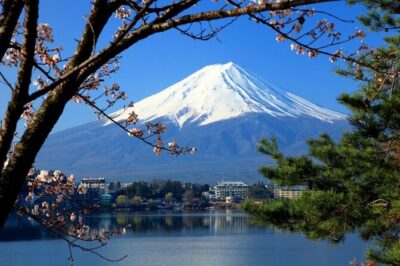 ★ 5.0Mt Fuji and Hakone 1-Day Bus Tour Return by Bullet TrainFrom $163
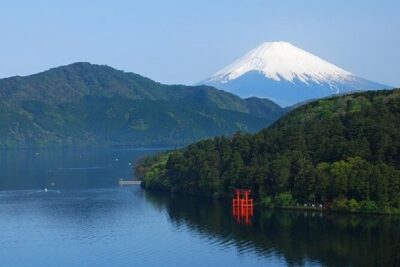 ★ 4.0Mt Fuji & Hakone Cruise, Drum Show Bullet Train 1 Day from TokyoFrom $149
 ★ 4.4Tokyo Mt Fuji 5th St & Hakone Cruise Bus Tour w/Bullet TrainFrom $15410 hours
 ★ 4.5From Tokyo: Mount Fuji Full-Day Sightseeing TripFrom $6810 hours
 ★ 4.7Tokyo: Mt. Fuji Tour, Hakone Ropeway, Owakudani, Lake AshiFrom $5410 hours
 ★ 4.4Tokyo:Mt.Fuji,Kawaguchiko Oishi Park,Arakurayama Sengen ParkFrom $5410 hours