
Reviewed · MT FUJI DAY TRIPS
From Tokyo: Mt. Fuji And Hakone Private Sightseeing Day Trip
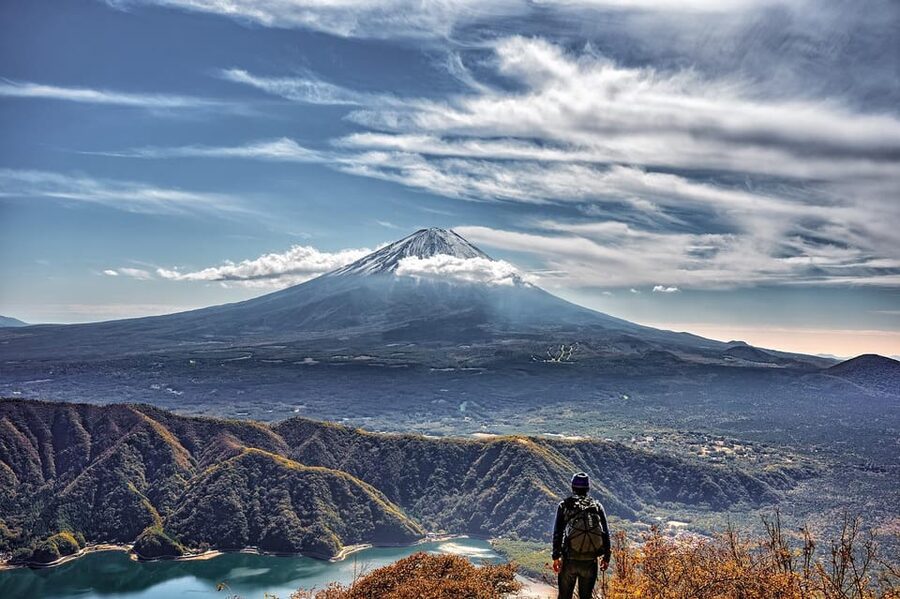
Mount Fuji is the star here, but the best part is how many different views you can collect in one day: from a pagoda, a shrine, a lake, a flower park, and possibly the mountain’s 5th Station. A private car makes that possible without wrestling with several train and bus connections.
I like the freedom to start and finish at your hotel in Tokyo’s 23 wards, and I like the choice between Fuji’s lakes and Hakone’s ropeway, cruise, and art museum. The $419 group price is fair for up to five people, especially when split among a family or small group. The catch is that traffic can delay pickup, and one past booking had a driver who was new to the Hakone route.
In This Review
- Key points to know before booking
- A private way to chase Mount Fuji
- Choose between Fuji scenery and Hakone art
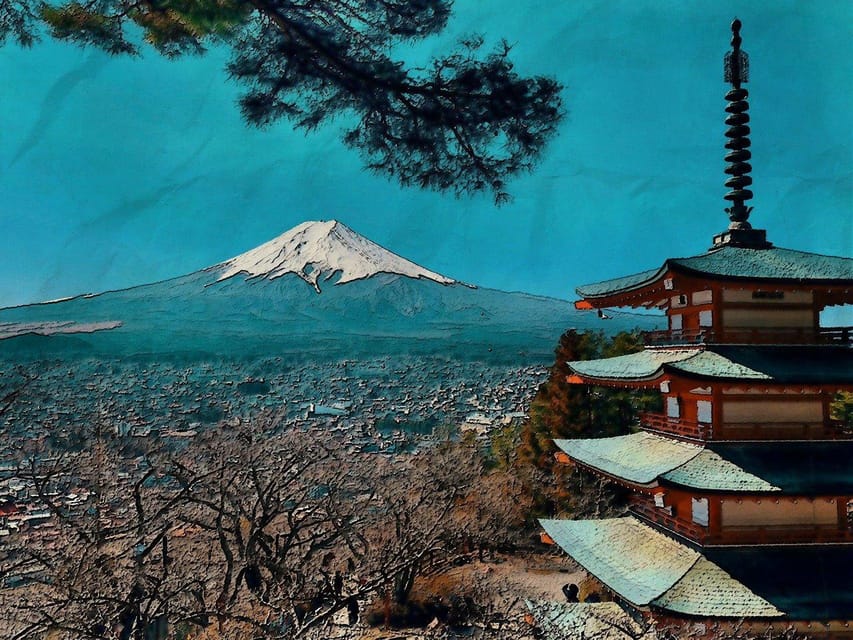
- Arakurayama Sengen Park and the famous pagoda view
- Kitaguchi Hongu Fuji Sengen Shrine
- Mount Fuji’s 5th Station
- Lake Kawaguchi, the ropeway, and lunch
- Oishi Park’s flowers and open Fuji views
- Oshino Hakkai and Saiko Iyashi-no-Sato Nenba
- Hakone Ropeway and Lake Ashi
- Hakone Open Air Museum
- What the private vehicle adds
- Costs, timing, and what to pack
- Who should book this Fuji and Hakone day trip?
- Should you book it?
- FAQ
- How long is the Mt. Fuji and Hakone private day trip?
- Where can pickup and drop-off take place?
- How many people can join the private tour?
- Is lunch included?
- Are the ropeway and cruise tickets included?
- Are Mount Fuji entrance fees included?
- Can I cancel the booking?
Key points to know before booking
- Two very different day plans: Choose Fuji Five Lakes sights or a Hakone combination of ropeway, Lake Ashi cruise, and outdoor art.
- Private transport for up to five people: Your group avoids public transport changes and can spend more time at places you care about.
- Classic Fuji views: Arakurayama Sengen Park, Lake Kawaguchi, Oishi Park, and the 5th Station each show the mountain from a different angle.
- Extra costs add up: Ropeway and cruise tickets, the Fuji entrance fee, and Saiko Iyashi admission are not included.
- Ten hours is a full day: Pickup is scheduled for 8:30 a.m., with return to a Tokyo location in the 23 wards.
- Driver quality matters: Amir, Ishii, and Zubi received strong praise for calm service and flexibility, but the Hakone route may not always be handled by a specialist.
A private way to chase Mount Fuji
This is not a slow, single-site excursion. It is a long day built around scenic stops, photo chances, short walks, and the convenience of a dedicated vehicle. You can be picked up at a hotel in Shinjuku, Shibuya, Minato, Shinagawa, or Setagaya, then returned to one of those Tokyo areas after roughly ten hours.
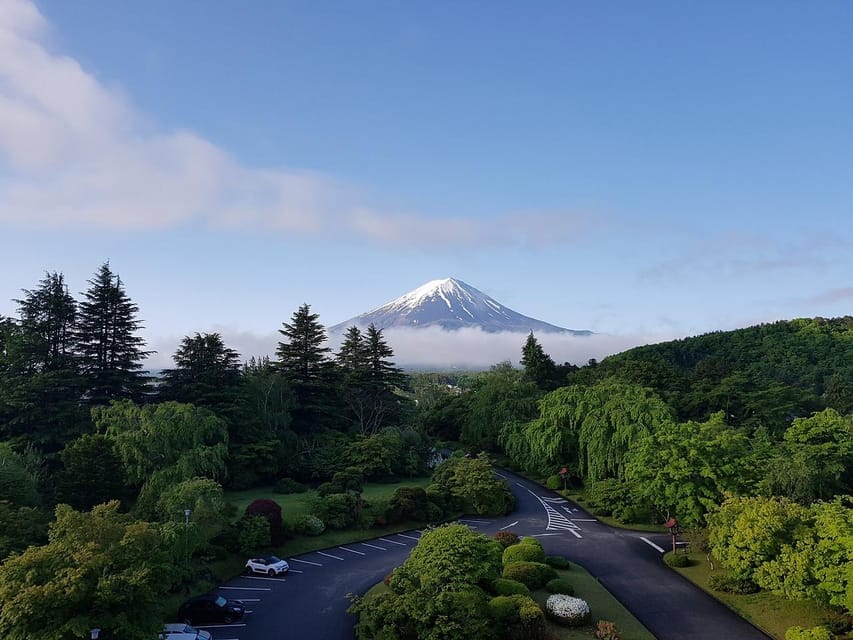
That arrangement matters in Japan. The Fuji region is spread out, and the most attractive viewpoints are not all beside train stations. A private vehicle lets you link Arakurayama Sengen Park, Lake Kawaguchi, Oishi Park, Oshino Hakkai, and other stops without planning each connection yourself.
The driver speaks English or Japanese and handles highway tolls and parking. The vehicle is described as modern, clean, air-conditioned, and private for your group. Pickup is set for 8:30 a.m., but traffic can make the driver up to 30 minutes late. Build that possibility into your morning rather than scheduling a tight activity in Tokyo afterward.
A few more Tokyo tours and experiences worth a look
Choose between Fuji scenery and Hakone art
The two advertised plans are not minor variations. They offer different kinds of days.
The Fuji-focused plan is best if this is your first sight of Mount Fuji and you want a broad collection of classic views. It includes Arakurayama Sengen Park, Kitaguchi Hongu Fuji Sengen Shrine, the 5th Station, Lake Kawaguchi, the Mount Fuji Panoramic Ropeway, Oishi Park, and Oshino Hakkai.
The Hakone plan trades some Fuji Five Lakes stops for Hakone’s volcanic scenery and cultural attractions. It includes Arakurayama Sengen Park, Oishi Park, the Hakone Ropeway, a Lake Ashi sightseeing cruise, and the Hakone Open Air Museum.
The detailed day schedule also lists Saiko Iyashi-no-Sato Nenba, with a 30-minute visit. Because the supplied route details show both a main schedule and two possible plans, confirm the exact route before paying. That is especially important if you have your heart set on the 5th Station, the cruise, or the traditional village.
Arakurayama Sengen Park and the famous pagoda view
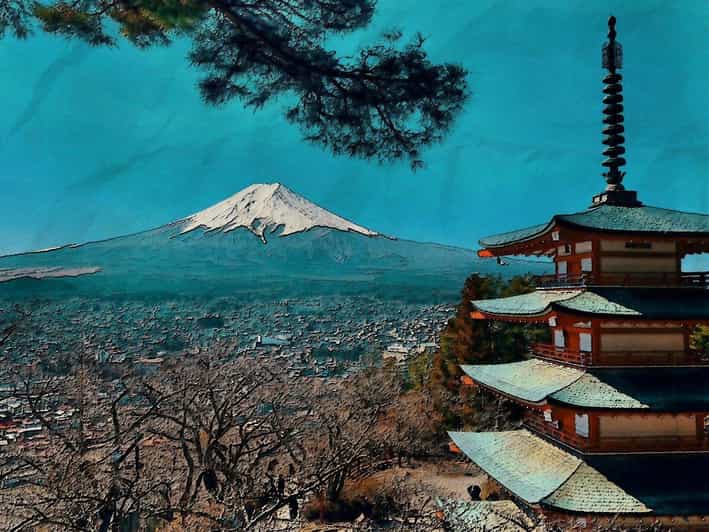
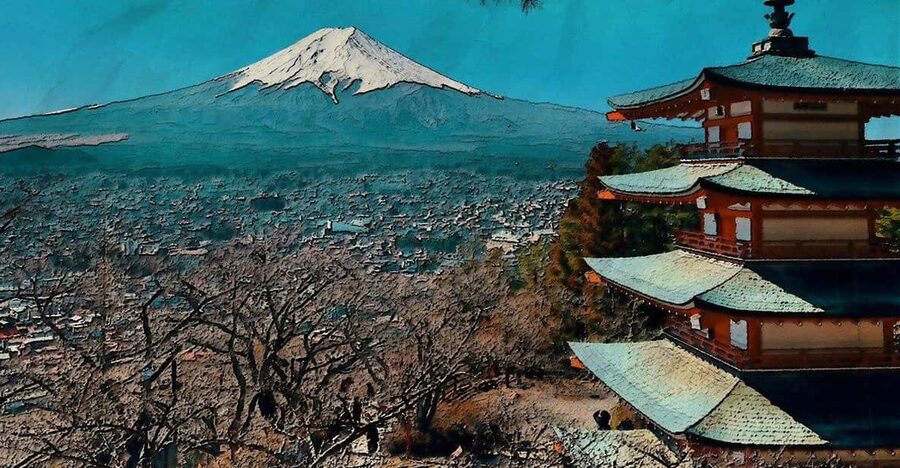
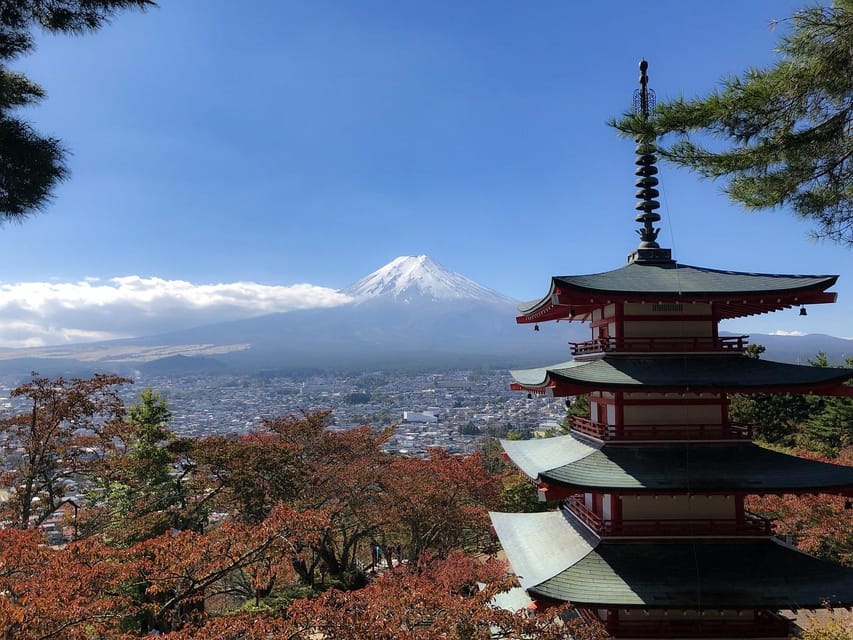
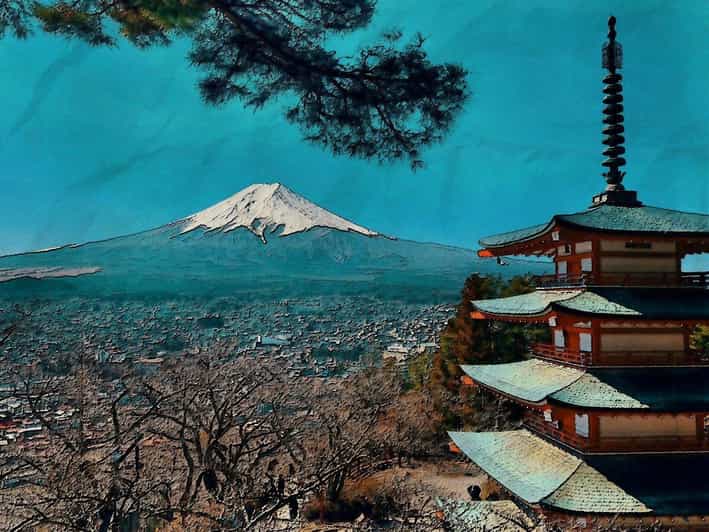
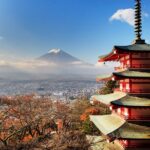
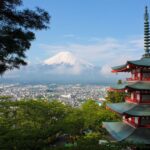
Arakurayama Sengen Park gives you one of Japan’s most recognizable views: the red Chureito Pagoda in the foreground, Mount Fuji behind it, and the town below. The pagoda is reached from the Arakura Sengen area by an uphill route with many steps, so this stop is not simply a pull-over photo point.
The reward depends heavily on weather. Clear air can frame Fuji beautifully, while cloud may hide the summit. The park still gives you a worthwhile shrine and hillside setting, but you should treat the mountain view as weather-dependent rather than guaranteed.
The scheduled time here can be as short as 30 minutes. That is enough for a quick visit if conditions are good, but it may feel rushed if you want to climb slowly, take photographs, and look around the shrine grounds. Tell your driver early if this is your top priority.
Kitaguchi Hongu Fuji Sengen Shrine
The shrine adds a quieter spiritual note to the Fuji plan. Kitaguchi Hongu Fuji Sengen Shrine is connected with traditional worship of Mount Fuji, and its wooded setting gives the day a pause between the busier viewpoints.
You will not get the same open mountain panorama here as at Arakurayama or Lake Kawaguchi. Its value is the atmosphere: shrine architecture, sacred grounds, and a chance to see Fuji as more than a scenic backdrop. If you want only panoramic photographs, this may feel less essential. If you enjoy Japanese religious sites, it gives the itinerary more depth.
Mount Fuji’s 5th Station
The 5th Station sits partway up Mount Fuji and is the highest scheduled point on the Fuji route. It offers broad views over the surrounding countryside and a different sense of the mountain than the lakeside viewpoints below.
Access can depend on road conditions and seasonal operation. The supplied details list a Fuji entrance charge of 2,100 yen per group and a Subaru Line charge of 2,100 yen per person, so ask which fee applies to your chosen date and route. These costs are separate from the tour price.
The visit is planned for about one hour, including sightseeing, free time, shopping, and photographs. At this elevation, weather can change quickly, and the mountain may be wrapped in cloud even when Tokyo looks clear. The 5th Station is worth including if you want to reach the mountain itself, but it should not replace the lower viewpoints in your expectations.
A few more Tokyo tours and experiences worth a look

Lake Kawaguchi, the ropeway, and lunch
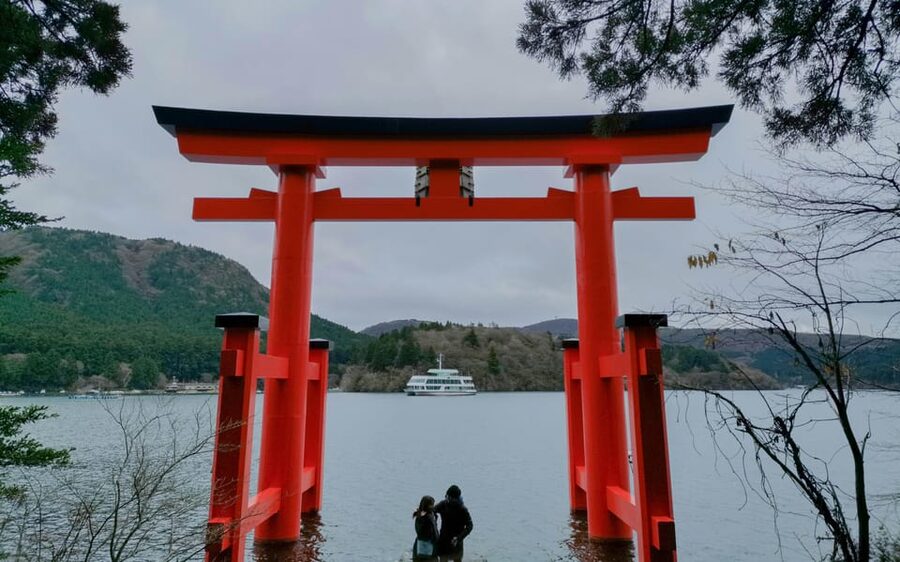
Lake Kawaguchi is one of the most useful stops because it combines scenery, food, shopping, and optional activities. The lake gives you a broad view of Fuji when the air is clear, while the water and nearby shore create a calmer setting after the drive.
The planned stop is about 90 minutes. That is a reasonable amount of time for lunch and a short look around, but it may not cover every optional activity. The schedule mentions a boat cruise and a long-tail boat ride, while the general plan also includes the Mount Fuji Panoramic Ropeway. Confirm what is operating on your date and how much time your driver has set aside.
The ropeway rises about 400 meters from the eastern shore of Lake Kawaguchiko to an observation area near Mount Tenjo. From above, you can look down over the lake and across toward Fuji. The ride is a fine choice when the summit is visible, though an extra ticket is required. Ropeway and cruise tickets are not included, with the supplied price information listing 500 yen per person for the relevant activity.
Lunch is also your responsibility. That is normal for a private day trip, since it lets you choose when and what to eat, but it means you should not assume the $419 price covers meals.
Oishi Park’s flowers and open Fuji views
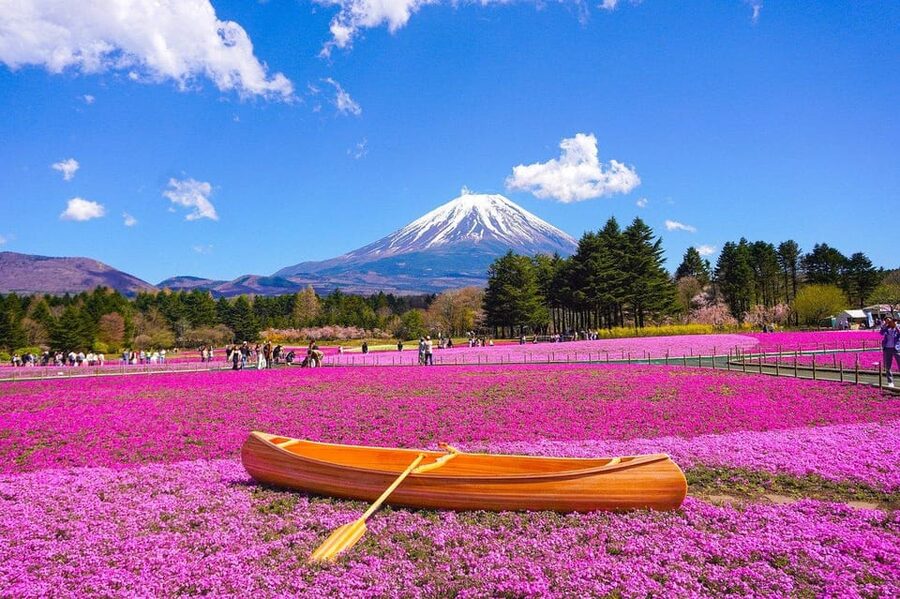
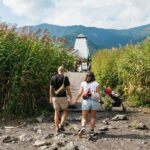
Oishi Park sits along Lake Kawaguchi and is known for flower displays backed by Mount Fuji. This is a strong stop for photographs because the view has several layers: the lake, planted flowers, open sky, and the mountain when clouds cooperate.
The planned hour gives you time to walk, take pictures, browse, and enjoy the shore without turning the stop into a rushed ten-minute break. Seasonal flowers change the appearance of the park, so the exact show depends on your travel date.
I would not count on Oishi Park alone for Fuji. Weather can close the view, and the park is best understood as a pleasant lakeside stop that becomes exceptional when the summit appears.
Oshino Hakkai and Saiko Iyashi-no-Sato Nenba
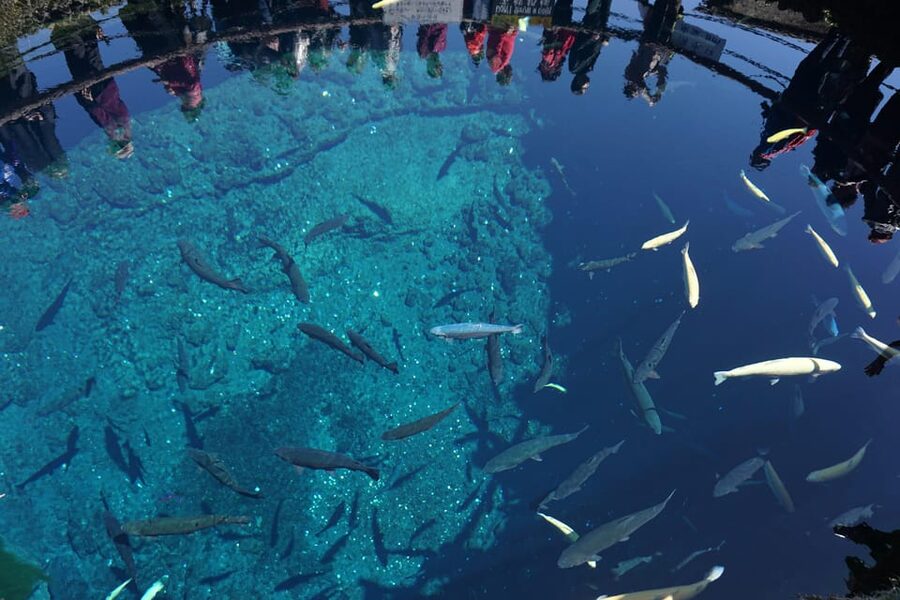
Oshino Hakkai offers a different side of the Fuji region. Its clear spring-fed ponds are linked to snowmelt from Mount Fuji, and the traditional thatched-roof houses give the village a distinctly old-fashioned appearance.
The scheduled 30 minutes is brief. You can see the ponds and houses, but you will have little time for a leisurely visit or extended shopping. If this is a favorite type of stop for you, ask whether the schedule can be adjusted.
Saiko Iyashi-no-Sato Nenba is another traditional-style village stop, also listed at 30 minutes. Admission is 500 yen per person and is not included. The short visit works well as a photo break, but you should not expect a detailed cultural program in that time.
Together, these villages keep the day from becoming only a series of mountain viewpoints. They show how local homes, water, and rural scenery fit into the Fuji area. The tradeoff is time: adding both means less room for long stops elsewhere.
Hakone Ropeway and Lake Ashi
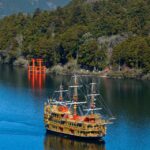
Hakone offers a more varied route than the Fuji plan. The Hakone Ropeway gives you aerial views over valleys and volcanic scenery, with possible views toward Mount Fuji and Lake Ashi. It is one of the day’s main attractions, not merely a way to get from one point to another.
The Lake Ashi sightseeing cruise then shifts the pace from moving above the valleys to gliding across the water. The cruise gives you a restful break, though the best views still depend on weather. As with the Fuji ropeway, tickets are extra.
This part of the tour needs careful time management. Ropeway stations and the cruise are linked as a transport system, so the exact boarding point matters. One past booking had a driver who was unfamiliar with the Hakone route and did not know which ropeway station to use. The driver was described as polite and trying hard, but that experience shows why you should confirm the route and station plan in advance.
Hakone Open Air Museum
The Hakone Open Air Museum places sculpture in a mountain setting. It is a good finish for people who want art as well as scenery, and it gives the Hakone plan a clear cultural stop after the ropeway and cruise.
The attraction is not the same kind of experience as a temple or historic village. You are coming for outdoor sculpture, views, and the relationship between art and its setting. If you prefer gardens, museums, and creative work to repeated viewpoints, this may be the deciding reason to choose Hakone.
The available schedule does not give a separate visit length for the museum. Since the entire day lasts ten hours and Tokyo traffic can be heavy, do not assume you can linger at every Hakone stop.
What the private vehicle adds
A private air-conditioned vehicle is the main practical advantage. You can leave your hotel in Tokyo’s 23 wards, carry purchases with you, and avoid changing between trains, buses, ropeways, and boats for the entire day.
The driver also covers highway tolls and parking fees. That makes the price easier to judge, since those costs can otherwise appear as small surprises during a long day outside Tokyo.
The private format is most valuable for two to five people. At the full group limit, $419 works out to about $84 per person before admission fees, food, and optional rides. For a couple, the per-person cost is much higher, but you are paying for privacy, hotel pickup, and control over the pace rather than simply transport.
Driver performance deserves a realistic note. Amir was praised for helpful, informative service, while Ishii was calm and professional on a rainy day. Zubi received strong praise for knowing good viewpoints, adjusting the schedule, and allowing extra time where needed. Another booking had a driver who took private calls while driving, struggled with the vehicle controls, and lacked route knowledge in Hakone.
That mixed record does not mean you will have a poor day. It does mean you should request an experienced driver for your chosen route, particularly if you select Hakone. A flexible plan is only useful when the person driving knows how the route fits together.
Costs, timing, and what to pack
The base price is $419 per private group of up to five. Included are hotel pickup and drop-off within Tokyo’s 23 wards, private transport, an air-conditioned vehicle, an English or Japanese-speaking driver, highway tolls, and parking.
Plan separately for:
- Lunch
- Ropeway or cruise tickets
- The listed Fuji entrance charge of 2,100 yen per group
- The Subaru Line charge of 2,100 yen per person, if applicable
- Saiko Iyashi-no-Sato Nenba admission of 500 yen per person
Wear shoes suitable for short walks and steps. The day includes viewpoints, shrine grounds, park paths, village visits, and possible ropeway or cruise boarding. Bring layers as well, since the 5th Station can feel different from Tokyo.
You can cancel up to 24 hours ahead for a full refund, and the reserve-now, pay-later option keeps your plans flexible. The tour is wheelchair accessible, though you should still confirm which exact route and optional activities work best for your needs.
Who should book this Fuji and Hakone day trip?
I would choose this experience if you want to see Mount Fuji without arranging a complex regional transport plan. It suits families, couples, and small groups who value hotel pickup, private space, and the ability to adjust the day.
The Fuji route fits first-time visitors who want the classic pagoda, lake, flower park, shrine, village, and 5th Station combination. It is also the better choice if Mount Fuji itself is the main reason for leaving Tokyo.
The Hakone route fits you if hot-spring country scenery, a lake cruise, an aerial ride, and outdoor art sound more appealing than visiting several Fuji Five Lakes sites. Just confirm the ropeway route and ask for a driver familiar with Hakone.
I would be cautious if you want a slow, detailed visit at every stop. Ten hours sounds generous, but Tokyo traffic, long distances, and optional activities create a packed day. You may need to choose between a leisurely lunch, a long ropeway ride, village browsing, and extended time at the best viewpoint.
Should you book it?
Book this tour if you are a group of up to five and want convenience more than the lowest possible transport cost. The strongest parts are the private vehicle, flexible pacing, wide range of Fuji viewpoints, and the chance to see several difficult-to-link sights in one day.
Choose the Fuji plan when the mountain is your priority. Choose Hakone for the ropeway, Lake Ashi cruise, and open-air art. Before departure, confirm the exact itinerary, extra fees, and the driver’s experience on the chosen route. That small check can make the difference between a smooth day and a hurried one.
FAQ
How long is the Mt. Fuji and Hakone private day trip?
The experience lasts 10 hours. Pickup is scheduled for 8:30 a.m., though traffic can make the driver up to 30 minutes late.
Where can pickup and drop-off take place?
Pickup and drop-off are available within Tokyo’s 23 wards, including Shinjuku, Shibuya, Minato, Shinagawa, and Setagaya. Contact the provider if you need service outside Tokyo.
How many people can join the private tour?
The price covers one private group of up to five people.
Is lunch included?
No. Lunch is not included, so you pay for your own meal during the day.
Are the ropeway and cruise tickets included?
No. Tickets for activities such as the ropeway or cruise are extra. The supplied information lists 500 yen per person for the relevant activity.
Are Mount Fuji entrance fees included?
No. The listed extra charges include a Mount Fuji entrance fee of 2,100 yen per group and a Subaru Line charge of 2,100 yen per person, when applicable.
Can I cancel the booking?
Yes. You can cancel up to 24 hours in advance for a full refund. A reserve-now, pay-later option is also available.
More Private Tours in Tokyo


More Hakone Day Trips in Tokyo
More Mt Fuji Day Trips in Tokyo
More tours in Tokyo we've reviewed




Mt Fuji Day Trips, compared.
 ★ 5.0Mt Fuji and Hakone 1-Day Bus Tour Return by Bullet TrainFrom $163
 ★ 4.0Mt Fuji & Hakone Cruise, Drum Show Bullet Train 1 Day from TokyoFrom $149
 ★ 4.4Tokyo Mt Fuji 5th St & Hakone Cruise Bus Tour w/Bullet TrainFrom $15410 hours
 ★ 4.5From Tokyo: Mount Fuji Full-Day Sightseeing TripFrom $6810 hours
 ★ 4.7Tokyo: Mt. Fuji Tour, Hakone Ropeway, Owakudani, Lake AshiFrom $5410 hours
 ★ 4.4Tokyo:Mt.Fuji,Kawaguchiko Oishi Park,Arakurayama Sengen ParkFrom $5410 hours