
Reviewed · TOKYO FOOD TOURS
Tokyo: Private Personalized Local Food Tour
Tokyo: Private Personalized Local Food Tour
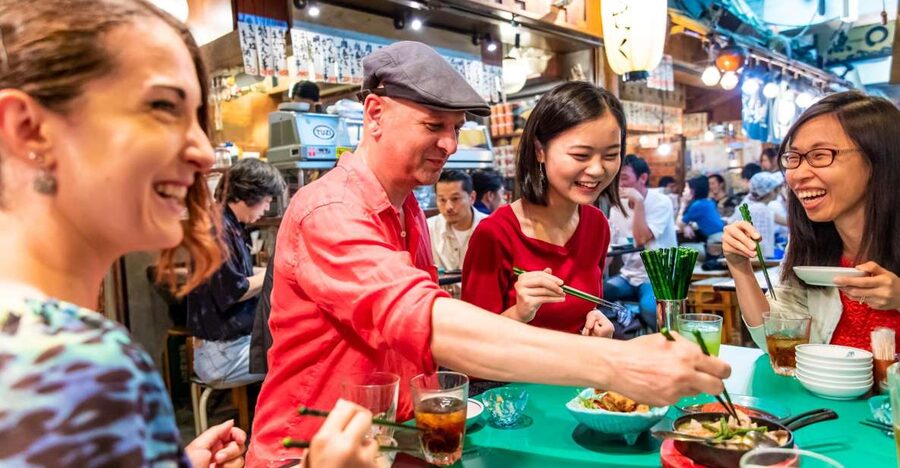
Tokyo’s best food memories may begin in a place you would walk past without a second thought. This private three-hour outing takes you into neighborhood izakayas, ramen counters, alley eateries, and yatai-style spots, with a local host adjusting the route as your appetite and curiosity develop. You might start beneath the lanterns of Sun Mall, warm up with oden and sake, then move on to skewers, karaage, miso eggplant, or a drink you would not have ordered alone.
I like two things right away: the food is shaped around your tastes, and the tour feels like a local evening out rather than a marching schedule. Hosts such as Apy, Mari, Steven, Amir, and Yuki have helped visitors find places they would not have located alone, explained Japanese customs, and offered useful advice for the rest of a Japan trip.
The tradeoff is that the experience is intentionally loose. You are paying for a private host, local access, translation, and guidance, not a fixed restaurant crawl with every stop announced in advance. Food beyond the included tastings and any rail or taxi fares cost extra, so ask your host to clarify the plan before you set out.
In This Review
- Key points to know before you book
- A Tokyo food night built around your tastes
- Starting in Sun Mall and Nakano
- What eight to 10 tastings really means
- Izakayas, skewers, and the pleasure of a small menu
- The host is part guide, part translator, part local friend
- A useful way to begin a Japan trip
- Price, inclusions, and the real value
- Walking, timing, and accessibility
- Who should book this Tokyo food tour?
- Should you book it?
- FAQ
- How long does the Tokyo private food tour last?
- How many dishes and drinks are included?
- Is this a private tour?
- Where does the tour meet?
- Can I request hotel pickup?
- What languages are available?
- Is transportation included?
- Can the tour accommodate dietary preferences?
- Is the experience wheelchair accessible?
- Can I cancel the booking?
Key points to know before you book
- Eight to 10 tastings at two or three eateries: Expect a spread of local dishes and traditional drinks, not one large sit-down meal.
- A flexible route around your preferences: Your questionnaire helps match you with a host and shape the evening around comfort food, adventurous choices, dietary needs, or neighborhood interests.
- A useful first-day orientation: Several hosts have helped with train travel, restaurant customs, and suggestions for the rest of a Japan itinerary.
- Backstreet Tokyo rather than a checklist: You may visit Sun Mall, Nakano-area spots, Ameyoko Street, Shibuya, or another suitable neighborhood depending on your host and plan.
- Private and walk-focused: You have your own host and no strangers in the group, but you should expect walking and possibly paid public transport.
- Best for curious eaters: This suits first-time visitors, couples, families, and anyone who wants help ordering in places where English may be limited.
A Tokyo food night built around your tastes
The clever part of this experience happens before the first bite. After booking, you receive a short questionnaire about your personality, food preferences, interests, and preferred pace. That information is used to match you with a like-minded host, who then contacts you directly with ideas for the route.
This gives you a chance to say what you actually want. You can ask for familiar Japanese comfort food, unusual local dishes, a gentle introduction to izakaya dining, or a night focused on neighborhood life. If someone in your group is vegetarian or has a dietary restriction, put that in the questionnaire and repeat it to the host before ordering.
The personal contact matters. It turns a generic three-hour booking into a conversation about what will make the evening work for you. One host, Till, adjusted the food choices for a vegetarian and a young child. Another guide, Mari, helped make a traditional meal work around a dietary restriction. That sort of help is far more useful than discovering a problem after you are seated.
You should still see the itinerary as a working plan, not a contract. The host may change the order, add a spontaneous stop, or skip somewhere if the mood, queue, or appetite points elsewhere. If you need a strict list of restaurants or a fixed menu, this may feel too open-ended.
A few more Tokyo tours and experiences worth a look
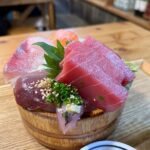
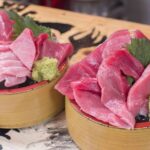
Starting in Sun Mall and Nakano
A possible meeting point is JR Nakano Station, with hotel pickup available from central Tokyo hotels. From there, your host may lead you toward Sun Mall, a retro shopping street where ramen steam, lantern light, and small food counters set the tone quickly.
Nakano is a useful base for this kind of evening because it gives you a sense of everyday Tokyo without requiring a grand sightseeing program. The appeal is not one famous monument. It is the small shift from station traffic to side streets, the shopfronts, the signs, and the compact restaurants where ordering can feel less obvious to a first-time visitor.
You might begin with ramen, especially if that is what you crave after arriving in Japan. Nancy’s visit began at a local ramen shop that opened at 11 a.m. and already had a short line. The wait was brief and the meal was worth it, but this is a good reminder that popular local places may not run on your preferred timetable.
Another option is a quiet alley and a bowl of oden with sake. Oden is gentle, warming food, with ingredients simmered in broth. It makes a sensible first stop if you want to ease into Japanese dining rather than begin with something challenging.
The exact opening point and neighborhood can vary. Some outings have focused on Shibuya or Ameyoko Street in Ueno instead. Ask your host what area best matches your questionnaire answers and how much walking is involved.
What eight to 10 tastings really means
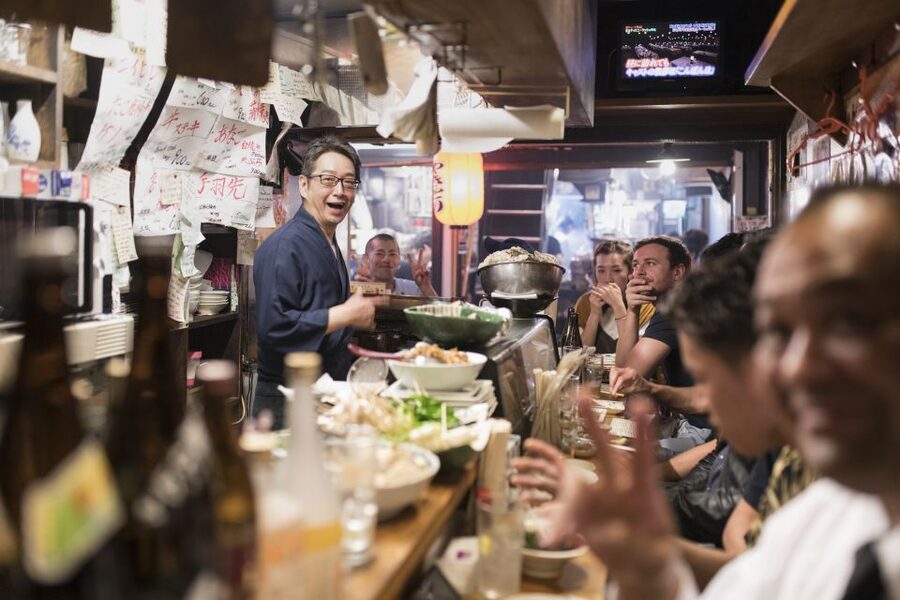
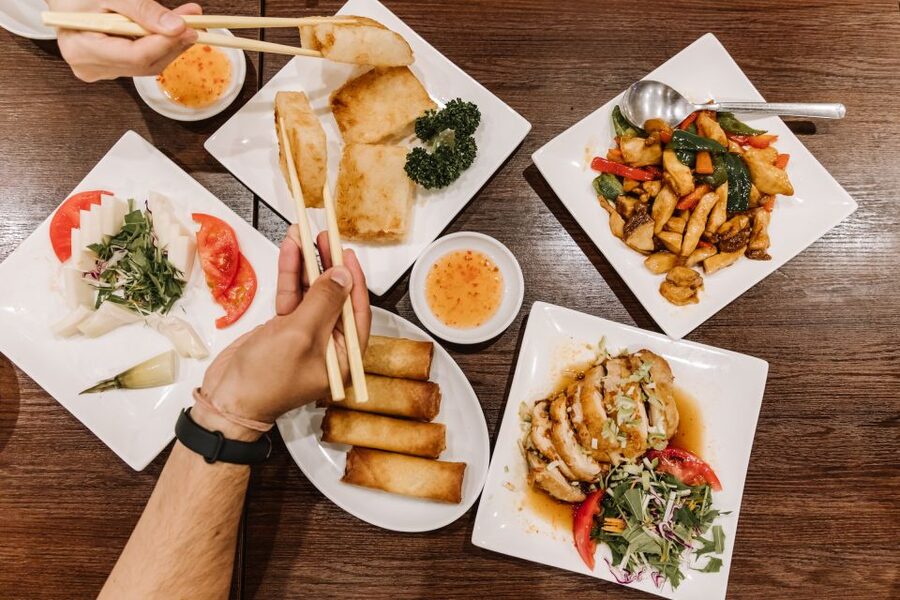
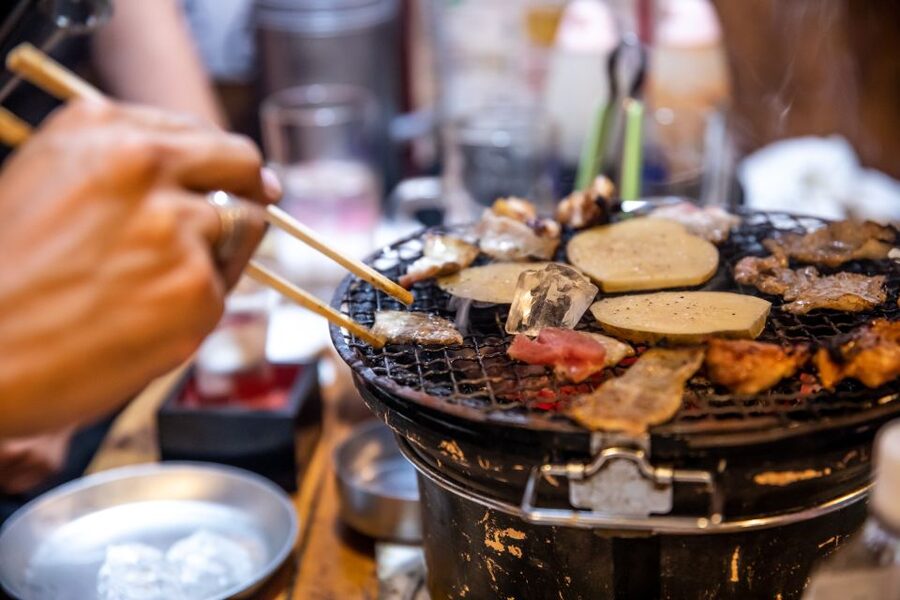
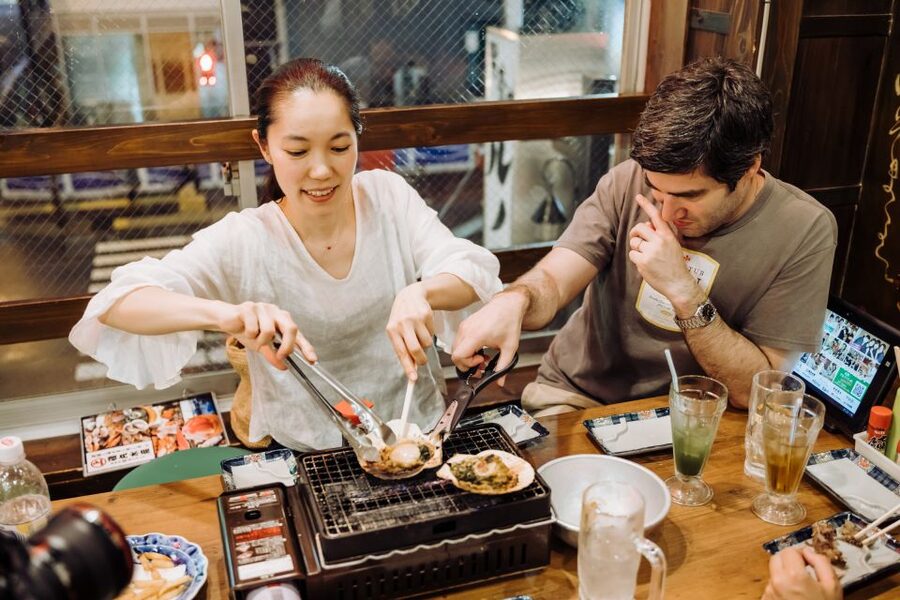
The included food is spread across two or three eateries. Think of it as a sequence of small discoveries rather than eight to 10 full restaurant meals. The selection might include crispy karaage, grilled skewers, miso eggplant, ramen, oden, regional specialties, and other dishes your host believes will suit the group.
Traditional drinks are part of the tasting, with sake, plum wine, and other local options possible. The information does not promise a set list, so do not book expecting a particular brand or drink. Tell your host your preferences, including how much alcohol you want, and remember that extra food and drinks beyond the included amount are not covered.
I like this format for Tokyo because a single restaurant can only show you one corner of the city’s food culture. Moving between two or three places lets you compare styles, portions, atmosphere, and ordering customs. You also have more chances to ask why a dish is prepared a certain way or where it comes from.
The pace should be manageable, but three hours passes quickly. Conversations, queues, ordering, and transfers all take time. If food is your only priority, ask for a route with minimal transportation and more eating. If you want a wider neighborhood introduction, accept that some of the time will go toward walking and orientation.
Izakayas, skewers, and the pleasure of a small menu
Izakaya dining is social and informal. You order several things for the table, share them, and keep going as long as the evening feels right. For a visitor, the hard part is often not finding food in Tokyo. It is knowing what to order, how much to order, and how to read a menu that may offer little English.
A host gives you a safety net without taking over the evening. You can point to something unfamiliar and ask for an explanation. You can also say no. The strongest moments of this tour are likely to come from that exchange, when a dish becomes less mysterious and more appealing because you understand its place in the meal.
One stop may specialize in karaage, another in grilled skewers, and another in a drink such as plum wine. Miso eggplant offers a different kind of lesson, showing how a simple vegetable can become a satisfying bar dish. The point is variety, but the route remains personal.
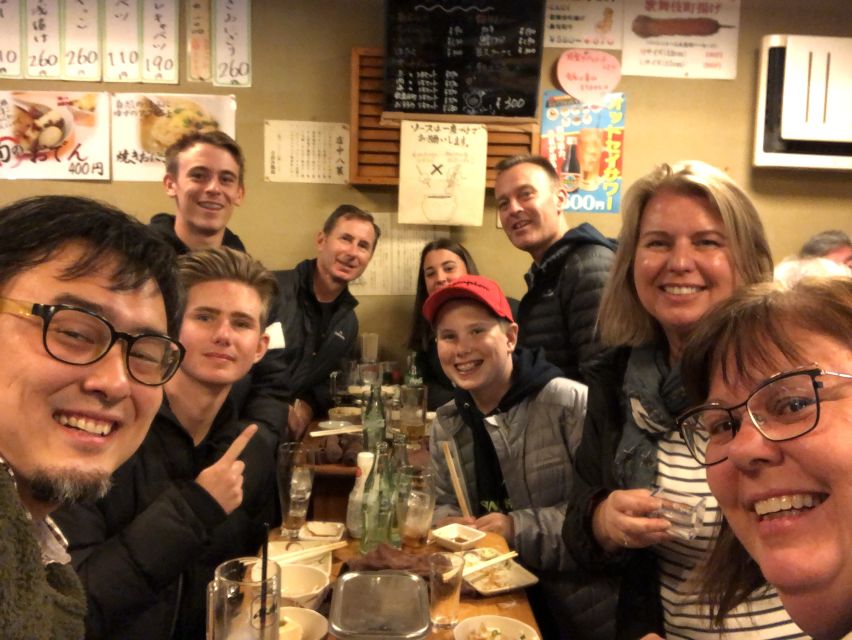
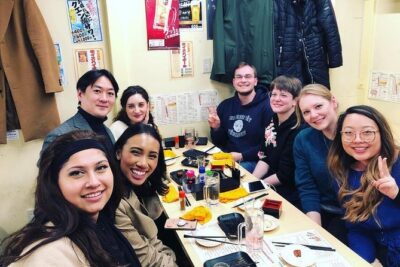
You may also find yourself sharing a small toast with people at a neighboring table. That kind of contact is not guaranteed, and it should not be treated as a performance. Still, a host who can explain the customs and help you behave comfortably makes these little moments easier.
The host is part guide, part translator, part local friend
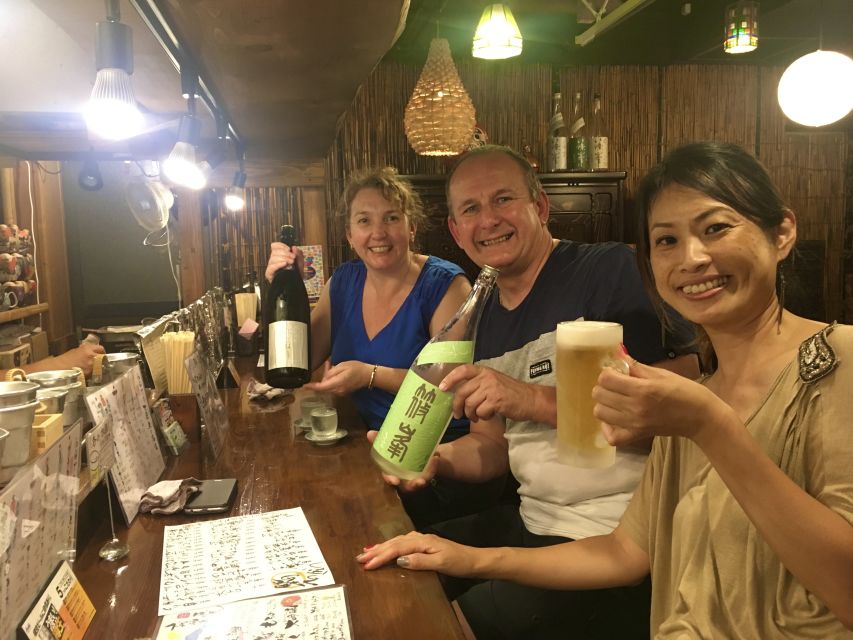
The food matters, but the host often determines the quality of the night. The strongest feedback about this experience centers on friendly conversation, clear communication, and the ability to adjust plans.
Apy helped a first-time visitor understand Tokyo’s districts, cuisine, customs, and rail system. Steven explained the food and the Japanese regions connected to it while chatting in an easy, relaxed way. Amir showed parts of the city his group would not have found alone and offered proactive communication before the meeting.
Other hosts added different strengths. Megumi provided translation and town guidance. Michael mixed food with Japanese history and culture. Ayaka made the outing enjoyable while sharing personal insight into Japan. Yuki adjusted the activities to suit the group’s interests. These details show why the questionnaire is important: the host is not simply delivering a standard script.
Your expectations should remain sensible. Not every host will give a detailed area history at every stop. One visit in Ameyoko Street was satisfying for the food and company but lighter on neighborhood and cultural explanation than expected. The guide later helped with train-ticket reservations, which was valuable, but it was a different kind of assistance.
If cultural context is your main reason for booking, say so clearly. Ask for explanations of the district, dishes, customs, and restaurant choices. If you mainly want companionship, translation, and help finding good places, the flexible format should suit you well.
A few more Tokyo tours and experiences worth a look



A useful way to begin a Japan trip

This tour works especially well on your first or second day in Tokyo. You get a meal, but you can also learn how to move around the city and how local dining works. Several hosts have helped with rail directions, suggested places to visit later, and pointed out restaurants or neighborhoods for independent exploring.
That orientation can save you time. Tokyo’s train system is efficient but not always simple at first glance. Station exits can be far apart, lines use different operators, and a restaurant may be close on a map but hard to reach from the correct gate. A host who walks you through the system gives you practical confidence for the days ahead.
You can also use the first conversation to set the tone for the rest of your trip. Ask about foods to try, places that fit your interests, and dishes that work for vegetarians or cautious eaters. Michael even suggested vegetarian ramen for the following day, showing how the value can continue after the three-hour booking ends.
Families can benefit from the private format because the host can adjust the pace and food choices. Jan’s outing included a young child alongside a vegetarian, and the menu was adjusted accordingly. A private group also makes it easier to stop for questions, photos, or a short break without holding up strangers.
Price, inclusions, and the real value
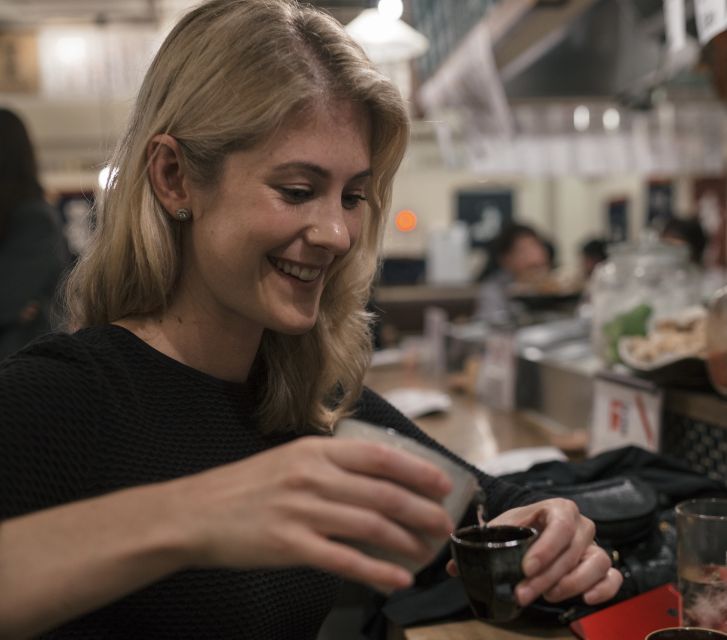
At $172 per person, this is not a cheap way to eat dinner. The price buys a private three-hour host, 8 to 10 food and drink tastings, pre-tour planning, direct communication, and help navigating places that may be hard to use on your own.
For a solo visitor or a pair, the cost can make sense if you value personal attention and translation. You are not just paying for food. You are paying for reduced guesswork, a route shaped around your interests, and the chance to ask questions throughout the evening.
For a larger private group, calculate carefully. The cost is per person, and additional dishes or drinks are not included. Public transport and local taxis may also add to the bill. Since the walking route can use rail or taxis between areas, ask your host about likely transfers and costs once the reservation is confirmed.
The value is strongest if you would otherwise spend your first evening searching menus, choosing restaurants by guesswork, and missing the social side of izakaya dining. It is weaker if you already know Tokyo well, speak Japanese comfortably, and prefer to choose every restaurant yourself.
A useful tip is to treat the booking as a guided introduction, not as your entire food budget for the night. Come hungry, but leave room for the possibility that you will want to pay for an extra drink or dish at a place you enjoy.
Walking, timing, and accessibility
The activity lasts three hours, with starting times available according to the date you choose. Hotel pickup can be arranged from a central Tokyo hotel, or you can meet at JR Nakano Station. Confirm the pickup details before the day, especially if your hotel is outside the central area.
This is primarily a walking experience. Public transport or local taxis may be used to move between locations, and those costs are separate. Wear comfortable shoes and allow enough time to reach the meeting point. The route can change, so do not plan a tight booking immediately afterward.
The experience is listed as wheelchair accessible, but it remains wise to discuss your needs with the host before arrival. Restaurant layouts, alley surfaces, queues, steps, and train transfers can vary. A private format makes adjustments easier, but it does not guarantee that every possible venue will suit every mobility need.
The guides speak English or Japanese. If you need an English-speaking host, state that clearly when booking. Direct communication before the outing gives you a chance to confirm food restrictions, alcohol preferences, walking limits, and the sort of neighborhood experience you want.
Who should book this Tokyo food tour?
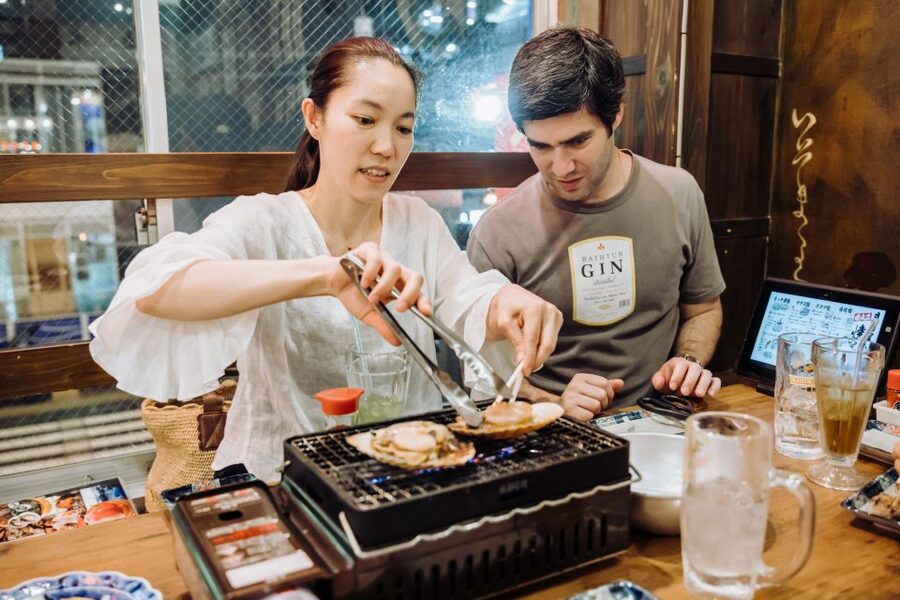
I would recommend it most strongly to first-time Tokyo visitors who want help getting oriented without joining a large group. It also suits couples seeking an easy first-night plan, families with mixed food preferences, and solo visitors who would rather share a meal with a local than decode every menu alone.
Adventurous eaters will get the most from the flexible route. You can try dishes you might skip on your own, then ask questions and adjust the next stop. Cautious eaters can use the same format to stay close to familiar foods while taking small steps outward.
This is less suitable if you want a precise restaurant list, a formal food-history lecture, or unlimited eating included in the price. It is also not the right choice if you dislike walking or do not want to pay separately for transportation and extras.
The overall rating is 4.5 from 101 ratings, with especially strong praise for personal tailoring, friendly hosts, local places, translation, and help with the train system. The occasional concern is not poor food. It is a mismatch between what someone expected from the cultural guiding and what the flexible companion-style format delivered.
Should you book it?
Book this tour if you want Tokyo food with a human guide beside you, especially at the start of your trip. The best use of the three hours is to tell your host exactly what you want, then let that person handle the menus, route, translations, and local rhythm.
I would book it for a first night, a group with different food needs, or anyone nervous about ordering in small Japanese eateries. I would skip it if you already have a carefully planned food itinerary or if $172 per person feels too high for a guided introduction.
Keep your expectations clear, ask about transport and included tastings, and use the questionnaire honestly. Done that way, this can give you more than dinner: it can show you how to eat, move, and feel at home in Tokyo.
FAQ
How long does the Tokyo private food tour last?
The experience lasts three hours.
How many dishes and drinks are included?
You receive tastings of 8 to 10 local dishes and traditional drinks at two or three eateries.
Is this a private tour?
Yes. It is offered as a private group experience, so you do not share the host with unrelated participants.
Where does the tour meet?
You can meet your host at JR Nakano Station, 5 Chome Nakano, Nakano City, Tokyo. Hotel pickup can also be arranged from any central Tokyo hotel.
Can I request hotel pickup?
Yes. Pickup can be arranged for central Tokyo hotels. Confirm the details with your host after booking.
What languages are available?
The live guides speak English or Japanese.
Is transportation included?
No. This is a walking tour, but public transportation or local taxis may be used between locations. Those costs are additional.
Can the tour accommodate dietary preferences?
The questionnaire lets you share food preferences and interests before the tour. You should also discuss dietary restrictions directly with your host so the route and dishes can be adjusted.
Is the experience wheelchair accessible?
Yes, it is listed as wheelchair accessible. Since the tour includes walking, possible train transfers, and small eateries, discuss your specific access needs with the host in advance.
Can I cancel the booking?
You can cancel up to 24 hours before the experience for a full refund. A reserve-now-and-pay-later option is also available.
More Private Tours in Tokyo




More Food Experiences in Tokyo
More Tokyo Food Tours in Tokyo
More tours in Tokyo we've reviewed







Tokyo Food Tours, compared.
 ★ 5.0Tokyo: Shinjuku Food Tour (13 Dishes at 4 Local Eateries)From $86
 ★ 4.9Tokyo: Shinjuku Food Tour (15 Dishes and 4 Eateries)From $853 hours
 ★ 5.0Best of Shinjuku: Izakaya Food Tour (4 Stops, 14+ Tastings)From $92
 ★ 5.0Tokyo Night Foodie Tour in Shinjuku – Seasonal Sushi, Wagyu BeefFrom $111
 ★ 5.0Eat and Drink Like a Local: Tokyo Ueno Food Tour-Taverns&RamenFrom $95
 ★ 5.0Tokyo: Shibuya Food Tour (13 dishes and 4 Eateries)From $77