
Reviewed · 3-HOUR EXPERIENCES
3-Hour Manga Drawing Workshop in Tokyo
A blank manga page becomes your souvenir in this three-hour Kichijoji workshop, where a professional manga artist guides you through the same basic tools and steps used to build a finished page. You sketch, practice with a dip pen, add ink and black areas, then finish with effect lines and screen tones.
I like two things right away: you make a real one-page work, not just a quick cartoon, and the small group is limited to five people. I also like that the class supplies every tool, so you can arrive with nothing but your interest in manga. The main thing to consider is the language setup: instruction is in Japanese, with English on the slides, so you need to be comfortable following visual demonstrations.
In This Review
- Key points to know
- Making a Manga Page in Three Hours
- What the Professional Manga Artist Teaches
- Following the Six Main Drawing Stages
- 1. Sketching on A4 manga paper
- 2. Practicing with a dip pen
- 3. Inking the drawing
- 4. Painting black
- 5. Adding effect lines
- 6. Applying screen tones
- Why Kichijoji Works Well for This Class
- What the $129 Price Buys You
- Language, Clothing, and Comfort
- Is This a Good Choice for Families and Beginners?
- How to Plan the Rest of Your Day
- Who Should Book This Experience?
- Should You Book the Kichijoji Manga Workshop?
- FAQ
- How long does the manga workshop last?
- Where is the workshop held?
- How far is the workshop from Kichijoji Station?
- How do I enter the building?
- Is the class taught in English?
- What will I make during the class?
- Are drawing materials included?
- Can wheelchair users attend?
- Can I cancel for a full refund?
Key points to know
- You create one A4 manga page: The finished page is yours to take home.
- The lesson follows a real manga workflow: Sketching, dip-pen practice, inking, black paint, effect lines, and screen tones.
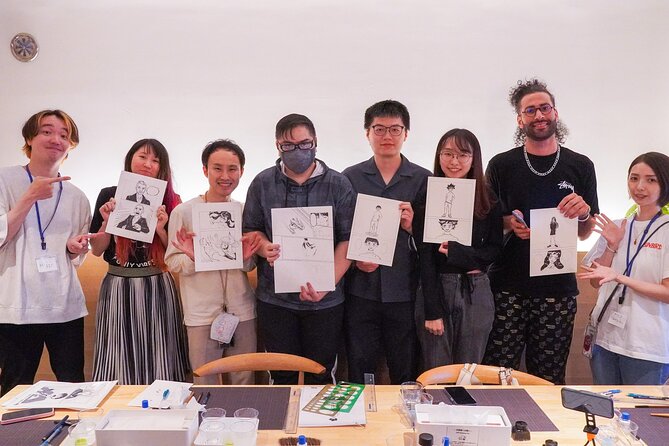
- The group is limited to five participants: That gives the artist room to offer individual help.
- The class is near Kichijoji Station: The apartment is an eight-minute walk from the north exit, close to Kichijoji Excel Hotel Tokyu and a New Balance store.
- English support comes through the slides: The workshop itself is conducted in Japanese.
- Wear clothes you can stain: Ink may mark your hands and clothing.
Making a Manga Page in Three Hours
This is not a general art class with a manga theme. The session is built around producing one complete page on A4 manga paper.
That matters because manga drawing is more than making expressive faces or large eyes. A finished page depends on line weight, black areas, motion marks, tone, and the way each part guides the eye. In three hours, you get a short but useful look at that process.
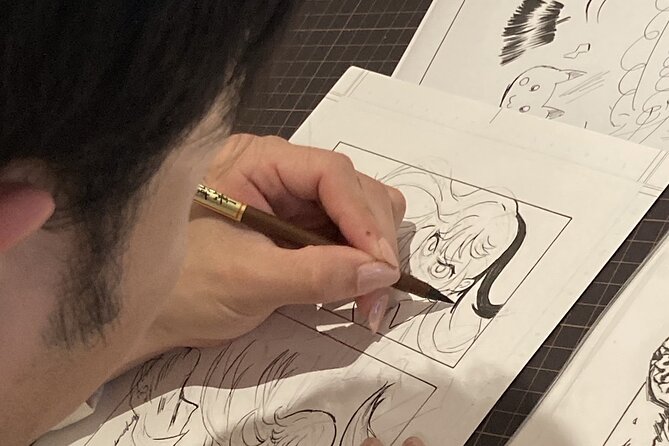
The workshop begins with a sketch. You work on manga paper and plan the page before adding permanent ink. This first stage is where you set up the composition, characters, and action. If you are new to drawing, do not expect a perfect sketch at once. The point is to learn how a manga artist builds the page in stages.
You then practice with a dip pen. This is one of the more distinctive parts of the class, since it gives you a feel for a traditional manga tool rather than a standard pencil or felt-tip marker. The pen requires control, and the practice step helps you understand how pressure affects the line.
After that comes inking. This is the moment when your rough drawing starts to look like finished manga. You follow the sketch with darker, cleaner lines. It can also be the most demanding stage, since ink is less forgiving than pencil. The instructor’s guidance is especially useful here.
The page then gains solid black areas. You paint black sections to create contrast and give the artwork a stronger visual rhythm. Next come effect lines, which can suggest movement, impact, speed, or emotion. Finally, you work with screen tones, the patterned sheets long associated with printed manga.
The order is important. You are not simply sampling random techniques. You see how each stage changes the page, from loose sketch to finished black-and-white artwork.
A few more Tokyo tours and experiences worth a look


What the Professional Manga Artist Teaches
The professional artist leads the workshop, with help available during the drawing process. The feedback from this experience points to a friendly teaching style, including one especially warm response to the artist and an assistant who explained each step and offered steady help.
That personal support is valuable in a class this short. You have enough time to try several techniques, but not enough time to spend half an hour wondering why your ink line is going wrong. A small class of five lets you ask for help and show your page as it develops.
You do not need to arrive as an experienced artist. One participant who attended alone described being very introverted and unsure with both Japanese conversation and manga drawing, yet still found the class approachable. That is useful advice if you are considering this on your own.
The workshop can also suit someone who is still learning Japanese. The spoken instruction is in Japanese, but the presentation slides include English. You should not expect a fully English-language class, though. The visual nature of manga instruction helps, but some parts may still require careful watching and simple exchanges with the instructor.
Following the Six Main Drawing Stages
1. Sketching on A4 manga paper
The first step is to sketch your page on A4 paper. This gives you a proper surface for the later ink, paint, and tone work.
A sketch lets you correct the basic arrangement before committing to the final lines. You can think about where the figures or action belong and how the page will read as a whole. For a beginner, this stage is also a reminder that good manga pages are planned, not simply drawn in one pass.
2. Practicing with a dip pen
The dip pen is a key part of the workshop. You get time to practice before using it on the final page, which is helpful because the tool feels different from a modern drawing pen.
This is a technique worth trying even if your main interest is Japanese pop culture rather than professional illustration. You get a practical sense of how manga line work is made, and you can see why practice matters before the permanent ink goes down.
A few more Tokyo tours and experiences worth a look





3. Inking the drawing
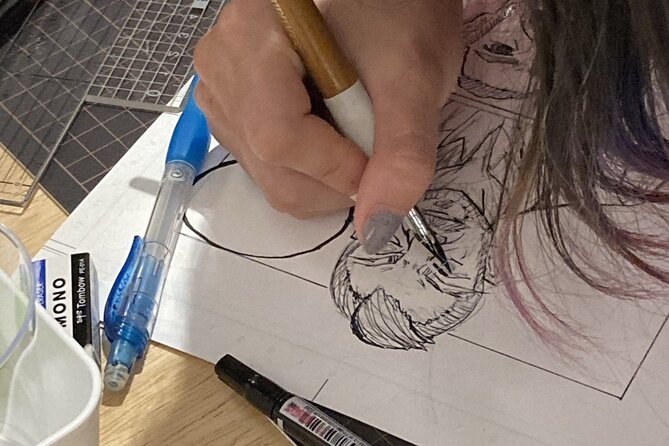
Inking turns your sketch into a more finished image. You trace and refine the important lines, giving the page its final structure.
I would treat this stage patiently. Beginners often want to rush toward the finished picture, but the ink is where small wobbles become visible. The artist’s guidance can help you decide which lines need to be stronger and how to keep the page readable.
4. Painting black
Manga pages depend on contrast. Solid black sections help define hair, clothing, shadows, and other parts of the image.
This stage may look simple, but it affects the balance of the entire page. Too little black can make an image feel weak, while too much can hide detail. You get to see how an artist uses black not just to fill empty spaces, but to make the drawing easier to read.
5. Adding effect lines
Effect lines are a classic manga feature. They can show motion, force, surprise, or atmosphere without requiring a detailed background.
For someone who knows manga mainly from finished books or anime, this is a useful chance to notice the visual shorthand behind the style. A few well-placed lines can change the mood of a panel. The technique is quick to learn in principle, though getting the placement right takes care.
6. Applying screen tones
Screen tones add texture and shading through patterns. They are one of the details that make a page look more like printed manga rather than ordinary black-and-white line art.
This final step helps pull the page together. You see how tones can separate areas, add depth, and guide attention. Since the page is yours to take home, the screen-tone work also gives the finished souvenir a more authentic manga look.
Why Kichijoji Works Well for This Class
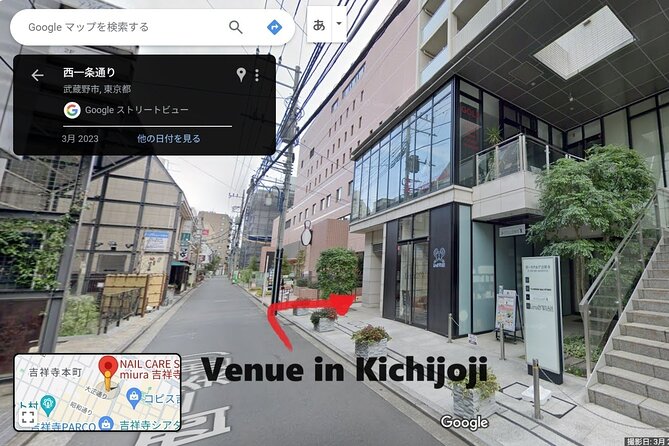
The workshop takes place in Kichijoji, close to the Ghibli Museum in Mitaka. The class itself is in an apartment near Kichijoji Excel Hotel Tokyu and a New Balance store.
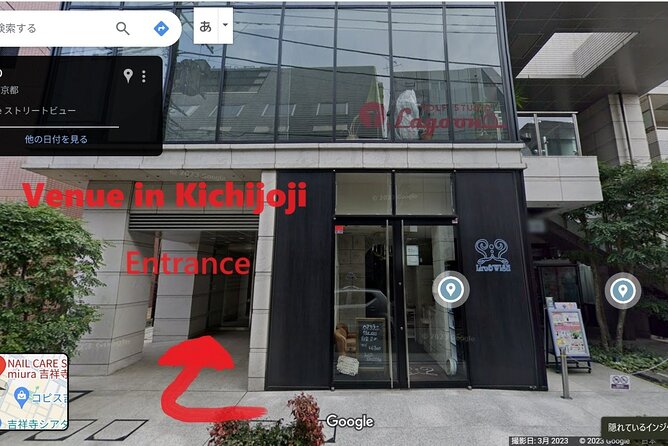
You reach the meeting point in about eight minutes from the north exit of Kichijoji Station. That is manageable, but you should allow time to find the correct building. There is another building with a similar name, so do not rely on a quick glance at the address.
The full address is 601 H-Square Kichijoji, 2-4-6 Kichijoji Honcho, Musashino-shi, Tokyo. When you arrive, press 601 and the call button. The room is number 601, and the door will be unlocked.
This is a practical location for a half-day plan. You can pair the workshop with time around Kichijoji, or plan it alongside a visit to the Ghibli Museum if your schedule and museum ticket work out. The workshop information only confirms the location near the museum, so you should arrange any museum entry separately.
What the $129 Price Buys You
At $129 per person, this is not the cheapest creative activity in Tokyo. The value depends on what you want from the class.
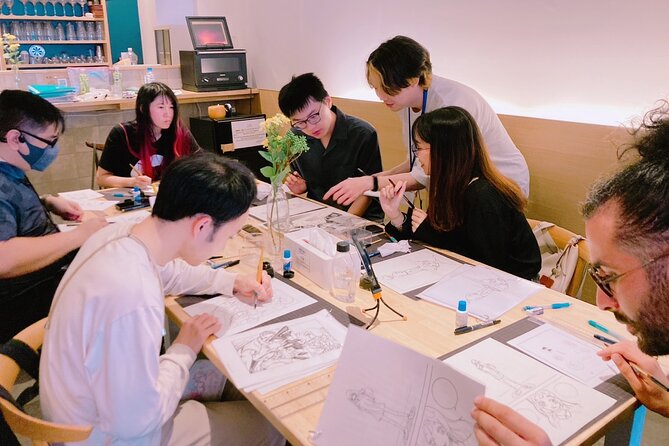
You are paying for three hours of instruction from a professional manga artist, a small class of no more than five people, all drawing materials, and a finished A4 page to take home. The cost also covers access to techniques that are difficult to understand from a quick demonstration or a souvenir shop purchase.
If you only want a casual doodle, the price may feel high. You can find cheaper ways to draw in Tokyo. But if you want a guided look at manga production and prefer to leave with a handmade page rather than a mass-produced item, the fee makes more sense.
The small group is a major part of the value. In a large class, you might spend much of the session waiting for help with a pen, tone, or composition. With a maximum of five participants, the artist can give more direct attention to each page.
It is also useful that the materials are included. You do not need to search for manga paper, dip pens, ink, black paint, or screen tones before arriving. That makes the activity easier to fit into a busy Tokyo visit.
Language, Clothing, and Comfort
The class is conducted in Japanese, with English included on the instruction slides. You should be ready to watch closely and follow visual examples. The format may work well for you if you know some Japanese, but the experience does not promise full spoken instruction in English.
The warm, patient atmosphere is part of the appeal. A solo participant with limited Japanese and little confidence in manga drawing still found enough support to keep going. That suggests the class can work for shy participants, though you should not expect every explanation to be translated word for word.
Wear clothes you do not mind getting dirty. Ink can stain your hands and clothing, and this is a working art class rather than a hands-off demonstration. Smoking is not allowed.
The workshop is wheelchair accessible. Transportation to and from the apartment is not included, and meals and drinks are also not included, so plan your route and refreshments before or after the session.
Is This a Good Choice for Families and Beginners?
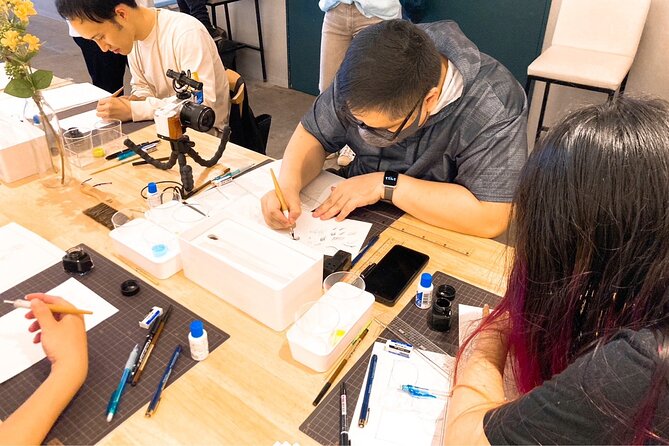
The available information confirms that beginners can receive guided help, but it does not give a minimum age or specific child policy. For that reason, check the current booking details if you are considering the class for children.
I would recommend it most strongly to manga fans, people curious about traditional drawing tools, and solo visitors who want a focused creative activity. It also suits anyone who would rather make a personal souvenir than buy one.
The small class size should help beginners feel less exposed. You are not expected to produce professional work in three hours. The point is to learn a sequence of techniques and finish a page with support.
Experienced artists may also enjoy the session, especially if they have never used a dip pen or screen tones. Still, you should keep your expectations realistic. This is a single-page workshop, not a full manga course.
How to Plan the Rest of Your Day
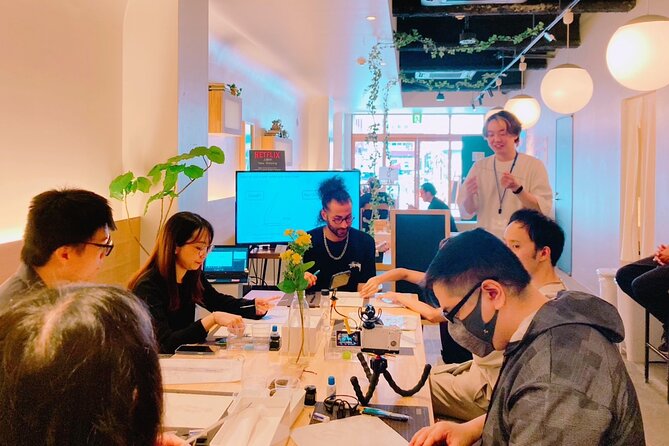
The workshop lasts three hours, so it takes a solid part of your day. Add the eight-minute walk from Kichijoji Station, plus a little extra time to identify the correct building.
Kichijoji is a sensible base for this activity because the station is easy to use as your arrival point, and the class is within walking distance of the north exit. You can arrange food before or after the workshop, since no meal is provided.
If you hope to visit the Ghibli Museum too, treat that as a separate booking and schedule. The workshop is near the museum, but the included experience is the manga class only.
You should also leave the page flat and protected after the session if possible. The artwork is a physical souvenir, and fresh ink or painted areas may need care. No protective packaging is specified, so bring your own folder if you want extra protection during the rest of your Tokyo trip.
Who Should Book This Experience?
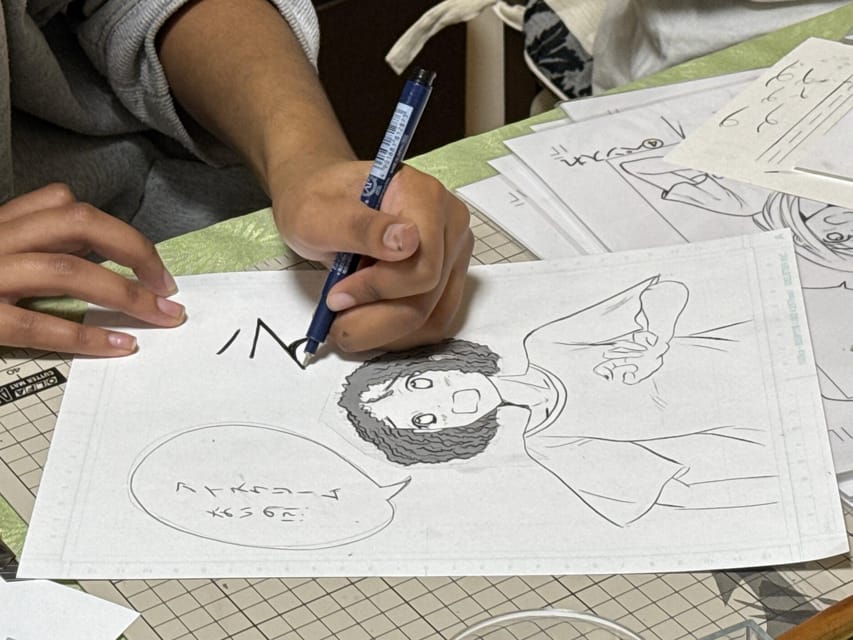
Book it if you want to:
- Make a one-page manga souvenir under professional guidance
- Try a dip pen, screen tones, effect lines, and black paint
- Learn through a structured process instead of a short photo opportunity
- Work in a small group limited to five people
- Enjoy an activity close to Kichijoji Station and the Ghibli Museum area
- Attend alone without needing to bring a group
Think twice if you need a fully English-speaking class, dislike the possibility of stained clothes, or want a broad art lesson covering several finished pages. The Japanese instruction and English slides may be enough for you, but that depends on how comfortable you are learning visually.
The class has earned a perfect five-star score across the three available verified bookings, with especially strong praise for the artist’s kindness, clear help, and ability to make a solo beginner feel comfortable. That matches the practical strengths of the format: a tiny group, supplied materials, and one finished page.
Should You Book the Kichijoji Manga Workshop?
I would book this if manga is a real interest for you and you want to make something with your own hands in Tokyo. The best reason to go is not simply that you get to draw. It is that you follow a complete manga-page process, from rough sketch to screen tones, and take the result home.
At $129, the workshop is a considered purchase. It earns that price through professional guidance, a five-person limit, included materials, and a three-hour format with a clear result.
For a visitor who wants a quick, cheap art activity, choose something else. For a manga fan, a solo participant, or anyone curious about the craft behind Japanese comics, this is a friendly and focused way to spend part of a day in Kichijoji.
FAQ
How long does the manga workshop last?
The workshop lasts three hours.
Where is the workshop held?
It is held at room 601 in H-Square Kichijoji, 2-4-6 Kichijoji Honcho, Musashino-shi, Tokyo.
How far is the workshop from Kichijoji Station?
The meeting point is an eight-minute walk from the north exit of Kichijoji Station.
How do I enter the building?
Press 601 and the call button when you arrive. The door will be unlocked.
Is the class taught in English?
The workshop is conducted in Japanese, but the instruction slides include English. The listed instructor languages are Japanese and English.
What will I make during the class?
You will create one A4 manga page and take it home as a souvenir.
Are drawing materials included?
Yes. All necessary manga drawing materials are provided.
Can wheelchair users attend?
Yes. The activity is listed as wheelchair accessible.
Can I cancel for a full refund?
Yes. You can cancel up to 24 hours in advance for a full refund.
More 3-Hour Experiences in Tokyo
More Workshops & Classes in Tokyo

More tours in Tokyo we've reviewed






3-Hour Experiences, compared.
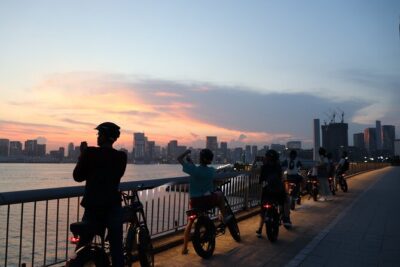 ★ 5.0Tokyo Top Highlights 3h Guided E-bike TourFrom $63
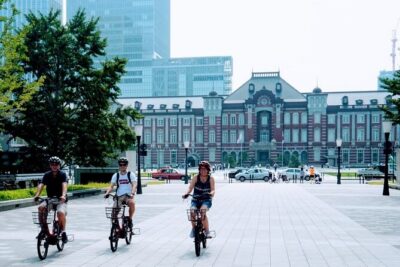 ★ 5.03h Tokyo E-Bike Tour: Hidden Gems, and Local Life with guideFrom $63
 ★ 4.8Tokyo: 3-Hour Bike or E-Bike City Highlights TourFrom $453 hours
 ★ 4.8Tokyo: 3-hour Guided E-Bike Tour of the City’s Hidden GemsFrom $65
 ★ 5.03-Hour Tokyo Pub Crawl Nightlife Welcome Guided Tour in ShibuyaFrom $46
 ★ 5.0Tokyo: 3-Hour Bike/E-Bike Tour of the City’s HighlightsFrom $63