
Reviewed · IMPERIAL PALACE & SHOGUN TOURS
Tokyo’s Imperial Palace & Nihonbashi Tour
The most interesting part of this half-day tour is the sharp change of scene: you begin among the stone walls and gardens of Edo Castle, then move into Nihonbashi, where old Japanese food and craft businesses still serve modern Tokyo. Guides such as Mari, Yoshi, Kishy, and Andy Watanabe have made this experience especially engaging for many visitors, with clear explanations and plenty of local context.
I like the mix of palace grounds and working shops, rather than spending four hours at one formal sight. I also like the tastings: dashi gives you a small but useful lesson in Japanese cooking, while the sake stop brings an easy finish to the walk. The main drawback is that this is not an indoor palace tour, and some advertised shop demonstrations may be unavailable. You should also expect a good deal of walking, with a subway ride between the palace and Nihonbashi.
In This Review
- Key points to know before booking
- Starting at Tokyo Station and entering the Imperial Palace grounds
- One hour in the East Gardens and Edo Castle ruins
- Traveling to Nihonbashi, Tokyo’s old commercial center
- Dashi at Ninben, a practical lesson in Japanese cooking
- Nori at Yamamoto Noriten, with limited demonstration value
- Kiya and the appeal of Japanese kitchen knives
- Ozu Washi and the traditional paper stop
- Toyama’s regional shop and the final sake tasting
- What the $101.72 price really covers
- The guide matters more than any single shop
- Who will enjoy this four-hour route
- Practical details before you go
- Should you book Tokyo’s Imperial Palace and Nihonbashi Tour?
- FAQ
- How long is the Tokyo Imperial Palace and Nihonbashi Tour?
- Does the tour enter the Imperial Palace?
- What food and drink are included?
- Where does the tour begin and end?
- Are morning and afternoon tour times available?
- Can the itinerary change?
Key points to know before booking
- The Imperial Palace visit means the East Gardens and outer grounds: You will not tour the emperor’s residence or enter a palace interior.
- Nihonbashi supplies the tour’s most unusual stops: Expect dashi, nori, Japanese knives, washi paper, and regional products.
- Food and drink are part of the experience: A dashi sample and Japanese sake set are included.
- The tour runs about four hours: The route includes walking, a short journey by public transportation, and time inside shops.
- The guide can make or break the day: English ability and presentation style have varied, though several guides have been praised for patience, humor, and strong local knowledge.
- Plan for weather and stamina: Rain, heat, and long stretches on foot have affected some departures, while guides have adjusted the pace when needed.
Starting at Tokyo Station and entering the Imperial Palace grounds
The meeting point is at Tokyo Station, at 1 Chome-9 Marunouchi. That puts you in a useful place to begin, since the station is easy to reach and the palace area is close by. You should arrive ready to walk, rather than treating this as a bus tour.
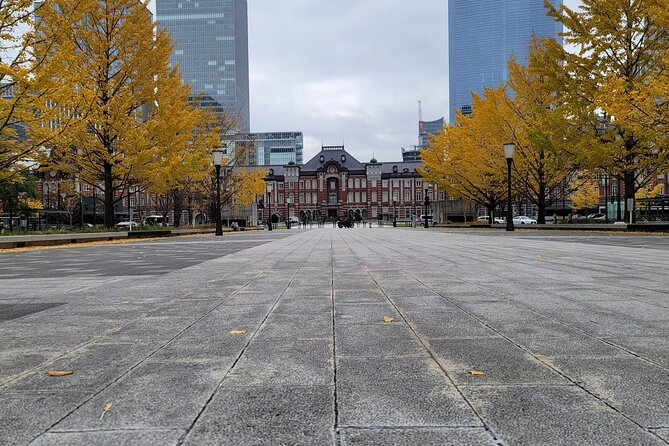
The first approach follows a ginkgo-lined avenue toward the Imperial Palace. This opening gives you a quick sense of Tokyo’s unusual scale: office towers and station traffic sit close to carefully maintained gardens, old gates, stone walls, pine trees, and seasonal plantings.
It is important to set your expectations correctly. The tour does not take you inside the Imperial Palace or show you the private residence of Japan’s imperial family. The visit centers on the publicly accessible grounds, especially the East Gardens. One disappointed visitor considered the title misleading for this reason, so I would think of this as an Imperial Palace grounds and Edo Castle tour, not a palace-interior visit.
The outer grounds receive about 15 minutes in the planned route. That is enough for an introduction, photographs, and a first explanation of the site, but not enough for a leisurely garden visit on its own.
A few more Tokyo tours and experiences worth a look

One hour in the East Gardens and Edo Castle ruins
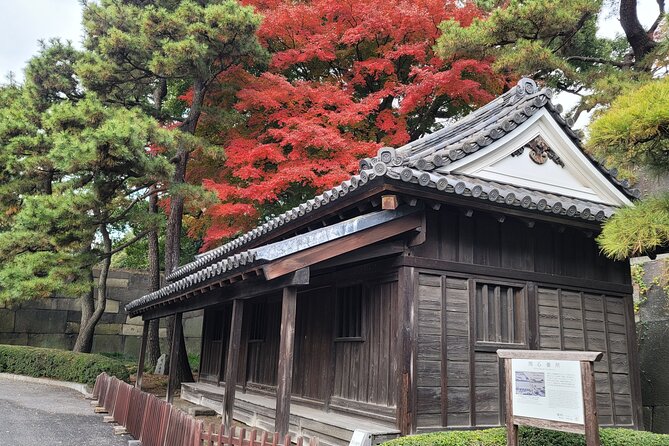
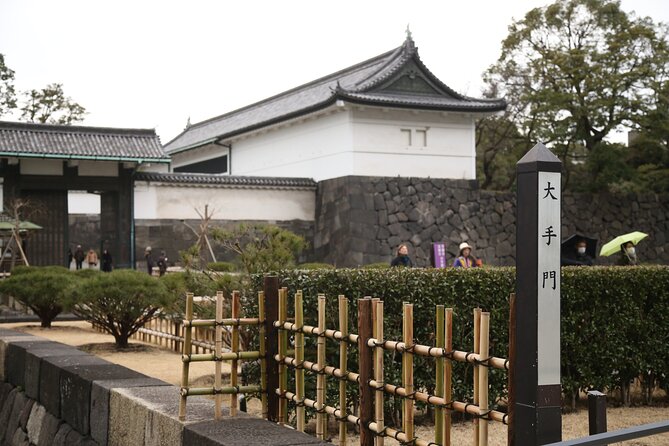
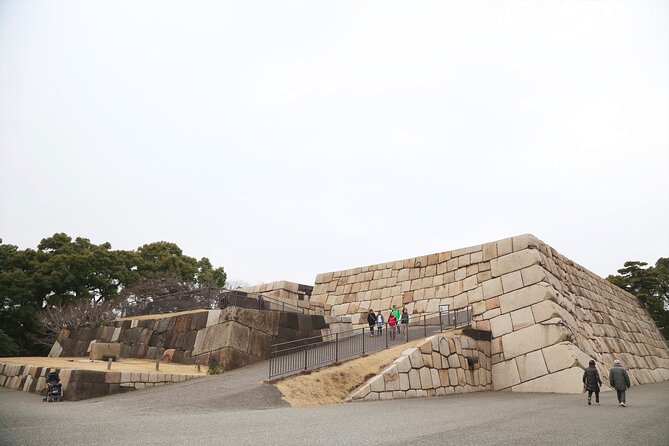
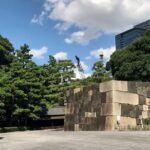
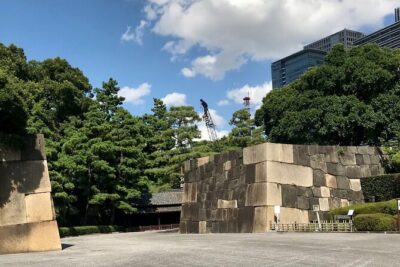
The East Gardens are the historical heart of the first half. You enter through Otemon Gate, once the main entrance to Edo Castle, the seat of the Tokugawa shoguns. The gate and stonework help you picture the castle complex that once controlled Japan, even though the main castle buildings no longer survive.
The garden itself is broad and open, with cherry trees, pine trees, seasonal flowers, and carefully tended paths. In spring, timing can change the experience. One April departure found remaining cherry blossoms alongside azaleas, creating a particularly colorful visit. You should not book solely for a certain flower display, though, since bloom times and weather vary.
A guide adds value here because the ruins can otherwise look like attractive stone foundations without much explanation. The better guides connect the walls, gates, and open spaces to the political power of the Tokugawa period. Yama-san, Kudo-san, Toyo, and Eriko have each been praised for setting a comfortable pace and answering questions. Some guides have also adjusted the route for people with physical limitations.
The East Gardens are free to enter, so part of what you are paying for is interpretation and structure, not admission. If you are comfortable reading signs and exploring independently, you can visit this area without a tour. If you want the garden tied to Japanese political history, a guide may make the stop far more useful.
Traveling to Nihonbashi, Tokyo’s old commercial center
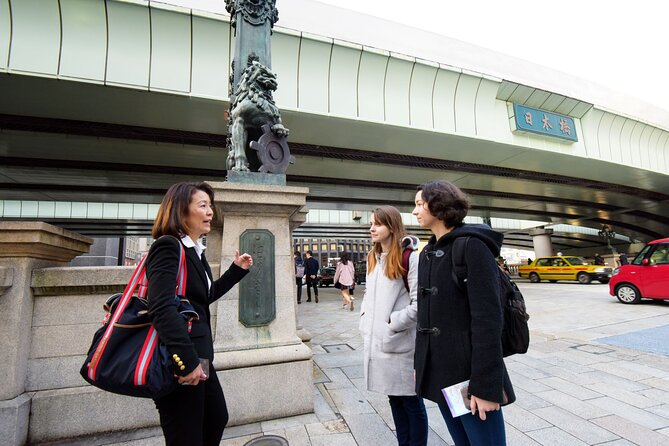
After the palace grounds, the tour shifts to Nihonbashi. The district has served as a major commercial center for centuries and marks the starting point of Japan’s national highway network from the early seventeenth century.
The change is valuable. The palace grounds show power, ceremony, and space. Nihonbashi shows commerce, food, tools, paper, and regional products. You see how tradition survives not only in temples and gardens, but also in shops that continue selling practical goods.
The journey includes public transportation, and one departure used the Tokyo subway between the two areas. The subway ride is part of the feel of the day, but it also adds time and walking. If you are expecting four uninterrupted hours at sights, this may feel less efficient. In heavy rain, one group felt too much of the day went into walking to and from stations.
That is a fair concern. Tokyo’s stations can require more walking than a map suggests, and the route is not designed as a seated sightseeing trip. Comfortable shoes are essential. In summer, heat can also be a serious factor. One guide shortened the route when the temperature became too much for a participant, which was a sensible choice.
Dashi at Ninben, a practical lesson in Japanese cooking
Ninben Nihombashi Main Store focuses on dashi, the basic soup stock used in dishes ranging from noodle soups to hot pots. This is one of the most useful stops because dashi is a foundation of Japanese cooking, yet it can be hard to understand from a menu description alone.
You receive a sample of dashi, included in the tour. The tasting is small, but it gives you a direct sense of the clean, savory flavor behind many Japanese dishes. The guide can also explain how a simple stock fits into everyday cooking.
The planned visit lasts about 20 minutes, so do not expect a full cooking class. The purpose is to introduce an ingredient and a long-running Japanese food business, not to prepare a meal.
There is also a practical warning. One departure found the dashi shop closed, and the guides did not know until arriving. The operator notes that facilities can close and that the route may change. If this particular stop matters greatly to you, ask at the beginning what is open that day.
Nori at Yamamoto Noriten, with limited demonstration value
Yamamoto Noriten Honten has been in business since 1849 and sells a variety of nori seaweeds. The intended visit includes learning about nori and watching staff roast it.
When available as described, the roasting element makes this more than a shop visit. You can see how a familiar ingredient is handled before it reaches a meal, and you can compare the idea of nori as a crafted food product with the packaged sheets found in supermarkets.
The stop lasts about 20 minutes. You should keep your expectations modest, since the visit may amount mainly to looking at packaged products and shopping. One disappointed participant found little explanation of how the seaweed was roasted or made. That does not make the shop useless, but it means the guide’s explanation and the day’s operating conditions matter.
For me, this is a pleasant supporting stop rather than a reason to book the entire tour. It works best as part of the larger story about old Nihonbashi businesses.

Kiya and the appeal of Japanese kitchen knives
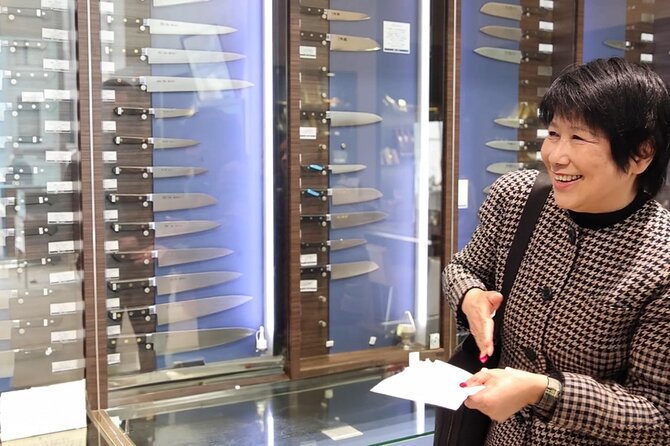
Kiya Nihombashi Main Branch dates to 1792 and carries hundreds of utensils. You may see traditional Japanese knives alongside more modern European-style tools.
This stop can be especially enjoyable if you cook or want a useful souvenir. Japanese knives have a strong reputation, and a specialist shop gives you a chance to compare shapes and purposes in person. It is also a reminder that Nihonbashi’s old businesses are not museum pieces. They sell goods for daily use.
The planned visit lasts about 20 minutes. It is primarily a shop visit, not a knife-sharpening class. Some descriptions suggest you may learn about sharpening, but you should not assume that a hands-on lesson will happen. One disappointed participant felt the stop mainly offered a chance to buy a knife.
If you are considering a purchase, remember that the tour’s short schedule may not leave much time for a long decision. You can enjoy the display even if you buy nothing. The store is a good fit for cooks, design-minded shoppers, and anyone interested in Japanese tools, but less so if you want an extended craft workshop.
Ozu Washi and the traditional paper stop
Ozu Washi is likely to be one of the most distinctive stops. The store presents Japanese paper and stationery, and the planned visit lasts about an hour.
Washi is not simply writing paper. It reflects a long tradition of careful fiber preparation, texture, and handwork. Even a short introduction can change how you look at notebooks, cards, wrapping, and stationery during the rest of your time in Japan.
The information for the tour says you will make a sheet of washi. In practice, that activity may not always be available. One group watched a film and visited the store but could not make paper because the paid activity required advance booking and was already full. If making your own sheet is important, confirm the arrangement before departure rather than treating it as guaranteed.
Even without the hands-on portion, the stop has substance. The paper display and film can show you how traditional materials remain part of modern Japanese design. You may also find attractive stationery and small gifts that are easier to pack than a knife or food item.
Toyama’s regional shop and the final sake tasting
The tour ends at the Toyama Prefecture Antenna Shop, where products come from Toyama, a coastal prefecture on the Sea of Japan. These regional shops are useful because they let you see food and goods from outside Tokyo without making a separate trip.
The stop is planned for about 30 minutes and serves as a relaxed finish. The included Japanese sake set is usually presented as a tasting of several kinds, with one departure describing three sakes. Other food and drinks are not included, so budget for purchases separately.
The sake tasting was a highlight for several people, especially as a gentle close after the palace and shop visits. Still, do not expect a formal brewery tour or a long lecture on sake production. The setting is a prefectural retail shop, and the amount of explanation can depend on the guide and staff available that day.
You finish in Nihonbashi, near Nihombashi Station, served by the Toei Asakusa Line and the Tokyo Metro Ginza and Tozai lines. Mitsukoshimae Station, on the Ginza and Hanzomon lines, is also nearby. This makes it easy to continue shopping or head elsewhere in Tokyo after the tour.
What the $101.72 price really covers
At $101.72 per person, this is not the cheapest way to see the East Gardens. Admission to the gardens is free, and you could visit the palace grounds and Nihonbashi shops independently.
The price makes more sense if you value a guide who connects separate stops into one story, helps with language barriers, leads you through public transportation, and arranges the dashi and sake tastings. It also saves you from researching which old businesses to find in Nihonbashi.
The value drops if you mainly want to walk through the gardens, or if you expect every advertised demonstration to operate exactly as described. The route is a sampler: a little palace history, a little food, a little shopping, a little craft, and a little regional culture.
Group discounts may improve the price for families or larger parties. The maximum group size is 28, though some departures have been much smaller. A small group can feel almost private, while a full group will make shop explanations and browsing less personal.
The guide matters more than any single shop
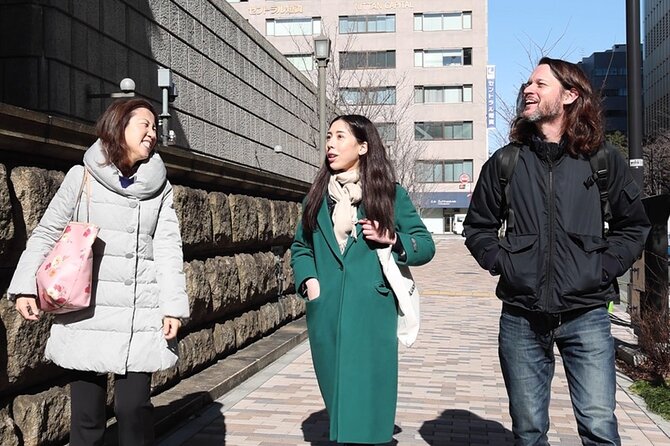
The strongest part of the experience is often the guide. Several guides have been praised for clear English, patience, humor, and willingness to answer questions. Andy Watanabe was singled out for an especially engaging style, while Mari was credited with staying cheerful and flexible during high winds and heavy rain.
That said, the experience has not been perfectly consistent. One departure had a guide whose English was difficult to follow, and another felt the route was poorly explained when several stops changed. Since the tour covers history, food, shopping, and craft, clear communication is important.
I would ask questions early. Find out which shops are open, whether the washi-making activity is confirmed, and how the route will work that day. A good guide can turn substitutions into useful alternatives. A weak explanation can make a free garden visit and a series of shop entrances feel overpriced.
Who will enjoy this four-hour route
I would recommend this tour to you if you want a first look at Tokyo that goes beyond famous towers and major crossings. It suits curious shoppers, cooks, paper lovers, and anyone who wants practical contact with Japanese traditions.
It also works well on a first day. The palace gives you a basic frame for Tokyo’s political past, while Nihonbashi introduces food, tools, stationery, sake, and regional goods. Several guides also offer general Tokyo advice during the walk, which can help you plan the rest of your stay.
I would hesitate if you dislike shopping stops, long walks, or changing plans. You should also reconsider if your main goal is to enter the Imperial Palace itself. This tour does not provide that access.
The experience is rated 4.5 from 38 reviews, which reflects a strong overall response but also some clear weak points. The best departures combine an enthusiastic guide with open shops and manageable weather. The least satisfying ones have involved rain, heat, closures, or expectations that the title promised an interior palace visit.
Practical details before you go
The tour lasts about four hours and offers morning or afternoon departures. Transportation to the Tokyo Station meeting point is not included, and you pay for any food or drink beyond the listed dashi sample and sake set.
Most people can take part, but you should be ready for sustained walking, outdoor time, stairs or uneven surfaces around historic grounds, and a subway transfer. The group can include up to 28 people. Good walking shoes, water, and weather protection will make a real difference.
Free cancellation is available until 24 hours before the local start time. If poor weather or an insufficient number of participants cancels the tour, you are offered another date or a full refund.
Should you book Tokyo’s Imperial Palace and Nihonbashi Tour?
Book it if you want context more than a checklist. The East Gardens and Edo Castle ruins are worthwhile, but the real character comes from pairing them with dashi, nori, knives, washi, Toyama products, and sake in Nihonbashi.
Do not book it expecting palace interiors, guaranteed demonstrations, or a carefully controlled museum-style route. I would choose it for a flexible half-day introduction, especially if you enjoy food and craft shops and want help navigating Tokyo. If the dashi, nori, or washi stop is central to your plans, confirm what is operating on your date. With that expectation in place, the tour offers a useful, human-scale look at two very different sides of central Tokyo.
FAQ
How long is the Tokyo Imperial Palace and Nihonbashi Tour?
The tour lasts approximately four hours. It includes the Imperial Palace outer grounds and East Gardens, transportation to Nihonbashi, several shop visits, and a sake tasting.
Does the tour enter the Imperial Palace?
No. The route visits the publicly accessible grounds and the East Gardens, including the Edo Castle ruins. It does not tour the palace interior or the imperial family’s residence.
What food and drink are included?
A sample of dashi soup stock and a Japanese sake set are included. Other food and beverages are not included.
Where does the tour begin and end?
It begins at Tokyo Station in Marunouchi and ends in Nihonbashi. The closest stations at the end are Nihombashi Station and Mitsukoshimae Station.
Are morning and afternoon tour times available?
Yes. You can choose a morning or afternoon departure, subject to availability.
Can the itinerary change?
Yes. Shops and facilities may close, and the route can change. The tour provider may guide you to other facilities if a listed stop is temporarily unavailable.
More Imperial Palace & Shogun Tours in Tokyo

More tours in Tokyo we've reviewed






Imperial Palace & Shogun Tours, compared.
 ★ 5.0Tokyo: Imperial Palace and Shogun Historical Walking TourFrom $22
 ★ 4.9Tokyo: Imperial Palace Japanese History Walking TourFrom $32
 ★ 4.9Tokyo: Imperial Palace and Shogun Walking TourFrom $162 hours
 ★ 5.0Imperial Palace East Garden and Edo Castle Walking Tour in TokyoFrom $25
 ★ 4.8Tokyo: Imperial Palace East Gardens Walking TourFrom $192h 30m
 ★ 4.5Tokyo: Imperial Palace, Sensō-ji Temple, & Tokyo Tower TourFrom $404 hours