
Reviewed · IMPERIAL PALACE & SHOGUN TOURS
Tokyo Imperial Palace with Kagurazaka Alley Tour
Tokyo’s grand center gives way to narrow lanes on this walking tour, and that change is the real attraction. You begin among the broad avenues around Tokyo Station and the Imperial Palace, then finish in Kagurazaka, where cobbled alleys, old restaurant streets, shrines, and former geisha quarters offer a quieter look at the city. Guides such as Sho and Aya add useful context about palace history, plants, architecture, and Japanese culture.
I like the small maximum group of eight, which gives you room to ask questions and makes it easier to hear your guide. I also like the route’s range: the Imperial Palace and Tokyo Station provide the famous sights, while Kagurazaka brings in the less expected details, including roof ornaments, Edo-era castle defenses, and Buddhist links to architecture. The main consideration is that this is a walking tour with only about three and a half hours, so palace interiors are not part of the experience and some stops receive only a brief look.
In This Review
- Key points to know before booking
- From Tokyo Station to the Imperial Palace
- Reading the Imperial Palace grounds
- A glimpse of the Nippon Budokan
- A quiet pause at Tokyo Daijingu Shrine
- Entering Kagurazaka through old lanes
- Geisha Alley, Hyogo Yokocho, and Kakurenbo Yokocho
- The old castle line at Ushigome Mitsuke
- What $52.84 buys you
- Timing, walking, and the end point
- Who will get the most from this walk
- Should you book the Tokyo Imperial Palace and Kagurazaka tour?
- FAQ
- How long does the tour last?
- What time does the tour begin?
- Where is the meeting point?
- Where does the tour finish?
- Is the Imperial Palace interior included?
- How many people can join the tour?
- Can I cancel for a full refund?
Key points to know before booking
- The route changes character: Start with Tokyo’s formal railway and palace district, then end in the old lanes of Kagurazaka.
- The group is capped at eight: A small group makes personal questions and conversation with the guide more practical.
- The Imperial Palace is viewed from its grounds: The palace itself is not open to the public on this tour.
- Kagurazaka is the most distinctive stop: Geisha Alley, Hyogo Yokocho, and Kakurenbo Yokocho show a quieter side of central Tokyo.
- Guides add cultural detail: Sho has explained palace and Japanese history with enthusiasm, while Aya has helped with group photos and plant knowledge.
- The price buys interpretation, not admission: At $52.84, the value rests mainly in the guide, route, and historical connections.
From Tokyo Station to the Imperial Palace
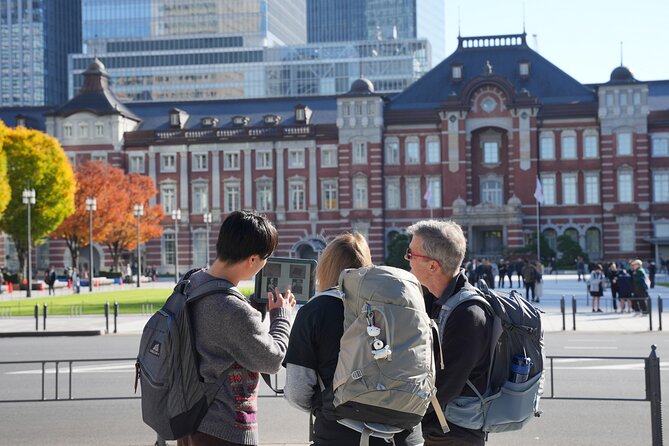
Meet at 9:00 a.m. outside the Shin-Marunouchi Building, at 1-chōme-5-1 Marunouchi. This is a sensible starting point because Tokyo Station is nearby and easy to recognize, though the station itself can feel like a small city. Give yourself extra time to reach the meeting point if you are unfamiliar with Tokyo’s underground passages.
Tokyo Station is more than a transport stop. It is a major hub for local and long-distance trains, and its Marunouchi setting puts you right beside the city’s business district and the Imperial Palace area. The tour allows only about five minutes here, so think of this as an orientation stop rather than a full architectural visit.
That short pause still helps. Your guide can place the station within the story of modern Tokyo, then lead you toward a very different setting. I appreciate this contrast because it shows how quickly Tokyo shifts from glass, offices, and rail connections to moats, gardens, and formal stone walls.
The pace should suit you if you want a broad introduction rather than a slow photography walk. If Tokyo Station is high on your list, plan a separate visit before or after the tour. The five-minute stop is not enough to explore the station’s details or surrounding shops.
A few more Tokyo tours and experiences worth a look

Reading the Imperial Palace grounds
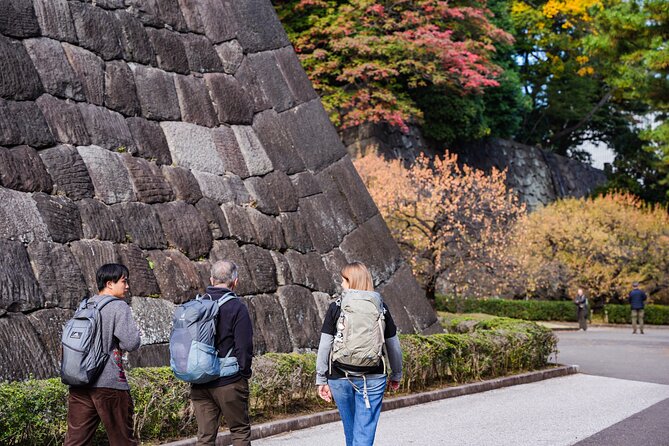
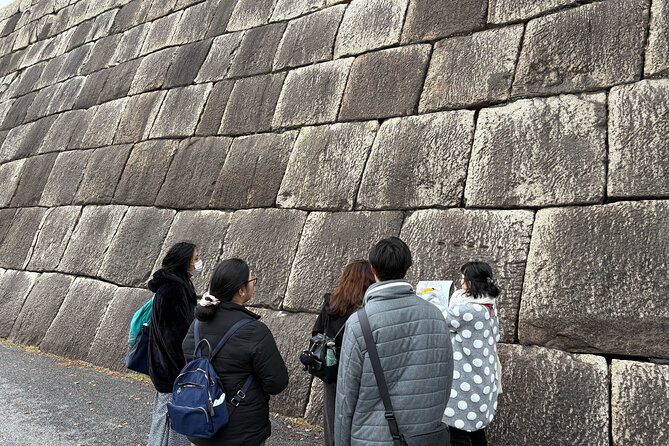
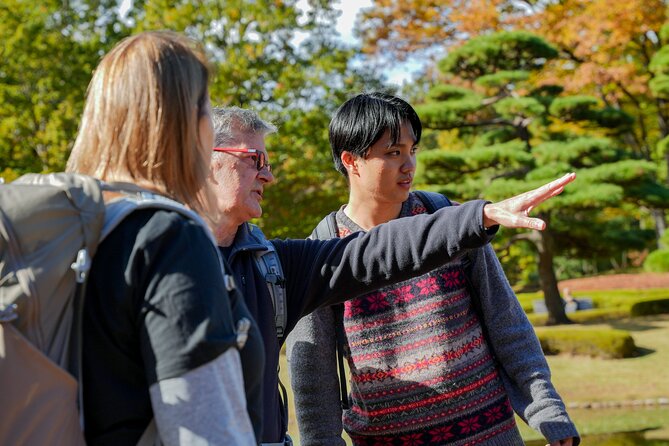
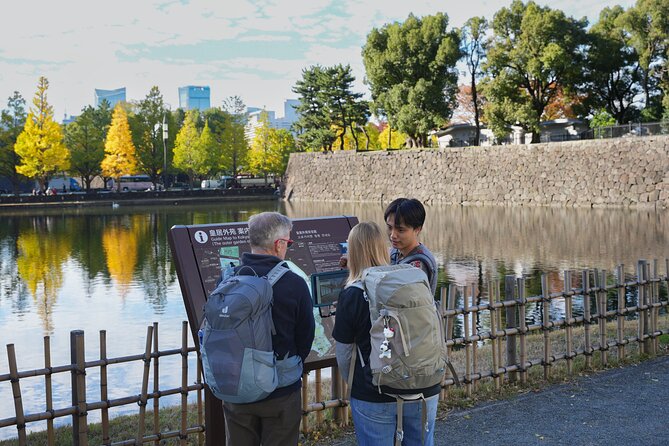
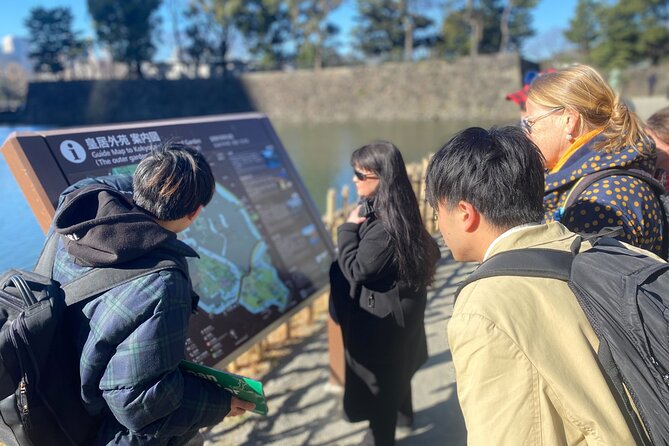
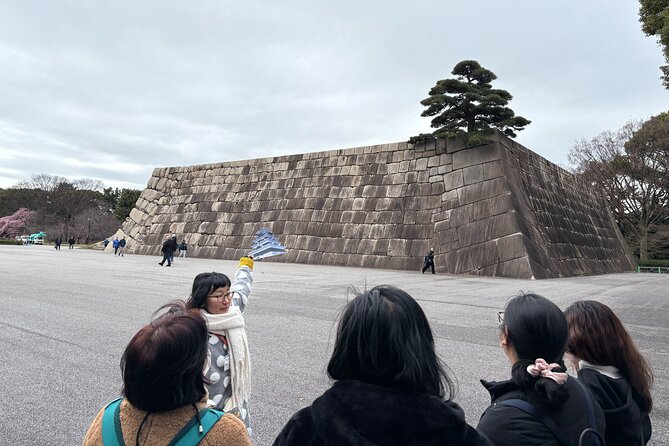
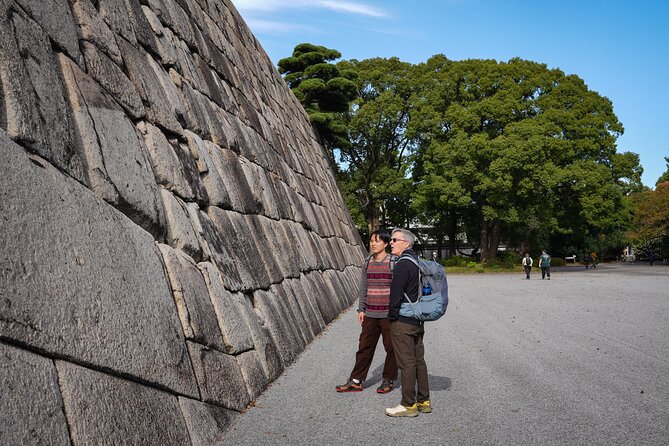
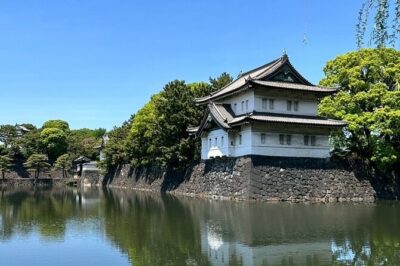
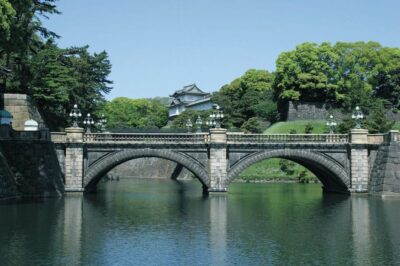
The Imperial Palace receives about 55 minutes, making it the main historical stop. It is the official residence of Japan’s emperor, in the center of Tokyo and surrounded by moats, gardens, and large park areas. The palace buildings themselves are not open to the public as part of this experience, so the focus is on the setting, exterior views, and the story of the site.
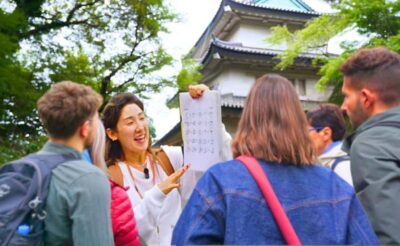
This is where a good guide matters. A walk through palace grounds can otherwise become a string of walls, bridges, and clipped greenery. Sho has been praised for bringing palace and Japanese history to life, even on a chilly morning, and Aya has been described as experienced and helpful with group pictures. Those details matter because the value here comes from explanation and observation, not from entering a grand interior.
You might also get more from the gardens by asking specific questions. One past experience included discussion of the meaning of fish ornaments on roofs, while another guide connected plants, Buddhist tradition, and architecture. These are the kinds of details that can turn a formal building into a cultural lesson.
The timing of the season can shape this stop. A spring visit may bring blossoms, while another time of year will offer a different look at the gardens. A guide with plant knowledge can help you notice more than the main view, but the tour does not promise a particular bloom period.
A glimpse of the Nippon Budokan
The route also passes the Nippon Budokan in Kitanomaru Park. Built in 1964 for martial arts events during the Tokyo Olympics, the indoor arena now hosts many types of events, including concerts. The supplied timing does not list a separate duration here, so expect a passing introduction rather than a long stop.
The Budokan adds useful modern context to the palace district. Tokyo’s central parks hold layers from the Edo period, imperial Japan, the 1964 Olympics, and present-day popular culture. You may not spend long at the arena, but its inclusion helps show that this part of the city is not frozen in the past.
I would treat this as a bonus, not a reason to book the tour by itself. If you have a special interest in martial arts or Japanese music, ask your guide about the building while you pass it. The route gives you a chance to connect a familiar Tokyo landmark with the city’s postwar story.
A quiet pause at Tokyo Daijingu Shrine
Tokyo Daijingu Shrine receives about 15 minutes. Established in 1880, it is dedicated to Amaterasu, the sun goddess, along with spirits connected to Japan’s imperial family. It offers a short look at Shinto practice in an urban setting.
Fifteen minutes is enough for a first impression, but not for a long visit. You can observe the shrine’s atmosphere and ask your guide about its role, but the stop is intentionally compact because the route still has to reach Kagurazaka.
This is a useful place to ask about the difference between seeing a shrine and understanding its customs. A guide can explain the cultural meaning behind what you are looking at, while you avoid treating the visit as just another photo stop. The tour description emphasizes Japanese culture as well as history, and this is one of the clearest places for that balance.
Do not expect a large ceremony or a private religious experience. The value is simple: a brief, guided introduction before the route moves into the neighborhood that gives the tour its strongest sense of place.
Entering Kagurazaka through old lanes
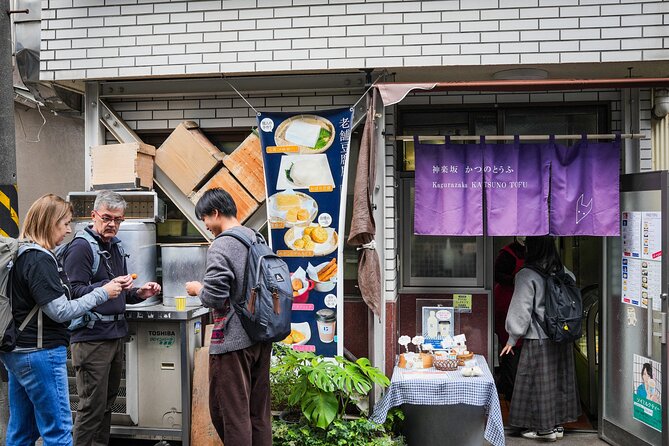
Kagurazaka is the payoff for anyone who wants more than Tokyo’s headline sights. Once associated with geisha culture, the neighborhood now mixes traditional restaurants, stylish cafes, and small shops. Its narrow lanes and cobbled surfaces give the area a different rhythm from the wide streets around the Imperial Palace.
The tour spends about 30 minutes in Kagurazaka, with additional short passages through named alleys. That is enough to show you the layout and point out important corners, but you will not have time to eat a full meal or browse every lane. I would note places that interest you and return later if your schedule allows.
The neighborhood is especially useful for understanding how old Tokyo survives inside the modern city. You are not simply looking at preserved buildings. You are seeing an active district where restaurants and cafes occupy streets tied to the Edo period and the Tokugawa Shogunate.
Your guide can also help with the visual clues. Traditional roof details, narrow entrances, and changes in paving may seem minor when you walk alone. With historical context, they become evidence of how the district developed. The small group makes it easier to stop without blocking a busy lane or losing the guide.


Geisha Alley, Hyogo Yokocho, and Kakurenbo Yokocho
The Geisha Alley keeps a nostalgic feel, with narrow lanes, traditional teahouses, and reminders of Kagurazaka’s past. The name points to the neighborhood’s former geisha culture, but you should not expect a staged performance or a guaranteed encounter with geisha. The attraction is the street itself and the way it preserves an old-town mood.
Hyogo Yokocho offers another compact view of the area. Small eateries and traditional shops line the narrow passage, creating a more intimate setting than the main road. This is a good place to ask your guide about dining customs, local architecture, or how the neighborhood has changed.
Kakurenbo Yokocho is described as a quiet alley with small bars and eateries. Its appeal is the close, enclosed feel and the chance to see where local evening life takes place. Since the tour begins in the morning, you will see the alley in its daytime form, not during its evening dining hours.
These lanes are where the tour feels most personal. Tokyo is famous for its scale, speed, and crowds, but Kagurazaka gives you a chance to notice small transitions: a restaurant sign, a tucked-away entrance, or a lane that suddenly narrows. I like that the route does not stop at a famous shrine and turn back. It uses the neighborhood itself as the lesson.
The old castle line at Ushigome Mitsuke
The route ends around Ushigome Mitsuke, once one of the gates of Edo Castle. The original gate no longer exists, but the site remains tied to the defensive system built during the Edo period. This is a fine final stop because it links Kagurazaka’s lanes back to the castle and shogunate history introduced earlier.
You will need to use your imagination here. There is no intact gate to walk through, and the stop may not produce the same instant visual impact as the palace moat or a shrine. Its value lies in the connection between scattered parts of the city. The guide can explain how a former defensive point fits into the old castle’s structure.
This is also why the tour works better as a guided walk than as a simple list of sights. Tokyo does not always label its historical layers in obvious ways. A place that looks like an ordinary street corner can carry a link to Edo Castle, a former geisha district, or a change in urban planning.
What $52.84 buys you
The listed price is $52.84 per person. There are no admission fees for the stated stops, so you are mainly paying for the guide’s time, the route design, and the explanations that connect the sights.
I think the price is reasonable if you value context and prefer a small group. A maximum of eight people is more appealing than a large walking crowd, especially in narrow Kagurazaka alleys. The private-tour possibility is also worth noting: when bookings are light, you might end up with only your own party, giving you more freedom to ask questions.
That does not make the tour a bargain for every kind of visitor. If you are comfortable researching the Imperial Palace and Kagurazaka yourself, you can walk many of these areas without paying an admission fee. The tour makes the most sense if you want help finding the less obvious lanes and understanding details such as roof symbols, plants, Buddhist influence, and Edo-era defenses.
The tour is booked, on average, 42 days ahead. That suggests you should reserve early if your Tokyo dates are fixed, particularly if the small group limit matters to you. The mobile ticket is convenient, and confirmation arrives when you book.
Timing, walking, and the end point
The tour lasts about three and a half hours and begins at 9:00 a.m. You finish at 3-chōme-2-202 Kagurazaka, near the main street and close to a FamilyMart convenience store. That end point is practical because you can continue exploring, stop for food, or use the neighborhood as a base for the rest of your day.
The route combines large open palace areas with narrow streets. Wear shoes you can walk in comfortably, and remember that weather can affect the experience. A chilly morning did not prevent Sho from leading an energetic walk, but you will still want suitable clothing for an outdoor tour.
The tour is near public transportation, and most people can take part. The provided details do not specify a total distance, step-free route, or restroom schedule, so ask the provider if those points are important to you.
Free cancellation is available up to 24 hours before the local start time for a full refund. Changes or cancellations inside that window are not accepted and are not refunded.
Who will get the most from this walk
I would choose this tour if you are visiting Tokyo for the first time and want the Imperial Palace placed within a wider story. It also suits repeat visitors who have seen the major districts and want a neighborhood with older streets and a less packaged feel.
It is a good match for you if:
- You enjoy walking and asking questions.
- You want Japanese history explained in plain terms.
- You prefer a small group over a bus or large guided crowd.
- You like combining major landmarks with local streets.
- You want suggestions for continuing your day in Kagurazaka.
I would look elsewhere if your main goal is to enter the Imperial Palace, spend hours in gardens, or focus on food and shopping. The route offers only brief time in some places, and there is no listed meal or tasting.
Should you book the Tokyo Imperial Palace and Kagurazaka tour?
Book it if you want a guided bridge between Tokyo’s formal center and one of its most atmospheric old neighborhoods. The strongest parts are the 55-minute palace visit, the small group, and the final walk through Geisha Alley, Hyogo Yokocho, Kakurenbo Yokocho, and the former Ushigome Mitsuke area.
At $52.84, the decision rests on how much you value interpretation. You can see the sites without an entry ticket, but you cannot easily recreate a guide’s explanations about roof ornaments, plants, Buddhist tradition, or Edo defenses while following the route alone. I would book this for a first or second day in Tokyo, then return to Kagurazaka later if its restaurants and alleys catch your interest.
FAQ
How long does the tour last?
The tour lasts approximately 3 hours and 30 minutes.
What time does the tour begin?
It starts at 9:00 a.m.
Where is the meeting point?
The meeting point is at the Shin-Marunouchi Building, 1-chōme-5-1 Marunouchi, Chiyoda City, Tokyo 100-6590, Japan.
Where does the tour finish?
It ends at 3-chōme-2-202 Kagurazaka, Shinjuku City, Tokyo 162-0825, Japan, near the main street and close to a FamilyMart convenience store.
Is the Imperial Palace interior included?
No. The Imperial Palace itself is not open to the public on this tour, so the visit focuses on the surrounding grounds, gardens, moats, and history.
How many people can join the tour?
The group has a maximum of eight people.
Can I cancel for a full refund?
Yes. You can cancel at least 24 hours before the local start time for a full refund. Cancellations or changes made less than 24 hours before the start are not refunded or accepted.
More Imperial Palace & Shogun Tours in Tokyo
More tours in Tokyo we've reviewed








Imperial Palace & Shogun Tours, compared.
 ★ 5.0Tokyo: Imperial Palace and Shogun Historical Walking TourFrom $22
 ★ 4.9Tokyo: Imperial Palace Japanese History Walking TourFrom $32
 ★ 4.9Tokyo: Imperial Palace and Shogun Walking TourFrom $162 hours
 ★ 5.0Imperial Palace East Garden and Edo Castle Walking Tour in TokyoFrom $25
 ★ 4.8Tokyo: Imperial Palace East Gardens Walking TourFrom $192h 30m
 ★ 4.5Tokyo: Imperial Palace, Sensō-ji Temple, & Tokyo Tower TourFrom $404 hours