
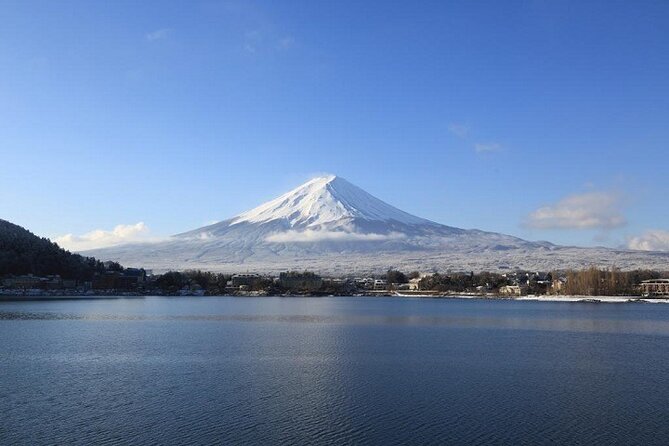
Reviewed · MT FUJI DAY TRIPS
Mt Fuji & Hakone Cruise, Drum Show Bus 1 Day from Tokyo Sta. Area
Mt. Fuji and Hakone make a fine one-day escape from Tokyo, and this tour links the two with very little planning on your part. You ride an air-conditioned bus to Fuji’s 5th Station, eat lunch with a traditional wadaiko drum performance, cruise Lake Ashi, and take the Komagatake Ropeway.
I like the easy door-to-door transport and the chance to combine two major sights in one long day. I also like the lunch choice, especially for vegetarian, Muslim-friendly, and Indian thali diners. Guides named Shin, Joe, and Marie have received especially warm praise on past departures.
The catch is the schedule. This is a 12-hour group outing, and Tokyo traffic can cause serious delays. Mt. Fuji may hide behind clouds, the 5th Station can close in winter, and the boat or ropeway may be swapped for another stop when weather or road conditions interfere.
In This Review
- Key points to know before booking
- What this Tokyo day trip really delivers
- Mt. Fuji 5th Station at 2,300 meters
- Lunch at Fuji Zakura Hotel and the wadaiko performance
- Lake Ashi aboard the Sorakaze
- Komagatake Ropeway and Hakone Shrine Mototsumiya
- The long ride back to Tokyo
- Lunch choices, language, and practical details
- Who will get the most from this $123.36 tour
- Should you book it?
- FAQ
- Where does the tour depart from?
- How long does the tour last?
- Is lunch included?
- What dietary meals are available?
- Can I always visit Mt. Fuji 5th Station?
- What happens if the cruise or ropeway cannot operate?
- Can I cancel for a full refund?
Key points to know before booking
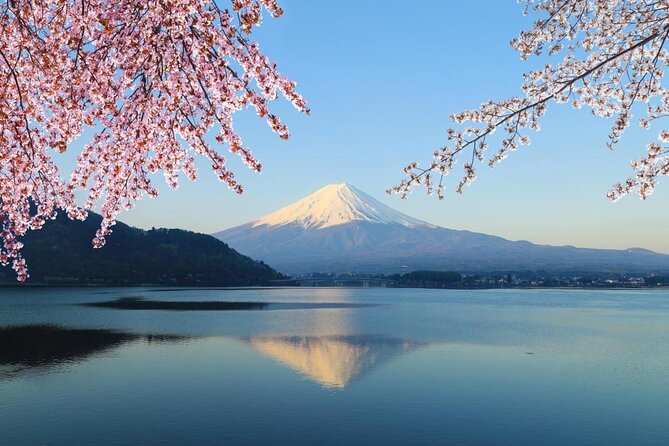
- Mt. Fuji 5th Station reaches 2,300 meters: Expect cooler air and possible snow closures from roughly December through early April.
- Lake Ashi comes with a short Sorakaze cruise: The 15-minute ride offers a pleasant view of Hakone and, on a clear day, Mt. Fuji.
- The Komagatake Ropeway adds a mountaintop stop: You ride toward Hakone Shrine Mototsumiya, with about 50 minutes at the area.
- Lunch is optional but worth planning carefully: Choose standard Japanese, vegetarian, Muslim-friendly, or Indian thali food.
- The day can end between 6pm and 9pm: Traffic, weather, and the order of stops can change the timing.
- The maximum group size is 44: This keeps the cost down, but the day feels like a proper coach tour rather than a private outing.
What this Tokyo day trip really delivers
At $123.36 per person, this is priced as a practical sightseeing package rather than a quiet custom excursion. Your payment covers round-trip bus transport, an English-speaking licensed guide, admission fees, the Lake Ashi cruise, and the ropeway. Lunch costs extra unless you select the package with lunch.
That price makes sense if you want to see Fuji and Hakone without figuring out several train lines, local buses, boat tickets, and mountain transport. You also avoid the stress of driving on unfamiliar roads. The tradeoff is time spent on the bus and less freedom at each stop.
I would treat this as a sampler of the Fuji and Hakone area, not a full visit to either region. You get the famous viewpoints and a taste of the mountain resort area, but each stop is tightly timed. The day is best for a first look, especially if you have only one spare day from Tokyo.
The meeting point is at Bus Terminal Tokyo Yaesu, inside Tokyo Midtown Yaesu. Departure is scheduled for 7:35am. Arrive early. Late arrivals can lose their reservation, and the tour does not wait for people who miss the departure.
A few more Tokyo tours and experiences worth a look
Mt. Fuji 5th Station at 2,300 meters
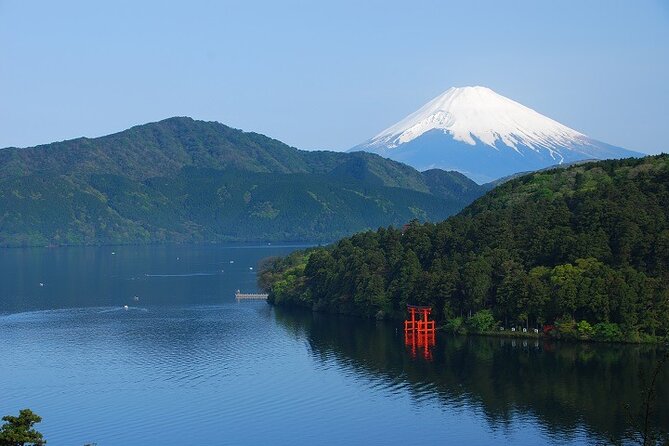
The first major stop is Mt. Fuji’s 5th Station, reached by the Fuji Subaru Line when the road is open. At 2,300 meters, this is the highest point normally accessible by road on the tour. You receive about 30 minutes here.
This is a good place to feel the scale of Fuji. The air is much cooler than in central Tokyo, and the views can be striking when the sky is clear. You can expect a mountain viewpoint, time for photographs, and a brief chance to look around before the bus moves on.
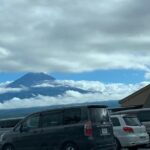
Keep your expectations sensible. Clouds can cover the summit even when the lower slopes are visible. The tour still operates if Fuji cannot be seen, and there is no refund simply because the mountain stays hidden. A clear morning can turn cloudy, or the reverse, so the weather is part of the gamble.
The road also has a seasonal limit. In a typical year, the 5th Station is accessible from around late April through November. From about December to early April, snow, ice, and road conditions can close the Fuji Subaru Line.
If the road is shut, or if the guide decides that a high Fuji viewpoint will offer no useful view, the group may visit the Fujisan Museum, Lake Kawaguchi Oishi Park, the Fujisan World Heritage Center, the Itchiku Kubota Art Museum, or Oshino Hakkai instead. These are reasonable substitutes, but they are not the same experience as standing high on Fuji.
Bring a warm layer even in summer. The tour information notes that daytime temperatures at the mountain stops can fall to around 14 degrees Celsius in summer and minus 5 degrees Celsius in winter.
Lunch at Fuji Zakura Hotel and the wadaiko performance
If you select the lunch package, the meal takes about 50 minutes at Fuji Zakura Hotel. You receive a Japanese-style meal with tea or coffee, and several dietary choices are available.
The standard meal is joined by these options:
- Japanese-style vegetarian meal
- Muslim-friendly meal without pork or alcohol
- Vegetarian Indian thali meal
The Muslim-friendly meal is not halal certified. That detail matters, so diners who require certified halal food should not assume this option meets that standard. Allergy-friendly and gluten-free meals are not available. If you have a serious allergy or need gluten-free food, choose the no-lunch package and arrange your own meal.
The lunch stop also includes a traditional wadaiko performance by the Social Welfare Corporation Fugakukai. Japanese drums are physical, rhythmic, and made for a live setting, so this adds a cultural element that many standard coach tours leave out. It is not just another restaurant break.
The performance can be missed if the bus arrives very late, if the route changes, or if the facility cancels it. It is also specifically not scheduled for February 28, 2026, with no partial refund in that case.
If you choose no lunch, prepare food before leaving Tokyo. There are no cafes, restaurants, or other lunch facilities near the break area. This is an easy detail to overlook, and it can turn into a hungry wait if you expect to buy something on site.
Lake Ashi aboard the Sorakaze
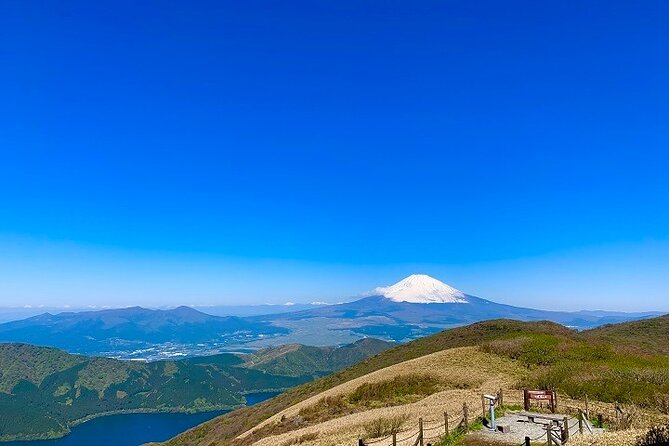
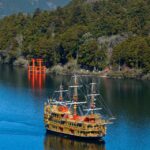
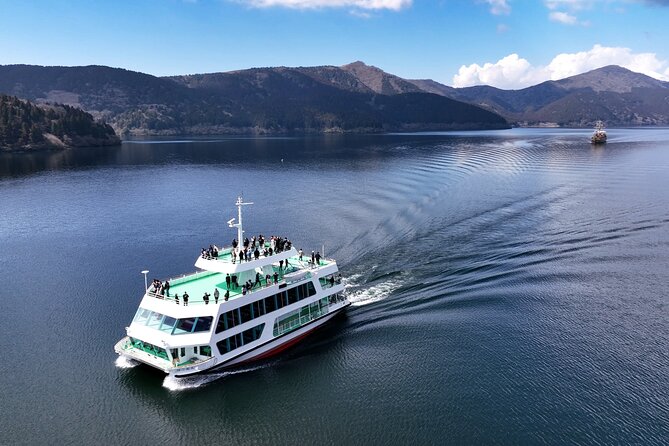
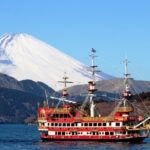
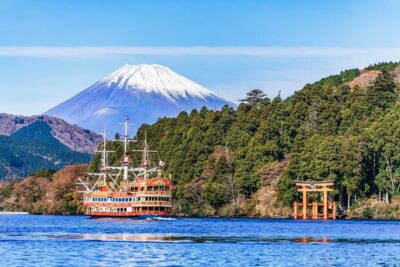
In Hakone, the tour boards the Sorakaze for a cruise on Lake Ashi. The boat ride is scheduled for about 15 minutes, so think of it as a scenic crossing rather than a long lake excursion.
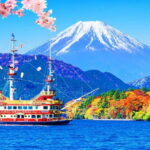
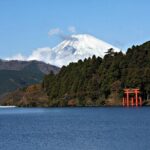
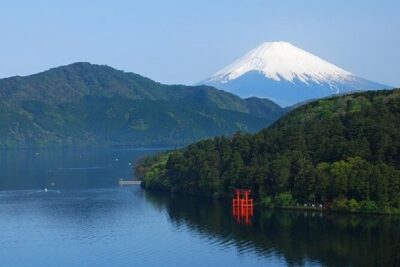
Lake Ashi is one of Hakone’s signature views. From the water, you see wooded slopes, the broad lake, and, if the weather cooperates, Mt. Fuji. The Sorakaze has an old-fashioned style designed to make the ride feel more like a small sightseeing voyage than a simple transfer.
This is one of the tour’s most relaxing moments. After the early start and road travel, sitting on the boat gives you a chance to step away from the bus and take in Hakone at a slower pace. The ride is short, however, and the overall stop may feel rushed if you want extended time by the lake.
Weather can change the plan. If the Lake Ashi cruise is not running, or if road congestion prevents the group from reaching the scheduled stop, the operator may use alternatives such as the Appare Sightseeing Boat on Lake Kawaguchi, the Swan Lake Cruise Ship on Lake Yamanaka, or the Hakone Pirate Ship.
Other possible substitutes include the Mt. Fuji Panoramic Ropeway, Hakone Ropeway, Hakone Jukkokutoge Panoramic Cable Car, and several museums or cultural sites. You should book this day for the wider Fuji and Hakone experience, not with the assumption that every named attraction is guaranteed.
Komagatake Ropeway and Hakone Shrine Mototsumiya
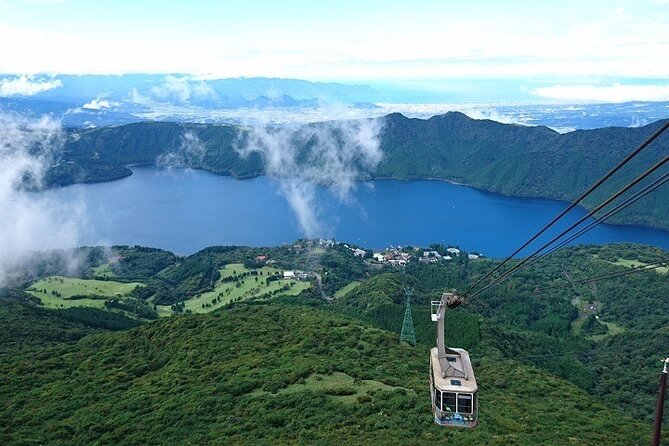
The Komagatake Ropeway ride takes you up toward the summit area of Mount Komagatake. The stop lasts about 50 minutes, including the cableway experience and time around Hakone Shrine Mototsumiya.
The shrine is the original mountaintop shrine connected with Hakone Shrine. Its setting gives the stop a spiritual feel, along with wide views over Lake Ashi and Hakone National Park. The ropeway also breaks up the bus travel and adds a different way to see the area.
Fifty minutes passes quickly. You may need to follow the guide’s timing closely so the bus can keep moving. The mountain can also be cold, windy, or cloudy, so bring that extra layer and comfortable shoes.
As with the cruise, the ropeway may be replaced if weather, congestion, or operating conditions interfere. Possible alternatives include the Hakone Ropeway, Hakone-en Aquarium, Narukawa Art Museum, Hakone Checkpoint, Odawara Castle, Owakudani, Hakone Shrine, and other Fuji or Hakone attractions.
That flexibility protects the tour from being canceled, but it also means your exact day may differ from the planned route. I would see this as a strength for keeping the day running, provided you are comfortable with some uncertainty.
A few more Tokyo tours and experiences worth a look
The long ride back to Tokyo
The bus may stop at Odawara Station for drop-off, but only if someone has booked that option in advance. Otherwise, the main return is to Tokyo Station.
The tour ends between 6pm and 9pm. That is a wide window, and you should not schedule a tight dinner reservation, theater ticket, airport transfer, or evening train immediately afterward. Traffic between Hakone, Fuji, and Tokyo can be heavy, especially on weekends, holidays, and busy seasonal dates.
The bus is air-conditioned and heated. Depending on the number of people booked, the vehicle may be a large bus, mid-size bus, small bus, or hired car. The maximum group size is 44, so the exact feel can vary.
A group of this size keeps the price below a private tour, but it also means fixed departure times and limited flexibility. If one stop runs late, the effect can be felt across the whole day. One poor experience reported for the route involved major delays and weak understanding of the English commentary, so I would pay close attention to the guide at the meeting point and ask questions early if anything is unclear.
The guide quality can shape the day. Past departures have included Shin, Joe, and Marie, with especially warm feedback for their friendliness and help. Your assigned guide may be different, and the tour’s value still depends partly on clear communication and good timing.
Lunch choices, language, and practical details
The included English guide is a National Government Licensed English Guide Interpreter. That gives you a useful point of contact during a complicated day, though spoken clarity can vary by guide and road noise.
Multilingual GPS audio guides are available only for dedicated vehicles departing from Shinjuku, not this Tokyo Station departure. The listed languages are Chinese, Spanish, Italian, Thai, and French. You must request one in advance, and supply is limited. Same-day requests are not accepted, and technical problems do not qualify for a refund.
Most people can take part, and service animals are allowed. Anyone under 18 needs written parental permission. Anyone under 15, or not yet enrolled in middle school, must be accompanied by a parent or guardian.
Children up to age 5 may join free, but they do not receive a bus seat or lunch under that arrangement. If you need either one, book the child rate.
The tour also operates as a carbon offset product. Part of the booking charge supports renewable energy linked to the tour’s emissions. That does not remove the environmental cost of a full-day bus trip, but it is a useful feature for people who want the operator to address part of it.
Free cancellation is available up to 24 hours before the start time. After that point, cancellations and changes are not accepted for a refund.
Who will get the most from this $123.36 tour
I would recommend this trip to you if you want the main Fuji and Hakone sights in one organized day. It works especially well for first-time visitors who do not want to rent a car, connect several forms of public transport, or research every admission ticket.
It also suits families and mixed groups with different interests. One person can enjoy the mountain view, another the boat, another the shrine and ropeway. The meal choices are helpful for vegetarian diners and for people who want an Indian thali option.
You should think twice if you want long walks, quiet time, or control over the schedule. The 30-minute Fuji stop and 15-minute cruise are short. The road journey can be tiring, and a cloudy day can reduce the visual payoff.
Photography is also weather dependent. Mt. Fuji can be completely hidden, even from its base. If seeing the summit is your main reason for booking, consider staying near the mountain for more than one night instead of relying on a single day’s forecast.
Should you book it?
Book this tour if convenience matters more than independence. For $123.36, you get a lot in one day: round-trip transport from central Tokyo, Fuji’s 5th Station when conditions allow, lunch and drums if selected, a Lake Ashi cruise, and the Komagatake Ropeway.
I would choose the lunch option unless you have dietary needs the menu cannot handle. I would also keep the evening open until 9pm, bring warm clothing, arrive early at Tokyo Yaesu, and accept that clouds or road closures may change the plan.
Skip it if you need guaranteed Fuji views, a relaxed pace, or a private guide. For everyone else, this is a strong-value introduction to two of Japan’s best-known mountain areas, with enough variety to make the long day worthwhile.
FAQ
Where does the tour depart from?
It departs from Bus Terminal Tokyo Yaesu, inside Tokyo Midtown Yaesu in Yaesu, Chuo City, Tokyo. The scheduled departure time is 7:35am.
How long does the tour last?
The planned duration is approximately 12 hours and 10 minutes. The return to Tokyo Station is expected between 6pm and 9pm, depending on traffic and other conditions.
Is lunch included?
Lunch is included only when you select the with-lunch option. The no-lunch option does not provide food, and there are no cafes or restaurants near the lunch break area.
What dietary meals are available?
You can request a Japanese-style vegetarian meal, a Muslim-friendly meal without pork or alcohol, or a vegetarian Indian thali meal. The Muslim-friendly meal is not halal certified, and allergy-friendly or gluten-free meals are not available.
Can I always visit Mt. Fuji 5th Station?
No. The Fuji Subaru Line may close because of snow, ice, or other conditions, especially from around December through early April. The tour may also use an alternative facility if poor weather is expected to block the view.
What happens if the cruise or ropeway cannot operate?
The tour will not be canceled for those reasons. The operator may substitute another boat, ropeway, museum, shrine, castle, or other Fuji and Hakone attraction, depending on conditions.
Can I cancel for a full refund?
Yes, if you cancel at least 24 hours before the experience start time. Cancellations or changes made less than 24 hours before departure are not accepted for a refund.
More Bay & River Cruises in Tokyo

More Hakone Day Trips in Tokyo
More Mt Fuji Day Trips in Tokyo
More tours in Tokyo we've reviewed











Mt Fuji Day Trips, compared.
 ★ 5.0Mt Fuji and Hakone 1-Day Bus Tour Return by Bullet TrainFrom $163
 ★ 4.0Mt Fuji & Hakone Cruise, Drum Show Bullet Train 1 Day from TokyoFrom $149
 ★ 4.4Tokyo Mt Fuji 5th St & Hakone Cruise Bus Tour w/Bullet TrainFrom $15410 hours
 ★ 4.5From Tokyo: Mount Fuji Full-Day Sightseeing TripFrom $6810 hours
 ★ 4.7Tokyo: Mt. Fuji Tour, Hakone Ropeway, Owakudani, Lake AshiFrom $5410 hours
 ★ 4.4Tokyo:Mt.Fuji,Kawaguchiko Oishi Park,Arakurayama Sengen ParkFrom $5410 hours