
Reviewed · TSUKIJI MARKET TOURS
Tokyo:Enjoy street food & Japanese food culture at Tsukiji Market
Tsukiji is far more than a fish market. On this three-hour walk, you’ll connect Japanese food culture with temples, shrines, dried seafood, seaweed, sashimi, and the practical pleasure of choosing lunch in the Tsukiji Outer Market. The former wholesale market has moved, but this shopping and dining district remains a fine place to see how food fits into daily life.
I like the small group, limited to six people, and I like that the guide does more than point at stalls. Guides including Yoshi, Yuki, Haruka, and Hiro have explained dashi, market customs, religion, and local history while leading tastings. The main consideration is cost: at $100.34 per person, lunch and extra purchases are still on you.
In This Review
- Key points to know before booking
- Why Tsukiji still matters after the wholesale market moved
- Starting at Tsukiji Hongwanji Temple
- Tasting your way through the Outer Market
- Choosing lunch at Tsukiji Fish Wharf
- Ending at Namiyoke Shrine
- What the English-speaking guide adds
- Is $100.34 a fair price?
- Timing, fitness, and who should book
- Should you book the Tsukiji food tour?
- FAQ
- How long does the Tsukiji food tour last?
- What food is included?
- Is lunch included in the price?
- Where does the tour begin and end?
- How many people can join the tour?
- Is the tour wheelchair accessible?
Key points to know before booking
- A small group of up to six: You get room to ask questions and move through narrow market lanes without managing a large crowd.
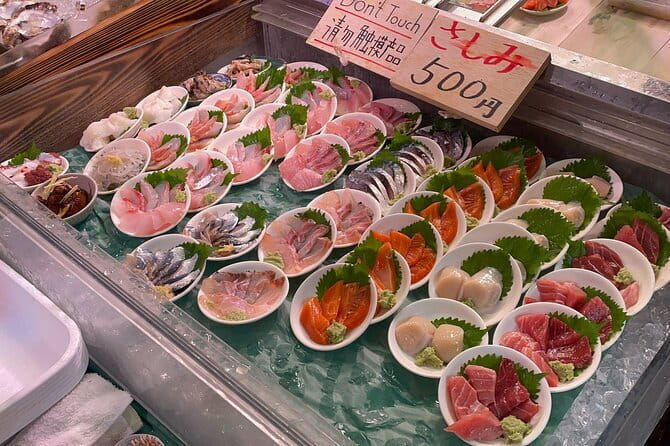
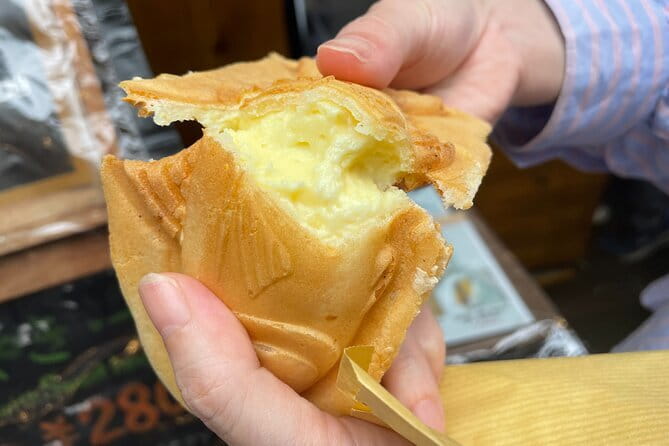
- More than seafood: Tastings can include seasoned seaweed, dried fish, roast beef sushi, oysters, sashimi, bean snacks, and other selected bites.
- Two important religious sites: The walk begins at Tsukiji Hongwanji Temple and ends at Namiyoke Shrine.
- Lunch is your choice: Your guide helps you find boxed lunches and other food, but lunch costs extra.
- A food lesson as well as a tasting: The tour explains dashi, Japanese life, market customs, and the role of religion in Tsukiji.
- Plan for walking and standing: The tour requires a moderate level of physical fitness and is not wheelchair accessible.
Why Tsukiji still matters after the wholesale market moved
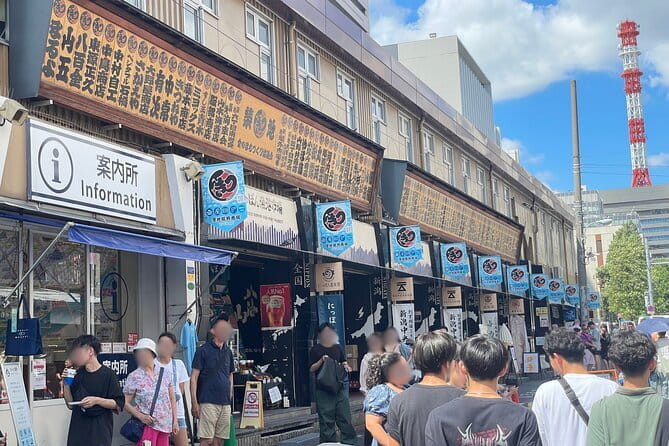
Many people first hear about Tsukiji as Tokyo’s famous fish market. That description is now incomplete. The old central wholesale market closed, but the Tsukiji Outer Market remains a busy food district filled with shops, counters, ingredients, and small places to eat.
This tour makes that change easier to understand. Instead of treating Tsukiji as a single attraction, it shows you the area as a working food neighborhood. You see the connection between the people who sell ingredients, the restaurants and cooks who use them, and the religious sites that have watched over the market for generations.
I especially like this approach if you have already watched videos or read about Tsukiji. A guide can explain what you are looking at, why certain foods matter, and how Japanese ingredients are used at home and in restaurants. That gives the market more meaning than simply walking past displays of seafood.
The group size is a real advantage here. With no more than six people, the guide can answer questions and help you make sense of unfamiliar foods. Narrow market lanes and crowded shop fronts are easier to manage in a small party than in a large organized group.
A few more Tokyo tours and experiences worth a look


Starting at Tsukiji Hongwanji Temple
The meeting point is the main gate of Tsukiji Hongwanji Temple, at 3-chōme-15-1 Tsukiji. The tour begins with about 20 minutes at the temple, and admission is free.
This is an unusual place to begin a market walk. The temple’s design incorporates architectural influences from other parts of Asia, including India, giving it an appearance that differs from many temples you may see elsewhere in Tokyo. The building helps set up one of the tour’s main ideas: Tsukiji’s food culture cannot be separated from its religious and community life.
Use this first stop to get your bearings and ask your guide about the district. The short visit is not meant to be a full temple tour, but it adds context before you enter the food stalls. You will also appreciate having a calm opening before the sensory rush of the market.
Tasting your way through the Outer Market
The main food portion takes about an hour in the Tsukiji Outer Market. Your guide leads you to recommended shops and buys several snacks for the group to taste.
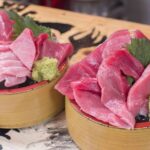
The listed examples give you a good sense of the range: seasoned seaweed, dried fish, roast beef sushi, oysters, sashimi, and bean snacks. Seafood and meat are part of the experience, so you should tell the guide about allergies before the tour begins. The exact mix can vary, and you may encounter other foods as well.
The useful part is not just eating. A guide can explain ingredients that might otherwise be hard to identify, including the many forms and uses of dashi. Dashi is a basic Japanese stock, often used to add savory flavor to soups, sauces, and other dishes. Learning about it gives you a practical key to Japanese cooking rather than just a list of foods to try.
You may also hear about the role of dried ingredients and preserved foods. Seaweed and dried fish are small items, but they can shape the flavor of an entire meal. This is the sort of detail that turns a market visit into a lesson in how Japanese food is built.
The tour includes selected snacks, but your additional shopping is not included. If you see fruit, seafood, sweets, knives, seasonings, or packaged foods you want to take home, you pay for those yourself. Keep this in mind when judging the price, since the $100.34 fee covers the guide and the planned tastings, not a full meal or personal purchases.
You should also expect the market to be a place for looking as well as eating. Some people want to sample oysters or sashimi, while others may prefer bean snacks or seaweed. Tell your guide what you are comfortable trying, especially if raw seafood is not part of your usual diet.
Choosing lunch at Tsukiji Fish Wharf
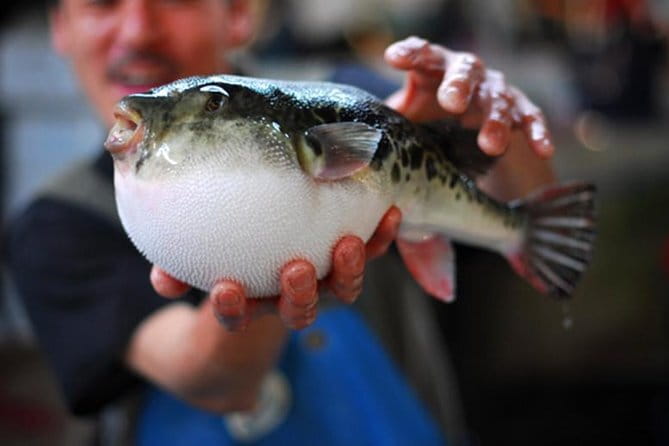
The next stop is the Tsukiji Fish Wharf, specifically the Kaiko Bridge Building, where the guide points out boxed lunches and other lunch choices. This portion lasts about 1 hour and 10 minutes, including time to eat.
Lunch is not included, which gives you control over both the menu and the cost. You can purchase what appeals to you, then enjoy it with the snacks gathered earlier. That arrangement works well because you are not locked into one restaurant or a preset lunch.
Your guide’s recommendations are useful here. Tsukiji can be confusing when you are faced with many shops and food counters, especially if you are trying to judge portions, ingredients, and prices quickly. One guide, Haruka, has helped people who felt lost among the many restaurants by offering specific suggestions.
There is a small tradeoff. Since lunch is paid separately, the final cost depends on what you choose. Someone who buys a modest boxed lunch will spend less than someone who adds premium seafood or extra market items. The tour price should therefore be viewed as payment for guidance, tastings, and cultural explanation, with lunch as a separate personal decision.
The lunch stop also slows the pace. Rather than racing from one tasting to another, you have time to sit with the food and talk about what you have tried. That makes the experience feel more like a guided introduction to Tsukiji than a quick snack crawl.
Ending at Namiyoke Shrine
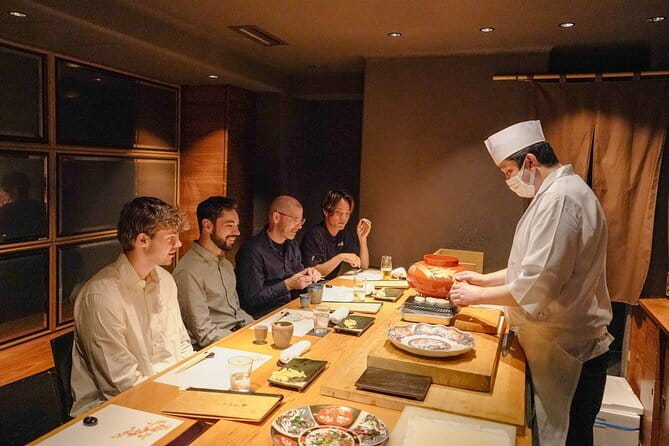
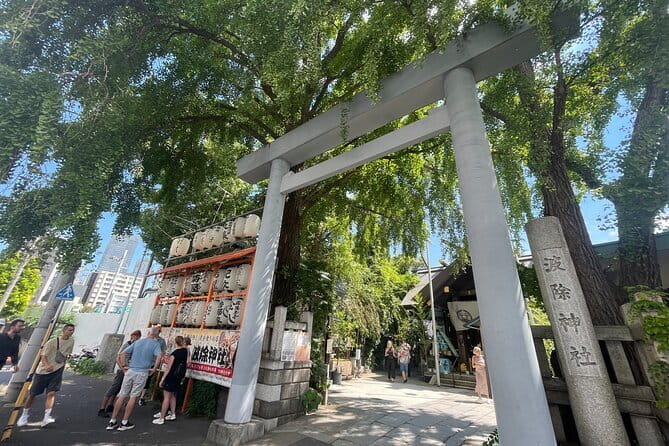
The tour ends at Namiyoke Shrine, at 6-chōme-20-37 Tsukiji. You spend about 30 minutes here, and the shrine provides a fitting final chapter.
Namiyoke has been worshipped since the Tsukiji Market was established in this area. Market workers have prayed here for safety at sea, a detail that links the shrine directly to the district’s long relationship with fishing and seafood.
This stop gives you a different way to understand the market. The stalls and snacks show the commercial side of food, while Namiyoke Shrine shows the hopes and rituals of the people who depended on the sea. It is a quiet reminder that markets are made of communities, not just products.
The end point is different from the starting point. You begin at Tsukiji Hongwanji Temple and finish at Namiyoke Shrine, both in the Tsukiji area. That is convenient for continuing your day nearby, but you should note the route if you need to return to your original meeting point.
A few more Tokyo tours and experiences worth a look


What the English-speaking guide adds
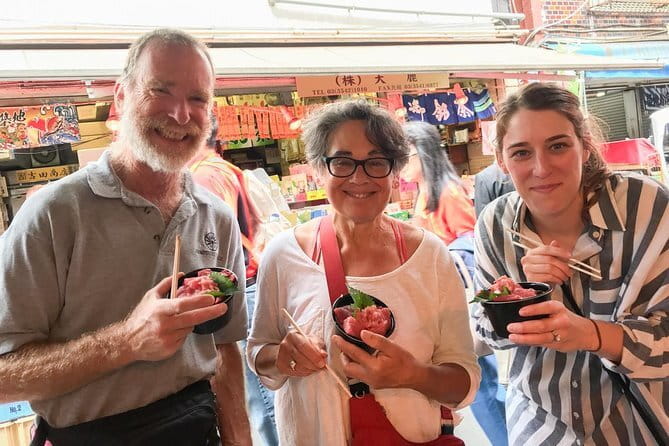
The guide is the main reason to choose this experience instead of simply visiting Tsukiji on your own. The market is easy to enter, but it is not always easy to interpret. Labels, ingredients, customs, and religious references may not be clear at first glance.
The guides have explained food culture, market history, Japanese life, and religion. Hiro, for example, has helped explain the uses of dashi while also making the tasting feel social and relaxed. Yoshi and Yuki have led tastings that included a wide range of market foods. Haruka has been especially helpful with restaurant suggestions.
You should still keep your expectations realistic. This is not a private chef lesson, a formal cooking class, or a full historical tour of Tokyo. It is a guided market walk with tastings and a lunch stop. Its strength is the connection between the food in front of you and the culture behind it.
The maximum group size of six helps preserve that personal feel. It also makes it easier for the guide to adjust explanations and snack choices to the people in the group. If you prefer wandering alone and choosing every bite yourself, the structure may feel restrictive. If you want help making sense of Tsukiji, the guidance is valuable.
Is $100.34 a fair price?
At $100.34 per person, this is not a cheap way to grab lunch. You still pay for lunch and any extra shopping, so the total can rise.
The value comes from the guide, the included snacks, the small group, and the cultural explanation. Buying a few bites on your own may cost less, but it will not necessarily show you what the foods are, how they are used, or why the market developed as it did.
I would consider the price reasonable for someone who wants a structured introduction and does not want to guess which stalls to visit. It is also a better fit for a first visit than for someone who already knows Tsukiji well and speaks Japanese.
Because the tasting includes seafood and meat, part of the value depends on your appetite and food preferences. If you avoid raw seafood or have several allergies, contact the guide in advance and understand that the included tasting is built around market foods. The operator specifically asks you to report allergies.
Timing, fitness, and who should book
The full experience lasts about three hours. The schedule includes temple visits, market walking, several tastings, lunch, and a shrine visit. You should be ready to walk and stand at market shops, since a moderate level of physical fitness is required.
The tour is not wheelchair accessible. That is an important limitation, not a minor footnote, because the market route and access arrangements may make movement difficult for wheelchair users.
I think this tour suits:
- First-time visitors to Tsukiji
- People curious about Japanese ingredients and dashi
- Seafood lovers who want guided tastings
- Visitors who enjoy small groups and conversation
- Anyone who wants food, religion, and local history in one morning
It may suit you less if you want a large meal included, dislike seafood or meat, need step-free access, or prefer complete freedom to shop and eat alone.
The tour is near public transportation, and confirmation is provided when you book. If your plans change, free cancellation is available up to 24 hours before the local start time. Changes or cancellations inside that window are not refunded.
Should you book the Tsukiji food tour?
Book it if you want more than photos of seafood stalls. The best part is the way the tour links everyday foods, market work, dashi, temples, and shrine traditions. The small group and English-speaking guide make unfamiliar foods easier to approach.
I would skip it if your main goal is simply the lowest-cost lunch in Tsukiji. You will pay extra for lunch and personal shopping, and the included snacks may not suit every diet.
For most curious eaters, this is a well-focused introduction to the area. Go with an open appetite, tell the guide about allergies, bring room in your budget for lunch, and let the market’s smaller details do the work.
FAQ
How long does the Tsukiji food tour last?
The experience lasts approximately three hours. It includes visits to Tsukiji Hongwanji Temple, the Tsukiji Outer Market, the Tsukiji Fish Wharf, and Namiyoke Shrine.
What food is included?
Included tastings can include seasoned seaweed, dried fish, roast beef sushi, oysters or sashimi, and bean snacks. The tour includes snacks, but the exact selection may vary.
Is lunch included in the price?
No. Your guide will show you boxed lunches and other lunch choices, but you purchase lunch separately.
Where does the tour begin and end?
The tour begins at the main gate of Tsukiji Hongwanji Temple, at 3-chōme-15-1 Tsukiji. It ends at Namiyoke Shrine, at 6-chōme-20-37 Tsukiji.
How many people can join the tour?
The tour has a maximum of six people.
Is the tour wheelchair accessible?
No. The tour is not wheelchair accessible, and participants should have a moderate level of physical fitness.
More Shopping Tours in Tokyo

More Food Experiences in Tokyo
More Tsukiji Market Tours in Tokyo
More tours in Tokyo we've reviewed




Tsukiji Market Tours, compared.
 ★ 5.0Tokyo Tsukiji Fish Market Food and Culture Walking TourFrom $99
 ★ 5.0Tokyo: Tsukiji Fish Market Food and Walking tourFrom $30
 ★ 4.9Tokyo: Tsukiji Fish Market Guided Walking TourFrom $222 hours
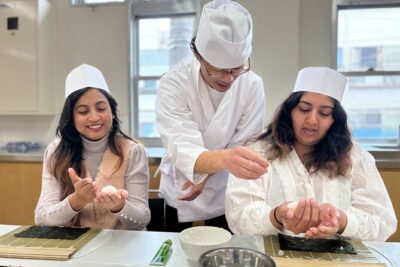 ★ 5.0Tokyo Sushi Making Class in Tsukiji with Professional ChefFrom $49
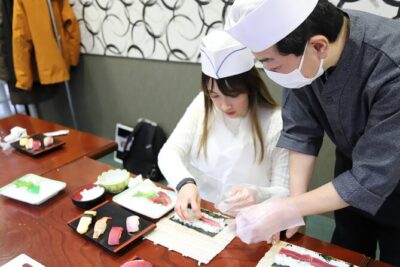 ★ 5.0Tsukiji Fish Market Guided Tour and Sushi Making with Pro ChefFrom $104
★ 4.7Tokyo: Tsukiji Fish Market Food and Culture Walking TourFrom $963 hours
★ 5.0Tsukiji Fish Market Guided Tour and Sushi Making with Pro ChefFrom $104
★ 4.7Tokyo: Tsukiji Fish Market Food and Culture Walking TourFrom $963 hours