
Reviewed · UENO & YANAKA WALKS
Tokyo : Yanaka and Nezu-Old Traditional Town Cultural Experience
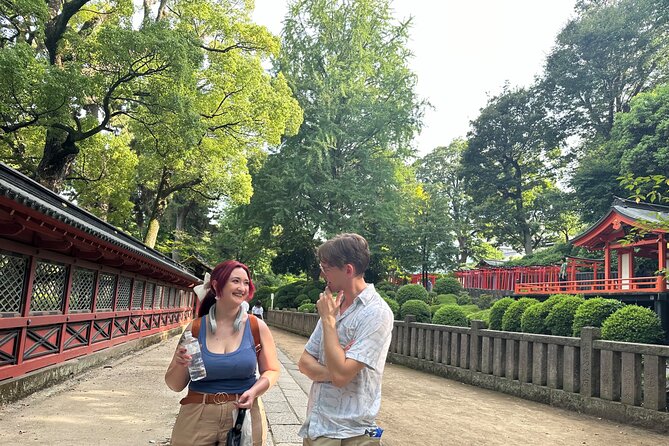
Tokyo’s old neighborhoods are best understood on foot, and this tour takes you through Yanaka and Nezu, where temples, wooden houses, small shops, and quiet lanes offer a sharp contrast to the city’s glass towers. The most memorable stop is Nezu Shrine, with its red torii-lined path and hands-on look at Japanese prayer customs.
I like the small group of no more than nine, which gives you room to ask questions and keep a comfortable pace. I also like the local focus: guide Sui explains how to pray, recommends food and shops, and adds context to buildings and customs that are easy to miss on your own.
The main consideration is that this is a walking tour through residential streets, cemeteries, and shopping areas, not a major-attraction tour with grand interiors. The pace is relaxed, but three and a half hours on foot may still feel long if you have limited mobility or want a fast checklist of Tokyo sights.
In This Review
- Key points at a glance
- Why Yanaka and Nezu feel different from central Tokyo
- Starting at Nippori Station
- Nezu Shrine and the customs you might miss
- Tennoji Temple and the quieter side of Yanaka
- Yanaka’s old buildings and family-run shops
- Walking through Nezu’s residential lanes
- Yanaka Cemetery and the 100-year-old cedar
- Yuyake Dandan and the view toward Yanaka Ginza
- Ueno Sakuragi Atari and reused wooden houses
- Ending at Yanaka Ginza
- What the $39.41 price gets you
- Who should book this walk
- Practical timing and cancellation advice
- Should you book the Yanaka and Nezu tour?
- FAQ
- How long is the Yanaka and Nezu tour?
- Where does the tour start?
- Where does the tour end?
- How many people can join the tour?
- How much does the tour cost?
- Is the tour available with a mobile ticket?
- Are admission tickets included?
- Can I cancel for a full refund?
Key points at a glance
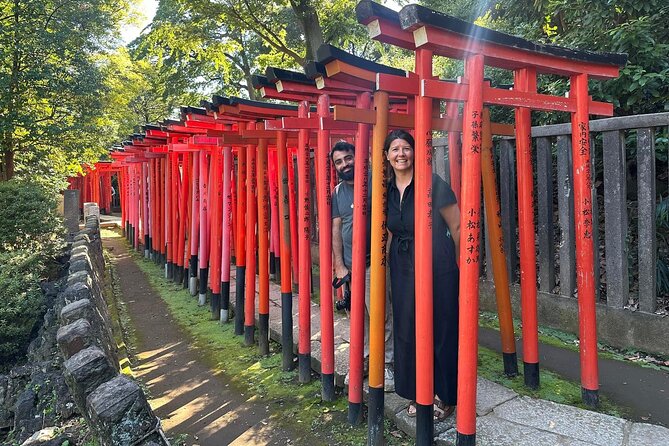
- Nezu Shrine’s torii path: Learn shrine etiquette, write a wish, and try a fortune telling ritual.
- Old Tokyo architecture: See buildings and shops connected with the Meiji, Taishō, and Showa periods.
- Yanaka Cemetery: Walk through one of Tokyo’s largest and most scenic cemeteries.
- Local shopping at Yanaka Ginza: Finish with advice on street food, Japanese sweets, and souvenirs.
- Small-group format: The group is capped at nine, making it easier to speak with guide Sui.
- A slower neighborhood walk: The route favors local streets and cultural context over crowded headline sights.
Why Yanaka and Nezu feel different from central Tokyo
Tokyo can feel like several cities stacked together. A few train stops from the neon streets and department stores, Yanaka, Nezu, and Sendagi offer a quieter look at how parts of the city developed around temples, shrines, homes, and family-run businesses.
The area is especially useful for understanding old Tokyo across several eras. Along the walk, you see remains and buildings linked with the Meiji, Taishō, and Showa periods. That does not mean every structure is preserved as a museum piece. The appeal is seeing older homes and small shops still folded into ordinary neighborhood life.
I like this approach because you are not simply moving from one famous monument to the next. You are learning how a shrine fits into a local street, why a temple matters, and how a shopping lane serves residents as well as people who come to explore.
The tour lasts about three hours and 30 minutes. That gives Sui time to explain customs and answer questions without racing from stop to stop. The route is also limited to nine people, a useful size for narrow lanes and informal conversation.
A few more Tokyo tours and experiences worth a look

Starting at Nippori Station
The meeting point is Nippori Station at 2 Chome-19 Nishinippori, in Arakawa City. Starting at a major station is practical, but you should allow enough time to find the correct exit and meeting spot before the start time.
From there, the route moves into Yanaka and nearby Nezu. The opening stretch helps shift your attention from Tokyo’s transport network to a neighborhood where the sights are smaller and the details matter more.
This is a good tour to schedule early in your Tokyo stay. Sui’s local recommendations can help shape later meals and short outings, and one review specifically describes the experience as setting the tone for the rest of a Japan holiday.
Nezu Shrine and the customs you might miss
Nezu Shrine receives about 30 minutes, the longest single stop at a major religious site. Its most striking feature is the picturesque pathway lined with torii gates, which gives you a memorable photo opportunity without requiring a major detour from the neighborhood walk.
The useful part is not just seeing the gates. Sui explains Japanese religious practices and shows you how to pray, write a wish, and receive a fortune. If you have visited shrines on your own, this is where a guide can make the experience more meaningful by explaining what to do and why.
You should still treat the shrine as a place of worship rather than a photo set. The tour’s emphasis on etiquette helps you do that respectfully.
Nezu Shrine is also a good early stop because it introduces a theme that returns throughout the morning: Tokyo’s older neighborhoods are not defined by one grand monument. Their character comes from the relationship between religious sites, homes, streets, and local routines.
Tennoji Temple and the quieter side of Yanaka
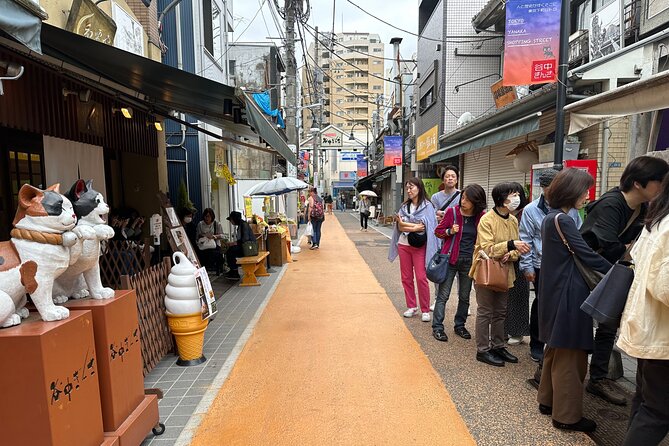
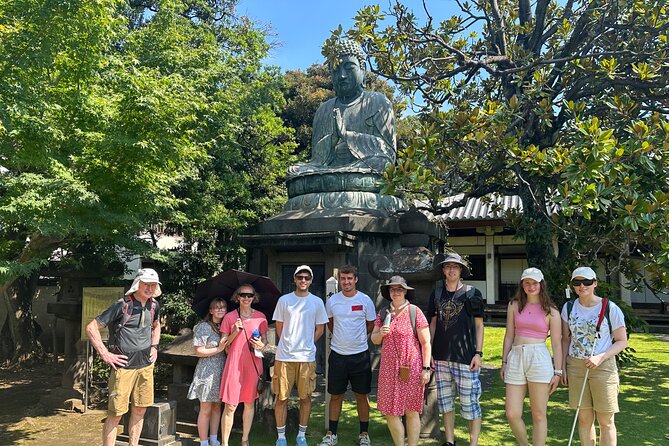
The stop at Tennoji Temple is brief, about five minutes, but it adds another piece to the area’s religious story. The temple is described as one of the oldest in Yanaka and is known for its large bronze seated Buddha.
You have time to appreciate the calm setting and garden view, though not enough for a long temple visit. That short timing is worth keeping in mind if you prefer extended time at each site. Here, Tennoji works more as a peaceful pause and visual introduction than as a full temple tour.
I like the contrast with Nezu Shrine. The shrine’s torii-lined approach feels visually strong, while Tennoji offers a quieter moment around the Buddha and garden. Together, they help you see the difference between shrine and temple traditions without turning the walk into a formal religious studies lesson.
Yanaka’s old buildings and family-run shops
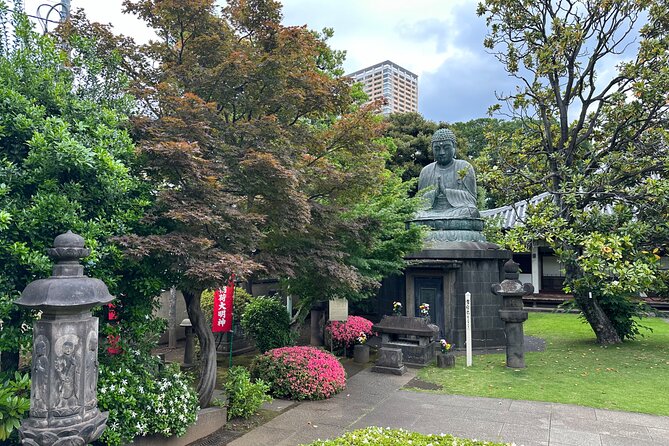
The Yanaka district portion lasts around 50 minutes. This is where the tour’s theme comes together, with older buildings from the Meiji, Taishō, and Showa periods and small shops passed down through generations.
You might find this more interesting than a polished historic district because the area is still part of daily life. The point is not simply to admire an old facade. It is to notice how a shop, house, temple, or narrow lane carries traces of different periods while continuing to serve the neighborhood.
Sui’s explanations are especially useful here. The route leaves room for conversation, and the small group means you can ask about architecture, customs, or places to return to later. Her English is described as strong, and her style as enthusiastic and engaging, but the pace remains comfortable rather than hurried.
This section also gives you a chance to see Tokyo’s ability to preserve character without freezing a district in time. The result is not a single reconstructed old street. It is a working neighborhood with older pieces still in use.





Walking through Nezu’s residential lanes
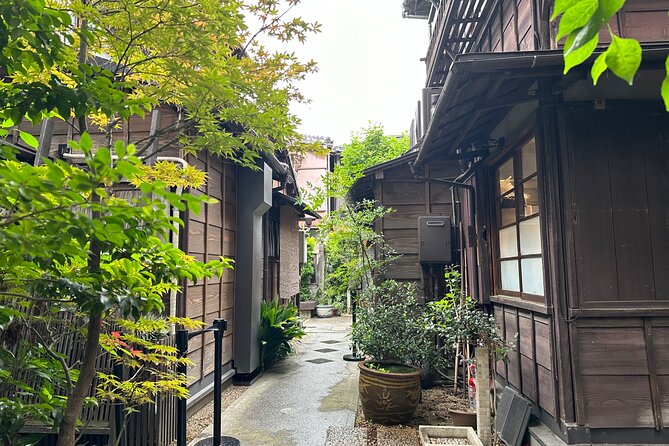
The Nezu section takes about 30 minutes and moves into local residential streets. You will see a mix of older and newer houses and shops while learning more about the neighborhood from a guide familiar with its history and daily character.
This part is less about ticking off attractions and more about observation. I enjoy walks like this because you can notice the scale of the streets, the way homes meet small businesses, and the shifts between older and newer construction.
It is also the portion most likely to appeal to you if you want a slower view of Tokyo. There are no major admission lines or large museum halls here. The reward comes from context and conversation.
The tradeoff is simple: if you want constant landmark views, you may find the residential walk understated. If you want to understand how an older Tokyo district feels beyond its famous sites, it is one of the most valuable parts of the route.
Yanaka Cemetery and the 100-year-old cedar
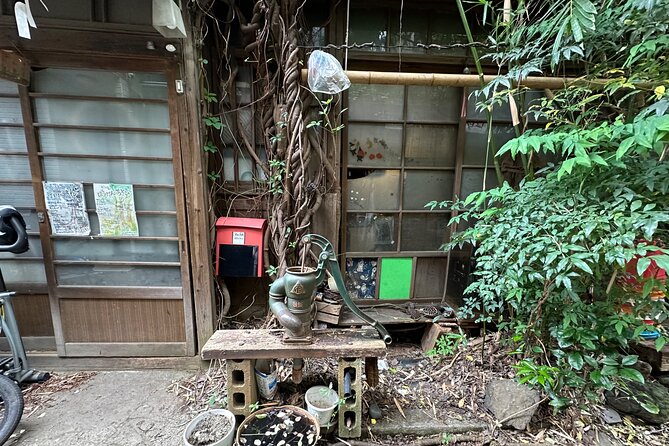
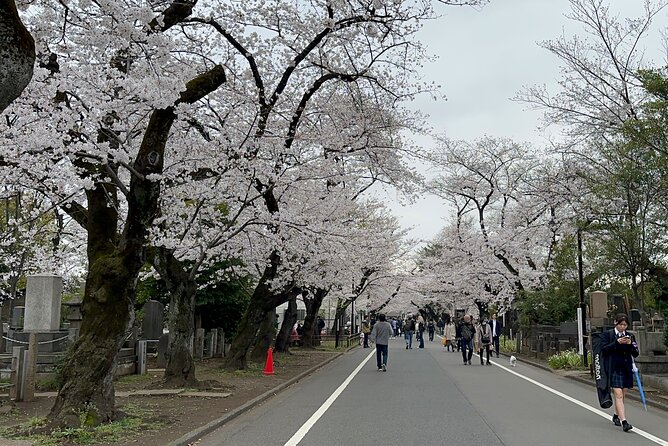
Yanaka Cemetery receives about 20 minutes. It is one of Tokyo’s largest and most scenic cemeteries, and important figures are buried there.
A cemetery may not be on every visitor’s must-see list, but this stop gives you a different view of the city’s past. It is a place for a quiet walk, and the setting helps explain the connection between Yanaka’s temples, religious traditions, and older community life.
The route also passes a Himalayan cedar said to be 100 years old. It is a small detail, but that is exactly the sort of detail that can make a neighborhood walk memorable. You get a sense of time through living trees and old buildings, not just dates recited by a guide.
You should approach this section respectfully. The tour treats the cemetery as a scenic and historic place, but it remains a functioning sacred space rather than a conventional attraction.
Yuyake Dandan and the view toward Yanaka Ginza
Yuyake Dandan means sunset staircase in Japanese. The stop lasts only about two minutes, but it is included as a photo point overlooking Yanaka Ginza and the surrounding street view.
The staircase gives you a visual transition from quiet Yanaka to the more active shopping street below. The timing is short, so have your camera ready and do not expect a long stop.
The name suggests sunset, but the tour schedule does not promise a sunset viewing. Treat this as a quick viewpoint rather than a guaranteed evening spectacle.
The route also passes a roughly 200-year-old bathhouse that has been converted into an art gallery. You do not appear to spend extended time inside, but seeing an old bathhouse given a new use is another example of how Yanaka’s older buildings continue to have a place in the present.
Ueno Sakuragi Atari and reused wooden houses
Ueno Sakuragi Atari receives about 15 minutes. Here, you explore wooden houses that have been converted into shops.
This is a compact but worthwhile stop because it shows preservation through reuse. Instead of presenting old buildings as untouchable relics, the area gives them a new role while keeping their traditional character visible.
You may find this section particularly useful if you are interested in design, architecture, or local shopping. It also prepares you for the final stop, where the tour shifts from cultural explanation to food and souvenirs.
Because the stop is short, do not expect to browse every shop in detail. Think of it as an introduction, with the chance to return if something catches your eye.
Ending at Yanaka Ginza
The tour ends at Yanaka Ginza, an old local shopping street. Sui introduces popular street foods, Japanese desserts, and souvenir ideas, then gives you time to choose what you want to eat or buy.
This is a practical ending. You finish with a better sense of what is local to the area and with a chance to continue exploring after the guided portion ends. The tour returns to the meeting point, so you should confirm how the end-of-tour arrangement works before setting up a separate appointment.
Yanaka Ginza is also where Sui’s food recommendations can be most useful. You may not know which snacks are popular or which small items make good souvenirs, and a guide can save you from wandering past everything without knowing what to try.
The listed visit is only about 10 minutes, so the guided introduction is brief. If you want a proper meal or a long shopping session, plan to stay after the tour. The advantage is flexibility: you receive orientation, then decide how long to browse.
What the $39.41 price gets you
At $39.41 per person, this is priced as an affordable half-day cultural walk rather than a private guide service. The admission tickets listed for Nezu Shrine, Tennoji Temple, Yanaka Cemetery, and Yuyake Dandan are free, while admission is included for Ueno Sakuragi Atari.
The main value is the guide’s interpretation. You are paying for three and a half hours of explanation, route planning, shrine and temple etiquette, neighborhood context, and food suggestions. If you would otherwise spend a morning wandering between these districts with only a map, the price is reasonable.
The value is strongest for a first visit to Tokyo or for anyone who wants help understanding customs. It is less compelling if you already know Yanaka well, speak with confidence about shrine and temple etiquette, and prefer to explore every shop at your own pace.
Group discounts are available, and the tour accepts a mobile ticket. Confirmation comes at booking, which makes it easy to keep the experience with the rest of your Tokyo plans.
Who should book this walk
I would choose this tour if you want a calm introduction to old Tokyo, especially during your first few days. It suits solo visitors, couples, and families who prefer conversation and local detail over a large coach group.
It also works well for people who enjoy walking but do not want a punishing pace. The group moves through residential streets, religious sites, a cemetery, a viewpoint, and shopping lanes, so the scenery changes often enough to keep the route interesting.
You should think twice if you need a seated tour, want extensive indoor sightseeing, or hope to spend a long time at each temple and shop. Most people can participate, and service animals are allowed, but the experience is still a walking route and may include uneven or crowded sections typical of old neighborhood streets.
The tour is recommended by all published ratings, with a five-star average from 23 ratings. The most consistently praised elements are Sui’s friendly, engaging manner, her clear English, her explanations of shrine and temple etiquette, and the relaxed pace.
Practical timing and cancellation advice
The tour is usually booked about 38 days in advance, so reserve early if your Tokyo dates are fixed. The group limit of nine can make popular dates fill faster than a large sightseeing excursion.
Free cancellation is available if you cancel at least 24 hours before the local start time. Changes or cancellations inside that 24-hour window are not accepted for a refund.
I would place this walk on a day when you can keep the rest of your schedule flexible. The route ends back at the meeting point, but Yanaka Ginza is worth extra time if you want to eat, shop, or revisit a building you saw along the way.
Should you book the Yanaka and Nezu tour?
Book it if you want to see a quieter, older side of Tokyo and value a guide who explains what you are seeing. Sui’s local recommendations, shrine instruction, and relaxed approach are the strongest reasons to choose it.
Skip it if your priority is Tokyo’s famous skyline, major museums, or fast sightseeing. This is a neighborhood walk built around details: a torii path, a seated Buddha, wooden homes, a cemetery, an old cedar, a reused bathhouse, and a shopping street.
For $39.41, the tour offers good value when you want cultural context and an easy introduction to Yanaka, Nezu, and Sendagi. I would especially recommend it early in a Tokyo stay, when practical food tips and a better sense of local etiquette can improve the rest of your visit.
FAQ
How long is the Yanaka and Nezu tour?
The experience lasts approximately three hours and 30 minutes.
Where does the tour start?
The meeting point is Nippori Station at 2 Chome-19 Nishinippori, Arakawa City, Tokyo 116-0013, Japan.
Where does the tour end?
The activity ends back at the meeting point.
How many people can join the tour?
The tour has a maximum of nine participants.
How much does the tour cost?
The listed price is $39.41 per person.
Is the tour available with a mobile ticket?
Yes. A mobile ticket is available, and confirmation is received at the time of booking.
Are admission tickets included?
The listed admission is free at Nezu Shrine, Tennoji Temple, Yanaka Cemetery, and Yuyake Dandan. Admission is included at Ueno Sakuragi Atari.
Can I cancel for a full refund?
Yes, if you cancel at least 24 hours before the experience start time. Cancellations or changes made less than 24 hours before the start time are not refunded or accepted.
More Ueno & Yanaka Walks in Tokyo

More tours in Tokyo we've reviewed






Ueno & Yanaka Walks, compared.
 ★ 5.0Eat and Drink Like a Local: Tokyo Ueno Food Tour-Taverns&RamenFrom $95
 ★ 4.5The Old Quarter of Tokyo – Yanaka Walking TourFrom $40
 ★ 5.0Yanaka Walking Tour: Historic and Traditional District of TokyoFrom $72
 ★ 4.8Tokyo: Old Quarter Yanaka Walking TourFrom $323 hours
 ★ 5.0Tokyo: Food Tour in Ueno with 10+ Tastings of Japanese ClassicsFrom $142
 ★ 4.9Tokyo:Stroll in Old traditional culture towns~Yanaka & NezuFrom $293h 30m