
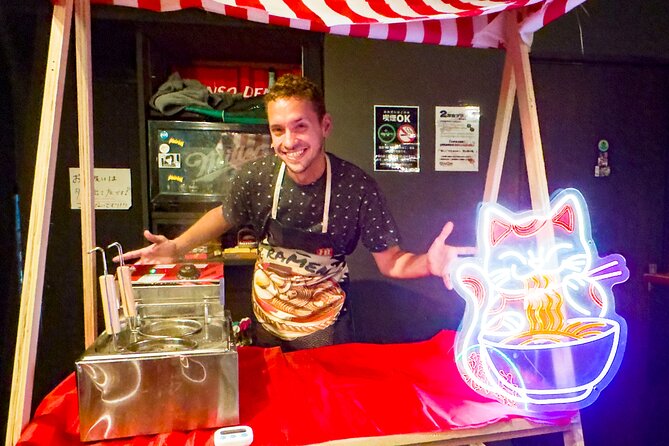
Reviewed · SHIBUYA TOURS
Shibuya: Ramen Dojo Tokyo | Make All 3 (Tonkotsu/Shoyu/Miso)
Ramen Dojo Tokyo lets you do more than eat ramen. You make fresh noodles, prepare chicken chashu, adjust three soup styles, and sit down to taste tonkotsu, shoyu, and miso in one compact lesson. I especially like the three-style tasting and the use of a professional noodle cutter, since you can compare the flavors while the details are still fresh.
I also like the small maximum group of eight and the patient help available in English. Beginners, including children, can take part with support. The main point to consider is that the class teaches noodle making more fully than broth making. If soup technique is your chief interest, you may find the lesson a little light in that area.
In This Review
- Key points at a glance
- Making three kinds of ramen near Shibuya
- The first 10 minutes: check-in and a quick briefing
- Chicken chashu comes before the noodles
- Twenty minutes of kneading and cutting fresh noodles
- Soup preparation and the three-way taste test
- Plating the ramen trio
- Thirty minutes to taste and ask questions
- What the $86.22 price buys you
- Who will enjoy this class most
- Practical planning near Shibuya Station
- Should you book Ramen Dojo Tokyo?
- FAQ
- How long does the ramen class last?
- Where does the activity meet?
- Where does the activity end?
- How far is the studio from Shibuya Station?
- Is the class taught in English?
- Which ramen styles will I make?
- Is food included in the price?
- What equipment and supplies are provided?
- Do I receive a recipe after the class?
- Can I cancel for a full refund?
Key points at a glance
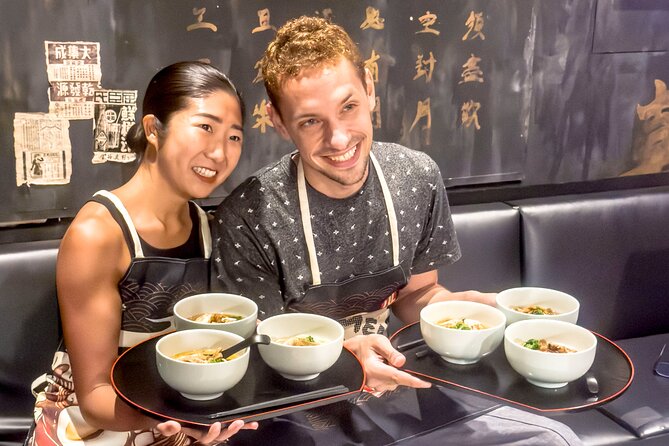
- Three ramen styles in 90 minutes: Taste mini bowls of tonkotsu, shoyu, and miso side by side.
- Hands-on noodle work: Knead dough and cut it with a professional noodle machine.
- Chicken chashu included: Prepare and finish the topping before plating your bowls.
- Small English-language class: The group is limited to eight people, allowing close guidance.
- A recipe for later: Receive a digital recipe after class so you can try the process at home.
- Easy Shibuya location: Walk about 10 minutes from Shibuya Station, then continue sightseeing from the same studio.
Making three kinds of ramen near Shibuya

Tokyo gives you endless chances to order ramen. This class gives you a different kind of meal: one where you handle the dough, prepare a topping, build the bowls, and learn how the main soup styles differ.
The studio is in the Umekita Building at 7-11 Maruyamachō, around a 10-minute walk from Shibuya Station. That location matters because the class does not eat up half your day. You can fit it between shopping, a visit to Shibuya Crossing, or an evening plan elsewhere in Tokyo.
The session lasts about 90 minutes and begins and ends at the same place. The activity is conducted in English, and all kitchen equipment, ingredients, and an apron are supplied. You do not need to bring cooking gear or arrange transport.
The class has earned a 4.9 rating from 214 ratings, with 100 percent recommendation shown in the supplied details. Those numbers point to a consistently well-received experience, but the practical details matter more when deciding if it suits you. You should book it for the hands-on noodle work and three-way tasting, not as a full lesson in making long-simmered ramen stock.
A few more Tokyo tours and experiences worth a look



The first 10 minutes: check-in and a quick briefing
The class opens with check-in and a 10-minute briefing. This is when you get oriented to the studio, the equipment, and the order of the work ahead.
A short introduction is useful here because ramen involves several timed steps. Dough needs handling, noodles need cutting, and the final cooking and plating happen in a tight sequence. The briefing helps beginners understand what they are doing before the kitchen work starts.
The small format should make it easier to ask questions. With no more than eight people, you have a better chance of receiving direct help than in a large demonstration class. That is especially useful if you have never kneaded noodle dough or used a pasta-style cutter.
An 8-year-old has taken part successfully with extra accommodation from the instructors, so families with children may find the class workable. Still, the activity includes stairs, flour, hot cooking equipment, wheat, egg, and soy. You should assess your group carefully before booking.
Chicken chashu comes before the noodles
The next step takes about five minutes and introduces the chicken chashu. You prepare the topping before moving into the main noodle work, then return to finish it for another 10 minutes later in the session.
That two-stage arrangement gives the meat time to fit into the rest of the schedule. It also adds a useful lesson beyond plain noodles and soup. A ramen bowl depends on texture and toppings as much as it depends on the broth, and chicken chashu gives you something substantial to arrange when the bowls come together.
The supplied information does not describe a long cooking process or a full recipe for broth. You should expect to prepare and finish the chicken chashu rather than spend the class making every component entirely from raw ingredients.
That distinction is important. One participant found the noodles enjoyable but wanted more detail about the broth. If you are most curious about how ramen soup is built from stock, seasonings, and fat, ask questions during the class and keep your expectations measured.
Twenty minutes of kneading and cutting fresh noodles
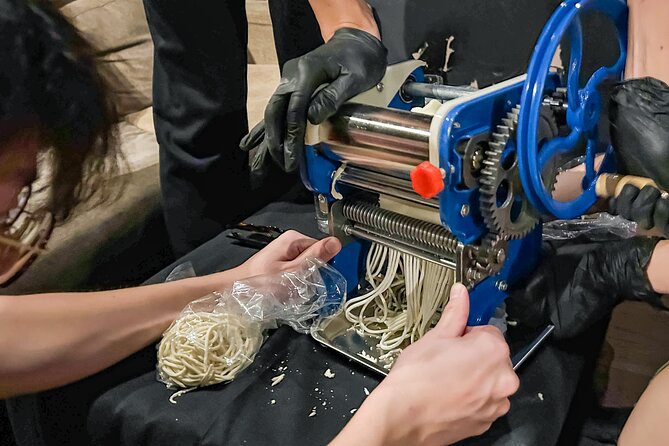
The noodle section is the practical heart of the experience. You knead the dough yourself, then push it through a professional cutter to create fresh noodles.
For many people, this will be the most memorable part. Ramen can look simple in a bowl, but the noodle gives it much of its character. Thickness, shape, and texture affect how the noodle meets the soup. Handling the dough lets you understand that relationship in a way that ordering a bowl cannot.
The process is designed for beginners. You do not need previous cooking experience, and the instructor provides guidance throughout. One first-time cook found the work difficult at the start but manageable with patient help. That is a fair expectation: the dough may not feel natural right away, but the class is built to support you through it.
The professional cutter adds a fun bit of theater and practical value. It is faster and more precise than cutting every strand by hand, and it gives you a clear idea of how fresh noodles are shaped for cooking.
The limitation is worth noting. The dough ingredients are prepared in advance, so you handle the kneading and machine cutting rather than measuring every ingredient from the beginning. If you want a full bakery-style lesson in flour ratios and dough formulation, this is not that kind of class. It is a focused ramen workshop with the most useful hands-on steps selected for a 90-minute format.
Soup preparation and the three-way taste test
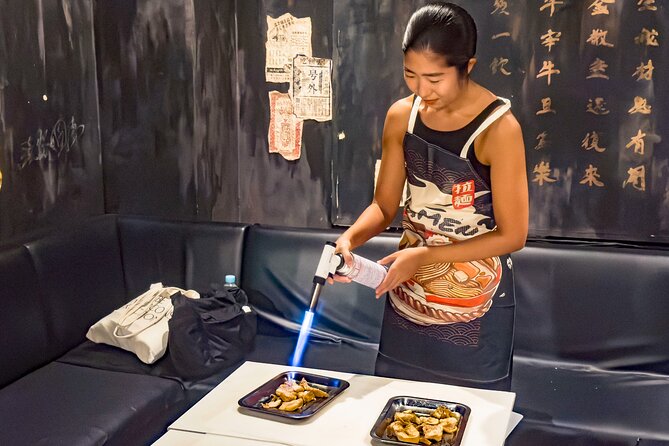
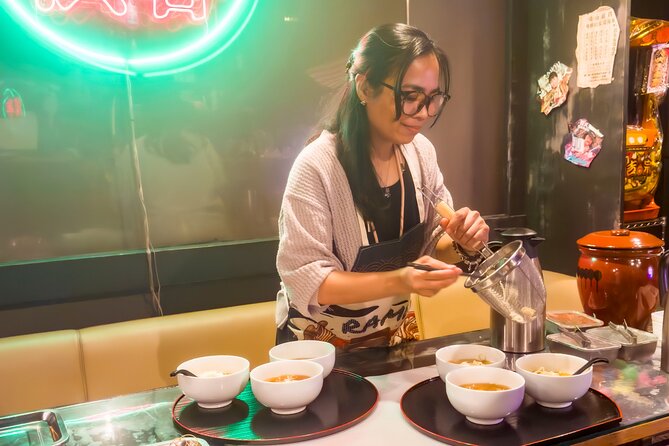
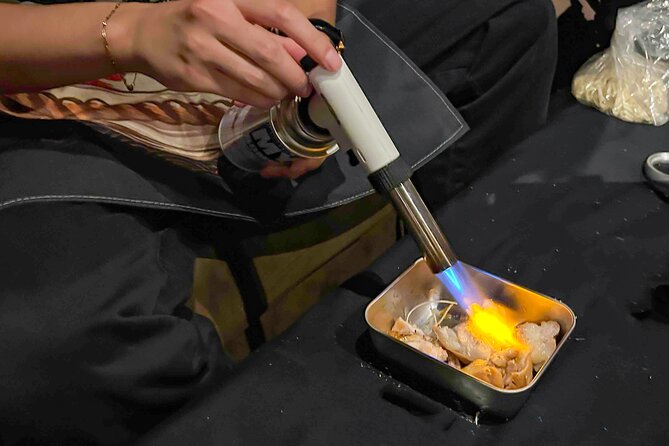
After the noodle work and chashu finishing, you spend about 10 minutes boiling the noodles and preparing the soups. The class presents three styles: tonkotsu, shoyu, and miso.
The three bowls are mini portions, not three full restaurant meals. That is a sensible design. You get to taste all three without turning the class into an uncomfortable eating challenge, and you can compare the styles side by side.
Tonkotsu is the richest and most filling of the three names listed. Shoyu brings the familiar soy-seasoned profile, while miso gives you a stronger fermented seasoning character. The class allows you to adjust the soup to your preferred taste, so you can notice how small changes affect the finished bowl.
Do not assume that you will make a full tonkotsu stock from pork bones during this 90-minute session. The information provided describes preparing and adjusting the soups, while the noodle work and chashu receive the main hands-on treatment. That makes the class more approachable, but it also explains why broth-focused cooks may want more.
The tasting is valuable for another reason: it gives you a simple framework for ordering ramen later in Japan. Instead of treating every bowl as one broad category, you leave with a clearer sense of what you like. You can decide if you prefer a miso-heavy flavor, a shoyu-style seasoning, or the fuller tonkotsu profile.




Plating the ramen trio
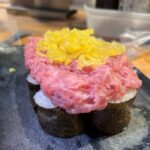
Plating takes about five minutes. You add the noodles, soup, chicken chashu, and other toppings, then finish three small bowls.
This is the moment when the separate jobs begin to look like a meal. The three bowls also make a good photo, and the schedule includes time for pictures before eating. The result is designed to be both tasty and visually clear, with each bowl showing a different style.
The topping and seasoning choices give you some control, but this is still a guided lesson rather than a free-form cooking class. You follow the instructor’s process and adjust the soup to your taste within that structure.
That balance works well for a first cooking class. Too much freedom can leave beginners unsure of what to do, while too much demonstration can make you feel like a spectator. Here, you take part in the key physical jobs and receive help as you go.
Thirty minutes to taste and ask questions
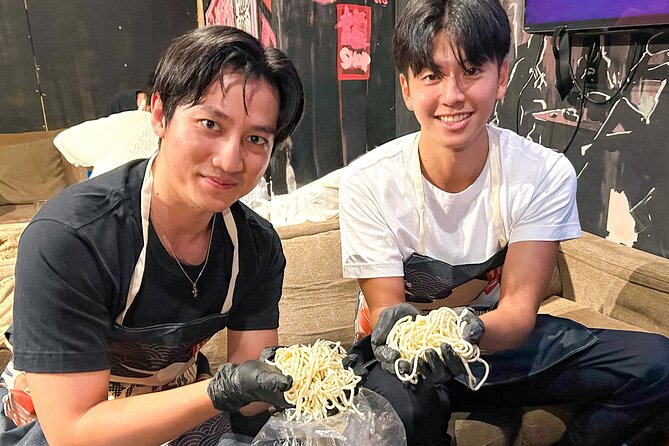
The final 30 minutes are set aside for tasting and photos. You sit down and eat the ramen you prepared, rather than rushing straight out after the last bowl is plated.
This is where the class earns much of its value. You can compare the three styles while they are fresh, see how the noodles work with each soup, and ask about recreating the meal at home. The digital recipe arrives after class, giving you a reference for another attempt.
A recipe is helpful, but you should treat it as a starting point rather than a guarantee of restaurant-level ramen on your first try. Home equipment, ingredients, and cooking time will differ. The class gives you a practical method and a better feel for the process, especially the noodles, but repeating the result will still take practice.
The tasting also solves a common problem with short food workshops: leaving hungry. Three mini bowls are included, so you get a real meal-sized tasting without having to buy lunch during the activity. Drinks and alcoholic beverages are not included, and personal expenses and gratuities are separate.
What the $86.22 price buys you

At $86.22 per person, this is not the cheapest way to eat ramen in Tokyo. A restaurant bowl costs far less. The price makes more sense if you put value on the instruction, the ingredients, the equipment, and the chance to taste three styles in one sitting.
You receive an English-speaking instructor, all ingredients, kitchen equipment, an apron loan, three mini ramen bowls, and a digital recipe. The group limit of eight is important here. You are paying for participation and access, not simply for a meal delivered to the table.
I would call it a fair price for visitors who want a compact cooking activity in Shibuya. It is less convincing for someone who only wants a full bowl of ramen or already has strong noodle-making skills.
The 90-minute length also helps the value. You do not lose an entire sightseeing block, and you can continue exploring Shibuya immediately afterward. Since the class starts and finishes at the meeting point, there is no extra transfer time or hotel pickup arrangement to manage.
Who will enjoy this class most
This workshop suits first-time cooks, ramen fans, couples, families, and small groups looking for an activity that is more personal than a standard food stop. It is also a good option if you want to learn a few techniques without committing to a full-day culinary course.
You will get the most from it if you enjoy doing the work yourself. Kneading dough, using the cutter, preparing chashu, and plating the bowls are central parts of the experience.
Children can take part, and the instructor has been especially accommodating to an 8-year-old. Parents should still consider the flour, stairs, hot cooking areas, and pace of the session before booking.
The class is not suitable for severe wheat, egg, or soy allergies, celiac disease, or severe airborne flour sensitivity. It also does not suit people who cannot use stairs or need strict vegan or religious dietary compliance. Special dietary substitutes beyond the stated offering are not included.
Practical planning near Shibuya Station
The meeting point is the Umekita Building, 7-11 Maruyamachō, Shibuya, Tokyo 150-0044. Plan on about a 10-minute walk from Shibuya Station and allow enough time to find the building without arriving breathless.
The activity is near public transportation, but hotel pickup and drop-off are not provided. After class, you return to the same meeting point, which makes it easy to pair the workshop with other Shibuya plans.
Mobile tickets are supported, and confirmation is received at booking. Free cancellation is available if you cancel at least 24 hours before the local start time. Cancellations or changes made within 24 hours are not refunded or accepted.
Should you book Ramen Dojo Tokyo?
Book this class if you want to make fresh noodles, learn the basic flow of ramen preparation, and compare tonkotsu, shoyu, and miso in one sitting. The English support, patient instruction, small group, and digital recipe make it a friendly choice for beginners.
Think twice if your main goal is a detailed lesson in broth from the stockpot up. The class gives you three soups to prepare and adjust, but its strongest teaching is in the noodles, chashu, assembly, and tasting.
At $86.22, I would choose it for a hands-on Tokyo food memory, not for the meal alone. If that distinction works for you, the 90-minute format fits neatly into a Shibuya day and gives you a useful skill to try again at home.
FAQ
How long does the ramen class last?
The class lasts approximately 90 minutes, including check-in, cooking, plating, tasting, and photo time.
Where does the activity meet?
It starts at the Umekita Building, 7-11 Maruyamachō, Shibuya, Tokyo 150-0044, Japan.
Where does the activity end?
The activity ends back at the same meeting point.
How far is the studio from Shibuya Station?
The studio is about a 10-minute walk from Shibuya Station.
Is the class taught in English?
Yes. An English-speaking instructor leads the class.
Which ramen styles will I make?
You will prepare and taste three mini bowls: tonkotsu, shoyu, and miso.
Is food included in the price?
Yes. The experience includes three mini bowls of ramen for tasting.
What equipment and supplies are provided?
All ingredients and kitchen equipment are included, along with an apron loan.
Do I receive a recipe after the class?
Yes. A digital recipe is provided after the class.
Can I cancel for a full refund?
Yes, if you cancel at least 24 hours before the experience start time. Cancellations within 24 hours are not refunded.
More Shibuya Tours in Tokyo


More tours in Tokyo we've reviewed









Shibuya Tours, compared.
 ★ 5.0Official Street Go-Kart in ShibuyaFrom $76
 ★ 4.9Tokyo: Street Kart Experience in ShibuyaFrom $741 hour
 ★ 5.0Shibuya Meltdown Nightlife Tour: All-You-Can-Drink Bar HoppingFrom $106
 ★ 5.0Shibuya Official Street Go-Kart in Shibuya AnnexFrom $69
 ★ 5.0Tokyo: Shibuya Food Tour (13 dishes and 4 Eateries)From $77
 ★ 5.0Best of Shibuya Food TourFrom $217